

Toyota bZ vs RAV4: Which SUV Should You Buy?

Contents in this publication
- Toyota bZ vs RAV4 at a Glance
- Understanding the 2026 Toyota bZ
- Understanding the 2026 Toyota RAV4
- Toyota bZ vs RAV4 Price
- Toyota bZ vs RAV4 Performance
- Toyota bZ vs RAV4 Driving Range
- Toyota bZ vs RAV4 Charging and Refueling
- Toyota bZ vs RAV4 Fuel and Energy Costs
- Toyota bZ vs RAV4 Interior and Technology
- Toyota bZ vs RAV4 Passenger Comfort
- Toyota bZ vs RAV4 Cargo Practicality
- Toyota bZ vs RAV4 All-Wheel Drive
- Toyota bZ vs RAV4 Safety Features
- Toyota bZ vs RAV4 Maintenance
- Toyota bZ vs RAV4 Reliability
- Toyota bZ vs RAV4 for Commuting
- Toyota bZ vs RAV4 for Road Trips
- Toyota bZ vs RAV4 for City Driving
- Toyota bZ vs RAV4 Environmental Considerations
- Should You Consider the RAV4 Plug-in Hybrid Instead?
- Which Toyota bZ Trim Should You Buy?
- Which Toyota RAV4 Trim Should You Buy?
- Toyota bZ vs RAV4: Pros and Cons
- Who Should Buy the Toyota bZ?
- Who Should Buy the Toyota RAV4?
- Toyota bZ vs RAV4: Which Is Cheaper to Own?
- Toyota bZ vs RAV4 Decision Checklist
- Final Verdict: Toyota bZ or RAV4?
- Frequently Asked Questions
Choosing between the Toyota bZ and Toyota RAV4 is not simply a matter of picking an electric SUV or a hybrid SUV. It is a decision between two very different ownership experiences.
The 2026 Toyota bZ represents Toyota’s fully electric path. It offers quiet acceleration, at-home charging, strong performance, and zero gasoline use. The redesigned 2026 Toyota RAV4 takes a broader approach, offering conventional hybrid and plug-in hybrid powertrains for buyers who want electrification without depending entirely on charging stations.
On paper, these two compact SUVs appear to be close relatives. They wear the same badge, seat five people, offer all-wheel drive, and target families, commuters, and road-trip travelers. Yet living with them can feel as different as using a smartphone and a Swiss Army knife. The bZ specializes in electric driving, while the RAV4 tries to handle almost everything.
So, which one should we put in the driveway?
For most American buyers, the RAV4 remains the easier and more flexible choice. However, shoppers with reliable home charging, predictable daily mileage, and a desire to leave gasoline behind may find that the bZ is the more rewarding vehicle.
Let us compare them carefully.
Toyota bZ vs RAV4 at a Glance
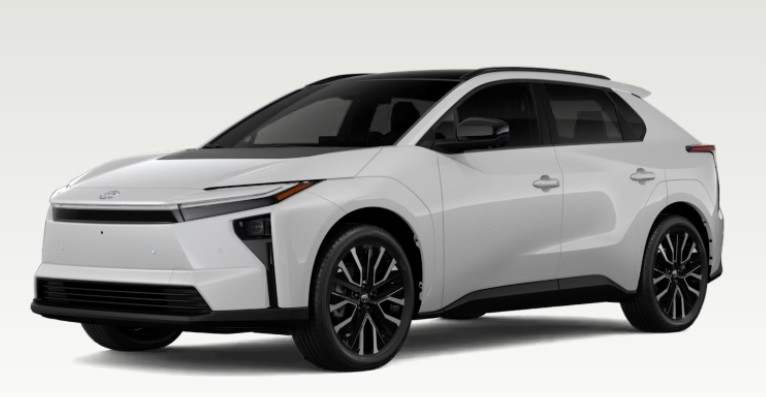
The 2026 Toyota bZ is a battery-electric compact crossover. It was previously called the bZ4X, but Toyota shortened the name to bZ for the 2026 model year. Along with the new name, it received improved range, more power, faster AC charging capability, battery preconditioning, and a North American Charging System port.
The 2026 RAV4 begins an all-new sixth generation. In the United States, the regular RAV4 lineup is now hybrid-only, while a separate RAV4 Plug-in Hybrid provides meaningful electric driving capability combined with a gasoline engine.
Here is the simplest way to understand the matchup:
| Category | 2026 Toyota bZ | 2026 Toyota RAV4 Hybrid |
|---|---|---|
| Power source | Fully electric | Gas-electric hybrid |
| Starting MSRP | $34,900 | $31,900 |
| Maximum output | Up to 338 hp | Up to 236 hp |
| Maximum rated range | Up to 314 electric miles | Hundreds of miles between fuel stops |
| Refueling method | Home or public charging | Gasoline |
| Home charging recommended | Yes | No |
| Best environment | Commuting and local driving | Mixed driving and road trips |
| Driving character | Quiet, quick, smooth | Efficient, familiar, versatile |
| Main limitation | Charging dependence | Still consumes gasoline |
| Main strength | Electric performance | Everyday flexibility |
Toyota lists the 2026 bZ from $34,900 and the 2026 RAV4 Hybrid from $31,900, excluding destination-related charges and possible dealer-added costs.
Understanding the 2026 Toyota bZ
The bZ is Toyota’s mainstream electric crossover. It occupies roughly the same general segment as the RAV4, but its engineering is centered around a large traction battery rather than an internal-combustion engine.
For 2026, Toyota offers two battery capacities: 57.7 kWh and 74.7 kWh. Depending on the trim and drivetrain, estimated range varies from 235 to 314 miles. The longest-range version is the XLE FWD Plus, while all-wheel-drive models sacrifice some efficiency in exchange for stronger performance and better traction.
That range increase matters. Earlier versions of Toyota’s electric crossover sometimes felt as though they entered a marathon wearing hiking boots: capable, but not especially competitive. The 2026 bZ is considerably more convincing.
It is now a realistic daily vehicle for many households rather than an experimental second car.
Toyota bZ Range by Version
Toyota lists the following estimated driving ranges for the 2026 bZ:
- XLE FWD: 235 miles
- XLE FWD Plus: 314 miles
- Limited FWD: 299 miles
- XLE AWD: 288 miles
- Limited AWD: 299 miles
These figures show why trim selection is especially important when buying an EV. Moving from the base XLE FWD to the XLE FWD Plus adds nearly 80 miles of estimated range because the Plus version receives the larger battery.
For most shoppers, the XLE FWD Plus may be the sweet spot. Its 314-mile rating creates more breathing room for freeway travel, cold weather, detours, and days when charging is inconvenient.
Understanding the 2026 Toyota RAV4
The RAV4 has become one of America’s default answers to the question, “Which compact SUV should we buy?” Its appeal comes from practicality rather than drama.
The 2026 redesign modernizes the formula without abandoning it. Toyota divides the lineup into Core, Rugged, and Sport personalities, with trims including LE, SE, XLE Premium, Woodland, XSE, and Limited. The standard hybrid system produces 226 combined horsepower with front-wheel drive or 236 horsepower with all-wheel drive.
Unlike older RAV4 generations, the regular 2026 model no longer makes buyers choose between a basic gasoline engine and a hybrid. Hybrid power is now the standard foundation.
That change strengthens the RAV4’s position against the bZ. Buyers receive strong fuel efficiency and electrified low-speed operation without needing to plug in.
The RAV4 Plug-in Hybrid Changes the Conversation
There is also a third route: the RAV4 Plug-in Hybrid.
Its battery can be charged at home, allowing shorter journeys to be completed partly or entirely on electricity. Once its usable electric charge is depleted, the gasoline engine keeps the vehicle moving like a conventional hybrid.
Prices start at $41,500 for the RAV4 Plug-in Hybrid SE, rising through Woodland, XSE, and GR SPORT versions.
That makes the plug-in RAV4 an appealing bridge between the regular hybrid and the fully electric bZ. However, it is also more expensive, mechanically more complex, and less purely electric than the bZ.
Toyota bZ vs RAV4 Price
At first glance, the RAV4 wins the price comparison.
The 2026 RAV4 Hybrid starts at $31,900, while the bZ begins at $34,900. That creates a base-price difference of approximately $3,000 before destination charges, taxes, registration, options, and dealer adjustments.
However, base prices rarely tell the entire story.
The least expensive bZ uses the smaller 57.7-kWh battery and carries the shortest rated range in the lineup. Buyers who want the 314-mile XLE FWD Plus will need to spend more than the entry price.
Similarly, RAV4 shoppers may move beyond the LE to obtain upgraded seating, larger displays, additional convenience features, sportier styling, or all-wheel drive.
Which One Offers Better Value?
The answer depends on how we define value.
The RAV4 offers better traditional value because it costs less, travels long distances easily, and requires no home-charging installation. It also provides a wider trim selection.
The bZ can offer stronger long-term value for a driver who:
- Has affordable residential electricity
- Can charge overnight
- Drives substantial annual mileage
- Rarely depends on public fast charging
- Plans to keep the vehicle for several years
- Values performance and refinement
An inexpensive EV can become expensive when it is charged mainly at high-priced public fast chargers. Meanwhile, a more expensive EV can become economical when it receives low-cost electricity in a garage every night.
The charging environment matters almost as much as the vehicle itself.
Toyota bZ vs RAV4 Performance
The bZ wins the acceleration contest decisively.
Front-wheel-drive versions produce up to 221 horsepower. All-wheel-drive models produce 338 combined horsepower and can accelerate from zero to 60 mph in a claimed 4.9 seconds.
That is genuine performance-SUV territory.
The RAV4 Hybrid produces 226 horsepower with front-wheel drive and 236 horsepower with all-wheel drive.
Those numbers are perfectly suitable for commuting, merging, and family transportation, but the RAV4 does not deliver the same immediate punch.
Why the bZ Feels Faster Than Its Numbers Suggest
Electric motors generate torque without waiting for an engine to rev or a transmission to find the correct ratio. Press the accelerator and the response arrives almost instantly.
The sensation is like pulling open a curtain rather than cranking up a machine. There is no conventional gear-change rhythm and very little mechanical noise.
The RAV4 Hybrid responds smoothly, but its gasoline engine becomes more noticeable under hard acceleration. It feels energetic rather than explosive.
Performance Winner: Toyota bZ
For straight-line speed, quietness, and effortless passing power, the bZ is the clear winner.
Nevertheless, performance is not only about acceleration. A vehicle that sprints quickly but complicates a long journey may not be the faster tool in real life. On a multi-state road trip, the RAV4’s rapid gasoline refueling may erase the bZ’s advantage before the first lunch stop.
Toyota bZ vs RAV4 Driving Range
This category requires two different definitions of range.
The bZ stores electricity and offers a rated maximum of 314 miles in XLE FWD Plus form. Other versions offer between 235 and 299 miles.
The RAV4 carries gasoline and refuels in minutes. Its total distance between fuel stops depends on trim, tank capacity, speed, weather, terrain, and driving style, but it is designed for easy long-distance travel.
The psychological difference is significant.
With the RAV4, we can drive until the fuel warning appears and then choose from thousands of gas stations. With the bZ, the smarter approach is to plan charging before the battery becomes critically low.
Is 314 Miles Enough?
For everyday life, 314 miles is more than enough for most commuters. Even drivers covering 50 miles per day could theoretically go several days between charges.
Yet an EPA-style range rating is not a promise that every driver will see the same number. Highway speed, freezing temperatures, cabin heating, heavy cargo, elevation changes, tire choice, and driving behavior can reduce real-world range. Toyota itself notes that range and charging time vary with conditions.
A practical EV buyer should therefore think in buffers rather than maximums.
A 314-mile rating does not mean we should routinely plan a 310-mile trip without charging. It means a 200- to 250-mile day may feel comfortable under ordinary conditions, with capacity reserved for uncertainty.
Range Convenience Winner: Toyota RAV4
The bZ provides respectable electric range, but the RAV4 remains easier for unpredictable schedules and long trips.
Toyota bZ vs RAV4 Charging and Refueling
Charging is the dividing line in this comparison.
The bZ uses a North American Charging System port, commonly known as NACS. This expands access to compatible fast-charging infrastructure and makes the vehicle easier to use on major travel corridors. Toyota also added Plug & Charge compatibility on selected charging networks, allowing the vehicle and charger to handle identification and payment more smoothly.
Under ideal conditions, Toyota says the bZ can charge from 10% to 80% in around 30 minutes using DC fast charging.
The RAV4 Hybrid does not need to be plugged in. We simply fill the gasoline tank and continue driving.
Home Charging Makes or Breaks the bZ Experience
The best bZ ownership experience begins with a home charger.
Toyota increased the onboard AC charger to 11 kW for 2026 and includes a dual-voltage charging cable.
With suitable Level 2 charging, an owner can plug in after work and wake up with a replenished battery. This reverses the traditional fueling routine. Instead of visiting a station, the vehicle quietly refuels while we sleep.
Without dependable home or workplace charging, the experience changes. Public chargers may be occupied, broken, slower than expected, or located inconveniently.
In that situation, the RAV4 becomes the safer recommendation.
Who Should Avoid the bZ?
We should think carefully before choosing the bZ when:
- We live in an apartment without dedicated charging
- Nearby charging stations are unreliable
- We regularly tow or carry heavy loads
- We make frequent long-distance trips
- We live in a region with limited fast-charging coverage
- Our schedule does not allow charging delays
- We cannot install a Level 2 charger
The bZ can work without home charging, but it becomes less convenient. It is like owning a washing machine but keeping it at a laundromat across town.
Toyota bZ vs RAV4 Fuel and Energy Costs
Energy costs vary dramatically by location.
Gasoline prices change from week to week and state to state. Electricity rates also differ based on utility company, time-of-use pricing, residential solar generation, and public charging fees.
As a general ownership pattern, the bZ will usually be least expensive to operate when charged at home during off-peak hours. The RAV4 Hybrid will usually be less expensive and more convenient when the EV would depend heavily on commercial fast charging.
A Simple Cost Calculation
We can compare estimated energy costs using this formula:
bZ charging cost
Electricity used × local electricity rate
RAV4 fuel cost
Gallons consumed × local gasoline price
Suppose we drive 1,000 miles per month.
If an EV uses approximately 300 kWh to cover that distance and electricity costs $0.15 per kWh, the energy bill would be about $45.
If a hybrid returns 40 mpg, it would use about 25 gallons to cover the same distance. At $3.50 per gallon, fuel would cost about $87.50.
Those figures are only an illustration, not a universal prediction. Charging losses, driving conditions, local prices, and vehicle efficiency will change the result.
Still, the example reveals why home charging is so powerful. The bZ effectively purchases energy wholesale from the wall, while the RAV4 purchases liquid fuel from a retail station.
Toyota bZ vs RAV4 Interior and Technology
The bZ interior feels more futuristic.
For 2026, it receives a 14-inch Toyota Audio Multimedia touchscreen, a redesigned dashboard, dual front wireless phone chargers, and customizable 64-color ambient lighting.
The cabin is clean and open, helped by the absence of a conventional transmission tunnel and bulky engine-related controls.
The RAV4 takes a more familiar SUV approach. It offers a standard 10.5-inch multimedia display or an available 12.9-inch screen, along with a standard 12.3-inch digital gauge cluster. Wireless Apple CarPlay and Android Auto are included.
Which Cabin Is Easier to Use?
The bZ feels more modern, but some drivers may need time to adjust to its instrument placement and EV-specific information.
The RAV4’s controls and driving interface are likely to feel immediately familiar to anyone coming from a traditional gasoline vehicle.
This produces a split decision:
- Choose the bZ for a more minimalist and technology-focused environment.
- Choose the RAV4 for conventional usability and an easier learning curve.
Toyota bZ vs RAV4 Passenger Comfort
Both models are five-passenger compact crossovers, but they create comfort differently.
The bZ benefits from an electric platform with a relatively flat floor and smooth, nearly silent power delivery. Around town, it can feel more expensive than its badge and price suggest because vibration and engine noise are largely absent.
The RAV4 counters with a practical cabin, useful seat height, and a design built around family use. Depending on grade, buyers can add heated and ventilated front seats, upgraded audio, and other comfort features.
Which Is Better for Families?
For a family that mostly drives locally and can charge at home, the bZ is wonderfully calm. Children can sleep without an engine starting, shifting, and revving beneath them.
For families that travel frequently, attend distant sporting events, or make spontaneous weekend trips, the RAV4 removes more logistical friction.
Comfort is not merely seat softness. It is also the absence of worry.
Toyota bZ vs RAV4 Cargo Practicality
The RAV4 has traditionally been one of the more practical compact SUVs, and the new generation continues to emphasize versatility.
Its upright shape, conventional roofline, and broad lifestyle range make it a natural fit for strollers, grocery runs, camping gear, sports equipment, and luggage.
The bZ also offers useful crossover cargo space, but its sleeker silhouette and electric packaging produce a slightly different shape and feel.
Which One Is Better for Road-Trip Luggage?
The RAV4 is the more natural road-trip companion because it combines usable cargo capacity with rapid refueling.
The bZ can carry luggage comfortably, but extra weight, roof-mounted equipment, cold weather, and high-speed driving may increase electrical consumption.
For local family duty, the difference may be minor. For repeated cross-country travel, the RAV4 is the stronger tool.
Practicality Winner: Toyota RAV4
The bZ is practical enough for most households, but the RAV4’s broader mission gives it the advantage.
Toyota bZ vs RAV4 All-Wheel Drive
Both vehicles offer all-wheel drive, but the systems serve slightly different purposes.
The bZ AWD uses electric motors to provide fast power distribution and strong acceleration. With up to 338 horsepower, it feels planted and remarkably quick.
The RAV4 Hybrid AWD is more focused on predictable traction, daily versatility, and light-adventure capability. The Woodland grade adds a more rugged visual and functional character for shoppers who regularly explore unpaved roads.
Which Is Better in Snow?
Both can be capable winter vehicles when equipped with suitable tires.
Tires matter more than many buyers realize. All-wheel drive helps a vehicle accelerate, but winter tires improve acceleration, braking, and cornering.
The RAV4 has one practical winter advantage: refueling remains fast even during extremely cold weather.
The bZ includes battery preconditioning, a heat pump, heated front seats, and a heated steering wheel to improve cold-weather usability and efficiency.
Even so, electric range generally deserves more conservative planning in winter.
Toyota bZ vs RAV4 Safety Features
The 2026 RAV4 introduces Toyota Safety Sense 4.0 and includes Blind Spot Monitor with Rear Cross-Traffic Alert as standard equipment.
The bZ also includes Toyota’s driver-assistance and active-safety technologies, although exact features may differ by trim.
When comparing individual vehicles at a dealership, we should verify the precise equipment rather than assuming every trim includes every feature.
Useful features to compare include:
- Adaptive cruise control
- Lane-centering assistance
- Automatic emergency braking
- Blind-spot monitoring
- Rear cross-traffic alert
- Parking sensors
- Surround-view camera
- Driver-monitoring systems
- Traffic-sign recognition
Safety technology should support attentive driving, not replace it.
Toyota bZ vs RAV4 Maintenance
The bZ has fewer routine mechanical service items.
There is no engine oil to change, no spark plugs, no exhaust system, and no traditional multi-speed automatic transmission. Routine attention focuses more heavily on tires, brakes, cabin filters, cooling systems, suspension, and general inspections.
The RAV4 Hybrid still contains a gasoline engine and therefore requires engine oil, filters, fluids, and other combustion-related maintenance.
Does the bZ Require No Maintenance?
No. Electric vehicles are lower-maintenance vehicles, not maintenance-free vehicles.
The bZ is relatively heavy and powerful. Frequent hard acceleration can increase tire wear. Its brakes may last longer because regenerative braking helps slow the vehicle, but brake components still require inspection and occasional service.
The RAV4 has more mechanical components, but its maintenance routine is familiar to almost every repair shop and Toyota dealership in the country.
Routine Maintenance Winner: Toyota bZ
The bZ has the simpler powertrain, while the RAV4 has the more familiar service ecosystem.
Toyota bZ vs RAV4 Reliability
Reliability comparisons between an established model and a newly updated EV require caution.
The RAV4 nameplate has a long history and a vast service network. The 2026 model is new, but Toyota has extensive experience with hybrid systems.
The bZ has fewer moving powertrain components, yet battery-electric ownership introduces different long-term questions involving battery health, charging electronics, software, thermal management, and future repair costs.
We should not assume that fewer moving parts automatically guarantee lower total ownership risk. At the same time, we should not assume that EV batteries routinely fail after only a few years.
Which One Is the Safer Long-Term Bet?
For conservative buyers, the RAV4 Hybrid is the safer choice because its technology, fueling model, resale audience, and service pathways are more familiar.
For buyers comfortable with EV technology and able to charge at home, the bZ’s mechanical simplicity is attractive.
A long ownership period may favor the bZ on routine maintenance and energy spending, but resale value and battery-condition perceptions can influence the eventual financial outcome.
Toyota bZ vs RAV4 for Commuting
The bZ is better for the ideal electric commute.
Imagine driving 20 to 60 miles per day, parking in a garage, plugging in each evening, and leaving every morning with a charged battery. In that environment, the bZ is smooth, fast, quiet, and convenient.
There are no gas-station stops, no engine warm-up, and no transmission shifting through traffic.
The RAV4 remains an excellent commuter, especially for drivers without charging. Its hybrid system is efficient in stop-and-go conditions and requires no behavioral adjustment.
Commuting Winner
- With home charging: Toyota bZ
- Without home charging: Toyota RAV4
That distinction may be the most important conclusion in the entire comparison.
Toyota bZ vs RAV4 for Road Trips
The RAV4 wins.
Even though the bZ offers up to 314 miles of rated range and can charge from 10% to 80% in around 30 minutes under ideal conditions, a gasoline stop is still much faster and more widely available.
A bZ road trip requires us to consider:
- Charger locations
- Charger availability
- Charging speed
- Weather
- Elevation
- Arrival battery percentage
- Hotel charging
- Backup charging stations
A RAV4 road trip mainly requires us to watch the fuel gauge.
That does not mean the bZ cannot travel. It means long-distance travel demands more planning.
Road-Trip Winner: Toyota RAV4
For drivers who regularly cover 400 or 500 miles in a day, the RAV4 remains the easier choice.
Toyota bZ vs RAV4 for City Driving
The bZ is wonderfully suited to urban driving.
Its immediate torque makes gaps in traffic easy to use. Regenerative braking can reduce reliance on the brake pedal, while quiet operation creates a more relaxed cabin.
Home or workplace charging can also eliminate trips to crowded urban gas stations.
The RAV4 has its own urban advantages. It is efficient, requires no charging plan, and can be parked by residents who lack private garages.
City Winner
- Home charger available: bZ
- Street parking or shared parking: RAV4
Once again, infrastructure determines the answer.
Toyota bZ vs RAV4 Environmental Considerations
The bZ produces no tailpipe emissions while driving. Its environmental impact depends partly on how the electricity used to charge it is generated, as well as battery production and vehicle manufacturing.
The RAV4 Hybrid burns gasoline but uses its electric motor and battery to reduce fuel consumption compared with a purely gasoline-powered vehicle of similar size.
The cleanest choice will vary by electricity source, annual mileage, vehicle lifespan, and driving behavior.
Still, buyers primarily seeking to eliminate direct gasoline consumption should choose the bZ.
The RAV4 Hybrid represents reduction rather than elimination.
Should You Consider the RAV4 Plug-in Hybrid Instead?
The RAV4 Plug-in Hybrid deserves attention when we want electric commuting without full dependence on public charging.
It starts at $41,500, considerably above both the regular RAV4 Hybrid and base bZ.
Its strengths include:
- Electric driving for shorter journeys
- Gasoline backup for long trips
- No severe range anxiety
- Strong performance
- Familiar RAV4 practicality
Its weaknesses include:
- Higher purchase price
- More mechanical complexity
- Continued gasoline use
- Less electric range than a dedicated EV
- Reduced financial value when rarely charged
A plug-in hybrid makes sense only when we actually plug it in. Otherwise, we are carrying an expensive battery without receiving its full benefit.
Which Toyota bZ Trim Should You Buy?
For many buyers, the XLE FWD Plus appears to be the most compelling bZ configuration because it provides the longest rated range at 314 miles.
The base XLE FWD may suit budget-focused local drivers, but its 235-mile rating creates a large range gap compared with the Plus.
The AWD versions are better for buyers who prioritize acceleration, traction, and performance. With 338 horsepower, they transform the bZ from a quiet commuter into something surprisingly athletic.
The Limited targets buyers seeking more premium features and materials.
Our bZ Trim Recommendations
- Best for value and local use: XLE FWD
- Best overall: XLE FWD Plus
- Best for performance: XLE AWD
- Best for luxury: Limited AWD
- Best for maximum range: XLE FWD Plus
Which Toyota RAV4 Trim Should You Buy?
The RAV4 lineup offers more personalities and a broader price ladder.
Toyota lists the following starting prices for the conventional hybrid versions:
- LE: $31,900
- SE: $34,700
- XLE Premium: $36,100
- Woodland: $39,900
- XSE: $41,300
- Limited: $43,300
These prices exclude Toyota’s listed processing and handling charge.
Our RAV4 Trim Recommendations
- Best budget option: LE
- Best sporty value: SE
- Best comfort-value balance: XLE Premium
- Best for outdoor styling: Woodland
- Best premium sport choice: XSE
- Best luxury-oriented version: Limited
The XLE Premium will likely make sense for a broad range of buyers because it sits between the basic trims and the expensive upper models.
Toyota bZ vs RAV4: Pros and Cons
Toyota bZ Pros
- Fully electric operation
- Up to 314 miles of rated range
- Strong AWD performance
- Quiet and smooth acceleration
- NACS charging port
- Lower routine powertrain maintenance
- Convenient home charging
- Modern 14-inch infotainment display
- No gasoline expenses
Toyota bZ Cons
- Home charging is highly desirable
- Public charging can be inconsistent
- Long trips require more planning
- Real-world range varies with weather and speed
- Base version has only 235 miles of rated range
- Potentially greater resale uncertainty
- Charging takes longer than refueling
Toyota RAV4 Pros
- Lower starting price
- No need for external charging
- Excellent travel flexibility
- Wide trim selection
- Familiar hybrid ownership
- Strong dealer and service network
- Practical family-friendly design
- Available plug-in hybrid alternative
- Quick gasoline refueling
Toyota RAV4 Cons
- Still consumes gasoline
- Slower than the AWD bZ
- Requires engine-related maintenance
- Less quiet under hard acceleration
- Upper trims become expensive
- Does not provide the same pure-EV experience
Who Should Buy the Toyota bZ?
The bZ is the better choice when we:
- Have a garage or dedicated parking space
- Can install Level 2 charging
- Drive predictable daily distances
- Want to stop buying gasoline
- Prefer rapid electric acceleration
- Mostly travel locally or regionally
- Are comfortable planning longer journeys
- Value a quiet and futuristic driving experience
The strongest bZ buyer is not necessarily an environmental activist or technology enthusiast. It may simply be a suburban commuter who drives 40 miles per day and wants to plug in at night instead of visiting gas stations.
Who Should Buy the Toyota RAV4?
The RAV4 is the better choice when we:
- Cannot charge at home
- Frequently drive long distances
- Want the lowest initial price
- Need maximum schedule flexibility
- Live in an apartment or condominium
- Take spontaneous trips
- Prefer familiar hybrid technology
- Want a wider variety of trims
- Expect the vehicle to serve as the household’s only car
The RAV4 is the safe recommendation because it asks for very little compromise.
It does not require us to study charging networks, change our travel habits, or install equipment at home. We can simply drive it.
Toyota bZ vs RAV4: Which Is Cheaper to Own?
The RAV4 will often be cheaper to purchase.
The bZ may be cheaper to power and maintain, especially when charged at home using affordable electricity.
Ownership cost depends on:
- Purchase price
- Financing incentives
- Insurance
- Electricity prices
- Gasoline prices
- Annual mileage
- Home-charger installation
- Public-charging use
- Tire replacement
- Maintenance
- Depreciation
- Resale value
Toyota may also offer model-specific financing or lease incentives, but promotions can vary by location and date. Buyers should compare the full transaction rather than the advertised monthly payment.
A heavily discounted bZ lease could be more affordable than a highly demanded RAV4. Conversely, a RAV4 purchased near MSRP may provide better long-term resale confidence.
Toyota bZ vs RAV4 Decision Checklist
Before choosing, ask these questions:
- Can we charge at home?
- How many miles do we drive each day?
- How often do we travel more than 250 miles?
- Will this be our only vehicle?
- Do we live in a cold climate?
- Are reliable fast chargers available nearby?
- Do we prioritize acceleration or flexibility?
- How long do we plan to keep the vehicle?
- What are our local gasoline and electricity rates?
- Are current incentives available on either model?
A buyer who answers yes to home charging and rarely travels long distances should lean toward the bZ.
A buyer who cannot charge at home or frequently takes long trips should lean toward the RAV4.
Final Verdict: Toyota bZ or RAV4?
The 2026 Toyota RAV4 is the better buying choice for most Americans.
It costs less at the entry level, requires no charging infrastructure, offers numerous trims, and handles long-distance travel without special planning. It is the multi-tool of this comparison: efficient, practical, familiar, and ready for almost any situation.
The Toyota bZ is the more exciting choice for the right household.
It is faster, quieter, mechanically simpler, and potentially cheaper to operate. Its improved 314-mile maximum range and NACS charging port make the 2026 model far more competitive than its predecessor.
Our final recommendation is straightforward:
- Buy the Toyota bZ when you have dependable home charging and most of your driving is local or predictable.
- Buy the Toyota RAV4 Hybrid when you need one SUV to commute, travel, explore, and adapt without charging concerns.
- Consider the RAV4 Plug-in Hybrid when you want electric commuting but still need gasoline-powered road-trip freedom.
The bZ is the better electric vehicle. The RAV4 is the better universal vehicle.
And that distinction should guide the purchase.
Frequently Asked Questions
1. Is the Toyota bZ bigger than the RAV4?
The Toyota bZ and RAV4 compete in the compact crossover category, but their exterior dimensions, rooflines, and interior packaging differ. The bZ has a lower, more aerodynamic electric-crossover shape, while the RAV4 has a more upright and traditional SUV profile. Buyers should sit in both because perceived space can matter more than measurements alone.
2. Is the Toyota bZ cheaper to drive than the RAV4?
It can be. The bZ is likely to cost less per mile when charged at home with reasonably priced electricity. However, frequent use of public fast chargers can reduce or eliminate that advantage. The RAV4’s fuel cost depends on local gasoline prices and driving efficiency.
3. Can the Toyota bZ be used for road trips?
Yes. The 2026 bZ offers up to 314 miles of rated range, a NACS charging port, battery preconditioning, and estimated 10%-to-80% fast charging in around 30 minutes under ideal conditions. Still, road trips require more planning than they do in a RAV4 Hybrid.
4. Is the Toyota bZ faster than the RAV4?
Yes, particularly in all-wheel-drive form. The bZ AWD produces up to 338 horsepower and can reach 60 mph in a claimed 4.9 seconds. The regular 2026 RAV4 Hybrid produces up to 236 combined horsepower with all-wheel drive.
5. Should we buy a bZ without a home charger?
It is possible, but generally not ideal. The bZ is easiest and most economical to own when it can charge overnight at home or regularly at work. Without dependable charging, the RAV4 Hybrid is usually the more convenient buying choice.
If you want to see other articles similar to Toyota bZ vs RAV4: Which SUV Should You Buy? you can visit the Compare category.
Ford Bronco Pros and Cons: Complete Buyer’s Guide
2026 Ford Bronco Towing: Capacity, Equipment, and Real-World Limits
Ford Bronco Gas Tank Size: 2026 U.S. Guide
2026 Ford Bronco Big Bend vs Outer Banks: Features and Differences Explained
2026 Ford Bronco Trim Levels in Order: Complete U.S. Guide
Ford Bronco Models Explained for U.S. Buyers
Leave a Reply
Related Topics