
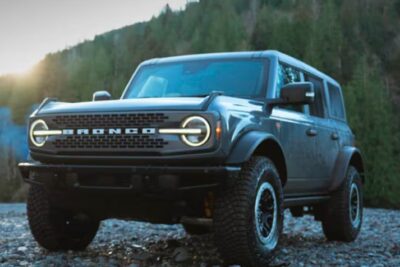
Ford Bronco Models Explained for U.S. Buyers

Contents in this publication
- Ford Bronco Lineup at a Glance
- Bronco Versus Bronco Sport: They Are Not the Same SUV
- What Every Ford Bronco Has in Common
- Ford Bronco Base Explained
- Ford Bronco Big Bend Explained
- Ford Bronco Outer Banks Explained
- Ford Bronco Badlands Explained
- Ford Bronco Heritage Edition Explained
- Ford Bronco Stroppe Edition Explained
- Ford Bronco Raptor Explained
- Ford Bronco Engine Options Explained
- Two-Door Versus Four-Door Bronco
- Sasquatch Package Explained
- Which Ford Bronco Model Is Best for Daily Driving?
- Which Bronco Is Best for Off-Roading?
- Which Bronco Offers the Best Value?
- How to Choose the Right Ford Bronco
- Final Thoughts on Ford Bronco Models in the U.S.
- Frequently Asked Questions
Shopping for a Ford Bronco should feel exciting. Yet the moment we examine the lineup, the names begin piling up like gear in an overpacked cargo area: Base, Big Bend, Outer Banks, Badlands, Heritage Edition, Stroppe Edition, Raptor, Sasquatch, Black Diamond, Wildtrak, and more.
Which names describe actual models? Which ones are optional packages? And which Bronco makes sense for commuting, camping, rock crawling, or simply enjoying the open-air design?
This guide breaks down the Ford Bronco models explained for U.S. buyers, focusing on the current 2026 lineup. Ford offers seven core Bronco models: Base, Big Bend, Outer Banks, Badlands, Heritage Edition, Stroppe Edition, and Raptor. Several familiar names, including Wildtrak and Black Diamond, now refer to packages rather than separate trims.
We will compare their personalities, equipment, body styles, engines, off-road abilities, comfort levels, and ideal buyers. Think of the Bronco family as a set of hiking boots. Every version can leave the pavement, but some are built for an easy woodland path while others are ready to climb a rocky mountain face.
Ford Bronco Lineup at a Glance
The 2026 Ford Bronco lineup progresses from a relatively simple, customizable off-roader to a wide-body desert-running performance SUV.
| Bronco model | Starting price* | Body styles | Best suited to |
|---|---|---|---|
| Base | $40,795 | Two-door or four-door | Budget-focused buyers and custom builds |
| Big Bend | $41,790 | Four-door | Everyday driving and weekend adventures |
| Outer Banks | $48,685 | Four-door | Comfort, appearance and moderate trails |
| Badlands | $49,385 | Two-door or four-door | Technical off-roading |
| Heritage Edition | $52,120 | Four-door | Retro styling with serious capability |
| Stroppe Edition | $69,995 | Four-door | Baja-inspired performance and exclusivity |
| Raptor | $80,990 | Four-door | High-speed off-road performance |
*Ford’s listed starting prices can change, and destination charges, dealer pricing, taxes and options may add considerably to the final figure. The prices above reflect Ford’s U.S. 2026 build-and-price page at the time of writing.
Notice something important? Price does not tell the entire story. The Outer Banks costs only slightly less than the Badlands, but the two models serve very different owners. One puts more attention on polished road manners and upscale presentation; the other arrives with hardware intended for rough, technical terrain.
Bronco Versus Bronco Sport: They Are Not the Same SUV
Before discussing individual Ford Bronco models, we need to clear up the most common source of confusion.
The Ford Bronco is a body-on-frame midsize 4x4 with removable doors and roof panels. The Bronco Sport is a smaller unibody crossover that shares more of its basic architecture and everyday character with conventional compact SUVs.
Both can handle outdoor adventures, but they approach the task differently.
The full-size Bronco is the one to choose when we want:
- A two-door option
- Removable doors and roof sections
- Greater modification potential
- Low-range four-wheel drive
- More demanding off-road capability
- Available 35- or 37-inch tires
- A more rugged, truck-like driving experience
The Bronco Sport is easier to park, generally more economical and better suited to buyers who mainly drive on pavement but want useful all-weather capability. Its current range also uses different trim names and smaller engines.
Throughout this guide, “Bronco” refers to the body-on-frame SUV rather than the Bronco Sport.
What Every Ford Bronco Has in Common
Although the models vary dramatically, every current Bronco begins with a strong shared foundation.
Ford describes the Bronco as a midsize two- or four-door 4x4 built around a high-strength steel frame. Its doors and roof sections can be removed, and four-wheel drive is standard rather than optional.
The basic ingredients include:
- Standard four-wheel drive
- A removable roof
- Frameless removable doors
- Front-fender trail sights and tie-down points
- A Terrain Management System with G.O.A.T. Modes
- A squared-off body that makes the vehicle easier to place on trails
- Extensive factory and aftermarket accessory support
- A choice of two-door or four-door configurations on selected models
Even the least expensive Bronco is not merely a road-going SUV wearing chunky styling. It starts with genuine off-road architecture.
Understanding G.O.A.T. Modes
G.O.A.T. stands for “Goes Over Any Type of Terrain.” The system changes settings such as throttle response, transmission behavior, steering feel and four-wheel-drive operation according to the selected mode.
Base, Big Bend, Outer Banks and Heritage Edition models receive five modes: Normal, Eco, Sport, Slippery and Sand. Badlands, Stroppe Edition and Raptor models add Off-Road, Rock Crawl and Baja functionality, bringing the available total to seven modes.
The system does not perform magic. Tires, ground clearance, driver judgment and mechanical equipment still matter. Nevertheless, G.O.A.T. Modes simplify the process of preparing the vehicle for changing conditions.
Ford Bronco Base Explained
The Bronco Base is the clean canvas of the range. It avoids unnecessary decoration and gives buyers the fundamental Bronco experience at the lowest advertised starting price.
Ford offers the 2026 Base as either a two-door or four-door model, making it one of the few choices for shoppers who want the short-wheelbase body. It starts at $40,795 according to Ford’s U.S. configurator.
Why the Base Model Is More Interesting Than It Sounds
“Base” often means stripped down, compromised and destined for rental fleets. That description does not quite fit the Bronco.
It still gives us four-wheel drive, removable body sections, trail-oriented styling and access to important option packages. For some buyers, fewer luxury features are actually beneficial. There is less expensive trim to scratch, fewer additions to pay for and more room in the budget for tires, recovery gear or suspension upgrades.
The Base rides on standard 30-inch all-season tires with 16-inch steel wheels. It is the simplest factory configuration in the family, although the Sasquatch Package can transform it into a far more serious trail machine with 35-inch tires and upgraded off-road hardware.
Who Should Buy a Bronco Base?
The Base is a strong match for:
- Buyers who want the least expensive new Bronco
- Enthusiasts planning a personalized build
- Drivers who prefer the two-door body
- Owners who do not need an upscale interior
- Weekend adventurers who want capability without paying for decorative extras
It may be less suitable for someone seeking a luxurious commuter straight from the dealership. By the time we add multiple convenience packages, the price can move close to better-equipped models.
Our View of the Bronco Base
The Base makes the most sense when we appreciate simplicity or have a specific modification plan. It is like buying an empty workshop rather than one filled with tools chosen by someone else.
Ford Bronco Big Bend Explained
The Big Bend sits just above the Base and serves as the practical center of the Bronco lineup. For 2026, Ford lists it as a four-door model starting at $41,790.
Its mission is straightforward: make the Bronco easier to live with without turning it into an expensive specialty vehicle.
What Makes Big Bend Different?
Big Bend adds visual and convenience improvements while retaining a fairly approachable price. It uses 17-inch Carbonized Gray-painted aluminum wheels and standard 32-inch all-terrain tires, giving it a tougher stance and better loose-surface traction than the Base configuration.
Depending on selected equipment, buyers can add useful features such as heated seats, remote start and additional onboard electrical capability. Ford also uses Big Bend as the foundation for several appearance and capability packages.
Big Bend as an Everyday Bronco
This is arguably the easiest model to recommend to someone who likes the Bronco’s design but is not planning to crawl across giant boulders every weekend.
It offers enough trail ability for:
- Dirt roads
- Snowy commutes
- Forest-service roads
- Camping routes
- Sandy access tracks
- Moderate recreational trails
At the same time, its standard tires and suspension are not as aggressive as those fitted to specialized versions. That usually means less road noise, easier entry and a more manageable character around town.
Available Black Diamond Package
Black Diamond used to be recognized as a standalone Bronco trim, but for 2026 Ford lists it among the optional packages. It can add more rugged equipment, including underbody protection, washout flooring and off-road-oriented hardware, depending on the exact configuration.
This structure makes Big Bend unusually flexible. We can keep it simple for daily use or make it tougher without jumping directly to Badlands pricing.
Who Should Buy Big Bend?
Big Bend is best for buyers who want a useful four-door Bronco for commuting, family life and occasional off-road trips. It is the sensible hiking boot of the lineup: comfortable enough for ordinary use but ready when the pavement disappears.
Ford Bronco Outer Banks Explained
Outer Banks is the style- and comfort-focused member of the family. Ford positions it as a four-door model, and its 2026 starting price is listed at $48,685.
Do not mistake “comfort-focused” for incapable. Outer Banks remains a proper Bronco with standard four-wheel drive and removable body panels. It simply places greater emphasis on presentation, technology and everyday refinement.
What Does Outer Banks Add?
The Outer Banks stands out with larger 18-inch machined aluminum wheels and 32-inch all-terrain tires. It also commonly provides access to higher-end interior equipment and appearance choices.
Side steps are standard, making entry easier for passengers. That matters more than it might seem. A tall off-road SUV can become tiring when children, older relatives or shorter adults climb in and out several times a day.
Outer Banks Versus Big Bend
The decision between these two models comes down to priorities.
Choose Big Bend when we prefer:
- A lower starting price
- A simpler cabin
- More money left for functional accessories
- A practical adventure vehicle
Choose Outer Banks when we prefer:
- A more polished appearance
- Greater access to premium features
- Standard running boards
- A more upscale daily-driving experience
Outer Banks is the Bronco that can arrive muddy at a campsite on Saturday and still look appropriate outside a nice restaurant on Sunday.
The 60th Anniversary Package
For 2026, Ford offers a special 60th Anniversary Package based on the Outer Banks. It can be configured with the 2.3-liter four-cylinder or the available 2.7-liter V6, but it is paired with the Sasquatch Package.
The anniversary treatment adds heritage-inspired styling, unique wheels, red exterior accents, special badging and upgraded interior materials. The Sasquatch hardware brings 35-inch tires, advanced four-wheel drive, electronic-locking front and rear differentials and a high-clearance suspension.
This creates an interesting combination: the comfort orientation of Outer Banks, the visual drama of a commemorative model and the mechanical capability of Sasquatch.
Who Should Buy Outer Banks?
Outer Banks works best for buyers who will spend most of their time on pavement but still want genuine Bronco character. It is also the natural choice when interior comfort and curb appeal matter as much as trail equipment.
Ford Bronco Badlands Explained
Badlands is where the lineup becomes seriously focused on technical off-roading.
Ford sells the 2026 Badlands in both two-door and four-door forms, with a listed starting price of $49,385. Ford itself describes the model as intended for extreme off-roading.
Why Badlands Is the Trail Specialist
The standard Badlands configuration uses 33-inch tires and position-sensitive Bilstein off-road shock absorbers. It also includes features designed to protect the vehicle and improve wheel articulation, including steel bash plates, rock rails, washout-capable flooring and a stabilizer-bar disconnect system.
The stabilizer-bar disconnect is especially valuable on uneven trails. Disconnecting the front bar allows the wheels to move more independently, helping them remain in contact with the ground as one side climbs and the other drops.
In plain English, Badlands can twist its suspension over obstacles with more freedom. It behaves less like a rigid table and more like a sure-footed animal adjusting each leg to the terrain.
Badlands G.O.A.T. Modes
Badlands includes the more extensive seven-mode system:
- Normal
- Eco
- Sport
- Slippery
- Off-Road
- Rock Crawl
- Baja
These settings underline its role as the model for owners who genuinely intend to use the Bronco’s mechanical ability.
Badlands With the Sasquatch Package
The regular Badlands is already capable, but Sasquatch raises the ceiling. The package brings 35-inch tires, greater clearance, locking differentials and additional trail-focused equipment.
This combination is one of the most balanced high-capability Broncos. It can tackle demanding terrain without reaching the Raptor’s price, width or specialized high-speed setup.
The Returning Wildtrak Package
Wildtrak is no longer one of the seven standalone 2026 Bronco models. Instead, Ford brings the name back as a package available exclusively on the four-door Badlands.
The Wildtrak Package bundles the 330-horsepower 2.7-liter EcoBoost V6, 10-speed automatic transmission, Sasquatch Package, HOSS 3.0 suspension with FOX internal-bypass dampers and a Black Appearance Package.
That recipe gives Badlands a stronger desert-running flavor while maintaining its broad technical-trail capability.
Who Should Buy Badlands?
Badlands is ideal for:
- Regular trail users
- Rock-crawling enthusiasts
- Drivers who value factory underbody protection
- Buyers who want a manual-friendly or two-door performance-oriented build
- Owners seeking serious capability below Raptor pricing
For many enthusiasts, Badlands is the sweet spot. It offers the hardware we actually need without forcing us into the most extreme vehicle in the showroom.
Ford Bronco Heritage Edition Explained
The Heritage Edition wraps modern Bronco capability in styling inspired by the original model. It is offered as a four-door vehicle and starts at $52,120 for 2026.
This is not merely an Outer Banks with white paint and nostalgic badges. It arrives with meaningful capability underneath its retro design.
What Gives the Heritage Edition Its Character?
The Heritage Edition uses distinctive 17-inch Oxford White “dog dish-style” aluminum wheels and 35-inch rugged-terrain tires. It also includes steel bash plates, standard side steps and the Sasquatch-oriented stance many buyers associate with highly modified Broncos.
Its visual theme recalls the early Bronco through contrasting roof treatments, classic-looking wheels and deliberately old-school color combinations.
Heritage Edition Versus 60th Anniversary Package
These two choices may look similar at first, but their intentions differ.
The Heritage Edition is a full model in the regular lineup. It combines throwback styling with standard 35-inch-tire capability.
The 60th Anniversary Package is an option based on Outer Banks. It adds special commemorative details, red accents and a premium cabin while relying on the required Sasquatch Package for its off-road stance.
The Heritage Edition feels more like a continuing retro-themed Bronco. The 60th Anniversary version feels like a specific celebration of the nameplate’s history.
Who Should Buy the Heritage Edition?
It suits buyers who love classic Bronco design but do not want to sacrifice modern trail ability. It also makes sense when we want a distinctive factory appearance without assembling a long list of options ourselves.
Ford Bronco Stroppe Edition Explained
The Stroppe Edition is one of the most specialized members of the lineup. It starts at $69,995 and is offered exclusively as a four-door model.
Its name honors Bill Stroppe and the Bronco’s historic connection with desert racing, particularly the Baja 1000. In spirit, this model sits between the technical versatility of a Badlands and the wild high-speed capability of a Raptor.
What Makes the Stroppe Edition Special?
The Stroppe Edition uses 35-inch tires, FOX internal-bypass suspension, steel underbody protection, washout flooring and a heavy-duty modular front bumper. Ford gives it the complete seven-mode G.O.A.T. system, including Baja and Rock Crawl settings.
It is therefore not just a cosmetic tribute. The equipment supports the desert-racing theme.
The four-door-only body makes it more practical than the competition-inspired Broncos of old, but the bright graphics and historic references will not appeal to someone seeking subtle transportation.
Stroppe Edition Versus Badlands Wildtrak
These two configurations overlap considerably.
The Badlands Wildtrak Package combines the V6, Sasquatch equipment, HOSS 3.0 FOX suspension and blacked-out styling. The Stroppe Edition also focuses on desert-oriented performance but adds a more exclusive identity, historic branding and distinctive visual presentation.
Choose Wildtrak when the hardware matters more than heritage. Choose Stroppe when we want performance equipment wrapped in a collectible-looking factory theme.
Who Should Buy the Stroppe Edition?
This model targets Bronco enthusiasts, Baja-history fans and buyers willing to pay for rarity and character. It is harder to justify purely through equipment value, but emotional vehicles are not purchased with spreadsheets alone.
Ford Bronco Raptor Explained
Bronco Raptor sits at the summit. It is the fastest, widest, most powerful and most expensive regular Bronco model.
Ford lists the 2026 Raptor at $80,990, available only as a four-door.
Raptor Is More Than a Loaded Bronco
A common mistake is to think of Raptor as a Badlands with a powerful engine. The differences run much deeper.
Bronco Raptor uses:
- A 3.0-liter EcoBoost V6
- 37-inch all-terrain tires
- FOX 3.1 internal-bypass semi-active dampers
- Reinforced steering components
- Wider axles and bodywork
- A strengthened suspension
- Upgraded brakes
- Standard heavy-duty off-road protection
- A maximum towing capacity of 4,500 pounds
Other properly equipped Bronco models generally top out at 3,500 pounds of conventional towing capacity.
The Raptor’s track width is dramatically broader than that of ordinary models, and its specialized suspension is designed to control hard impacts at speeds that would overwhelm a conventional trail SUV.
Where Bronco Raptor Excels
Raptor thrives in environments with space:
- Desert tracks
- High-speed dirt roads
- Dunes
- Wide rocky routes
- Open recreational areas
- Rough terrain where suspension travel matters
It can crawl, but sheer width may work against it on tight woodland trails. The broad body that brings stability in the desert can feel like carrying a sofa through a narrow hallway.
The Cost of Raptor Capability
Beyond the purchase price, we should consider:
- More expensive 37-inch replacement tires
- Higher fuel consumption
- Increased difficulty in parking
- A tall step-in height
- Costlier suspension components
- Greater width on narrow roads and trails
Raptor is magnificent when its talents match our lifestyle. When they do not, it can become an expensive solution to a problem we never had.
Who Should Buy Bronco Raptor?
Raptor is for drivers who want maximum factory performance, have room to use it and accept the running costs. It is not automatically the “best” Bronco. It is simply the most extreme.
Ford Bronco Engine Options Explained
The Bronco family uses three turbocharged EcoBoost engines, although availability depends on model and configuration.
2.3-Liter EcoBoost Four-Cylinder
The 2.3-liter engine is the standard choice across much of the range. It offers a useful blend of torque, affordability and manageable running costs.
For many owners, it is all the engine they need. A Bronco is not light, but the turbocharged four-cylinder provides enough low-end response for commuting, trail work and highway travel.
It is also the engine associated with the available seven-speed manual transmission on compatible configurations. The manual includes a crawler gear, giving low-speed trail users extra control.
2.7-Liter EcoBoost V6
The available 2.7-liter V6 provides stronger acceleration and a more effortless feeling when climbing grades, carrying accessories or turning larger tires.
Ford pairs the 330-horsepower version with the 10-speed automatic in the 2026 Wildtrak Package. The engine is also available on selected Outer Banks, Badlands and Heritage configurations.
It is the sensible performance upgrade for someone who wants more power but does not need a Raptor.
3.0-Liter EcoBoost V6
The 3.0-liter engine belongs to Bronco Raptor. It works with the vehicle’s strengthened drivetrain, upgraded cooling and performance suspension.
We should not evaluate it only by horsepower. The entire Raptor platform is engineered around sustained rough-terrain performance rather than simply quick acceleration at a traffic light.
Two-Door Versus Four-Door Bronco
Body style can influence the ownership experience as much as trim level.
For 2026, the Base and Badlands are offered in both two-door and four-door forms. The remaining core models are shown as four-door-only choices in Ford’s U.S. configurator.
Advantages of the Two-Door Bronco
The two-door has a 100.4-inch wheelbase compared with 116.1 inches for most four-door versions. It also seats four rather than five.
Its advantages include:
- Better breakover behavior on uneven terrain
- Easier maneuvering on tight trails
- Classic Bronco proportions
- Less overall length
- A more playful personality
Its disadvantages are equally clear: tighter rear-seat access, less cargo room and reduced convenience for families.
Advantages of the Four-Door Bronco
The four-door model gives us:
- Seating for five
- Easier rear-seat access
- More cargo flexibility
- Better practicality for road trips
- A larger fuel tank
- Greater availability across the trim range
Ford lists a 16.9-gallon fuel tank for two-door versions and a 20.8-gallon tank for four-door models.
For most American households, the four-door is the practical answer. The two-door is the emotional answer—and sometimes emotion is exactly why we are shopping for a Bronco.
Sasquatch Package Explained
Few Bronco terms generate more interest than “Sasquatch.”
Sasquatch is not a trim level. It is an off-road package available on several models. Its major ingredients include 35-inch tires, beadlock-capable wheels, increased ground clearance, advanced four-wheel drive and electronic-locking front and rear differentials. Exact content can vary with the model year and base configuration.
Do We Actually Need Sasquatch?
Sasquatch is worthwhile when we:
- Regularly encounter deep ruts, mud or loose sand
- Need locking differentials
- Want 35-inch tires under factory warranty
- Prefer the wide, aggressive Bronco stance
- Plan to modify the vehicle similarly anyway
It may be unnecessary when we mainly commute, tour national parks or use maintained dirt roads.
The package can increase road noise, step-in height, tire cost and fuel use. Those compromises are small for active trail drivers but difficult to justify when the toughest obstacle is a shopping-center speed bump.
Which Ford Bronco Model Is Best for Daily Driving?
For ordinary commuting, the Big Bend and Outer Banks deserve the closest look.
Big Bend offers the more approachable entry point. Its 32-inch tires, useful equipment and four-door layout provide plenty of Bronco personality without pushing too far into specialty territory.
Outer Banks is preferable when cabin amenities, appearance and convenience take priority. Its standard side steps and access to premium equipment make daily life easier.
Raptor may look spectacular, but its width, tire expense and fuel appetite make it harder to recommend as a purely urban vehicle.
Which Bronco Is Best for Off-Roading?
There is no single answer because “off-roading” can mean different things.
For occasional trails, Big Bend is enough.
For demanding technical routes and rock crawling, Badlands offers the most balanced factory setup.
For high-speed desert terrain, Stroppe Edition, Badlands with Wildtrak, and especially Raptor become more appropriate.
For a capable retro-themed build, Heritage Edition combines 35-inch tires with distinctive styling.
The smartest choice is not the model with the most impressive specification sheet. It is the one designed for the terrain we genuinely visit.
Which Bronco Offers the Best Value?
The Base has the lowest price, but Big Bend may offer the broadest value for typical buyers. Its price begins less than $1,000 above the Base according to Ford’s 2026 configurator, while its four-door practicality, larger wheels and greater convenience can make it feel more complete.
For serious off-road users, Badlands may be the value champion. Its factory suspension, protection, trail modes and disconnecting stabilizer bar could cost far more to replicate properly through aftermarket modifications.
Value changes according to use. Paying for rock rails makes sense when rocks are part of our weekends. Paying for them to decorate a school-run vehicle does not.
How to Choose the Right Ford Bronco
Before selecting a model, answer five honest questions.
1. How Often Will We Drive Off-Road?
“Someday” should not justify thousands of dollars in hardware. Choose according to realistic use.
2. Do We Need Four Doors?
Families and frequent passengers usually do. Solo drivers and couples may enjoy the shorter two-door.
3. How Much Comfort Do We Expect?
Outer Banks emphasizes refinement. Base emphasizes simplicity. Badlands and Raptor prioritize equipment that may add noise, height and firmness.
4. Are We Buying Capability or Appearance?
There is nothing wrong with wanting the Sasquatch look. We should simply understand the costs that accompany larger tires and specialized equipment.
5. Will We Modify the Bronco?
A Base or Big Bend can be a strong starting point for a custom build. A Badlands may save money when we already know that lockers, protection and advanced suspension are required.
Final Thoughts on Ford Bronco Models in the U.S.
The Ford Bronco lineup is easier to understand once we stop viewing it as a simple ladder from “worst” to “best.”
Each model follows a different path.
The Base is an affordable blank canvas. Big Bend is the practical all-rounder. Outer Banks blends rugged character with comfort. Badlands specializes in technical trails. Heritage Edition combines nostalgia with 35-inch-tire capability. Stroppe Edition celebrates Baja history through specialized hardware and bold design. Raptor turns the Bronco into a wide, high-speed off-road performance machine.
Packages complicate the picture, but they also give us flexibility. Black Diamond can make a Big Bend tougher. Sasquatch can transform several models. Wildtrak can give a four-door Badlands more power and desert-oriented suspension. The 60th Anniversary Package can turn Outer Banks into a commemorative retro build.
The best Bronco is not necessarily the one sitting highest in the price list. It is the model whose talents match our roads, trails, passengers and budget. Buy too little and we may wish for more capability. Buy too much and we may spend years carrying heavy-duty equipment that never leaves the pavement.
The sweet spot lies where ambition meets reality—and fortunately, the Bronco range gives us plenty of ways to find it.
Frequently Asked Questions
1. What are the Ford Bronco models in order for 2026?
The seven U.S. models are Base, Big Bend, Outer Banks, Badlands, Heritage Edition, Stroppe Edition and Raptor. Their prices do not rise in exactly the same order as their off-road ability because some emphasize comfort, styling or historical themes rather than pure capability.
2. Is Wildtrak still a Ford Bronco model?
Wildtrak is not a standalone model in the 2026 U.S. lineup. It returns as an optional package available exclusively on the four-door Badlands. The package includes the 2.7-liter V6, 10-speed automatic, Sasquatch hardware, HOSS 3.0 FOX suspension and blacked-out appearance features.
3. Which Ford Bronco model has the smoothest daily-driving character?
Outer Banks is generally the most natural choice for buyers prioritizing everyday comfort, convenience and upscale styling. Big Bend is also a strong daily driver for owners who prefer a lower price and simpler equipment.
4. Is Badlands better than Bronco Raptor?
Badlands can be better on narrow or highly technical trails because it is smaller, less expensive and available as a two-door. Raptor is superior for high-speed rough-terrain driving, wider desert routes, large impacts and maximum factory performance. “Better” depends on where we drive.
5. Does every Ford Bronco come with four-wheel drive?
Yes. The full-size Bronco uses a front-engine, four-wheel-drive layout across the range. Buyers should not confuse it with the smaller Bronco Sport, which uses different architecture, engines and model choices.
If you want to see other articles similar to Ford Bronco Models Explained for U.S. Buyers you can visit the Compare category.
Ford Bronco Pros and Cons: Complete Buyer’s Guide
2026 Ford Bronco Towing: Capacity, Equipment, and Real-World Limits
Ford Bronco Gas Tank Size: 2026 U.S. Guide
2026 Ford Bronco Big Bend vs Outer Banks: Features and Differences Explained
2026 Ford Bronco Trim Levels in Order: Complete U.S. Guide
Ford Bronco Cargo Space: Dimensions, Capacity, and Practicality Explained
Leave a Reply
Related Topics