

Toyota bZ vs bZ4X: Performance and Range Compared

Contents in this publication
- Toyota bZ vs bZ4X: Quick Explanation
- Toyota bZ vs bZ4X Specifications at a Glance
- Is the Toyota bZ Merely a Renamed bZ4X?
- Toyota bZ vs bZ4X Performance
- Toyota bZ vs bZ4X Acceleration
- Toyota bZ vs bZ4X Driving Range
- Range Is Not the Same Across Every bZ
- Real-World Range Considerations
- Battery Capacity Comparison
- Toyota bZ vs bZ4X Charging Ports
- DC Fast-Charging Performance
- Battery Preconditioning Gives the bZ an Advantage
- Home Charging: 11 kW vs 7 kW
- Regenerative Braking Differences
- FWD or AWD: Which Is Better for Range?
- Ride and Handling
- Interior and Technology Changes
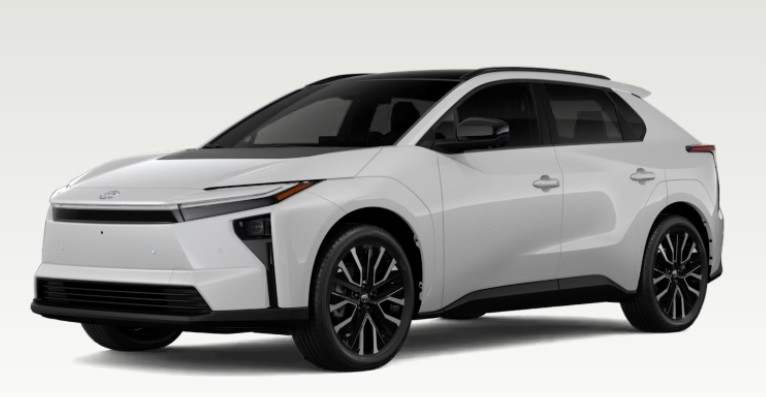
- Exterior Styling: Evolution Rather Than Reinvention
- Toyota bZ vs bZ4X Pricing
- Which One Is Better for Road Trips?
- Which One Is Better for Commuting?
- Which Toyota EV Should Performance Buyers Choose?
- Should Existing bZ4X Owners Upgrade?
- Toyota bZ vs bZ4X Reliability Expectations
- Advantages of the 2026 Toyota bZ
- Advantages of the 2025 Toyota bZ4X
- Potential Drawbacks of the Toyota bZ
- Potential Drawbacks of the bZ4X
- Toyota bZ vs bZ4X: Which One Should You Buy?
- Final Verdict
- Frequently Asked Questions
The Toyota bZ vs bZ4X comparison may initially sound like a battle between two separate electric SUVs. In the United States, however, the story is more interesting—and much simpler.
The Toyota bZ is essentially the substantially upgraded successor to the bZ4X. Toyota dropped the “4X” portion of the name for the 2026 model year, but this is more than a cosmetic rebranding exercise. The newer bZ receives larger available batteries, significantly greater horsepower, longer driving range, quicker acceleration, improved home charging, battery preconditioning, and a built-in North American Charging System port.
Think of the bZ4X as Toyota’s opening act in the modern electric SUV market. The bZ is the same performer returning to the stage with better equipment, stronger vocals, and considerably more confidence.
For American buyers, the central question is not merely whether the name is shorter. It is whether the 2026 Toyota bZ improves enough upon the 2025 bZ4X to justify choosing the newer vehicle.
For most buyers—particularly those concerned about performance, range, or public charging—the answer is yes.
Toyota bZ vs bZ4X: Quick Explanation
Before comparing specifications, we should clear up the naming confusion.
The bZ4X was Toyota’s compact battery-electric crossover for model years 2023 through 2025 in the United States. For 2026, Toyota renamed the updated vehicle simply bZ. Toyota officially describes the change as a way to simplify the model’s name for customers.
Therefore:
- Toyota bZ4X: The earlier version sold through the 2025 model year
- Toyota bZ: The refreshed and substantially improved 2026 version
- Relationship: Successive versions of the same basic electric crossover
- Biggest changes: Range, output, acceleration, batteries, charging and interior technology
This distinction matters when shopping because dealers may offer a new 2026 bZ alongside discounted, used, or remaining 2025 bZ4X inventory. Their profiles look similar, but their capabilities are no longer particularly close in several important areas.
Toyota bZ vs bZ4X Specifications at a Glance
| Category | 2026 Toyota bZ | 2025 Toyota bZ4X |
|---|---|---|
| Maximum EPA-estimated range | 314 miles | 252 miles |
| FWD power | Up to 221 hp | 201 hp |
| AWD power | 338 hp | 214 hp |
| AWD 0–60 mph | 4.9 seconds | Approximately 6.5 seconds |
| Battery sizes | 57.7 or 74.7 kWh | Approximately 71.4–72.8 kWh |
| AC onboard charger | 11 kW | 7 kW |
| Fast-charging port | NACS | CCS1 |
| Battery preconditioning | Standard | Not equivalent |
| Approximate 10–80% fast charge | Around 30 minutes | Conditions and drivetrain dependent |
| Starting MSRP | $34,900 | $37,070 when introduced for 2025 |
The headline is difficult to miss. The 2026 bZ offers up to 62 additional miles of EPA-estimated range and, in AWD form, 124 more horsepower than the outgoing bZ4X.
Is the Toyota bZ Merely a Renamed bZ4X?
Not really.
The basic vehicle concept remains familiar. Both models are compact electric crossovers based on Toyota’s dedicated e-TNGA electric-vehicle architecture. Their overall proportions, practical mission and available front- or all-wheel-drive layouts are closely related.
Nevertheless, describing the bZ as nothing more than a renamed bZ4X would be like calling a thoroughly remodeled house the same property because its foundation remains in place.
The 2026 changes include:
- New battery choices
- Longer maximum range
- More powerful electric motors
- Much stronger AWD acceleration
- Native NACS charging compatibility
- Faster Level 2 charging capability
- Battery preconditioning
- Adjustable regenerative braking
- A revised exterior
- A redesigned dashboard
- A larger 14-inch touchscreen
- Two front wireless phone chargers
Toyota did not start from an entirely blank page, but it addressed several weaknesses that kept the earlier bZ4X from competing confidently with longer-range and faster electric SUVs.
Toyota bZ vs bZ4X Performance
Performance is one of the clearest victories for the 2026 Toyota bZ.
The bZ4X was smooth, quiet and perfectly adequate for everyday driving. However, its acceleration figures did not create the punchy, roller-coaster sensation many buyers associate with modern electric vehicles.
The bZ changes that—especially with all-wheel drive.
Front-Wheel-Drive Power
The 2025 Toyota bZ4X FWD produces 201 horsepower. That output supports relaxed urban acceleration and predictable highway driving, but it is not especially energetic by electric-vehicle standards.
The 2026 Toyota bZ FWD increases output to as much as 221 horsepower.
A 20-horsepower gain may not sound dramatic on paper, yet it should make the newer vehicle feel more responsive when:
- Joining a fast highway
- Passing at moderate speeds
- Climbing long grades
- Carrying several passengers
- Accelerating from urban intersections
The FWD bZ remains the efficiency-focused choice rather than the performance flagship. Still, it no longer feels as though range was achieved by asking the powertrain to whisper.
All-Wheel-Drive Power
This is where the comparison becomes one-sided.
The 2025 bZ4X AWD produces 214 combined horsepower. The 2026 bZ AWD raises output to 338 combined horsepower—a gain of 124 horsepower, or roughly 58 percent based on the published figures.
Toyota described the increase as up to 50 percent when announcing the updated model, depending on the precise comparison and rounding used. Either way, the difference is huge.
The newer dual-motor system does not merely add a little urgency. It changes the character of the vehicle.
The bZ4X AWD feels like a calm family crossover with electric propulsion. The bZ AWD feels like a genuinely quick electric crossover that also happens to be practical.
Why the AWD Increase Matters
Extra power provides more than impressive numbers. It can improve confidence during short merging opportunities and make the vehicle feel less strained with passengers or luggage.
We should not mistake raw horsepower for superior handling, braking or overall driver involvement. Nevertheless, a 338-horsepower system gives the bZ a performance reserve the bZ4X simply does not possess.
Toyota bZ vs bZ4X Acceleration
Toyota lists a 0–60 mph time of 4.9 seconds for the 2026 bZ AWD. The earlier bZ4X AWD was estimated at approximately 6.5 seconds, while the FWD bZ4X took around 7.1 seconds.
That 1.6-second AWD difference is enormous in everyday performance terms.
At 4.9 seconds, the bZ AWD is quick enough to surprise passengers and out-accelerate many gasoline-powered crossovers. Press the accelerator and the response arrives like a door being pushed open by a strong gust—immediate, smooth and forceful.
The older bZ4X is not dangerously slow. Far from it. Its instant electric torque makes normal traffic easy to manage. However, drivers expecting sports-car-like EV acceleration may find it restrained.
Which Version Feels Better in Daily Driving?
Choose the bZ4X when calm, progressive power is enough and purchase price matters more than speed.
Choose the bZ AWD when you want:
- Stronger highway merging
- Effortless passing
- Faster response with a full cabin
- More entertaining acceleration
- AWD traction without sacrificing performance
For most commuters, 201 or 214 horsepower is sufficient. The difference is not about need alone. It is about how relaxed and satisfying the vehicle feels when a quick burst of power is requested.
Toyota bZ vs bZ4X Driving Range
Range may matter even more than acceleration because it shapes how frequently we charge, which trips feel comfortable and how much reserve remains in poor weather.
The 2025 bZ4X reaches a maximum EPA-estimated range of 252 miles in XLE FWD form. Its other configurations are rated lower:
- XLE FWD: 252 miles
- Limited FWD: 236 miles
- XLE AWD: 228 miles
- Limited AWD: 222 miles
- Nightshade AWD: 222 miles
Those ratings made the bZ4X usable for commuting and regional travel, but less competitive for buyers who regularly drive long distances.
The 2026 bZ improves the picture considerably.
2026 Toyota bZ Range by Configuration
Toyota’s published EPA-estimated or model-specific range figures include:
- XLE FWD: Approximately 236 miles with the smaller battery
- XLE FWD Plus: 314 miles
- Limited FWD: 299 miles
- XLE AWD: 288 miles
- Limited AWD: 299 miles
The star of the lineup is the XLE FWD Plus, which combines a 74.7-kWh battery with an EPA-estimated 314-mile range. Toyota’s consumer site also lists 288 miles for the XLE AWD.
How Large Is the Range Improvement?
Comparing the longest-range versions:
- 2025 bZ4X XLE FWD: 252 miles
- 2026 bZ XLE FWD Plus: 314 miles
- Difference: 62 miles
- Approximate improvement: 24.6 percent
Toyota describes this as a 25 percent increase.
Sixty-two additional miles can materially change ownership. It may mean completing a full week of light commuting without charging, reaching a destination without an intermediate stop, or arriving home with a comfortable reserve instead of watching the battery gauge like a countdown clock.
Range Is Not the Same Across Every bZ
Buyers should be careful when seeing advertisements claiming that the bZ travels 314 miles.
That figure belongs specifically to the XLE FWD Plus. The entry-level XLE FWD uses a smaller 57.7-kWh battery and offers far less range.
The larger 74.7-kWh battery is used in the longer-range versions, including the FWD Plus, AWD and Limited configurations.
This creates an unusual situation: the least expensive bZ may not be the best replacement for a long-range gasoline vehicle. A buyer focused on road trips should look beyond the attractive base price and confirm the battery size and EPA rating of the exact vehicle.
Do Not Shop by Trim Name Alone
When comparing dealer listings, verify:
- Model year
- FWD or AWD
- Standard FWD or FWD Plus
- Battery capacity
- EPA range shown on the window sticker
- Wheel size
- Installed equipment
Two bZ models parked side by side may look almost identical while offering dramatically different driving ranges.
Real-World Range Considerations
EPA figures provide a standardized comparison, not a promise that every driver will achieve the exact number.
Actual range can change with:
- Highway speed
- Outside temperature
- Cabin heating or air conditioning
- Elevation changes
- Wind
- Tire pressure
- Passenger and cargo weight
- Wheel and tire choice
- Driving style
- Battery age
Cold weather can be particularly demanding because the vehicle must warm both its cabin and battery. Highway driving can also reduce range because aerodynamic drag rises quickly as speed increases.
A 314-mile bZ may therefore travel considerably less during a fast winter road trip. The same principle applies to a 252-mile bZ4X, except the older vehicle begins with a smaller cushion.
This is one reason the newer model’s extra range matters so much. A larger advertised number is not merely for bragging rights; it provides a wider safety margin when conditions turn unfriendly.
Battery Capacity Comparison
The 2026 bZ introduces two battery choices:
- 57.7-kWh battery
- 74.7-kWh battery
The larger unit supports the strongest range figures and is fitted to the XLE FWD Plus, XLE AWD and Limited versions.
The 2025 bZ4X uses different battery specifications depending on drivetrain and supplier, generally around 71.4 or 72.8 kWh in gross capacity.
Although the larger 2026 battery is not radically bigger than the bZ4X pack, the newer vehicle extracts more range from it. That suggests improvements in power electronics, motors, thermal management, control software and overall system efficiency—not merely a larger energy tank.
Toyota specifically notes that the revised eAxles use silicon-carbide semiconductors to support higher output and efficiency.
In simple terms, the bZ does more with its electricity.
Toyota bZ vs bZ4X Charging Ports
Charging compatibility may be the most practical upgrade after range.
The 2025 bZ4X uses a J1772 connection for AC charging and a CCS1 connection for DC fast charging.
The 2026 bZ has a native NACS port, also standardized as SAE J3400. This is the connector design widely associated with Tesla’s North American Supercharger network.
The bZ can access more than 25,000 additional NACS charging plugs through the Tesla Supercharger network, according to Toyota. Plug & Charge functionality can also authenticate and begin compatible charging sessions after initial account setup.
Does This Make the bZ4X Obsolete?
No.
Toyota has offered eligible 2023–2025 bZ4X owners a complimentary NACS adapter through dealers, allowing those vehicles to use compatible NACS charging locations. The older model can therefore gain broader network access without being replaced.
However, an adapter introduces another object to carry, connect and store. Native NACS integration in the bZ is cleaner and more convenient.
The 2026 vehicle also comes with adapters for backward compatibility with J1772 and CCS stations, giving buyers access to both older and newer infrastructure.
DC Fast-Charging Performance
Under ideal conditions, Toyota says the 2026 bZ can charge from 10 to 80 percent in approximately 30 minutes using DC fast charging.
That does not make it the fastest-charging EV on the market, but it represents a more road-trip-friendly ownership experience.
A 30-minute stop can fit naturally into:
- A lunch break
- A coffee stop
- A restroom visit
- A grocery run
- A short walk
Charging speed is not fixed throughout a session. The vehicle typically accepts more power when the battery is at a lower state of charge, then reduces the rate as it approaches full capacity. Weather, charger output, battery temperature and nearby charging activity may also affect results.
For road trips, stopping at around 70 or 80 percent is often more time-efficient than waiting for 100 percent.
Battery Preconditioning Gives the bZ an Advantage
The 2026 Toyota bZ includes battery preconditioning across the lineup.
This system prepares the battery for fast charging by moving it toward an optimal temperature. It can activate manually or automatically when the navigation system is guiding the vehicle to a fast-charging station.
Why does that matter?
Imagine trying to pour cold honey through a narrow opening. It moves slowly. Warm it, and it flows much more freely. A cold EV battery can similarly accept energy more slowly than a properly conditioned one.
Preconditioning cannot eliminate every cold-weather limitation, but it can make charging more consistent and reduce the chance of arriving at a high-output charger only to receive disappointing speed.
For buyers in northern states, this may be one of the most valuable changes in the entire comparison.
Home Charging: 11 kW vs 7 kW
The 2025 bZ4X uses a 7-kW onboard AC charger. The 2026 bZ upgrades that capacity to 11 kW.
The onboard charger determines how much AC power the vehicle can accept from a compatible home or public Level 2 station. An 11-kW system may replenish the battery significantly faster than a 7-kW system, provided the electrical circuit and charging equipment can supply enough power.
Not every home can support 11-kW charging without electrical upgrades. Many owners will still charge at lower rates because their equipment, panel capacity or circuit limits the power.
Even so, the bZ offers greater flexibility. Drivers with suitable hardware may recover more miles during a short overnight window, which is particularly useful for:
- High-mileage commuters
- Households sharing one charger
- Drivers with time-of-use electricity plans
- Owners who cannot leave the vehicle connected all night
- Buyers using the vehicle for delivery or business travel
Regenerative Braking Differences
The 2026 bZ adds steering-wheel-mounted paddles that let drivers adjust regenerative braking strength.
Regenerative braking slows the vehicle by using its electric motor as a generator, recovering energy that would otherwise be lost as heat through the conventional brakes.
The paddles allow drivers to choose a stronger or lighter deceleration effect depending on the road and their preferences.
Stronger regeneration can feel useful in:
- Stop-and-go traffic
- Hilly areas
- Winding roads
- Long descents
- Urban driving with frequent speed changes
Lighter regeneration may feel more natural on open highways where coasting is desirable.
The feature does not transform the bZ into an entirely one-pedal vehicle in every circumstance, but it gives the driver more control than the earlier model’s simpler setup.
FWD or AWD: Which Is Better for Range?
Traditionally, front-wheel-drive electric vehicles achieve better range because they carry one motor and have lower drivetrain losses.
That pattern appears in the bZ4X lineup, where the 252-mile XLE FWD leads the AWD models rated at 228 or 222 miles.
The 2026 bZ presents a more nuanced picture. The XLE FWD Plus leads at 314 miles, while the XLE AWD reaches 288 miles. Interestingly, Toyota lists the Limited AWD at 299 miles, matching the Limited FWD figure in its initial published range table.
Regardless of trim-specific details, buyers should choose based on usage rather than assuming AWD is automatically necessary.
Choose FWD When:
- Maximum range is the priority
- Winters are mild
- Roads are normally paved and cleared
- Lower weight and simplicity appeal to you
- You want the 314-mile XLE FWD Plus
Choose AWD When:
- Snow and heavy rain are frequent
- You travel on steep or loose surfaces
- Strong acceleration matters
- You want the 338-horsepower powertrain
- Losing some maximum range is acceptable
AWD improves traction when accelerating, but tires remain crucial. A FWD vehicle with quality winter tires can outperform an AWD vehicle wearing unsuitable tires when braking or turning on snow.
Ride and Handling
Both models prioritize comfort, stability and ease of use rather than razor-sharp sports-car behavior.
The low-mounted battery helps keep the center of gravity down, while Toyota’s e-TNGA platform provides a rigid foundation. The result is a planted feeling through corners without making the ride unnecessarily harsh.
The bZ’s stronger AWD system adds excitement in a straight line, but we should not assume horsepower alone turns it into a track-focused crossover. Its mission remains family-friendly electric transportation.
The available X-MODE system can coordinate power delivery and braking to improve control in adverse conditions.
For normal driving, both vehicles should feel quiet and composed. The bZ simply possesses a much deeper reserve of power.
Interior and Technology Changes
The cabin is another area where the bZ feels like a fuller update rather than a basic name change.
The 2026 model receives:
- A 14-inch multimedia touchscreen
- A redesigned, slimmer dashboard
- A revised center console
- Two wireless phone chargers
- Softer-touch materials
- Customizable 64-color ambient lighting
- Improved charging-related software
Toyota retained the distinctive high-mounted digital instrument display. Some drivers like how it places information closer to their line of sight; others may find that the steering-wheel position partially blocks the display.
This remains something worth testing in person. Seat height, arm length and preferred steering-wheel position can completely change the experience.
Exterior Styling: Evolution Rather Than Reinvention
The bZ adopts a cleaner “hammerhead” front-end design with narrow LED lighting and revised front overfenders. Certain versions offer color-matched cladding, reducing the heavy contrast of the bZ4X’s dark wheel-arch treatment.
The result is smoother and more conventional without becoming anonymous.
The bZ4X still looks futuristic, almost as if it drove out of a concept-car sketch. The bZ sands down some of that visual drama and trades it for maturity.
Which looks better will depend on taste:
- The bZ4X appears more rugged and experimental.
- The bZ looks cleaner, sleeker and more cohesive.
Neither design disappears into a parking lot, but the newer vehicle wears its angles with greater restraint.
Toyota bZ vs bZ4X Pricing
The 2025 bZ4X launched with a starting MSRP of $37,070 for the XLE FWD. The XLE AWD started at $39,150, while Limited FWD pricing began at $41,800.
The 2026 bZ starts at $34,900 for the entry-level XLE FWD before destination and optional equipment. The Limited starts at $43,300 according to Toyota’s U.S. model page.
The lower base MSRP is attractive, but remember that the least expensive bZ uses the smaller battery and does not deliver the headline 314-mile range.
A fair price comparison should therefore match equivalent equipment and battery configurations rather than simply comparing the two lowest advertised prices.
Could a Discounted bZ4X Be the Better Deal?
Absolutely.
The bZ wins the technical comparison, but the bZ4X may win a financial one when dealers apply large discounts, lease incentives or used-car depreciation.
Suppose a lightly used bZ4X costs many thousands less than a similarly equipped bZ. A buyer who drives 30 miles per day, charges at home and rarely takes road trips might never benefit enough from the bZ’s additional range to recover the price difference.
Value depends on how much we pay for capabilities we will actually use.
Which One Is Better for Road Trips?
The 2026 Toyota bZ is the clear choice.
Its advantages include:
- Up to 314 miles of EPA-estimated range
- Native NACS charging
- Access to compatible Tesla Superchargers
- Battery preconditioning
- Plug & Charge capability
- Approximately 30-minute 10–80% charging under ideal conditions
- Faster 11-kW AC charging
- More powerful highway acceleration
The bZ4X can still make long trips, especially with route planning and the available NACS adapter. However, its shorter range means more frequent stops and less flexibility when chargers are busy, broken or widely spaced.
A 252-mile rating can shrink noticeably in winter or at highway speeds. The lower-rated AWD versions begin with even less buffer.
The bZ does not eliminate charging planning, but it turns road-trip preparation from a complicated puzzle into something closer to a normal itinerary.
Which One Is Better for Commuting?
The answer is less obvious.
For a predictable commute with home charging, either model can work beautifully.
The bZ4X offers:
- Quiet operation
- Adequate range for most daily travel
- Smooth power delivery
- Potentially attractive used or discounted pricing
- Toyota dealer support
The bZ adds:
- More range between charging sessions
- Faster home charging potential
- More responsive performance
- Better public charging integration
- Newer cabin technology
A short-distance commuter may not need 314 miles. Yet the newer bZ could still provide greater convenience, especially for people who cannot charge every night.
Which Toyota EV Should Performance Buyers Choose?
The AWD bZ wins without debate.
Its 338 horsepower and 4.9-second 0–60 mph estimate place it in a different performance category from the 214-horsepower bZ4X AWD.
That said, buyers should consider whether they want acceleration or efficiency.
The XLE FWD Plus is the range champion, while the AWD bZ is the speed champion. No single configuration maximizes every characteristic.
The ideal choice depends on what makes an EV feel liberating to you:
- Fewer charging stops?
- Faster acceleration?
- Better snow traction?
- Lower initial cost?
- More luxury equipment?
There is no universal champion, but there is usually a clear champion for a particular owner.
Should Existing bZ4X Owners Upgrade?
Not automatically.
The bZ improves nearly every weakness of the bZ4X, but trading a relatively new vehicle can create substantial depreciation and transaction costs.
An upgrade makes the most sense when:
- Current range regularly causes inconvenience
- Cold-weather fast charging is frustrating
- Road trips are frequent
- Strong acceleration is important
- Native NACS connectivity is highly valuable
- A favorable trade or lease arrangement is available
Keeping the bZ4X may be smarter when:
- It comfortably handles daily travel
- Home charging is available
- Long trips are rare
- The vehicle is already paid down
- Depreciation would make trading expensive
- An official NACS adapter solves the main charging concern
The newer model is better, but “better” and “worth replacing your current car” are not the same question.
Toyota bZ vs bZ4X Reliability Expectations
Both models use fewer routine mechanical service items than a gasoline-powered crossover. There is no engine oil, spark plugs, exhaust system or conventional multispeed automatic transmission to maintain.
However, EV reliability includes more than the number of moving parts. Owners should consider:
- Battery health
- Charging hardware
- Thermal-management components
- Infotainment software
- Driver-assistance sensors
- Electric climate-control systems
- Tires, which can wear quickly under heavy EV torque
The bZ4X has a longer real-world history, while the revised bZ introduces newer batteries, motors, charging hardware and software. Those improvements look promising on paper, but long-term reliability data naturally takes time to accumulate.
Toyota provides an eight-year or 100,000-mile warranty covering specified electric-vehicle driving components, subject to warranty terms and exclusions.
Advantages of the 2026 Toyota bZ
The bZ’s main strengths are:
- Maximum range increases to 314 miles
- AWD output rises to 338 horsepower
- AWD acceleration drops to 4.9 seconds
- Native NACS charging port
- Wider compatible fast-charging access
- Battery preconditioning
- 11-kW onboard AC charger
- Plug & Charge functionality
- Adjustable regenerative braking
- Larger 14-inch touchscreen
- Lower advertised base MSRP
- Cleaner exterior styling
It feels more complete, more competitive and less compromised than the outgoing vehicle.
Advantages of the 2025 Toyota bZ4X
The bZ4X still has reasons to consider it:
- Potentially substantial dealer discounts
- Lower used-market pricing
- Adequate 252-mile maximum range for many drivers
- Familiar Toyota dealership network
- Comfortable and quiet driving experience
- Available AWD with X-MODE
- Complimentary official NACS adapter eligibility for qualifying owners
- Less performance than the bZ, but still sufficient for normal driving
A discounted bZ4X can be a rational purchase when the price gap is large and the buyer’s routine is predictable.
Potential Drawbacks of the Toyota bZ
The newer model is not perfect.
First, the 314-mile figure does not apply to the base vehicle. Buyers must select the XLE FWD Plus to receive the maximum rating.
Second, a roughly 30-minute fast-charge time is useful but not class-leading. Some competing EVs use higher-voltage architectures capable of shorter ideal charging stops.
Third, the unconventional instrument placement may not suit every driver.
Fourth, range still varies with temperature, speed and equipment. Larger wheels may look sharper but can reduce efficiency.
Finally, Toyota’s naming strategy may initially confuse shoppers. Searching for “Toyota bZ” can return information about Toyota’s wider Beyond Zero family rather than this specific vehicle.
Potential Drawbacks of the bZ4X
The older bZ4X’s main limitations are easier to identify:
- Shorter range than many current competitors
- Modest FWD and AWD horsepower
- Slower acceleration
- 7-kW onboard AC charging
- No native NACS port
- Less sophisticated cold-weather charging preparation
- More frequent road-trip charging stops
- Lower range on Limited and AWD versions
None of these issues makes the bZ4X unusable. Together, however, they explain why the 2026 update is so extensive.
Toyota bZ vs bZ4X: Which One Should You Buy?
For most new-EV shoppers in the United States, we would choose the 2026 Toyota bZ.
It offers a more convincing combination of range, charging access, home-charging speed and performance. The 314-mile XLE FWD Plus is the sensible choice for buyers prioritizing efficiency and road-trip flexibility. The 338-horsepower AWD versions suit drivers who want fast acceleration and stronger all-weather traction.
The 2025 bZ4X becomes compelling primarily when its price is substantially lower.
A discounted or lightly used bZ4X can still be an excellent commuter. Its 252-mile XLE FWD range is enough for many households, and home charging can make the shorter range almost irrelevant during normal weeks.
Our decision would follow this simple formula:
- Buy the bZ for capability.
- Buy the bZ4X for value.
Best for Maximum Range
Choose the 2026 bZ XLE FWD Plus, rated at 314 miles.
Best for Performance
Choose a 2026 bZ AWD, producing 338 horsepower and reaching 60 mph in an estimated 4.9 seconds.
Best for a Lower Used Price
Choose a well-priced 2023–2025 bZ4X, preferably after checking battery condition, charging history, recalls and remaining warranty coverage.
Best All-Round Choice
The 2026 bZ XLE AWD balances an EPA-estimated 288-mile range with substantially stronger performance and all-weather capability.
Final Verdict
The Toyota bZ and bZ4X share the same family tree, but they do not offer the same level of capability.
The bZ4X introduced Toyota’s dedicated electric crossover to American buyers. It delivered comfort, quietness and everyday usability, yet conservative power, modest range and limited charging performance made it feel cautious in a rapidly moving segment.
The 2026 bZ is Toyota pressing the accelerator.
Its available 314-mile range makes long drives easier. Its 338-horsepower AWD system transforms acceleration. Its NACS port expands practical charging access. Battery preconditioning and an 11-kW onboard charger improve both public and home charging. Even the shorter name feels appropriate because the vehicle itself now makes a clearer argument.
The bZ4X remains worth considering when discounted heavily. For a home-charging commuter, it can provide all the electric range genuinely needed at a much lower purchase price.
But when both vehicles are compared as new-car propositions, the bZ is the stronger purchase. It is faster, travels farther and fits the evolving American charging network more naturally.
The bZ4X was Toyota’s first serious step. The bZ is the longer, more confident stride.
Frequently Asked Questions
1. Is the Toyota bZ replacing the bZ4X?
Yes. In the United States, Toyota changed the model’s name from bZ4X to bZ for the 2026 model year. The bZ is an extensively updated successor rather than an unrelated vehicle. It receives new battery options, greater range, stronger motors, revised styling and improved charging technology.
2. How far can the 2026 Toyota bZ travel?
The longest-range configuration is the 2026 Toyota bZ XLE FWD Plus, with an EPA-estimated range of 314 miles. Other configurations have different ratings, including 288 miles for the XLE AWD and 299 miles for certain Limited models. The base XLE FWD uses a smaller battery and offers considerably less range.
3. Is the Toyota bZ faster than the bZ4X?
Yes, especially with all-wheel drive. The 2026 bZ AWD produces 338 horsepower and has an estimated 0–60 mph time of 4.9 seconds. The earlier bZ4X AWD produces 214 horsepower and was estimated to reach 60 mph in around 6.5 seconds.
4. Can the Toyota bZ4X use Tesla Superchargers?
Eligible 2023–2025 Toyota bZ4X vehicles can use compatible NACS charging locations with an approved adapter. Toyota announced a complimentary genuine NACS adapter program for qualifying owners. Compatibility can vary by charger, so drivers should verify availability through Toyota’s official tools before traveling.
5. Is a used bZ4X worth buying instead of a new bZ?
A used bZ4X can be worth buying when it is substantially cheaper and its range suits your routine. It is best for drivers with home charging and limited long-distance travel. Buyers who frequently take road trips, need stronger cold-weather charging or want quick acceleration will probably find the newer bZ more satisfying.
If you want to see other articles similar to Toyota bZ vs bZ4X: Performance and Range Compared you can visit the Compare category.
Ford Bronco Pros and Cons: Complete Buyer’s Guide
2026 Ford Bronco Towing: Capacity, Equipment, and Real-World Limits
Ford Bronco Gas Tank Size: 2026 U.S. Guide
2026 Ford Bronco Big Bend vs Outer Banks: Features and Differences Explained
2026 Ford Bronco Trim Levels in Order: Complete U.S. Guide
Ford Bronco Models Explained for U.S. Buyers
Leave a Reply
Related Topics