
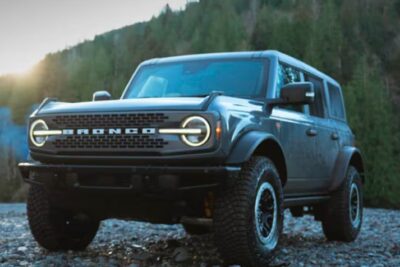
Ford Bronco Outer Banks vs Badlands: Which Trim Should You Buy?

Contents in this publication
- Ford Bronco Outer Banks vs Badlands at a Glance
- Understanding the Two Bronco Personalities
- Model-Year Coverage: What “All Years” Means Here
- Exterior Design and Styling
- Interior Comfort and Materials
- Engine Choices and Performance
- Transmission Differences
- Four-Wheel-Drive Systems Compared
- Locking Differentials: Why They Matter
- Stabilizer-Bar Disconnect
- Suspension and Ride Quality
- The Sasquatch Package Question
- Ground Clearance and Off-Road Geometry
- G.O.A.T. Modes and Terrain Management
- Daily Driving and Commuting
- Fuel Economy
- Towing Capacity
- Technology and Convenience Features
- Two-Door Versus Four-Door Considerations
- Reliability and Ownership Costs
- Used Ford Bronco Outer Banks vs Badlands
- Resale Value
- Which Trim Is Better in Snow?
- Which Trim Is Better for Camping?
- Which Trim Is Better for Modifications?
- Outer Banks Pros and Cons
- Badlands Pros and Cons
- Ford Bronco Outer Banks vs Badlands: Which Is the Better Value?
- Who Should Buy the Outer Banks?
- Who Should Buy the Badlands?
- Final Verdict: Outer Banks or Badlands?
- Frequently Asked Questions
Choosing between the Ford Bronco Outer Banks and Badlands sounds simple until we start studying the configurator. At first glance, both trims share the same unmistakable Bronco shape, removable body panels, four-wheel drive, turbocharged power, and enough personality to make an ordinary crossover look like a household appliance.
Yet these two Broncos approach adventure from opposite directions.
The Outer Banks is the polished traveler. It combines genuine four-wheel-drive capability with a more comfortable cabin, upscale styling, and road-friendly manners. The Badlands is the trail specialist. It sacrifices some elegance in favor of stronger mechanical hardware, greater articulation, more drive modes, and better performance on demanding terrain.
Think of the Outer Banks as a hiking boot that has been cleaned and polished for dinner. The Badlands arrives at the same restaurant with mud still packed into its tread—and is rather proud of it.
This Ford Bronco Outer Banks vs Badlands comparison covers the modern full-size Bronco introduced for the 2021 model year, including the meaningful changes buyers may encounter across different production years. It does not compare the smaller Bronco Sport, which is a separate vehicle.
Ford Bronco Outer Banks vs Badlands at a Glance
For most buyers, the decision can be reduced to one question:
Do we want a Bronco that is more comfortable during everyday driving, or one engineered to handle tougher trails before modifications?
| Category | Bronco Outer Banks | Bronco Badlands |
|---|---|---|
| Primary character | Refined and stylish | Rugged and trail-focused |
| Best environment | Roads, commuting, light trails | Rocks, mud and technical trails |
| Four-wheel-drive system | Standard 4x4; equipment varies by year and package | More advanced trail hardware as standard |
| Suspension focus | Everyday comfort | Off-road control and articulation |
| Stabilizer-bar disconnect | Generally unavailable | Standard on most modern configurations |
| Locking differentials | Package-dependent | Rear locker standard; front capability varies by configuration |
| Interior personality | More premium and polished | Durable and functional |
| Exterior styling | Body-color details and larger-looking wheels | Protective, purposeful appearance |
| Manual transmission availability | Generally automatic-focused | Available in certain years and engine combinations |
| Sasquatch Package | Available on many model years | Available, though Badlands is already highly capable |
| Ideal buyer | Daily driver who occasionally explores | Buyer who regularly tackles difficult terrain |
The current lineup still positions the Outer Banks as the comfort-oriented choice and Badlands as the stronger off-road model. Exact prices, engines, packages, body styles, and standard features have changed over the years, so used-vehicle shoppers should verify the original window sticker rather than relying only on the badge. Ford’s 2026 configurator, for example, lists the trims close together in starting price even though their equipment priorities remain very different.
Understanding the Two Bronco Personalities
What Is the Ford Bronco Outer Banks?
Outer Banks is the Bronco for buyers who love the vehicle’s adventurous image but do not necessarily want every drive to feel like preparation for a rock-crawling expedition.
Historically, it has emphasized:
- More upscale exterior details
- Larger, stylish wheels
- Painted or coordinated trim pieces
- Better convenience equipment
- Carpeted flooring on many configurations
- Comfortable seating materials
- Road-oriented tires
- Available luxury and technology packages
Recent versions have included features such as power-adjustable front seats, a heated steering wheel, carpeted flooring, and additional comfort equipment. These features reinforce its role as the Bronco most naturally suited to commuting, road trips, shopping runs, and occasional off-pavement travel.
The Outer Banks is not merely a cosmetic SUV wearing an outdoor costume. It still uses the body-on-frame Bronco platform, proper four-wheel drive, removable doors, and a removable roof. It can handle sand, snow, forest tracks, campsites, and moderate trails. It simply starts with a more civilized setup.
What Is the Ford Bronco Badlands?
Badlands is the model for buyers who view a rocky trail not as an obstacle but as an invitation.
Its defining advantage is not just aggressive styling. Badlands typically includes important mechanical equipment that improves traction and control when the terrain becomes difficult. Depending on the model year and configuration, that may include:
- A more capable four-wheel-drive system
- Electronic locking rear differential
- Front locking differential availability or inclusion
- Electronic front stabilizer-bar disconnect
- Off-road-oriented suspension
- Additional terrain-management modes
- Protective bash plates
- More suitable tires
- Washable or durable interior materials
- Rock rails on relevant configurations
Those components matter because serious off-roading is not won by badges or bright tow hooks. It is won by keeping tires in contact with the ground, controlling wheelspin, protecting vulnerable components, and placing torque where it can actually move the vehicle.
For current models, Ford continues to advertise Badlands with seven drive modes, up to 330 horsepower when appropriately configured, and a maximum conventional towing rating of 3,500 pounds.
Model-Year Coverage: What “All Years” Means Here
The Outer Banks and Badlands comparison applies to the sixth-generation full-size Bronco, beginning with the 2021 model year.
The broad distinction has remained stable:
- Outer Banks prioritizes style and comfort.
- Badlands prioritizes advanced off-road performance.
However, buyers should not assume that every 2021 Bronco has the same equipment as a 2024, 2025, or 2026 model. Ford has adjusted standard features, packages, colors, wheel designs, engine availability, transmissions, infotainment equipment, and special editions throughout the generation.
For example, Ford’s 2025 order guide noted that the heated steering wheel became standard on Outer Banks and Badlands for that model year. The 2026 lineup introduced further packaging and appearance changes, including a Wildtrak Package offered exclusively on four-door Badlands models.
When shopping used, we should therefore compare three things:
- The trim level
- The model year
- The installed factory packages
A well-equipped Outer Banks Sasquatch may be more trail-capable than a buyer expects. Likewise, a standard Badlands may have more serious hardware than an Outer Banks with attractive wheels but no off-road package.
Exterior Design and Styling
Outer Banks: Clean, Coordinated and Upscale
The Outer Banks usually presents the Bronco in its most polished mainstream form.
Its styling has often included body-color or coordinated exterior components, attractive aluminum wheels, side steps, and details that make the Bronco look more at home outside a hotel than a trail-repair shop.
That visual refinement is one of its strongest selling points. Some buyers love the Bronco’s boxy profile and removable roof but do not want steel wheels, chunky tires, exposed hardware, or an overtly utilitarian appearance. Outer Banks answers that demand.
Its road-oriented wheel and tire combinations can also produce more precise on-road behavior. The steering may feel less vague, road noise may be reduced, and the vehicle can appear less cumbersome in urban environments.
Who Will Prefer the Outer Banks Look?
Outer Banks will probably appeal more to us when we value:
- Body-color exterior treatment
- A cleaner street-oriented stance
- Stylish wheels
- A premium-looking cabin
- A Bronco that feels less industrial
- An SUV that balances adventure with professional use
It is the trim more likely to look equally natural at a trailhead, an office building, or a restaurant.
Badlands: Functional and Intentionally Rugged
Badlands styling is more purposeful. Its visual identity communicates that the vehicle expects to encounter rocks, branches, ruts, and mud.
The smaller-diameter wheels and taller tire sidewalls found on many configurations are not a styling compromise. They provide more tire compliance and better protection when the surface becomes sharp or uneven. Protective equipment, rock rails, heavy-duty bumpers, and exposed recovery points can further strengthen the trail-ready appearance.
The Badlands does not whisper. It looks like equipment.
Why Smaller Wheels Can Be Better Off Road
Large wheels may look impressive in a parking lot, but a taller tire sidewall generally offers several off-road benefits:
- Better impact absorption
- More flexibility at reduced tire pressures
- Greater wheel protection
- Improved conformity over rocks
- A softer ride on broken surfaces
This is one reason the Badlands setup makes more practical sense for demanding trails, even when the Outer Banks wheel design looks more expensive.
Interior Comfort and Materials
Outer Banks Interior Advantages
The Outer Banks usually has the advantage when our typical week includes far more pavement than dirt.
Depending on model year and options, it may provide:
- Carpeted floors
- Power-adjustable seats
- Heated front seats
- A heated steering wheel
- More premium upholstery
- Additional cabin convenience features
- Upgraded audio
- Advanced driver-assistance equipment
- Larger infotainment hardware on relevant years
The result feels closer to a conventional premium SUV, although the Bronco never becomes whisper-quiet or limousine-smooth. Its removable roof, upright windshield, exposed-door design, and boxy body create wind and road noise that no leather seat can completely hide.
Still, Outer Banks softens the Bronco experience. It is more likely to satisfy someone moving from an Explorer, Grand Cherokee, Wrangler Sahara, or well-equipped crossover.
Badlands Interior Advantages
Badlands cabins have historically favored durability.
Washable rubberized flooring, drain plugs, marine-grade vinyl on certain configurations, practical controls, and surfaces that tolerate mud are more useful than delicate materials after a wet trail ride.
That does not mean Badlands must feel basic. Many model years allow buyers to add luxury, technology, heated seats, leather-trimmed surfaces, premium sound, and advanced safety features. A fully equipped Badlands can be surprisingly luxurious.
The difference lies in its foundation. Badlands begins as a serious off-roader and adds comfort. Outer Banks begins as a comfortable Bronco and adds capability.
Washable Floors Versus Carpet
This small detail can become a major ownership issue.
Carpet is quieter, warmer, and more welcoming during daily use. Rubberized flooring is easier to clean after mud, sand, snow, pets, camping gear, or wet clothing.
We should not choose based on what looks best in a brochure. We should imagine the vehicle after the messiest trip we realistically plan to take.
Engine Choices and Performance
Throughout the modern Bronco’s production run, engine availability has varied by year, body style, transmission, and package. The principal engines encountered in Outer Banks and Badlands models include Ford’s turbocharged four-cylinder and twin-turbocharged V6 options.
In broad terms:
- The smaller EcoBoost engine offers adequate torque and may be paired with the manual transmission in eligible Badlands configurations.
- The larger EcoBoost V6 provides stronger acceleration and easier power delivery with heavy tires or accessories.
- The ten-speed automatic is widely available and is the normal choice for Outer Banks.
- Manual availability has historically favored specific four-cylinder Badlands configurations.
Outer Banks Engine Character
Outer Banks does not need the largest engine to fulfill its mission. The four-cylinder can feel energetic enough for everyday use, especially when the vehicle retains road-friendly tires.
The V6, where offered, adds effortless passing power and stronger acceleration. It may be worthwhile for buyers who frequently drive at highway speeds, carry passengers, live at elevation, or plan to fit heavier off-road equipment.
The trade-offs are predictable:
- Higher purchase cost
- Potentially greater fuel consumption
- More mechanical complexity
- Increased temptation to accelerate simply because we can
Badlands Engine Character
The four-cylinder can be an appealing Badlands choice because its low-end torque and manual-transmission availability fit the trim’s hands-on personality.
The V6 makes more sense when the Bronco wears larger tires, carries camping equipment, or spends significant time climbing steep grades. It does not transform the Bronco into a sports car, but it makes its substantial weight feel less obvious.
For 2026, Ford’s returned Wildtrak Package bundles the 2.7-liter V6, ten-speed automatic, Sasquatch equipment, and HOSS 3.0 suspension with FOX internal-bypass dampers on four-door Badlands models. That package further expands the performance gap between a heavily equipped Badlands and a conventional Outer Banks.
Transmission Differences
Automatic Transmission
The automatic is the natural fit for Outer Banks buyers. It is convenient in traffic, smooth enough for road trips, and useful during technical off-roading because it allows precise low-speed progress without clutch management.
The automatic also broadens engine compatibility and is easier to share with family members.
Manual Transmission
The manual has been one of the Badlands model’s more distinctive attractions in eligible model years.
A manual Bronco delivers more driver involvement and includes a crawler gear designed for extremely low-speed operation. Enthusiasts may love its mechanical character. Yet it is not automatically the better off-road choice.
An automatic can be easier when:
- Crawling over rocks
- Starting on steep grades
- Maneuvering in tight spaces
- Driving through deep sand
- Navigating stop-and-go traffic
The manual is about engagement, not universal superiority.
Four-Wheel-Drive Systems Compared
This is where the Badlands begins to justify its name.
Both trims are legitimate four-wheel-drive Broncos, but the standard hardware and available systems differ. Exact transfer-case specifications should always be checked by model year and window sticker.
Outer Banks Four-Wheel Drive
A typical Outer Banks setup provides enough traction for:
- Snow-covered roads
- Gravel tracks
- Forest roads
- Beach driving where permitted
- Moderate mud
- Camping access
- Light-to-medium trails
With appropriate options, especially the Sasquatch Package, its capability rises sharply. That package has historically added major off-road equipment such as larger tires, locking differentials, revised gearing, and upgraded suspension components, though package content can vary by year.
An Outer Banks Sasquatch is not pretending. It can be a highly capable machine.
Badlands Four-Wheel Drive
Badlands begins with a stronger trail-oriented foundation. Its gearing, differential equipment, suspension tuning, and disconnecting stabilizer bar provide benefits that are difficult or costly to reproduce later.
The key lesson is simple:
Outer Banks can be upgraded into a serious off-roader. Badlands is designed as one from the beginning.
Locking Differentials: Why They Matter
An open differential allows wheels on the same axle to rotate at different speeds, which is useful when turning. On loose or uneven ground, however, torque can follow the path of least resistance and spin the tire with the least traction.
A locking differential connects both axle shafts so the tires turn together. This can help the Bronco continue moving when one tire is light, lifted, or sitting on a slippery surface.
Outer Banks Differential Setup
On Outer Banks, locking differentials have generally depended more heavily on packages and configuration. A standard road-oriented model may not include the same axle hardware as Badlands.
For casual use, that is perfectly reasonable. Many owners never encounter terrain difficult enough to require a locker.
Badlands Differential Setup
Badlands has historically offered stronger differential equipment as part of its core identity, including a standard electronic-locking rear differential and access to front-locking capability depending on model year and configuration.
This gives Badlands a significant advantage on:
- Cross-axle obstacles
- Loose climbs
- Deep ruts
- Uneven rock shelves
- Muddy inclines
- Situations with limited tire contact
A locker is like having an extra card hidden in our sleeve. Most of the time we do not need it, but when traction disappears, it can change the outcome.
Stabilizer-Bar Disconnect
One of the Badlands model’s most meaningful features is its electronic front stabilizer-bar disconnect.
A stabilizer bar helps limit body roll on the road by linking the movement of the left and right suspension. Off road, that same connection can restrict wheel articulation.
Disconnecting the bar allows the front wheels to move more independently. One wheel can rise over an obstacle while the other drops into a depression, helping maintain tire contact.
Why Badlands Wins Here
This system improves:
- Suspension articulation
- Tire contact
- Low-speed stability
- Traction on uneven ground
- Driver confidence over rocks
Outer Banks buyers are unlikely to miss it during commuting, snow driving, or mild trails. Serious off-road drivers may value it every time they reach technical terrain.
Suspension and Ride Quality
Outer Banks on the Road
Outer Banks typically feels more natural during regular driving because its wheel, tire, and suspension setup is less extreme.
Benefits may include:
- Quieter tires
- More predictable steering
- Reduced wandering
- Better fuel economy
- Easier braking feel
- Less vibration from aggressive tread
- More comfortable entry height
We should still remember that the Bronco is a body-on-frame 4x4 with a removable roof. Even in Outer Banks form, it will not behave like a unibody luxury crossover.
Badlands on the Road
Badlands remains entirely usable on pavement, but its off-road priorities can introduce compromises:
- More tire noise
- Heavier steering
- Reduced fuel economy
- Greater sensitivity to tire pressures
- A firmer or busier ride on some surfaces
- More expensive replacement tires
- Additional height in certain configurations
Standard Badlands models can be surprisingly manageable. Sasquatch-equipped or heavily modified versions amplify the compromises.
Badlands Off the Road
Once pavement ends, the balance shifts.
The Badlands suspension is better prepared to absorb repeated impacts, manage articulation, and keep the Bronco composed across broken surfaces. Its extra hardware helps the driver proceed slowly and deliberately rather than relying on speed and momentum.
That is a crucial difference. Good off-road engineering lets us use less drama.
The Sasquatch Package Question
The Sasquatch Package complicates every Ford Bronco Outer Banks vs Badlands comparison because it can dramatically increase the Outer Banks model’s capability.
Package details have changed, but Sasquatch has broadly been associated with features such as:
- Approximately 35-inch-class tires
- Beadlock-capable wheels
- Locking front and rear differentials
- Shorter axle gearing
- Increased ride height
- Wider fender flares
- Upgraded dampers or suspension components
Outer Banks Sasquatch
This configuration makes sense for buyers who want:
- Outer Banks styling
- A more comfortable or upscale interior
- Strong factory off-road capability
- The visual impact of large tires
- Locking differentials without choosing Badlands
It is arguably one of the most versatile Bronco combinations. It can look polished in town and remain highly capable on a trail.
However, it may still lack the Badlands stabilizer-bar disconnect and some trim-specific hardware, depending on model year.
Badlands Sasquatch
Badlands Sasquatch is for buyers who want nearly every available trail advantage short of moving into a more specialized Bronco variant or adding advanced packages.
It provides:
- The Badlands off-road foundation
- Larger tires
- More ground clearance
- Aggressive gearing
- Strong differential capability
- A wider, more imposing stance
The downside is that it can be excessive for daily driving. Larger tires cost more, weigh more, consume more fuel, and alter steering and braking feel.
Do We Actually Need Sasquatch?
We probably do not need it when our off-road use consists mainly of:
- Gravel roads
- Maintained campsites
- Snowy highways
- Easy forest trails
- Occasional beach trips
- Mild mud
We should consider it when we expect:
- Deep ruts
- Larger rocks
- difficult climbs
- Heavy sand use
- Frequent trail travel
- A strong preference for the lifted Bronco appearance
Buying capability we never use is not harmful, but we pay for it every day through cost, weight, noise, and fuel consumption.
Ground Clearance and Off-Road Geometry
Ground clearance depends heavily on tire size and configuration rather than the trim badge alone.
A Sasquatch-equipped Outer Banks can sit higher than a non-Sasquatch Badlands. Therefore, we should not assume Badlands automatically wins every published dimension.
Important measurements include:
- Ground clearance
- Approach angle
- Breakover angle
- Departure angle
- Water-fording depth
- Track width
- Overall height
Badlands earns its advantage through the complete package: articulation, protection, traction hardware, drive modes, and suspension—not merely one clearance number.
G.O.A.T. Modes and Terrain Management
Ford uses the term G.O.A.T. Modes for its selectable terrain programs, meaning the Bronco is designed to “go over any type of terrain.”
Depending on model year, trim, and equipment, modes may adjust:
- Throttle response
- Transmission behavior
- Four-wheel-drive engagement
- Differential operation
- Traction control
- Stability control
- Steering weight
Badlands generally offers more off-road-specific modes and Ford currently lists seven drive modes for the trim.
Outer Banks includes enough modes for ordinary weather and recreational use, but Badlands provides greater specialization for technical terrain.
Daily Driving and Commuting
Why Outer Banks Is Usually Better
For a buyer who spends 90% of the time on pavement, Outer Banks is usually the rational choice.
It offers the Bronco experience without forcing us to pay for trail hardware we may rarely use. Its cabin can be more inviting, its tires more civilized, and its exterior more polished.
Outer Banks makes sense for:
- Urban commuting
- Family transportation
- Long highway trips
- Occasional camping
- Snowy climates
- Buyers prioritizing appearance
- Drivers who want open-air fun
Can Badlands Still Be a Daily Driver?
Absolutely.
A non-Sasquatch Badlands can be a sensible everyday vehicle, especially for an owner who regularly explores on weekends. The problem appears when we configure it for an imaginary lifestyle rather than our real one.
A lifted Badlands with 35-inch tires may look magnificent, but that same setup will accompany us through every parking garage, fuel stop, tire replacement, and highway commute.
Fuel Economy
Neither Bronco is a fuel-economy champion. Its upright shape pushes through the air like a garden shed in a headwind.
Real consumption varies according to:
- Engine
- Transmission
- Body style
- Axle ratio
- Tire size
- Roof choice
- Speed
- Elevation
- Accessories
- Driving habits
Outer Banks may have an advantage when fitted with smaller, road-oriented tires. Badlands—especially with Sasquatch equipment—typically carries more rolling resistance, aerodynamic drag, and rotating mass.
Roof racks, steel bumpers, winches, cargo boxes, tents, and oversized tires can further reduce efficiency.
When comparing used Broncos, do not study the engine alone. Tire and axle configuration can have an equally noticeable effect.
Towing Capacity
Towing capacity is not the main reason to choose one of these trims. Properly configured modern Badlands models are currently rated for up to 3,500 pounds of conventional towing, and comparable ratings are common elsewhere in the mainstream Bronco range.
Actual capacity can differ by model year, configuration, equipment, and trailer type. Buyers must verify the door label, owner’s manual, and factory towing guide for the exact vehicle.
Neither trim becomes a heavy-duty tow vehicle merely because it has a powerful turbocharged engine.
For frequent towing, we should consider:
- Payload capacity
- Passenger weight
- Hitch weight
- Trailer brakes
- Cooling demands
- Wheelbase
- Tire load rating
- Local regulations
Outer Banks may feel more pleasant during highway towing. Badlands may be better when the trailer must reach a rough campsite. Neither is designed to replace a full-size pickup.
Technology and Convenience Features
Outer Banks has traditionally offered an easier path to comfort and convenience equipment, though Badlands can often be configured with similar technology.
Depending on year and package, available features may include:
- Large central touchscreen
- Smartphone integration
- Navigation
- Premium sound
- 360-degree camera system
- Trail cameras
- Adaptive cruise control
- Blind-spot monitoring
- Lane assistance
- Wireless charging
- Additional USB ports
- Remote start with automatic transmission
The 360-degree camera system is useful on both trims. In Outer Banks, it helps with tight parking. In Badlands, it can show obstacles hidden below the hood line.
That is a rare feature that feels equally valuable outside a supermarket and halfway up a rocky climb.
Two-Door Versus Four-Door Considerations
Body-style availability has changed across model years and trims, so buyers should verify the year they are considering.
Two-Door Benefits
- Shorter wheelbase
- Better breakover geometry
- Easier trail placement
- Classic Bronco proportions
- More maneuverable off road
- Often lighter
Four-Door Benefits
- Easier rear-seat access
- More cargo room
- Better family usability
- Greater road-trip practicality
- More stable feel at speed
- Wider used-market selection
Outer Banks buyers commonly gravitate toward the four-door because it complements the trim’s everyday mission. Badlands buyers may appreciate either: two-door for agility, four-door for expedition gear and passengers.
Reliability and Ownership Costs
Reliability depends more on model year, maintenance, modifications, and individual vehicle history than on whether the badge says Outer Banks or Badlands.
However, ownership costs can differ.
Outer Banks Cost Considerations
Potential advantages include:
- Less expensive road-oriented tires
- Better fuel consumption
- Fewer specialized mechanical systems
- Lower exposure to harsh trail damage
- Easier cleaning when kept mainly on road
Potential disadvantages include:
- More cosmetic surfaces to scratch
- Carpet that holds moisture or dirt
- Expensive luxury equipment
- Costly painted exterior components
Badlands Cost Considerations
Potential expenses include:
- Larger or more aggressive tires
- More frequent underbody inspections
- Damage to wheels, rails, and skid plates
- Mud and water exposure
- Differential and transfer-case servicing
- Repairs related to intensive off-road use
The trim itself is not necessarily unreliable. Its intended use simply puts it in situations where wear arrives faster.
Modified Used Broncos Require Extra Care
A used Bronco with a lift, aftermarket wheels, winch, lighting, steel bumpers, or engine tune deserves a detailed inspection.
We should check:
- Suspension geometry
- Uneven tire wear
- Steering components
- Axle seals
- Differential leaks
- Underbody impacts
- Wiring quality
- Roof and door seals
- Evidence of water intrusion
- Calibration for tire size
- Warranty implications
A stock Badlands with maintenance records may be a safer purchase than a heavily altered Outer Banks that has been driven hard.
Used Ford Bronco Outer Banks vs Badlands
What to Check on an Outer Banks
Inspect the vehicle for:
- Scratched painted fender flares or trim
- Carpet moisture
- Roof wind noise
- Water leaks
- Power-seat operation
- Heated-seat function
- Wheel damage
- Uneven tire wear
- Missing luxury-package equipment
- Aftermarket modifications
Also verify whether the Bronco has Sasquatch. Large tires alone do not prove it left the factory with the complete package.
What to Check on a Badlands
Focus on:
- Skid-plate dents
- Rock-rail damage
- Differential leaks
- Stabilizer-bar disconnect operation
- Locker operation
- CV joints and boots
- Steering play
- Mud trapped around components
- Scraped suspension mounts
- Water exposure
- Oversized aftermarket tires
- Poorly installed lift kits
Trail scars are not automatically a reason to reject a Badlands. They are evidence that should shape the price and inspection.
Why the Window Sticker Matters
Bronco configurations can be confusing because packages change the vehicle dramatically.
The original window sticker can reveal:
- Engine
- Transmission
- Axle ratio
- Factory packages
- Roof type
- Towing equipment
- Luxury package
- Sasquatch equipment
- Wheel and tire specification
- Original MSRP
Two Broncos wearing the same badge may be substantially different underneath.
Resale Value
Both trims can hold strong appeal because each serves a recognizable buyer.
Outer Banks attracts buyers who want:
- Premium styling
- Everyday comfort
- Removable-roof fun
- Less aggressive road manners
- A family-friendly adventure vehicle
Badlands attracts buyers who want:
- Proven factory off-road equipment
- Locking differentials
- Better articulation
- Strong modification potential
- A trail-ready starting point
Badlands may have stronger enthusiast demand, especially in desirable colors and configurations. Outer Banks may reach a broader mainstream audience.
Condition matters more than theory. A clean, documented Outer Banks can be worth more than an abused Badlands with questionable modifications.
Which Trim Is Better in Snow?
Both can perform extremely well in snow when equipped with suitable tires.
Badlands has stronger low-speed traction tools, but those tools do not overcome poor tires or reckless driving. Lockers can even make steering more difficult when used incorrectly on slippery surfaces.
Outer Banks may be the better snow vehicle for normal roads because:
- Its tires may be quieter and more road-focused
- Automatic four-wheel-drive functionality may be available depending on configuration
- Its on-road behavior can feel more predictable
- Comfort features improve winter commuting
Badlands is better when “snow driving” means deep, unplowed tracks rather than a cleared highway.
The best winter upgrade is often a proper set of winter tires, not a more extreme trim badge.
Which Trim Is Better for Camping?
That depends on the campsite.
Choose Outer Banks when camping usually involves:
- Paved highways
- Maintained campgrounds
- Gravel access roads
- Family trips
- Long-distance comfort
- Minimal technical terrain
Choose Badlands when camping involves:
- Remote trail systems
- Deep mud
- Rocky access roads
- Washed-out tracks
- Overlanding equipment
- Greater self-recovery risk
For many campers, Outer Banks provides more capability than necessary. For remote travel, Badlands offers valuable insurance.
Which Trim Is Better for Modifications?
Badlands is generally the better foundation for a serious off-road build because it already includes expensive hardware that would be difficult to duplicate cleanly.
Outer Banks works better for:
- Appearance upgrades
- Mild lifts
- All-terrain tires
- Roof racks
- Lighting
- Touring accessories
- Comfort-focused builds
Badlands works better for:
- Rock-crawling builds
- Heavy skid protection
- Winches
- Advanced suspension
- Larger tires
- Expedition equipment
- Technical trail use
Before modifying either, we should drive it in factory form. The Bronco may already do everything we need.
Outer Banks Pros and Cons
Outer Banks Pros
- More refined appearance
- Better everyday comfort
- Attractive cabin materials
- Road-friendly wheel and tire options
- Plenty of capability for ordinary adventures
- Available Sasquatch Package on relevant years
- Easier fit for commuting and family use
- Potentially lower running costs
- Strong balance of image and usability
Outer Banks Cons
- Less standard technical off-road equipment
- Painted exterior pieces may scratch easily
- Larger street wheels can be vulnerable on trails
- Carpet is harder to clean
- Adding packages can make it expensive
- Sasquatch versions may approach Badlands pricing
- Serious off-road upgrades can become costly
Badlands Pros and Cons
Badlands Pros
- Strong factory off-road capability
- Electronic stabilizer-bar disconnect
- Better trail-oriented suspension
- Locking differential capability
- More specialized terrain modes
- Durable interior choices
- Better articulation
- Excellent foundation for modifications
- Manual transmission availability on eligible versions
Badlands Cons
- Rougher or noisier on-road experience
- Aggressive tires can cost more
- Lower fuel economy in heavy configurations
- Greater step-in height
- Extra hardware may be unnecessary
- Used examples may have experienced hard trail use
- Fully equipped models become expensive
- Large-tire versions can feel cumbersome in town
Ford Bronco Outer Banks vs Badlands: Which Is the Better Value?
Value depends on which equipment we would otherwise add.
Outer Banks is the better value when we want comfort, attractive styling, four-wheel drive, and moderate adventure capability. Paying for the Badlands hardware makes little sense if the Bronco will rarely leave maintained roads.
Badlands becomes the better value when we genuinely need lockers, articulation, protective equipment, and a disconnecting stabilizer bar. Installing comparable aftermarket hardware can be expensive and may not integrate as neatly with the vehicle’s electronics.
A useful rule is:
- Buy Outer Banks for the life we live every day.
- Buy Badlands for terrain we actually visit regularly.
We should avoid buying Badlands solely because it seems more impressive on paper. We should also avoid buying Outer Banks and then spending thousands trying to recreate a Badlands.
Who Should Buy the Outer Banks?
The Ford Bronco Outer Banks is the better choice when we:
- Drive mainly on pavement
- Want a more upscale cabin
- Prefer a polished appearance
- Take occasional camping or beach trips
- Need a family-friendly four-door SUV
- Value heated and power-operated features
- Want lower tire and fuel costs
- Do not plan technical rock crawling
- Like capability without excessive ruggedness
It is the sensible Bronco for the buyer who wants adventure available, not mandatory.
Who Should Buy the Badlands?
The Ford Bronco Badlands is the better choice when we:
- Regularly drive difficult trails
- Need locking differentials
- Value suspension articulation
- Want a factory stabilizer-bar disconnect
- Plan to modify the vehicle
- Prefer durable, washable materials
- Encounter rocks, deep ruts, or mud
- Want a manual transmission where available
- Accept additional noise and operating cost
It is the Bronco for buyers who will use the mechanical hardware rather than merely explain it to friends.
Final Verdict: Outer Banks or Badlands?
The Ford Bronco Outer Banks is the better all-around purchase for most buyers. It preserves the open-air personality, distinctive design, four-wheel-drive confidence, and recreational ability that make the Bronco special, while adding the comfort and refinement we appreciate every day.
The Ford Bronco Badlands is the better machine for serious off-road use. Its advantage comes from meaningful engineering: stronger traction hardware, improved articulation, trail-oriented suspension, protective equipment, and systems designed to help it move through terrain that can stop a conventional SUV.
Our final recommendation is straightforward:
Choose Outer Banks when your Bronco will be a daily driver that occasionally explores. Choose Badlands when exploring difficult terrain is one of the main reasons you are buying a Bronco.
And when the answer still feels unclear, inspect the tires. If quiet highway manners matter more, Outer Banks probably fits. If we are already picturing those tires compressed against a rock ledge, Badlands is calling.
Frequently Asked Questions
Is the Bronco Badlands More Expensive Than the Outer Banks?
Not always by a large amount. Pricing has changed by model year, and packages can reverse the expected order. A heavily optioned Outer Banks can cost more than a standard Badlands. Ford’s 2026 configurator lists their starting prices relatively close together, making equipment and intended use more important than the initial price gap.
Is an Outer Banks With Sasquatch Better Than a Badlands?
It can be better for a buyer who wants upscale styling and strong off-road capability. Sasquatch adds major trail equipment, but Badlands may retain advantages such as its stabilizer-bar disconnect, trim-specific suspension tuning, and more rugged baseline equipment. The better choice depends on whether comfort or technical articulation matters more.
Can the Bronco Outer Banks Handle Off-Road Trails?
Yes. Even without Sasquatch, Outer Banks can handle gravel, snow, sand, forest roads, campsites, and many moderate trails when equipped with appropriate tires. It becomes substantially more capable with factory off-road packages. Badlands is preferable for frequent rock crawling, deep ruts, and difficult terrain.
Is the Badlands Comfortable Enough for Daily Driving?
Yes, particularly in non-Sasquatch form. It remains a practical road vehicle and can be equipped with many comfort features. However, aggressive tires, additional height, and off-road suspension can create more noise, weight, and fuel consumption than a road-oriented Outer Banks.
Which Bronco Trim Has Better Resale Value?
Badlands may attract stronger enthusiast demand because of its factory off-road hardware. Outer Banks can appeal to a larger group of everyday buyers. Model year, mileage, service records, condition, factory packages, roof type, and modification quality usually influence resale value more than the trim name alone.
If you want to see other articles similar to Ford Bronco Outer Banks vs Badlands: Which Trim Should You Buy? you can visit the Compare category.
2026 Ford Bronco Towing: Capacity, Equipment, and Real-World Limits
Ford Bronco Gas Tank Size: 2026 U.S. Guide
2026 Ford Bronco Big Bend vs Outer Banks: Features and Differences Explained
2026 Ford Bronco Trim Levels in Order: Complete U.S. Guide
Ford Bronco Models Explained for U.S. Buyers
Ford Bronco Cargo Space: Dimensions, Capacity, and Practicality Explained
Leave a Reply
Related Topics