

Can Toyota bZ4X Charge at Tesla Supercharger Stations?

Contents in this publication
- Can a Toyota bZ4X Use a Tesla Supercharger?
- Toyota bZ4X Supercharger Compatibility by Model Year
- What Is NACS?
- Which Toyota bZ4X Models Need an Adapter?
- Can the 2026 Toyota bZ Charge Without an Adapter?
- Will Every Tesla Supercharger Work With a bZ4X?
- How to Charge a Toyota bZ4X at a Tesla Supercharger
- Do We Need the Tesla App?
- How Fast Will a bZ4X Charge at a Tesla Supercharger?
- Does the bZ4X Precondition Its Battery for Supercharging?
- Can a Toyota bZ4X Use Tesla Superchargers in Europe?
- Can a Toyota bZ4X Use Tesla Destination Chargers?
- What Does It Cost to Charge a bZ4X at a Supercharger?
- Why Won’t My bZ4X Charge at a Tesla Supercharger?
- Tips for Taking a bZ4X on a Supercharger Road Trip
- Advantages of Tesla Supercharger Access for bZ4X Owners
- Potential Disadvantages and Limitations
- Is Tesla Supercharger Access Worth It for bZ4X Drivers?
- Should We Buy a Used bZ4X Now That It Has Supercharger Access?
- Final Verdict: Can Toyota bZ4X Charge at Tesla Supercharger Stations?
- Frequently Asked Questions
Yes, a Toyota bZ4X can charge at certain Tesla Supercharger stations, but the exact answer depends on three important details: the vehicle’s model year, the country where it is being driven, and whether the Supercharger location supports non-Tesla electric vehicles.
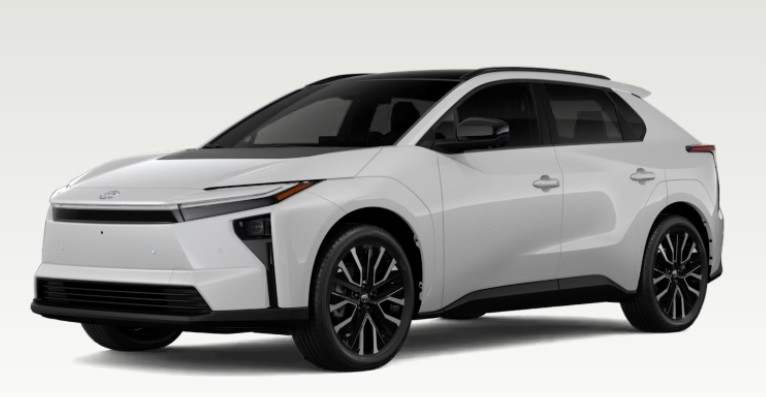
For drivers in North America, the picture became much clearer in 2026. Toyota officially expanded Tesla Supercharger access to its battery-electric customers. Owners of 2023–2025 Toyota bZ4X models can use compatible Tesla Superchargers with an approved NACS-to-CCS1 fast-charging adapter. Meanwhile, the renamed 2026 Toyota bZ has a built-in NACS charging port, eliminating the need for that adapter.
That sounds simple enough, right? Well, EV charging compatibility can resemble a set of nesting dolls. Open one answer and another condition appears inside it. Having the correct plug does not automatically mean that every Tesla station will work. The charging site must also be open to Toyota vehicles, appear as compatible in the Toyota or Tesla app, and support the necessary communication between the charger and the car.
Let’s unpack everything carefully so we can arrive at a Tesla Supercharger with confidence rather than crossing our fingers beside the charging cable.
Can a Toyota bZ4X Use a Tesla Supercharger?
A Toyota bZ4X can use compatible Tesla Superchargers when the vehicle has either:
- A Toyota-approved NACS DC fast-charging adapter
- A factory-installed NACS port
- Access to a Tesla Magic Dock station that supports CCS-equipped vehicles
In the United States and Canada, 2023, 2024, and 2025 bZ4X models were manufactured with a CCS1 fast-charging inlet. These vehicles therefore need an appropriate NACS-to-CCS1 adapter at Tesla Supercharger stations that provide NACS cables but support Toyota vehicles.
The 2026 Toyota bZ, which replaces the bZ4X name in the North American market, comes with a native NACS charging port. Toyota confirms that this port is compatible with the Tesla Supercharger network, although drivers must still choose a participating station.
Tesla similarly explains that selected Supercharger locations are available to non-Tesla vehicles equipped with NACS ports or approved NACS DC adapters.
The One-Sentence Answer
In North America, a 2023–2025 Toyota bZ4X can charge at compatible Tesla Superchargers using an approved adapter, while the 2026 Toyota bZ can connect directly through its built-in NACS port.
Toyota bZ4X Supercharger Compatibility by Model Year
Compatibility is easier to understand when we separate the vehicle generations.
| Toyota model | Original charging port | Tesla Supercharger access | Adapter required? |
|---|---|---|---|
| 2023 Toyota bZ4X | CCS1 | Selected compatible locations | Yes |
| 2024 Toyota bZ4X | CCS1 | Selected compatible locations | Yes |
| 2025 Toyota bZ4X | CCS1 | Selected compatible locations | Yes |
| 2026 Toyota bZ | NACS/J3400 | Selected compatible locations | No |
| European bZ4X | CCS2 | Selected open Superchargers | Usually no adapter at supported CCS2 sites |
Toyota specifically states that 2023–2025 bZ4X vehicles require a charging adapter when using the Tesla Supercharger network in North America.
Why Did Toyota Change the Name?
For the 2026 model year in North America, Toyota shortened the vehicle’s name from bZ4X to simply bZ. The change arrived alongside significant updates, including improved range, revised styling, battery preconditioning and native NACS compatibility.
This naming change matters because online searches can become confusing. Someone asking whether a “2026 bZ4X” works at a Supercharger may actually be referring to the 2026 Toyota bZ.
What Is NACS?
NACS stands for North American Charging System. The connector was originally developed by Tesla and has since been standardized as SAE J3400.
In practical terms, it is the slim charging plug found at most Tesla Supercharger locations in North America. Major automakers have adopted it because it provides access to a large, established charging network and combines AC and DC charging in one compact connector.
Tesla says its network is progressively opening to vehicles from other manufacturers. As automakers transition to native NACS ports, older compatible EVs can gain access through adapters supplied or approved by their manufacturers.
NACS Versus CCS1
The 2023–2025 bZ4X uses CCS1 in North America. The 2026 bZ uses NACS.
The main differences are physical design and network availability:
| Feature | CCS1 | NACS/J3400 |
|---|---|---|
| Connector size | Larger | More compact |
| Used by early bZ4X models | Yes | No |
| Used by 2026 Toyota bZ | No | Yes |
| Tesla Supercharger connection | Adapter or Magic Dock | Direct connection |
| Common on older North American non-Tesla EVs | Yes | Increasingly replacing CCS1 |
The change does not magically increase the vehicle’s maximum charging rate. The charging connector is the doorway, not the size of the room behind it. Battery temperature, state of charge, vehicle software and charging hardware still decide how quickly energy flows.
Which Toyota bZ4X Models Need an Adapter?
The North American 2023, 2024 and 2025 Toyota bZ4X require an adapter at compatible NACS Tesla Superchargers.
The adapter connects the Tesla NACS cable to the bZ4X’s CCS1 inlet. It is designed for DC fast charging and should not be confused with smaller adapters intended only for Level 2 charging.
Use a Toyota-Approved Adapter
An adapter may look like a passive lump of plastic, but it carries a tremendous electrical load. DC fast charging can involve hundreds of volts and substantial current. Heat management, locking mechanisms and communication protocols all matter.
For that reason, we should use the adapter provided or specifically approved by Toyota rather than choosing an unknown third-party product simply because it costs less.
A bargain adapter can be like a discount parachute: the savings feel attractive until the moment reliability becomes important.
Do Not Confuse the Adapter Direction
Adapters are directional.
A NACS-to-CCS1 adapter allows a CCS1-equipped Toyota bZ4X to receive power from a compatible NACS Supercharger cable.
A CCS1-to-NACS adapter sold for some Tesla vehicles performs the opposite job. Tesla’s own CCS1 adapter, for example, allows a compatible Tesla to use third-party CCS chargers. It is not the adapter a CCS-equipped bZ4X needs at a Tesla Supercharger.
Always check the product description, Toyota guidance and vehicle compatibility before connecting anything.
Can the 2026 Toyota bZ Charge Without an Adapter?
Yes. The North American 2026 Toyota bZ has a factory-installed NACS charging port and can connect directly to compatible Tesla Superchargers.
Toyota says 2026 bZ drivers can access more than 25,000 Tesla Supercharger plugs in North America, alongside networks such as IONNA, EVgo and ChargePoint.
The key word is still compatible. A native NACS port does not guarantee access to every charger carrying a Tesla logo.
Some older Superchargers remain limited to Tesla vehicles. Others may not support the communication requirements of partner-brand EVs. The Toyota app should identify stations available to the bZ.
Plug & Charge on the Toyota bZ
The 2026 bZ supports Plug & Charge functionality at participating chargers.
With Plug & Charge, the vehicle identifies itself when connected. Authentication and payment can happen automatically through the linked account rather than requiring us to open an app, select a stall and start the session manually.
Toyota notes that app-based charging functions, including Plug & Charge, may require an eligible Remote Connect trial or subscription and a working mobile data connection.
That introduces an important distinction:
- Physical compatibility means the plug fits.
- Network compatibility means the charger accepts the vehicle.
- Account compatibility means authentication and payment work.
- Charging compatibility means the entire digital handshake succeeds.
Successful fast charging needs all four pieces to line up.
Will Every Tesla Supercharger Work With a bZ4X?
No. A Toyota bZ4X cannot necessarily use every Tesla Supercharger.
Tesla’s network contains several generations of charging equipment, different access policies and region-specific configurations. Only stations officially opened to compatible non-Tesla vehicles should be used.
Before travelling, check the station in:
- The Toyota app
- The Tesla app
- The vehicle’s built-in navigation system
- Tesla’s online charging map
Tesla describes non-Tesla access as available at “select” Superchargers, which is a polite way of saying that we should never assume.
Tesla-Only Superchargers
Some locations may still be reserved for Tesla vehicles. These sites might not appear as options when a Toyota is selected in the app, or they may be marked as unavailable to partner vehicles.
Even when the cable physically fits through an adapter, the station can refuse to initiate a session. The charger and vehicle must exchange authentication and safety information before power begins flowing.
NACS Partner Sites
Compatible North American stations may be labelled as NACS partner sites. Tesla location pages can also indicate whether a NACS adapter is needed by non-Tesla EVs.
For example, some Tesla station listings explicitly state that an adapter is required for non-Tesla vehicles and provide separate pricing information for Tesla owners, members and other drivers.
Magic Dock Superchargers
A Magic Dock Supercharger has an integrated CCS1 adapter. At these locations, a CCS-equipped bZ4X may be able to charge without carrying a separate adapter.
The connector is released through the Tesla app and comes out of the charging pedestal with the CCS adapter attached.
Magic Dock sites were particularly valuable before manufacturers began distributing their own NACS adapters. They remain useful, but they represent only part of the Supercharger network.
How to Charge a Toyota bZ4X at a Tesla Supercharger
The exact process varies depending on the model year and station configuration.
Charging a 2023–2025 bZ4X With an Adapter
Follow these general steps:
- Confirm that the Supercharger supports Toyota or other compatible non-Tesla vehicles.
- Park close enough for the charging cable to reach the bZ4X inlet.
- Open the vehicle’s charging door.
- Attach the approved NACS-to-CCS1 adapter to the Tesla cable.
- Insert the combined connector firmly into the vehicle.
- Start the session through the Toyota or Tesla app, as instructed.
- Confirm that charging has started before leaving the vehicle.
- Stop the charging session through the app or vehicle controls.
- Unlock and remove the connector.
- Separate and store the adapter safely.
Do not force the connector. If it does not seat correctly, disconnect it, inspect the components and try again.
Charging a 2026 Toyota bZ
The process should be more straightforward:
- Locate a compatible Supercharger in the Toyota app.
- Navigate to the station so battery preconditioning can operate when available.
- Park with the charging inlet close to the cable.
- Connect the NACS cable directly to the vehicle.
- Allow Plug & Charge to authenticate the session or follow the app prompts.
- Verify the charging rate on the vehicle display.
- Stop the session and disconnect when finished.
It should feel closer to using a petrol pump, only quieter and with fewer mysterious smells.
Charging at a Magic Dock Station
At a Magic Dock location:
- Open the Tesla app.
- Select “Charge Your Other EV” or the equivalent charging option.
- Choose the station and stall number.
- Follow the app instructions to release the CCS connector.
- Insert it into the bZ4X.
- Start and monitor the charging session.
- Return the cable correctly when finished.
App wording can change over time, so follow the live prompts rather than relying entirely on an old screenshot or video.
Do We Need the Tesla App?
Sometimes.
Older bZ4X owners may use the Tesla app at Magic Dock stations or at locations where the charging session is managed through Tesla’s non-Tesla interface.
Toyota’s charging integration can also allow drivers to find compatible Superchargers and manage charging from the Toyota app. The 2026 bZ introduces a more integrated experience, including supported Plug & Charge functionality.
Keeping both apps installed is sensible during the transition period. One may provide better station status information, while the other may be required for payment or vehicle-specific access.
Account and Payment Requirements
Before a road trip, set up:
- A Toyota account
- A Tesla account
- A valid payment method
- The correct vehicle profile
- Charging notifications
- Location and mobile-data permissions where necessary
Doing this at home takes a few minutes. Doing it at midnight in the rain while the battery sits at 4% feels like solving a tax return on a roller coaster.
How Fast Will a bZ4X Charge at a Tesla Supercharger?
The bZ4X will not automatically charge at the station’s maximum advertised output.
A Supercharger may be capable of delivering 250 kW or more, but the car controls how much power it accepts. The vehicle’s maximum charging capability, battery temperature and current state of charge determine the real speed.
For earlier bZ4X models, the theoretical peak can vary by drivetrain, battery supplier, model year and market. Real charging performance may fall below the headline number, especially in cold weather or when the battery is already relatively full.
Factors That Affect Charging Speed
The most important factors include:
- Battery temperature
- Starting state of charge
- Outside temperature
- Battery preconditioning
- Vehicle model year
- Front-wheel-drive or all-wheel-drive configuration
- Charger power capability
- Charging-stall congestion
- Software and battery-protection limits
A cold battery accepts energy more cautiously. Think of it like frozen honey: it still moves, but it takes persuasion.
Why Charging Slows Above 80%
EVs usually reduce charging power as the battery approaches full capacity. This protects the battery and controls heat.
Consequently, charging from 10% to 80% can be relatively quick, while charging from 80% to 100% may take disproportionately longer.
On a road trip, it is often faster to stop charging around 70–80%, drive to the next suitable station and recharge again rather than waiting for the final percentage points.
Will a 250 kW Supercharger Damage the bZ4X?
No, provided the station and adapter are officially compatible.
A 250 kW charger does not force 250 kW into the battery. The car and charger continuously communicate, and the vehicle requests an appropriate amount of power.
We can picture the charger as a large water reservoir and the vehicle as a tap. The reservoir may hold enormous capacity, but the tap still controls the flow.
Does the bZ4X Precondition Its Battery for Supercharging?
Battery preconditioning prepares the battery for faster DC charging by bringing it closer to an ideal temperature before arrival.
The 2026 Toyota bZ includes improved charging technology and battery preconditioning. Toyota says the feature helps improve DC fast-charging speeds in colder temperatures by heating the battery toward an appropriate operating range.
For the best results, select the charging station through the vehicle’s compatible navigation or routing system rather than simply driving there without entering it as a destination.
Earlier bZ4X versions may not provide the same preconditioning behaviour or level of integration. Cold-weather charging can therefore be noticeably slower.
Can a Toyota bZ4X Use Tesla Superchargers in Europe?
Yes, at selected locations that Tesla has opened to non-Tesla vehicles.
European charging compatibility differs from North America because Tesla generally uses the CCS2 connector at European Superchargers. The European bZ4X also uses CCS2 for DC fast charging, so a separate NACS adapter is normally not required at compatible stations.
However, drivers must still check whether the particular Supercharger is open to non-Tesla vehicles. Access is commonly managed through the Tesla app.
Why the European Answer Is Different
In North America, the main transition is from CCS1 to NACS/J3400.
In Europe, CCS2 became the standard connector for many manufacturers, including Tesla. Therefore, the physical plug is less likely to be the obstacle. Network access is the more important question.
This is why online articles can appear to contradict one another. An American writer may say an adapter is essential, while a British or European owner may plug in directly. Both answers can be correct within their own markets.
Can a Toyota bZ4X Use Tesla Destination Chargers?
Tesla Destination Chargers are different from Superchargers.
A Supercharger supplies DC fast charging and is designed primarily for road-trip stops. A Destination Charger generally supplies slower Level 2 AC charging at hotels, restaurants, car parks and similar locations.
A North American 2023–2025 bZ4X may use certain Tesla Destination Chargers with a compatible NACS-to-J1772 AC adapter, provided the charger allows non-Tesla vehicles.
That AC adapter is not the same as the DC fast-charging adapter used at Superchargers.
Supercharger Versus Destination Charger
| Characteristic | Tesla Supercharger | Tesla Destination Charger |
|---|---|---|
| Charging type | DC fast charging | AC Level 2 charging |
| Typical use | Road trips and quick stops | Overnight or longer parking |
| Adapter for 2023–2025 bZ4X | NACS-to-CCS1 DC adapter | NACS-to-J1772 AC adapter |
| Charging speed | Much faster | Slower |
| App access | Often required | Depends on location |
Never assume one adapter can perform both jobs. AC and DC charging involve different contacts, communication requirements and electrical loads.
What Does It Cost to Charge a bZ4X at a Supercharger?
Tesla Supercharger prices vary by location, time, local electricity costs and membership status.
Non-Tesla drivers may pay a higher per-kWh rate than Tesla owners. In some regions, Tesla offers a charging membership that lowers the energy rate for a monthly fee.
The membership makes the most sense for drivers who use Superchargers regularly. If we only visit one a few times each year, the monthly cost may outweigh the savings.
Possible Additional Fees
Besides the energy consumed, drivers may encounter:
- Idle fees after charging ends
- Congestion fees at busy locations
- Parking charges
- Local taxes
- Different peak and off-peak rates
- Higher non-member prices
The current price should appear in the app before the charging session begins.
Avoid Idle Fees
Move the vehicle promptly after charging is finished.
A charging bay is not a premium EV parking space. Leaving a fully charged vehicle connected can block another driver and trigger additional fees.
Why Won’t My bZ4X Charge at a Tesla Supercharger?
A failed charging session does not necessarily mean the vehicle is incompatible. Several smaller problems can interrupt the process.
Common Reasons Charging Fails
Possible causes include:
- The station is not open to Toyota vehicles
- The wrong type of adapter is being used
- The adapter is not fully seated
- The charging cable is under tension
- The app has the wrong vehicle selected
- The payment method has expired
- Mobile coverage is weak
- The stall is temporarily offline
- The vehicle is not in Park
- The charging port is locked
- The battery is too hot or too cold
- The charger and car fail to complete their communication handshake
What to Try First
Try these steps:
- Stop the session in the app.
- Disconnect the cable and adapter.
- Inspect the connector for dirt, moisture or damage.
- Reconnect everything firmly.
- Try a different charging stall.
- Restart the app.
- Confirm that the selected station supports the bZ4X.
- Check the vehicle display for an error message.
- Contact Tesla or Toyota charging support if the issue continues.
A different stall often solves the problem. Charging cabinets and individual posts can occasionally experience temporary faults even when the rest of the station remains operational.
Tips for Taking a bZ4X on a Supercharger Road Trip
Access to Tesla’s network makes long-distance travel easier, but good planning still matters.
Plan Around Compatible Locations
Do not simply search for the nearest Tesla logo. Filter for stations that support the bZ4X or NACS partner vehicles.
Build the route with backup options, particularly in rural areas.
Arrive With a Lower State of Charge
When practical, arrive around 10–20% rather than 50–60%. The battery usually accepts more power at a lower state of charge, assuming its temperature is suitable.
Using the vehicle’s navigation can activate battery preconditioning on compatible models. That can improve charging speed in cold conditions.
Keep the Adapter Accessible
Do not bury the DC adapter beneath luggage, camping equipment and three weeks of supermarket shopping.
Store it somewhere dry, clean and easy to reach.
Carry Backup Charging Apps
Install and configure apps for other major charging networks before travelling. Tesla may offer the best station on one route, while IONNA, EVgo, ChargePoint or another CCS network may be more convenient elsewhere.
Check Recent Station Status
A charger that worked last month may be temporarily unavailable today. Review live stall availability, current access information and recent driver reports when possible.
Advantages of Tesla Supercharger Access for bZ4X Owners
The most obvious advantage is a larger selection of charging locations.
Toyota’s integration with Tesla’s North American network substantially expands the number of fast-charging options available to its electric-vehicle drivers. The 2026 bZ alone is promoted with access to more than 25,000 Supercharger plugs across North America.
Other advantages include:
- More road-trip route choices
- Better charging coverage in many regions
- Additional backup stations
- Generally clear station layouts
- Real-time availability information
- Potential Plug & Charge convenience
- Reduced dependence on one charging network
For an EV owner, network choice is freedom. One charger is a plan. Three chargers are peace of mind.
Potential Disadvantages and Limitations
Tesla Supercharger access does not erase every weakness of earlier bZ4X charging performance.
Owners should still consider:
- Adapter cost and availability
- Differences between compatible and Tesla-only stations
- Short charging cables at some sites
- Parking-position difficulties
- Potentially higher non-Tesla pricing
- Slower charging in cold weather
- Vehicle charging limits below the charger’s rating
- App or account problems
- Possible congestion at popular locations
The Short-Cable Problem
Many Supercharger layouts were designed around the charging-port position of Tesla vehicles. The bZ4X inlet may sit in a different location, making some cables difficult to reach.
We may need to park carefully, use a stall at the end of a row or choose a newer location with longer cables.
Never park across multiple spaces unless the site layout leaves no safe alternative, and avoid blocking adjacent chargers whenever possible.
Is Tesla Supercharger Access Worth It for bZ4X Drivers?
Absolutely, especially for drivers who travel beyond their normal home-charging radius.
Home charging will usually remain the cheapest and most convenient option for daily use. We plug in overnight, sleep, and wake up with enough range for the day.
Superchargers matter most when:
- Travelling long distances
- Living without reliable home charging
- Visiting areas with limited CCS coverage
- Needing a dependable backup
- Charging during busy travel periods
- Driving in unfamiliar regions
The value is not merely faster charging. It is optionality. A larger network lowers the chance that one broken or occupied station ruins the journey.
Should We Buy a Used bZ4X Now That It Has Supercharger Access?
Tesla Supercharger compatibility improves the practical appeal of a used 2023–2025 bZ4X, but it should not be the only purchasing consideration.
Before buying, check:
- Whether an approved adapter is included
- Battery condition
- Remaining warranty coverage
- DC fast-charging performance
- Cold-weather charging behaviour
- Software-update status
- Local Supercharger availability
- Insurance costs
- Real-world range
- Home-charging options
A used bZ4X may represent strong value where depreciation has been steep. However, frequent long-distance drivers should compare its charging curve and road-trip performance against newer electric SUVs.
Supercharger access opens more doors, but the bZ4X still walks through them at its own charging pace.
Final Verdict: Can Toyota bZ4X Charge at Tesla Supercharger Stations?
Yes, the Toyota bZ4X can charge at compatible Tesla Supercharger stations.
In North America, 2023–2025 bZ4X models use a CCS1 inlet and require an approved NACS-to-CCS1 DC fast-charging adapter at compatible NACS Superchargers. Toyota officially confirms adapter-based Supercharger access for those model years.
The 2026 Toyota bZ makes the process easier because it includes a native NACS port. It can connect directly to compatible Superchargers and supports integrated features such as Plug & Charge at participating locations.
In Europe and other CCS2 markets, selected Tesla Superchargers may accept a bZ4X directly, without the North American-style adapter. Drivers must still confirm that the station is open to non-Tesla vehicles.
The golden rule is simple: check compatibility in the app before arriving. The Tesla logo alone does not guarantee access, but when the vehicle, connector, station and account all agree, the bZ4X can tap into one of the world’s largest fast-charging networks.
Frequently Asked Questions
1. Can a 2024 Toyota bZ4X use a Tesla Supercharger?
Yes. A North American 2024 Toyota bZ4X can use compatible Tesla Superchargers with a Toyota-approved NACS-to-CCS1 DC fast-charging adapter. The station must be open to Toyota vehicles or compatible non-Tesla EVs.
2. Does the Toyota bZ4X come with a Tesla adapter?
Adapter availability can depend on the model year, market, Toyota distribution programme and whether the vehicle was purchased new or used. Owners should verify their eligibility with Toyota or an authorised dealer rather than buying an unapproved third-party adapter.
3. Can the 2026 Toyota bZ use Tesla chargers directly?
Yes. The North American 2026 Toyota bZ has a built-in NACS port and can connect directly to participating Tesla Superchargers without a CCS adapter.
4. Can a bZ4X charge at every Tesla Supercharger?
No. Only selected Superchargers are open to compatible non-Tesla vehicles. Check the Toyota app, Tesla app or compatible vehicle navigation before travelling.
5. Will a Tesla Supercharger charge the bZ4X at 250 kW?
Not necessarily. The charger may be capable of 250 kW, but the bZ4X controls the power it accepts. Real charging speed depends on the model, battery temperature, state of charge, charging curve and other conditions.
If you want to see other articles similar to Can Toyota bZ4X Charge at Tesla Supercharger Stations? you can visit the Compare category.
Ford Bronco Pros and Cons: Complete Buyer’s Guide
2026 Ford Bronco Towing: Capacity, Equipment, and Real-World Limits
Ford Bronco Gas Tank Size: 2026 U.S. Guide
2026 Ford Bronco Big Bend vs Outer Banks: Features and Differences Explained
2026 Ford Bronco Trim Levels in Order: Complete U.S. Guide
Ford Bronco Models Explained for U.S. Buyers
Leave a Reply
Related Topics