

Toyota Camry Versus Honda Civic: Which Sedan Fits Your Life Best?

Contents in this publication
- Toyota Camry Versus Honda Civic at a Glance
- Understanding the Size Difference
- Exterior Design and Road Presence
- Interior Design and Cabin Atmosphere
- Passenger Space and Everyday Comfort
- Cargo Space and Practicality
- Engines, Hybrid Systems, and Performance
- Toyota Camry Powertrain
- Honda Civic Powertrain Choices
- Fuel Economy Comparison
- Ride Quality and Highway Comfort
- Handling and Driving Enjoyment
- All-Wheel Drive and Bad-Weather Capability
- Technology and Infotainment
- Safety and Driver Assistance
- Reliability and Long-Term Ownership
- Maintenance and Running Costs
- Purchase Price and Overall Value
- Trim Levels: Finding the Sweet Spot
- Toyota Camry Versus Honda Civic for City Driving
- Toyota Camry Versus Honda Civic for Highway Driving
- Toyota Camry Versus Honda Civic for Students
- Toyota Camry Versus Honda Civic for Families
- Resale Value
- Used Toyota Camry Versus Used Honda Civic
- The Biggest Strengths of the Toyota Camry
- The Biggest Strengths of the Honda Civic
- Possible Drawbacks of Each Car
- Which One Should We Buy?
- Final Verdict: Camry Comfort or Civic Agility?
- Frequently Asked Questions
The Toyota Camry versus Honda Civic debate may seem slightly unusual at first. After all, the Camry is a midsize sedan, while the Civic belongs to the compact-car class. They do not stand on precisely the same rung of the automotive ladder.
Yet real shoppers compare them all the time.
Why? Because both cars promise many of the same things: excellent fuel economy, dependable daily transportation, comfortable seating, modern technology, and ownership costs that should not keep us awake at night. A well-equipped Civic can overlap with an entry-level Camry in price, making the decision much less obvious than their size classifications suggest.
The Civic is the energetic younger sibling. It feels lighter, sharper, and more urban. The Camry is the calmer, roomier adult in the room, offering additional passenger space, stronger standard performance, and the availability of all-wheel drive.
So, which one should we park in our driveway? Let us break down the Toyota Camry versus Honda Civic comparison from every useful angle.
Toyota Camry Versus Honda Civic at a Glance
The quickest way to understand these two sedans is to consider their personalities.
The Toyota Camry is generally the stronger choice for:
- Families needing more rear-seat space
- Drivers wanting a midsize sedan
- Buyers seeking standard hybrid power
- Commuters interested in available all-wheel drive
- People who regularly make long highway trips
- Owners who prefer a smoother, more relaxed ride
The Honda Civic is generally better suited to:
- Urban drivers who value easy maneuverability
- Buyers looking for a lower entry price
- Drivers wanting sharper handling
- Singles, couples, and smaller households
- Shoppers interested in sedan or hatchback versatility
- Enthusiasts considering the Civic Si or Type R
The Camry feels like a comfortable pair of walking shoes built for long days. The Civic feels more like a lightweight trainer—smaller, livelier, and eager to change direction.
Understanding the Size Difference
The Camry Is a Midsize Sedan
The Toyota Camry competes traditionally with vehicles such as the Honda Accord, Hyundai Sonata, and Kia K5. Its body is longer and its cabin is designed to accommodate adults in both rows without forcing anyone to negotiate for knee space.
That added size matters when we regularly carry passengers, install child seats, or travel with several suitcases. A larger sedan can also feel more settled on highways, particularly during long journeys or in gusty weather.
The Civic Is a Compact Car
The Honda Civic competes with the Toyota Corolla, Hyundai Elantra, Mazda3, and Kia K4. However, the word “compact” can be misleading. Modern Civics use interior space efficiently and provide enough room for many small families.
The Civic is smaller outside, though, and that brings genuine benefits. It is easier to park, easier to guide through crowded streets, and less intimidating in tight garages. In a city, those advantages can matter every single day.
Does Bigger Automatically Mean Better?
Not necessarily.
A larger vehicle gives us more room, but it can also cost more and feel less agile. A smaller car may demand modest compromises in passenger space while rewarding us with easier maneuverability and a more responsive driving experience.
The correct size is not the largest one we can afford. It is the one that suits our routine without making us pay for space we rarely use.
Exterior Design and Road Presence
Toyota Camry Styling
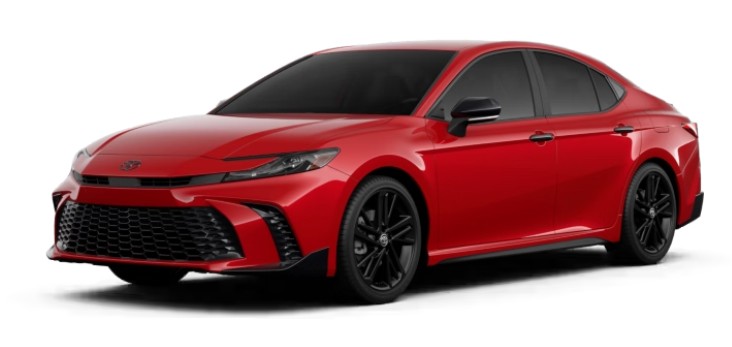
The modern Camry no longer looks like a sedan designed exclusively for sensible accountants. Toyota has given it a lower-looking front end, slim lighting elements, sculpted bodywork, and distinct personalities across its trims.
LE and XLE models lean toward refinement. SE, Nightshade, and XSE versions bring sportier styling details, larger wheels, and a more assertive stance. The overall effect is mature without being sleepy.
The Camry looks substantial on the road. It carries more visual weight than the Civic, which may appeal to buyers who want their sedan to feel closer to an executive car.
Honda Civic Styling
The Civic follows a cleaner and more restrained design philosophy. Its proportions are low and wide, while its roofline gives it an almost fastback-like silhouette.
Rather than covering the body in dramatic creases, Honda keeps the surfaces relatively simple. This makes the Civic look modern without trying too hard. Sport and hybrid trims add larger wheels and darker exterior accents, but the basic shape remains elegant.
The Civic appears youthful and athletic. The Camry looks broader and more substantial. Neither approach is objectively superior; the winner depends on what we want our car to communicate.
Interior Design and Cabin Atmosphere
Camry Interior Experience
Inside the Camry, the dashboard has a layered design that wraps gently toward the front occupants. The cabin feels wider than the Civic’s, and higher trims add upgraded materials, larger displays, additional seat adjustments, and more comfort-oriented features.
The Camry’s controls are generally positioned logically. We do not need a degree in software engineering merely to change the temperature. That simplicity matters because a car’s interior should support driving rather than compete for our attention.
Lower trims are practical rather than luxurious. Move into the XLE or XSE, however, and the Camry begins to feel noticeably more premium.
Civic Interior Experience
The Civic’s interior is one of its strongest qualities. Its dashboard is clean, horizontal, and remarkably easy to understand. A mesh-style trim panel cleverly hides the air vents, giving the cabin a distinctive look without creating unnecessary visual noise.
The driving position is low and natural. The controls feel thoughtfully placed, and visibility is generally good. Even entry-level versions avoid feeling as though every surface was selected solely by the accounting department.
The Civic’s cabin is narrower, but its minimalist design can make it feel open and organized. It resembles a tidy studio apartment: not enormous, yet intelligently arranged.
Passenger Space and Everyday Comfort
Front-Seat Room
Both cars provide comfortable front seating for most adults. The Civic’s seats feel supportive and slightly sporty, while the Camry’s wider cabin creates more breathing room between occupants.
Taller drivers may appreciate the Camry’s overall sense of space. However, many people will find the Civic’s driving position more engaging because the seat, steering wheel, and pedals create a closer connection to the road.
Rear-Seat Space
This is where the Camry begins to justify its larger dimensions.
Rear passengers generally receive more room to stretch out, and the broader cabin makes three-person seating less awkward. No sedan turns the center rear seat into a luxury lounge, but the Camry makes the task more realistic.
The Civic remains impressive for a compact car. Two average-size adults can sit in the rear without feeling trapped. Nevertheless, taller passengers will notice the difference between the two cars, especially on longer trips.
Which Is Better for Families?
The Camry usually wins for growing families because it offers:
- Easier child-seat access
- More space around rear-facing seats
- Greater comfort for teenage passengers
- A wider cabin for three occupants
- A more relaxed highway environment
The Civic still works well for one-child households, couples, or families that only occasionally use the rear seats. We should not buy a larger car merely because we might transport five adults once every two years.
Cargo Space and Practicality
The trunk-space contest is closer than the exterior dimensions might suggest.
The 2026 Camry provides approximately 15.1 cubic feet of cargo capacity, while Honda lists 14.8 cubic feet for the 2026 Civic Sedan. In other words, the Camry’s trunk is slightly larger, but not dramatically so.
The shape of the cargo area can matter as much as the official number. Wide openings, low liftover heights, and folding rear seats determine whether a trunk works in real life.
The Civic Hatchback Advantage
Honda offers a Civic Hatchback, and that version changes the practicality conversation completely. Its large rear opening makes it easier to load bulky objects, sports equipment, furniture boxes, or travel gear.
Honda lists 24.5 cubic feet of cargo volume behind the rear seats in the 2026 Civic Hatchback. That is considerably more useful than a traditional sedan trunk for many lifestyles.
Therefore:
- Choose the Camry for a spacious traditional sedan.
- Choose the Civic Sedan for compact efficiency.
- Choose the Civic Hatchback for maximum cargo flexibility.
Engines, Hybrid Systems, and Performance
Toyota Camry Powertrain
The current Camry lineup is hybrid-only. That means every buyer receives an electrified powertrain rather than choosing between a conventional gasoline engine and a hybrid upgrade.
For 2026, Toyota advertises up to 225 combined horsepower with front-wheel drive and up to 232 combined horsepower with available electronic all-wheel drive.
That output gives the Camry confident acceleration for merging, passing, and everyday commuting. The power delivery is smooth, and the electric assistance makes the car feel responsive at lower speeds.
The Camry is not a sports sedan in the classic rear-wheel-drive sense. Still, it has enough strength to prevent highway driving from becoming a patience exercise.
Honda Civic Powertrain Choices
The Civic offers more mechanical variety.
Depending on trim and body style, buyers can choose a conventional gasoline engine or a two-motor hybrid powertrain. The 2026 Civic Hybrid produces 200 horsepower, combining strong efficiency with brisk everyday acceleration.
Honda also keeps the enthusiast side of the Civic family alive through the manual-transmission Civic Si and the much more powerful Civic Type R.
That range gives the Civic an unusual breadth. It can be an efficient commuter, a practical hatchback, a sporty manual sedan, or a serious performance machine.
Which Car Feels Faster?
Comparing the mainstream hybrids, the Camry has the higher advertised total output, but the Civic’s lighter, more compact character can make it feel energetic and responsive.
The Camry delivers speed with less drama. Press the accelerator, and it gathers pace smoothly.
The Civic feels more playful. Its steering and chassis encourage us to notice the road rather than simply glide over it.
For straight-line confidence, the Camry has an advantage. For driver involvement, the Civic often feels more alive.
Fuel Economy Comparison
Fuel economy is one of the strongest reasons to consider either model.
Toyota states that the 2026 Camry can achieve up to an EPA-estimated 51 mpg combined in its most efficient configuration.
Honda lists the 2026 Civic Hybrid at 50 mpg city, 47 mpg highway, and 49 mpg combined. Non-hybrid Civic trims return lower figures, with ratings varying by configuration.
Those numbers place the Camry and Civic Hybrid remarkably close. Real-world results will depend on temperature, traffic, driving style, tire pressure, speed, and vehicle load. The EPA itself emphasizes that actual mileage varies according to several controllable and uncontrollable factors.
Which One Saves More Fuel?
For drivers comparing the most efficient versions, neither car delivers a crushing victory. The difference may be only a few gallons across an entire year.
A more practical question is whether we want hybrid efficiency as standard or optional.
- Every current Camry uses a hybrid powertrain.
- Only selected Civic trims are hybrids.
- Gas-only Civics may cost less initially.
- Hybrid Civics deliver the best combination of performance and economy within the mainstream Civic range.
Ride Quality and Highway Comfort
Camry Ride
The Camry is designed to absorb distance. Its longer wheelbase, broader stance, and comfort-oriented tuning help it feel stable on highways.
LE and XLE trims generally emphasize smoothness, while SE and XSE versions use sportier suspension tuning and larger wheels. Those sportier models may look sharper, but larger wheels can transmit more road texture into the cabin.
For drivers who spend hours on interstates, the Camry’s calmer personality can feel like noise-canceling headphones for the road.
Civic Ride
The Civic rides comfortably for a compact car, but it communicates more of the pavement beneath it. That is not necessarily a flaw. Many drivers prefer a vehicle that feels alert rather than isolated.
Its compact dimensions and well-controlled body movements make it enjoyable on curved roads. The Civic changes direction with less effort and feels lighter on its feet.
The Camry is the better long-distance cruiser. The Civic is the more engaging dance partner.
Handling and Driving Enjoyment
The Civic traditionally builds its reputation around chassis quality, and the current car continues that theme. Steering is direct, body control is tidy, and the car feels easy to place on narrow roads.
The Camry has improved considerably in this area. It no longer floats through corners like a sofa pushed down a hill. Sport-oriented trims feel reasonably controlled, and the hybrid powertrain provides useful acceleration.
Still, physics remains physics. The Civic is smaller and feels more agile.
Choose the Civic When Driving Fun Matters
The Civic is likely to satisfy us more when we:
- Enjoy winding roads
- Prefer responsive steering
- Want a lower seating position
- Value a lightweight feel
- Plan to consider the Civic Si
- Want a manual transmission in a performance trim
Choose the Camry When Relaxation Matters
The Camry is more convincing when we:
- Drive long highway distances
- Carry passengers frequently
- Prefer smoother responses
- Want stronger standard output
- Need available all-wheel drive
- Care more about calmness than cornering excitement
All-Wheel Drive and Bad-Weather Capability
One of the Camry’s clearest advantages is available all-wheel drive. Toyota offers its electronic on-demand AWD system across the lineup, allowing buyers to add extra traction without abandoning the hybrid powertrain.
The mainstream Civic remains front-wheel drive.
Does that make the Camry automatically superior in rain or snow? Not entirely. Tires have a huge influence on braking, steering, and traction. A front-wheel-drive Civic equipped with high-quality seasonal tires may perform better than an AWD Camry wearing unsuitable rubber.
Nevertheless, AWD can be valuable for drivers dealing with steep roads, frequent snowfall, loose surfaces, or slippery starts.
For buyers who insist on all-wheel drive, this comparison becomes simple: the Camry is the answer.
Technology and Infotainment
Both cars offer the connectivity features most buyers expect, including smartphone integration, digital displays, USB connectivity, and available premium audio systems.
Camry Technology
The Camry can be equipped with a large central touchscreen, a digital instrument display, wireless smartphone connectivity, a head-up display on selected trims, and various connected services.
Higher trims create the most impressive experience. The larger screens look modern, while physical climate controls preserve everyday usability.
Civic Technology
The Civic’s infotainment experience varies by trim. Entry versions use simpler displays, while upper models add a larger touchscreen, a digital gauge cluster, wireless phone integration, premium audio, and available Google built-in functionality.
Honda’s cabin layout may feel cleaner, while Toyota can provide a more feature-rich atmosphere in its higher trims.
We should test the exact versions under consideration. Comparing a base Civic with a loaded Camry—or the reverse—tells us very little about the broader model lines.
Safety and Driver Assistance
Modern versions of both vehicles offer extensive driver-assistance technology.
Typical systems include:
- Automatic emergency braking
- Forward-collision warning
- Lane-departure warning
- Lane-keeping assistance
- Adaptive cruise control
- Traffic-sign recognition
- Automatic high beams
- Blind-spot monitoring on selected trims
The precise availability of each feature depends on trim and configuration, so buyers should review the window sticker rather than assume every advertised feature is standard.
For 2026, the Toyota Camry appears on the Insurance Institute for Highway Safety’s midsize-car list as a Top Safety Pick+ under the organization’s updated criteria.
Size also deserves consideration. The IIHS notes that larger, heavier vehicles generally provide greater protection than smaller, lighter vehicles, although crashworthiness, structure, restraint systems, and avoidance technology remain critically important.
That does not make the Civic unsafe. It simply means we should consider both crash-test performance and vehicle size when evaluating occupant protection.
Reliability and Long-Term Ownership
Toyota Camry and Honda Civic reputations were not built through flashy advertising alone. Both nameplates have spent decades earning trust from commuters, families, fleets, students, and high-mileage owners.
However, reliability is not a magical property applied equally to every vehicle bearing the same badge. Results depend on:
- Model year
- Engine and transmission
- Maintenance history
- Driving conditions
- Accident history
- Climate exposure
- Previous-owner behavior
- Quality of repairs
A carefully maintained Civic can outlast a neglected Camry, and the reverse is equally true.
Hybrid Longevity Concerns
Some buyers still worry that hybrid systems automatically produce enormous repair bills. Modern hybrid components have become mainstream, and both Toyota and Honda have extensive experience with electrified powertrains.
Hybrid batteries do age, but that does not mean they routinely fail just after the warranty expires. When shopping used, we should evaluate service records, battery condition, mileage, and any remaining hybrid-component coverage.
Which Brand Has the Reliability Advantage?
Toyota may hold a slight perception advantage among risk-averse buyers, particularly because the Camry’s hybrid system builds on the company’s long history of hybrid development.
Honda counters with a strong record of durable compact cars and efficient engineering.
The realistic conclusion is simple: both are sensible long-term choices, provided we select the right model year and inspect the individual vehicle carefully.
Maintenance and Running Costs
The Civic’s smaller size can reduce certain expenses. Tires may cost less on modestly equipped trims, the car may be cheaper to purchase, and gas-only versions avoid some of the complexity buyers associate with hybrids.
The Camry’s standard hybrid system can reduce fuel consumption, while regenerative braking may help decrease conventional brake wear under normal driving conditions.
Insurance costs cannot be declared universally because premiums depend on location, age, driving record, coverage, annual mileage, trim, repair prices, and insurer-specific formulas.
Higher-performance Civic versions can be expensive to insure. Likewise, a loaded Camry XSE may cost considerably more to repair than a base model after a collision because it carries larger wheels, sensors, cameras, and additional equipment.
Before buying, we should obtain insurance quotes for the exact vehicle identification number or trim level. Guessing is not a financial strategy.
Purchase Price and Overall Value
The Civic normally has the lower starting price because it occupies a smaller vehicle class and offers non-hybrid entry trims. The Camry starts higher but includes hybrid power as standard.
This creates an important distinction between price and value.
The Civic may be the better value when we want:
- A lower initial cost
- Good fuel economy without paying for maximum space
- Sporty handling
- A practical but compact footprint
- Access to a hatchback body style
The Camry may justify its premium through:
- More passenger room
- Greater standard power
- Standard hybrid efficiency
- Available all-wheel drive
- Better long-distance comfort
- Stronger family-car versatility
A cheaper car is not automatically the better value, just as a larger car is not automatically the better purchase. Value means receiving the features and abilities we will actually use.
Trim Levels: Finding the Sweet Spot
Best Camry Trims for Most Buyers
The Camry LE is likely to appeal to efficiency-focused commuters. It delivers the strongest fuel-economy potential and avoids the cost and ride compromises associated with oversized wheels.
The Camry SE adds a sportier appearance and firmer character without moving into luxury-car pricing territory.
The XLE focuses on comfort and upscale features, while the XSE blends premium equipment with more aggressive styling.
The Nightshade trim sits between conventional and premium versions, adding dark exterior details for buyers who want extra visual character.
Best Civic Trims for Most Buyers
The entry Civic is attractive for shoppers prioritizing price and essential transportation.
The Civic Sport adds appearance upgrades and desirable convenience features.
The Sport Hybrid may be the lineup’s sweet spot because it combines the Civic’s sharp chassis with its efficient 200-horsepower hybrid system.
The Sport Touring Hybrid adds the richest technology and comfort package.
For enthusiasts, the Civic Si and Type R exist in their own universe. They should not be compared directly with a regular Camry because their missions are fundamentally different.
Toyota Camry Versus Honda Civic for City Driving
The Civic wins the urban contest for most drivers.
Its shorter body makes parallel parking easier. It fits naturally in tight garages, feels less cumbersome in crowded traffic, and changes lanes with a nimble confidence.
The Camry remains perfectly manageable, but its extra length and width are always present. We gain cabin room, yet we must carry those dimensions through every parking structure and narrow street.
Choose the Civic when most journeys involve:
- Dense traffic
- Compact parking spaces
- Short commutes
- Narrow streets
- Frequent stops
- Limited garage room
Toyota Camry Versus Honda Civic for Highway Driving
The Camry takes the lead when the road opens up.
Its cabin feels roomier, the ride is more settled, and the powertrain provides confident passing performance. Passengers also benefit from additional rear-seat space on long journeys.
The Civic is efficient and stable at highway speeds, but its compact-car character remains noticeable. Depending on trim, wheel size, and road surface, tire and wind noise may be more apparent.
For weekly interstate travel or regular family road trips, the Camry is the more natural companion.
Toyota Camry Versus Honda Civic for Students
The Civic is usually the more logical student car.
It can cost less to buy, fits easily around campuses, delivers good fuel economy, and provides enough space for everyday life. A Civic Hatchback is especially useful for moving boxes, luggage, sports equipment, or small pieces of furniture.
The Camry makes sense for students who frequently travel long distances, carry several passengers, or need a vehicle that can transition easily into post-graduation family life.
When buying used, condition matters more than badge prestige. A clean, well-maintained older Civic is a better student car than a newer Camry with accident damage and missing maintenance records.
Toyota Camry Versus Honda Civic for Families
The Camry is the stronger family choice.
It offers more rear-seat room, easier accommodation for child seats, and a calmer ride. Available AWD can also be attractive in regions with challenging winter weather.
The Civic works for smaller families and can be remarkably practical in hatchback form. However, once rear-facing child seats, strollers, travel bags, and adult passengers enter the equation, the Camry’s additional size becomes valuable.
The Civic can handle family duty. The Camry simply handles it with fewer compromises.
Resale Value
Both vehicles are likely to attract used-car buyers because the Camry and Civic names are familiar, economical, and widely supported by parts and service networks.
Resale value depends on more than the model itself. The strongest used-car prices usually go to vehicles with:
- Clean accident histories
- Documented maintenance
- Reasonable mileage
- Popular colors
- Desirable trims
- Original equipment
- Clean interiors
- No warning lights or unresolved recalls
Extreme modifications can narrow the buyer pool, especially with Civics. A stock, well-maintained car generally appeals to more shoppers than one wearing a loud exhaust, questionable suspension parts, and a mysterious engine tune.
Used Toyota Camry Versus Used Honda Civic
The used market expands the comparison across multiple generations and powertrains.
Older Camrys may offer gasoline four-cylinder engines, V6 options, or hybrid systems. Older Civics may include naturally aspirated engines, turbocharged engines, manuals, continuously variable transmissions, hybrids, sedans, coupes, and hatchbacks.
When shopping used, follow this order:
- Establish a realistic total budget.
- Research the exact model year and powertrain.
- Review the vehicle-history report.
- Inspect maintenance records.
- Check for open recalls.
- Arrange an independent pre-purchase inspection.
- Test every electronic feature.
- Drive the vehicle from a cold start.
- Listen for unusual suspension or drivetrain noises.
- Compare the asking price with similar local listings.
The badge on the grille matters. The life the car has lived matters more.
The Biggest Strengths of the Toyota Camry
The Camry’s most important advantages include:
- Spacious midsize cabin
- Standard hybrid powertrain
- Strong fuel economy
- Available all-wheel drive
- Confident acceleration
- Comfortable highway manners
- Family-friendly rear seating
- Broad trim selection
- Strong safety credentials
- Established resale appeal
Its greatest weakness is that buyers pay more for a larger vehicle, whether or not they truly need the additional space.
The Biggest Strengths of the Honda Civic
The Civic’s standout qualities include:
- Lower-cost entry point
- Sharp handling
- Efficient use of interior space
- Excellent hybrid option
- Sedan and hatchback configurations
- Easier urban maneuverability
- Clean cabin design
- Available manual-transmission performance models
- Strong daily usability
- Broad appeal across different buyer types
Its main limitation is that it cannot match the Camry’s rear-seat room, relaxed highway character, or available AWD.
Possible Drawbacks of Each Car
Toyota Camry Drawbacks
Potential Camry disadvantages include:
- Higher starting cost
- Larger footprint
- No non-hybrid budget model
- Less agile than the Civic
- Sport trims may ride more firmly
- Sedan-only practicality
- No true enthusiast version
Honda Civic Drawbacks
Potential Civic disadvantages include:
- Less rear-seat space
- No mainstream all-wheel-drive option
- Smaller overall cabin
- More road noise in some configurations
- Hybrid trims cost more than base gasoline models
- Performance trims may carry high insurance premiums
Which One Should We Buy?
We should buy the Toyota Camry when we need one car to serve as commuter, family sedan, road-trip vehicle, and comfortable long-term companion. It gives us more room, standard hybrid power, strong fuel economy, and available AWD.
We should choose the Honda Civic when we want lower entry costs, easier city driving, sharper handling, or hatchback practicality. It delivers an enjoyable driving experience without abandoning efficiency or everyday comfort.
The decision becomes easier when we stop asking, “Which car is better?” and start asking, “Which car is better for the way we actually live?”
Buy the Toyota Camry If:
- Adults regularly use the rear seats.
- We drive long highway distances.
- We want hybrid power as standard.
- We need available AWD.
- Ride comfort matters more than sporty handling.
- We expect our household to grow.
Buy the Honda Civic If:
- We want to spend less initially.
- We drive mainly in cities.
- We enjoy responsive handling.
- We rarely carry three rear passengers.
- We want a hatchback option.
- We are interested in Si or Type R performance.
Final Verdict: Camry Comfort or Civic Agility?
In the Toyota Camry versus Honda Civic comparison, there is no universal champion because these cars solve slightly different problems.
The Camry is the more complete family sedan. It is larger, stronger, calmer, and better prepared for long trips. Its standard hybrid powertrain makes excellent fuel economy part of the basic package rather than a premium upgrade.
The Civic is the more versatile compact. It is easier to park, more enjoyable on curved roads, and available in more distinct personalities. It can be a sensible commuter, a practical hatchback, or a genuine performance car.
For families and frequent highway travelers, we would lean toward the Camry. For students, couples, city drivers, and people who enjoy a more agile car, we would lean toward the Civic.
Think of the Camry as a spacious living room on wheels. The Civic is a clever downtown apartment with excellent furniture and a lively neighborhood. The right choice depends on where—and how—we want to live.
Frequently Asked Questions
1. Is a Toyota Camry bigger than a Honda Civic?
Yes. The Toyota Camry is a midsize sedan, while the Honda Civic is classified as a compact car. The Camry generally provides more rear-seat space and a wider cabin, making it better suited to families and frequent passengers.
2. Which gets better gas mileage, the Camry or Civic?
The most efficient versions are closely matched. Toyota advertises up to 51 mpg combined for the 2026 Camry, while the 2026 Civic Hybrid is rated at up to 49 mpg combined. Actual fuel economy depends on trim, weather, traffic, and driving habits.
3. Is the Honda Civic more fun to drive than the Camry?
For many drivers, yes. The Civic feels smaller, lighter, and more responsive. The Camry focuses more heavily on smoothness, passenger comfort, and highway stability, although its sport-oriented trims provide firmer handling.
4. Which is better for a family, the Camry or Civic?
The Camry is usually better for families because of its larger rear seat, wider cabin, smoother ride, and available AWD. The Civic can still serve a small household effectively, especially in practical hatchback form.
5. Which will last longer, a Toyota Camry or Honda Civic?
Both can deliver long service lives when maintained properly. Model year, service history, driving conditions, and previous-owner care influence longevity more than the nameplate alone. A professional inspection is essential when buying either vehicle used.
If you want to see other articles similar to Toyota Camry Versus Honda Civic: Which Sedan Fits Your Life Best? you can visit the Compare category.
Ford Bronco Pros and Cons: Complete Buyer’s Guide
2026 Ford Bronco Towing: Capacity, Equipment, and Real-World Limits
Ford Bronco Gas Tank Size: 2026 U.S. Guide
2026 Ford Bronco Big Bend vs Outer Banks: Features and Differences Explained
2026 Ford Bronco Trim Levels in Order: Complete U.S. Guide
Ford Bronco Models Explained for U.S. Buyers
Leave a Reply
Related Topics