

Toyota bZ 2026 Range USA: How Far Can It Really Go?

Contents in this publication
- Toyota bZ 2026 Range Overview
- How Much Better Is the 2026 Toyota bZ Range?
- Toyota bZ 2026 Battery Options
- What Is the Real-World Toyota bZ 2026 Range?
- 2026 Toyota bZ Charging Time
- NACS Changes the Toyota bZ Ownership Experience
- Battery Preconditioning and Cold-Weather Range
- Toyota bZ 2026 Performance and Range Balance
- Toyota bZ Range by Trim: Which One Should We Buy?
- Can the 2026 Toyota bZ Handle Road Trips?
- How to Maximize Toyota bZ Driving Range
- How the Toyota bZ Range Compares With Gasoline Driving
- Is the 2026 Toyota bZ Range Good Enough?
- What Else Changed for 2026?
- Potential Toyota bZ Range Disadvantages
- Final Verdict: Toyota bZ 2026 Range USA
- Frequently Asked Questions
The Toyota bZ 2026 range in the USA reaches up to an EPA-estimated 314 miles per full charge, a major improvement that turns Toyota’s electric SUV into a much more convincing option for American drivers.
That headline number belongs to the 2026 Toyota bZ XLE FWD Plus, which uses the larger 74.7-kWh battery and front-wheel drive. Other configurations deliver between approximately 236 and 299 miles, depending on battery size, drivetrain, trim, and wheel setup.
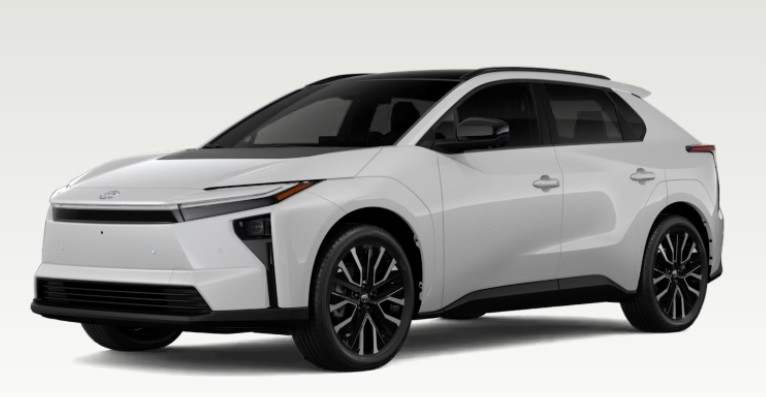
More importantly, the 2026 model is not simply last year’s SUV with a few extra miles squeezed from its battery. Toyota has renamed the vehicle from bZ4X to bZ, increased power, adopted a native North American Charging System port, improved AC charging, added battery preconditioning, and redesigned portions of the cabin and exterior.
In other words, Toyota appears to have listened.
The previous bZ4X sometimes felt like an early draft of Toyota’s electric ambitions. The 2026 Toyota bZ feels closer to the finished paragraph.
Toyota bZ 2026 Range Overview
Here are the official U.S. driving-range figures buyers need to know:
| 2026 Toyota bZ configuration | Battery | Drivetrain | EPA-estimated range |
|---|---|---|---|
| XLE FWD | 57.7 kWh | Front-wheel drive | 236 miles |
| XLE FWD Plus | 74.7 kWh | Front-wheel drive | 314 miles |
| Limited FWD | 74.7 kWh | Front-wheel drive | 299 miles |
| XLE AWD | 74.7 kWh | All-wheel drive | 288 miles |
| Limited AWD | 74.7 kWh | All-wheel drive | 299 miles |
Toyota’s consumer website identifies the XLE FWD Plus as the range leader at 314 miles. It also lists 288 miles for the XLE AWD and 299 miles for the Limited trim.
The unusual detail in this lineup is that the Limited AWD is rated higher than the XLE AWD. Normally, added equipment, larger wheels, or extra weight reduce range. Vehicle certification, tire selection, equipment combinations, and drivetrain calibration can all influence the final EPA figure, however, so trim names alone do not tell the entire efficiency story.
Which Toyota bZ Has the Longest Range?
The 2026 Toyota bZ XLE FWD Plus has the longest range in the U.S. lineup:
- EPA-estimated range: 314 miles
- Battery capacity: 74.7 kWh
- Drivetrain: Front-wheel drive
- Power output: Up to 221 horsepower
- Charging connection: Native NACS port
- Starting position: Above the smaller-battery XLE FWD
This is likely to be the sweet spot for many shoppers. It combines the larger battery with the efficiency advantage of a single-motor, front-wheel-drive system.
Think of it as the long-distance runner of the bZ family. It may not launch as violently as the AWD models, but it carries its energy farther.
Why Front-Wheel Drive Travels Farther
An all-wheel-drive electric vehicle typically uses two motors instead of one. That additional motor improves acceleration and traction, but it also adds weight and creates extra electrical and mechanical losses.
The FWD Plus avoids some of that penalty. Its single-motor layout lets the 74.7-kWh battery focus on distance rather than maximum performance.
For drivers in warm or moderate climates who rarely face deep snow, steep unpaved roads, or slippery mountain conditions, the front-wheel-drive version may offer the most practical balance.
How Much Better Is the 2026 Toyota bZ Range?
The previous Toyota bZ4X XLE FWD carried an EPA-estimated range of 252 miles. The 2026 XLE FWD Plus reaches 314 miles, representing an increase of approximately 25 percent.
That is a gain of 62 miles.
Toyota itself describes the 314-mile figure as a 25-percent improvement over the outgoing 252-mile model.
Sixty-two miles may not sound revolutionary until we place it in everyday terms. That difference can represent:
- Several extra commuting days before charging
- A longer highway section between charging stops
- More flexibility during cold weather
- Greater tolerance for missed or occupied chargers
- Less concern when starting a trip below 100 percent
- A wider safety cushion when driving in rural areas
Range is not merely a number on a dashboard. It is breathing room.
2025 bZ4X vs 2026 Toyota bZ Range
| Model | Representative FWD range | Representative AWD range |
|---|---|---|
| 2025 Toyota bZ4X | Up to 252 miles | Up to 228 miles |
| 2026 Toyota bZ | Up to 314 miles | Up to 299 miles |
| Maximum improvement | 62 miles | Up to 71 miles |
The improvement is particularly meaningful for AWD shoppers. Earlier AWD versions struggled to compete with longer-range electric crossovers, but the 2026 lineup pushes close to the 300-mile threshold.
That psychological threshold matters. For many Americans, 300 miles feels less like an experimental EV and more like a normal road-trip vehicle.
Toyota bZ 2026 Battery Options
Toyota offers two lithium-ion battery capacities in the 2026 bZ:
57.7-kWh Battery
The smaller battery is fitted to the standard XLE FWD configuration.
Its EPA-estimated range is approximately 236 miles, making it the least expensive and shortest-range version of the lineup.
This model may suit:
- Urban commuters
- Two-car households
- Drivers with reliable home charging
- Shoppers prioritizing a lower purchase price
- Owners who rarely travel long distances
The smaller battery is not necessarily a weakness. Carrying less battery weight can make sense when a driver does not need 300 miles every day.
Buying more battery than we regularly use can be like carrying a full suitcase to the grocery store. It works, but it is not always necessary.
74.7-kWh Battery
The larger 74.7-kWh unit powers the following versions:
- XLE FWD Plus
- XLE AWD
- Limited FWD
- Limited AWD
Depending on the configuration, it produces an EPA-estimated range of 288 to 314 miles.
Toyota’s original 2026 product announcement confirmed that the larger battery would be used by the XLE FWD Plus, XLE AWD, Limited FWD, and Limited AWD models.
Is 74.7 kWh Enough for 314 Miles?
A 314-mile rating from a 74.7-kWh battery suggests competitive energy efficiency.
Dividing 314 miles by 74.7 kWh gives a theoretical figure of roughly 4.2 miles per kWh, although usable battery capacity, EPA testing procedures, charging reserves, and real-world conditions prevent that simple calculation from being exact.
Still, it shows that Toyota did not achieve the improved range by installing an enormous and heavy battery. Efficiency upgrades play an important role.
What Is the Real-World Toyota bZ 2026 Range?
EPA figures offer a standardized comparison, but real roads are rarely standardized.
A 314-mile Toyota bZ may deliver close to that figure in mild weather, mixed-speed driving, and efficient conditions. At sustained interstate speeds, in freezing temperatures, or with a fully loaded cabin, actual range will normally be lower.
A practical real-world estimate for the 314-mile model might look like this:
| Driving conditions | Possible real-world range |
|---|---|
| Mild weather, mixed driving | 285–325 miles |
| Warm city driving | 300–335 miles |
| Highway driving at 70–75 mph | 245–285 miles |
| Cold winter highway driving | 210–260 miles |
| Heavy cargo, wind, hills, or roof load | Varies considerably |
These are broad planning estimates rather than official Toyota ratings. An individual result can land above or below them.
Factors That Reduce Electric Range
The biggest variables include:
- Highway speed
- Outside temperature
- Cabin heating
- Air-conditioning use
- Tire pressure
- Wheel and tire selection
- Elevation changes
- Headwinds
- Passenger and cargo weight
- Roof racks or cargo boxes
- Aggressive acceleration
- Battery temperature
- Rain, snow, or standing water
An EV moving at 75 mph pushes through the air like a swimmer fighting a current. Increase speed, and aerodynamic resistance rises rapidly.
That is why a 314-mile EPA rating should not automatically be interpreted as 314 miles of nonstop high-speed interstate travel.
How Much Range Should We Use Between Stops?
On a road trip, most drivers will not travel from 100 percent all the way to zero. A more comfortable pattern may involve departing near 90 or 100 percent and stopping with 10 to 20 percent remaining.
Using 80 percent of the 314-mile rating gives approximately 251 miles between a full departure and a 20-percent arrival.
Using the common 10-to-80-percent fast-charging window gives access to roughly 70 percent of the rated range, or about 220 miles in ideal conditions.
Real highway intervals may be lower, but this remains a substantial improvement over the outgoing model.
2026 Toyota bZ Charging Time
Range tells us how far the SUV can travel. Charging tells us how easily we can repeat the journey.
Toyota says the 2026 bZ can charge from 10 to 80 percent in around 30 minutes at a compatible DC fast charger under ideal conditions.
That time is competitive enough for a meal, coffee break, or stretch during a highway trip.
However, “around 30 minutes” depends on several factors:
- Charger output
- Battery temperature
- Starting state of charge
- Outside temperature
- Charging-station performance
- Vehicle software
- Battery protection limits
- Whether another vehicle shares station power
Fast-charging speed also changes throughout a session. The battery usually accepts power faster at a lower state of charge and slows as it approaches 80 or 100 percent.
Level 2 Home Charging
The 2026 bZ receives an 11-kW onboard AC charger, replacing the previous model’s lower-capacity 7-kW unit.
Toyota estimates that Level 2 charging can take the battery from 10 to 100 percent in approximately seven hours under appropriate conditions.
That makes overnight charging straightforward for most owners.
We arrive home, connect the cable, go to sleep, and wake up with the electronic equivalent of a full fuel tank. That quiet convenience remains one of the strongest arguments for EV ownership.
Level 1 Charging
The included dual-voltage charging cable also supports charging from a standard 120-volt household outlet.
Level 1 charging is slow, but it can still work for:
- Short daily commutes
- Overnight top-ups
- Emergency charging
- Drivers covering fewer than 30 or 40 miles per day
- Owners without immediate access to a 240-volt circuit
For the larger battery, relying entirely on Level 1 power would require patience. It is more of a drinking straw than a fire hose.
Should We Install a Level 2 Charger?
For most owners driving regularly, yes.
A home Level 2 setup allows the vehicle to recover a typical day’s driving within a few hours. It also makes scheduled charging easier and reduces dependence on public infrastructure.
Installation cost varies according to:
- Electrical-panel capacity
- Distance from the panel to the parking space
- Local labor rates
- Permit requirements
- Charger model
- Whether trenching or wall work is required
Before buying, homeowners should request an electrical assessment rather than assume their current panel can support the ideal charging rate.
NACS Changes the Toyota bZ Ownership Experience
One of the most important 2026 updates is not hidden under the floor. It is located behind the charging door.
The Toyota bZ now uses a native North American Charging System, also identified as SAE J3400, connection.
This allows compatible access to thousands of additional charging plugs, including more than 25,000 Tesla Supercharger plugs in North America, according to Toyota.
That expanded access can matter as much as the larger battery.
A 300-mile EV with unreliable charging is still stressful. A 300-mile EV connected to a dense, dependable network feels far more useful.
What About CCS and J1772 Chargers?
Toyota says 2026 battery-electric vehicles include adapters for backward compatibility with SAE J1772 and CCS charging stations.
That means owners are not locked into one ecosystem.
The native NACS connection handles compatible NACS stations, while adapters help preserve access to many older AC and DC charging locations.
Plug & Charge Capability
The 2026 bZ also supports Plug & Charge.
After enrollment through the Toyota app, a compatible station can identify the vehicle and process the charging session without requiring the driver to open a separate app, scan a QR code, or repeatedly enter payment details.
That may sound minor, but public charging often becomes frustrating because of tiny inconveniences stacked on top of one another.
A failed login here. A weak signal there. An unreadable card terminal in the rain.
Plug & Charge aims to remove some of that friction.
Battery Preconditioning and Cold-Weather Range
Toyota has added battery preconditioning across the 2026 bZ lineup.
The system prepares the battery for DC fast charging by bringing it toward an optimal temperature. It can be activated manually or triggered automatically when the navigation system routes the vehicle to a fast-charging station.
This is especially important in cold U.S. regions.
A frozen battery may charge more slowly, just as cold syrup pours more reluctantly than warm syrup. Preconditioning helps the battery accept power more effectively when the vehicle arrives at the charger.
Does Preconditioning Increase Driving Range?
Not directly in the same way as a larger battery, but it improves the overall travel experience.
Benefits may include:
- Faster winter charging
- More predictable road-trip stops
- Reduced charging delays
- Better battery temperature management
- Improved consistency in cold climates
Preconditioning itself consumes some energy. The goal is not free range; it is better thermal preparation and more dependable charging.
Winter Range Expectations
Drivers in Minnesota, Colorado, Michigan, New York, or other cold regions should expect winter range to fall below the EPA estimate.
The cabin heater, battery heating, dense cold air, winter tires, and snow-covered roads all increase consumption.
Starting with a warm battery while the vehicle is still plugged in can help. So can preheating the cabin using grid electricity rather than battery energy.
Toyota bZ 2026 Performance and Range Balance
The 2026 Toyota bZ is not only more efficient. It is substantially more powerful.
Front-wheel-drive models produce up to 221 horsepower, while AWD versions generate a combined 338 horsepower.
Toyota reports a 0-to-60-mph time of approximately 4.9 seconds for AWD models.
That is sports-car acceleration in a practical electric crossover.
Does AWD Reduce Range?
Usually, yes.
The XLE AWD is rated at 288 miles, compared with 314 miles for the XLE FWD Plus. That is a difference of 26 miles.
In return, AWD buyers receive:
- Stronger acceleration
- Dual-motor traction
- X-MODE capability
- Greater confidence on slippery surfaces
- Better power distribution in poor conditions
The correct choice depends on where and how we drive.
A Florida commuter may value every additional mile. A Colorado driver climbing snowy roads may happily exchange some range for traction.
Is the AWD Model Worth It?
AWD is most valuable for drivers who regularly face:
- Snow or ice
- Steep terrain
- Unpaved roads
- Heavy rain
- Rapid highway merging
- A preference for stronger acceleration
It is less essential for mild-climate suburban driving, especially when the vehicle wears quality tires.
Remember, AWD helps the vehicle accelerate. Tires and brakes remain critical when turning and stopping.
Toyota bZ Range by Trim: Which One Should We Buy?
XLE FWD: Best for Lower-Cost Commuting
The standard XLE FWD begins at a base MSRP of $34,900, excluding destination charges and other fees. Toyota lists its range at approximately 236 miles.
Choose it when:
- Purchase price matters most
- Daily driving is predictable
- Home charging is available
- Long road trips are uncommon
- Maximum performance is unnecessary
Its shorter range may be perfectly adequate for someone driving 30 miles per day.
XLE FWD Plus: Best Overall Range
The XLE FWD Plus is the obvious choice for distance-focused buyers.
Its 314-mile rating gives it:
- The longest range in the lineup
- The larger battery
- Lower consumption than dual-motor versions
- Better road-trip flexibility
- A stronger buffer against winter losses
For many households, this will be the rational center of the range.
XLE AWD: Best Balance of Traction and Value
The XLE AWD combines 338 horsepower, X-MODE, and an EPA-estimated 288 miles.
That remains enough for everyday commuting and occasional road trips while delivering a major performance upgrade.
It is likely to appeal to drivers who want AWD but do not need every luxury feature of the Limited.
Limited FWD: Comfort Without AWD
The Limited FWD is rated at 299 miles.
It adds premium equipment while staying close to the 300-mile mark. Toyota lists features such as SofTex-trimmed seating and heated and ventilated front seats on the Limited grade.
This version makes sense for drivers prioritizing:
- Cabin comfort
- Premium conveniences
- Near-300-mile range
- Front-wheel-drive efficiency
- A more upscale daily experience
Limited AWD: Luxury, Speed, and 299 Miles
The Limited AWD delivers an unusual combination:
- 338 horsepower
- AWD traction
- Approximately 299 miles of range
- Premium cabin features
- Strong acceleration
It is the all-rounder for buyers who want most of the available performance and comfort without dropping far below the 300-mile line.
Can the 2026 Toyota bZ Handle Road Trips?
Yes, particularly in the larger-battery configurations.
The combination of up to 314 miles of rated range, NACS access, battery preconditioning, Plug & Charge, and approximately 30-minute 10-to-80-percent charging makes the 2026 bZ far more road-trip-ready than earlier versions.
A hypothetical 600-mile trip might involve:
- Starting at 100 percent
- Driving approximately 230 to 270 highway miles
- Charging from around 10 or 20 percent to 80 percent
- Driving another 180 to 220 miles
- Taking a second shorter charging stop
- Arriving with a reasonable reserve
Exact timing depends heavily on speed, temperature, route, and charger placement.
Planning a Long Trip
Before departure, we should:
- Check compatible charging stations
- Review recent station reliability
- Plan a backup charger
- Precondition before fast charging
- Avoid arriving below 5 percent when possible
- Consider weather and elevation
- Leave extra range in remote areas
- Charge overnight at hotels when available
A good EV road trip is less like following a rigid railway timetable and more like sailing. We watch conditions, maintain a reserve, and adjust when necessary.
Should We Charge to 100 Percent on the Road?
Usually, no.
Charging slows substantially near the top of the battery. During most road trips, leaving around 70 to 85 percent can save time if another charger is comfortably within range.
Charging to 100 percent may make sense when:
- Crossing a charger desert
- Driving through extreme cold
- Towing or carrying heavy loads
- Facing strong headwinds
- The next charger has uncertain reliability
- The vehicle will depart immediately after charging
For routine daily use, owners should follow Toyota’s battery-care recommendations in the owner’s manual.
How to Maximize Toyota bZ Driving Range
A few habits can meaningfully improve efficiency.
Drive Smoothly
Electric motors deliver instant torque, which can tempt us to sprint away from every traffic light.
Gentle acceleration reduces energy use and is usually easier on tires.
Use Regenerative Braking Wisely
The 2026 bZ adds steering-wheel paddles that allow the driver to adjust regenerative braking strength.
Stronger regeneration can be useful in city traffic or on downhill roads, while lighter regeneration may allow more efficient coasting in other conditions.
The best setting depends on the road, not simply on choosing the strongest mode every time.
Control Highway Speed
Reducing speed from 75 to 68 or 70 mph can noticeably improve range.
The time difference over a moderate journey may be small, while the energy savings can be meaningful.
Precondition While Plugged In
Heating or cooling the cabin before departure allows the vehicle to draw energy from the grid rather than relying entirely on the battery.
This is particularly useful during winter.
Check Tire Pressure
Underinflated tires increase rolling resistance and reduce efficiency.
Pressure should be checked when the tires are cold and adjusted according to Toyota’s specification label, not the maximum number printed on the tire sidewall.
Remove Unnecessary Roof Accessories
Roof boxes, baskets, and exposed equipment disturb airflow.
At highway speed, a large roof box can behave like a small parachute.
How the Toyota bZ Range Compares With Gasoline Driving
A gasoline SUV might travel 350 to 450 miles per tank, but the comparison is not as simple as matching the largest numbers.
Most EV owners charge at home, meaning they may begin almost every morning with ample range. Gasoline drivers must visit a station after consuming the tank.
An EV’s daily convenience can therefore be greater even when its maximum range is lower.
The trade-off appears on long trips:
- Gasoline refueling takes minutes
- EV charging takes longer
- EV owners can perform other activities while charging
- Home charging eliminates many routine fuel stops
- Electricity costs vary by location and charging network
- Public fast charging is usually more expensive than home charging
The Toyota bZ makes the most sense when home or workplace charging handles the majority of energy needs.
Is the 2026 Toyota bZ Range Good Enough?
For most American drivers, yes.
The average person does not need 314 miles every day. What matters is whether the vehicle can complete routine travel comfortably and handle occasional longer journeys without unreasonable disruption.
The larger-battery bZ models meet that test for many households.
The 236-mile base version requires more consideration. It may be ideal for commuting but less flexible for frequent highway travel in cold regions.
Who Should Choose the 314-Mile Model?
The XLE FWD Plus is especially suitable for:
- High-mileage commuters
- Frequent highway travelers
- Drivers without charging at work
- Buyers living in colder climates
- Owners wanting fewer road-trip stops
- Households using the bZ as their primary vehicle
Who Can Live With 236 Miles?
The standard XLE FWD may be enough for:
- City residents
- Retired drivers
- Short-distance commuters
- Households with another road-trip vehicle
- Owners with dependable nightly charging
- Budget-conscious EV buyers
The right range is not always the highest range. It is the amount that fits our actual life with a sensible reserve.
What Else Changed for 2026?
Beyond range, Toyota made several important updates.
The bZ4X Name Is Gone
For 2026, Toyota shortened the name from bZ4X to bZ.
The simpler name is easier to pronounce, remember, and type into a search bar.
Updated Exterior Design
The front receives slimmer lighting, a revised fascia, and Toyota’s hammerhead-inspired styling.
Color-matched overfenders are also available, softening the contrasting plastic-heavy appearance that divided opinions on the previous model.
Redesigned Interior
The cabin gains:
- A 14-inch Toyota Audio Multimedia touchscreen
- Two front wireless phone chargers
- Four USB-C ports
- A redesigned center console
- Softer dashboard materials
- Customizable 64-color ambient lighting
Toyota also retains up to approximately 27.7 cubic feet of cargo space behind the rear seats.
Toyota Safety Sense 3.0
Toyota Safety Sense 3.0 remains part of the vehicle’s safety and driver-assistance package.
These systems are designed to assist the driver, not replace attentive driving.
Potential Toyota bZ Range Disadvantages
No EV is perfect, and shoppers should consider several limitations.
The Base Model Is Far Below 300 Miles
The 236-mile XLE FWD is significantly less flexible than the XLE FWD Plus.
Buyers attracted by the low starting price should confirm which battery they are purchasing.
EPA Range Is Not Guaranteed
Extreme cold, high speed, strong winds, and heavy loads can reduce range sharply.
A winter highway trip may look very different from the figure printed on a dealer window sticker.
Fast Charging Still Takes Time
Thirty minutes is reasonable for an EV, but it remains longer than gasoline refueling.
Families who regularly complete 800-mile driving days may prefer another powertrain or should accept longer stops.
Public Charging Costs Vary
Fast charging can sometimes approach or exceed the fuel cost of an efficient hybrid, depending on local prices.
The strongest financial case typically comes from charging at home during lower-cost periods.
Final Verdict: Toyota bZ 2026 Range USA
The 2026 Toyota bZ range in the USA is finally competitive enough to remove one of the model’s biggest weaknesses.
With up to 314 miles of EPA-estimated range, native NACS charging, access to thousands of additional fast chargers, battery preconditioning, an 11-kW onboard charger, and stronger performance, the bZ has matured into a more complete electric SUV.
The XLE FWD Plus is the range champion and probably the best choice for buyers who want maximum flexibility. The AWD models sacrifice relatively little distance while gaining 338 horsepower and stronger all-weather capability. Meanwhile, the 236-mile XLE FWD offers a lower entry price for drivers whose routines do not demand a large battery.
Toyota has not reinvented the electric vehicle. Instead, it has improved the details that shape ownership every day.
And sometimes that is exactly what a vehicle needs.
The old bZ4X often felt as though it were cautiously dipping a toe into the electric market. The 2026 bZ steps into the water with far more confidence.
Frequently Asked Questions
1. What is the 2026 Toyota bZ range in the USA?
The 2026 Toyota bZ offers between approximately 236 and 314 miles of EPA-estimated driving range, depending on the trim, battery, and drivetrain. The XLE FWD Plus provides the longest range at 314 miles.
2. Which 2026 Toyota bZ has a 314-mile range?
The Toyota bZ XLE FWD Plus has the 314-mile EPA-estimated range. It uses a 74.7-kWh battery and a single front electric motor.
3. How long does the 2026 Toyota bZ take to charge?
Toyota says DC fast charging can take the battery from 10 to 80 percent in around 30 minutes under ideal conditions. Level 2 charging can take approximately seven hours from 10 to 100 percent using the vehicle’s 11-kW onboard charger.
4. Does the 2026 Toyota bZ use a Tesla charging plug?
The 2026 Toyota bZ uses a native NACS, or SAE J3400, charging port. This provides access to compatible Tesla Superchargers and other NACS charging networks. Toyota also provides adapters for compatible J1772 and CCS stations.
5. Is the 2026 Toyota bZ better than the bZ4X?
The 2026 bZ improves on the previous bZ4X with more range, greater horsepower, native NACS compatibility, battery preconditioning, faster AC charging, updated styling, and a redesigned interior. For most buyers, it represents a substantial upgrade.
If you want to see other articles similar to Toyota bZ 2026 Range USA: How Far Can It Really Go? you can visit the Compare category.
Ford Bronco Pros and Cons: Complete Buyer’s Guide
2026 Ford Bronco Towing: Capacity, Equipment, and Real-World Limits
Ford Bronco Gas Tank Size: 2026 U.S. Guide
2026 Ford Bronco Big Bend vs Outer Banks: Features and Differences Explained
2026 Ford Bronco Trim Levels in Order: Complete U.S. Guide
Ford Bronco Models Explained for U.S. Buyers
Leave a Reply
Related Topics