

Toyota Camry Reliability by Year: Best and Worst Models

Contents in this publication
- Is the Toyota Camry a Reliable Car?
- Toyota Camry Reliability by Year at a Glance
- Understanding Toyota Camry Generations
- Toyota Camry Reliability by Individual Model Year
- 1997 Toyota Camry Reliability
- 1998–2001 Toyota Camry Reliability
- 2002 Toyota Camry Reliability
- 2003–2004 Toyota Camry Reliability
- 2005–2006 Toyota Camry Reliability
- 2007 Toyota Camry Reliability
- 2008 Toyota Camry Reliability
- 2009 Toyota Camry Reliability
- 2010 Toyota Camry Reliability
- 2011 Toyota Camry Reliability
- 2012 Toyota Camry Reliability
- 2013 Toyota Camry Reliability
- 2014 Toyota Camry Reliability
- 2015 Toyota Camry Reliability
- 2016 Toyota Camry Reliability
- 2017 Toyota Camry Reliability
- 2018 Toyota Camry Reliability
- 2019 Toyota Camry Reliability
- 2020 Toyota Camry Reliability
- 2021 Toyota Camry Reliability
- 2022 Toyota Camry Reliability
- 2023 Toyota Camry Reliability
- 2024 Toyota Camry Reliability
- 2025 Toyota Camry Reliability
- 2026 Toyota Camry Reliability
- Best Toyota Camry Years to Buy
- Toyota Camry Years to Approach Carefully
- Camry Four-Cylinder vs V6 Reliability
- How Long Can a Toyota Camry Last?
- How to Inspect a Used Toyota Camry
- Does Maintenance Matter More Than Model Year?
- Final Verdict
- Frequently Asked Questions
The Toyota Camry has spent decades earning a reputation as the sensible sedan that simply refuses to quit. It is not usually the loudest car in the parking lot, nor does it try to turn every commute into a racetrack experience. Instead, the Camry has traditionally followed a quieter formula: start every morning, require predictable maintenance, carry the family comfortably, and keep doing so long after the finance agreement ends.
However, reliability is not identical across every model year.
Some Camrys are nearly legendary for durability. Others have suffered from excessive oil consumption, transmission hesitation, electrical annoyances, or first-year redesign problems. That difference matters because a well-chosen used Camry can provide hundreds of thousands of miles of dependable service, while a poorly maintained example from a troublesome year may drain our wallet one repair at a time.
In this Toyota Camry reliability by year guide, we will examine the strongest and weakest model years, explain the problems associated with each generation, and identify the versions that deserve a place on our used-car shortlist.
Is the Toyota Camry a Reliable Car?
Yes, the Toyota Camry is generally considered a highly dependable midsize sedan. Its strongest qualities include durable naturally aspirated engines, widely available replacement parts, straightforward routine maintenance, and conventional automatic transmissions in most gasoline models.
That does not mean every Camry is flawless.
Reliability depends on several factors:
- The specific model year
- Engine and transmission choice
- Previous maintenance
- Accident history
- Driving environment
- Mileage
- Whether recall work was completed
- How the previous owner treated the vehicle
A neglected “reliable” car can become less trustworthy than a carefully maintained vehicle from an average brand. Service history often tells us more than the badge on the trunk.
The Camry’s long-term popularity also works in its favor. Mechanics know these cars, parts are common, and many independent garages can diagnose them without treating the vehicle like a complicated science experiment.
Toyota Camry Reliability by Year at a Glance
The following chart offers a practical overview rather than an absolute verdict. A model listed as “below average” may still be worth buying when it has excellent maintenance records, while a highly rated year can become expensive if it has been abused.
| Model years | General reliability outlook | Buying verdict |
|---|---|---|
| 1997–2001 | Excellent for their age | Strong budget choices |
| 2002–2006 | Good to very good | Usually recommended |
| 2007–2009 | Mixed | Inspect carefully |
| 2010–2011 | Fair to good | Better than early sixth-generation cars |
| 2012 | Good, with some first-year concerns | Consider after inspection |
| 2013–2014 | Very good | Recommended |
| 2015–2017 | Excellent | Among the best used Camrys |
| 2018 | Mixed to good | First-year caution |
| 2019–2020 | Good | Generally recommended |
| 2021–2024 | Very good | Strong modern choices |
| 2025–2026 | Promising but not fully proven | Too new for a long-term verdict |
Understanding Toyota Camry Generations
Before ranking individual years, we need to understand the Camry’s generational changes. Manufacturers normally redesign a vehicle every five or six years. A redesign may introduce a new body, engine, transmission, electronics package, platform, or safety system.
That is important because the first model year of a new generation can experience teething problems. Think of it like the opening night of a stage production. Everyone knows the script, but a few lights may still flicker and someone may miss a cue.
Later years frequently benefit from software updates, revised components, and manufacturing improvements.
Fourth Generation: 1997–2001
The 1997–2001 Camry remains one of the models that built Toyota’s modern reliability reputation. These cars are mechanically simple compared with newer vehicles, and both four-cylinder and V6 versions can deliver impressive longevity.
Their biggest enemy is no longer poor design. It is age.
Rubber hoses, seals, suspension bushings, engine mounts, cooling-system parts, and electrical connections naturally deteriorate after more than two decades. Rust can also be a serious concern in regions that use road salt.
A clean example with documented maintenance may still be an affordable daily driver, but we should not expect a 25-year-old car to behave like a new appliance.
Fifth Generation: 2002–2006
The fifth-generation Camry became larger, quieter, and more comfortable. Reliability remained strong, especially in later production years.
Some owners encounter oil leaks, worn engine mounts, oxygen-sensor faults, aging suspension components, and dashboard-material deterioration. Nevertheless, catastrophic failures are not the defining story of this generation.
The 2005 and 2006 models are particularly attractive because Toyota had several years to refine the design. They also avoid some of the concerns associated with the redesigned 2007 Camry.
Sixth Generation: 2007–2011
This is where the Toyota Camry reliability story becomes more complicated.
The 2007 model introduced a major redesign, stronger styling, additional technology, and a new generation of powertrains. Unfortunately, some four-cylinder examples developed excessive oil consumption as mileage increased.
Toyota later issued a warranty-enhancement program addressing excessive oil consumption in certain vehicles equipped with the affected engine family. The official documentation included certain 2007–2009 Camry models, making oil usage a central inspection point for buyers considering these years.
The sixth generation was not universally unreliable. Many examples have travelled enormous distances. Still, it contains several of the model years that require the most caution.
Seventh Generation: 2012–2017
Toyota redesigned the Camry again for 2012, improving fuel economy, interior space, refinement, and technology. Toyota described the new model as offering a more spacious cabin, revised driving dynamics, and improved efficiency.
The 2012 model can experience occasional transmission hesitation, torque-converter shudder, interior trim complaints, or infotainment problems. Toyota made gradual improvements during the generation, and the 2015 refresh brought updated styling and additional refinement.
The 2015–2017 period became a sweet spot. These models combine modern safety, strong reliability, reasonable purchase prices, and relatively uncomplicated mechanical systems.
Eighth Generation: 2018–2024
The 2018 Camry moved to Toyota’s newer platform and introduced more expressive styling, revised engines, and an eight-speed automatic transmission for gasoline models.
As we often see with redesigns, the first year generated more complaints than later versions. Some drivers reported rough shifting, delayed responses, low-speed hesitation, and infotainment frustrations. Not every transmission complaint indicated a mechanical failure; software calibration and driving characteristics also influenced how the car felt.
Toyota refined the model during subsequent years. By 2021, the Camry also offered an upgraded suite of driver-assistance technologies. The Insurance Institute for Highway Safety reported superior vehicle-to-vehicle front crash-prevention performance for the system used on 2021–2023 models.
Ninth Generation: 2025–Present
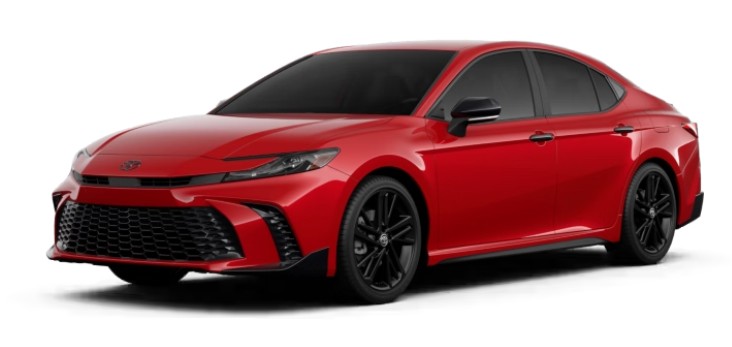
The 2025 Camry marked another major transition. In the United States, the lineup became hybrid-only, combining a gasoline engine with Toyota’s hybrid system.
Early impressions may be positive, but genuine long-term reliability cannot be measured after only one or two years. Durability needs time, mileage, heat cycles, winter starts, neglected fluid changes, and thousands of ordinary commutes before a complete pattern emerges.
Therefore, the 2025 and 2026 Camry should be viewed as promising rather than proven. Toyota currently markets the 2026 Camry around its hybrid performance and updated interior, confirming that electrification remains central to the latest generation.
Toyota Camry Reliability by Individual Model Year
Let us now move from broad generations to specific years.
1997 Toyota Camry Reliability
The 1997 Camry began one of the nameplate’s most respected generations. Its engines are durable, and the automatic transmission is generally dependable when serviced correctly.
Today, our inspection should focus on age-related concerns:
- Timing-belt history on applicable engines
- Cooling-system condition
- Oil leaks
- Worn suspension
- Rust
- Cracked hoses
- Deteriorated engine mounts
A carefully preserved 1997 Camry can still serve as basic transportation, but condition matters far more than mileage alone.
1998–2001 Toyota Camry Reliability
The 1998, 1999, 2000, and 2001 Camry models are generally strong. By this point, Toyota had established the fourth-generation platform and corrected many early-production details.
These years are easy to repair compared with modern cars. However, buyers should budget for maintenance associated with age. A low purchase price does not make old rubber, worn struts, weak batteries, and leaking seals disappear.
The 2000 and 2001 models are often the most desirable choices within this generation.
2002 Toyota Camry Reliability
The 2002 Camry was the first year of a new generation. It brought more cabin space and greater comfort but also introduced a fresh set of components.
Potential concerns include minor oil leaks, interior-material wear, electrical accessories, and occasional transmission complaints. We would not automatically reject a 2002 model, but a later year may provide greater peace of mind at a similar price.
2003–2004 Toyota Camry Reliability
The 2003 and 2004 Camry are generally reliable, particularly when maintenance records are complete. At this age, oil leaks, worn mounts, suspension noises, and air-conditioning repairs are more relevant than exotic electronic failures.
These cars can make good low-cost commuters because they retain traditional controls, proven engines, and simple drivetrains.
2005–2006 Toyota Camry Reliability
The 2005 and 2006 Camry represent two of the best older choices. They arrived near the end of a mature generation and benefited from several years of production refinement.
Their strengths include:
- Proven four-cylinder and V6 engines
- Smooth automatic transmissions
- Comfortable ride
- Affordable parts
- Straightforward servicing
- Strong potential lifespan
The challenge is finding one that has not been neglected. These vehicles are old enough that many have passed through several owners, and each owner may have followed a different definition of “maintenance.”
2007 Toyota Camry Reliability
The 2007 Camry is one of the most controversial years.
It was the first year of the sixth generation and introduced a completely redesigned package. Some four-cylinder models became known for excessive oil consumption, especially as mileage accumulated. The problem could require piston and ring work in severe cases.
The 2007 model was also included in the broader period associated with accelerator-pedal and floor-mat recall attention. Owners should check the vehicle identification number rather than assuming all required work was completed. NHTSA recommends using its recall lookup system to identify unresolved safety campaigns on a specific vehicle.
We would only buy a 2007 Camry after confirming:
- Oil level remains stable between changes.
- There is no blue exhaust smoke.
- Maintenance records are available.
- Recall work is complete.
- The transmission shifts smoothly.
- The dashboard has no warning lights.
2008 Toyota Camry Reliability
The 2008 model shares many of the 2007 Camry’s strengths and weaknesses. It can be spacious, quiet, and durable, but four-cylinder oil consumption remains a concern.
A V6 does not automatically guarantee a trouble-free experience. It may avoid the same oil-burning reputation, but it brings higher fuel use, tighter engine-bay packaging, and potentially greater repair costs.
The 2008 Camry is not an automatic “never buy.” It is simply a year that demands evidence rather than optimism.
2009 Toyota Camry Reliability
The 2009 Camry is somewhat improved, yet it still falls within the period requiring careful oil-consumption checks on certain four-cylinder vehicles.
An owner who checks and replenishes oil may prevent immediate engine damage, but that does not eliminate the underlying consumption issue. A seller saying, “It only needs a little oil every week,” is not reassurance. That sentence is a red flag wearing a friendly hat.
2010 Toyota Camry Reliability
The 2010 Camry received an updated four-cylinder engine, helping separate it from the most widely discussed oil-consumption concerns affecting earlier examples.
Reliability is generally better, although buyers should still evaluate transmission operation, water-pump condition, brakes, suspension, and maintenance history.
The 2010 model can be a reasonable value when priced below a 2012–2014 Camry.
2011 Toyota Camry Reliability
The 2011 Camry is arguably the safest choice from the sixth generation. It came at the end of the design cycle, offering a familiar platform and fewer first-year uncertainties.
It may not feel as modern as the redesigned 2012 model, but simplicity is often a reliability advantage. A clean 2011 Camry with service records deserves serious consideration.
2012 Toyota Camry Reliability
The 2012 Camry introduced another redesign. It improved efficiency, reduced weight, and modernized the interior.
Reported concerns have included torque-converter shudder, transmission hesitation, infotainment glitches, and premature interior wear. These problems do not affect every vehicle, but they justify an extended test drive.
Drive at low speeds, accelerate gently, cruise steadily, and then apply moderate throttle. We want to detect vibration, delayed engagement, unusual engine-speed changes, or rough shifts.
2013 Toyota Camry Reliability
The 2013 Camry is generally a better bet than the 2012 model. Toyota had more time to refine production, while the core engine and transmission combination remained familiar.
It offers a useful balance between price, technology, fuel economy, and reliability. Check for transmission shudder, verify fluid-service history, and inspect the infotainment system.
For many used-car shoppers, the 2013 model represents the point where the Camry begins to feel genuinely modern without becoming overly complicated.
2014 Toyota Camry Reliability
The 2014 Camry is another strong option. It was the final year before the substantial 2015 styling update, so it benefits from a mature platform.
Its design may appear conservative, but reliability buyers often appreciate boring cars for the same reason we appreciate a boring refrigerator: it quietly does its job without demanding emotional support.
Provided that the vehicle passes a pre-purchase inspection, the 2014 model is easy to recommend.
2015 Toyota Camry Reliability
The 2015 Camry received extensive exterior and interior updates while retaining proven mechanical foundations.
This combination makes it one of the smartest used Camry years. We get fresher styling and improved cabin presentation without accepting the full uncertainty of an entirely new powertrain.
Possible problems include minor infotainment faults, worn suspension components at higher mileage, water-pump leaks, and ordinary age-related repairs. Major mechanical reliability is generally strong.
2016 Toyota Camry Reliability
The 2016 Toyota Camry is among the most dependable choices in the entire lineup. It benefits from the refinements introduced for 2015 and avoids being the first year of a new generation.
A 2016 model can work well for:
- Daily commuting
- Family transportation
- Rideshare driving
- Long highway journeys
- High-mileage ownership
- First-time car buyers
The four-cylinder version is usually the rational choice, while the V6 provides stronger acceleration with increased fuel and maintenance costs.
2017 Toyota Camry Reliability
The 2017 Camry may be the best all-around used model year.
It was the final year before the 2018 redesign, meaning Toyota had years to polish the platform. It offers proven engines, established transmissions, comfortable road manners, and enough modern equipment for most drivers.
NHTSA maintains a model-specific vehicle page where buyers can review recalls, safety information, and complaints for the 2017 Camry.
The 2017 model is our top recommendation when reliability carries more weight than dramatic styling or cutting-edge technology.
2018 Toyota Camry Reliability
The 2018 Camry looks sharper and drives with more confidence than its predecessor, but it is another first-year redesign.
Some owners have complained about eight-speed automatic transmission behavior, including hesitation, unpredictable low-speed shifting, or delayed response. In certain cases, the transmission may simply feel different from the older six-speed unit. In others, software updates or repairs may be relevant.
Infotainment complaints and early-production quality issues also deserve attention.
The 2018 Camry can still be a good car, but we would choose a similarly priced 2019 or 2020 model when possible.
2019 Toyota Camry Reliability
The 2019 Camry retained the modern design while benefiting from an additional year of production experience.
Its gasoline engines and hybrid system are generally strong. We should still test the eight-speed transmission carefully, check for software updates, and inspect electronic features.
NHTSA provides a dedicated lookup page for the 2019 Camry, allowing owners and buyers to review applicable safety information and investigate recalls using the VIN.
2020 Toyota Camry Reliability
The 2020 Camry is generally a dependable modern sedan. It offers better technology and sharper handling than the previous generation while preserving Toyota’s focus on practical ownership.
Toyota also expanded the Camry’s performance image during this period with the TRD version, which added sport-oriented styling and suspension tuning.
The ordinary four-cylinder LE, SE, XLE, and XSE versions remain better choices for owners prioritizing operating costs.
2021 Toyota Camry Reliability
The 2021 Camry is one of the strongest modern model years. Toyota updated its driver-assistance package, while the engines and transmissions had already spent several years in production.
The IIHS awarded the 2021–2022 Camry Top Safety Pick+ recognition under its applicable criteria.
Safety and reliability are not the same measurement, but a well-developed safety package adds meaningful value to a dependable family sedan.
2022 Toyota Camry Reliability
The 2022 Camry continued with proven powertrains and relatively minor changes. This is normally good news for reliability because manufacturers are not trying to reinvent the entire vehicle.
IIHS testing gave the 2022 Camry good results in several crashworthiness categories, and the model again appeared among the organization’s Top Safety Pick+ vehicles for that year.
A 2022 Camry may cost considerably more than a 2017 model, but it offers additional safety technology, a more contemporary interior, and fewer age-related repairs.
2023 Toyota Camry Reliability
The 2023 model remained mechanically similar to surrounding years. That consistency is reassuring.
There may still be isolated complaints involving sensors, infotainment, trim, batteries, or transmission behavior, but no mass-produced car escapes every defect. The key question is whether problems are isolated or form a costly pattern.
The 2023 Camry’s established powertrains make it one of the lower-risk choices for buyers seeking a nearly new sedan.
2024 Toyota Camry Reliability
The 2024 Camry was the final model year before the hybrid-only redesign. This makes it attractive to buyers who want the most refined version of the eighth generation.
It is also one of the final opportunities to purchase a recent Camry with a conventional non-hybrid gasoline powertrain in the U.S. market.
Because it is relatively new, long-term data remain limited. Nevertheless, its mature platform and carryover components give it a favorable outlook.
2025 Toyota Camry Reliability
The 2025 Camry launched a new generation with hybrid power across the lineup. Toyota’s hybrid experience stretches back decades, which reduces some concern, but the vehicle still introduced new styling, electronics, packaging, and calibration.
The IIHS has published crash-test information for the 2025 Camry, although safety performance should not be confused with long-term mechanical durability.
We would describe the 2025 model as promising. Buyers planning to keep the car for 10 or 15 years should follow the maintenance schedule carefully and avoid assuming that a hybrid requires no servicing.
2026 Toyota Camry Reliability
The 2026 Camry continues the latest hybrid-focused generation. It is too new for a meaningful long-term verdict.
Early ownership data can reveal software bugs, assembly issues, or obvious component failures. It cannot show how batteries, cooling systems, suspension parts, screens, and electronics will behave after 150,000 miles.
Buying new provides warranty protection, but buying used in several years will give us a clearer picture of real-world durability.
Best Toyota Camry Years to Buy
Based on platform maturity, drivetrain history, owner experience, and overall risk, our strongest choices are:
Best Older Camry: 2005–2006
These years are mechanically straightforward and belong to the end of a dependable generation. They are ideal for buyers with modest budgets, provided rust and age-related deterioration are not severe.
Best Affordable Modern Camry: 2013–2014
The 2013 and 2014 models provide modern comfort without the higher prices associated with later cars. They also avoid the earliest sixth-generation oil-consumption concerns.
Best Overall Camry: 2015–2017
These are the standout years for many shoppers. They combine strong reliability, proven mechanical components, comfortable interiors, reasonable fuel economy, and broad parts availability.
Best Newer Camry: 2021–2024
These models offer modern safety technology and a well-developed eighth-generation platform. The 2021–2024 period is especially appealing for drivers who want newer features without buying the first version of the ninth generation.
Toyota Camry Years to Approach Carefully
The years that deserve the most scrutiny are:
- 2007: First-year redesign and oil-consumption concerns
- 2008: Similar four-cylinder oil-usage risk
- 2009: Potential oil consumption in affected examples
- 2012: First year of a new generation, with possible transmission shudder
- 2018: First year of another redesign, with transmission-behavior complaints
- 2025: New generation with insufficient long-term evidence
“Approach carefully” does not mean “never buy.” Price, condition, maintenance, and inspection results can completely change the equation.
Camry Four-Cylinder vs V6 Reliability
The four-cylinder Camry is usually the best option for economical ownership. It uses less fuel, provides easier engine-bay access, and generally costs less to maintain.
The V6 is smooth, powerful, and usually durable, but it can bring:
- Higher fuel costs
- More expensive ignition-service work
- Tighter access to engine components
- Greater strain on tires and brakes
- Higher purchase prices in desirable trims
For reliability alone, both engines can be excellent. For total cost of ownership, the four-cylinder normally wins.
What About Camry Hybrid Reliability?
Toyota’s hybrid system has a strong reputation, and Camry Hybrid models can deliver excellent fuel economy with smooth operation.
Potential long-term expenses include the high-voltage battery, cooling fan maintenance, inverter-related components, and hybrid-specific diagnostics. However, the absence of a conventional starter motor and alternator removes certain traditional failure points.
A hybrid battery does not automatically fail at a particular mileage. Climate, use, age, charging patterns within the system, and cooling-system cleanliness all influence battery health.
How Long Can a Toyota Camry Last?
A well-maintained Camry can realistically exceed 200,000 miles. Many reach 250,000 or even 300,000 miles, but mileage should not become a magical promise.
Longevity depends on whether we:
- Change oil at sensible intervals
- Maintain coolant
- Service transmission fluid appropriately
- Replace worn filters
- Repair leaks quickly
- Avoid overheating
- Use quality replacement parts
- Keep the hybrid battery cooling intake clean
- Respond to warning lights
- Protect the vehicle from corrosion
An engine cannot read the reputation printed in a sales brochure. It only knows whether it has clean oil, proper cooling, and sensible treatment.
How to Inspect a Used Toyota Camry
Check the Engine Cold
Ask the seller not to warm the car before we arrive. A cold start can expose rattles, smoke, weak batteries, rough idle, and delayed oil pressure.
Inspect the Oil
Low oil may indicate neglect or excessive consumption. Thick sludge beneath the oil cap can suggest poor maintenance, although light condensation alone is not always serious.
Test the Transmission Thoroughly
Drive in traffic, on an incline, and at highway speed. Look for shuddering, delayed engagement, harsh shifts, slipping, or unusual vibration.
Scan the Vehicle for Codes
A diagnostic scan may reveal pending faults even when the dashboard warning light is currently off.
Verify Recall Completion
Use the VIN to check official recall databases. A general model-year search cannot tell us whether one particular Camry has unresolved campaign work.
Get an Independent Inspection
A professional pre-purchase inspection can uncover:
- Collision repairs
- Fluid leaks
- Worn suspension
- Brake problems
- Rust
- Electronic faults
- Cooling-system issues
- Tire wear indicating poor alignment
Spending a little money before buying can prevent us from spending a great deal afterward.
Does Maintenance Matter More Than Model Year?
Once we compare two Camrys of similar reliability, maintenance becomes the deciding factor.
Imagine choosing between a neglected 2017 model and a meticulously serviced 2014 model. The newer badge does not automatically make the 2017 car better. The 2014 vehicle may have cleaner fluids, newer brakes, documented transmission service, quality tires, and no accident history.
A thick folder of receipts is more persuasive than a freshly sprayed engine bay.
Service records show us whether the owner treated maintenance as a routine responsibility or waited until every small problem became a roadside emergency.
Final Verdict
Toyota Camry reliability by year is remarkably consistent compared with many midsize sedans, but several periods stand above the rest.
The 2005–2006 Camry models are strong choices for buyers seeking simple, inexpensive transportation. The 2013–2014 cars provide an appealing combination of value and modern usability. The 2015–2017 models are arguably the best overall options, while the 2021–2024 Camry delivers newer technology on a mature platform.
We should be more cautious with the 2007–2009 four-cylinder models because of potential oil consumption. The redesigned 2012 and 2018 Camry also deserve more careful inspection than their later-generation siblings.
The 2025 and 2026 models appear promising, but time has not yet delivered its final verdict.
Ultimately, the best Camry is not simply the year with the strongest online reputation. It is the one with clean fluids, complete maintenance records, no serious collision damage, completed recall work, and an owner who cared for it properly.
Find that car, inspect it carefully, and the Camry may remain what it has always promised to be: a quiet, dependable companion that keeps rolling while flashier machines come and go.
Frequently Asked Questions
What is the most reliable Toyota Camry year?
The 2015–2017 Toyota Camry models are among the most reliable overall. The 2017 model is particularly appealing because it was the final year of a mature generation and used well-established engines and transmissions.
Which Toyota Camry years should we avoid?
The 2007, 2008, and 2009 four-cylinder Camry models deserve caution because certain examples may consume excessive oil. The 2012 and 2018 models should also be inspected carefully because they were first-year redesigns associated with more transmission and refinement complaints than some later years.
Is a Toyota Camry reliable after 100,000 miles?
Yes. A properly maintained Camry can remain highly dependable after 100,000 miles. At that point, service history, oil consumption, transmission condition, cooling-system maintenance, suspension wear, and accident history matter more than the odometer number alone.
Is the Toyota Camry Hybrid as reliable as the gasoline Camry?
Camry Hybrid models are generally reliable and use well-established Toyota hybrid technology. Their high-voltage batteries eventually age, but they also eliminate certain conventional components, including a traditional starter and alternator. Battery condition and cooling-system maintenance should be checked before purchase.
How many miles will a Toyota Camry normally last?
A well-maintained Toyota Camry can often exceed 200,000 miles, and some examples reach 250,000 to 300,000 miles. Results depend heavily on maintenance, climate, driving habits, rust exposure, and whether emerging problems are repaired promptly.
If you want to see other articles similar to Toyota Camry Reliability by Year: Best and Worst Models you can visit the Compare category.
Ford Bronco Pros and Cons: Complete Buyer’s Guide
2026 Ford Bronco Towing: Capacity, Equipment, and Real-World Limits
Ford Bronco Gas Tank Size: 2026 U.S. Guide
2026 Ford Bronco Big Bend vs Outer Banks: Features and Differences Explained
2026 Ford Bronco Trim Levels in Order: Complete U.S. Guide
Ford Bronco Models Explained for U.S. Buyers
Leave a Reply
Related Topics