
Toyota bZ Woodland vs Subaru Trailseeker: Which Adventure EV Is Better?

Contents in this publication
- Toyota bZ Woodland vs Subaru Trailseeker at a Glance
- Why These Two Electric SUVs Are So Similar
- Exterior Design: Rugged Toyota or Classic Subaru?
- Interior Comfort and Cabin Quality
- Cargo Capacity and Everyday Practicality
- Performance: Identical Horsepower, Slightly Different Character
- All-Wheel Drive and Trail Capability
- Electric Range Comparison
- Charging Speed and Tesla Supercharger Access
- Towing Capacity
- Technology and Infotainment
- Safety and Driver Assistance
- Price and Value
- Toyota bZ Woodland Advantages
- Subaru Trailseeker Advantages
- Which Is Better for Snow?
- Which Is Better for Road Trips?
- Which One Should You Buy?
- Toyota bZ Woodland vs Subaru Trailseeker: Final Verdict
- Frequently Asked Questions
The Toyota bZ Woodland vs Subaru Trailseeker comparison may be one of the most unusual electric-SUV matchups we have seen in years. These vehicles do not merely share similar dimensions, batteries, motors, and adventure-focused personalities. They are so closely related beneath the sheet metal that choosing between them can feel like choosing between two hiking boots built on the same sole.
Yet they are not identical.
Toyota presents the bZ Woodland as a comfortable, rugged extension of its expanding electric lineup. Subaru shapes the Trailseeker around its familiar outdoorsy identity, emphasizing Symmetrical All-Wheel Drive, X-MODE, generous ground clearance, and practical equipment for active families.
Both deliver 375 horsepower. Both use dual electric motors and standard all-wheel drive. Both offer roughly 280 miles of range, access to Tesla Superchargers, 3,500 pounds of towing capability, and enough cargo space for a serious weekend escape.
So, which one should we buy?
For most value-conscious drivers, the Subaru Trailseeker appears to be the stronger bargain. The Toyota bZ Woodland, however, makes a persuasive case with its longer list of standard comfort features, included dual-voltage charging cable, straightforward two-trim lineup, and Toyota ownership experience.
Let us pull these electric twins apart layer by layer.
Toyota bZ Woodland vs Subaru Trailseeker at a Glance
Before we disappear into the weeds, here is the broad picture.
| Category | Toyota bZ Woodland | Subaru Trailseeker |
|---|---|---|
| Power | 375 hp | 375 hp |
| Drivetrain | Dual-motor AWD | Dual-motor Symmetrical AWD |
| Estimated range | 281 miles | More than 280 miles |
| Ground clearance | 8.4 inches | 8.5 inches |
| Towing capacity | Up to 3,500 lb | Up to 3,500 lb |
| DC charging | 10–80% in around 30 minutes | 10–80% in about 28 minutes |
| Charging connector | NACS | NACS |
| Toyota starting MSRP | $45,300 | Approximately $39,995 |
| Main personality | Refined adventure SUV | Value-focused outdoor EV |
Toyota lists the 2026 bZ Woodland at a starting MSRP of $45,300, excluding its processing and handling charge. Subaru advertises the Trailseeker with a starting value of $39,995. That creates an initial gap of more than $5,000 before options, dealer fees, incentives, or local promotions enter the picture.
Those numbers immediately place the Subaru in a favorable position. Still, equipment levels matter. A cheaper vehicle is not automatically the better deal when the more expensive alternative includes features we would otherwise add later.
Why These Two Electric SUVs Are So Similar
The resemblance is not a coincidence. Toyota and Subaru have already collaborated on the Toyota bZ and Subaru Solterra, and the Woodland and Trailseeker continue that relationship in a larger, more useful package.
They share the same broad electric architecture, similar battery capacity, matching horsepower figures, comparable exterior proportions, and closely aligned capability targets.
Think of them as two cabins built from the same blueprint. Toyota installs smoother furniture and a polished front door. Subaru hangs kayaks outside, places muddy boots near the entrance, and invites the dog inside.
Automakers can begin with similar hardware and still create different vehicles through:
- Suspension tuning
- Steering calibration
- Accelerator response
- Traction-control programming
- Standard equipment
- Interior materials
- Infotainment design
- Warranty coverage
- Dealer support
- Pricing strategy
The decision, therefore, is not simply whether we prefer a Toyota badge or a Subaru badge. We need to consider how each company packages and calibrates the shared ingredients.
Exterior Design: Rugged Toyota or Classic Subaru?
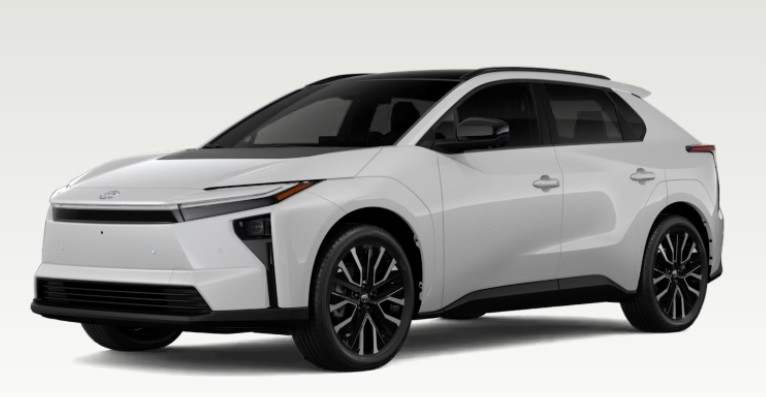
The Toyota bZ Woodland takes the familiar shape of the smaller bZ and stretches it into a more muscular electric wagon. Black overfenders, functional roof rails, 18-inch wheels, and a taller rear section give it a stronger outdoor presence.
Toyota says the Woodland is nearly six inches longer than the standard bZ. The additional body length expands its maximum cargo capacity to 74.3 cubic feet with the second row folded, compared with 67.1 cubic feet in the regular bZ.
The Trailseeker follows a similar tall-wagon formula, but its design feels more naturally connected to Subaru’s existing lineup. We can see hints of the Outback, Forester, and Solterra without mistaking it for any of them.
Which One Looks Better?
That answer depends largely on taste.
The Toyota appears slightly cleaner and more futuristic. Its hammerhead-inspired front styling creates a smooth, modern face that fits neatly within Toyota’s newer design language.
The Subaru looks busier and more overtly rugged. Its cladding, roof-rail treatment, and tougher visual details communicate its mission immediately.
Neither vehicle looks like a hardcore rock crawler. Both resemble practical electric crossovers wearing durable hiking jackets—and that is probably exactly what their buyers want.
Our Design Verdict
We would give the Toyota a narrow advantage for visual polish. We would choose the Subaru when the goal is to look more obviously adventure-ready.
Interior Comfort and Cabin Quality
Toyota gives the bZ Woodland a well-equipped cabin from the base trim upward. Standard equipment includes SofTex-trimmed seating, heated front seats, heated rear outboard seats, a heated steering wheel, dual-zone climate control, eight-way power-adjustable front seats, and dual wireless phone chargers.
That is a strong standard package.
The dashboard centers around a large 14-inch Toyota Audio Multimedia touchscreen. Four USB-C ports help manage the collection of phones, tablets, cameras, and other devices that tend to multiply during family trips.
Subaru also gives the Trailseeker a modern, practical cabin, but its atmosphere is likely to appeal more to drivers who value function over decoration. The layout feels familiar, upright, and outdoors-oriented rather than futuristic for the sake of being futuristic.
Moving to the bZ Woodland Premium adds several desirable features:
- Ventilated front seats
- Driver-seat memory
- Front radiant leg and foot heaters
- JBL nine-speaker audio
- Panoramic fixed-glass roof
- Digital rearview mirror
- Memory exterior mirrors
The Premium starts at $47,400 before the applicable delivery and processing charge.
These additions give Toyota a credible advantage for buyers who want an electric adventure vehicle without giving up near-luxury comfort.
Which Cabin Is Better for Families?
Both should work well for couples, small families, dogs, groceries, sports equipment, and road-trip luggage. The Toyota’s standard heated rear seats and easily cleaned SofTex upholstery are especially appealing in a family vehicle.
Subaru’s straightforward controls and outdoor-friendly personality may be better for owners who expect wet jackets, muddy shoes, camping gear, and frequent trailhead visits.
We would call cabin space almost even, but Toyota earns the comfort advantage.
Cargo Capacity and Everyday Practicality
Toyota confirms 74.3 cubic feet of cargo capacity behind the front seats, giving the bZ Woodland enough room for bicycles with a wheel removed, camping equipment, moving boxes, or a large dog crate.
The Subaru offers similarly useful cargo space, and its roof rails are clearly intended to support bike racks, kayak carriers, cargo boxes, and other adventure accessories.
The Roof-Rail Question Matters
Roof rails are sometimes little more than visual decoration. That is not the case here.
Both vehicles treat their roof systems as functional pieces of outdoor equipment. For buyers carrying long or dirty gear, the ability to move equipment outside the passenger compartment can be more valuable than an extra inch of touchscreen.
Practicality Verdict
This category is essentially a draw. Toyota publishes a strong maximum cargo figure, while Subaru’s entire packaging philosophy is built around active-lifestyle utility.
Performance: Identical Horsepower, Slightly Different Character
Both SUVs produce 375 horsepower from dual electric motors. That figure makes either vehicle far quicker than most conventional adventure crossovers.
Toyota estimates that the bZ Woodland can accelerate from zero to 60 mph in 4.4 seconds. Subaru also quotes 4.4 seconds for the Trailseeker, describing it as one of the quickest production vehicles in the brand’s U.S. history.
That is serious speed.
A vehicle does not need supercar acceleration to carry tents and mountain bikes, of course. Yet instant electric torque can be useful when merging onto highways, passing slow traffic, climbing steep grades, or pulling a trailer.
Will They Feel Exactly the Same?
Probably not.
Even with shared output, calibration can change how the power arrives. Toyota may favor smooth, progressive responses. Subaru is likely to tune the accelerator and traction systems around predictable control on loose or slippery surfaces.
The difference may be subtle rather than dramatic. We are comparing two interpretations of the same song, not rock music against jazz.
Handling and Ride Comfort
The battery mounted beneath the floor gives both SUVs a low center of gravity. That helps reduce body roll and gives them a planted feeling despite their elevated ride heights.
Toyota specifically highlights the bZ Woodland’s battery cross-framing structure, which increases rigidity and contributes to stable handling.
Subaru’s advantage may emerge on broken pavement, gravel, snow, and muddy access roads, where decades of all-wheel-drive branding have shaped what customers expect from the company.
For ordinary highway driving, Toyota may feel marginally smoother. For consistently rough surfaces, the Subaru could feel more at home.
All-Wheel Drive and Trail Capability
Neither model is a substitute for a body-on-frame off-road SUV with low-range gearing, locking differentials, and underbody armor.
Still, both are considerably more capable than the typical low-riding electric crossover.
Toyota equips the bZ Woodland with standard dual-motor AWD, X-MODE, and Grip Control. At low speeds, Grip Control manages motor output and braking to help maintain a steady pace over difficult surfaces.
The Trailseeker includes standard Symmetrical All-Wheel Drive, dual-function X-MODE, and Grip Control. Subaru says these systems allow the driver to tailor traction behavior for rough roads, mud, snow, and other low-grip conditions.
Ground Clearance Comparison
The Trailseeker provides 8.5 inches of ground clearance, while the bZ Woodland offers 8.4 inches.
A tenth of an inch will not decide whether we reach a campsite. Tire choice, approach angle, wheel placement, traction calibration, and driver judgment matter much more.
Nevertheless, the Subaru technically wins the ground-clearance contest.
Toyota’s Available All-Terrain Tires
Toyota offers optional all-terrain tires on both Woodland trims. They improve the SUV’s visual toughness and should provide better grip on loose surfaces.
There is a meaningful compromise: EPA-estimated range falls from 281 miles to 260 miles with the all-terrain tires.
That 21-mile reduction illustrates an important EV truth. More aggressive tires increase rolling resistance. The same tread that bites into loose dirt also asks the battery to work harder on pavement.
Which SUV Is Better Off-Road?
On paper, the Trailseeker takes a tiny lead because of its extra ground clearance and Subaru-focused positioning. In real life, the difference is likely to be narrow.
With Toyota’s optional all-terrain tires, the bZ Woodland may have the traction advantage over a Trailseeker equipped with road-oriented tires. With equivalent tires, driver skill could matter more than the badge.
Electric Range Comparison
The Toyota bZ Woodland carries a 74.7-kWh lithium-ion battery and delivers an EPA-estimated 281-mile range with its standard all-season tires.
Subaru advertises an available range of more than 280 miles for the Trailseeker.
In practical terms, range is a tie.
What Does 280 Miles Mean in Real Life?
A rated range of approximately 280 miles should comfortably handle:
- Daily commuting
- School and shopping trips
- Regional weekend travel
- Airport runs
- Moderate road trips
- Outdoor excursions with planned charging
We should not expect to drive the full rated distance under every condition. Cold temperatures, highway speeds, cabin heating, roof boxes, trailers, strong winds, elevation changes, and heavy loads can all reduce real-world range.
Towing may have the largest impact. Pulling a tall camper through the air can turn a 280-mile EV into a vehicle that needs charging far more frequently.
Range Winner
Toyota has the clearer confirmed EPA number, while Subaru’s published figure lands in almost the same place. We would call this category a draw.
Charging Speed and Tesla Supercharger Access
Both SUVs use the North American Charging Standard connector, commonly known as NACS. This gives owners direct access to a large portion of the Tesla Supercharger network without depending exclusively on adapters. Subaru says Trailseeker drivers can access more than 25,000 compatible Tesla Superchargers. Toyota cites similarly broad access for its newest electric models.
This is a major improvement over the charging situation faced by earlier Toyota and Subaru EV owners.
DC Fast-Charging Times
Under suitable conditions:
- Toyota estimates a 10% to 80% charge in around 30 minutes.
- Subaru estimates a 10% to 80% charge in about 28 minutes.
Two minutes will rarely matter. Charger performance, battery temperature, station congestion, and charging-curve behavior can easily create larger real-world differences.
Battery Preconditioning
Both vehicles include battery-preconditioning technology. This warms or cools the battery toward an ideal temperature before fast charging, improving charging performance in difficult weather.
Toyota allows preconditioning to be activated manually or automatically when a supported charging station is entered into the navigation system.
That seemingly small feature can make the difference between a smooth winter charging stop and a frustratingly slow one.
Home Charging Advantage
Toyota equips the bZ Woodland with an 11-kW onboard charger and includes a dual-voltage 120V/240V charging cable. The cable allows owners with an appropriate 240-volt outlet to establish basic Level 2 home charging without immediately purchasing another portable unit.
This included equipment adds genuine value and helps soften Toyota’s higher price.
Charging Verdict
The Subaru is theoretically two minutes quicker during an ideal 10% to 80% session. Toyota counters with a clearly specified 11-kW onboard charger and included dual-voltage cable.
We give Toyota a narrow overall charging-equipment victory.
Towing Capacity
Both SUVs can tow up to 3,500 pounds when properly equipped.
That capacity may be enough for:
- A small utility trailer
- Personal watercraft
- Lightweight camping trailer
- Small fishing boat
- Motorcycle trailer
- Compact teardrop camper
The limitation is not power. With 375 horsepower and instant torque, either SUV should pull a moderate trailer confidently.
Range is the challenge.
Trailer weight matters, but aerodynamic drag can matter even more. A tall, square camper acts like a parachute. It may dramatically reduce highway efficiency, requiring more charging stops and careful route planning.
Charging with a trailer attached can also be awkward when stations use pull-in spaces rather than drive-through layouts.
Towing Verdict
This category is a complete tie on paper. Buyers should choose based on hitch availability, trailer-brake requirements, local dealer support, and how each vehicle behaves during a test drive with additional weight.
Technology and Infotainment
Toyota’s standard 14-inch touchscreen is one of the bZ Woodland’s strongest cabin features. It supports Toyota’s current multimedia system and sits prominently in a clean dashboard arrangement.
The Woodland also includes dual Qi wireless charging pads and four USB-C ports, making it easier for several passengers to keep devices powered.
Subaru’s technology package includes a large central display, connected features, and a broad suite of driver-assistance systems. Its interface may look familiar to current Subaru owners, which reduces the learning curve.
Toyota Panoramic View Monitor
Toyota equips the Woodland with a Panoramic View Monitor and Multi-Terrain Monitor. These camera systems are particularly useful on narrow trails, near rocks, in crowded parking areas, or when approaching a hidden obstacle.
Subaru offers an available 360-degree Panoramic View Monitor, but availability can vary by trim.
Regenerative-Braking Controls
The bZ Woodland includes steering-wheel paddles that adjust regenerative braking. This allows us to change how strongly the vehicle slows when we release the accelerator.
That flexibility is helpful on long descents, urban roads, and winding routes where we may want stronger energy recovery without repeatedly pressing the brake pedal.
Technology Winner
Toyota wins by a narrow margin because its standard touchscreen, charging ports, wireless pads, camera technology, and regenerative controls form a particularly complete package.
Safety and Driver Assistance
Toyota equips the bZ Woodland with Toyota Safety Sense 3.0, while Subaru gives the Trailseeker its latest EyeSight driver-assistance technologies.
Subaru highlights features including:
- Pre-Collision System
- Traffic Jam Assist
- Front Cross-Traffic Alert
- Rear Cross-Traffic Alert
- Driver-monitoring technology
- Available 360-degree camera
The driver-monitoring system watches for signs of distraction or drowsiness, adding another protective layer during long journeys.
Toyota’s safety package brings the familiar collection of automatic emergency braking, lane-support technology, adaptive cruise functions, and proactive driving assistance expected in a modern Toyota.
Which Safety System Is Better?
We should avoid selecting a winner based solely on brand reputation. Real crash-test results, system calibration, visibility, braking performance, and driver interaction matter more than the number of features listed in a brochure.
Subaru’s driver-monitoring technology is compelling. Toyota’s system may feel more familiar and less intrusive to drivers already accustomed to Toyota Safety Sense.
For now, we consider safety equipment broadly even.
Price and Value
Price creates the biggest separation between these vehicles.
The Toyota bZ Woodland begins at $45,300, while the bZ Woodland Premium begins at $47,400, excluding Toyota’s stated processing and handling charge.
Subaru advertises the Trailseeker at approximately $39,995 to start.
Why Is the Toyota More Expensive?
The Woodland includes a substantial amount of equipment as standard:
- Heated front and rear seats
- Heated steering wheel
- SofTex upholstery
- Power-adjustable front seats
- 14-inch touchscreen
- Dual wireless chargers
- Four USB-C ports
- Dual-voltage charging cable
- Panoramic and multi-terrain camera technology
- Power-folding mirrors
A Trailseeker configured with similar comfort and technology equipment may reduce the apparent price gap.
Even so, more than $5,000 is a meaningful difference. It could cover a home charging installation, several years of insurance, a roof box, winter tires, camping equipment, or a large portion of the vehicle’s financing costs.
Value Winner
The Subaru Trailseeker wins the value category, assuming buyers can purchase the advertised entry model without unwanted dealer additions.
Toyota bZ Woodland Advantages
The Toyota makes the most sense when we prioritize comfort, included equipment, and a polished ownership experience.
Its strongest advantages include:
- Clearly confirmed 281-mile EPA range
- Included 120V/240V charging cable
- Standard heated rear seats
- Standard SofTex upholstery
- Large 14-inch touchscreen
- Dual wireless phone chargers
- Panoramic View Monitor
- Available ventilated seats
- Available JBL audio
- Simple two-trim structure
The Toyota feels like the more refined interpretation of this shared electric platform.
Subaru Trailseeker Advantages
The Subaru appeals to buyers who want maximum capability per dollar.
Its principal strengths include:
- Lower advertised starting price
- Slightly more ground clearance
- Subaru-branded Symmetrical AWD
- Dual-function X-MODE
- Approximately 28-minute fast charging
- Strong outdoor identity
- Comparable power, range, and towing
- Broad adventure-accessory appeal
It gives us most of the Toyota’s mechanical capability for substantially less money.
Which Is Better for Snow?
Both should be strong winter vehicles because they include dual-motor all-wheel drive, generous ground clearance, battery preconditioning, and traction-management modes.
The deciding factor will often be tires.
A Trailseeker with mediocre all-season tires may struggle more than a bZ Woodland wearing high-quality winter tires—and vice versa. AWD helps the vehicle accelerate, but winter tires improve braking and cornering too.
Our Snow Verdict
The Subaru receives a symbolic edge because of its extra tenth of an inch of clearance and long-established winter-driving identity. Mechanically, however, the difference should be extremely small.
Which Is Better for Road Trips?
The answer is almost a draw because both provide approximately 280 miles of range, NACS charging, battery preconditioning, and similar DC charging times.
Toyota may be preferable when we value:
- More standard comfort features
- Heated rear seats
- Adjustable regenerative braking
- A clear 281-mile EPA rating
- Included dual-voltage charging equipment
Subaru may be preferable when we value:
- Lower purchase price
- Slightly faster advertised charging
- More money left for hotels, equipment, or charging
- Stronger adventure-oriented packaging
For paved family road trips, we lean toward Toyota. For budget-conscious trips involving trailheads and outdoor equipment, we lean toward Subaru.
Which One Should You Buy?
Buy the Toyota bZ Woodland If:
Choose the Toyota when we want the better-equipped base vehicle and prefer paying more upfront for additional convenience.
It is especially appealing for drivers who:
- Want heated rear seats as standard
- Prefer SofTex upholstery
- Need an included portable Level 1/Level 2 cable
- Value Toyota’s multimedia interface
- Want multi-terrain camera assistance
- Prefer a slightly more refined exterior
- Plan to choose a premium trim
Buy the Subaru Trailseeker If:
Choose the Subaru when price-to-performance value matters most.
It is likely the smarter option for drivers who:
- Want 375 horsepower without spending over $45,000
- Prefer Subaru’s outdoor image
- Frequently drive on gravel, mud, or snow
- Plan to add racks and adventure accessories
- Want nearly identical range and towing capacity
- Do not need every premium comfort feature
- Would rather invest the savings in home charging or equipment
Toyota bZ Woodland vs Subaru Trailseeker: Final Verdict
The Toyota bZ Woodland and Subaru Trailseeker are remarkably evenly matched. They offer the same horsepower, nearly the same battery capacity, almost identical range, comparable fast charging, matching towing limits, standard AWD, and only one-tenth of an inch difference in ground clearance.
The Toyota feels more polished. It arrives with a generous list of standard comfort and technology equipment, including heated rear seats, SofTex upholstery, a 14-inch screen, dual wireless chargers, multi-terrain cameras, and a dual-voltage charging cable.
The Subaru feels more economical and more tightly connected to the outdoor lifestyle its brand has cultivated for decades. Its lower starting price is difficult to ignore because it does not require us to sacrifice power, range, towing capacity, charging access, or meaningful trail capability.
Our overall winner is the Subaru Trailseeker.
It delivers the core mechanical experience for thousands of dollars less, making it the more rational purchase for most buyers. The Toyota bZ Woodland remains the better choice for anyone willing to pay more for additional standard comfort, cleaner styling, and a slightly richer cabin experience.
Ultimately, this comparison is less like choosing between opposites and more like choosing between two backpacks made from the same durable fabric. The Toyota has better padding and more organized pockets. The Subaru costs less and looks ready to be thrown into the dirt.
Either one can take us somewhere interesting.
Frequently Asked Questions
Is the Toyota bZ Woodland the same as the Subaru Trailseeker?
They are closely related electric SUVs with similar engineering, batteries, motors, performance, and dimensions, but they use different styling, equipment packages, software calibration, pricing, and brand-specific features.
Which has more range, the bZ Woodland or Trailseeker?
The Toyota bZ Woodland has an EPA-estimated range of 281 miles with standard all-season tires. Subaru advertises more than 280 miles of available range for the Trailseeker, making the practical difference negligible.
Which electric SUV has more ground clearance?
The Subaru Trailseeker has 8.5 inches of ground clearance, while the Toyota bZ Woodland has 8.4 inches. The Subaru leads by only one-tenth of an inch.
Can the Toyota bZ Woodland and Subaru Trailseeker tow?
Yes. Both electric SUVs are rated to tow up to 3,500 pounds when properly equipped. Actual driving range can fall significantly while towing, especially with a tall or aerodynamically inefficient trailer.
Which is cheaper, the bZ Woodland or Trailseeker?
The Subaru Trailseeker has the lower advertised starting price at approximately $39,995. The Toyota bZ Woodland begins at $45,300 before its processing and handling fee, although it includes a generous standard-equipment package.
If you want to see other articles similar to Toyota bZ Woodland vs Subaru Trailseeker: Which Adventure EV Is Better? you can visit the Compare category.
Ford Bronco Pros and Cons: Complete Buyer’s Guide
2026 Ford Bronco Towing: Capacity, Equipment, and Real-World Limits
Ford Bronco Gas Tank Size: 2026 U.S. Guide
2026 Ford Bronco Big Bend vs Outer Banks: Features and Differences Explained
2026 Ford Bronco Trim Levels in Order: Complete U.S. Guide
Ford Bronco Models Explained for U.S. Buyers
Leave a Reply
Related Topics