

Toyota bZ vs IONIQ 5: Which Electric SUV Should We Buy?

Contents in this publication
- Toyota bZ vs IONIQ 5 at a Glance
- The Main Difference Between the Toyota bZ and IONIQ 5
- Price and Trim Value
- Driving Range: Almost a Tie on Paper
- Charging Speed: The IONIQ 5 Pulls Ahead
- Performance and Acceleration
- Ride Comfort and Road Manners
- Interior Space and Practicality
- Technology and Infotainment
- Exterior Design
- Safety and Driver Assistance
- Warranty and Ownership Confidence
- Efficiency and Everyday Running Costs
- Winter Driving and All-Wheel Drive
- Road-Trip Capability
- Toyota bZ Pros and Cons
- Hyundai IONIQ 5 Pros and Cons
- Which One Should We Choose?
- Toyota bZ vs IONIQ 5: Final Verdict
- Frequently Asked Questions
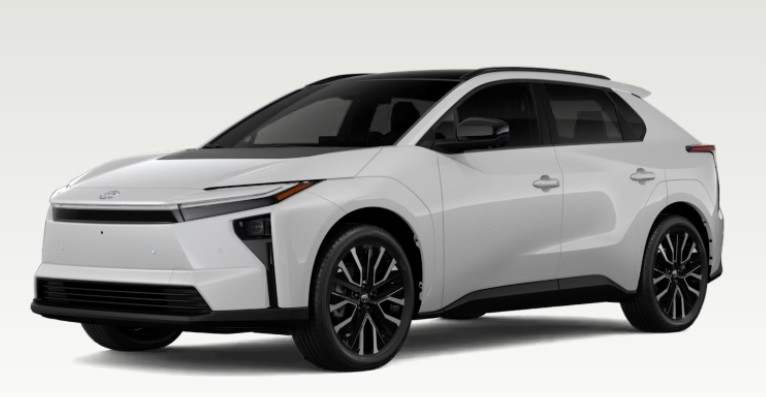
The Toyota bZ vs IONIQ 5 comparison has become far more interesting than it was only a few years ago. Toyota’s electric crossover is no longer merely the cautious alternative from a familiar brand. For the 2026 model year, the vehicle previously known as the bZ4X has evolved into the simpler-named Toyota bZ, gaining more range, stronger performance, faster home charging, a refreshed cabin, and native access to North American Charging Standard stations.
The Hyundai IONIQ 5, meanwhile, remains one of the segment’s benchmarks. Its futuristic shape, spacious interior, rapid DC charging, and clever everyday features give it the personality of a concept car that somehow escaped the auto-show floor.
So, which one deserves space in our garage?
The broad answer is straightforward. The Toyota bZ feels more conventional, composed, and easy to understand. The Hyundai IONIQ 5 is roomier, charges faster, and makes a stronger technological statement. Yet buying an electric vehicle is rarely as simple as choosing the model with the longest specification sheet.
Let’s compare these two electric SUVs in the areas that actually influence ownership.
Market note: This comparison focuses on the 2026 Toyota bZ and 2026 Hyundai IONIQ 5 sold in the United States. Prices, trims, equipment, range estimates, and warranties may differ elsewhere.
Toyota bZ vs IONIQ 5 at a Glance
Before digging into every detail, here is the basic personality of each model:
| Category | 2026 Toyota bZ | 2026 Hyundai IONIQ 5 |
|---|---|---|
| Starting MSRP | About $34,900 | About $35,000 |
| Maximum EPA-estimated range | 314 miles | 318 miles |
| Available drivetrain | FWD or AWD | RWD or AWD |
| Maximum mainstream AWD output | 338 hp | 320 hp |
| Approximate 10–80% DC charge | 30 minutes | As little as 20 minutes |
| Cargo space behind rear seats | Up to 27.7 cu. ft. | More spacious overall |
| Charging connector | Native NACS | Native NACS |
| Main strength | Familiarity and balanced value | Charging speed and interior space |
| Main weakness | Slower road-trip charging | Unusual controls and styling may divide buyers |
Toyota lists a starting MSRP of $34,900 for the 2026 bZ XLE, while Hyundai lists the 2026 IONIQ 5 from $35,000. Their entry prices are therefore almost identical before destination charges, taxes, options, dealer adjustments, and incentives.
The Main Difference Between the Toyota bZ and IONIQ 5
The biggest difference is not range or horsepower. It is philosophy.
The Toyota bZ approaches electric driving like a familiar compact SUV that happens to run on electricity. Its cabin, ride, safety technology, and overall character aim to reduce the learning curve. It is the calmer handshake.
The IONIQ 5 approaches the same mission like a reinvention of the family car. Its long wheelbase, flat floor, lounge-inspired cabin, geometric lighting, and ultra-fast charging architecture make it feel more experimental. It is the confident entrance through the automatic doors.
Neither approach is automatically better. The right one depends on whether we want our first electric vehicle to feel reassuringly normal or refreshingly different.
Price and Trim Value
Toyota bZ Pricing Strategy
The 2026 Toyota bZ starts at roughly $34,900 in XLE FWD form. Toyota also offers configurations with a larger battery, all-wheel drive, and the more luxurious Limited trim. The price climbs as we add range, performance, and comfort equipment.
Toyota’s lineup can require some attention because not every front-wheel-drive bZ has the same battery. The entry XLE FWD uses a smaller 57.7-kWh battery, while longer-range versions use a 74.7-kWh unit.
That distinction matters. A low advertised price may look attractive, but the lowest-cost version also gives up a meaningful amount of range.
Hyundai IONIQ 5 Pricing Strategy
The 2026 IONIQ 5 starts at about $35,000 for the SE Standard Range. That version offers an EPA-estimated 245 miles of range. Buyers seeking the full 318-mile figure need one of the larger-battery rear-wheel-drive configurations.
As with Toyota, the headline price does not buy the headline range.
Hyundai spreads its equipment across several trims, including SE Standard Range, SE, SEL, Limited, and adventure-oriented versions such as the XRT. The high-performance IONIQ 5 N occupies its own category and is not a direct rival to an ordinary Toyota bZ.
Which One Offers Better Value?
At the entry level, the contest is close enough to be decided by local inventory, financing, lease offers, and the exact features included.
The IONIQ 5 often provides more cabin flexibility and faster charging for the money. The Toyota counters with strong standard safety equipment, a more traditional ownership experience, and ToyotaCare scheduled maintenance coverage.
We should compare actual dealer proposals rather than starting MSRPs alone. A vehicle that costs $1,500 more on paper may become cheaper once lease support, financing rates, insurance, or dealer discounts enter the equation.
Driving Range: Almost a Tie on Paper
Toyota bZ Range
Official EPA-estimated range figures vary significantly by trim:
- XLE FWD: approximately 236 miles
- XLE FWD Plus: 314 miles
- XLE AWD: 288 miles
- Limited FWD: 299 miles
- Limited AWD: 299 miles
Toyota highlights the XLE FWD Plus as the range champion, delivering an EPA-estimated 314 miles on a full charge.
The short-range XLE FWD is best suited to drivers who charge at home and rarely travel far. The FWD Plus is the version to choose when range anxiety regularly sits in the passenger seat.
Hyundai IONIQ 5 Range
The IONIQ 5 offers:
- SE Standard Range RWD: 245 miles
- SE, SEL, and Limited RWD: up to 318 miles
- SE and SEL AWD: around 290 miles
- Other wheel-and-trim combinations may return different estimates
Hyundai’s larger-battery rear-wheel-drive models reach an EPA-estimated 318 miles, narrowly beating the Toyota’s 314-mile maximum.
Does the Four-Mile Difference Matter?
Not really.
Four miles is a rounding error in real-world EV ownership. Cold weather, highway speed, headwinds, elevation changes, cabin heating, tire pressure, and driving style can alter range by much more than that.
The more meaningful comparison is this:
- Long-range Toyota bZ: 314 miles
- Long-range Hyundai IONIQ 5: 318 miles
- Toyota bZ AWD: roughly 288–299 miles, depending on trim
- Hyundai IONIQ 5 AWD: roughly 290 miles on key trims
For normal commuting and regional travel, both provide enough range to make electric driving practical. The IONIQ 5’s real advantage appears when the battery needs replenishing on the road.
Charging Speed: The IONIQ 5 Pulls Ahead
Toyota bZ DC Fast Charging
Toyota says the bZ can charge from 10% to 80% in approximately 30 minutes under ideal DC fast-charging conditions. It also gains an 11-kW onboard AC charger and a native NACS port for 2026.
That is a substantial improvement over the earlier bZ4X experience. Home charging becomes more convenient, and Tesla-style NACS compatibility greatly expands the number of stations owners can potentially access.
Thirty minutes is acceptable. It gives us enough time to use the restroom, stretch, grab coffee, and question why the service plaza charges so much for a sandwich.
Hyundai IONIQ 5 DC Fast Charging
Hyundai says the 2026 IONIQ 5 can charge from 10% to 80% in as little as 20 minutes under suitable conditions.
Its high-voltage electrical architecture is one of its defining advantages. At a compatible high-output station, the Hyundai can add energy remarkably quickly. On a long journey, ten minutes saved at each charging stop can become meaningful.
After three charging sessions, that theoretical difference may amount to half an hour.
Charging Speed Depends on More Than the Vehicle
Maximum charging claims should not be treated like promises carved into stone. Actual charging speed depends on:
- Battery temperature
- Starting state of charge
- Charger output
- Station reliability
- Weather
- Battery conditioning
- How many vehicles share the site
- The charging curve as the battery fills
A powerful charger does not guarantee maximum power throughout the session. EV charging resembles filling a theater rather than a fuel tank: the final seats usually take longer to occupy.
Charging Winner
The Hyundai IONIQ 5 wins the charging comparison.
The Toyota bZ is now competitive enough for occasional road trips, but the Hyundai remains the more convincing choice for drivers who frequently travel between cities and depend on public fast chargers.
Performance and Acceleration
Toyota bZ Performance
The 2026 bZ is far more energetic than its mild styling may suggest. Toyota lists up to 338 combined system horsepower for AWD models and a 0–60 mph time of 4.9 seconds.
That is properly quick. Pressing the accelerator can make the bZ leap forward like a quiet dog suddenly spotting a squirrel.
Front-wheel-drive versions prioritize efficiency rather than drama. They should feel perfectly adequate for commuting, merging, and passing, although they lack the effortless punch of the AWD model.
Toyota’s AWD system also includes X-MODE, which adjusts braking and power delivery to improve control in adverse conditions.
Hyundai IONIQ 5 Performance
Long-range rear-wheel-drive IONIQ 5 trims produce 225 hp, while mainstream AWD versions produce 320 hp.
The RWD model feels smooth and responsive rather than aggressive. The AWD version provides much stronger acceleration and confident all-weather traction.
Although the Toyota’s 338-hp figure exceeds the Hyundai’s 320 hp, horsepower alone does not describe the experience. Throttle calibration, weight, tire choice, torque delivery, suspension tuning, and road conditions all influence how fast a vehicle feels.
The IONIQ 5 N is dramatically more powerful, but comparing it with a regular bZ would be like entering hiking boots in a running-spike contest.
Performance Winner
For ordinary models, the Toyota bZ AWD has the stronger headline output, while the IONIQ 5 feels polished and naturally responsive.
Drivers seeking maximum mainstream acceleration may prefer the bZ AWD. Those who value rear-wheel-drive balance and smooth power delivery may favor the Hyundai.
Ride Comfort and Road Manners
How the Toyota bZ Feels
The bZ has a planted, crossover-like character. Its seating position, steering, and controls feel familiar to anyone moving from a RAV4, Corolla Cross, or another mainstream SUV.
Toyota typically emphasizes predictable responses over playful handling, and that philosophy suits the bZ. It feels stable and easy to place on the road. The ride aims for comfort without becoming excessively soft.
The unusual high-mounted instrument display can require adjustment. Some drivers enjoy looking over the steering wheel toward the display, while others may struggle to find a seating position that provides an unobstructed view.
How the IONIQ 5 Feels
The IONIQ 5’s long wheelbase helps it glide over open roads with a relaxed, almost limousine-like rhythm. The cabin feels wide, the floor is flat, and the vehicle carries its weight low.
Around town, its broad body may feel larger than expected. The exterior resembles a compact hatchback in photographs, but the IONIQ 5 occupies a substantial footprint.
Its ride is generally comfortable, although large wheels can transmit sharper impacts. Buyers who prioritize comfort and efficiency should consider wheel size carefully rather than automatically selecting the biggest design.
Ride Winner
The Hyundai offers the more spacious and lounge-like experience. The Toyota feels slightly more conventional and easier to understand immediately.
This category ends in a draw because comfort is personal. One vehicle feels like a modern living room; the other feels like a well-organized cockpit.
Interior Space and Practicality
Toyota bZ Cabin
Toyota redesigned the bZ interior for 2026 with a slimmer dashboard, two front wireless charging pads, soft-touch materials, customizable ambient lighting, and a 14-inch multimedia touchscreen.
The front seats offer a good view of the road, while rear-seat passengers receive useful legroom and a relatively open atmosphere. Toyota quotes up to 27.7 cubic feet of cargo capacity behind the rear seats.
That is enough for groceries, luggage, sports equipment, and everyday family duties. It is practical, though not class-leading.
IONIQ 5 Cabin
The Hyundai’s interior is one of its greatest strengths. Its dedicated EV platform creates a long wheelbase and flat floor, giving passengers generous room to stretch out.
The design feels airy rather than tightly wrapped around the occupants. Depending on trim, the front center console arrangement and sliding features can make the space more flexible.
The IONIQ 5 also offers more of the “mobile lounge” sensation Hyundai frequently promotes. Rear passengers may feel as though they received proper seats rather than the leftovers after the front cabin was designed.
Which Is Better for Families?
The IONIQ 5 is generally the better family vehicle because of its passenger space, rear-seat comfort, and versatile cabin. It works especially well for:
- Parents carrying child seats
- Adults who frequently use the second row
- Road trips with four passengers
- Drivers who value an open floor and flexible storage
- Owners replacing a larger crossover
The Toyota remains practical, but its layout feels more like a conventional compact SUV.
Interior Winner
The Hyundai IONIQ 5 wins for space and flexibility.
The Toyota’s updated cabin is attractive and functional, but Hyundai makes better use of the possibilities created by a dedicated electric platform.
Technology and Infotainment
Toyota Technology
The bZ’s 14-inch touchscreen gives the cabin a cleaner, more contemporary center point. Wireless phone connectivity, connected services, navigation functions, and dual wireless charging pads make it easy to integrate daily digital routines.
Toyota’s interface is relatively straightforward once we sign in and configure the system. Physical controls remain available for several essential functions, reducing the need to hunt through menus while driving.
The digital gauge placement remains the most controversial element. A test drive is essential because steering-wheel position can affect visibility.
Hyundai Technology
The IONIQ 5 uses a broad dual-screen layout that reinforces its futuristic appearance. The interface presents plenty of information without looking like a laptop bolted to the dashboard.
Hyundai also offers useful driver-assistance equipment, including Highway Driving Assist 2 on certain trims.
Its menus may take time to master, and some touch-sensitive controls are less intuitive than traditional buttons. Still, the overall system feels polished and visually cohesive.
Vehicle-to-Load Capability
One of the Hyundai’s most useful party tricks is Vehicle-to-Load capability. It allows the traction battery to power compatible external equipment through the appropriate connection.
That can help us run camping equipment, tools, small appliances, or emergency devices. Hyundai confirms V2L availability, although operation and equipment requirements vary by trim and setup.
For some buyers, V2L is a novelty. For campers, contractors, and households preparing for power interruptions, it can be genuinely valuable.
Technology Winner
The IONIQ 5 wins narrowly because its technology feels more deeply integrated into the vehicle’s identity.
The bZ counters with simplicity. Buyers tired of touch-sensitive experiments may find Toyota’s approach less exciting but easier to live with.
Exterior Design
Toyota bZ Styling
The 2026 bZ receives a cleaner front end and updated lighting. Its shape remains recognizably crossover-like, with enough visual drama to appear modern without becoming theatrical.
It looks like an electric Toyota rather than an alien spacecraft. That may sound like faint praise, but understated styling ages well. A design that seems conservative today can still look respectable after six years of school runs and parking-lot door dings.
Hyundai IONIQ 5 Styling
The IONIQ 5 mixes retro hatchback proportions with pixel-inspired lighting and sharp geometric surfaces. Few electric vehicles are as instantly recognizable.
It looks smaller in photographs than it is in person. The long wheelbase and broad stance give it surprising presence.
Some buyers will love its concept-car character. Others may prefer something that attracts less attention. Design is emotional, and no spreadsheet can decide whether pixel lights make our heart beat faster.
Design Winner
The IONIQ 5 wins for originality. The Toyota wins for restraint.
We should choose the Hyundai when we want the vehicle to feel special every time we walk toward it. We should choose the Toyota when we prefer a design that blends naturally into everyday life.
Safety and Driver Assistance
Toyota equips the bZ with its modern suite of active safety technologies. Depending on trim and specification, these systems may include automatic emergency braking, pedestrian detection, adaptive cruise control, lane assistance, road-sign recognition, blind-spot monitoring, and parking support.
Hyundai provides a similarly broad collection of driver-assistance features, with higher trims adding more sophisticated highway, blind-spot, camera, and parking technologies.
Both vehicles should satisfy buyers seeking modern active-safety equipment. Nevertheless, no assistance system replaces attention. Marketing labels may sound like a co-pilot joined the trip, but the driver remains responsible.
Which System Feels More Natural?
Toyota’s assistance systems often prioritize gentle, predictable intervention. Hyundai’s Highway Driving Assist features can feel more advanced on well-marked highways.
The best system is the one whose warnings, steering assistance, and adaptive-cruise behavior match our expectations. A lengthy test drive on familiar roads reveals more than an equipment list.
Warranty and Ownership Confidence
Toyota covers bZ electric-drive components, including the traction battery, for eight years or 100,000 miles. Its coverage also addresses abnormal battery-capacity loss below the specified threshold in accordance with warranty terms.
Toyota also includes ToyotaCare, which can reduce early scheduled-maintenance expenses. Electric vehicles require less routine mechanical maintenance than gasoline vehicles, but tire rotations, inspections, cabin filters, brake-fluid checks, and eventual wear-item replacement still matter.
Hyundai has historically built a strong value proposition around generous warranty coverage. Buyers should review the exact 2026 warranty booklet for battery, electric-system, roadside-assistance, and basic-vehicle terms before signing.
Warranty length matters, but dealership access matters too. A longer warranty is less comforting when the nearest qualified service center is two hours away.
Efficiency and Everyday Running Costs
Neither vehicle needs gasoline, oil changes, spark plugs, or exhaust-system repairs. That removes several familiar expenses, but electric driving is not free.
Our real operating costs depend on:
- Residential electricity rates
- Public charging prices
- Insurance premiums
- Tire replacement
- Registration fees
- Climate
- Driving speed
- Home-charger installation
- Local incentives and taxes
The IONIQ 5’s fast-charging advantage saves time, not necessarily money. Public DC fast charging can cost considerably more per kilowatt-hour than charging at home.
The most economical ownership pattern is simple: charge overnight at home, drive during the day, and use fast chargers mainly for travel.
Winter Driving and All-Wheel Drive
Both vehicles offer all-wheel drive, making them suitable for rain, snow, and slippery roads when paired with appropriate tires.
The bZ’s X-MODE gives Toyota a small advantage for drivers who encounter muddy tracks, steep snowy driveways, or loose surfaces. The Hyundai’s AWD system delivers strong traction and quick electric torque.
However, tires matter more than badges. An AWD electric crossover on unsuitable tires can stop and turn worse than a front-wheel-drive model wearing quality winter rubber.
Cold weather also reduces range and may slow charging. Drivers in northern states should choose a version with enough range margin rather than expecting the EPA estimate every morning in January.
Road-Trip Capability
Why the IONIQ 5 Is the Better Traveler
The IONIQ 5 combines long range with faster DC charging. That pairing is more useful than range alone.
Imagine two vehicles arriving at a charger with 10% remaining. Even when both need to stop at similar intervals, the Hyundai may leave sooner. Over a 700-mile journey, repeated savings can noticeably shorten the day.
Its roomy rear seats also help passengers remain comfortable between charging stops.
Why the Toyota Can Still Work
The bZ’s 314-mile maximum range is competitive, and its native NACS port improves access to compatible charging infrastructure. Its approximate 30-minute 10–80% charging time is adequate for occasional travel.
Owners who take two or three long trips per year may barely care about the charging difference. Daily convenience, dealer location, purchase price, and home charging could matter much more.
Road-Trip Winner
The Hyundai IONIQ 5 wins clearly for frequent interstate travel.
The Toyota bZ remains viable, but the Hyundai’s charging system gives it the stronger long-distance résumé.
Toyota bZ Pros and Cons
Reasons to Buy the Toyota bZ
- Competitive starting price
- Up to 314 miles of EPA-estimated range
- Powerful 338-hp AWD configuration
- Native NACS charging port
- Faster 11-kW Level 2 charging for 2026
- Straightforward crossover character
- X-MODE for difficult surfaces
- Strong standard safety focus
- Familiar Toyota dealer network
- ToyotaCare included for early ownership
Reasons to Reconsider It
- Around 30-minute 10–80% charging is slower than the Hyundai
- Entry model has only about 236 miles of range
- Cargo space trails more spacious rivals
- High-mounted gauge arrangement may not suit every driver
- The best range requires selecting a specific FWD Plus configuration
- Interior packaging is less innovative than the Hyundai’s
Hyundai IONIQ 5 Pros and Cons
Reasons to Buy the IONIQ 5
- Up to 318 miles of EPA-estimated range
- 10–80% charging in as little as 20 minutes
- Spacious rear seats and flat floor
- Distinctive exterior design
- Smooth, comfortable ride
- Useful Vehicle-to-Load capability
- Available 320-hp AWD system
- Strong highway-assistance technology
- Flexible, family-friendly cabin
- Native NACS compatibility
Reasons to Reconsider It
- Styling may be too unusual for conservative buyers
- Its real-world size can surprise drivers
- Some touch controls require extra attention
- Large wheels may reduce comfort and efficiency
- The standard-range model does not deliver the headline 318-mile range
- Faster charging depends on finding a compatible, functioning station
Which One Should We Choose?
Choose the Toyota bZ When…
The Toyota makes more sense when we:
- Prefer a traditional crossover experience
- Want Toyota’s familiar ownership ecosystem
- Need strong AWD performance
- Mainly charge at home
- Take only occasional long trips
- Value X-MODE and all-weather confidence
- Prefer restrained styling
- Find a particularly attractive Toyota lease or financing offer
The bZ is no longer an EV we choose only because we trust the badge. Its improved range, stronger AWD system, updated interior, and NACS port make it a legitimate competitor.
Choose the Hyundai IONIQ 5 When…
The Hyundai is the stronger choice when we:
- Frequently use public fast chargers
- Take long road trips
- Carry adults in the rear seats
- Want maximum cabin flexibility
- Appreciate bold, futuristic styling
- Need Vehicle-to-Load capability
- Want the longest range by a narrow margin
- Prefer a dedicated-EV feel rather than a conventional crossover atmosphere
The IONIQ 5 remains one of the most complete electric family vehicles because it excels in the areas that make EV ownership easier: space, charging, comfort, and versatility.
Toyota bZ vs IONIQ 5: Final Verdict
The 2026 Hyundai IONIQ 5 wins this comparison overall, but not by an overwhelming margin.
It offers a slightly higher maximum range, a roomier cabin, more imaginative packaging, useful V2L functionality, and significantly faster ideal-condition DC charging. For families and frequent travelers, those advantages are difficult to ignore.
The 2026 Toyota bZ, however, may be the smarter purchase for buyers seeking familiarity, strong AWD acceleration, straightforward controls, and a Toyota-centered ownership experience. Its 314-mile long-range configuration nearly matches the Hyundai, and its new NACS port removes one of the largest practical objections to the previous bZ4X.
Here is the simplest conclusion:
- Best for charging and road trips: Hyundai IONIQ 5
- Best for rear-seat space: Hyundai IONIQ 5
- Best for bold design: Hyundai IONIQ 5
- Best mainstream AWD horsepower: Toyota bZ
- Best for a familiar transition to electric driving: Toyota bZ
- Best overall: Hyundai IONIQ 5
- Best deal: Whichever receives the stronger local discount, lease, or financing package
The Hyundai is the more accomplished electric vehicle. The Toyota may be the easier electric vehicle to welcome into our lives.
A specification sheet can point us toward the showroom, but the final decision should come after test-driving both on the same day. Seats, visibility, controls, ride quality, and cabin noise are personal. The right EV should not merely win the comparison—it should make us look forward to plugging it in.
Frequently Asked Questions
1. Is the Toyota bZ better than the Hyundai IONIQ 5?
The Toyota bZ is better for buyers who prefer familiar controls, Toyota’s dealer network, strong AWD output, and a conventional crossover feel. The Hyundai IONIQ 5 is better for most road-trip drivers because it charges faster and offers a roomier, more flexible cabin.
2. Which has more range, the Toyota bZ or IONIQ 5?
The 2026 Hyundai IONIQ 5 offers up to an EPA-estimated 318 miles, while the Toyota bZ offers up to 314 miles. The four-mile difference is too small to influence most buying decisions. Trim, wheels, weather, speed, and drivetrain have a much greater effect.
3. Which electric SUV charges faster?
The Hyundai IONIQ 5 charges faster under ideal conditions. Hyundai advertises a 10–80% DC fast-charging time of as little as 20 minutes, while Toyota estimates approximately 30 minutes for the bZ. Actual times depend on the charger, battery temperature, weather, and state of charge.
4. Is the Toyota bZ good for long trips?
Yes. The long-range bZ offers up to 314 miles of EPA-estimated range and includes a native NACS port. It can handle long journeys, although the IONIQ 5 is generally a better road-trip vehicle because of its faster potential charging time.
5. Which is better for a family?
The Hyundai IONIQ 5 is generally better for families because it provides more rear-seat room, a flat floor, flexible interior packaging, and rapid charging. The Toyota bZ still works well for small families and may appeal more to buyers who prefer a traditional SUV layout.
If you want to see other articles similar to Toyota bZ vs IONIQ 5: Which Electric SUV Should We Buy? you can visit the Compare category.
Ford Bronco Pros and Cons: Complete Buyer’s Guide
2026 Ford Bronco Towing: Capacity, Equipment, and Real-World Limits
Ford Bronco Gas Tank Size: 2026 U.S. Guide
2026 Ford Bronco Big Bend vs Outer Banks: Features and Differences Explained
2026 Ford Bronco Trim Levels in Order: Complete U.S. Guide
Ford Bronco Models Explained for U.S. Buyers
Leave a Reply
Related Topics