
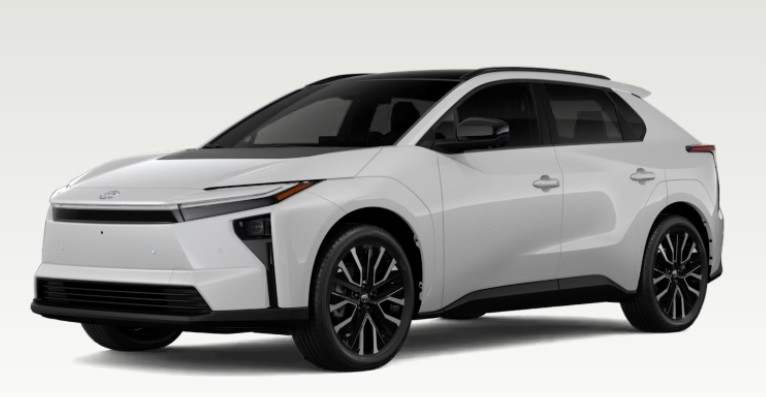
Toyota bZ Cargo Space: Dimensions, Capacity, and Everyday Practicality

Contents in this publication
- Toyota bZ Cargo Space at a Glance
- How Big Is the Toyota bZ Trunk?
- Toyota bZ Cargo Space With the Seats Folded
- Toyota bZ Cargo Space Behind the Rear Seats
- Does the Toyota bZ Have a Front Trunk?
- Toyota bZ Cargo Area Design
- Passenger Room Versus Cargo Room
- Toyota bZ Cargo Space for Families
- Toyota bZ Cargo Space for Pets
- Toyota bZ Cargo Space for Camping
- How Cargo Weight Can Affect Electric Range
- Toyota bZ Versus Toyota bZ Woodland Cargo Space
- Toyota bZ Versus Toyota C-HR EV Cargo Space
- Toyota bZ Versus Corolla Cross Cargo Space
- How to Maximize Toyota bZ Cargo Capacity
- What the Cargo Number Does Not Tell Us
- Is the Toyota bZ Cargo Space Good Enough?
- Who Will Appreciate the Toyota bZ Cargo Area Most?
- Final Verdict: Practical Without Being Excessive
- Frequently Asked Questions
Cargo space can make or break an electric SUV. A vehicle may offer excellent range, rapid acceleration, and enough technology to resemble a rolling computer, but none of that matters much when the weekly groceries refuse to fit behind the rear seats.
The Toyota bZ cargo space strikes a useful balance between passenger comfort and everyday storage. For the 2026 model year, Toyota lists up to 27.7 cubic feet of cargo capacity behind the second row. With the rear seats folded, Toyota has also referenced 67.1 cubic feet of maximum storage space for the standard bZ.
Those figures place the bZ in familiar compact-electric-SUV territory. It is not a cavernous moving van disguised as a crossover, but it provides enough room for luggage, shopping bags, sports equipment, pet supplies, and most of the objects we carry during ordinary life.
Let us open the liftgate, fold the seats, and examine how practical the Toyota bZ really is.
Toyota bZ Cargo Space at a Glance
The essential cargo figures for the 2026 Toyota bZ are:
- Cargo volume behind the rear seats: Up to 27.7 cubic feet
- Maximum cargo volume with rear seats folded: Approximately 67.1 cubic feet
- Rear-seat configuration: 60/40 split-folding seatbacks
- Seating capacity: Five passengers
- Body style: Two-row compact electric SUV
- Front trunk: No conventional front trunk is promoted by Toyota
Toyota’s official consumer page emphasizes the 27.7-cubic-foot capacity behind the rear seats, while Toyota’s comparison with the larger bZ Woodland identifies 67.1 cubic feet for the regular bZ with its second row folded.
That gives us two distinct ways to view the vehicle.
With every seat occupied, the bZ works like a practical family crossover. Fold the rear seats, and it transforms into a much larger cargo carrier suitable for bulky purchases or outdoor equipment.
How Big Is the Toyota bZ Trunk?
Behind the second row, the Toyota bZ provides up to 27.7 cubic feet of cargo volume.
That number may sound abstract, so let us translate it into everyday life.
A cargo area of this size should accommodate combinations such as:
- Several full grocery bags
- Two or three medium suitcases
- A folded stroller plus smaller bags
- Carry-on luggage for a couple
- Backpacks and camping supplies
- A compact pet crate
- Sports bags, boots, and protective equipment
- Boxes from an ordinary shopping trip
Naturally, real-world capacity depends on the shape of each item. Cargo measurements describe volume, but boxes, suitcases, and strollers rarely arrange themselves like perfectly cooperative puzzle pieces.
Still, 27.7 cubic feet is enough for the duties most compact-SUV owners perform during a normal week.
Is 27.7 Cubic Feet Considered Spacious?
For a two-row compact electric SUV, 27.7 cubic feet is respectable rather than extraordinary.
The bZ does not dominate the category solely through cargo volume. Instead, Toyota appears to have balanced storage capacity with a roomy passenger compartment, aerodynamic styling, and a long wheelbase.
The result feels more like a spacious hatchback crossed with a compact SUV than a tall, box-shaped utility vehicle.
That distinction matters. A boxier SUV may deliver more vertical room, while the bZ’s sleeker silhouette favors efficiency and a modern appearance. It is the automotive equivalent of choosing a fitted travel bag over an oversized suitcase: more streamlined, but still useful.
Toyota bZ Cargo Space With the Seats Folded
The standard Toyota bZ offers approximately 67.1 cubic feet of cargo room with the second-row seats folded, according to Toyota’s comparison with the longer bZ Woodland.
This expanded configuration changes the personality of the vehicle.
With the rear seats upright, the bZ carries people and their belongings. With the seats folded, it becomes a compact electric hauler capable of handling longer, wider, and more awkward items.
Possible loads may include:
- Flat-packed furniture
- Multiple large suitcases
- Camping equipment
- Small household appliances
- Moving boxes
- Musical instruments
- Golf clubs and travel bags
- Skiing or snowboarding gear
- Gardening supplies
- Large pet carriers
We should still measure unusually long or bulky objects before purchasing or transporting them. Maximum volume does not reveal the exact width between the wheel arches, hatch opening dimensions, or available length behind the front seats.
Nevertheless, 67.1 cubic feet gives the bZ meaningful flexibility.
The Advantage of a 60/40 Split Rear Seat
The split-folding rear seat is more valuable than it first appears.
Instead of choosing between carrying passengers or cargo, we can fold only part of the second row. This creates several useful layouts.
One Seat Section Folded
Folding the narrower section can create room for long equipment while preserving seating for two rear passengers.
This arrangement works well for:
- Skis
- Fishing rods
- Narrow shelving
- Long boxes
- Folded chairs
- Sporting equipment
The Larger Section Folded
Folding the wider portion gives us more loading room while leaving one rear seat available.
It can be ideal when three people are travelling with substantial luggage.
The Entire Rear Seat Folded
Folding both sections unlocks the maximum cargo area. This is the setup we would use for furniture, bicycles with a wheel removed, large boxes, or a serious home-improvement run.
Toyota bZ Cargo Space Behind the Rear Seats
The space behind the rear seats is the figure most families should consider first because it represents the vehicle’s normal daily configuration.
We rarely want to dismantle the passenger area just to load groceries. A useful SUV should provide enough trunk room while preserving all five seating positions, and the bZ generally succeeds here.
Its 27.7 cubic feet behind the second row means the cargo compartment remains usable for commuting, errands, school runs, and weekend travel without forcing us to fold seats constantly.
Can the Toyota bZ Carry a Stroller?
Most compact or medium folding strollers should fit in the rear cargo area.
A particularly large double stroller may consume a substantial percentage of the available floor, leaving less space for groceries or luggage. Parents should therefore test their specific stroller at a dealership rather than relying on cargo volume alone.
The best test is surprisingly simple:
- Fold the stroller exactly as we would at home.
- Place it through the hatch without changing its orientation repeatedly.
- Check whether grocery bags fit beside or above it.
- Confirm that the cargo cover can still close.
- Make sure the liftgate shuts without pressing against the stroller.
A specification tells us how much air fits inside a cargo compartment. A physical test tells us whether our oddly shaped belongings fit.
Can the Toyota bZ Carry Golf Clubs?
Golf bags should generally fit, although longer clubs may need to be positioned diagonally or placed through the folded portion of the rear seat.
For one or two golfers, the bZ should be practical. Carrying four passengers, four large golf bags, and extra luggage could become more challenging.
Removing unnecessary bag accessories or using the 60/40 split seat may make loading easier.
Can the Toyota bZ Carry a Bicycle?
A bicycle may fit with the rear seats folded, especially when the front wheel is removed.
The exact result depends on:
- Bicycle frame size
- Handlebar width
- Wheel diameter
- Saddle position
- Whether one or both wheels are removed
- The position of the front seats
Cyclists who transport bicycles regularly may prefer an external hitch-mounted rack, provided they use equipment compatible with the vehicle and observe Toyota’s loading guidance.
Does the Toyota bZ Have a Front Trunk?
The Toyota bZ is not marketed with a conventional front trunk, commonly called a frunk.
Some electric vehicles use the area beneath the hood for extra storage because their electric motors require less space than combustion engines. However, electric powertrains still need inverters, cooling components, structural elements, and other hardware.
Toyota has prioritized the bZ’s rear cargo compartment rather than presenting a separate front storage area as a major feature.
For buyers coming from an EV with a large frunk, this may feel like a missed opportunity. For buyers moving from a conventional compact SUV, it may not matter at all.
The practical question is not whether the bZ has storage beneath the hood. It is whether its rear compartment carries what we need, and for many drivers, 27.7 cubic feet will be sufficient.
Toyota bZ Cargo Area Design
Cargo usability involves much more than a headline number.
Two vehicles can offer identical cubic-foot ratings while feeling completely different in everyday use. A wide rectangular compartment is usually easier to load than one interrupted by large wheel wells, sloping trim, or a narrow hatch.
The Toyota bZ benefits from its crossover layout and broad rear opening. Its liftgate provides direct access to the main storage area, while the folding rear seats allow longer items to extend into the passenger compartment.
Low Loading Effort
An SUV-style hatch generally makes loading easier than lifting objects over the high trunk wall of a sedan.
This becomes important when handling:
- Heavy grocery crates
- Large suitcases
- Pet carriers
- Boxes
- Coolers
- Strollers
A manageable loading height also reduces the awkward twisting motion that makes a 30-pound suitcase suddenly feel like a refrigerator.
Wide Hatch Access
A wide hatch opening allows us to load items without rotating them through several angles.
This sounds like a small convenience until we are standing in a parking lot during heavy rain, wrestling with a box that is only half an inch too wide.
Interior Side Trim and Wheel-Well Intrusion
Like most compact SUVs, the bZ’s wheel arches and interior trim affect the shape of its cargo floor.
Soft bags adapt easily to these contours. Hard suitcases, crates, and large boxes are less forgiving. Smart packing therefore matters almost as much as total volume.
Passenger Room Versus Cargo Room
Toyota has not sacrificed passenger comfort simply to publish an enormous trunk figure.
The 2026 bZ provides 42.1 inches of front legroom and 35.3 inches of rear legroom, according to Toyota.
That helps explain the vehicle’s overall packaging. The cabin gives front passengers generous space and leaves useful room for those in the second row while still preserving 27.7 cubic feet behind them.
Some SUVs inflate cargo capacity by squeezing rear passengers toward the front. The bZ takes a more balanced approach.
A Long Wheelbase Helps Cabin Packaging
The bZ has traditionally used a relatively long wheelbase for its overall body length. Earlier Toyota specifications placed the bZ4X at 184.6 inches long with a 112.2-inch wheelbase, illustrating the platform’s emphasis on interior space.
A long wheelbase can improve cabin room because the wheels sit farther apart, allowing more of the vehicle’s body to be dedicated to passengers.
For families, that may be more valuable than winning a cargo-capacity contest by a few cubic feet.
Toyota bZ Cargo Space for Families
For a small or medium-sized family, the Toyota bZ offers enough flexibility for most routines.
The rear compartment can handle school bags and groceries during the week, while the split-folding seat expands capacity for weekend projects.
School and Commuting Duties
On a regular school day, we may carry:
- Backpacks
- Lunch boxes
- Sports uniforms
- Musical instruments
- Work bags
- Grocery bags
The bZ should handle this combination comfortably in most situations.
Family Road Trips
A road trip requires more strategic packing.
Four occupants with soft-sided luggage should be easier to accommodate than five occupants with large hard-shell suitcases. Packing cubes, duffel bags, and smaller cases can help us use the available space efficiently.
The best approach is to keep heavy items low and close to the rear seatbacks. Lighter objects can occupy the upper portion of the cargo area, provided they remain properly secured.
Travelling With a Baby
Baby equipment expands like bread dough. One moment we need a stroller and diaper bag; the next, the entire house appears to be coming with us.
The bZ’s 27.7-cubic-foot rear area should work for one child’s routine equipment, but larger strollers, portable cribs, and multiple suitcases may demand careful organization.
For a family carrying bulky child equipment daily, a hands-on cargo test is essential.
Toyota bZ Cargo Space for Pets
The bZ can be a practical vehicle for dogs and other pets, depending on the size of the animal and its travel crate.
A small or medium pet carrier should fit behind the rear seats. Larger crates may require one or both seat sections to be folded.
Important considerations include:
- Crate height
- Hatch opening height
- Cargo-floor dimensions
- Ventilation
- Interior temperature
- Proper restraint points
- Space remaining for luggage
We should never rely on loose placement alone. Pets and carriers should be secured appropriately so they cannot move dangerously during sudden braking.
A cargo liner may also protect the floor from hair, mud, water, and scratches.
Toyota bZ Cargo Space for Camping
Camping is where cargo areas reveal their true character.
Tents and sleeping bags are compressible, but coolers, cooking equipment, chairs, and water containers quickly consume space. The bZ can support a weekend trip for two people particularly well because the entire second row can be folded.
With four or five occupants, packing becomes more selective.
A sensible camping setup might include:
- Compact tent
- Rolled sleeping bags
- Collapsible chairs
- Soft duffel bags
- Medium cooler
- Portable stove
- Food container
- Emergency equipment
Roof-mounted cargo accessories may create additional room, but owners should verify weight limits, aerodynamic effects, range implications, and equipment compatibility before installation.
How Cargo Weight Can Affect Electric Range
Cargo volume and cargo weight are not the same thing.
We may fill the trunk with pillows and barely affect vehicle weight. Fill the same space with tools, bottled water, or paving stones, and the situation changes dramatically.
Additional weight requires energy to move. As a result, a heavily loaded bZ may consume more electricity, particularly during:
- Stop-and-go driving
- Steep climbs
- Highway travel
- Cold weather
- Strong headwinds
- Trips with roof-mounted cargo
Toyota advertises an EPA-estimated range of up to 314 miles for the 2026 bZ XLE FWD Plus, but actual range varies with configuration, driving conditions, temperature, speed, accessory use, and load.
A few suitcases will not suddenly cut the range in half. Still, weight and aerodynamic drag should be included in our charging plan for a heavily loaded road trip.
Roof Boxes Can Affect Range More Than Expected
A roof box adds storage, but it also disrupts airflow.
At highway speeds, aerodynamic resistance can become a larger concern than the cargo’s weight. It is like asking the vehicle to run while holding an open umbrella.
Drivers who rarely need the extra space may benefit from removing roof-mounted equipment between trips.
Toyota bZ Versus Toyota bZ Woodland Cargo Space
Toyota has expanded its electric lineup with the more rugged bZ Woodland.
The Woodland is nearly six inches longer than the standard bZ and provides a larger rear cargo area. Toyota reports 74.3 cubic feet with the Woodland’s second row folded, compared with 67.1 cubic feet in the regular bZ.
Toyota has also described the Woodland as offering more than 30 cubic feet behind its rear seats.
| Cargo measurement | Toyota bZ | Toyota bZ Woodland |
|---|---|---|
| Behind second row | Up to 27.7 cu. ft. | More than 30 cu. ft. |
| Second row folded | About 67.1 cu. ft. | About 74.3 cu. ft. |
| Seating | Five | Five |
| Primary focus | Everyday electric crossover | Rugged, adventure-oriented EV |
The regular bZ should suit commuters, couples, and families with ordinary storage needs. The Woodland makes more sense for buyers who frequently carry camping gear, sports equipment, pets, or bulky recreational items.
Which One Should We Choose?
Choose the standard bZ when:
- Urban maneuverability matters
- 27.7 cubic feet is sufficient
- Maximum driving range is a priority
- We rarely transport oversized objects
- We prefer the standard bZ design
Consider the bZ Woodland when:
- We routinely fill the trunk
- Outdoor equipment is part of our lifestyle
- Additional folded-seat capacity matters
- Standard all-wheel drive is desirable
- Towing capability is important
The Woodland is not automatically the better vehicle. It is simply the more cargo-oriented member of the family.
Toyota bZ Versus Toyota C-HR EV Cargo Space
Toyota’s electric C-HR is smaller and more style-focused than the bZ.
Toyota lists up to 25.3 cubic feet behind the C-HR’s rear seats and up to 59.5 cubic feet with those seats folded.
Compared with the C-HR, the bZ provides:
- Roughly 2.4 additional cubic feet behind the second row
- Approximately 7.6 additional cubic feet with the rear seats folded
- A less coupe-like roofline
- More emphasis on all-around family utility
The difference behind the seats is modest, but the gap becomes more meaningful when both vehicles are configured for maximum cargo.
For buyers who value style and compact dimensions, the C-HR may be appealing. For buyers who prioritize cargo versatility, the bZ is the stronger option.
Toyota bZ Versus Corolla Cross Cargo Space
Toyota advertises up to 24 cubic feet of cargo space for the 2026 gasoline-powered Corolla Cross.
The bZ’s 27.7-cubic-foot rating gives it an advantage on paper.
However, buyers should evaluate more than the total volume. The cargo floor’s width, height, shape, spare-wheel packaging, and trim configuration can influence real-world usability.
The bZ also offers the quiet power delivery and flat-floor possibilities associated with an electric platform, while the Corolla Cross may appeal to drivers who are not ready to rely on charging.
How to Maximize Toyota bZ Cargo Capacity
Even a large trunk can feel small when packed poorly. A few simple habits help us use the bZ more efficiently.
Use Soft-Sided Luggage
Duffel bags compress into corners that rigid suitcases cannot use.
Hard cases protect fragile belongings, but a combination of hard and soft luggage usually makes better use of the available space.
Pack Heavy Objects First
Place dense objects low on the floor and close to the rear seatbacks.
This improves stability and reduces the chance of heavy cargo shifting during braking.
Use the 60/40 Split Strategically
Do not fold the entire rear row when only one long object needs additional room.
The split seat lets us preserve passenger capacity while extending the cargo area.
Remove Unnecessary Cargo
Carrying unused tools, sports equipment, or storage boxes wastes space and adds weight.
An occasional trunk cleanout keeps the vehicle efficient and ready for unexpected loads.
Add Organizers Carefully
Cargo organizers can prevent small items from rolling around, but oversized organizers may consume more space than they save.
Choose collapsible products that can be stored flat when not in use.
Secure Everything
Toyota warns that cargo capacity is limited by weight and distribution and recommends properly securing items in the cargo area.
Loose objects can become dangerous projectiles during sudden braking or a collision. This includes seemingly harmless items such as reusable bottles, tools, and small electronics.
What the Cargo Number Does Not Tell Us
A published cargo-volume figure is helpful, but it cannot answer every question.
It does not fully reveal:
- The narrowest width between interior panels
- The height under the cargo cover
- The length behind the rear seats
- The length behind the front seats
- The hatch opening’s exact shape
- Whether a particular stroller fits
- Whether a bicycle fits upright
- How much space trim-specific audio equipment occupies
- How flat the load floor becomes
- Whether our largest suitcase can be loaded without rotation
This is why we should treat 27.7 cubic feet as a starting point, not a final verdict.
Bring Your Equipment to the Dealership
A tape measure helps, but a real object is better.
Bring the stroller, golf bag, mobility equipment, pet crate, or suitcase that matters most. Dealers are generally familiar with buyers testing cargo compatibility.
Ten minutes of practical testing can prevent years of frustration.
Is the Toyota bZ Cargo Space Good Enough?
For most compact-SUV buyers, yes.
The Toyota bZ offers enough room for everyday shopping, luggage, school supplies, sports equipment, and ordinary family activities. Its 27.7 cubic feet behind the second row is useful with all seats occupied, while approximately 67.1 cubic feet with the rear seats folded provides significantly more flexibility for bulky loads.
Its limitations are equally clear.
Drivers who regularly carry five passengers plus substantial luggage may want a larger SUV. Buyers who transport multiple bicycles, large dogs in crates, construction materials, or extensive camping equipment may prefer the bZ Woodland or another larger model.
The standard bZ is best understood as a well-balanced electric crossover, not a cargo-first utility machine.
Who Will Appreciate the Toyota bZ Cargo Area Most?
The bZ should work particularly well for:
- Commuters who make weekly shopping trips
- Couples taking weekend vacations
- Small families
- Drivers carrying one stroller
- Pet owners with small or medium carriers
- Golfers and recreational athletes
- Urban residents who need SUV versatility
- Buyers replacing a compact hatchback or sedan
It may be less suitable for:
- Large families with extensive luggage
- Owners of very large dogs and crates
- Contractors carrying heavy equipment
- Cyclists transporting several bicycles internally
- Buyers who need three-row seating
- Anyone expecting full-size-SUV cargo capacity
Final Verdict: Practical Without Being Excessive
The Toyota bZ cargo space is neither tiny nor enormous. It occupies the useful middle ground where most daily life happens.
Behind the rear seats, we get up to 27.7 cubic feet—enough for groceries, luggage, a stroller, sports equipment, or pet supplies. Fold the second row, and the standard bZ expands to approximately 67.1 cubic feet, giving it the flexibility to handle larger purchases and weekend adventures.
The bZ Woodland offers more room for buyers who need it, but the standard model remains the smarter fit when we want a balanced electric SUV without unnecessary exterior bulk.
Ultimately, the best cargo compartment is not the one with the largest number in a brochure. It is the one that accommodates our belongings without complicating every trip.
For many drivers, the Toyota bZ does exactly that.
Frequently Asked Questions
1. How much cargo space does the 2026 Toyota bZ have?
The 2026 Toyota bZ provides up to 27.7 cubic feet of cargo capacity behind the second-row seats. This configuration preserves seating for five passengers and should accommodate groceries, luggage, sports bags, and other everyday items.
2. How much space does the Toyota bZ have with the seats folded?
The standard Toyota bZ offers approximately 67.1 cubic feet of maximum cargo space with its second-row seats folded. Toyota cites this figure when comparing the regular bZ with the larger bZ Woodland.
3. Does the Toyota bZ have more cargo space than the bZ Woodland?
No. The bZ Woodland is longer and more cargo-oriented. Toyota states that it offers approximately 74.3 cubic feet with the second row folded, compared with about 67.1 cubic feet in the standard bZ.
4. Can a stroller fit in the Toyota bZ trunk?
Most compact and medium folding strollers should fit in the 27.7-cubic-foot cargo compartment. Large double strollers may occupy much of the available floor, so families should test their specific stroller before purchasing.
5. Does the Toyota bZ have a frunk?
Toyota does not promote a conventional front trunk for the bZ. Its primary storage area is located behind the second-row seats, with additional capacity available by folding the rear seatbacks.
If you want to see other articles similar to Toyota bZ Cargo Space: Dimensions, Capacity, and Everyday Practicality you can visit the Compare category.
Ford Bronco Pros and Cons: Complete Buyer’s Guide
2026 Ford Bronco Towing: Capacity, Equipment, and Real-World Limits
Ford Bronco Gas Tank Size: 2026 U.S. Guide
2026 Ford Bronco Big Bend vs Outer Banks: Features and Differences Explained
2026 Ford Bronco Trim Levels in Order: Complete U.S. Guide
Ford Bronco Models Explained for U.S. Buyers
Leave a Reply
Related Topics