

Toyota bZ XLE vs Limited: Which 2026 Trim Is Better?

Contents in this publication
- Toyota bZ XLE vs Limited at a Glance
- Understanding the 2026 Toyota bZ Trim Structure
- Toyota bZ XLE vs Limited Price Difference
- Range Comparison
- Performance and Horsepower
- Exterior Design Differences
- Interior Quality and Materials
- Seat Comfort
- Technology and Infotainment
- Charging Capabilities
- Safety Features
- Passenger and Cargo Space
- Ride Comfort and Road Noise
- Ownership Costs
- Which Toyota bZ Trim Is Best for Commuters?
- Which Trim Is Better for Families?
- Which Trim Is Better for Cold Weather?
- Which Trim Is Better for Hot Climates?
- Toyota bZ XLE Pros and Cons
- Toyota bZ Limited Pros and Cons
- Best Toyota bZ Configuration for Most Buyers
- Who Should Buy the Toyota bZ XLE?
- Who Should Buy the Toyota bZ Limited?
- Toyota bZ XLE vs Limited: Final Verdict
- Frequently Asked Questions
Choosing between the Toyota bZ XLE vs Limited looks simple until we begin examining the details. Both trims share the same sleek electric SUV body, modern cabin layout, advanced safety technology, and convenient North American Charging System port. Yet their personalities are noticeably different.
The XLE approaches electric driving like a sensible pair of everyday sneakers. It is comfortable, efficient, practical, and relatively affordable. The Limited feels more like stepping into a tailored jacket. It adds richer materials, larger wheels, extra convenience technology, and more comfort features—but it also asks us to pay considerably more.
For the 2026 model year, Toyota has dropped the old bZ4X name in the United States and now calls this electric crossover simply the Toyota bZ. The refresh brings more range, stronger performance, faster charging under certain conditions, a redesigned interior, a standard 14-inch multimedia screen, and a native NACS charging port.
So, should we save money with the XLE or stretch the budget for the Limited? Let us compare them carefully.
Toyota bZ XLE vs Limited at a Glance
The biggest differences appear in price, standard battery capacity, wheels, upholstery, seat comfort, and convenience features.
| Category | Toyota bZ XLE | Toyota bZ Limited |
|---|---|---|
| Starting MSRP | $34,900 | $43,300 |
| Standard drivetrain | Front-wheel drive | Front-wheel drive |
| Available drivetrain | All-wheel drive | All-wheel drive |
| Standard estimated range | 236 miles | 299 miles |
| Maximum available range | 314 miles with XLE FWD Plus | 299 miles |
| Standard wheels | Smaller efficiency-focused wheels | 20-inch alloy wheels |
| Seat upholstery | Fabric/SofTex combination | SofTex upholstery |
| Front seats | Heated on many configurations | Heated and ventilated |
| Main appeal | Value and efficiency | Comfort and premium equipment |
Toyota currently lists the XLE at a starting MSRP of $34,900 and the Limited at $43,300 before destination charges, taxes, registration, options, and dealer fees. That creates an initial difference of approximately $8,400.
However, the comparison is not quite as straightforward as those starting prices suggest. The least expensive XLE uses a smaller battery and offers less range, while the XLE FWD Plus receives the larger battery and delivers the longest EPA-estimated range in the entire standard bZ lineup.
Understanding the 2026 Toyota bZ Trim Structure
The XLE is not just one fixed configuration. Toyota divides it into several versions depending on battery size and drivetrain.
The main configurations include:
- XLE FWD with the smaller battery
- XLE FWD Plus with the larger battery
- XLE AWD with the larger battery
- Limited FWD with the larger battery
- Limited AWD with the larger battery
The entry-level XLE FWD uses a 57.7-kWh battery, while XLE FWD Plus, XLE AWD, Limited FWD, and Limited AWD models use a larger 74.7-kWh battery. Toyota originally announced estimated ranges of 314 miles for XLE FWD Plus, 299 miles for Limited FWD, 288 miles for XLE AWD, 299 miles for Limited AWD, and approximately 235 miles for the smaller-battery XLE FWD.
That unusual structure creates an important twist: the more expensive Limited is not automatically the longest-range model. In fact, range-conscious buyers may find the XLE FWD Plus more appealing.
Toyota bZ XLE vs Limited Price Difference
The starting-price gap of roughly $8,400 is substantial. That is not pocket change hiding beneath the sofa cushions. Depending on the loan term and interest rate, the difference could add well over $100 to a monthly payment.
The XLE begins at $34,900, while the Limited begins at $43,300 according to Toyota’s current consumer website.
What Does the Extra Money Buy?
Moving from the XLE to the Limited generally adds or upgrades features such as:
- 20-inch multi-spoke alloy wheels
- SofTex-trimmed seating
- Heated and ventilated front seats
- Additional exterior detailing
- More premium interior finishes
- Enhanced parking and visibility technology
- Greater availability of premium audio equipment
- Additional convenience features, depending on configuration
The Limited is not faster simply because it is the higher trim. Performance depends primarily on whether we choose FWD or AWD. The Limited’s real advantages revolve around comfort, style, and technology.
Is the Limited Worth $8,400 More?
That depends on how we use the vehicle.
The Limited can make sense when we spend hours commuting, live in a hot climate where ventilated seats matter, appreciate upgraded cabin materials, or simply want an electric SUV that feels more luxurious.
However, the XLE provides the same fundamental platform, core safety systems, large multimedia screen, charging connection, and available AWD capability. For buyers focused on transportation rather than indulgence, it is difficult to ignore the XLE’s value.
Range Comparison
Range may be the most important part of the Toyota bZ XLE vs Limited decision.
The standard XLE FWD is currently listed with an EPA-estimated range of approximately 236 miles. The XLE FWD Plus reaches as high as 314 miles, while the Limited is listed at 299 miles.
XLE FWD Standard Range
The entry XLE FWD uses the smaller 57.7-kWh battery. Its estimated range is approximately 236 miles.
That can be sufficient for:
- Daily commuting
- School runs
- Grocery shopping
- Regional travel
- Overnight home charging
- Households with a second vehicle
A driver covering 35 miles per day could theoretically complete several days of commuting before charging. Real-world results will vary with temperature, driving speed, climate-control use, elevation, tire pressure, cargo, and driving style.
XLE FWD Plus Range
The XLE FWD Plus is the range champion, offering an EPA-estimated 314 miles under ideal testing conditions.
This model may be the sweet spot for people who want:
- Maximum driving range
- Fewer public charging stops
- Lower rolling resistance than the Limited
- A more affordable price than the premium trim
- Most of the bZ’s essential technology
The XLE FWD Plus is proof that paying more for luxury does not always buy more distance.
Limited FWD and AWD Range
Toyota lists the Limited with an estimated range of 299 miles. Interestingly, Toyota’s published 2026 range figures indicate 299 miles for both Limited FWD and Limited AWD configurations.
That makes the Limited AWD particularly attractive for drivers wanting strong performance and all-weather traction without the usual dramatic range penalty. Still, actual range will depend on driving conditions, temperature, speed, and accessory use.
Which Trim Wins for Range?
The XLE FWD Plus wins with up to 314 miles.
The Limited remains competitive at 299 miles, but drivers prioritizing maximum efficiency should examine the XLE FWD Plus before assuming the premium trim is automatically better.
Performance and Horsepower
Performance depends more on drivetrain selection than trim level.
Front-wheel-drive models use a single electric motor. AWD models add a second motor, increasing total power and improving traction.
Toyota states that AWD versions of the 2026 bZ produce up to 338 combined horsepower.
Front-Wheel Drive Performance
FWD models are best suited to buyers prioritizing:
- Efficiency
- Lower purchase cost
- Longer potential range
- Simpler everyday driving
- Mild-weather use
Electric motors deliver power immediately, so even the single-motor bZ should feel responsive in urban traffic. It may not pin us to the seat like a performance EV, but it should move away from traffic lights smoothly and confidently.
All-Wheel Drive Performance
AWD versions feel noticeably stronger. With dual motors and up to 338 combined horsepower, they deliver quicker acceleration and more secure traction in rain, snow, gravel, and loose surfaces.
Both XLE and Limited offer AWD with X-MODE. Therefore, we do not need to buy the Limited merely to access dual-motor performance.
Does the Limited Drive Better?
Not necessarily.
An XLE AWD and Limited AWD share the same broad dual-motor concept. The Limited’s larger 20-inch wheels may sharpen visual appeal, but they may also produce a firmer ride over broken pavement and increase replacement-tire costs.
The XLE’s smaller wheels can provide a little more tire sidewall, which often helps absorb potholes and rough surfaces. In real life, that may matter more than showroom sparkle.
Exterior Design Differences
Both trims share the updated 2026 bZ shape, which includes revised front-end styling and cleaner body-colored elements compared with the earlier bZ4X.
The body still looks futuristic, but the refreshed design feels less like a concept vehicle that escaped from an auto show. It is sharper, cleaner, and easier on the eyes.
XLE Exterior Style
The XLE adopts a simpler, more efficiency-focused appearance. Its wheels are less dramatic, and the exterior avoids some of the Limited’s upscale detailing.
That is not necessarily a weakness. Smaller wheels can:
- Improve ride comfort
- Reduce tire costs
- Protect better against pothole damage
- Support efficiency
- Create a less flashy appearance
For many buyers, the XLE looks modern without trying too hard.
Limited Exterior Style
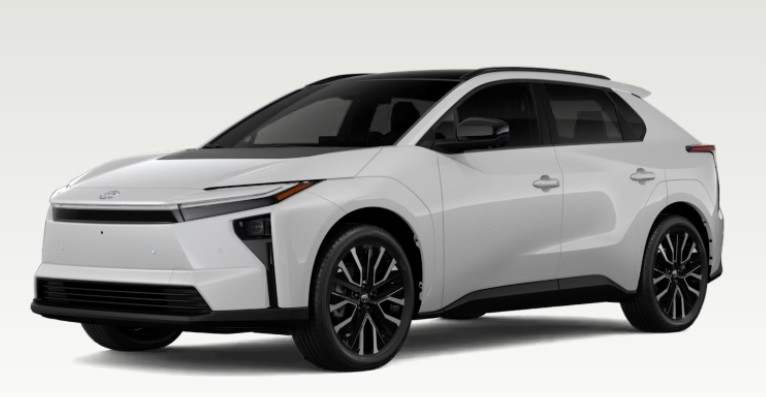
The Limited receives 20-inch multi-spoke black-and-silver alloy wheels, giving it a stronger road presence.
These wheels fill the arches more completely and make the vehicle appear lower, wider, and more expensive. Think of them as polished shoes completing an outfit.
However, style carries practical trade-offs. Large wheels usually mean thinner tire sidewalls, potentially higher replacement costs, and somewhat greater vulnerability to road damage.
Which Trim Looks Better?
The Limited is more striking.
The XLE is more understated and potentially more practical.
Beauty remains subjective, but the Limited is clearly designed for buyers who want their EV to communicate that they selected the premium version.
Interior Quality and Materials
The 2026 interior is a major improvement over the original bZ4X layout. Toyota has redesigned the center console, slimmed the instrument panel, added ambient lighting, and made a 14-inch multimedia display standard.
XLE Cabin
The XLE generally uses fabric and SofTex-trimmed seating. This combination aims to balance durability, comfort, and cost.
The cabin does not feel stripped bare. We still receive a modern dashboard, large touchscreen, wireless smartphone integration, digital controls, and plenty of EV-specific information.
The overall atmosphere is functional rather than luxurious. It is the kind of interior we can live with every day without worrying about every coffee drip or muddy jacket.
Limited Cabin
The Limited receives SofTex-trimmed seating and heated and ventilated front seats.
The upholstery looks richer and is easier to wipe clean than traditional cloth. Additional trim detailing and lighting help the cabin feel more polished.
Toyota also showcases the Limited with available JBL premium audio, although equipment availability may depend on packages and region.
The Limited cabin does not suddenly transform into a Lexus, but it feels more finished. It adds a layer of comfort and sophistication that becomes noticeable during long drives.
Seat Comfort
Seat comfort may be one of the strongest reasons to choose the Limited.
XLE Seats
The XLE’s seats should satisfy most drivers. Depending on the exact configuration, heated front seats may be available or included, but ventilated seating is one of the Limited’s defining advantages.
Fabric inserts can actually feel pleasant in extreme temperatures. They do not become as hot under sunlight as some synthetic surfaces, and they may feel warmer when first entering the vehicle during winter.
Limited Heated and Ventilated Seats
The Limited’s heated and ventilated front seats are valuable for drivers living in regions with hot summers or cold winters. Toyota highlights these features as part of the Limited’s equipment package.
Ventilation does not turn a seat into an air conditioner, but it circulates air through the seat surface and can reduce that sticky, overheated feeling after the vehicle has been parked in the sun.
For commuters spending ten hours or more per week behind the wheel, this feature can move from “nice luxury” to “daily pleasure.”
Technology and Infotainment
Both trims receive a standard 14-inch Toyota Audio Multimedia touchscreen.
That standardization is excellent news. Buyers do not need to select the Limited merely to avoid a small entry-level screen.
The system supports modern connectivity features, and Toyota has also introduced Apple Maps EV Routing through Apple CarPlay for compatible Toyota battery-electric vehicles. The routing system can use vehicle information and consider factors such as battery performance and elevation when guiding drivers toward compatible chargers.
Depending on configuration and subscription status, shared or widely available features include:
- 14-inch Toyota Audio Multimedia
- Wireless Apple CarPlay
- Wireless Android Auto
- USB charging ports
- Wireless phone charging
- Toyota app compatibility
- EV charging information
- Connected services
- Digital instrumentation
- Over-the-air functionality for supported systems
Limited Technology Advantages
The Limited may add or make available:
- Panoramic View Monitor
- Digital Key capability
- Additional parking assistance
- Premium JBL audio
- More extensive ambient lighting
- Additional convenience equipment
Toyota’s interior feature presentation specifically highlights technology including a Panoramic View Monitor, Digital Key capability, ambient lighting, wireless charging, and available JBL audio in the Limited.
Drivers who frequently park in tight garages or crowded city spaces may find the surround-view camera especially useful.
Charging Capabilities
Both XLE and Limited models now use a standard NACS charging inlet. This allows access to compatible Tesla Superchargers as well as other NACS networks.
Toyota says 2026 bZ drivers can access more than 25,000 additional plugs in North America through the Tesla Supercharger network. The vehicle also supports Plug & Charge after enrollment through the Toyota app.
NACS Port Advantages
The native NACS connection offers several benefits:
- Access to a broader fast-charging network
- No adapter required at compatible NACS stations
- A smaller, easier-to-handle connector
- Potentially simpler road-trip planning
- Plug & Charge support on participating networks
Toyota also includes adapters for compatibility with J1772 AC charging and CCS fast-charging stations.
Does the Limited Charge Faster?
No major trim-based charging advantage separates the XLE and Limited when similarly equipped with the larger battery.
Charging time depends on factors including:
- Battery size
- Starting charge level
- Battery temperature
- Charger output
- Weather
- Battery preconditioning
- Station congestion
- Vehicle software limits
Therefore, spending more on the Limited does not automatically mean we will spend less time charging.
Safety Features
Both trims include Toyota Safety Sense 3.0, meaning the XLE is not treated like a second-class citizen in the safety department. Toyota identifies Safety Sense 3.0 as a central part of the bZ technology package.
The suite includes driver-assistance systems intended to help with collision avoidance, lane positioning, speed management, and everyday awareness.
Typical features within Toyota Safety Sense 3.0 include:
- Pre-Collision System with Pedestrian Detection
- Lane Departure Alert with Steering Assist
- Lane Tracing Assist
- Full-Speed Range Dynamic Radar Cruise Control
- Road Sign Assist
- Automatic High Beams
- Proactive Driving Assist
Driver-assistance systems do not replace attentive driving. They are electronic safety nets, not invisible chauffeurs.
Limited Parking Advantages
The Limited’s stronger camera and parking equipment may provide greater confidence in tight spaces. A Panoramic View Monitor can display a composite view around the vehicle, helping us identify curbs, parking lines, bicycles, and low obstacles.
That feature is helpful, but it does not fundamentally make the Limited safer in ordinary highway driving. The core active-safety package remains strong in the XLE.
Passenger and Cargo Space
The XLE and Limited share the same basic body structure, so passenger room and cargo practicality are broadly similar.
Choosing the Limited does not buy a larger rear seat or a deeper cargo floor. Both models are compact electric crossovers designed for five passengers.
The flat battery placement beneath the floor helps create a low center of gravity, but EV packaging can also raise the cabin floor slightly. Rear passengers may notice that their knees sit somewhat higher than in certain conventional SUVs.
Everyday Practicality
Both trims should accommodate:
- Weekly groceries
- Carry-on luggage
- Child seats
- Sports equipment
- Small furniture with the rear seats folded
- Commuting bags and work equipment
The rear seat uses a split-folding design, allowing us to carry longer cargo while retaining one or two passenger positions.
Because cargo room is effectively equal, this category should not determine the trim choice.
Ride Comfort and Road Noise
Electric vehicles expose road and wind noise more clearly because there is no gasoline engine humming in the background. A coarse tire can sound like a drummer practicing in the next room.
XLE Ride Quality
The XLE’s smaller wheels may provide the better ride, especially on cracked city streets. More tire sidewall creates additional cushioning between the road and suspension.
The XLE may also generate slightly less tire noise depending on the tire model and road surface.
Limited Ride Quality
The Limited’s 20-inch wheels look impressive but may transmit sharper impacts through the cabin. The trade-off is a more planted visual stance and potentially more immediate steering response.
Buyers should test-drive both trims on imperfect roads—not merely around a smooth dealership parking lot.
A five-minute drive over patched pavement may reveal more than an hour spent reading specification sheets.
Ownership Costs
Purchase price is only the opening chapter. We should also consider insurance, tires, energy use, depreciation, maintenance, and financing.
Insurance
The Limited’s higher value and more expensive equipment may lead to higher insurance premiums. Rates vary dramatically by location, driving history, age, annual mileage, deductible, and insurer.
Obtaining quotes for both trims before buying is a smart move.
Tires
The Limited’s 20-inch tires will generally cost more to replace than the XLE’s smaller tires. Large EV-compatible tires can be particularly expensive because they must support substantial vehicle weight while controlling noise and rolling resistance.
Over several years, one or two complete tire replacements can narrow the perceived luxury-value equation.
Energy Costs
The XLE FWD Plus is likely to appeal most strongly to efficiency-focused drivers because it provides the highest official range rating. Smaller wheels and front-wheel drive can also support lower energy consumption than a heavier, more aggressively equipped configuration.
Actual charging costs depend on home electricity rates, public-network pricing, charging losses, weather, and driving habits.
Maintenance
Both trims avoid many traditional gasoline-vehicle maintenance items. There is no engine oil, spark plugs, exhaust system, or conventional multi-speed automatic transmission.
However, owners still need to consider:
- Tire rotations
- Cabin air filters
- Brake-fluid checks
- Wiper blades
- Suspension components
- Cooling-system inspections
- Brake service
- Alignment
- 12-volt battery replacement
- Software and recall updates
Which Toyota bZ Trim Is Best for Commuters?
The XLE is likely the better commuter choice.
It costs less, includes the same large touchscreen, offers essential safety equipment, and can be configured with the longest-range battery.
The XLE FWD Plus is especially compelling for long-distance commuters. Its 314-mile EPA-estimated range creates more breathing room between charges than the Limited’s 299-mile figure.
The Limited becomes more appealing when seat ventilation, premium materials, a surround-view camera, and upscale styling significantly improve the daily experience.
Which Trim Is Better for Families?
Families may find either trim suitable because passenger and cargo dimensions are essentially shared.
The XLE makes sense for families concerned about budget, tire costs, and the inevitable crumbs, spills, backpacks, and muddy shoes.
The Limited offers advantages for parents who value:
- Easier-to-clean SofTex upholstery
- Better parking visibility
- Greater front-seat comfort
- More premium cabin materials
- Additional convenience technology
The Panoramic View Monitor can be particularly useful when maneuvering around toys, bicycles, narrow driveways, or crowded school parking lots.
Which Trim Is Better for Cold Weather?
AWD matters more than trim level.
An XLE AWD should offer broadly similar traction benefits to a Limited AWD, including X-MODE capability. Both can provide greater confidence in snow and slippery conditions than FWD versions.
However, winter range will generally fall below official estimates because cold temperatures affect battery efficiency and cabin heating consumes energy.
The Limited’s comfort features may make winter driving more pleasant, but buyers seeking maximum practicality could choose XLE AWD and invest the savings in high-quality winter tires.
Good winter tires often matter more than a premium badge or oversized wheels.
Which Trim Is Better for Hot Climates?
The Limited takes the lead in hot climates because of its ventilated front seats.
Anyone who has entered a vehicle after it sat beneath summer sun understands the value. The steering wheel feels like a frying pan, the seat feels like a griddle, and suddenly every luxury option seems perfectly rational.
Still, fabric upholstery in the XLE can remain relatively comfortable and may absorb less heat than dark synthetic trim. Remote climate-control functions can also cool the cabin before departure, depending on connectivity and subscription availability.
Toyota bZ XLE Pros and Cons
XLE Pros
- Lower starting price
- Access to the longest-range configuration
- Standard 14-inch touchscreen
- Available AWD with X-MODE
- Strong standard safety technology
- Potentially lower tire-replacement costs
- More comfortable ride on smaller wheels
- Better overall value
XLE Cons
- Entry model has the smallest battery
- Less premium upholstery
- No standard ventilated front seats
- Less dramatic exterior appearance
- Fewer convenience and parking features
- Cabin may feel plain beside the Limited
Toyota bZ Limited Pros and Cons
Limited Pros
- Premium SofTex upholstery
- Heated and ventilated front seats
- 20-inch alloy wheels
- More sophisticated interior atmosphere
- Additional parking and visibility technology
- Strong 299-mile estimated range
- Available AWD with powerful dual motors
- Available premium JBL audio
Limited Cons
- Approximately $8,400 higher starting price
- Shorter maximum range than XLE FWD Plus
- More expensive tires
- Larger wheels may reduce ride comfort
- No fundamental cargo-space advantage
- Core safety and infotainment features are already strong on XLE
Best Toyota bZ Configuration for Most Buyers
For most buyers, the Toyota bZ XLE FWD Plus appears to be the strongest overall configuration.
It combines the larger battery with an EPA-estimated range of up to 314 miles while avoiding the Limited’s higher price and large wheels.
It is the practical center of the Venn diagram: long range, useful technology, modern styling, and reasonable value.
Drivers in snowy regions may prefer the XLE AWD, accepting a range reduction in exchange for dual-motor traction and stronger performance.
Who Should Buy the Toyota bZ XLE?
The XLE is the better choice when we:
- Want the lowest possible purchase price
- Prioritize range over luxury
- Prefer smaller wheels and softer ride quality
- Do not need ventilated seats
- Want AWD without paying for the Limited
- Expect higher annual mileage
- Prefer lower replacement-tire costs
- View the vehicle primarily as practical transportation
The XLE is not a bargain-basement trim. Its standard 14-inch screen, current charging hardware, advanced safety suite, and available high-capacity battery give it most of the bZ experience.
Who Should Buy the Toyota bZ Limited?
The Limited is better when we:
- Want heated and ventilated front seats
- Prefer SofTex upholstery
- Value premium cabin materials
- Want distinctive 20-inch wheels
- Frequently use parking cameras
- Desire available premium audio
- Plan to keep the vehicle for several years
- Believe everyday comfort justifies the price difference
Luxury is not always about necessity. Sometimes it is about enjoying small moments repeatedly: cooling the seat after a hot afternoon, seeing every corner of the vehicle while parking, or hearing music through a better audio system.
Those moments can add up.
Toyota bZ XLE vs Limited: Final Verdict
The Toyota bZ XLE is the better value, while the Toyota bZ Limited is the better-equipped vehicle.
For most drivers, we would select the XLE FWD Plus. It offers the longest EPA-estimated range in the lineup, includes the same standard 14-inch multimedia display, supports the same broad NACS charging ecosystem, and costs less than the Limited.
The Limited deserves consideration when comfort features carry genuine daily value. Its ventilated seats, SofTex upholstery, larger wheels, improved parking visibility, and available premium audio create a noticeably richer ownership experience.
Yet the Limited does not offer more cargo space, exclusive AWD capability, a larger touchscreen, or the longest range. We are mainly paying for refinement rather than additional utility.
So the decision becomes wonderfully simple.
Choose the XLE with the larger battery when range, efficiency, and financial sense lead the conversation.
Choose the Limited when comfort, appearance, and premium convenience make every drive feel more special.
Neither choice is wrong. One is the head speaking clearly; the other lets the heart join the discussion.
Frequently Asked Questions
1. What is the main difference between the Toyota bZ XLE and Limited?
The XLE emphasizes affordability, efficiency, and practical equipment. The Limited adds premium SofTex upholstery, heated and ventilated front seats, 20-inch alloy wheels, more convenience technology, and upgraded cabin details.
2. Which Toyota bZ trim has the longest range?
The XLE FWD Plus has the longest EPA-estimated range, reaching up to 314 miles. The Limited is rated at approximately 299 miles.
3. Is AWD available on both XLE and Limited trims?
Yes. Both XLE and Limited models are available with all-wheel drive and X-MODE. AWD versions produce up to 338 combined horsepower.
4. Does the Toyota bZ Limited charge faster than the XLE?
Not simply because it is the Limited trim. Charging performance depends on battery configuration, charger output, battery temperature, state of charge, and environmental conditions. Both trims use a standard NACS inlet for 2026.
5. Is the Toyota bZ Limited worth the extra money?
It can be worth the extra cost for buyers who value ventilated seats, premium upholstery, larger wheels, parking technology, and a more upscale cabin. Buyers focused on range and value will probably prefer the XLE FWD Plus.
If you want to see other articles similar to Toyota bZ XLE vs Limited: Which 2026 Trim Is Better? you can visit the Compare category.
Ford Bronco Pros and Cons: Complete Buyer’s Guide
2026 Ford Bronco Towing: Capacity, Equipment, and Real-World Limits
Ford Bronco Gas Tank Size: 2026 U.S. Guide
2026 Ford Bronco Big Bend vs Outer Banks: Features and Differences Explained
2026 Ford Bronco Trim Levels in Order: Complete U.S. Guide
Ford Bronco Models Explained for U.S. Buyers
Leave a Reply
Related Topics