
Toyota Camry and Their Years in the US: Complete Model Guide

Contents in this publication
- Toyota Camry Generations and Model Years at a Glance
- Why Toyota Camry Model Years Matter
- First-Generation Toyota Camry: 1983–1986
- Second-Generation Toyota Camry: 1987–1991
- Third-Generation Toyota Camry: 1992–1996
- Fourth-Generation Toyota Camry: 1997–2001
- Fifth-Generation Toyota Camry: 2002–2006
- Sixth-Generation Toyota Camry: 2007–2011
- Seventh-Generation Toyota Camry: 2012–2017
- Eighth-Generation Toyota Camry: 2018–2024
- Ninth-Generation Toyota Camry: 2025–Present
- The Most Important Toyota Camry Redesign Years
- Best Toyota Camry Years for Different Buyers
- Toyota Camry Years to Approach Carefully
- How to Choose Between Two Camry Model Years
- Camry Safety Across the Years
- How Long Can a Toyota Camry Last?
- Gasoline, Hybrid or V6 Camry?
- Is an Older Camry Better Than a Newer One?
- Used Toyota Camry Buying Checklist
- Final Thoughts on Toyota Camry Years in the US
- Frequently Asked Questions
Few cars have woven themselves into American life as quietly and successfully as the Toyota Camry. It has carried commuters through rush-hour traffic, transported families across state lines, survived years of teenage driving, and accumulated six-digit mileage totals without demanding much attention. The Camry is not usually the loudest car in the parking lot, but that has always been part of its appeal.
The first-generation Toyota Camry reached the United States for the 1983 model year. Since then, the nameplate has evolved through nine generations, changing from a small, practical import into one of America’s best-known midsize sedans. Toyota also began producing the Camry in Georgetown, Kentucky, in 1988, strengthening the model’s connection to the U.S. market.
In this guide, we will examine Toyota Camry years in the US, explain the major generations, identify meaningful redesigns, and discuss what used-car shoppers should consider. Rather than treating every Camry as interchangeable, we will look at how the car changed over time—and why the model year on the title matters.
Toyota Camry Generations and Model Years at a Glance
The U.S. Camry timeline can be organized into nine broad generations:
| Camry generation | Approximate U.S. model years | Main character |
|---|---|---|
| First generation | 1983–1986 | Compact, economical newcomer |
| Second generation | 1987–1991 | Larger body and first available V6 |
| Third generation | 1992–1996 | Wider, more refined family sedan |
| Fourth generation | 1997–2001 | Simpler, durable, value-focused design |
| Fifth generation | 2002–2006 | Roomier cabin and modernized styling |
| Sixth generation | 2007–2011 | First Camry Hybrid era |
| Seventh generation | 2012–2017 | Better efficiency and more technology |
| Eighth generation | 2018–2024 | Sportier platform, V6, hybrid and AWD choices |
| Ninth generation | 2025–present | Hybrid-only U.S. lineup |
These divisions are useful, but they should not replace a vehicle-specific inspection. A carefully maintained Camry from an older generation may be a better purchase than a neglected example ten years newer.
Why Toyota Camry Model Years Matter
At first glance, shopping by year may seem unnecessary. After all, a Camry is a Camry, right?
Not quite.
A model year may determine the car’s engine, transmission, safety equipment, infotainment system, structural design, fuel economy and available drivetrain. It may also tell us whether the vehicle came from the first year of a redesign or from the final, more mature year of a generation.
Year-to-year differences can influence:
- Purchase price
- Insurance costs
- Fuel consumption
- Repair complexity
- Replacement-part availability
- Driver-assistance technology
- Resale value
- Long-term ownership comfort
Think of each Camry generation as a long-running television series. The main characters remain familiar, but the writers change the setting, fix unpopular storylines and occasionally introduce something unexpected.
First-Generation Toyota Camry: 1983–1986
The Camry Arrives in America
Toyota introduced the first-generation Camry to the U.S. market for the 1983 model year. It was sold as a practical front-wheel-drive car at a time when many American buyers were becoming increasingly interested in efficient Japanese vehicles. Toyota reported that 52,651 Camrys were sold during the model’s first full year in the United States.
The earliest U.S. Camrys were much smaller and simpler than today’s models. Their cabins, safety systems and performance figures would feel basic by modern standards, yet their efficient packaging helped establish the formula that would define the nameplate.
Who Should Buy a 1983–1986 Camry?
Today, these cars are better suited to collectors and enthusiasts than ordinary commuters. Age-related deterioration matters more than the original reputation of the model. Rubber hoses, seals, wiring, suspension bushings and interior plastics may all require attention after four decades.
An early Camry can be charming, but it should be approached like a vintage vehicle—not like a cheap substitute for a modern daily driver.
Second-Generation Toyota Camry: 1987–1991
More Space and the First Camry V6
The second-generation Camry became larger, more comfortable and more closely aligned with American preferences. A V6 engine was offered for the first time during this generation, while diesel availability disappeared from the U.S. and Canadian range.
This was also the generation that marked an important manufacturing milestone. In May 1988, Toyota began Camry production in Georgetown, Kentucky. The first American-built Camry LE rolled off the line that year.
That Kentucky plant would become central to the Camry’s identity. The car was no longer merely an imported alternative to domestic sedans; it was increasingly becoming part of America’s own automotive landscape.
What These Years Feel Like Today
A second-generation Camry has thin pillars, simple controls and a lightweight feel that modern cars rarely reproduce. However, crash protection, braking performance and cabin technology fall well behind contemporary expectations.
We may admire the mechanical simplicity, but nostalgia should not blind us to age. Rust, fluid leaks and discontinued trim components can turn a seemingly inexpensive purchase into a slow-moving restoration.
Third-Generation Toyota Camry: 1992–1996
The Camry Becomes a True Midsize Sedan
The 1992 redesign represented a major step toward the Camry we recognize today. The body became wider, the cabin felt more substantial, and the overall presentation moved upmarket.
Toyota offered multiple body styles during this period, including sedans and wagons. Certain years also included coupe variants, giving the Camry family more variety than buyers receive from the current sedan-only lineup. Toyota’s historical archive identifies the third-generation U.S. Camry as covering the 1992–1996 period.
Reasons These Camrys Still Attract Buyers
Enthusiasts often appreciate this generation for its smooth ride, straightforward engineering and unmistakably 1990s design. A clean example may still function as a local commuter, particularly when it has documented maintenance and limited corrosion.
Nevertheless, safety should remain a priority. Even an exceptionally maintained 1994 Camry does not provide the structural engineering or collision-avoidance systems found in a much newer sedan.
Fourth-Generation Toyota Camry: 1997–2001
A Simpler Formula With Broad Appeal
The fourth-generation Camry leaned heavily into practicality. It was not designed to shock anyone. Instead, Toyota concentrated on comfort, usability and sensible ownership costs.
This generation helped reinforce the Camry’s reputation as an appliance-like sedan—and that description is not necessarily an insult. A good refrigerator is rarely exciting, but we appreciate it precisely because it works every morning without demanding applause.
The 1997–2001 cars generally feel lighter and less isolated than later Camrys. Their controls are uncomplicated, visibility is good, and independent repair shops are familiar with the basic mechanical layout.
What to Inspect on an Older Camry
Because these cars are now more than two decades old, condition should outweigh mileage alone. Before buying one, we should examine:
- Timing-belt history where applicable
- Cooling-system condition
- Oil leaks around seals and gaskets
- Transmission-shift quality
- Suspension noise
- Rust underneath the body
- Air-conditioning performance
- Evidence of collision repairs
- Tire age, not merely tread depth
A low odometer reading does not freeze time. A vehicle that has spent years sitting can have its own collection of problems.
Fifth-Generation Toyota Camry: 2002–2006
A Roomier and More Comfortable Camry
The 2002 redesign gave the Camry a taller cabin, softer lines and more interior space. This generation appealed strongly to families and commuters who prioritized a quiet ride over sharp handling.
Four-cylinder and V6 configurations allowed buyers to choose between everyday economy and smoother acceleration. The cabin was conventional and easy to understand, with physical controls that remain pleasantly intuitive today.
Why 2002–2006 Camrys Remain Common
Many examples survived because they were used exactly as intended: commuting, grocery shopping, school runs and long highway journeys. They were not exotic machines, and owners generally did not need specialized facilities to maintain them.
However, survival does not automatically equal quality. At this age, maintenance records are worth more than shiny paint. A stack of receipts can tell us whether the car has been cared for or simply kept moving until something expensive breaks.
Best Use Case for This Generation
A well-maintained fifth-generation Camry may work as a low-cost secondary car or basic commuter. It makes the most sense for someone who accepts older safety technology and budgets for age-related repairs.
Sixth-Generation Toyota Camry: 2007–2011
The First U.S. Camry Hybrid Era
The sixth-generation Camry introduced a more modern shape and, importantly, expanded the model into hybrid territory. Toyota began producing the first Camry Hybrid in October 2006, establishing an electrified option that would eventually reshape the entire lineup.
The hybrid combined gasoline and electric power to improve efficiency without requiring external charging. That basic convenience remains central to the Camry Hybrid concept: we drive it like a normal sedan, while the system manages energy recovery and electric assistance behind the scenes.
Should We Buy an Older Camry Hybrid?
An older hybrid should not be dismissed simply because of its battery. Nor should we assume that every battery will last forever.
A pre-purchase inspection should include:
- Hybrid-battery health
- Warning-light scan
- Cooling-fan cleanliness
- Service history
- Brake-system condition
- Twelve-volt battery condition
- Evidence of flood or electrical damage
Battery replacement costs vary by vehicle, part source and labor rate. Buyers should obtain a model-specific estimate rather than relying on a generic figure found in a forum.
Conventional Gasoline Versions
Gas-powered 2007–2011 Camrys may cost less than comparable hybrids and can be easier for some independent shops to service. Yet each candidate should be judged individually. Oil consumption, fluid condition, maintenance intervals and prior repairs deserve close examination.
A badge cannot protect us from a careless previous owner.
Seventh-Generation Toyota Camry: 2012–2017
A More Efficient Everyday Sedan
The seventh-generation Camry arrived for 2012 with updated styling, a lighter-feeling character and improved technology. Toyota refreshed the design substantially for 2015, giving later examples a more aggressive front end and a noticeably newer appearance.
This generation sits in an appealing part of the used market. It is modern enough to provide useful comfort and safety equipment, yet old enough to avoid the highest depreciation found on nearly new vehicles.
Safety Progress During These Years
Safety performance also evolved within the generation. IIHS information shows that the 2017 Camry earned a Top Safety Pick+ designation, while its crash-test details included ratings that applied to redesigned or updated vehicles from the later part of the generation.
We should still verify the exact trim and production configuration because headlights, driver-assistance systems and optional equipment can affect safety evaluations.
Strong Used-Car Candidates
For many buyers, the later seventh-generation years—particularly 2015 through 2017—offer a convincing balance of affordability, familiarity and modern appearance.
Their advantages may include:
- Straightforward cabin controls
- Widely available parts
- Large used-market inventory
- Comfortable highway ride
- Four-cylinder, V6 and hybrid possibilities
- Lower prices than eighth-generation models
Still, a late-generation year is not automatically perfect. Buyers should review its title history, maintenance documentation, recalls and mechanical condition before committing.
Eighth-Generation Toyota Camry: 2018–2024
The Camry Learns to Look Sporty
Toyota redesigned the Camry for the 2018 model year, giving it lower proportions, more expressive styling and a more engaging platform. IIHS confirms that the 2018 redesign formed the basis of the 2018–2024 model family.
This generation tried to escape the idea that sensible cars must look half asleep. The styling became sharper, the dashboard more dramatic and the driving position more contemporary.
Engine Choices During the Eighth Generation
Depending on model year and trim, U.S. buyers could find:
- A naturally aspirated four-cylinder engine
- A gasoline-electric hybrid
- A V6 in selected versions
- Front-wheel drive
- All-wheel drive in later four-cylinder configurations
The range became unusually broad for a mainstream sedan. A fuel-conscious commuter could choose a hybrid, while someone craving extra power could hunt for a V6 XSE or TRD.
The Arrival of the Camry TRD
Toyota introduced the first Camry TRD for the 2020 model year. The TRD version gave the sedan a more aggressive personality with performance-oriented chassis and appearance changes. Toyota described it as the first TRD model in Camry history.
It did not transform the Camry into a lightweight sports car, but it made the lineup more interesting. The result was like seeing a dependable office worker arrive on Monday wearing racing shoes.
Technology and Safety Improvements
Later eighth-generation cars gained updated infotainment and driver-assistance features. Toyota Safety Sense 2.5+ was standard on many 2021–2024 configurations, and IIHS gave the 2021–2022 Camry Top Safety Pick+ recognition.
The 2018–2024 generation is particularly attractive to used-car buyers who want modern design without moving to the hybrid-only ninth generation.
Which Eighth-Generation Years Make Sense?
The best year depends on priorities:
- 2018–2020: Lower entry price and broad engine availability
- 2021–2022: Updated safety and technology features
- 2023–2024: Final, mature years of the generation
- V6 models: Stronger acceleration and distinctive character
- Hybrid models: Better fuel efficiency for frequent commuters
- AWD models: Added traction for drivers in snowy regions
We should remember that all-wheel drive improves acceleration traction, not the laws of physics. Good winter tires remain crucial for braking and cornering on snow or ice.
Ninth-Generation Toyota Camry: 2025–Present
The Camry Becomes Hybrid-Only
The 2025 model year opened the Camry’s ninth generation in the United States. Toyota made a decisive change: every new U.S. Camry became a hybrid. The lineup pairs a 2.5-liter four-cylinder gasoline engine with Toyota’s fifth-generation hybrid system.
Front-wheel-drive versions produce 225 net combined horsepower, while available electronic on-demand all-wheel-drive versions produce 232 net combined horsepower.
The ninth-generation Camry is not an electric car and does not need to be plugged in. It remains a conventional hybrid, using regenerative braking and onboard energy management to reduce gasoline consumption.
What Changed for 2025?
The redesigned Camry brought:
- Standard hybrid power
- Available electronic all-wheel drive
- Updated exterior styling
- Redesigned interior technology
- Newer driver-assistance features
- Greater emphasis on efficiency
- No U.S.-market V6 option
- No conventional gasoline-only version
For commuters, the transition is logical. For enthusiasts who loved the smooth V6, it marks the end of an era.
The 2026 Toyota Camry
The 2026 Camry continues with an exclusively hybrid range. Toyota lists front-wheel-drive and available all-wheel-drive configurations, with up to 232 net combined horsepower and an EPA-estimated rating of up to 51 mpg combined in the most efficient configuration.
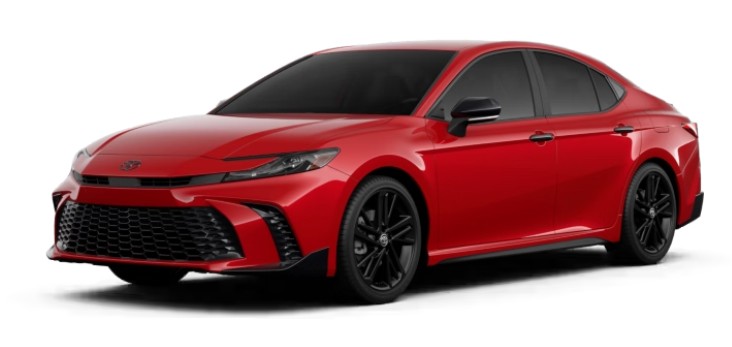
Toyota also added a Nightshade edition to the 2026 lineup, providing a darker appearance package for buyers who want more visual attitude without leaving the core hybrid formula.
The 2026 model illustrates how far the Camry has traveled. The original car arrived as a modest front-wheel-drive economy model; the current sedan offers hybrid power, available AWD, advanced driver assistance and technology that would have looked like science fiction in 1983.
The Most Important Toyota Camry Redesign Years
Not every year represents a major mechanical change. The most significant U.S. redesign points include:
- 1983: Camry launches as a standalone U.S. model.
- 1987: Second generation introduces a larger package and available V6.
- 1992: Camry becomes wider and more substantial.
- 1997: Fourth generation emphasizes simplicity and value.
- 2002: Taller, roomier fifth generation arrives.
- 2007: Sixth generation introduces the Camry Hybrid era.
- 2012: Seventh generation improves efficiency and modernization.
- 2015: Major styling refresh within the seventh generation.
- 2018: Eighth generation adopts a sportier platform and design.
- 2020: First Camry TRD joins the lineup.
- 2021: Updated technology and safety features appear.
- 2025: Ninth generation becomes exclusively hybrid.
Redesign years can provide the latest styling and engineering, but they may also introduce unfamiliar systems. Final-year models, meanwhile, often benefit from several seasons of production experience.
Best Toyota Camry Years for Different Buyers
There is no single “best” Camry year for everyone. The smartest choice depends on budget, driving habits and expectations.
Best for a Tight Budget
A maintained 2002–2006 or 2012–2014 Camry may provide inexpensive transportation. Condition is everything at this price level, so we should leave room in the budget for immediate maintenance.
Best Balance of Price and Modern Features
The 2015–2017 Camry is appealing for buyers who want a recognizable modern sedan without paying eighth-generation prices. Later examples in this period also benefit from stronger safety credentials.
Best for Modern Used-Car Shoppers
The 2021–2024 Camry provides contemporary styling, mature eighth-generation engineering and useful driver-assistance technology. These years also preserve access to powertrain options that disappeared from the hybrid-only redesign.
Best for Fuel-Conscious Drivers
Camry Hybrid models deserve attention across multiple generations, but the 2025 and newer cars make hybrid power standard. Buyers who want a traditional gasoline-only Camry must shop for a 2024 or older example.
Best for Buyers Who Want a V6
The eighth-generation V6 Camry, especially in XSE or TRD form, offers performance that contrasts sharply with the model’s conservative reputation. Because the ninth-generation U.S. Camry is hybrid-only, clean late-model V6 examples may become increasingly desirable.
Toyota Camry Years to Approach Carefully
It is tempting to create a dramatic list of “Camry years to avoid,” but reality is more nuanced. Online complaint totals can be distorted by sales volume, vehicle age and reporting behavior. A popular model may generate more complaints simply because far more examples exist.
Rather than rejecting an entire year automatically, we should investigate:
- Whether open recalls remain unresolved
- Whether the engine consumes or leaks oil
- Whether the transmission shifts smoothly
- Whether dashboard warning lights return after startup
- Whether maintenance records are available
- Whether the title is clean
- Whether the car has flood or collision damage
- Whether a hybrid battery has been tested
- Whether software updates or service campaigns were completed
NHTSA recommends checking recalls by VIN because a model-level search cannot confirm whether a particular vehicle still needs repair. Recall work is tied to the individual vehicle, not merely to the nameplate printed on its trunk.
How to Choose Between Two Camry Model Years
Suppose we are comparing a high-mileage 2020 Camry with a lower-mileage 2017 example. Which one wins?
The newer car is not automatically better. We should compare the complete ownership picture:
1. Maintenance Documentation
Receipts for oil changes, coolant service, brake work and major repairs provide more confidence than verbal promises.
2. Vehicle History
A history report may reveal title brands, odometer inconsistencies and reported collisions. It is useful, but it cannot uncover every unreported incident.
3. Independent Inspection
A qualified technician should examine the body, suspension, brakes, tires, electronics, drivetrain and diagnostic systems. Hybrid models should receive an appropriate hybrid-system evaluation.
4. Trim-Level Differences
A newer base Camry may have fewer comfort features than an older XLE or XSE. Compare equipment, not just years.
5. Total Ownership Cost
Include taxes, insurance, registration, fuel, tires and likely repairs. A bargain purchase can become expensive when it immediately needs brakes, tires and suspension work.
Camry Safety Across the Years
Safety standards evolve, so ratings from different eras should not be compared as though the tests were identical. IIHS has repeatedly strengthened its procedures, including the introduction of more demanding side-impact and moderate-overlap evaluations.
Modern Camrys may offer features unavailable on older cars, such as:
- Automatic emergency braking
- Pedestrian detection
- Lane-departure warning
- Lane-centering assistance
- Adaptive cruise control
- Blind-spot monitoring
- Rear cross-traffic alert
- Improved airbag coverage
The 2025 Camry received ratings under newer IIHS testing criteria, while earlier generations were assessed under the standards applicable during their own periods.
That does not make an older Camry inherently unsafe, but it means buyers should understand what technology and crash protection they are giving up in exchange for a lower purchase price.
How Long Can a Toyota Camry Last?
There is no guaranteed lifespan. Mileage is only one chapter in the story.
A Camry’s longevity depends on:
- Oil-change consistency
- Cooling-system maintenance
- Driving environment
- Rust exposure
- Accident history
- Engine and transmission condition
- Quality of replacement parts
- Frequency of short trips
- Previous-owner behavior
- Timely response to warning signs
A highway-driven Camry with 150,000 miles may be healthier than a neglected city car showing 80,000. Maintenance and condition matter more than a magical number on the odometer.
We should also resist the idea that reliability means “nothing will ever break.” Every vehicle eventually needs tires, brakes, batteries, seals, suspension components and fluids. Reliability usually means the car is less likely to deliver frequent, unpredictable disasters—not that it is exempt from aging.
Gasoline, Hybrid or V6 Camry?
Gasoline Four-Cylinder
The conventional four-cylinder is the traditional Camry choice. It generally provides adequate power, familiar servicing and reasonable efficiency. Buyers shopping 2024 or older vehicles will find the broadest selection.
Camry Hybrid
The hybrid is ideal for frequent urban driving, where regenerative braking and electric assistance can provide the greatest benefit. It also offers smooth low-speed operation and does not require external charging.
Camry V6
The V6 prioritizes effortless acceleration and refinement. It consumes more fuel than the hybrid but gives the Camry a character that many people do not expect from a family sedan.
Because the 2025 redesign eliminated both gasoline-only and V6 versions in the U.S., powertrain preference now plays a major role in choosing between generations.
Is an Older Camry Better Than a Newer One?
An older Camry may be simpler, cheaper to purchase and easier for independent mechanics to understand. A newer Camry may deliver better fuel economy, stronger crash protection, quieter operation and more advanced technology.
Neither is universally better.
The ideal vehicle is the one that fits our budget without draining it, meets our safety expectations and survives a professional inspection. Buying the newest Camry we can barely afford is not always wiser than purchasing a slightly older one while preserving money for maintenance and insurance.
Used Toyota Camry Buying Checklist
Before signing a contract, we should:
- Confirm the exact year, trim and powertrain.
- Decode and verify the VIN.
- Check for open recalls through NHTSA.
- Review maintenance and ownership records.
- Inspect the title for brands or inconsistencies.
- Start the engine when completely cold.
- Test every warning light and dashboard display.
- Drive at low and highway speeds.
- Listen for suspension and wheel-bearing noise.
- Test the air conditioning and heating.
- Check tire age and wear patterns.
- Inspect underneath for rust and leaks.
- Scan the vehicle’s diagnostic systems.
- Evaluate the hybrid system where applicable.
- Arrange an independent pre-purchase inspection.
Skipping an inspection to save a little money is like refusing an umbrella because the first raindrop has not landed. The risk may remain invisible—right until it becomes expensive.
Final Thoughts on Toyota Camry Years in the US
The Toyota Camry’s U.S. story stretches from the small 1983 newcomer to today’s hybrid-only ninth-generation sedan. Along the way, it gained V6 power, American production, hybrid technology, all-wheel drive, stronger crash protection and increasingly advanced electronics.
Each generation offers a different version of the same central idea: comfortable, accessible transportation designed for ordinary life.
Older Camrys may attract us with simplicity and affordability. Seventh-generation models can offer strong value. Eighth-generation cars provide the widest personality range, from efficient hybrids to V6-powered TRD models. The 2025-and-newer Camry moves the nameplate decisively toward electrification without requiring drivers to plug in.
The smartest purchase is not necessarily the newest year, the lowest mileage or the most expensive trim. It is the Camry whose history, condition, equipment and ownership costs make sense together. When those pieces align, the car can feel less like a gamble and more like a dependable pair of shoes—perhaps not flashy, but ready whenever the road calls.
Frequently Asked Questions
1. What year did the Toyota Camry first appear in the US?
The first-generation Toyota Camry entered the U.S. market for the 1983 model year. Toyota sold 52,651 units during the model’s first full year of American sales.
2. How many Toyota Camry generations are there?
The 2025 redesign began the ninth Camry generation in the United States. Toyota officially described the redesigned 2025 model as the ninth-generation Camry.
3. What was the final year of the gasoline-only Toyota Camry?
The 2024 model year was the final U.S. Camry generation year offering conventional gasoline-only powertrains. Beginning with the 2025 model, every U.S. Camry uses Toyota’s hybrid system.
4. Which Toyota Camry years had a V6 engine?
V6 availability began with the second-generation Camry and continued intermittently through later generations. The eighth-generation Camry offered a V6 in selected trims, but the ninth-generation model became hybrid-only and no longer includes a U.S.-market V6.
5. Should we avoid the first year of a Camry redesign?
Not automatically. A first-year redesign provides newer styling and technology, but it may have less long-term reliability data than later years. Review recalls, service history, owner reports and the condition of the specific vehicle rather than rejecting it solely because it launched a new generation.
If you want to see other articles similar to Toyota Camry and Their Years in the US: Complete Model Guide you can visit the Buying category.
How Does Ford F 150 Hybrid Work? A Clear Guide to PowerBoost Technology
Are Ford F 150 Trucks Reliable? A Real-World Look at America’s Favorite Pickup
Ford F-150 Tire Size: The Complete Guide to Choosing the Right Tires
What questions to ask when buying an engine?
How to avoid buying a stolen engine
Engine compatibility checklist for swaps
Leave a Reply
Related Topics