
Ford Bronco Years to Avoid in the US: Complete Buyer’s Guide

Contents in this publication
- Ford Bronco and Bronco Sport Are Not the Same Vehicle
- Ford Bronco Years to Avoid at a Glance
- Why the 2021 Ford Bronco Is the Main Year to Avoid
- Should We Avoid the 2022 Ford Bronco?
- Is the 2023 Ford Bronco a Bad Year?
- Why Later Broncos Still Require Recall Checks
- What About Classic Ford Bronco Years?
- 1966–1977 First-Generation Bronco
- 1978–1979 Full-Size Bronco
- 1980–1986 Ford Bronco
- 1987–1991 Ford Bronco
- 1992–1996 Ford Bronco
- Why the Ford Bronco II Deserves Special Caution
- Which Ford Bronco Years Are Better to Buy?
- Which Bronco Engine Is the Best Choice?
- The 2.3-Liter EcoBoost Four-Cylinder
- The 2.7-Liter EcoBoost V6
- The 3.0-Liter Bronco Raptor Engine
- Red Flags When Buying Any Used Bronco
- How Off-Road Use Affects Bronco Reliability
- How Modifications Can Create Reliability Problems
- Essential Ford Bronco Pre-Purchase Checklist
- Is an Extended Warranty Worth Buying?
- Final Verdict on Ford Bronco Years to Avoid
- Frequently Asked Questions
The Ford Bronco is not the kind of SUV that quietly blends into traffic. It is bold, boxy, and built to look as if it is always five minutes away from climbing a mountain. That adventurous personality is exactly why so many American drivers want one.
However, buying a used Bronco is not simply a matter of finding the right color, trim level, and tire package. Some production years have experienced more engine concerns, recalls, software problems, roof complaints, and build-quality issues than others.
So, which Ford Bronco years should we avoid in the US?
For buyers considering the modern full-size Bronco, the 2021 model year deserves the most caution, especially when equipped with the 2.7-liter EcoBoost V6. The 2022 Bronco should also be inspected carefully because some examples continued to experience early-production problems and were included in important engine-related safety actions.
The 2023 model is not necessarily a year we must avoid completely, but its recall history means we should verify every repair and software update before buying.
With older Broncos built from 1966 to 1996, the situation is different. At that age, rust, neglect, accident damage, poor restoration work, and questionable modifications usually matter more than the specific year.
Let us examine which Ford Bronco years to avoid, which ones may be worth buying, and what we should inspect before bringing one home.
Ford Bronco and Bronco Sport Are Not the Same Vehicle
Before discussing reliability, we need to separate the Ford Bronco from the Bronco Sport.
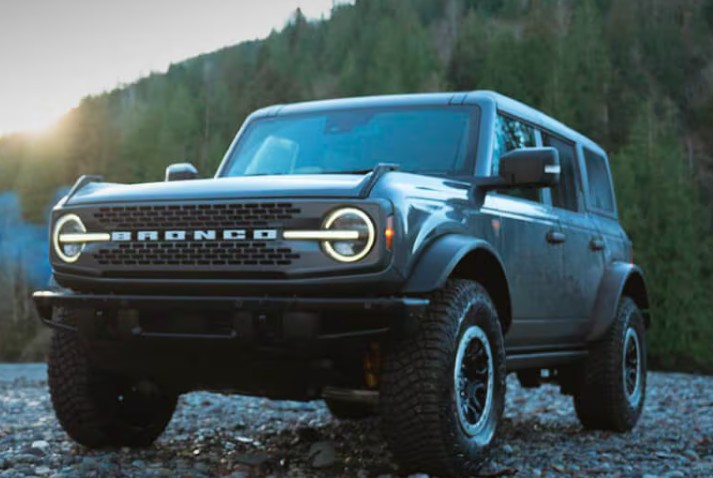
The full-size Ford Bronco returned for the 2021 model year as a body-on-frame SUV designed for serious off-road driving. It competes directly with vehicles such as the Jeep Wrangler and offers features including:
- Removable doors
- Removable roof panels
- Low-range four-wheel drive
- Locking differentials
- Multiple off-road drive modes
- Available sway-bar disconnect
- Two-door and four-door body styles
The Bronco Sport is a smaller unibody crossover related to the Ford Escape. It is designed for everyday commuting, light trails, and family use rather than extreme off-road driving.
This guide focuses primarily on the full-size Ford Bronco sold in the United States.
Ford Bronco Years to Avoid at a Glance
The following table provides a quick summary for used buyers.
| Model year or period | Recommendation | Main concern |
|---|---|---|
| 2021 Bronco | Avoid or inspect very carefully | First-year production problems and certain 2.7L engine failures |
| 2022 Bronco | Buy cautiously | Some continued engine, roof, transmission, and quality concerns |
| 2023 Bronco | Inspect recalls carefully | Extensive recall history and software complaints |
| 1984–1990 Bronco II | Generally avoid | Rollover reputation and aging components |
| 1966–1996 classic Broncos | Judge individually | Rust, modifications, neglect, and poor restoration work |
| 2024 and newer Bronco | Usually preferable | More production maturity, though recalls may still apply |
This list should be treated as a starting point rather than an automatic verdict.
A properly maintained 2021 Bronco with completed recalls and a documented replacement engine may be safer than a neglected later model with off-road damage and no service records.
The production year opens the investigation. It should never close it.
Why the 2021 Ford Bronco Is the Main Year to Avoid
The 2021 Ford Bronco was one of the most anticipated vehicle launches in recent American automotive history.
Ford revived a legendary nameplate, introduced a new platform, added advanced off-road technology, developed removable body components, and offered several complicated powertrain and drivetrain combinations.
That is a lot to introduce at once.
Like the first pancake in a batch, the first modern Bronco was exciting but not always perfectly formed.
First-Year Production Problems
First-year vehicles frequently experience more problems because manufacturers are still refining:
- Assembly processes
- Supplier quality
- Software programming
- Component tolerances
- Weather sealing
- Electrical communication
- Dealer repair procedures
The 2021 Bronco arrived during a period of major supply-chain disruption, which added another layer of complexity.
Owners reported concerns ranging from minor rattles to severe engine failures.
The 2.7-Liter EcoBoost Engine Problem
The most serious reliability concern associated with certain early Broncos involved the available 2.7-liter EcoBoost V6.
Some owners reported sudden engine failure, sometimes while driving at highway speeds. The engine could lose power, shut down, and fail to restart.
Investigations connected some failures to intake valves that could fracture inside the engine. A broken valve can cause catastrophic internal damage to components such as:
- Pistons
- Cylinder walls
- Cylinder heads
- Turbocharger systems
- Connecting rods
This is not a small repair like replacing a battery or sensor. In severe cases, the engine may require major repair or complete replacement.
Does Every 2021 Bronco Have a Bad Engine?
No.
The intake-valve concern did not affect every 2021 Bronco. Many vehicles have accumulated substantial mileage without experiencing catastrophic failure.
The issue involved specific engines built during particular production periods.
Even so, we should never buy a 2021 Bronco with the 2.7-liter engine without checking:
- The vehicle identification number
- Open recall status
- Engine production information
- Dealer inspection records
- Previous engine replacement
- Warranty repair documentation
- Oil-change history
- Previous loss-of-power complaints
A Bronco that received a replacement engine under warranty may actually be a better purchase than an untouched example, provided the work was completed correctly and documented by an authorized dealer.
Hardtop Roof Quality Complaints
The removable roof is one of the Bronco’s greatest attractions. Unfortunately, it also became one of the most discussed early-production concerns.
Some 2021 owners reported:
- Rough panel edges
- Discoloration
- Surface patterns
- Cracks
- Delamination
- Wind noise
- Water leaks
- Misaligned panels
- Rattling at highway speeds
A removable roof will rarely be as silent as a permanently fixed luxury-SUV roof. Some wind noise is normal.
However, excessive whistling, visible moisture, damaged seals, or panels that do not sit correctly should not be dismissed as part of the Bronco experience.
How to Inspect a Bronco Hardtop
During a pre-purchase inspection, we should:
- Remove and reinstall the front roof panels.
- Inspect all panel edges.
- Look for cracks or separation.
- Examine weather seals for cuts or flattening.
- Check the cabin for water stains.
- Drive at highway speed with the radio turned off.
- Listen for whistling, tapping, and popping.
- Ask whether the roof was replaced under warranty.
A roof can look perfect in an online advertisement and still leak during heavy rain.
Electrical and Infotainment Problems
The modern Bronco depends heavily on software and electronic modules.
Its cameras, drive modes, navigation, smartphone integration, safety systems, and off-road displays must all communicate correctly.
Early owners reported problems including:
- Frozen touchscreens
- Wireless Apple CarPlay disconnections
- Android Auto interruptions
- Backup-camera faults
- Random warning messages
- Slow system responses
- Battery-drain problems
- Features temporarily becoming unavailable
Many software problems can be corrected with updates. Nevertheless, repeated module failures can become expensive and frustrating after warranty coverage expires.
Build-Quality Inconsistency
Some 2021 Broncos also displayed inconsistent assembly quality.
Potential concerns included:
- Uneven body gaps
- Door-alignment problems
- Interior rattles
- Loose trim
- Weather-seal defects
- Wind noise
- Water intrusion
- Poorly fitted exterior panels
The Bronco is a rugged SUV with removable doors and roof panels, so it will naturally produce more noise than a conventional crossover.
Still, rugged should not mean poorly assembled.
Persistent rattles, leaking seals, or doors that require excessive force to close deserve further investigation.
Should We Avoid the 2022 Ford Bronco?
The 2022 Bronco is more difficult to classify.
It was no longer the first model year, and Ford had gained valuable production experience. Many 2022 Broncos have delivered satisfactory reliability.
However, the year still deserves caution.
Certain 2022 Broncos equipped with the 2.7-liter EcoBoost V6 were included in the engine population associated with defective intake valves.
Therefore, moving from a 2021 to a 2022 does not automatically eliminate the most serious engine concern.
VIN verification remains essential.
A seller should ideally provide:
- Complete Ford dealer service history
- Recall-completion documents
- Engine-replacement records
- Oil-change invoices
- Roof-repair records
- Transmission-repair details
- Electrical diagnostic reports
When someone says, “The dealer fixed everything,” we should ask to see the paperwork.
Soft-Top and Window Problems
The Bronco uses frameless windows that lower slightly when a door is opened and rise after the door closes.
This design helps create a better seal, but it can also cause problems if the windows lose calibration.
Possible symptoms include:
- Glass catching on the weather strip
- Windows failing to lower when opening the door
- Wind noise
- Water leaks
- Windows bouncing back down
- Scratches caused by poor alignment
- Slow or irregular window movement
Some of these issues can be corrected with recalibration. Others may require adjustment or replacement parts.
Manual-Transmission Noise
Certain owners of manual-transmission Broncos have reported scraping, grinding, or rotational noises, particularly when the vehicle is cold.
Manual transmissions naturally produce more mechanical sound than automatics, but noticeable grinding should never be ignored.
During a test drive, we should evaluate the gearbox:
- From a cold start
- While idling in neutral
- With the clutch engaged
- With the clutch disengaged
- Through every forward gear
- During slow parking maneuvers
- Under light acceleration
- After reaching operating temperature
A seller who warms the Bronco before we arrive may be trying to hide a cold-start noise.
Ask that the vehicle remain cold before the inspection.
Is the 2023 Ford Bronco a Bad Year?
The 2023 Bronco is not necessarily a model year we should automatically avoid.
By then, Ford had more experience building the vehicle and had already addressed several early production concerns.
However, the 2023 Bronco still accumulated a notable recall history.
Why Recall History Matters
A recall does not automatically make a vehicle unreliable.
A recall means a manufacturer and safety regulator identified a problem that requires correction. Once the repair is completed, the vehicle may be perfectly safe to own.
The real problem begins when:
- The repair has not been completed
- Replacement parts are unavailable
- The owner ignored recall notices
- The same system develops repeated faults
- Dealer records are incomplete
- Software updates were never installed
Recall totals also need context.
A simple software update and a potential engine defect should not be treated as equal problems.
The important question is not simply how many recalls a Bronco has.
The better question is: Does this specific VIN have any unresolved recalls?
Software and Camera Concerns
Later Broncos have also been included in broad recalls involving rearview-camera displays and software performance.
A reversing camera that suddenly disappears is more than an inconvenience, particularly in a tall SUV with limited rear visibility.
Before buying a 2023 Bronco, test:
- The rearview camera
- The 360-degree camera system
- Parking sensors
- Blind-spot monitoring
- Lane-assistance functions
- Infotainment response
- Smartphone integration
- Drive-mode selection
Every system should work without freezing, flashing warnings, or rebooting.
Why Later Broncos Still Require Recall Checks
It is tempting to assume that buying a newer Bronco solves every early problem.
Unfortunately, recalls can span multiple model years.
Some campaigns have affected Broncos produced from 2021 through later years because of problems involving:
- Wiring harnesses
- Rearview cameras
- Software modules
- Seat-belt components
- Steering systems
- Fuel-delivery components
- Child-safety features
- Powertrain parts
This does not mean we should avoid every modern Bronco.
It means no Bronco should be purchased without a VIN-specific recall search.
Why VIN Research Is Better Than General Advice
Two Broncos built in the same year may have different engines, factories, suppliers, production dates, and recall eligibility.
One may have every recall completed. The other may have several open campaigns.
That is why broad statements such as “all 2022 Broncos are bad” are too simplistic.
The individual VIN tells a more accurate story than the model-year badge.
What About Classic Ford Bronco Years?
Classic Broncos require a completely different buying strategy.
When a vehicle is 30, 40, or nearly 60 years old, maintenance history and structural condition matter more than the original production year.
A properly restored 1974 Bronco may be safer and more dependable than a neglected 1995 model.
With classic Broncos, the real enemies are:
- Rust
- Poor restoration work
- Old wiring
- Neglected fluids
- Accident damage
- Worn steering
- Unsafe modifications
- Missing documentation
1966–1977 First-Generation Bronco
The first-generation Bronco is one of the most desirable classic SUVs in the United States.
Its simple mechanical design, compact proportions, and iconic styling make it highly collectible.
However, these vehicles were once inexpensive utility trucks. Many were used hard, modified heavily, damaged off-road, and repaired with whatever parts were available.
Common First-Generation Bronco Problems
We should inspect:
- Rocker-panel rust
- Floor-pan corrosion
- Damaged door posts
- Rust around body mounts
- Cracked frames
- Poorly repaired quarter panels
- Worn steering boxes
- Old drum brakes
- Leaking fuel lines
- Deteriorated brake hoses
- Improvised electrical wiring
- Amateur engine swaps
A vehicle advertised as fully restored may deserve more scrutiny than an original survivor.
Fresh paint can hide filler and rust like a rug hiding a damaged floor.
Are Any First-Generation Years Worse Than Others?
Not necessarily.
Condition matters far more than the year.
We would rather buy a structurally solid 1968 Bronco than a poorly restored 1977 model with hidden corrosion.
1978–1979 Full-Size Bronco
The 1978 and 1979 Broncos are popular because of their distinctive design and short production period.
They can be excellent classics, but they are now old enough to require a complete mechanical and structural inspection.
Common concerns include:
- Tailgate rust
- Rear-quarter corrosion
- Worn steering systems
- Carburetor problems
- Aging automatic transmissions
- Leaking transfer cases
- Improper suspension lifts
- Outdated braking components
These years are not automatically bad. They simply require more maintenance awareness.
1980–1986 Ford Bronco
Early 1980s Broncos can offer good value compared with more collectible models.
However, buyers should expect age-related problems involving:
- Carburetors
- Vacuum lines
- Emissions equipment
- Electrical connectors
- Cooling systems
- Steering components
- Automatic transmissions
- Body rust
Old vacuum lines can look like a bowl of spaghetti. When one line cracks, several engine functions may begin behaving strangely.
Inspect the frame, steering box, floor panels, tailgate, fuel system, and four-wheel-drive system carefully.
1987–1991 Ford Bronco
These Broncos introduced more modern styling and increased use of electronic fuel injection.
A well-maintained example can still be practical, but we should examine:
- Fuel-injection sensors
- Automatic transmission operation
- Cooling-system condition
- Tailgate wiring
- Power rear-window operation
- Front suspension wear
- Oil leaks
- Rust around weather seals
The power rear window deserves special attention because it is closely connected to tailgate operation.
If the window does not move correctly, opening the rear cargo area may become difficult.
1992–1996 Ford Bronco
The final years of the classic full-size Bronco are often among the most attractive options for buyers who want old-school styling with more modern drivability.
They offer improved interiors, fuel-injected engines, and better everyday comfort than earlier models.
However, they are now approximately three decades old.
Potential concerns include:
- Transmission slipping
- Delayed gear engagement
- Engine oil leaks
- Cooling-system neglect
- Worn ball joints
- Loose steering
- Rust around rear wheel arches
- Tailgate-window failure
- Cracked dashboards
- Aging emissions equipment
- Poorly installed lift kits
A stock 1994 Bronco with complete maintenance records may be a better buy than a modified 1996 model with oversized tires and mystery wiring.
Why the Ford Bronco II Deserves Special Caution
The Bronco II was a compact SUV sold during the 1980s and through the 1990 model year.
Although it shares the Bronco name, it is a separate vehicle from the larger full-size Bronco.
The Bronco II developed a controversial reputation for rollover risk.
Its combination of a short wheelbase, narrow track, tall body, and older suspension design requires careful driving.
Decades of wear can make the situation worse.
Why We Would Usually Avoid a Bronco II
Potential concerns include:
- High center of gravity
- Narrow track width
- Worn suspension components
- Old tires
- Excessive body roll
- Improper lift kits
- Weak braking systems
- Aging steering parts
For most buyers, we would avoid the Bronco II unless it is being purchased as a collectible or specialized project.
It may be appropriate when:
- The suspension has been professionally inspected
- The vehicle remains close to stock height
- Modern tires are installed
- The frame is structurally sound
- The driver understands its handling limits
- It will not serve as the primary family vehicle
Nostalgia can be powerful, but it should never overpower physics.
Which Ford Bronco Years Are Better to Buy?
No Bronco production year is completely problem-free.
However, later modern Broncos generally benefit from improved production processes, updated software, revised components, and greater dealer familiarity.
Consider a 2024 or Newer Bronco
A 2024 or newer Bronco may provide a more mature ownership experience than a 2021 launch model.
Advantages may include:
- Improved assembly consistency
- Updated software
- Revised components
- More remaining warranty coverage
- Fewer first-year design concerns
- Better dealer repair knowledge
That does not mean newer Broncos are immune to recalls.
We should still check the VIN, inspect the vehicle, and review maintenance history.
Consider a Repaired 2021 or 2022 at the Right Price
A 2021 or 2022 Bronco should not be rejected automatically.
It may be worth buying when:
- All recalls have been completed
- The engine is outside the affected production group
- A replacement engine was installed under warranty
- The roof is watertight
- The transmission operates smoothly
- Service records are complete
- The vehicle remains mechanically stock
- An independent inspection finds no serious concerns
- The asking price reflects the additional risk
The discount should be meaningful.
We should not pay nearly new-vehicle pricing for a Bronco with greater uncertainty.
Which Bronco Engine Is the Best Choice?
The modern Ford Bronco has been offered with several turbocharged engines.
Each one has different advantages and risks.
The 2.3-Liter EcoBoost Four-Cylinder
The 2.3-liter EcoBoost is sometimes overlooked because buyers assume a serious off-road SUV needs a V6.
However, it provides respectable power and may be an attractive choice for cautious used buyers.
It was not the main engine involved in the early 2.7-liter intake-valve concern.
We should still inspect for:
- Oil leaks
- Coolant leaks
- Turbocharger noise
- Rough idle
- Misfires
- Delayed maintenance
- Aggressive engine tuning
The four-cylinder may not sound as dramatic as a V6, but it can deliver more than enough performance for everyday driving and recreational trails.
The 2.7-Liter EcoBoost V6
The 2.7-liter V6 offers stronger acceleration and greater torque.
It is an excellent engine when properly built and maintained.
However, early 2021 and certain 2022 examples require careful VIN and production-date verification because of the intake-valve concern.
When inspecting one, look for:
- Engine replacement records
- Recall completion
- Abnormal ticking
- Rough idle
- Misfire codes
- Oil consumption
- Cooling-system leaks
- Turbocharger noise
- Delayed maintenance
Do not rely on a seller saying the engine is “one of the good ones.”
Verify it.
The 3.0-Liter Bronco Raptor Engine
The Bronco Raptor uses a powerful 3.0-liter EcoBoost V6.
It delivers impressive performance, but it also comes with higher purchase, fuel, tire, suspension, and repair costs.
A used Bronco Raptor may also have experienced aggressive off-road driving.
Inspect for:
- Damaged skid plates
- Bent suspension components
- Worn shock absorbers
- Frame damage
- Uneven tire wear
- Overheated fluids
- Engine tuning
- Modified exhaust systems
- Incomplete recalls
A Raptor can look immaculate from above while carrying expensive damage underneath.
Red Flags When Buying Any Used Bronco
Regardless of the model year, certain warning signs should make us slow down or walk away.
These include:
- Open safety recalls
- Missing maintenance history
- Persistent warning lights
- Recently cleared diagnostic codes
- Heavy underbody damage
- Bent suspension mounts
- Water stains
- Musty interior odors
- Uneven paint
- Poor panel alignment
- Tangled aftermarket wiring
- Oversized tires without supporting upgrades
- Engine tuning without documentation
- A seller refusing a cold start
- A seller refusing an independent inspection
- Fresh undercoating applied over possible rust
A Bronco may be designed for mud and rocks, but that does not mean abuse is harmless.
How Off-Road Use Affects Bronco Reliability
A used Bronco that has been driven off-road is not automatically a bad vehicle.
Off-road capability is part of its purpose.
The real concern is careless or extreme use.
Hard impacts can damage:
- Tie rods
- Steering racks
- Control arms
- Axle housings
- Shock absorbers
- Driveshafts
- Exhaust components
- Oil pans
- Transfer cases
- Wiring connectors
- Skid-plate mounts
Mud can trap moisture around electrical connections and body seams.
Deep-water crossings can contaminate:
- Differential fluid
- Transmission fluid
- Transfer-case fluid
- Wheel bearings
- Electrical connectors
Inspect the Undercarriage Carefully
Normal scratches on skid plates are expected.
More serious warning signs include:
- Deep dents
- Cracked mounts
- Freshly painted components
- Bent brackets
- Leaking seals
- Crushed exhaust pipes
- Damaged wiring
- Uneven suspension geometry
Look underneath the vehicle rather than judging it only by shiny body panels.
Check for Water Exposure
Some Broncos include washable interior materials and drain plugs.
These features are useful, but they can also hide a history of water intrusion.
Inspect for:
- Damp carpet or insulation
- Mud in floor seams
- Corroded seat bolts
- Oxidized connectors
- Mold
- Musty odors
- Water lines
- Rust beneath brackets
A Bronco may have crossed a stream without becoming stranded, but water can still remain inside hidden areas.
How Modifications Can Create Reliability Problems
The Bronco aftermarket offers almost endless possibilities.
Owners can add:
- Suspension lifts
- Larger tires
- Winches
- Steel bumpers
- Roof racks
- Auxiliary lights
- Engine tuning
- Snorkels
- Rock sliders
- Heavy recovery equipment
Some modifications improve capability. Others create new problems.
Problems Caused by Oversized Tires
Larger tires can increase stress on:
- Wheel bearings
- Tie rods
- Steering components
- Axles
- Differentials
- Brakes
- Transmission components
- Suspension bushings
They can also reduce fuel economy and alter speedometer accuracy.
Problems Caused by Poor Wiring
Improperly installed lights, winches, or accessories can cause:
- Battery drain
- Blown fuses
- Short circuits
- Warning lights
- Intermittent electrical faults
- Overheated wiring
- Fire risk
For most used buyers, a stock or lightly modified Bronco is the safer choice.
A professional build with receipts may be excellent. A driveway project with unidentified wires and suspension parts is a rolling question mark.
Essential Ford Bronco Pre-Purchase Checklist
Before buying any used Bronco, we should complete the following steps.
Check the VIN for Recalls
Use an official recall-search tool and contact a Ford dealer.
Confirm:
- Open recalls
- Completed recalls
- Warranty extensions
- Previous engine replacement
- Software updates
- Outstanding service campaigns
Demand a Cold Start
Listen for:
- Knocking
- Ticking
- Grinding
- Rattling
- Uneven idle
- Exhaust smoke
- Delayed warning lights
- Misfires
A cold start often reveals noises that disappear after the engine warms up.
Scan Every Electronic Module
A basic code reader may only check the engine computer.
A complete diagnostic scan should inspect:
- Powertrain module
- Transmission module
- Body-control module
- Four-wheel-drive module
- Camera system
- Safety systems
- Infotainment network
Recently cleared codes may indicate someone reset warning lights before listing the vehicle.
Test Every Four-Wheel-Drive Function
Check:
- Four-wheel drive high
- Four-wheel drive low
- Automatic four-wheel-drive mode
- Locking differentials
- Trail-control features
- Drive modes
- Sway-bar disconnect
Use these systems only in suitable conditions.
Inspect the Roof and Doors
Remove and reinstall roof panels when possible.
Look for:
- Damaged latches
- Missing tools
- Worn seals
- Stripped bolts
- Scratches
- Leaks
- Misalignment
- Excessive wind noise
Drive at Highway Speed
A short neighborhood test drive is not enough.
At higher speeds, listen for:
- Roof whistling
- Steering vibration
- Wheel-bearing noise
- Driveline vibration
- Tire imbalance
- Suspension rattles
Pay for an Independent Inspection
Use a technician familiar with:
- Ford EcoBoost engines
- Electronic four-wheel-drive systems
- Off-road suspension damage
- Ford diagnostic software
- Removable roof systems
A professional inspection may cost a few hundred dollars, but it can prevent a repair bill worth thousands.
Is an Extended Warranty Worth Buying?
An extended warranty may be useful for an early modern Bronco because the vehicle contains:
- Turbocharged engines
- Complex electronics
- Multiple cameras
- Removable roof components
- Advanced four-wheel-drive systems
- Electronic locking differentials
- Sophisticated infotainment systems
However, not every warranty provides meaningful protection.
Before buying one, confirm:
- Which engine parts are covered
- Whether turbochargers are included
- Whether electronics are covered
- Whether camera systems are included
- Whether roof leaks are excluded
- Whether modifications cancel coverage
- The deductible amount
- Labor-rate limits
- Diagnostic-fee coverage
- Approved repair facilities
- Transferability
- Cancellation rules
A warranty full of exclusions can be as useful as an umbrella made from mesh.
Final Verdict on Ford Bronco Years to Avoid
The 2021 Ford Bronco is the main modern model year we should avoid or approach with exceptional caution.
Its first-year production status, roof-quality complaints, software concerns, and certain 2.7-liter EcoBoost engine failures make it the riskiest year of the revived Bronco generation.
The 2022 Bronco is a conditional purchase. Many examples are reliable, but some remain connected to early engine and quality concerns.
The 2023 Bronco is not automatically a bad year, but its recall and software history makes VIN verification essential.
Later models may provide greater manufacturing maturity, but they are not immune to recalls or defects.
For classic Broncos built from 1966 to 1996, we should avoid bad vehicles rather than entire production years. Rust, accident damage, poor restoration work, old wiring, and extreme modifications are far more important than the model year.
The best used Bronco is not always the newest or most expensive one.
It is the vehicle with:
- A transparent history
- Completed recalls
- Consistent maintenance
- Sensible modifications
- No serious accident damage
- No hidden water intrusion
- A successful independent inspection
A Bronco should carry us toward adventure, not toward the repair shop on the back of a tow truck.
Frequently Asked Questions
What is the worst Ford Bronco year to buy?
The 2021 Ford Bronco is generally considered the riskiest modern model year. It was the first year of the revived generation and experienced early build-quality concerns, roof complaints, software problems, and certain 2.7-liter EcoBoost engine failures.
Should we avoid every 2021 Ford Bronco?
No. Some 2021 Broncos have been reliable, and others received replacement engines or recall repairs. A 2021 model may be worth buying when it has complete service records, no open recalls, a clean inspection, and an appropriately reduced price.
Is the four-cylinder Bronco more reliable than the V6?
The 2.3-liter four-cylinder was not the main engine associated with the early intake-valve concern affecting certain 2.7-liter engines. However, it can still experience turbocharger, sensor, cooling-system, or maintenance-related problems.
Is the 2023 Ford Bronco reliable?
The 2023 Bronco benefits from greater production maturity than the 2021 model, but it still has a notable recall history. Buyers should verify every recall, software update, and repair by VIN before purchasing.
Which used Ford Bronco year is best?
A well-documented 2024 or newer Bronco may provide the best balance of production maturity and warranty coverage. A properly repaired 2021–2023 Bronco can also be a good purchase when its history is transparent and the price reflects any additional risk.
If you want to see other articles similar to Ford Bronco Years to Avoid in the US: Complete Buyer’s Guide you can visit the Buying category.
How Does Ford F 150 Hybrid Work? A Clear Guide to PowerBoost Technology
Are Ford F 150 Trucks Reliable? A Real-World Look at America’s Favorite Pickup
Ford F-150 Tire Size: The Complete Guide to Choosing the Right Tires
What questions to ask when buying an engine?
How to avoid buying a stolen engine
Engine compatibility checklist for swaps
Leave a Reply
Related Topics