

Toyota Camry vs Prius: Which Hybrid Toyota Fits You Best?

Contents in this publication
- Toyota Camry vs Prius at a Glance
- What Is the Main Difference Between the Camry and Prius?
- Exterior Design: Traditional Elegance or Futuristic Efficiency?
- Performance: Is the Camry Faster Than the Prius?
- Fuel Economy: Where the Prius Pulls Ahead
- Interior Comfort and Cabin Quality
- Passenger Space: The Camry’s Family Advantage
- Cargo Space: Trunk Versus Liftback
- Ride Quality and Road Noise
- Handling and Everyday Maneuverability
- All-Wheel Drive and Bad-Weather Confidence
- Technology and Infotainment
- Safety Features
- Toyota Camry vs Prius Reliability
- Maintenance and Ownership Costs
- Pricing and Value
- Toyota Camry vs Prius for Commuting
- Toyota Camry vs Prius for Families
- Toyota Camry vs Prius for Road Trips
- Should We Consider the Prius Plug-In Hybrid?
- Advantages of the Toyota Camry
- Advantages of the Toyota Prius
- Potential Drawbacks of the Camry
- Potential Drawbacks of the Prius
- Toyota Camry vs Prius: Which One Should We Buy?
- Final Verdict
- Frequently Asked Questions
Choosing between the Toyota Camry and Toyota Prius used to be fairly straightforward. The Camry was the conventional family sedan, while the Prius was the unmistakable fuel-saving hatchback for drivers determined to visit gas stations as rarely as possible.
That distinction is no longer so clear.
The current Camry is an all-hybrid sedan, offering impressive efficiency without abandoning the space, comfort, and familiar proportions that made it a household name. Meanwhile, the Prius has transformed from a sensible but slightly awkward economy car into a sleek hatchback that looks as though it arrived from the future.
Both cars now offer hybrid power, five seats, available all-wheel drive, strong safety technology, and excellent fuel economy. Their starting prices are also remarkably close. The 2026 Prius starts slightly below the 2026 Camry in the United States, while the Prius reaches up to an EPA-estimated 57 mpg combined and the Camry delivers up to 51 mpg combined.
So, which one should we choose?
The answer depends less on whether we want a hybrid and more on what kind of hybrid ownership experience we prefer. The Prius emphasizes maximum efficiency, compact dimensions, and hatchback versatility. The Camry prioritizes passenger comfort, stronger performance, rear-seat space, and the reassuring character of a traditional midsize sedan.
Let us compare them from every meaningful angle.
Toyota Camry vs Prius at a Glance
Before diving into the details, here is the basic personality of each vehicle:
| Category | Toyota Camry | Toyota Prius |
|---|---|---|
| Body style | Midsize sedan | Compact liftback hatchback |
| Powertrain | Hybrid only | Hybrid; plug-in version sold separately |
| Maximum fuel economy | Up to 51 mpg combined | Up to 57 mpg combined |
| Maximum output | Up to 232 net combined hp | Up to 196 net combined hp |
| Drivetrain | FWD or available AWD | FWD or available AWD |
| Best quality | Comfort and balanced performance | Efficiency and hatchback versatility |
| Ideal buyer | Families, commuters, highway travelers | Efficiency-focused commuters and urban drivers |
Toyota lists the Camry with as much as 232 net combined horsepower and the Prius with 194 horsepower in front-wheel-drive form or 196 horsepower with all-wheel drive.
In plain English, the Camry is the roomier and more powerful all-rounder. The Prius is the lighter-footed fuel-economy specialist.
What Is the Main Difference Between the Camry and Prius?
The most important difference is not under the hood. It is behind the rear seats.
The Camry is a conventional four-door sedan with a separate trunk. The Prius is a liftback, meaning its rear window and cargo door rise together like a hatchback. That design gives the Prius a wider cargo opening and makes it easier to load tall or awkward objects.
Think of the Camry as a comfortable business shoe. It works almost everywhere, feels familiar, and rarely attracts the wrong kind of attention. The Prius is more like a lightweight modern trainer: efficient, flexible, and clearly designed around movement.
The Camry also belongs to the midsize-sedan class, whereas the Prius feels smaller and more intimate. Passengers generally get a more relaxed experience in the Camry, particularly in the second row. The Prius counters with easier maneuverability and a more useful cargo shape.
Neither philosophy is inherently better. One simply fits family duty more naturally, while the other excels at economical commuting.
Exterior Design: Traditional Elegance or Futuristic Efficiency?
Toyota Camry Styling
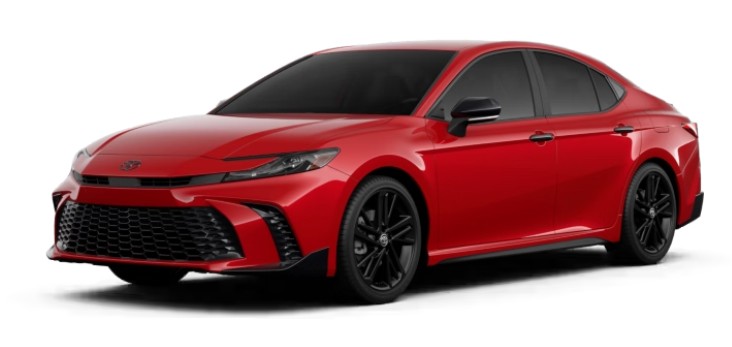
The current Camry looks cleaner and more athletic than older generations. Its low nose, sculpted bodywork, and wide stance give it a confident appearance without turning it into a rolling science experiment.
Toyota offers different visual personalities across the lineup. Comfort-focused versions appear restrained and polished, while sportier trims add more aggressive bumpers, larger wheels, dark exterior details, and sharper accents.
The Camry’s greatest design advantage is familiarity. Nobody needs an explanation of what it is. It looks appropriate outside an office, school, restaurant, airport, or suburban home.
Toyota Prius Styling
The Prius makes a stronger entrance.
Its steeply angled windshield, smooth roofline, narrow lighting elements, and hidden rear-door handles create a shape that appears to slice through the air. Older Prius generations often looked unusual because efficiency dictated their proportions. The newer design turns that aerodynamic necessity into something genuinely attractive.
It has more visual drama than the Camry, although beauty comes with a few compromises. The low roof can reduce the sense of openness inside, and the sloping rear profile may affect rearward visibility.
Which One Looks Better?
The Prius wins if we want a distinctive, modern car that attracts attention. The Camry wins if we prefer a mature, balanced design that should age gracefully.
Design is subjective, but the difference in character is obvious: the Prius whispers “technology,” while the Camry says “refinement.”
Performance: Is the Camry Faster Than the Prius?
Yes, the Camry is generally the stronger performer.
Its hybrid system uses a 2.5-liter four-cylinder engine and produces up to 232 net combined horsepower in all-wheel-drive form. Front-wheel-drive Camry models produce slightly less, but they still offer more power than the standard Prius. Toyota lists the Prius at 194 net combined horsepower with front-wheel drive and 196 horsepower with all-wheel drive.
That difference becomes noticeable during:
- Highway merging
- Passing slower traffic
- Climbing steep roads
- Carrying several passengers
- Accelerating with luggage onboard
The Prius is not slow in the way older versions once felt. Its current hybrid system provides responsive acceleration, and the immediate assistance from the electric motor helps it move away from traffic lights with confidence.
Still, the Camry feels more effortless. It has extra muscle in reserve, like a runner who finishes a race without appearing out of breath.
Does the Prius Feel Sportier?
Curiously, it sometimes can.
The Prius sits lower, feels compact, and reacts quickly in city traffic. Its smaller footprint can make it seem nimble when changing lanes or navigating tight streets. The Camry feels more substantial and planted, especially at higher speeds.
Neither vehicle is a true sports car. Sport-oriented trims may sharpen their appearance and steering response, but efficiency and everyday usability remain the main priorities.
For pure acceleration and relaxed highway power, the Camry wins. For light, agile urban driving, the Prius has plenty of charm.
Fuel Economy: Where the Prius Pulls Ahead
Fuel economy is the Prius’s signature advantage.
The 2026 Prius can achieve an EPA-estimated 57 mpg combined in its most efficient configuration. Toyota rates front-wheel-drive models at up to 57 mpg combined and all-wheel-drive versions at up to 54 mpg combined.
The Camry is hardly thirsty. Its most efficient version reaches up to 51 mpg combined, an excellent figure for a roomy midsize sedan with significantly more power.
A six-mpg difference may look enormous on a comparison chart, but we should consider how we actually drive.
Imagine traveling 12,000 miles annually:
- At 57 mpg, the Prius would use roughly 211 gallons.
- At 51 mpg, the Camry would use roughly 235 gallons.
- The difference would be approximately 24 gallons per year.
At $3.50 per gallon, that represents about $84 in annual fuel savings. Real-world results will vary, but the example shows why purchase price, comfort, insurance, and practicality may matter more than a small difference in mpg.
Which Car Is Better for City Driving?
The Prius is the natural city champion.
Its superior efficiency, compact body, hatchback design, and easy maneuverability suit stop-and-go traffic. Hybrid systems also thrive in urban conditions because regenerative braking captures energy during deceleration.
The Camry remains impressively economical around town, but its larger dimensions can make narrow parking spaces and crowded streets slightly more demanding.
Which Is Better on the Highway?
The decision becomes closer on the open road.
The Prius uses less fuel, but the Camry offers a quieter, roomier, and more relaxed cruising experience. Its extra power also makes passing easier.
For a short solo commute, we would lean toward the Prius. For repeated interstate trips with passengers and luggage, the Camry’s comfort may be worth using a little more gasoline.
Interior Comfort and Cabin Quality
Camry Interior Experience
The Camry cabin follows a familiar layout. Controls are positioned where we expect them, the dashboard feels broad, and the seating position suits a wide range of drivers.
Its larger body provides an airier atmosphere, particularly for rear passengers. The Camry is more likely to keep adults comfortable on longer journeys, and families will appreciate the extra breathing room around child seats.
The available equipment varies by trim, but desirable features may include:
- Heated and ventilated front seats
- Dual-zone automatic climate control
- Larger digital displays
- Wireless smartphone connectivity
- Premium audio
- Power-adjustable seating
- Rear air vents
The Camry does not try to reinvent the cabin. That restraint is part of its appeal.
Prius Interior Experience
The Prius takes a more unconventional approach.
Its digital instrument display sits high and far forward near the windshield rather than directly behind the steering wheel. Some drivers appreciate how close the information appears to their natural line of sight. Others may need time to adjust the steering wheel so it does not partially block the display.
The cabin looks modern and uncluttered, matching the futuristic exterior. Front-seat space is comfortable, but the low roof and compact body make the Prius feel more enclosed than the Camry.
Which Interior Is Easier to Live With?
The Camry wins for immediate familiarity, rear-seat comfort, and long-distance relaxation.
The Prius wins for visual freshness and a cockpit-like atmosphere. It feels special, but the Camry feels effortless.
Passenger Space: The Camry’s Family Advantage
The Camry is the stronger choice when rear-seat passengers are part of everyday life.
Adults in the second row benefit from the sedan’s longer body and more accommodating proportions. The roofline also feels less restrictive than the sharply sloping shape of the Prius.
This matters when we regularly transport:
- Teenagers or adult family members
- Clients or coworkers
- Rear-facing child seats
- Elderly passengers
- Friends on long journeys
The Prius can carry five people, but four occupants will usually be happier than five. Its center rear position is best treated as an occasional seat rather than premium real estate.
The Camry is not limousine-sized, yet it creates fewer arguments about legroom. For families, rideshare drivers, or anyone who routinely uses the back seat, that advantage may outweigh the Prius’s fuel savings.
Cargo Space: Trunk Versus Liftback
This category is more complicated than simply comparing volume figures.
The Camry provides a traditional trunk, which keeps luggage concealed and separated from the passenger compartment. Grocery bags, suitcases, and everyday items fit easily, and the rear seats can fold when longer cargo must pass through.
However, the trunk opening limits what we can load. A bulky box may have enough theoretical space inside but still refuse to squeeze through the opening.
The Prius solves that problem with its large rear hatch. Fold the back seats and it can accommodate items that would frustrate Camry owners, including:
- Flat-packed furniture
- Sports equipment
- Large pet carriers
- Camping gear
- Oversized shopping boxes
- Multiple travel bags
Which Has the More Practical Cargo Area?
The Prius wins for flexibility.
The Camry’s trunk may suit conventional luggage perfectly well, but the Prius behaves almost like a small crossover. Its hatchback layout turns an efficient commuter into a surprisingly useful cargo carrier.
The Camry remains better when we want belongings hidden in a separate, secure-looking compartment. The Prius is better when we frequently carry objects rather than neatly shaped suitcases.
Ride Quality and Road Noise
The Camry’s larger footprint gives it the advantage in ride comfort.
It feels planted on the highway and generally absorbs broken pavement with more composure. Smaller wheels on lower trims typically provide the softest experience, while larger wheels may improve appearance at the cost of additional firmness.
The Prius has a lower, tighter personality. It is not uncomfortable, but rough surfaces can feel more noticeable, particularly with larger wheels and low-profile tires.
Road noise also depends on pavement, speed, tire choice, and trim. In general, the Camry creates a calmer environment for long trips. The Prius feels more like a compact efficiency car, even though it is far more polished than earlier generations.
Comfort Verdict
Choose the Camry when ride quality is a top priority.
Choose the Prius when compact responsiveness matters more than isolating every crack in the road.
Handling and Everyday Maneuverability
The Prius earns points back once the road narrows.
It is easier to position in traffic, less intimidating in parking garages, and more convenient in crowded neighborhoods. Its low center of gravity also helps it feel stable through curves.
The Camry is still easy to drive. Steering effort is light, visibility is generally manageable, and its dimensions are far from enormous. Nevertheless, we are always aware that it occupies more road.
The Camry offers greater high-speed confidence. The Prius offers easier low-speed maneuverability. Which advantage matters more depends on whether our week revolves around city blocks or highways.
All-Wheel Drive and Bad-Weather Confidence
Both the Camry and Prius offer electronic on-demand all-wheel drive in the United States.
That is excellent news for drivers living in regions with snow, rain, steep driveways, or slippery winter roads.
The available systems use electric assistance at the rear wheels when additional traction is needed. They are designed for stability on paved roads rather than serious off-roading.
We should remember that all-wheel drive does not shorten braking distances on ice. A good set of winter tires can influence cold-weather safety more dramatically than driven-wheel count alone.
Which Is Better in Snow?
The Camry’s longer wheelbase and more substantial highway character may feel reassuring in poor weather. The Prius’s smaller dimensions make it easier to maneuver, but its low body deserves caution around deep snowbanks.
For moderate snow on plowed roads, either model can work well with appropriate tires. The Camry gets our vote for winter highway travel; the Prius remains a smart urban winter commuter.
Technology and Infotainment
Both cars provide modern connectivity, digital instrumentation, and Toyota’s current multimedia technology. Equipment levels differ across trims, so buyers should compare individual vehicles rather than assuming every example includes the same screen or convenience features.
Commonly available highlights include:
- Apple CarPlay and Android Auto
- Touchscreen infotainment
- USB charging ports
- Digital gauge displays
- Wireless smartphone charging
- Connected navigation services
- Voice controls
- Premium sound systems on selected trims
The Prius presents technology more dramatically. Its interior architecture reinforces the feeling that we are driving a high-tech efficiency machine.
The Camry integrates similar functions into a more conventional layout. Drivers who dislike learning new control arrangements may prefer it.
The best system is not necessarily the one with the largest display. It is the one we can operate without staring away from the road.
Safety Features
Toyota positions both vehicles as modern everyday cars with comprehensive driver-assistance technology.
Depending on trim and model-year specifications, their safety systems can include functions such as:
- Pre-collision assistance
- Pedestrian detection
- Lane-departure warning
- Steering assistance
- Adaptive cruise control
- Lane-tracing support
- Automatic high beams
- Road-sign recognition
- Blind-spot monitoring
- Rear cross-traffic alert
No assistance system replaces attentive driving. Cameras and sensors are useful co-pilots, not invisible chauffeurs.
Which One Feels Safer?
The Camry may create a subjective sense of security because of its larger body, calmer highway behavior, and roomier cabin. The Prius counters with compact maneuverability and strong outward awareness at the front.
Actual safety performance should be checked using the latest crash-test results for the exact model year being considered. Features can also vary by trim, so we should inspect the window sticker before buying.
Toyota Camry vs Prius Reliability
Toyota has spent decades refining hybrid technology, and both nameplates have long histories in the electrified market.
The Prius has served as Toyota’s hybrid laboratory and efficiency flagship. The Camry uses related hybrid principles in a more conventional family-sedan package.
Both systems reduce reliance on certain traditional components. For example, Toyota hybrids use an electronically controlled continuously variable transmission rather than a conventional stepped automatic gearbox. Regenerative braking can also reduce wear on friction brakes under many driving conditions.
Still, hybrids are not maintenance-free. They require:
- Engine oil and filter changes
- Tire rotations and replacement
- Brake inspections
- Coolant maintenance
- Cabin and engine air filters
- Suspension checks
- 12-volt battery replacement
- Hybrid-system inspections when necessary
Which One Should Last Longer?
There is no responsible way to promise that one will outlive the other. Maintenance history, climate, accident damage, mileage, and driving habits matter more than the badge on the trunk.
The Camry’s relaxed character may appeal to owners who accumulate highway miles. The Prius’s exceptional efficiency makes it attractive to high-mileage commuters and fleet drivers.
With proper care, both are sensible long-term choices. When shopping used, a complete service history is more valuable than a shiny set of wheels.
Maintenance and Ownership Costs
Routine maintenance should be broadly comparable because both vehicles combine a gasoline engine with Toyota hybrid hardware.
The Prius may save slightly more at the pump. The Camry, however, may use less expensive tires on trims equipped with smaller wheels. Sportier versions of either vehicle can carry larger tires that cost more to replace.
Insurance rates depend on location, age, driving history, coverage, trim, repair costs, and theft data. We should request quotes for both cars before signing anything. A modest fuel-economy advantage can disappear quickly if one vehicle costs substantially more to insure.
Other ownership expenses to compare include:
- Purchase price
- Dealer fees
- Financing rate
- Annual registration
- Insurance premiums
- Tire replacement
- Scheduled maintenance
- Depreciation
- Fuel consumption
The wisest purchase is not always the car with the highest mpg number. It is the vehicle with the most favorable total cost of ownership for our actual routine.
Pricing and Value
The two cars are priced close enough that buyers may genuinely cross-shop them. Toyota’s U.S. listings show the 2026 Prius starting slightly below the 2026 Camry, although exact prices can change with trims, destination charges, options, and model-year updates.
The Prius delivers strong value when maximum fuel economy and hatchback versatility are priorities. Even its basic mission feels specialized and intentional.
The Camry gives us more physical car for the money. We receive a larger cabin, stronger power, greater rear-seat comfort, and a more refined highway experience without sacrificing much fuel economy.
Which Offers Better Value?
The Prius is the better value for a solo commuter who wants to minimize fuel consumption.
The Camry is the better value for a household using one vehicle for commuting, family transportation, road trips, and general errands.
Value depends on how much of the vehicle we actually use. Paying for extra passenger room makes sense when passengers are present. Carrying empty rear seats every day does not magically improve our finances.
Toyota Camry vs Prius for Commuting
For dense city commuting, the Prius is difficult to beat.
It uses less fuel, fits into tighter spaces, and offers flexible cargo access for work bags, groceries, or equipment. Its dramatic design also gives an otherwise ordinary commute a little personality.
The Camry becomes more appealing as commuting distance and speed increase. A long highway journey exposes its advantages in seating comfort, ride quality, cabin space, and passing power.
Our Commuter Recommendation
- Mostly urban streets: Prius
- Mixed roads with limited parking: Prius
- Long freeway commute: Camry
- Frequent passenger transport: Camry
- Maximum mpg priority: Prius
- Comfort-first priority: Camry
Toyota Camry vs Prius for Families
The Camry is the clearer family choice for most buyers.
It provides easier rear-seat access, more passenger space, and a cabin that feels less confined. Installing child seats should also be less awkward because the roof does not slope as aggressively.
The Prius still works for small families, especially those who value the hatchback and rarely carry tall adults in the rear. Its cargo opening can be extremely useful for strollers, sports bags, and bulky purchases.
The decision comes down to whether we need passenger flexibility or cargo flexibility.
The Camry is better at carrying people. The Prius is better at swallowing oddly shaped gear.
Toyota Camry vs Prius for Road Trips
A road trip tests more than fuel economy.
We need supportive seats, manageable noise, predictable handling, luggage capacity, easy passing power, and enough room to prevent passengers from turning minor inconveniences into international disputes.
The Prius will travel farther on a gallon and its hatchback can accept an impressive amount of luggage. Yet the Camry provides the more relaxed experience for several adults. Its stronger powertrain and roomier cabin reduce fatigue over long distances.
For two travelers carrying plenty of gear, the Prius is excellent. For four adults crossing several states, we would choose the Camry.
Should We Consider the Prius Plug-In Hybrid?
The Prius Plug-in Hybrid is a separate proposition from the standard Prius.
It combines gasoline-electric operation with a rechargeable battery that allows a meaningful amount of electric-only driving. Toyota lists the current plug-in model with up to 220 net combined horsepower, while newer specifications advertise as much as 44 miles of EPA-estimated electric range on the most efficient trim.
It can be attractive when:
- We can charge at home
- Our daily commute fits within its electric range
- We want stronger acceleration
- We still need gasoline for long trips
- Local incentives improve the purchase equation
However, it generally costs more than the regular Prius. Without convenient charging, we lose much of the reason to buy it.
For this comparison, the standard Prius remains the more direct rival to the hybrid-only Camry.
Advantages of the Toyota Camry
The Camry makes the strongest case through balance rather than one spectacular statistic.
Why Choose the Camry?
- More passenger room
- Better rear-seat comfort
- Stronger hybrid performance
- More relaxed highway manners
- Traditional sedan styling
- Familiar interior layout
- Available all-wheel drive
- Excellent fuel economy for its size
- Better fit for families and frequent passengers
The Camry is the vehicle we recommend when one car must perform several jobs well. It may not match the Prius at the fuel pump, but it never feels like efficiency came at the expense of everyday comfort.
Advantages of the Toyota Prius
The Prius remains the efficiency specialist, but it is no longer merely an appliance.
Why Choose the Prius?
- Higher maximum fuel economy
- Lower starting price in current U.S. listings
- Easier city maneuverability
- Useful liftback cargo area
- Distinctive aerodynamic styling
- Modern cabin design
- Available all-wheel drive
- Strong performance compared with older Prius generations
- Optional plug-in hybrid alternative
The Prius is ideal when we want our car to work smarter, occupy less space, and consume as little fuel as reasonably possible.
Potential Drawbacks of the Camry
No car wins every category.
The Camry’s disadvantages include:
- Lower maximum mpg than the Prius
- Less versatile trunk opening
- Larger exterior dimensions
- More conservative personality
- Potentially higher fuel use in heavy city driving
- No standard hatchback practicality
Its trunk is adequate for normal use, but the Prius can accept cargo that the Camry may reject simply because of opening shape.
Potential Drawbacks of the Prius
The Prius has its own compromises:
- Less rear-seat headroom
- Tighter passenger accommodations
- Lower power output than the Camry
- More noticeable road texture
- Unconventional instrument placement
- Reduced rear visibility from the sloping shape
- Styling that may be too dramatic for some buyers
The low roof deserves special attention. A brief test drive may not reveal whether tall passengers will remain comfortable after two hours.
Toyota Camry vs Prius: Which One Should We Buy?
Choose the Toyota Camry when comfort, passenger space, acceleration, and highway refinement matter most. It is the stronger all-purpose car and the easier recommendation for families.
Choose the Toyota Prius when maximum fuel economy, urban maneuverability, and hatchback utility lead the priority list. It is better suited to solo commuters, couples, and drivers who regularly load bulky objects.
Here is the simplest breakdown:
Buy the Camry If We:
- Regularly carry rear passengers
- Take frequent highway trips
- Prefer a conventional sedan
- Want stronger acceleration
- Need one vehicle for nearly every household task
- Prioritize comfort over maximum mpg
Buy the Prius If We:
- Spend most of our time commuting
- Want the best possible fuel economy
- Often park in tight spaces
- Prefer a hatchback cargo area
- Like futuristic styling
- Rarely carry tall rear passengers
The Ten-Minute Test
At the dealership, we should spend ten minutes doing more than driving around the block.
Sit in the rear seat. Adjust the steering wheel. Check the instrument display. Load a large box or stroller. Test rear visibility. Enter and exit several times. Connect a phone. Drive over rough pavement.
The right car often reveals itself through small daily interactions rather than impressive brochure numbers.
Final Verdict
The Toyota Camry vs Prius comparison does not produce a universal winner because these hybrids solve different problems.
The Prius remains Toyota’s efficiency icon. It achieves better fuel economy, occupies less space, and offers a practical liftback body. It is the sharper tool for city commuting and fuel-conscious ownership.
The Camry is the broader solution. It provides more power, greater passenger comfort, calmer highway behavior, and enough efficiency to make many conventional sedans look wasteful. The fact that it can reach up to 51 mpg combined while offering as much as 232 net combined horsepower demonstrates how far mainstream hybrid technology has progressed.
For most families and drivers who need one vehicle to cover everything, the Camry is our overall winner.
For commuters who place fuel economy and cargo flexibility above rear-seat space, the Prius is the smarter choice.
Neither is a bad answer. We are simply choosing between a roomy hybrid sedan that happens to be exceptionally efficient and an efficiency-focused hatchback that has become surprisingly stylish and capable.
Frequently Asked Questions
1. Is the Toyota Camry more reliable than the Prius?
Both vehicles use well-established Toyota hybrid technology and can provide dependable long-term service when properly maintained. Condition, service history, mileage, climate, and previous repairs matter more than choosing one nameplate over the other.
2. Which gets better gas mileage, the Camry or Prius?
The Prius gets better maximum fuel economy. The 2026 Prius reaches up to an EPA-estimated 57 mpg combined, while the 2026 Camry reaches up to 51 mpg combined.
3. Is the Prius smaller than the Camry?
Yes. The Prius is a more compact liftback, while the Camry is a midsize sedan. The Camry generally provides more rear-passenger room, whereas the Prius is easier to maneuver and offers a more versatile rear cargo opening.
4. Is the Camry faster than the Prius?
The Camry generally offers stronger acceleration because it produces more total system power. Toyota lists up to 232 net combined horsepower for the Camry, compared with 194 horsepower for the front-wheel-drive Prius and 196 horsepower for the all-wheel-drive version.
5. Which is better for a family, the Camry or Prius?
The Camry is usually better for families because of its roomier rear seat, more relaxed ride, stronger performance, and conventional cabin layout. The Prius can still work well for a smaller family that values fuel economy and hatchback cargo flexibility.
If you want to see other articles similar to Toyota Camry vs Prius: Which Hybrid Toyota Fits You Best? you can visit the Compare category.
Ford Bronco Pros and Cons: Complete Buyer’s Guide
2026 Ford Bronco Towing: Capacity, Equipment, and Real-World Limits
Ford Bronco Gas Tank Size: 2026 U.S. Guide
2026 Ford Bronco Big Bend vs Outer Banks: Features and Differences Explained
2026 Ford Bronco Trim Levels in Order: Complete U.S. Guide
Ford Bronco Models Explained for U.S. Buyers
Leave a Reply
Related Topics