

Toyota Camry vs Crown: Which Toyota Sedan Is Better?

Contents in this publication
- Toyota Camry vs Crown at a Glance
- What Is the Main Difference Between the Toyota Camry and Crown?
- Toyota Camry vs Crown Price
- Exterior Design: Familiar Confidence or Bold Individuality?
- Interior Quality and Cabin Atmosphere
- Passenger Space and Seating Comfort
- Cargo Space and Everyday Practicality
- Powertrain Comparison
- Toyota Camry vs Crown Fuel Economy
- All-Wheel-Drive Capability
- Ride Comfort and Handling
- Technology and Infotainment
- Safety and Driver Assistance
- Reliability and Long-Term Ownership
- Insurance and Depreciation
- Toyota Camry vs Crown Trim Strategy
- Toyota Camry vs Crown for City Driving
- Toyota Camry vs Crown for Long Road Trips
- Which One Is Better for Snow?
- Which One Offers Better Overall Value?
- Advantages of the Toyota Camry
- Advantages of the Toyota Crown
- Who Should Buy the Toyota Camry?
- Who Should Buy the Toyota Crown?
- Toyota Camry vs Crown: Final Verdict
- Frequently Asked Questions
The Toyota Camry vs Crown comparison is not a conventional battle between two nearly identical family sedans. These cars share Toyota badges, hybrid technology, five-passenger cabins, and a reputation for sensible engineering, yet they approach driving from noticeably different directions.
The Camry is Toyota’s familiar midsize sedan: affordable, efficient, practical, and easy to recommend. It is the dependable all-rounder that can commute Monday through Friday, carry the family on Saturday, and complete a long road trip on Sunday without making life complicated.
The Toyota Crown is more ambitious. It sits higher, looks bolder, offers standard all-wheel drive, and surrounds its passengers with a more upscale atmosphere. Think of the Camry as a well-tailored everyday jacket and the Crown as a designer overcoat. Both keep us comfortable, but one makes a louder entrance.
For the 2026 U.S. market, the Camry uses an all-hybrid lineup, offers front-wheel drive or available all-wheel drive, produces up to 232 net combined horsepower, and can return up to an EPA-estimated 51 mpg combined. The Crown also comes exclusively with hybrid power, but it adds standard all-wheel drive and a choice between an efficiency-focused hybrid system and a powerful 340-horsepower Hybrid MAX setup.
So, which one deserves a space in our driveway? Let’s compare their prices, designs, interiors, performance, economy, comfort, technology, practicality, and long-term value.
Toyota Camry vs Crown at a Glance
Before diving into the details, here is the basic personality of each model:
| Category | Toyota Camry | Toyota Crown |
|---|---|---|
| Vehicle type | Conventional midsize sedan | Raised premium sedan |
| Powertrain | Hybrid only | Hybrid or Hybrid MAX |
| Drivetrain | FWD or available AWD | Standard AWD |
| Maximum output | Up to 232 hp | Up to 340 hp |
| Best combined fuel economy | Up to 51 mpg | Up to 41 mpg |
| Starting position | Mainstream midsize market | Near-luxury market |
| Driving character | Efficient and approachable | Refined, substantial, or powerful |
| Best for | Commuters, families, value seekers | Luxury-oriented buyers and AWD shoppers |
The key takeaway is simple: the Crown is not merely a more expensive Camry. It delivers a different seating position, road presence, equipment level, and ownership experience.
What Is the Main Difference Between the Toyota Camry and Crown?
The biggest difference is their mission.
Toyota designed the Camry to satisfy the broadest possible range of midsize-car buyers. It focuses on affordability, fuel economy, intuitive controls, manageable running costs, and everyday usefulness. We can choose a comfortable trim, a sportier appearance package, or an upscale version without leaving the Camry family.
The Crown aims to bridge the gap between a conventional sedan and a crossover. It has a taller body, greater visual presence, standard all-wheel drive, and premium features that make it feel closer to an entry-level luxury vehicle.
That difference becomes obvious as soon as we approach the cars. The Camry looks low, sleek, and athletic. The Crown stands taller and appears more substantial. Behind the wheel, the Camry feels familiar within minutes. The Crown feels more ceremonial, like it wants every trip—even a short grocery run—to feel important.
Toyota Camry vs Crown Price
Price may be the deciding factor for many buyers.
The 2026 Toyota Camry starts at approximately $29,600 in the United States, while the 2026 Crown starts at approximately $41,440. That creates an initial gap of nearly $12,000 before options, taxes, registration, or dealer-related charges.
The Crown lineup climbs further as we move through Limited, Nightshade, and Platinum configurations. Toyota lists prices reaching roughly $54,990 for the Platinum before additional costs or accessories. The Crown Platinum’s price reflects its Hybrid MAX system, premium positioning, advanced equipment, and standard all-wheel drive.
Is the Crown Worth the Extra Money?
That depends on what we expect from the vehicle.
The Crown’s higher price brings:
- Standard all-wheel drive
- A taller and more distinctive body
- A more premium cabin presentation
- Greater standard equipment
- Available 340-horsepower Hybrid MAX performance
- More visual exclusivity
- A quieter, more substantial road presence
However, the Camry already supplies the features most drivers use every day. Higher Camry trims can include large displays, heated and ventilated seating, premium audio, driver-assistance technology, attractive upholstery, and available all-wheel drive.
If our goal is simply reliable, comfortable transportation, the Crown’s premium may be difficult to justify. If we value individuality, elevated comfort, stronger acceleration, and a more luxurious atmosphere, the Crown begins to make sense.
The Value Perspective
The Camry wins the value argument because it delivers most of Toyota’s essential hybrid and safety technology for considerably less money. The Crown wins the emotional argument because it feels rarer, more distinctive, and more special.
Exterior Design: Familiar Confidence or Bold Individuality?
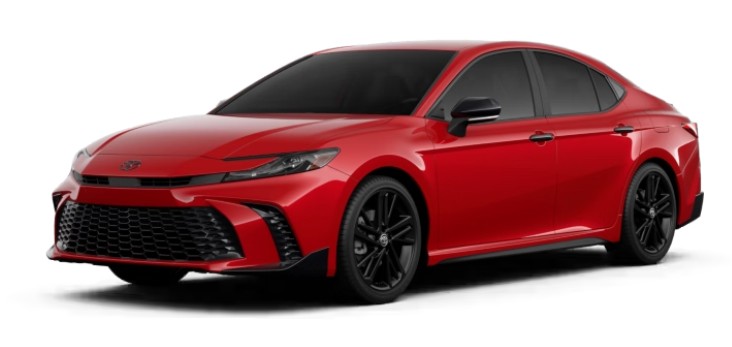
The Camry’s design has become sharper and more expressive, but it remains recognizably a midsize sedan. Its low nose, flowing roofline, defined body creases, and athletic trim variations give it enough visual energy without becoming controversial.
The Crown takes a much bigger swing.
Its raised stance, broad body, dramatic lighting, available large wheels, and coupe-like roof create a silhouette that does not fit neatly into a traditional category. It is part sedan, part fastback, and part crossover. Toyota itself describes the Crown as blending sedan and SUV characteristics through its higher ride height and coupe-like profile.
Toyota Camry Design Strengths
The Camry’s styling works well because it is:
- Sporty without being impractical
- Modern without appearing excessively unusual
- Easy to park and visually place on the road
- Available in multiple personalities
- Likely to age gracefully
The Nightshade Edition adds black exterior elements, 19-inch satin-black wheels, black badging, and other darkened details for drivers who want a stronger street presence.
Toyota Crown Design Strengths
The Crown feels more like a statement piece. It is the model for buyers who are tired of seeing the same luxury sedans and crossovers in every parking lot.
Its available two-tone paint schemes can make the body look almost concept-car dramatic. Large wheels fill the arches, while the tall profile gives the Crown an imposing stance.
The trade-off is that not everyone will love it. The Crown’s unusual proportions can divide opinion. Some of us will call it futuristic; others may think it looks like a sedan standing on tiptoe.
Interior Quality and Cabin Atmosphere
The Camry’s cabin prioritizes clarity, comfort, and ease of use. The dashboard is driver-focused, the main controls are logically placed, and the design feels modern without requiring us to study an instruction manual before changing the temperature.
Material quality varies by trim. Entry-level versions are built primarily for durability and value, while upper trims introduce more attractive upholstery, softer surfaces, ambient details, and comfort features.
The Crown begins at a higher level. Its cabin generally feels more upscale from the moment we close the door. The dashboard, seat materials, digital displays, center console, and sound insulation reinforce its premium mission.
Which Cabin Feels More Luxurious?
The Crown wins.
It provides the richer environment, particularly in Limited and Platinum configurations. Its standard equipment and design details make it feel closer to a Lexus than a basic Toyota commuter car—although it does not completely duplicate the refinement, branding, or dealership experience of a Lexus.
The Camry can feel impressively premium in upper trims, but its architecture still serves a broader price range. Some harder plastics and simpler details remind us that value remains part of its mission.
Which Interior Is Easier to Use?
The Camry may have the advantage in immediate familiarity.
Its controls tend to feel straightforward, and its lower seating position matches what most sedan drivers expect. The Crown is not difficult to operate, but its greater number of premium features and more elaborate environment may require additional setup.
Neither car forces us into an entirely screen-dependent experience, which is refreshing. Important functions remain accessible without navigating a maze of menus.
Passenger Space and Seating Comfort
Both models seat five, but they deliver different sensations.
The Camry’s seating position is lower and more conventional. Front passengers receive good legroom, supportive seats, and a natural relationship with the dashboard and windows. Rear-seat space is suitable for adults, children, and everyday family duty.
The Crown’s taller body makes entering and exiting easier for many drivers. We do not have to drop as far into the seat, which can be helpful for older passengers or anyone with reduced mobility.
Front-Seat Comfort
The Crown’s front seats usually feel more substantial and premium, particularly on longer trips. Available heating and ventilation add year-round comfort, while the elevated position gives drivers a broader view over surrounding traffic.
The Camry’s seats are also comfortable, but their character depends on trim. Sport-oriented versions may provide firmer support, while luxury-focused grades emphasize softer materials and relaxed cruising.
Rear-Seat Comfort
The comparison becomes closer in the rear.
The Crown’s exterior dimensions suggest limousine-like space, but its sloping roof and elevated floor can influence the way passengers perceive room. The Camry uses its cabin efficiently and remains a strong choice for families.
For frequent adult passengers, we should sit in both before deciding. A specification sheet cannot tell us whether the seat cushion angle, roof shape, or door opening suits our body.
Cargo Space and Everyday Practicality
Neither model is a cargo champion compared with a crossover, but both provide usable trunks for groceries, luggage, work equipment, and family errands.
The Camry’s conventional sedan proportions make it predictable. Its trunk opening and rear-seat folding capability accommodate most daily needs, and the vehicle’s lower overall height can make loading some heavy objects easier.
The Crown’s fastback-inspired shape looks practical, but it still uses a conventional trunk rather than a large hatchback opening. That distinction matters. We should not assume it offers crossover-like cargo flexibility merely because it looks taller.
Which One Is Better for Families?
The Camry is usually the stronger family value.
It costs less, offers efficient hybrid operation, provides sufficient rear space, and leaves more room in the budget for insurance, fuel, maintenance, or family activities.
The Crown can still work well for a family, especially when standard all-wheel drive and easier entry matter. Yet its price places it in competition with several practical premium crossovers that offer larger cargo areas.
Powertrain Comparison
The powertrain comparison reveals the clearest mechanical difference between these models.
Toyota Camry Hybrid Performance
Every 2026 Camry uses a hybrid system built around a 2.5-liter four-cylinder gasoline engine and electric assistance. Front-wheel-drive versions produce up to 225 net combined horsepower, while all-wheel-drive models can produce up to 232 horsepower.
The system is designed for smooth, efficient movement rather than aggressive drama. Electric torque helps the Camry pull away cleanly at low speeds, and the gasoline engine joins the conversation as speed increases.
For normal commuting, highway merging, and passing, the Camry has enough power. It no longer feels like choosing efficiency means accepting a painfully slow car.
Toyota Crown Hybrid Performance
Most Crown trims use a 2.5-liter hybrid system focused on refinement and fuel economy. It provides smooth acceleration and an estimated combined fuel economy rating of up to 41 mpg.
The Crown Platinum is a different animal. Its Hybrid MAX powertrain combines a turbocharged 2.4-liter engine with electric motors and a rear eAxle, producing 340 horsepower and 400 lb-ft of torque.
That output transforms the Crown from a relaxed premium cruiser into a genuinely quick sedan. Press the accelerator, and the Platinum moves with far more authority than the Camry.
Which Car Is Faster?
The Crown Platinum is clearly faster than any Camry.
However, the standard Crown hybrids are not built to dominate drag races. Their additional weight and premium tuning mean they prioritize smoothness over urgency.
For most people, the Camry offers the better balance between useful performance and low fuel consumption. For buyers who want effortless passing power and stronger acceleration, the Crown Platinum wins comfortably.
Toyota Camry vs Crown Fuel Economy
Fuel economy is one of the Camry’s greatest advantages.
The most efficient 2026 Camry configurations can achieve up to an EPA-estimated 51 mpg combined. Even less economy-focused configurations remain impressively efficient for a roomy midsize sedan.
The efficiency-oriented Crown powertrain returns up to an EPA-estimated 41 mpg combined. That is excellent for a larger, taller sedan with standard all-wheel drive, but it cannot match the best Camry. The Crown Platinum’s Hybrid MAX system is rated at approximately 30 mpg combined, reflecting the cost of its additional power.
How Much Could the Fuel Difference Matter?
Suppose we drive 15,000 miles per year:
- At 51 mpg, we would use roughly 294 gallons.
- At 41 mpg, we would use roughly 366 gallons.
- At 30 mpg, we would use roughly 500 gallons.
Actual consumption depends on trim, weather, speed, traffic, tires, terrain, and driving style. Still, the illustration shows why the Camry can be significantly cheaper to fuel over several years.
The Crown’s standard hybrid remains economical. The Platinum simply asks us to trade some efficiency for performance.
All-Wheel-Drive Capability
All-wheel drive is standard on every Crown. That gives the model a clear identity and makes the buying process simpler for drivers in rainy, snowy, or mountainous regions.
The Camry offers electronic on-demand all-wheel drive on selected configurations. This system can direct additional electric power to the rear wheels when extra traction is needed.
Which AWD System Is Better?
For ordinary road use, both systems are designed to improve confidence rather than turn the cars into off-road machines.
The Crown’s standard AWD suits its taller stance and premium touring personality. The Camry’s available AWD is attractive because buyers can choose whether they need it instead of paying for it automatically.
Remember that tires remain critical. A front-wheel-drive Camry with quality winter tires may perform better in snow than an AWD Crown wearing unsuitable all-season tires. AWD helps us accelerate; it does not rewrite the laws of braking and cornering.
Ride Comfort and Handling
The Camry feels lighter, lower, and more agile. Its steering is easy to manage in urban traffic, and the car responds naturally when changing lanes or navigating winding roads.
Sport-oriented Camry trims may ride more firmly because of their suspension tuning and larger wheels. Comfort-oriented trims generally provide a more relaxed experience.
The Crown feels heavier and more planted. Its longer body, taller stance, and premium tuning create a calmer personality on the highway. Road imperfections often feel more distant, and the cabin can seem better isolated from wind and tire noise.
Which One Is More Fun to Drive?
That depends on how we define fun.
The Camry can feel more nimble and approachable on a twisting road. It carries less visual and financial weight, so we may feel more comfortable exploring its handling.
The Crown Platinum delivers far stronger acceleration. Its Hybrid MAX system provides the kind of effortless thrust that turns a routine highway merge into a small event.
The Camry dances more lightly. The Crown charges forward like a well-dressed bull.
Which One Is Better for Highway Driving?
The Crown has the edge in premium highway cruising. Its stable stance, standard AWD, stronger available power, and upscale cabin make long distances feel less tiring.
The Camry remains an excellent road-trip vehicle, particularly because its fuel economy can extend the distance between stops. It simply feels more practical than indulgent.
Technology and Infotainment
Both vehicles offer Toyota’s modern multimedia interface, smartphone integration, digital displays, USB connectivity, available premium audio, and connected services.
The Crown generally includes more technology as standard because of its higher base price. Available features may include a head-up display, premium JBL audio, a panoramic-view monitor, digital key functionality, and additional comfort systems.
The Camry’s technology package is more trim-dependent. Lower versions cover the essentials, while upper trims can become surprisingly sophisticated.
Which Model Has Better Technology?
The Crown wins for standard premium presentation.
Its large displays and higher equipment floor create a more impressive first impression. The Camry wins for technology-per-dollar because buyers can access many of Toyota’s most useful features without entering luxury-car pricing territory.
We should also consider simplicity. A longer feature list is not automatically better. The best technology is the equipment we use regularly, not the menu we demonstrate once to a neighbor.
Safety and Driver Assistance
Both models benefit from Toyota Safety Sense 3.0, which bundles active safety and driver-assistance technologies. Depending on operating conditions and configuration, these systems can include:
- Pre-collision assistance with pedestrian detection
- Lane-departure alert
- Steering assistance
- Lane-tracing support
- Adaptive cruise control
- Road-sign assistance
- Automatic high beams
- Proactive driving assistance
The Crown’s official 2026 information confirms Toyota Safety Sense 3.0 as standard, and the Camry also features Toyota’s current safety suite.
Which Toyota Is Safer?
We should avoid declaring a universal winner based solely on size, price, or a feature list. Crash-test results, tire condition, driver behavior, weather, speed, and exact equipment all matter.
The Crown’s taller seating position may improve outward visibility for some drivers. The Camry’s lower center of gravity and lighter feel may make it easier for others to maneuver.
In either model, driver-assistance technology remains assistance—not permission to stop paying attention.
Reliability and Long-Term Ownership
Toyota’s hybrid systems have been developed over decades, and both models benefit from that accumulated experience. Still, long-term ownership involves more than the basic powertrain.
The Camry is likely to be the simpler and less expensive vehicle to own. It is sold in higher volumes, uses smaller wheels in many configurations, begins at a lower price, and is supported by a broad supply of familiar service parts.
The Crown is mechanically more specialized. Its large wheels, premium features, standard AWD, unique body components, and available turbocharged Hybrid MAX system may increase replacement or repair costs as the vehicle ages.
Which One Should Be Cheaper to Maintain?
The Camry should generally cost less.
Routine service intervals may be similar, but consumables can differ. Crown tires may cost more because of their size. Insurance may also be more expensive because the Crown has a higher purchase price and potentially higher repair costs.
The Camry is the safer choice for drivers who plan to keep their vehicle for ten years or more while controlling expenses.
The Crown is still a Toyota, but premium equipment rarely becomes cheaper simply because the badge is familiar.
Insurance and Depreciation
Insurance premiums depend on location, age, driving record, credit factors where legally permitted, coverage, deductible, annual mileage, and trim.
The Crown will often cost more to insure because:
- It has a higher replacement value.
- Some trims use expensive wheels and exterior components.
- The Platinum has substantially more power.
- Specialized parts may raise collision-repair costs.
Depreciation is harder to predict. Camry demand is broad and well established, which can support resale value. The Crown is more unusual. Its rarity may attract used buyers, but unconventional styling can also narrow the audience.
The practical move is to request insurance quotes for the exact vehicle identification number or trim before signing a purchase agreement.
Toyota Camry vs Crown Trim Strategy
The Camry offers a wider path through the mainstream market. Buyers can prioritize affordability, sport-inspired styling, premium comfort, or all-wheel drive.
The Crown lineup starts where the Camry begins to feel expensive.
Choose a Camry LE or Similar Trim When:
- Maximum fuel economy matters.
- We want the lowest purchase price.
- The vehicle will cover many commuter miles.
- Simple comfort matters more than visual drama.
- We want smaller, more affordable tires.
Choose a Sport-Oriented Camry When:
- We prefer more aggressive styling.
- Firmer road manners appeal to us.
- Black exterior accents or larger wheels matter.
- We still want excellent hybrid efficiency.
Choose a Crown XLE or Limited When:
- Standard AWD is important.
- We want an upscale cabin without maximum performance.
- A taller seating position is easier to live with.
- Distinctive styling matters.
- We want good fuel economy from a premium sedan.
Choose the Crown Platinum When:
- Strong acceleration is a priority.
- We want the 340-horsepower Hybrid MAX system.
- Higher fuel consumption is acceptable.
- We value flagship equipment and styling.
- The price overlaps comfortably with our budget.
Toyota Camry vs Crown for City Driving
The Camry is the better urban companion for most people.
Its lower price reduces anxiety in crowded parking lots. Its dimensions feel manageable, its fuel economy thrives in stop-and-go traffic, and its controls are straightforward.
The Crown is still easy to drive, but its larger footprint, taller body, and expensive wheels may make narrow streets and tight parking spaces feel less relaxing.
City buyers who want luxury may still prefer the Crown, especially if easy entry and exit are important. Yet the Camry is the more rational tool for dense daily traffic.
Toyota Camry vs Crown for Long Road Trips
The Crown’s comfort, quietness, standard AWD, and premium cabin give it the advantage when our road trips are long and relaxed.
Passengers may appreciate the richer materials and elevated seating position. The Platinum’s power also makes highway passing effortless.
The Camry fights back with lower fuel consumption, lower ownership costs, and enough comfort for all-day driving. It is the road-trip choice for travelers who would rather spend money at the destination than at the dealership.
Which One Is Better for Snow?
The Crown has standard all-wheel drive, so every buyer receives additional traction capability.
The Camry can also be equipped with AWD, allowing it to compete more closely. Its lower ground clearance may become a disadvantage in deep, unplowed snow, while the Crown’s raised stance can provide a little more confidence.
Neither is a rugged SUV. For severe winters, tire quality, ground clearance, weather preparation, and careful driving remain essential.
Which One Offers Better Overall Value?
The Camry offers better objective value.
It is less expensive, more fuel-efficient, widely available, family-friendly, and equipped with modern hybrid and safety technology. For the average buyer, it completes nearly every required task without demanding a luxury-sized budget.
The Crown offers better subjective value for a narrower audience. It feels more special, looks more distinctive, provides standard AWD, and offers performance the Camry cannot match.
Value is not always about spending the least. Sometimes it means buying the vehicle that makes us look back after parking it. The Crown has a stronger chance of creating that reaction.
Advantages of the Toyota Camry
The Camry’s main strengths include:
- Lower starting price
- Superior maximum fuel economy
- Available rather than mandatory AWD
- Lower expected running costs
- Familiar sedan proportions
- Easier urban maneuverability
- Broad trim selection
- Strong practicality
- Established resale appeal
- Excellent commuter credentials
Its weaknesses are equally clear: it feels less exclusive, cannot match the Crown Platinum’s power, and offers a less premium cabin at comparable lower trims.
Advantages of the Toyota Crown
The Crown stands out through:
- Standard all-wheel drive
- Higher seating position
- More luxurious cabin
- Greater road presence
- Distinctive exterior styling
- Available 340-horsepower Hybrid MAX system
- Strong highway comfort
- Generous standard technology
- Greater exclusivity
- Premium ownership atmosphere
Its disadvantages include the higher price, lower fuel economy, potentially greater insurance and tire costs, and styling that may not appeal to everyone.
Who Should Buy the Toyota Camry?
The Camry is the right choice for commuters, young families, high-mileage drivers, practical retirees, rideshare operators, first-time new-car buyers, and anyone who wants dependable transportation without unnecessary expense.
It is especially compelling when we want:
- Excellent fuel economy
- A price near the mainstream midsize-sedan average
- Proven hybrid technology
- Available AWD without paying Crown prices
- A comfortable car we can keep for many years
The Camry asks us to make very few sacrifices. That is its quiet superpower.
Who Should Buy the Toyota Crown?
The Crown is designed for buyers who want something more distinctive than a Camry but do not necessarily want a conventional luxury badge.
It makes sense when we prioritize:
- Standard all-wheel drive
- A taller and easier seating position
- Premium materials and technology
- Uncommon styling
- Powerful Hybrid MAX acceleration
- A relaxed, upscale highway experience
The Crown is not the economical default. It is the deliberate alternative.
Toyota Camry vs Crown: Final Verdict
In the Toyota Camry vs Crown contest, the Camry is the better choice for most buyers.
It costs significantly less, achieves better fuel economy, offers available all-wheel drive, provides plenty of passenger space, and includes the modern technology required for daily life. It is efficient without being dull, practical without feeling cheap, and comfortable without becoming expensive.
The Crown is the more desirable choice for buyers who want premium comfort, standard AWD, an elevated seating position, uncommon styling, or serious Hybrid MAX performance. It feels richer and more substantial, but we must be willing to pay for those advantages at purchase time and throughout ownership.
Our simple recommendation is this:
- Buy the Camry when affordability, efficiency, practicality, and long-term value come first.
- Buy the Crown when luxury, individuality, standard AWD, and stronger performance matter more than minimizing cost.
- Buy the Crown Platinum only when we genuinely want its 340-horsepower Hybrid MAX system; otherwise, the efficient Crown trims provide a more balanced experience.
The Camry is the sensible winner. The Crown is the emotional winner. Choosing between them depends on whether we want our Toyota to quietly improve daily life or turn every arrival into a small occasion.
Frequently Asked Questions
1. Is the Toyota Crown bigger than the Camry?
Yes. The Crown is generally longer, taller, and more visually substantial than the Camry. Its raised ride height also creates a seating position closer to a crossover, although it remains a sedan with a conventional trunk.
2. Is the Toyota Crown more luxurious than the Camry?
Yes. The Crown offers a more premium cabin, richer standard equipment, greater sound isolation, standard all-wheel drive, and available high-end features. An upper-trim Camry can feel upscale, but the Crown begins from a more luxurious foundation.
3. Which is more fuel-efficient, the Toyota Camry or Crown?
The Camry is more efficient. The 2026 Camry can return up to an EPA-estimated 51 mpg combined, while the standard Crown hybrid reaches up to approximately 41 mpg combined. The 340-horsepower Crown Platinum is rated at roughly 30 mpg combined.
4. Is the Toyota Crown faster than the Camry?
The Crown Platinum is substantially faster because its Hybrid MAX powertrain produces 340 horsepower and 400 lb-ft of torque. Standard Crown hybrid models focus more on smoothness and economy, while the Camry provides adequate everyday performance with up to 232 net combined horsepower.
5. Is the Toyota Crown worth buying over the Camry?
The Crown is worth considering when standard AWD, premium comfort, distinctive styling, easy entry, or powerful acceleration justifies the price difference. For buyers primarily concerned with affordability, fuel economy, and practical transportation, the Camry provides better overall value.
If you want to see other articles similar to Toyota Camry vs Crown: Which Toyota Sedan Is Better? you can visit the Compare category.
Ford Bronco Pros and Cons: Complete Buyer’s Guide
2026 Ford Bronco Towing: Capacity, Equipment, and Real-World Limits
Ford Bronco Gas Tank Size: 2026 U.S. Guide
2026 Ford Bronco Big Bend vs Outer Banks: Features and Differences Explained
2026 Ford Bronco Trim Levels in Order: Complete U.S. Guide
Ford Bronco Models Explained for U.S. Buyers
Leave a Reply
Related Topics