

Toyota Camry vs Avalon: Which Toyota Sedan Is Better?

Contents in this publication
- Toyota Camry vs Avalon at a Glance
- What Is the Main Difference Between the Camry and Avalon?
- Exterior Design and Road Presence
- Interior Quality and Cabin Atmosphere
- Front-Seat Comfort
- Rear-Seat Space and Family Use
- Cargo Space and Everyday Practicality
- Engine Options and Performance
- Hybrid Models Compared
- Fuel Economy
- Ride Quality
- Handling and Steering
- Road Noise and Cabin Refinement
- Technology and Infotainment
- Safety Features
- Reliability and Longevity
- Maintenance and Repair Costs
- Insurance Costs
- Purchase Price and Used-Car Value
- Toyota Camry Trim Levels
- Toyota Avalon Trim Levels
- Camry vs Avalon for City Driving
- Camry vs Avalon for Highway Driving
- Camry vs Avalon for Families
- Camry vs Avalon for Older Drivers
- Camry vs Avalon for Young Drivers
- Reasons to Choose the Toyota Camry
- Reasons to Choose the Toyota Avalon
- Potential Disadvantages of the Camry
- Potential Disadvantages of the Avalon
- What to Inspect When Buying a Used Camry or Avalon
- Toyota Camry vs Avalon: Which Is More Luxurious?
- Toyota Camry vs Avalon: Which Is More Reliable?
- Toyota Camry vs Avalon: Which Holds Its Value Better?
- Is the Avalon Just a Bigger Camry?
- Should We Buy a Newer Camry or an Older Avalon?
- Which Toyota Sedan Is Best for Most Buyers?
- Final Verdict: Toyota Camry vs Avalon
- Frequently Asked Questions
The Toyota Camry vs Avalon comparison may look straightforward at first. Both are comfortable Toyota sedans, both have strong reputations, and both offer enough practicality for everyday driving. Yet once we spend time examining them, the differences become much clearer.
The Camry is the familiar all-rounder. It is efficient, easy to drive, reasonably affordable, and available in several personalities. Depending on the version, it can behave like a sensible commuter, a sporty family sedan, or an economical hybrid.
The Avalon takes a different route. It is larger, quieter, more relaxed, and generally more luxurious. Think of the Camry as a well-designed everyday jacket and the Avalon as a tailored coat. Both can serve us well, but they suit different occasions and different buyers.
There is another important detail: Toyota discontinued the Avalon in the United States after the 2022 model year. That means shoppers comparing these cars today will usually be deciding between a new or used Camry and a used Avalon. This changes the buying equation because price, mileage, condition, maintenance history, and available technology become especially important.
So, which sedan deserves a place in our driveway? Let’s compare the Toyota Camry vs Toyota Avalon in detail.
Toyota Camry vs Avalon at a Glance
Before digging into every difference, here is the basic picture:
| Category | Toyota Camry | Toyota Avalon |
|---|---|---|
| Vehicle class | Midsize sedan | Full-size sedan |
| Main personality | Practical and versatile | Comfortable and upscale |
| Passenger space | Spacious | More generous, especially in back |
| Ride quality | Balanced, sometimes sporty | Softer and quieter |
| Fuel economy | Usually better | Good for its size |
| Engine selection | Four-cylinder, hybrid, or V6 depending on year | Mainly V6 or hybrid |
| Purchase price | Generally lower | Generally higher |
| New availability | Available in newer model years | Used market only in the U.S. |
| Best suited to | Commuters, families, value-focused buyers | Comfort-focused drivers and highway travelers |
Neither sedan is automatically better. The winner depends on whether we care more about affordability and efficiency or space and refinement.
What Is the Main Difference Between the Camry and Avalon?
The central difference is size and positioning.
Toyota designed the Camry as a mainstream midsize sedan. It competes with cars such as the Honda Accord, Nissan Altima, Hyundai Sonata, and Kia K5. Its job is to satisfy a broad audience without becoming too expensive or too specialized.
The Avalon was positioned above the Camry. It served buyers who wanted a larger, more premium Toyota without stepping into a Lexus showroom. It competed with roomy, comfort-oriented sedans and appealed especially to drivers who valued a smooth ride, a quiet cabin, and abundant rear-seat space.
In simple terms:
- The Camry prioritizes balance.
- The Avalon prioritizes comfort.
- The Camry feels more compact and manageable.
- The Avalon feels more substantial and relaxed.
- The Camry usually costs less to purchase and operate.
- The Avalon provides a more upscale experience.
That distinction influences nearly every part of the ownership experience.
Exterior Design and Road Presence
Toyota Camry Styling
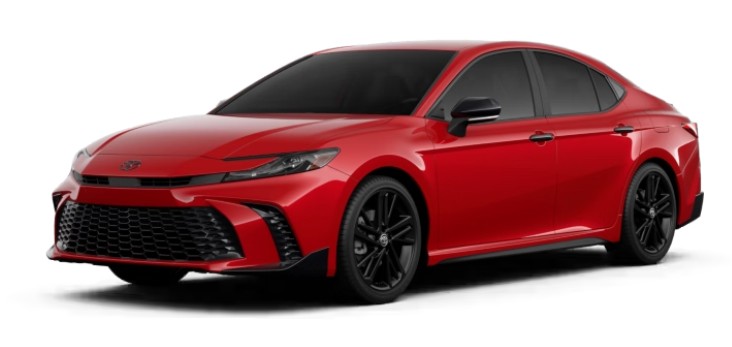
The Camry has evolved far beyond the anonymous sedan it once was. Recent generations use sharp body lines, dramatic grilles, sculpted sides, and trim-specific styling.
Sport-oriented versions often include:
- More aggressive bumpers
- Dark exterior details
- Larger wheels
- Rear spoilers
- Sportier exhaust treatments
- Firmer-looking bodywork
Other Camry trims adopt a cleaner and more conservative appearance. This variety allows us to choose between something subtle and something more expressive.
The Camry’s slightly smaller dimensions also make it easier to place on narrow streets, fit into parking spaces, and maneuver through busy urban areas.
Toyota Avalon Styling
The Avalon has a longer, wider, and more commanding shape. It carries itself like a car built for long highway journeys. Its stretched profile and broader stance create more visual presence than the Camry.
Some Avalon generations look elegant and restrained, while later models became considerably bolder. Certain trims feature large grilles and sporty accents, but even the aggressive versions maintain an upscale character.
The Avalon does not necessarily look like a luxury car from every angle, but it has more visual weight. It appears expensive in a quiet, understated way.
Which Sedan Looks Better?
Beauty is personal. The Camry will appeal to drivers who prefer a more athletic and modern design. The Avalon is better suited to those who like longer, more elegant proportions.
For city use, the Camry’s smaller footprint is an advantage. For road presence, the Avalon has the edge.
Interior Quality and Cabin Atmosphere
Step inside these cars, and the difference in their intended audiences becomes obvious.
Camry Interior
The Camry’s cabin is functional, comfortable, and generally easy to understand. Controls are positioned logically, visibility is good, and the driving position suits a wide range of body types.
Interior quality varies by trim. Entry-level models use more basic materials, while upper versions add:
- Softer dashboard surfaces
- Leather or upgraded upholstery
- Heated and ventilated seats
- Larger infotainment displays
- Premium audio systems
- Additional driver-assistance technology
- Decorative metallic or wood-style trim
The Camry feels well built, but lower trims do not pretend to be luxury vehicles. That honesty is part of its appeal.
Avalon Interior
The Avalon provides a more premium environment. Materials typically feel richer, the seats are broader, and the cabin is designed to isolate passengers from road noise and vibration.
Depending on the model year and trim, we may find:
- Genuine or convincing wood-style accents
- Leather upholstery
- Heated rear seats
- Ventilated front seats
- Premium sound systems
- Ambient lighting
- Additional acoustic insulation
- Power-adjustable comfort features
The Avalon’s interior is not identical to a Lexus cabin, but the family resemblance is easy to notice. It feels like a bridge between Toyota practicality and Lexus luxury.
Cabin Quality Verdict
The Avalon wins for materials, quietness, and overall atmosphere. The Camry remains comfortable and well organized, but the Avalon creates a more relaxing space.
Front-Seat Comfort
Both sedans offer supportive front seats, but their personalities differ.
The Camry’s seats tend to hold us more securely, particularly in sportier trims. Drivers who prefer a slightly more engaged seating position may enjoy the Camry’s setup.
The Avalon’s seats often feel wider and softer. They are designed for long-distance comfort rather than aggressive cornering. On a three-hour highway trip, this difference can matter more than an extra horsepower figure or a larger touchscreen.
Taller drivers may appreciate the Avalon’s generous space. However, most people will still find the Camry roomy enough for everyday driving.
The Avalon wins narrowly for pure comfort, while the Camry may feel better to drivers who prefer a more controlled and compact seating position.
Rear-Seat Space and Family Use
Camry Rear Seats
The Camry has a spacious rear bench by midsize-sedan standards. It can carry adults comfortably, and families will have enough room for children, teenagers, and most child seats.
It works well for:
- Daily school runs
- Family road trips
- Commuting with coworkers
- Occasional adult passengers
- Rideshare driving
The rear seat is not cramped, even if it lacks the limousine-like feel of the Avalon.
Avalon Rear Seats
Rear-seat space is one of the Avalon’s greatest strengths. The longer body and larger cabin give passengers more room to stretch out. Adults can sit behind other adults without feeling squeezed.
This makes the Avalon especially attractive for:
- Families with tall teenagers
- Frequent highway trips
- Drivers who regularly carry adult passengers
- Chauffeur or executive-style use
- Buyers who prioritize passenger comfort
The Avalon feels more like a rolling lounge. That may sound exaggerated, but after climbing from a compact crossover into the back of an Avalon, the difference can feel dramatic.
Best Choice for Passengers
For occasional passenger use, the Camry is sufficient. For frequent rear-seat passengers, the Avalon is clearly better.
Cargo Space and Everyday Practicality
A larger car does not always provide a dramatically larger trunk, so we should not assume the Avalon automatically dominates every practical category.
Both sedans generally offer useful trunk space for:
- Grocery bags
- Suitcases
- Sports equipment
- Work supplies
- Strollers
- Weekend luggage
The Camry’s trunk is practical and easy to use. The Avalon may provide additional width or overall room depending on the model year, but the difference is not always transformative.
Neither vehicle offers the vertical cargo flexibility of an SUV or hatchback. Large boxes and awkward objects can still be difficult to load through a sedan trunk opening.
For normal luggage and family errands, either car works. The Avalon’s overall cabin space is a bigger advantage than its trunk.
Engine Options and Performance
Engine availability differs significantly by generation and trim, so shoppers should verify the specifications of the exact vehicle they are considering.
Camry Four-Cylinder Performance
Many Camry models use a naturally aspirated four-cylinder engine. This engine is designed primarily for efficiency, simplicity, and predictable everyday performance.
It usually delivers:
- Smooth acceleration in normal driving
- Good highway efficiency
- Lower fuel costs
- Adequate passing power
- More affordable ownership than the V6
It is not thrilling, but it handles commuting, errands, and road trips without drama. For many buyers, that is exactly what a Camry should do.
Camry V6 Performance
Certain Camry generations and trims offer a V6 engine. These models are considerably quicker and give the sedan a more energetic personality.
A V6 Camry can surprise people. It looks like a practical family car, yet it can accelerate with real confidence. Passing slower traffic becomes effortless, and merging onto a fast highway feels much less stressful.
The trade-offs include higher fuel consumption and potentially higher purchase costs.
Avalon V6 Performance
The Avalon’s V6 is well matched to its larger body. It provides smooth, strong acceleration without making the car feel nervous or overly aggressive.
Rather than encouraging us to attack corners, it delivers power like a steady wave. Press the accelerator, and the car gathers speed smoothly and confidently.
The Avalon may feel less sporty than a V6 Camry because its suspension and steering prioritize comfort. Even so, it has enough power for highway passing and long-distance travel.
Which One Is Faster?
A V6 Camry can feel quicker and more responsive because it is smaller and often tuned with a sportier character. The Avalon is powerful, but its performance feels more relaxed.
Drivers who want excitement should lean toward the Camry V6. Drivers who want effortless acceleration should consider the Avalon.
Hybrid Models Compared
Both the Camry and Avalon have been offered with hybrid powertrains. These versions combine a gasoline engine with electric assistance to improve fuel economy.
Camry Hybrid
The Camry Hybrid is one of the strongest choices for drivers who cover significant mileage. It typically delivers excellent fuel efficiency without requiring charging from an external power source.
Its advantages include:
- Low fuel consumption
- Smooth urban driving
- Quiet low-speed operation
- Strong resale appeal
- Practical passenger space
- Lower fuel expenses for commuters
The Camry Hybrid often makes the most financial sense for drivers focused on economy.
Avalon Hybrid
The Avalon Hybrid adds fuel efficiency to a larger and more luxurious package. It may not feel as quick as the V6, but it offers smooth power delivery and impressive economy for a full-size sedan.
It suits drivers who want:
- A quiet highway cruiser
- A spacious cabin
- Better fuel efficiency than a traditional large sedan
- Premium features without luxury-brand pricing
Which Hybrid Is Better?
The Camry Hybrid is generally the smarter choice for maximizing efficiency and minimizing operating costs. The Avalon Hybrid is better for buyers who value passenger space and comfort but still want to reduce fuel consumption.
Fuel Economy
Fuel economy is one of the Camry’s biggest advantages.
Because it is generally lighter and available with efficient four-cylinder and hybrid configurations, the Camry usually consumes less fuel than a V6 Avalon. The difference becomes especially meaningful for people driving long distances every week.
Consider a commuter covering thousands of miles each year. Even a modest difference in fuel consumption can add up over time. Fuel costs do not arrive dramatically; they nibble at our budget like tiny mice in a pantry.
The Avalon Hybrid helps narrow the gap. It can deliver impressive efficiency for its size, though a comparable Camry Hybrid will usually remain the more economical option.
Fuel-Economy Winner
- Best for maximum efficiency: Camry Hybrid
- Best conventional gasoline choice: Four-cylinder Camry
- Best blend of space and efficiency: Avalon Hybrid
- Best for smooth power rather than economy: Avalon V6
The Camry wins the overall fuel-economy category.
Ride Quality
Ride quality may be the clearest reason to choose the Avalon.
Camry Ride
The Camry generally offers a balanced ride. It is comfortable enough for daily commuting but controlled enough to avoid feeling like a boat.
Sport-oriented trims may use firmer suspension tuning and larger wheels. These versions can feel more responsive, though they may transmit more road imperfections into the cabin.
Standard Camry trims are softer and more relaxed, but they still feel smaller and more alert than the Avalon.
Avalon Ride
The Avalon is tuned for comfort. It absorbs bumps with greater composure and feels more settled on highways. Expansion joints, rough pavement, and uneven surfaces tend to create less disturbance.
This does not mean every Avalon floats over potholes. Large wheels and low-profile tires can make some versions firmer than expected. Still, the overall driving experience remains more isolated and luxurious.
Ride Comfort Winner
The Avalon wins. It is the better choice for long trips, rough roads, and drivers who prefer calmness over sportiness.
Handling and Steering
The Camry is the more agile car.
Its smaller size makes it easier to maneuver, and sportier trims can feel surprisingly capable on winding roads. Steering is generally light enough for parking while remaining accurate at higher speeds.
The Avalon feels larger. Its steering and suspension are designed for stable cruising rather than sharp direction changes. It can still handle safely and predictably, but it does not shrink around the driver in the same way.
For city driving, narrow roads, and occasional spirited driving, the Camry has the advantage.
For relaxed highway travel, the Avalon’s stability is appealing.
Road Noise and Cabin Refinement
The Avalon is generally quieter.
Toyota used additional insulation and comfort-focused engineering to make the Avalon feel more premium. At highway speed, wind and tire noise are usually better controlled. Conversations feel easier, music sounds clearer, and long trips become less tiring.
The Camry is reasonably refined, especially in higher trims, but road noise can be more noticeable. Wheel size, tire design, pavement quality, and trim level all influence the result.
A top-trim Camry may feel quieter than a base or poorly maintained Avalon, so condition still matters when shopping used. Worn tires, damaged seals, and suspension issues can erase the refinement advantage of any car.
In comparable condition, however, the Avalon wins for cabin quietness.
Technology and Infotainment
Technology depends heavily on model year. A newer Camry may offer more modern connectivity and driver-assistance features than an older Avalon, even though the Avalon originally occupied a higher market position.
Depending on the year and trim, both cars may offer:
- Touchscreen infotainment
- Smartphone integration
- Bluetooth connectivity
- Navigation
- USB ports
- Wireless charging
- Premium audio
- Digital driver displays
- Head-up displays
- Surround-view cameras
The Avalon often includes more luxury features at a given trim level. The Camry, however, benefits from remaining in production through newer generations.
This creates an interesting choice. Would we rather own an older, more luxurious car or a newer, simpler one?
There is no universal answer. Buyers who value updated software and connectivity may prefer the newer Camry. Those who prioritize seat comfort, cabin materials, and audio quality may prefer a well-equipped Avalon.
Safety Features
Toyota has equipped many Camry and Avalon models with active safety technology, particularly in recent generations.
Available systems may include:
- Automatic emergency braking
- Forward-collision warning
- Lane-departure warning
- Lane-keeping assistance
- Adaptive cruise control
- Blind-spot monitoring
- Rear cross-traffic alert
- Automatic high beams
- Parking sensors
Exact equipment varies by year, trim, and market. Buyers should inspect the original window sticker, owner’s manual, or vehicle listing rather than assuming every example has the same features.
A newer Camry may provide updated safety technology, while an older Avalon may have more comfort equipment but earlier versions of driver-assistance systems.
For safety, vehicle age and condition may matter more than the badge on the trunk.
Reliability and Longevity
Toyota built both sedans with long-term ownership in mind. Properly maintained examples can provide many years of service.
Camry Reliability
The Camry has a long reputation for durability. Its widespread popularity also means:
- Replacement parts are easy to find
- Many mechanics know the platform
- Used components are widely available
- Maintenance information is abundant
- Repair costs are usually manageable
Four-cylinder versions may offer especially straightforward ownership, though every engine and generation has its own potential issues.
Avalon Reliability
The Avalon also has a strong reliability reputation. Many mechanical components are related to other Toyota or Lexus products, which helps with parts availability.
However, the Avalon may include more electronic features and comfort equipment. As the car ages, components such as power seats, premium audio equipment, sensors, or advanced climate systems can create extra repair expenses.
Reliability Verdict
The Camry has a slight advantage because of its simpler configurations, enormous parts supply, and lower typical repair costs. The Avalon remains a dependable choice when it has been maintained properly.
Maintenance records matter more than model reputation alone. A neglected Camry can be a worse purchase than a carefully serviced Avalon.
Maintenance and Repair Costs
The Camry is generally cheaper to own.
Common expenses such as tires, brakes, suspension parts, and routine servicing may cost less because the Camry often uses smaller wheels and simpler equipment. Its lower weight may also reduce wear on certain components.
The Avalon can remain affordable compared with luxury sedans, but it may cost more than the Camry because of:
- Larger wheels and tires
- More complex interior features
- Higher fuel consumption in V6 models
- Greater purchase price
- More expensive trim-specific components
- Potentially higher insurance costs
Still, the Avalon’s maintenance costs are often more reasonable than those of similarly sized European luxury sedans.
The Camry is the better budget choice. The Avalon is the better comfort choice for buyers willing to accept slightly higher expenses.
Insurance Costs
Insurance premiums depend on location, driving history, age, coverage level, annual mileage, repair costs, and the exact vehicle.
In many cases, the Camry may be cheaper to insure because of its lower market value and more affordable parts. However, certain sporty Camry trims could cost more than expected.
Used Avalons may be reasonably priced to insure because depreciation has reduced their value. On the other hand, expensive lights, sensors, wheels, and trim components can increase collision repair costs.
The only reliable solution is to request quotes for the exact vehicles before buying. Two similar-looking sedans can produce surprisingly different premiums.
Purchase Price and Used-Car Value
Camry Pricing
The Camry covers a broad price range. Base models attract value-focused buyers, while upper trims approach near-luxury territory.
On the used market, supply is generally strong. This gives shoppers more choices in:
- Color
- Mileage
- Engine
- Trim
- Model year
- Price
- Service history
High demand can keep resale values strong, but the large number of available vehicles makes comparison shopping easier.
Avalon Pricing
The Avalon originally cost more, but depreciation can make used examples surprisingly attractive. A well-equipped Avalon may cost a similar amount to a newer or lower-trim Camry.
That sounds like a bargain—and sometimes it is. Yet we must compare more than the purchase price. The Avalon may be older, have higher mileage, consume more fuel, and require more expensive tires.
Which Is the Better Value?
The Camry offers better value for efficiency, ease of ownership, and resale strength.
The Avalon can be a hidden gem for buyers seeking luxury and space at a used-car price. In many cases, it provides more comfort per dollar than a newer mainstream sedan.
Toyota Camry Trim Levels
Camry trims vary by model year and region, but they often range from comfort-oriented versions to sportier alternatives.
Typical categories include:
Entry-Level Camry
These models focus on affordability and essential equipment. They are ideal for commuters who prioritize reliability over luxury.
Comfort-Focused Camry
Midlevel and premium trims add upgraded upholstery, larger screens, convenience features, and improved cabin materials.
Sport-Oriented Camry
Sport trims may include aggressive styling, firmer suspension tuning, larger wheels, and available V6 power in certain years.
Camry Hybrid
Hybrid versions prioritize fuel economy and smooth everyday performance. They are particularly attractive for high-mileage drivers.
The Camry lineup gives us more freedom to choose a specific personality.
Toyota Avalon Trim Levels
The Avalon generally begins from a higher level of equipment than the Camry.
Depending on the generation, trims may emphasize:
- Traditional luxury
- Sporty styling
- Premium audio
- Advanced comfort
- Hybrid efficiency
- Touring-oriented suspension
Even lower Avalon trims often feel well equipped. Higher versions can include features usually associated with premium brands.
When buying used, though, a higher trim is not always the smarter purchase. More features mean more components that can eventually fail. We should prioritize condition and maintenance history over a long equipment list.
Camry vs Avalon for City Driving
The Camry is better suited to urban life.
Its smaller body helps with:
- Parallel parking
- Tight parking garages
- Narrow streets
- Heavy traffic
- Quick lane changes
- Lower-speed maneuvering
The Avalon is not enormous by traditional full-size-car standards, but it feels noticeably larger in confined spaces.
Drivers who spend most of their time in congested areas will probably appreciate the Camry’s manageable size and better fuel economy.
Camry vs Avalon for Highway Driving
The Avalon shines on the highway.
Its longer wheelbase, quiet cabin, comfortable seats, and relaxed suspension make it an excellent road-trip vehicle. It settles into a cruise as naturally as a ship finding calm water.
The Camry is still a capable highway car. It may even be the smarter option for drivers concerned about fuel costs. However, it does not isolate passengers from noise and road imperfections quite as effectively.
For frequent long-distance travel, the Avalon wins. For mixed commuting with occasional road trips, the Camry may be more economical.
Camry vs Avalon for Families
Both cars work well for families, but household needs determine the better option.
Choose the Camry when:
- Children are younger
- Fuel economy matters
- Parking space is limited
- The budget is tighter
- A newer model is preferred
- Lower maintenance costs are important
Choose the Avalon when:
- Teenagers or adults often sit in back
- Long trips are frequent
- Comfort matters more than sportiness
- A quiet cabin is a priority
- Used-car shopping is acceptable
- More premium features are desired
The Camry is the sensible family choice. The Avalon is the comfortable family choice.
Camry vs Avalon for Older Drivers
Many older drivers appreciate the Avalon’s comfortable seats, smooth ride, large cabin, and relaxed driving character.
However, the Camry may be easier to park and maneuver. A newer Camry may also provide more current safety technology and infotainment.
Seat height deserves attention. Both are traditional sedans, meaning passengers sit lower than they would in a crossover. Anyone with mobility limitations should test entry and exit before purchasing.
The Avalon wins for comfort once seated. The Camry may feel easier to manage in everyday traffic.
Camry vs Avalon for Young Drivers
The Camry is usually the better fit for younger drivers because it tends to offer:
- Lower fuel expenses
- More affordable maintenance
- Easier maneuverability
- A wider range of used options
- Sportier styling
- Potentially newer technology
A young driver could still appreciate an Avalon, particularly when comfort and highway travel matter. Used Avalons can also provide excellent value. However, fuel, tires, and insurance should be calculated before choosing one simply because the purchase price looks attractive.
Reasons to Choose the Toyota Camry
The Camry makes sense for buyers who want one car to handle almost everything.
Its strongest advantages include:
- Better fuel economy in most configurations
- Lower typical ownership costs
- Easier city maneuverability
- Wider selection of model years and trims
- Newer vehicles available
- Strong resale value
- Sportier handling
- Excellent parts availability
- Practical family space
- Efficient hybrid options
The Camry does not dominate every category, but it rarely performs badly in any of them. It is a Swiss Army knife on four wheels.
Reasons to Choose the Toyota Avalon
The Avalon appeals to buyers who are tired of noisy, cramped, overly firm cars.
Its main advantages include:
- More rear-seat room
- Quieter cabin
- Softer ride
- More upscale materials
- Strong V6 performance
- Excellent highway comfort
- Generous standard equipment
- Near-luxury experience
- Attractive used-car pricing
- Greater road presence
The Avalon turns ordinary journeys into calmer experiences. It may not make a grocery run exciting, but it can make it peaceful—and that has real value.
Potential Disadvantages of the Camry
No car is perfect. Camry buyers should consider the following drawbacks:
- Base interiors can feel plain.
- Road noise may be noticeable.
- Sport trims can ride firmly.
- Four-cylinder performance may feel modest.
- Rear-seat space is good but not class-leading compared with the Avalon.
- Popularity can make the car feel less distinctive.
- High resale values may make used examples expensive.
The Camry’s weaknesses are rarely serious. They mostly reflect its position as a mainstream sedan.
Potential Disadvantages of the Avalon
Avalon shoppers should also recognize its compromises:
- It is no longer sold new in the U.S.
- Its larger size can make parking harder.
- V6 fuel consumption is higher.
- Tires and trim-specific parts may cost more.
- Older infotainment systems may feel dated.
- More luxury features can mean more age-related repairs.
- Some examples may have high mileage.
- Resale demand may be lower than for the Camry.
The Avalon is often a great used-car purchase, but only when we choose carefully.
What to Inspect When Buying a Used Camry or Avalon
A used Toyota badge should never replace a proper inspection.
Before purchasing either sedan, check:
- Complete maintenance records
- Engine oil level and condition
- Coolant condition
- Transmission behavior
- Hybrid battery health, where applicable
- Tire age and tread depth
- Brake condition
- Suspension noises
- Warning lights
- Infotainment operation
- Air-conditioning performance
- Power seat operation
- Signs of water leaks
- Accident repairs
- Uneven panel gaps
- Rust in vulnerable climates
A pre-purchase inspection by an independent mechanic is strongly recommended.
Hybrid Inspection Tips
For hybrid models, pay special attention to:
- Hybrid battery condition
- Cooling-fan cleanliness
- Warning messages
- Smooth transition between electric and gasoline power
- Service history
- Long periods of inactivity
- Fuel economy during a test drive
Hybrid batteries can last a long time, but age, heat, mileage, and maintenance all influence their condition.
Toyota Camry vs Avalon: Which Is More Luxurious?
The Avalon is more luxurious.
It usually provides better materials, more sound insulation, broader seats, increased passenger space, and additional comfort features. It was specifically designed to sit above the Camry in Toyota’s sedan hierarchy.
A high-trim Camry can still feel premium. It may include leather upholstery, advanced technology, upgraded audio, and attractive styling. Yet the Avalon’s larger body and comfort-focused engineering create a more complete luxury experience.
The Camry can dress elegantly. The Avalon was invited to the event from the beginning.
Toyota Camry vs Avalon: Which Is More Reliable?
Both can be extremely dependable, but the Camry has a slight practical advantage.
Its simpler configurations, wider parts availability, and massive owner base make repairs easier to manage. The Avalon uses proven Toyota components, but its extra comfort features can create more things to repair as it ages.
That said, the individual car matters more than the model name.
A carefully maintained Avalon with detailed records is usually a safer purchase than a neglected Camry with mysterious mileage and cheap replacement parts.
Reliability is not just engineered at the factory. It is preserved—or destroyed—by previous owners.
Toyota Camry vs Avalon: Which Holds Its Value Better?
The Camry generally has stronger and more predictable resale demand. It appeals to commuters, families, fleets, students, and retirees, creating a broad used-car audience.
The Avalon has a smaller buyer pool. Full-size sedans are less popular than they once were, and many shoppers have moved toward crossovers. This can lead to greater depreciation.
That depreciation can benefit used buyers. We may obtain an Avalon with premium features for far less than its original price.
Therefore:
- The Camry is better for future resale.
- The Avalon may be better for used-car bargain hunting.
Is the Avalon Just a Bigger Camry?
Not quite.
The Avalon shares Toyota engineering philosophy with the Camry, but it is more than a stretched version. Its cabin tuning, seating, sound insulation, suspension, equipment, and overall character are designed around comfort.
The Camry feels like a practical sedan that can become sporty or luxurious depending on the trim.
The Avalon feels like a comfort-oriented sedan that can add sportiness around the edges.
They may come from the same family, but they play different roles at the reunion.
Should We Buy a Newer Camry or an Older Avalon?
This may be the most important real-world question.
Choose the newer Camry when we prioritize:
- Updated safety systems
- Newer infotainment
- Lower mileage
- Better fuel efficiency
- Remaining warranty coverage
- Lower maintenance risk
- Easier resale
Choose the older Avalon when we prioritize:
- Ride comfort
- Cabin quietness
- Rear-seat room
- Premium materials
- Strong V6 power
- More equipment for the purchase price
Condition should break the tie. A clean, fully documented Avalon can be a wonderful purchase. A newer Camry may still be smarter when reliability, economy, and modern technology matter most.
Which Toyota Sedan Is Best for Most Buyers?
For most people, the Camry is the better all-round choice.
It costs less to operate, uses less fuel, fits more easily into city life, and can be purchased in newer model years. It also offers enough passenger space and comfort for the typical family.
The Avalon is not the universal winner, but it may be the more satisfying car for a specific buyer. Someone who drives long distances, carries adults regularly, or values a quiet cabin may enjoy the Avalon far more.
The correct decision depends on our daily routine rather than the longest list of features.
Final Verdict: Toyota Camry vs Avalon
The Toyota Camry vs Avalon battle is really a contest between practicality and refinement.
The Camry wins for efficiency, affordability, maneuverability, availability, and overall versatility. It is easier to recommend to commuters, younger drivers, small families, and anyone focused on predictable ownership costs.
The Avalon wins for comfort, rear-seat space, quietness, road-trip ability, and premium atmosphere. It is a compelling used-car choice for buyers who want something close to a luxury sedan without paying for a luxury badge.
Choose the Toyota Camry when you want the smartest all-rounder.
Choose the Toyota Avalon when you want the calmer and more comfortable experience.
Neither decision is wrong. The Camry is the head’s choice, while the Avalon often speaks to the shoulders, back, and ears after a long day. Sometimes the best car is not the one that excites us in the showroom. It is the one that still feels pleasant after three hours on the road.
Frequently Asked Questions
1. Is the Toyota Avalon better than the Camry?
The Avalon is better for buyers who prioritize comfort, cabin space, ride quality, and premium features. The Camry is better for fuel economy, lower ownership costs, easier maneuverability, and access to newer model years. The best choice depends on how the vehicle will be used.
2. Is the Toyota Avalon more reliable than the Camry?
Both sedans have strong reliability records. The Camry may be slightly easier and cheaper to maintain because it is more common and available in simpler configurations. A well-maintained Avalon, however, can also provide dependable service for many years.
3. Which is bigger, the Toyota Camry or Avalon?
The Avalon is the larger vehicle. It belongs to the full-size sedan category, while the Camry is considered a midsize sedan. The Avalon generally provides more rear-seat space and a more substantial highway-driving experience.
4. Does the Toyota Avalon use more gas than the Camry?
A V6 Avalon will generally consume more fuel than a four-cylinder or hybrid Camry. The Avalon Hybrid offers much better efficiency than the V6, but the Camry Hybrid is usually the strongest option for drivers focused on minimizing fuel expenses.
5. Should I buy a used Avalon instead of a Camry?
A used Avalon can be an excellent choice when it has a clean history, strong maintenance records, and a professional inspection. It offers more comfort and equipment for the money. A Camry may still be preferable when lower running costs, newer technology, and stronger resale demand are priorities.
If you want to see other articles similar to Toyota Camry vs Avalon: Which Toyota Sedan Is Better? you can visit the Compare category.
Ford Bronco Pros and Cons: Complete Buyer’s Guide
2026 Ford Bronco Towing: Capacity, Equipment, and Real-World Limits
Ford Bronco Gas Tank Size: 2026 U.S. Guide
2026 Ford Bronco Big Bend vs Outer Banks: Features and Differences Explained
2026 Ford Bronco Trim Levels in Order: Complete U.S. Guide
Ford Bronco Models Explained for U.S. Buyers
Leave a Reply
Related Topics