

Toyota Camry MPG Non Hybrid: Real Fuel Economy Guide

Contents in this publication
- What Is the Toyota Camry MPG Non Hybrid?
- Which Non-Hybrid Camry Gets the Best Gas Mileage?
- Understanding City, Highway, and Combined MPG
- Toyota Camry 2.5-Liter Four-Cylinder MPG
- Toyota Camry V6 MPG
- Toyota Camry AWD MPG
- Toyota Camry MPG by Trim Level
- What MPG Does a Toyota Camry Get in Real Life?
- Does Eco Mode Improve Camry MPG?
- How Driving Speed Affects Camry Gas Mileage
- Toyota Camry MPG in Winter
- Toyota Camry MPG With Regular Gas
- How Far Can a Non-Hybrid Camry Travel on One Tank?
- Non-Hybrid Camry vs Camry Hybrid MPG
- How Much Can Better MPG Save Each Year?
- How to Improve Toyota Camry Non-Hybrid MPG
- Is 30 MPG Good for a Non-Hybrid Camry?
- Is 40 MPG Possible in a Non-Hybrid Camry?
- How to Calculate Your Camry’s Actual MPG
- What Is the Best Used Camry for Fuel Economy?
- Why the 2025 and Newer Camry Has No Non-Hybrid MPG Rating
- Final Thoughts on Toyota Camry MPG Non Hybrid
- Frequently Asked Questions
The Toyota Camry has spent decades building a reputation as the sensible sedan that simply gets on with the job. It is comfortable, dependable, spacious enough for a family, and generally inexpensive to run. Yet one question continues to matter to owners and used-car shoppers: What is the Toyota Camry MPG non hybrid rating?
The answer depends on the model year, engine, trim, drivetrain, wheel size, traffic conditions, and even how heavily we press the accelerator. A fuel-efficient four-cylinder Camry LE can behave like a disciplined long-distance runner, while a V6-powered Camry TRD drinks more fuel in exchange for stronger acceleration and a sportier personality.
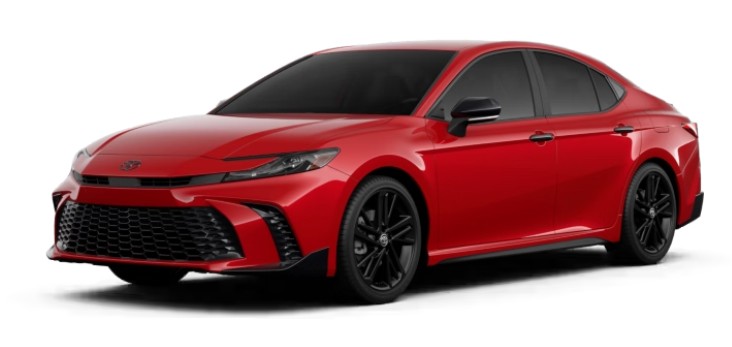
There is also an important model-year distinction. In the United States, the 2024 Camry was the final model year offered with conventional non-hybrid gasoline engines. Beginning with the 2025 generation, Toyota changed the U.S. Camry lineup to an exclusively hybrid powertrain.
That means anyone searching for a new non-hybrid Camry will generally be looking at remaining 2024 inventory or, more realistically, the used-car market. Let us examine official MPG ratings, real-world expectations, engine differences, fuel costs, and practical ways to squeeze more miles from every gallon.
What Is the Toyota Camry MPG Non Hybrid?
For the 2024 model year, the most fuel-efficient non-hybrid Toyota Camry was rated at approximately:
- 28 MPG city
- 39 MPG highway
- 32 MPG combined
Those figures apply to front-wheel-drive versions of the Camry LE, SE, and SE Nightshade with the 2.5-liter four-cylinder engine. The more luxurious XLE and sportier XSE four-cylinder trims were rated slightly lower at 27 MPG city, 38 MPG highway, and 31 MPG combined.
The difference may appear small, but one MPG can matter over years of ownership. A driver covering thousands of highway miles annually may spend noticeably less in the lighter, more efficiency-focused LE than in a heavier trim wearing larger wheels and performance-oriented tires.
Quick Toyota Camry Non-Hybrid MPG Table
| 2024 Camry configuration | City MPG | Highway MPG | Combined MPG |
|---|---|---|---|
| LE 2.5L FWD | 28 | 39 | 32 |
| SE 2.5L FWD | 28 | 39 | 32 |
| SE Nightshade 2.5L FWD | 28 | 39 | 32 |
| XLE 2.5L FWD | 27 | 38 | 31 |
| XSE 2.5L FWD | 27 | 38 | 31 |
| Four-cylinder AWD models | Around 25 | Around 34 | Around 28–29 |
| XLE V6 | 22 | 33 | 26 |
| XSE V6 | 22 | 32 | 26 |
| TRD V6 | 21 | 31 | 25 |
These are official estimates intended for comparison. Real mileage can rise or fall depending on driving style, weather, vehicle condition, tires, terrain, fuel quality, and journey length. Toyota explicitly notes that actual mileage varies according to how and where the vehicle is driven.
Which Non-Hybrid Camry Gets the Best Gas Mileage?
The four-cylinder front-wheel-drive Camry LE, SE, and SE Nightshade are the efficiency champions of the final gasoline-only lineup. Their 32 MPG combined rating is excellent for a midsize sedan with enough cabin and luggage space for everyday family use.
Among them, the LE is usually the logical choice for drivers who place fuel economy above aggressive styling. It generally uses smaller wheels and less performance-focused equipment, helping reduce rolling resistance and rotational weight.
The SE achieves the same official combined rating, although owners may experience slightly different real-world numbers depending on tires, wheel design, options, and driving habits.
Think of the LE as a comfortable pair of walking shoes. It may not attract the most attention, but it carries us efficiently from one destination to another without demanding much in return.
Understanding City, Highway, and Combined MPG
MPG means miles per gallon. It measures how many miles a vehicle can theoretically travel on one U.S. gallon of gasoline.
However, city, highway, and combined figures represent different driving environments.
City MPG
City driving includes:
- Frequent stops
- Traffic lights
- Idling
- Low-speed acceleration
- Short journeys
- Congested roads
A gasoline engine consumes more fuel when repeatedly accelerating a heavy vehicle from a standstill. That is why non-hybrid Camrys usually produce lower city MPG than highway MPG.
Unlike a hybrid, a conventional gasoline Camry cannot recover as much braking energy or rely on an electric motor during low-speed movement. Every stop feels like dropping momentum into a drain and paying fuel to rebuild it.
Highway MPG
Highway mileage is usually better because the Camry can maintain a steady speed in a high transmission gear. Once the car is moving, the engine does not need to fight repeated starts and stops.
The 39 MPG highway rating of certain four-cylinder Camry trims is particularly appealing for commuters and road-trip drivers. Under favorable conditions, some owners may even see dashboard averages near or above the official figure.
Combined MPG
Combined MPG blends city and highway performance into a single comparison figure. It does not guarantee that every owner will achieve that exact number.
A driver who spends 90% of the week in heavy urban traffic may remain below the combined rating. Someone who travels mainly on flat highways at moderate speeds may exceed it.
Toyota Camry 2.5-Liter Four-Cylinder MPG
The 2.5-liter Dynamic Force four-cylinder engine is the sensible heart of the non-hybrid Camry range. It offers a useful balance of power, efficiency, smoothness, and affordability.
In front-wheel-drive form, it delivers the strongest non-hybrid fuel economy in the lineup. Depending on trim, official combined estimates sit around 31 or 32 MPG.
For most drivers, the four-cylinder engine feels entirely adequate. It handles commuting, overtaking, errands, and interstate cruising without struggling. It may not deliver the dramatic surge of the V6, but it asks for fewer visits to the fuel pump.
Why the Four-Cylinder Camry Is Efficient
Several design choices help the Camry stretch each gallon:
- An efficient eight-speed automatic transmission
- Aerodynamic sedan bodywork
- Relatively low vehicle height
- Careful engine management
- Front-wheel-drive availability
- Moderate curb weight for its class
- Tall cruising gears
- Low-friction internal engine components
No single feature performs magic. Instead, many small efficiency gains work together like members of a well-rehearsed orchestra.
Toyota Camry V6 MPG
The 3.5-liter V6 transforms the Camry from a quiet commuter into something far more energetic. It offers stronger acceleration, effortless highway passing power, and a smoother rush toward higher speeds.
Naturally, that performance has a price at the pump.
The 2024 Camry XLE V6 was rated at 22 MPG city, 33 MPG highway, and 26 MPG combined. The XSE V6 carried a similar 26 MPG combined rating, while the performance-focused TRD was rated at 21 MPG city, 31 MPG highway, and 25 MPG combined.
Is the V6 Camry Bad on Gas?
Not necessarily. A combined figure of 25 or 26 MPG is reasonable for a naturally aspirated V6 midsize sedan with substantial power.
Still, it is clearly thirstier than the four-cylinder version. Comparing 32 MPG with 25 MPG reveals a meaningful difference, especially for high-mileage drivers.
For someone covering 15,000 miles annually:
- At 32 MPG, the car would use roughly 469 gallons.
- At 25 MPG, it would use roughly 600 gallons.
- The V6 would therefore consume about 131 additional gallons annually.
Multiply that difference by the local price of fuel, and the V6 premium becomes easier to understand.
Who Should Choose the V6?
The V6 makes sense for drivers who value:
- Stronger acceleration
- Smooth power delivery
- More confident overtaking
- Sportier character
- The sound and feel of a larger engine
It is less suitable for someone whose main priority is reducing fuel expenses.
Toyota Camry AWD MPG
All-wheel drive adds traction by sending power to the rear wheels when conditions require it. That can be helpful in snow, rain, loose surfaces, and slippery uphill situations.
However, the system adds weight and mechanical resistance. As a result, an AWD Camry generally uses more fuel than an equivalent front-wheel-drive model.
Toyota listed AWD Camry fuel economy around 25 MPG city and 34 MPG highway, with combined ratings generally in the 28–29 MPG range depending on trim. Toyota’s comparison material also showed up to 25/34/29 MPG for the AWD Camry.
Is AWD Worth the MPG Penalty?
That depends on location and lifestyle.
Drivers in regions with frequent snowfall may consider the small fuel penalty worthwhile. Better traction can inspire confidence when roads resemble skating rinks.
In warm or mostly dry climates, front-wheel drive is usually sufficient and more efficient. Good tires often make a greater everyday difference than many drivers expect.
Toyota Camry MPG by Trim Level
Trim level affects fuel economy because each version carries different wheels, tires, equipment, weight, and aerodynamic details.
Camry LE MPG
The LE is the efficiency-oriented gasoline Camry. It offers the headline 28 city, 39 highway, and 32 combined MPG figures in front-wheel-drive form.
It is ideal for:
- Daily commuting
- Long highway trips
- Rideshare driving
- Family transportation
- Buyers seeking low running costs
Camry SE MPG
The SE adds sportier styling and suspension tuning while retaining an official rating of up to 28 city, 39 highway, and 32 combined MPG in front-wheel-drive configuration.
That makes it attractive to drivers who want a sharper appearance without sacrificing much efficiency.
Camry XLE MPG
The four-cylinder XLE is rated at approximately 27 city, 38 highway, and 31 combined MPG. Its comfort equipment and luxury-oriented specification slightly reduce efficiency compared with the LE.
The V6 XLE falls to 26 MPG combined but delivers considerably stronger performance.
Camry XSE MPG
The four-cylinder XSE achieves around 27 city, 38 highway, and 31 combined MPG. The V6 XSE returns approximately 22 city, 32 highway, and 26 combined MPG.
Larger wheels and performance-focused tires can also influence real-world consumption.
Camry TRD MPG
The TRD is the least fuel-efficient non-hybrid Camry, but efficiency is not its main mission. Its V6 engine, aggressive bodywork, sport exhaust, suspension setup, and performance personality target drivers who want excitement.
Its official rating of 21 city, 31 highway, and 25 combined MPG remains respectable given the power available.
What MPG Does a Toyota Camry Get in Real Life?
Real-world fuel economy often differs from laboratory estimates. A four-cylinder Camry rated at 32 MPG combined might return:
- 24–29 MPG in short, congested city journeys
- 29–34 MPG in mixed driving
- 35–42 MPG on gentle highway trips
- Less than 25 MPG during aggressive driving or severe winter conditions
These ranges are not guarantees. They are practical expectations based on how gasoline sedans typically respond to different conditions.
A calm driver on an open road may produce excellent figures. An impatient driver accelerating hard between traffic lights can turn the same Camry into a much thirstier machine.
Why Your Camry MPG May Be Lower Than Expected
Common causes include:
- Heavy traffic
- Frequent short journeys
- Cold weather
- Low tire pressure
- Aggressive acceleration
- High cruising speeds
- Excessive idling
- Roof racks or cargo boxes
- Heavy luggage
- Worn spark plugs
- Dirty engine air filter
- Incorrect wheel alignment
- Dragging brakes
- Poor-quality or unsuitable tires
One small issue may barely move the needle. Several issues together can make fuel economy fall like a stone.
Does Eco Mode Improve Camry MPG?
Eco mode adjusts accelerator response and may modify climate-control behavior to encourage smoother, less demanding driving.
It does not create free energy. Instead, it softens the car’s reactions so we are less likely to request unnecessary power.
Eco mode can help most in:
- Urban traffic
- Stop-and-go commuting
- Gentle suburban driving
- Situations where throttle control is difficult
Its benefit may be minimal on a steady highway journey because the car is already operating efficiently.
The driver remains the biggest variable. Eco mode cannot compensate for constant full-throttle acceleration, excessive speed, or neglected maintenance.
How Driving Speed Affects Camry Gas Mileage
A Camry may deliver excellent highway MPG, but speed matters enormously.
At moderate speeds, the engine can maintain momentum with relatively little effort. As speed rises, aerodynamic drag increases dramatically. The car must push through the air like a swimmer fighting a stronger current.
Cruising at 65 mph will usually use less fuel than cruising at 80 mph. The journey at 80 may feel quicker, but the fuel gauge often falls faster.
Best Highway Habits for Better MPG
We can improve highway efficiency by:
- Maintaining a steady speed.
- Avoiding unnecessary rapid acceleration.
- Looking ahead and anticipating traffic.
- Using cruise control on suitable flat roads.
- Reducing speed during strong headwinds.
- Removing unused roof racks.
- Keeping windows closed at higher speeds.
- Maintaining proper tire pressure.
These habits are simple, but fuel economy is often won through consistency rather than dramatic tricks.
Toyota Camry MPG in Winter
Cold weather can reduce fuel economy for several reasons.
The engine takes longer to reach its ideal operating temperature. Oil and other fluids become thicker. Tire pressure falls. Winter gasoline blends may contain less energy. Cabin heating, defrosting, and longer idling periods also increase consumption.
Snow and slush create additional rolling resistance, while winter tires may generate more friction than low-rolling-resistance summer or all-season tires.
During a harsh winter, a Camry that normally averages 31 MPG might temporarily fall into the mid-20s. That does not automatically indicate a mechanical fault.
How to Protect MPG in Cold Weather
- Check tire pressure regularly.
- Avoid extended warm-up idling.
- Combine several short errands into one trip.
- Remove heavy snow from the vehicle.
- Use the correct oil viscosity.
- Keep the engine properly maintained.
- Drive smoothly until the powertrain warms up.
Toyota Camry MPG With Regular Gas
Most non-hybrid Camry models are designed to operate on regular unleaded gasoline when the fuel meets the octane requirements stated in the owner’s manual.
Using premium fuel does not automatically improve MPG. Higher octane mainly increases resistance to engine knock. It does not contain a magical efficiency potion.
Unless a particular engine specifically requires or benefits from premium fuel under defined conditions, paying more per gallon may offer little practical return.
The safest approach is simple: follow the fuel recommendation printed in the owner’s manual and near the fuel filler.
How Far Can a Non-Hybrid Camry Travel on One Tank?
Driving range depends on fuel-tank capacity and actual MPG. A Camry averaging around 32 MPG can theoretically travel a substantial distance between fill-ups.
For example, with a tank holding roughly 15.8 gallons:
- At 25 MPG: about 395 theoretical miles
- At 28 MPG: about 442 theoretical miles
- At 32 MPG: about 506 theoretical miles
- At 38 MPG: about 600 theoretical miles
We should not plan to use every last drop. The displayed range is an estimate, and driving until the tank is completely empty can leave us stranded or place unnecessary strain on the fuel system.
A realistic safe range will be lower than the mathematical maximum.
Non-Hybrid Camry vs Camry Hybrid MPG
The difference between the gasoline Camry and Camry Hybrid is most noticeable in city driving.
The 2024 non-hybrid four-cylinder Camry reached up to 32 MPG combined, while the 2024 Camry LE Hybrid was rated at 52 MPG combined.
That is a major gap.
Why the Hybrid Performs Better in Town
A hybrid can:
- Use electric assistance during acceleration
- Shut off the gasoline engine at stops
- Recover energy during braking
- Reduce fuel use in slow traffic
- Operate efficiently at lower speeds
A non-hybrid Camry relies almost entirely on its gasoline engine. It remains efficient, but it cannot play the same energy-recycling game.
Why Choose the Non-Hybrid Anyway?
A conventional Camry may still appeal because of:
- Lower used purchase prices
- Familiar mechanical operation
- Straightforward highway performance
- Wide used-car availability
- Strong V6 options
- No concern about an aging traction battery
- Potentially simpler long-term ownership for some buyers
The better choice depends on purchase price, annual mileage, driving environment, and how long we plan to own the vehicle.
How Much Can Better MPG Save Each Year?
Suppose two drivers each travel 12,000 miles annually.
One Camry averages 25 MPG, and the other averages 32 MPG:
- At 25 MPG, annual fuel use is about 480 gallons.
- At 32 MPG, annual fuel use is about 375 gallons.
- The more efficient car saves approximately 105 gallons per year.
At $3.50 per gallon, that represents about $368 in annual savings. Over five years, the difference approaches $1,840 before considering changes in fuel prices.
This illustrates why engine and trim selection matter. A small-looking MPG difference can quietly grow into a sizeable ownership expense.
How to Improve Toyota Camry Non-Hybrid MPG
Better fuel economy rarely requires extreme hypermiling. We can start with practical habits.
Drive Smoothly
Accelerate progressively rather than launching away from every stop. Lift off the accelerator early when approaching red lights.
Every unnecessary burst of acceleration burns fuel that may be wasted moments later through braking.
Maintain Correct Tire Pressure
Underinflated tires create extra rolling resistance. The engine must work harder, much like cycling with soft tires.
Check pressures when the tires are cold and follow the vehicle placard rather than the maximum figure printed on the tire sidewall.
Reduce Unnecessary Weight
A few light items make little difference, but carrying heavy tools, boxes, or unused equipment every day forces the car to move extra mass.
Clean out the trunk periodically.
Limit Idling
A stationary vehicle achieves zero miles per gallon. Long idling sessions burn fuel without moving us closer to the destination.
Keep Up With Maintenance
Fuel economy may suffer when the car has:
- Incorrect oil
- Worn ignition components
- Sensor problems
- Dirty filters
- Misaligned wheels
- Binding brakes
- Old or unsuitable tires
Routine maintenance protects efficiency as well as reliability.
Use Air Conditioning Sensibly
Air conditioning places additional load on the engine. We do not need to suffer in a hot cabin, but extreme cooling settings can increase consumption.
At highway speeds, using air conditioning may be more aerodynamic than driving with all windows fully open.
Is 30 MPG Good for a Non-Hybrid Camry?
Yes. An average near 30 MPG is healthy for a gasoline midsize sedan, especially when driving includes traffic, urban roads, and occasional rapid acceleration.
For a four-cylinder front-wheel-drive Camry, a long-term average between 29 and 33 MPG is generally consistent with its official combined figures.
A V6 Camry averaging 24–27 MPG may also be operating normally.
Context matters. Comparing a V6 TRD used in city traffic with a four-cylinder LE driven on open highways would be unfair. They wear the same Camry name but serve different personalities.
Is 40 MPG Possible in a Non-Hybrid Camry?
Yes, under favorable highway conditions.
A four-cylinder Camry with a 39 MPG highway estimate may display 40 MPG or more during a gentle trip involving:
- Warm weather
- Flat roads
- Moderate speed
- Light traffic
- Correct tire pressure
- Little cargo
- Smooth acceleration
- Minimal idling
However, maintaining 40 MPG across mixed city and highway driving is much more difficult.
A single impressive trip reading is also different from a long-term average measured over several tanks.
How to Calculate Your Camry’s Actual MPG
Dashboard estimates are convenient, but the fill-to-fill method provides a useful independent calculation.
Manual MPG Formula
- Fill the fuel tank completely.
- Reset the trip odometer.
- Drive normally.
- Refill the tank at the same level.
- Record the miles driven.
- Record the gallons added.
- Divide miles by gallons.
For example:
420 miles ÷ 13.5 gallons = 31.1 MPG
Repeat the calculation over several tanks. One fill-up can be distorted by pump angle, temperature, fuel level, or an incomplete refill.
What Is the Best Used Camry for Fuel Economy?
For shoppers who specifically want a non-hybrid model, a front-wheel-drive four-cylinder Camry LE from the later years of the eighth generation is a compelling option.
The 2024 LE provides the clearest example, with an official rating of 28 city, 39 highway, and 32 combined MPG.
However, condition matters more than a one-MPG paper advantage. A well-maintained slightly older Camry with quality tires and a clean service history may outperform a neglected newer example.
Before buying, inspect:
- Service records
- Tire condition
- Wheel alignment
- Warning lights
- Brake operation
- Engine smoothness
- Transmission behavior
- Evidence of accident repairs
- Fuel-economy display history
- Signs of oil or coolant leaks
A pre-purchase inspection is usually money well spent.
Why the 2025 and Newer Camry Has No Non-Hybrid MPG Rating
Toyota moved the U.S. Camry to an all-hybrid lineup for the 2025 model year. Therefore, a search for “2025 Toyota Camry non-hybrid MPG” leads to a simple conclusion: there is no conventional gasoline-only U.S. version.
The 2025 and 2026 Camry use hybrid powertrains, with Toyota advertising up to 51 MPG combined in efficient front-wheel-drive configurations.
This distinction is important for used-car research. Listings sometimes use broad terms such as “gasoline Camry,” even when the vehicle is a gasoline-electric hybrid. Buyers should confirm the powertrain through the VIN, window sticker, engine-bay labeling, and vehicle specifications.
Final Thoughts on Toyota Camry MPG Non Hybrid
The Toyota Camry MPG non hybrid story is one of balance. The four-cylinder front-wheel-drive model delivers up to 28 MPG city, 39 MPG highway, and 32 MPG combined, making it one of the more economical conventional gasoline sedans of its size.
Drivers seeking extra traction can choose AWD and expect roughly 28–29 MPG combined. Those wanting stronger performance can select a V6, accepting a combined rating of approximately 25–26 MPG.
The real result ultimately depends on us. Smooth acceleration, moderate speed, proper tire pressure, reduced idling, and regular maintenance can turn a decent MPG figure into an excellent one. Aggressive driving and neglected servicing can do the opposite.
Although the Camry became hybrid-only in the United States from the 2025 model year, the used market remains full of capable non-hybrid examples. For drivers who prefer a traditional gasoline powertrain, the four-cylinder Camry remains as dependable and efficient as a trusted travel companion—rarely dramatic, almost always ready, and remarkably good at making every gallon count.
Frequently Asked Questions
1. What is the best Toyota Camry MPG non hybrid rating?
The most fuel-efficient 2024 non-hybrid Camry trims were rated at 28 MPG city, 39 MPG highway, and 32 MPG combined. This applied to front-wheel-drive LE, SE, and SE Nightshade four-cylinder models.
2. How many MPG does a four-cylinder Camry get?
A front-wheel-drive four-cylinder Camry generally achieves an official combined rating of about 31–32 MPG, depending on trim. Actual mileage may be higher during gentle highway driving and lower in heavy city traffic.
3. Is the Toyota Camry V6 fuel-efficient?
The V6 is reasonably efficient for its power, returning approximately 25–26 MPG combined in 2024 models. However, it consumes noticeably more fuel than the four-cylinder Camry, which can achieve up to 32 MPG combined.
4. Why is my Camry getting only 25 MPG?
Heavy traffic, short trips, winter temperatures, low tire pressure, rapid acceleration, excessive idling, AWD, a V6 engine, or maintenance issues can produce an average near 25 MPG. The number may be normal depending on the engine and driving conditions.
5. Does Toyota still make a non-hybrid Camry?
Not in the current U.S. lineup. The 2024 model year was the last U.S. Camry generation offered with conventional gasoline-only engines. The redesigned 2025 Camry and subsequent models use hybrid powertrains exclusively.
If you want to see other articles similar to Toyota Camry MPG Non Hybrid: Real Fuel Economy Guide you can visit the Compare category.
Ford Bronco Pros and Cons: Complete Buyer’s Guide
2026 Ford Bronco Towing: Capacity, Equipment, and Real-World Limits
Ford Bronco Gas Tank Size: 2026 U.S. Guide
2026 Ford Bronco Big Bend vs Outer Banks: Features and Differences Explained
2026 Ford Bronco Trim Levels in Order: Complete U.S. Guide
Ford Bronco Models Explained for U.S. Buyers
Leave a Reply
Related Topics