

Toyota Camry Models by Year: Complete Guide to Every Generation

Contents in this publication
- Why Toyota Camry Models by Year Matter
- A Quick Overview of Toyota Camry Generations
- 1983–1986 Toyota Camry Models
- 1987–1991 Toyota Camry Models
- 1992–1996 Toyota Camry Models
- 1997–2001 Toyota Camry Models
- 2002–2006 Toyota Camry Models
- 2007–2011 Toyota Camry Models
- 2012–2017 Toyota Camry Models
- 2018–2024 Toyota Camry Models
- 2025–Present Toyota Camry Models
- Toyota Camry Trims by Year
- Best Toyota Camry Years to Buy Used
- Toyota Camry Years to Inspect Carefully
- Toyota Camry Engine Options by Year
- Toyota Camry Design Evolution by Year
- Toyota Camry Safety Features by Year
- Toyota Camry Interior Changes by Year
- Toyota Camry Fuel Economy by Year
- Toyota Camry Reliability by Year
- Toyota Camry Models by Year for Different Buyers
- Toyota Camry Model Year Buying Tips
- Toyota Camry Models by Year: Quick Comparison
- Is an Older Toyota Camry Still Worth Buying?
- Is a Newer Toyota Camry Worth the Money?
- Final Thoughts on Toyota Camry Models by Year
- FAQs About Toyota Camry Models by Year
The Toyota Camry models by year story is not just a list of sedans with different headlights, engines, and badges. It is the story of how Toyota took a practical family car and slowly turned it into one of the most trusted names on the road. For many drivers, the Camry is the automotive equivalent of a dependable friend: not always flashy, rarely dramatic, but almost always ready when life says, “Let’s go.”
When we look at the Camry year by year, we see more than a car evolving. We see changing buyer tastes, fuel economy priorities, safety technology, hybrid innovation, and the slow disappearance of the old-school sedan market. SUVs may have stolen the spotlight, but the Camry keeps showing up like the quiet student who keeps getting straight A’s.
In this guide, we are going to walk through the Toyota Camry models by year, generation by generation, with practical notes on design, engines, trims, strengths, common buyer considerations, and which model years may make the most sense depending on what you want.
Why Toyota Camry Models by Year Matter
Buying a Camry is not as simple as saying, “They are all reliable.” That is a good starting point, but it is not the whole picture. A 2007 Camry is very different from a 2018 Camry. A 2025 Camry is a totally different animal from a 1997 model. Some years brought major redesigns, while others simply polished what already worked.
Understanding Toyota Camry models by year helps us answer important questions:
- Which Camry years are best for fuel economy?
- Which model years offer hybrid options?
- Which generations feel more modern?
- Which years are better for used-car shoppers?
- Which Camry trims offer the best value?
- When did Toyota add major safety and technology features?
- Which years feel more comfortable, sporty, or efficient?
Think of this guide like a road map. Instead of wandering through used listings blindly, we can understand what each Camry era brings to the table.
A Quick Overview of Toyota Camry Generations
Before we go year by year, let’s zoom out. The Camry has gone through several major phases. In the United States, most shoppers focus on the Camry from the 1980s onward, especially from the late 1990s to today.
Toyota Camry Generation Timeline
| Generation | Approximate U.S. Model Years | General Personality |
|---|---|---|
| Early Camry Era | 1983–1986 | Compact, simple, efficient |
| Second Generation | 1987–1991 | More refined and family-friendly |
| Third Generation | 1992–1996 | Bigger, smoother, more mature |
| Fourth Generation | 1997–2001 | Reliable, simple, long-lasting |
| Fifth Generation | 2002–2006 | Roomier, softer, more comfortable |
| Sixth Generation | 2007–2011 | More power, hybrid introduced |
| Seventh Generation | 2012–2017 | Practical, efficient, safer |
| Eighth Generation | 2018–2024 | Sharper styling, better handling |
| Ninth Generation | 2025–Present | Hybrid-only modern Camry |
Each generation has its own flavor. Some are known for simplicity. Some are known for comfort. Some are better for tech. Some are ideal for budget buyers. Others feel almost premium compared with older Camrys.
1983–1986 Toyota Camry Models
The early Toyota Camry models were smaller and simpler than the Camry we know today. These cars were built during a time when Toyota was building its reputation in the U.S. market by offering efficient, durable, no-nonsense transportation.
1983 Toyota Camry
The 1983 Camry helped introduce American buyers to Toyota’s practical midsize formula. It was not huge, luxurious, or powerful, but it had the ingredients that would later define the Camry name: good fuel economy, easy driving, and sensible engineering.
1984 Toyota Camry
The 1984 model continued the same practical formula. Buyers could expect basic comfort, straightforward controls, and a driving experience that cared more about dependability than excitement.
1985 Toyota Camry
By 1985, the Camry was gaining recognition as a smart alternative to domestic sedans. It appealed to people who wanted reliability without unnecessary drama.
1986 Toyota Camry
The 1986 model closed out the first major U.S. Camry chapter. These early cars are rare today, but they matter because they planted the seed for everything that followed.
1987–1991 Toyota Camry Models
The second-generation Camry became more refined. Toyota started pushing the car beyond basic transportation and into true family-sedan territory.
1987 Toyota Camry
The 1987 redesign made the Camry more comfortable and mature. It looked more modern, drove better, and started feeling like a serious family car instead of just an economical compact sedan.
1988 Toyota Camry
The 1988 Camry carried the new generation forward with dependable four-cylinder engines and available V6 power in some versions. That V6 option helped broaden the Camry’s appeal.
1989 Toyota Camry
The 1989 model kept the Camry’s reputation growing. This was the kind of car that families bought because they wanted something that would simply work.
1990 Toyota Camry
By 1990, the Camry had become a familiar sight. It was not trying to be a sports sedan. It was trying to be a calm, sensible, long-term companion.
1991 Toyota Camry
The 1991 Camry wrapped up this generation with the same practical strengths: reliability, comfort, and easy ownership.
1992–1996 Toyota Camry Models
The 1992 redesign was a big moment. The Camry grew larger, smoother, and more polished. This era helped push the Camry closer to the top of the midsize-sedan class.
1992 Toyota Camry
The 1992 Camry arrived with a more rounded design and a noticeably more refined feel. Compared with earlier models, it felt like Toyota had turned the volume down on noise and turned the comfort up.
1993 Toyota Camry
The 1993 model kept the strong formula intact. Buyers liked the quiet cabin, smooth ride, and dependable nature.
1994 Toyota Camry
The 1994 Camry remained one of the most sensible cars in its segment. It offered a nice balance between affordability and comfort.
1995 Toyota Camry
For 1995, the Camry continued as a dependable family sedan with broad appeal. Many used-car fans still respect this generation for its durability.
1996 Toyota Camry
The 1996 model was the final year of this generation. It is remembered as one of those classic old Toyotas that could keep running with basic care.
1997–2001 Toyota Camry Models
The 1997–2001 Camry generation is one of the most famous used Camry eras. It was simple, comfortable, and extremely practical.
1997 Toyota Camry
The 1997 Camry brought cleaner styling, improved comfort, and excellent reliability. For many shoppers, this generation represents the “golden age” of simple Toyota sedans.
1998 Toyota Camry
The 1998 model was largely a continuation of the strong 1997 redesign. It offered a smooth ride and a reputation for lasting a long time.
1999 Toyota Camry
The 1999 Camry is still respected by budget used-car buyers. It was not fancy, but it had a tough, honest personality.
2000 Toyota Camry
The 2000 Camry added minor updates while keeping the same proven foundation. It was comfortable, quiet, and easy to maintain.
2001 Toyota Camry
The 2001 Camry closed out this beloved generation. For drivers who value simplicity over screens and sensors, this era still has charm.
2002–2006 Toyota Camry Models
The fifth-generation Camry became larger and softer. Toyota leaned into comfort, making this Camry feel more spacious and relaxed.
2002 Toyota Camry
The 2002 Camry redesign brought a bigger cabin, smoother ride, and more modern styling. It was designed for people who wanted a calm commute rather than sharp cornering.
2003 Toyota Camry
The 2003 model continued with strong comfort and dependability. It became a popular choice for families, commuters, and anyone who wanted low-stress ownership.
2004 Toyota Camry
The 2004 Camry offered a comfortable interior and solid engine choices. It was one of those cars that did not shout for attention but quietly did its job.
2005 Toyota Camry
The 2005 model year remained a strong used-car option. It delivered good value, especially for buyers who wanted space and dependability.
2006 Toyota Camry
The 2006 Camry was the final year of this generation. It marked the end of a comfort-first era before Toyota moved toward more power and technology.
2007–2011 Toyota Camry Models
The 2007 Camry brought a major redesign and introduced the Camry Hybrid to many shoppers. This generation became very popular but also deserves careful year-by-year consideration.
2007 Toyota Camry
The 2007 Camry arrived with bolder styling, more power, and an available hybrid model. It was modern for its time, but early redesign years often deserve extra inspection when buying used.
2008 Toyota Camry
The 2008 Camry improved the formula while keeping the same basic design. Buyers could choose efficient four-cylinder models, stronger V6 versions, or the hybrid.
2009 Toyota Camry
The 2009 Camry remained a practical midsize sedan with a comfortable ride. It was a good fit for commuters who wanted a quiet cabin and predictable ownership.
2010 Toyota Camry
The 2010 Camry received styling updates and continued offering broad trim choices. It felt familiar, comfortable, and easy to live with.
2011 Toyota Camry
The 2011 Camry was the final year before another redesign. As a late-generation model, it benefited from years of refinement.
2012–2017 Toyota Camry Models
The 2012–2017 Camry generation became a staple of the modern used-car market. It balanced reliability, comfort, efficiency, and better technology.
2012 Toyota Camry
The 2012 redesign brought a more efficient and practical Camry. It was not radical, but it improved the things Camry buyers cared about most.
2013 Toyota Camry
The 2013 Camry remained a strong choice for commuters. It offered good fuel economy, a roomy cabin, and Toyota’s familiar ownership experience.
2014 Toyota Camry
The 2014 model continued the same formula. For used buyers, it can be appealing because it offers modern enough features without feeling overly complicated.
2015 Toyota Camry
The 2015 Camry received a significant refresh. Styling became more aggressive, the cabin felt improved, and Toyota gave the car a more updated personality.
2016 Toyota Camry
The 2016 model is often attractive as a used option because it comes after the refresh and before the next redesign. It offers a good blend of value and refinement.
2017 Toyota Camry
The 2017 Camry was the final year of this generation. It is a strong candidate for buyers who want a mature, proven version of the seventh-generation Camry.
2018–2024 Toyota Camry Models
The 2018 Camry was a major turning point. Toyota gave the Camry sharper styling, better handling, and a more emotional design. Suddenly, the Camry was not just the safe choice. It had some attitude.
2018 Toyota Camry
The 2018 Camry launched on a new platform with a sportier look and improved driving feel. It offered four-cylinder, V6, and hybrid options depending on trim.
2019 Toyota Camry
The 2019 Camry built on the redesigned platform. Buyers could choose practical trims like LE and XLE or sportier versions like SE and XSE.
2020 Toyota Camry
The 2020 Camry added more variety, including performance-oriented options in some markets. This year helped show that the Camry could be more than a commuter appliance.
2021 Toyota Camry
The 2021 model received updates to styling and technology. Toyota also continued expanding safety and convenience features across the lineup.
2022 Toyota Camry
The 2022 Camry remained a strong midsize sedan choice. It appealed to shoppers who wanted modern safety features, hybrid efficiency, and available all-wheel drive in some versions.
2023 Toyota Camry
The 2023 Camry continued with familiar trims and strong resale appeal. It was one of the last years where shoppers could still get traditional gasoline options alongside hybrids.
2024 Toyota Camry
The 2024 Camry marked the final model year before the hybrid-only redesign. For some buyers, that makes it interesting: it offers the mature eighth-generation platform and traditional powertrain variety.
2025–Present Toyota Camry Models
The ninth-generation Camry represents a major shift. Toyota moved the Camry into a hybrid-only era, making efficiency the standard rather than the special option.
2025 Toyota Camry
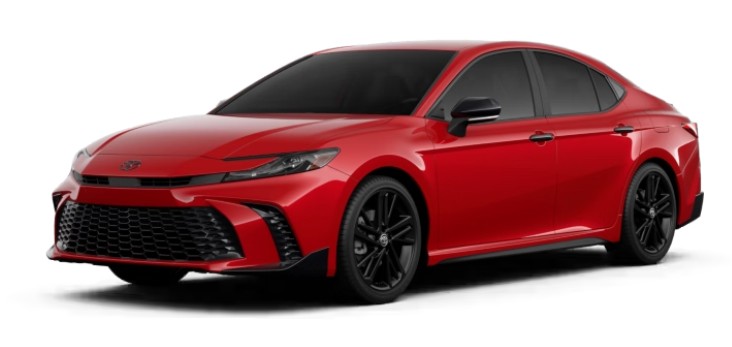
The 2025 Toyota Camry introduced the new generation with hybrid power as standard. Instead of treating the hybrid as a separate eco-minded choice, Toyota made it the heart of the lineup. That is a big deal. It tells us where the midsize sedan market is going.
The 2025 Camry also brought updated styling, a more modern cabin, and available all-wheel drive. For drivers who want excellent fuel economy without jumping into a full electric vehicle, this model year is especially important.
2026 Toyota Camry
The 2026 Camry continues the hybrid-only formula and adds more visual variety, including the Nightshade Edition. This model year is for buyers who like the new-generation Camry but want a slightly sharper look.
The 2026 Camry remains focused on the same core strengths: efficiency, comfort, reliability, and daily usability. It is not trying to become a luxury car or a race car. It is trying to be the sedan that makes everyday driving easier.
Toyota Camry Trims by Year
Toyota Camry trims have changed over time, but several names appear again and again. Understanding trims is just as important as understanding model years because two Camrys from the same year can feel very different.
Common Toyota Camry Trims
Here are the trims shoppers often see:
- CE: Basic older trim, usually focused on value.
- LE: Comfortable mainstream trim with practical features.
- SE: Sportier styling and firmer driving feel.
- XLE: More comfort-focused, often with nicer materials.
- XSE: Sporty appearance with more upscale features.
- Hybrid LE: Efficiency-focused hybrid trim.
- Hybrid SE: Hybrid power with sportier styling.
- Hybrid XLE: Hybrid efficiency with comfort features.
- Hybrid XSE: Hybrid power with a more premium sporty feel.
- TRD: Performance-inspired trim available in later eighth-generation years.
- Nightshade: Blacked-out appearance package offered in select years.
Best Trim for Value
For many used-car buyers, the LE and SE trims often provide the best value. LE is usually more comfortable and practical, while SE adds sportier looks without going too expensive.
Best Trim for Comfort
The XLE is usually the comfort pick. It often comes with more convenience features, better materials, and a calmer personality.
Best Trim for Style
The SE, XSE, and Nightshade versions usually appeal to drivers who want the Camry to look less like a plain commuter car and more like something with personality.
Best Toyota Camry Years to Buy Used
The best Camry year depends on budget, but some years stand out because they combine reliability, refinement, and value.
Best Older Camry Years
If we are shopping with a smaller budget, these years may be worth considering:
- 1997–2001 Camry: Simple, durable, easy to maintain.
- 2002–2006 Camry: Comfortable and spacious.
- 2010–2011 Camry: Later years of the sixth generation.
- 2015–2017 Camry: Refreshed design and proven platform.
Older Camrys can be great, but condition matters more than year. A well-maintained 2005 Camry can be better than a neglected 2015 Camry. Cars remember how they were treated.
Best Modern Camry Years
For buyers wanting newer safety and tech, these model years are especially appealing:
- 2018–2020 Camry: Newer platform, sharper design.
- 2021–2024 Camry: Updated features and mature eighth-generation engineering.
- 2025–2026 Camry: Hybrid-only efficiency and modern technology.
Best Camry Hybrid Years
The Camry Hybrid became more attractive as Toyota improved hybrid technology. For many shoppers, newer hybrids are the sweet spot because they offer excellent fuel economy without giving up comfort.
Strong hybrid years include:
- 2015–2017 Camry Hybrid
- 2018–2024 Camry Hybrid
- 2025–2026 Camry hybrid-only models
Toyota Camry Years to Inspect Carefully
The Camry has a strong reputation, but no car is perfect. Some years may need more careful inspection, especially early redesign years or high-mileage examples.
What to Check Before Buying Any Used Camry
Before buying, we should inspect:
- Maintenance records
- Oil change history
- Transmission behavior
- Brake condition
- Suspension wear
- Hybrid battery health, if applicable
- Accident history
- Rust in snow-belt areas
- Tire wear patterns
- Warning lights
- Air conditioning performance
- Interior electronics
Why Maintenance Matters More Than Reputation
Toyota reliability is real, but it is not magic. A Camry still needs oil, coolant, brakes, tires, filters, and care. Buying a used Camry without checking maintenance history is like buying a house because the neighborhood is nice but never looking at the roof.
Toyota Camry Engine Options by Year
The Camry has used several engine types over the years. The broad categories are simple.
Four-Cylinder Camry Models
Four-cylinder Camrys are usually the practical choice. They are fuel-efficient, less expensive to maintain, and ideal for commuting.
Best for:
- Daily driving
- Lower fuel costs
- Simple ownership
- Budget-conscious buyers
V6 Camry Models
V6 Camrys offer more power and smoother acceleration. They are great for drivers who want stronger highway performance.
Best for:
- Highway passing
- Smoother acceleration
- Drivers who prefer power
- Buyers who do not mind higher fuel use
Hybrid Camry Models
Hybrid Camrys combine gasoline engines with electric assistance. They are especially useful for city driving and long commutes.
Best for:
- Fuel savings
- Stop-and-go traffic
- Modern efficiency
- Long-term commuters
The Big Shift: Hybrid Becomes Standard
The most important modern change is that the newest Camry generation moved to a hybrid-only lineup. That means Toyota now treats hybrid efficiency as the default Camry identity.
Toyota Camry Design Evolution by Year
The Camry’s design has changed a lot. Earlier models were conservative and soft-edged. Later models became sharper, lower, wider, and more expressive.
1980s and 1990s: Simple and Practical
Early Camrys were designed with function first. They were boxy, clean, and easy to see out of. The design was not dramatic, but it aged honestly.
2000s: Bigger and Softer
The 2000s Camry became roomier and more comfort-focused. Toyota knew its audience wanted a relaxing car, so the Camry leaned into smoothness.
2010s: More Modern and Confident
By the 2010s, Toyota started giving the Camry more personality. The 2015 refresh and 2018 redesign made the car look more aggressive.
2020s: Sleek, Hybrid, and Tech-Focused
The newest Camry models look sharper and more upscale. They are still practical sedans, but they no longer look like background traffic.
Toyota Camry Safety Features by Year
Safety is one of the biggest reasons newer Camry models are attractive. Older Camrys may be reliable, but newer models usually offer stronger safety technology.
Older Camry Safety
Older models may include basic airbags, anti-lock brakes in some trims, and sturdy construction for their time. However, they lack many driver-assistance features modern buyers expect.
Modern Camry Safety
Newer Camrys may include features such as:
- Pre-collision warning
- Automatic emergency braking
- Lane departure alert
- Adaptive cruise control
- Blind-spot monitoring
- Rear cross-traffic alert
- Lane tracing assistance
- Automatic high beams
Why Newer Camrys Feel More Valuable
A newer Camry may cost more upfront, but the extra safety tech can make daily driving less stressful. That matters when we spend hours in traffic, on highways, or driving at night.
Toyota Camry Interior Changes by Year
The Camry interior has gone from basic and durable to modern and feature-rich.
Older Interiors
Older Camry interiors were simple. Buttons were large, dashboards were straightforward, and materials were built to survive daily use.
Mid-Generation Interiors
By the 2000s and 2010s, the Camry became more comfortable. Seats improved, cabins grew quieter, and infotainment screens started appearing.
Newer Interiors
Modern Camrys offer better screens, improved driver displays, nicer materials, smartphone integration, and more advanced comfort features.
Practicality Still Wins
Even in newer models, the Camry remains practical. The cabin is not trying to be a spaceship. It is designed so we can get in, connect our phone, adjust the climate, and drive.
Toyota Camry Fuel Economy by Year
Fuel economy has always been part of the Camry’s appeal, but hybrid models changed the game.
Older Gas Models
Older four-cylinder Camrys usually provide reasonable fuel economy, especially compared with larger sedans. V6 models use more fuel but deliver stronger performance.
Camry Hybrid Models
Hybrid models are ideal for people who drive often. Over time, the fuel savings can be meaningful, especially for commuters.
New Hybrid-Only Camry Models
The newest Camry generation makes hybrid efficiency standard. That simplifies the buying decision because shoppers no longer have to choose between regular gas and hybrid power.
Toyota Camry Reliability by Year
The Camry’s reputation is built on reliability, but reliability depends on the year, condition, maintenance, and how the car was driven.
Why the Camry Is Known for Reliability
The Camry became famous because it usually does the basics extremely well. Engines are generally durable, parts are widely available, and mechanics know how to work on them.
Even reliable Camrys can develop issues over time, such as:
- Worn suspension parts
- Oil leaks
- Engine mounts
- Brake wear
- Alternator failure
- Starter problems
- Sensor issues
- Interior wear
- Hybrid battery aging
- Transmission wear on neglected cars
The Best Reliability Strategy
Buy the cleanest, best-maintained Camry you can afford. A newer year is nice, but a documented service history is better than a shiny paint job.
Toyota Camry Models by Year for Different Buyers
Not every buyer needs the same Camry. The best model year depends on how we drive and what we value most.
Best Camry for Students
Students usually need low costs and simple maintenance. A well-kept older Camry from 2002–2011 can be a smart pick if the budget is tight.
Best Camry for Families
Families may prefer 2015 and newer Camrys because they offer better safety, comfort, and interior features.
Best Camry for Commuters
Commuters should strongly consider Camry Hybrid models, especially 2018 and newer. Fuel savings and comfort make a big difference over time.
Best Camry for Tech Lovers
Drivers who want modern screens, smartphone integration, and advanced driver assistance should focus on 2021 and newer models.
Best Camry for Long-Term Ownership
For long-term ownership, late-generation models often make sense. A 2016–2017, 2021–2024, or 2025–2026 Camry can be a strong candidate depending on budget.
Toyota Camry Model Year Buying Tips
Buying a Camry is easier when we know what to look for. The badge is trustworthy, but the individual car still matters.
Check the Vehicle History Report
Look for accidents, title problems, mileage inconsistencies, and ownership history. A clean history does not guarantee perfection, but it helps.
Get a Pre-Purchase Inspection
A mechanic can spot problems we may miss. This is especially important with older cars, high-mileage cars, and hybrids.
Compare Trim and Features
Do not only compare model years. Compare trims. A 2020 XLE may feel more luxurious than a newer base model.
Test Drive Carefully
During the test drive, pay attention to:
- Smooth acceleration
- Transmission shifts
- Brake feel
- Steering response
- Suspension noise
- Dashboard warnings
- Air conditioning
- Infotainment behavior
- Hybrid system operation
Trust the Feeling, Not Just the Badge
A good Camry should feel tight, smooth, and predictable. If something feels off, listen to that instinct.
Toyota Camry Models by Year: Quick Comparison
Here is a simple way to think about Camry model years.
| Model Years | Best For | Main Strength |
| 1983–1991 | Collectors, Toyota fans | Early Camry history |
| 1992–1996 | Budget simplicity | Smooth old-school reliability |
| 1997–2001 | Low-cost used buyers | Durable and easy to maintain |
| 2002–2006 | Comfort seekers | Roomy and soft ride |
| 2007–2011 | Value shoppers | Power and hybrid availability |
| 2012–2017 | Practical used buyers | Efficiency and refinement |
| 2018–2024 | Modern sedan shoppers | Style, safety, and tech |
| 2025–Present | Hybrid-focused buyers | Standard hybrid efficiency |
Is an Older Toyota Camry Still Worth Buying?
Yes, an older Camry can still be worth buying, but only if it has been maintained well. The older the car, the more condition matters. A cheap Camry can become expensive if it needs tires, brakes, suspension work, engine repairs, and a full fluid service immediately after purchase.
When an Older Camry Makes Sense
An older Camry makes sense when:
- The price is fair
- Maintenance records are available
- The body is not badly rusted
- The engine runs smoothly
- The transmission shifts properly
- The interior and electronics work
- A mechanic approves it
When to Walk Away
Walk away if the car has overheating problems, major rust, slipping transmission, warning lights, bad accident history, or signs of neglect. There are many Camrys out there. We do not need to marry the first one we meet.
Is a Newer Toyota Camry Worth the Money?
A newer Camry can be worth it if we value safety, fuel economy, technology, and lower immediate repair risk. The newest hybrid-only models are especially attractive for drivers who want strong efficiency without switching to an electric vehicle.
Why Newer Camrys Stand Out
Newer Camrys offer:
- Better fuel economy
- More advanced safety tech
- Improved infotainment
- More refined interiors
- Sharper styling
- Available hybrid and AWD combinations
- Strong resale value
The Real Question
The real question is not, “Is a newer Camry good?” It is, “Does the newer Camry give us enough extra value for the price?” For many commuters, the answer may be yes.
Final Thoughts on Toyota Camry Models by Year
The Toyota Camry models by year timeline shows us why this sedan has lasted so long. It adapted without losing its identity. It grew from a simple, efficient family car into a modern hybrid sedan with serious everyday appeal.
Older Camrys are loved because they are simple and tough. Middle-generation Camrys are popular because they balance comfort and affordability. Newer Camrys are appealing because they bring better safety, sharper styling, and hybrid efficiency.
The best Camry year depends on your budget and priorities. If we want simplicity, older models can work. If we want safety and technology, newer models make more sense. If we want fuel savings, the hybrid years are the obvious place to look.
The Camry is not exciting in the way a sports car is exciting. It is exciting in a different way. It is the excitement of knowing the car will probably start tomorrow morning, handle the commute, carry the family, sip fuel, and still be worth something years later. That kind of dependability may not make noise, but it sure makes life easier.
FAQs About Toyota Camry Models by Year
1. What are the best Toyota Camry years to buy used?
Some of the best used Toyota Camry years include 2015–2017 for value, 2018–2024 for modern features, and 2025–2026 for hybrid-only efficiency. Older years like 1997–2001 and 2002–2006 can also be good if they are well maintained.
2. Which Toyota Camry years are hybrid?
The Camry Hybrid became available during the 2007–2011 generation and continued through later generations. Starting with the 2025 model year, the Camry moved to a hybrid-only lineup in the U.S. market.
3. What Toyota Camry year is best for fuel economy?
Newer Camry Hybrid models are usually the best choice for fuel economy. The 2025 and newer Camry models are especially important because hybrid power is standard across the lineup.
4. Are older Toyota Camry models still reliable?
Yes, older Camry models can still be reliable, but maintenance history is everything. A well-maintained older Camry can be a great budget car, while a neglected one can become costly quickly.
5. What is the newest Toyota Camry generation?
The newest Toyota Camry generation began with the 2025 model year. It introduced a hybrid-only lineup, updated styling, modern technology, and available all-wheel drive.
If you want to see other articles similar to Toyota Camry Models by Year: Complete Guide to Every Generation you can visit the Compare category.
Ford Bronco Pros and Cons: Complete Buyer’s Guide
2026 Ford Bronco Towing: Capacity, Equipment, and Real-World Limits
Ford Bronco Gas Tank Size: 2026 U.S. Guide
2026 Ford Bronco Big Bend vs Outer Banks: Features and Differences Explained
2026 Ford Bronco Trim Levels in Order: Complete U.S. Guide
Ford Bronco Models Explained for U.S. Buyers
Leave a Reply
Related Topics