

Toyota bZ vs Tesla Model Y: Which Electric SUV Is Better?

Contents in this publication
- Toyota bZ vs Tesla Model Y at a Glance
- What Is the 2026 Toyota bZ?
- What Is the Tesla Model Y?
- Exterior Design: Conservative Confidence or Clean Minimalism?
- Interior Layout and Everyday Usability
- Passenger Space and Seating Comfort
- Cargo Space: Model Y Takes a Clear Lead
- Range Comparison
- Charging at Home
- DC Fast Charging and Road Trips
- Performance and Acceleration
- Ride Comfort and Handling
- All-Wheel Drive and Winter Use
- Technology and Infotainment
- Driver-Assistance Systems
- Reliability and Long-Term Ownership
- Warranty Considerations
- Purchase Price and Overall Value
- Insurance and Repair Costs
- Which SUV Is Better for Families?
- Which One Is Better for Road Trips?
- Which One Is Better for City Driving?
- Toyota bZ Pros and Cons
- Tesla Model Y Pros and Cons
- Toyota bZ vs Tesla Model Y: Which Should We Buy?
- Final Verdict
- Frequently Asked Questions
The Toyota bZ vs Tesla Model Y contest has become far more interesting than it once was. A few years ago, the Tesla looked like the obvious choice for shoppers who wanted long range, fast charging, strong acceleration, and access to a dependable charging network. Toyota’s electric crossover, formerly known as the bZ4X, felt more conservative and less competitive.
That gap has narrowed considerably.
For 2026, Toyota shortened the vehicle’s name to bZ and made meaningful improvements rather than simply changing the badge. The updated SUV offers more power, a maximum EPA-estimated range of 314 miles, an 11-kW onboard charger, and a native North American Charging System port. It can also use compatible Tesla Superchargers, removing one of the biggest disadvantages that previously separated it from the Model Y.
The Tesla Model Y remains a formidable rival. It combines efficient powertrains, brisk acceleration, generous cargo capacity, mature charging integration, and one of the strongest software experiences available in any vehicle. Depending on the version, Tesla currently advertises up to an EPA-estimated 321 miles of range, while its Supercharging system can add as much as 160 miles in 15 minutes under suitable conditions.
So, which electric SUV should we buy?
The answer depends on what we value most. The Model Y remains the sharper technological tool, but the Toyota bZ may be the more familiar, reassuring, and comfortable everyday companion. Let’s pull both vehicles apart and see where each one wins.
Toyota bZ vs Tesla Model Y at a Glance
Before diving into every detail, here is the broad picture:
| Category | Toyota bZ | Tesla Model Y |
|---|---|---|
| Maximum advertised EPA range | Up to 314 miles | Up to 321 miles |
| Available drivetrains | Front-wheel drive or all-wheel drive | Rear-wheel drive or all-wheel drive |
| Maximum advertised output | Up to 338 horsepower | Tesla does not consistently publish horsepower |
| Quickest listed acceleration | 4.9 seconds to 60 mph for AWD bZ | Around 4.6 seconds for AWD version shown |
| Charging connector | Native NACS | Native NACS |
| DC fast-charging claim | Roughly 10–80% in 30 minutes | Up to 160 miles added in 15 minutes |
| Cargo emphasis | 27.7 cu. ft. behind rear seats | About 74–75 cu. ft. maximum total storage |
| Controls | Conventional cabin with physical controls | Touchscreen-centered minimalist cabin |
| Main strength | Familiarity, comfort, dealership support | Efficiency, software, cargo and charging |
| Main weakness | Slower road-trip charging | Sparse controls and firmer character |
Range, acceleration, cargo, and charging figures vary by trim, drivetrain, wheels, weather, battery temperature, and testing method. Toyota and Tesla also describe cargo space differently, so their headline numbers should not be treated as a perfect apples-to-apples measurement.
What Is the 2026 Toyota bZ?
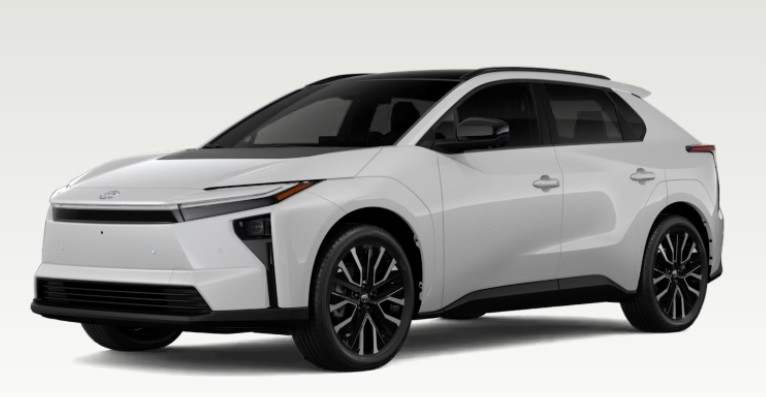
The 2026 Toyota bZ is the heavily revised successor to the bZ4X. Although its overall shape remains recognizable, the new model represents more than a light cosmetic refresh.
Toyota has increased range, raised power on selected versions, improved home-charging capability, introduced a native NACS charging port, and updated the exterior styling. The model now feels less like Toyota’s first cautious experiment with a mainstream EV and more like a serious attempt to compete.
The longest-range configuration is the XLE FWD Plus, which carries an EPA-estimated 314-mile range. All-wheel-drive models can produce as much as 338 horsepower and accelerate from zero to 60 mph in a claimed 4.9 seconds. Toyota also advertises up to 27.7 cubic feet of cargo room behind the rear seats.
Those figures push the bZ much closer to the heart of the electric-crossover market.
Why the Name Changed
Removing “4X” from the old bZ4X name makes the vehicle easier to remember and pronounce. More importantly, it allows Toyota to position “bZ” as the central model in a broader electric lineup.
The simpler name also suits the vehicle’s new personality. It is no longer merely an awkwardly named alternative for committed Toyota buyers. It is now a legitimate competitor for shoppers considering a Tesla, Hyundai, Kia, Ford, Chevrolet, Nissan, or Subaru EV.
What Is the Tesla Model Y?
The Tesla Model Y is a fully electric midsize crossover built around Tesla’s established formula: strong efficiency, rapid acceleration, a spacious cabin, extensive software integration, and convenient fast charging.
Its design is minimalist to the point of being controversial. Nearly every function flows through the central touchscreen. There is no conventional instrument cluster directly in front of the driver, and physical buttons are limited. Some people find the cabin elegant and futuristic. Others feel as though someone furnished the interior and then forgot to install half the furniture.
The Model Y is available in multiple powertrain configurations, with advertised range and performance varying by version. Tesla currently lists a rear-wheel-drive configuration with up to 321 miles of EPA-estimated range and an all-wheel-drive configuration with approximately 294 miles in the specifications displayed on its U.S. page. Tesla also advertises up to 74.8 cubic feet of cargo capacity for selected variants.
Exterior Design: Conservative Confidence or Clean Minimalism?
Design is subjective, but these SUVs speak very different visual languages.
Toyota bZ Styling
The Toyota bZ has a recognizable crossover profile with sharp lighting, muscular wheel arches, and a more expressive front end. The 2026 revisions soften some of the previous model’s busy details, giving it a cleaner and more cohesive appearance.
It still looks unmistakably like a modern Toyota. That matters for shoppers who want an EV without announcing it from three blocks away. The bZ appears futuristic, but it does not resemble a rolling science experiment.
Its body cladding and upright stance also create a slightly rugged tone. It is not a hardcore trail vehicle, but it looks comfortable beside hiking boots, muddy bicycles, or a cart full of garden supplies.
Tesla Model Y Styling
The Model Y takes the opposite path. Its smooth surfaces, low nose, flush door handles, and glass-heavy roofline prioritize aerodynamics and simplicity.
It looks sleek from some angles and bulbous from others. Imagine a Model 3 inflated gently like a balloon, and we are close to the basic idea.
The Tesla’s shape contributes to its efficiency and interior packaging, but its design has also become extremely familiar. That can be a positive or a negative. Some drivers appreciate its clean, recognizable appearance. Others want something that does not blend into every upscale parking lot.
Design Winner
The Toyota wins for visual character and conventional SUV presence. The Tesla wins for aerodynamic simplicity. Our preference will depend on whether we want personality or purity.
Interior Layout and Everyday Usability
The cabin may be the biggest philosophical difference in the Toyota bZ vs Tesla Model Y comparison.
Toyota bZ Interior
Toyota gives us a relatively conventional dashboard. We get a driver display, a central infotainment screen, recognizable climate controls, a steering wheel with familiar functions, and an interior that does not require a tutorial before the first grocery run.
The digital instrument panel sits high on the dashboard. Some drivers appreciate how close it is to their natural line of sight, while others may find the steering-wheel relationship unusual. A proper test drive is important because seating position can change how clearly we see the display.
Materials and design favor durability rather than dramatic luxury. The cabin feels practical, calm, and built for real life. We can climb in, locate the important controls, and drive away without digging through layers of menus.
Tesla Model Y Interior
The Model Y uses a large central touchscreen as its command center. Navigation, climate settings, vehicle controls, entertainment, charging information, camera views, and many smaller functions live within the same digital ecosystem.
This approach makes the cabin look spacious and uncluttered. The screen is quick, graphically polished, and deeply integrated with the vehicle.
However, minimalism has a cost. Adjustments that would require a single button in the Toyota may demand a glance and one or more taps in the Tesla. Drivers who love smartphones often adapt quickly. Those who prefer tactile controls may never completely warm to it.
Tesla’s center display is a core strength when parked and a potential distraction when moving. It is brilliant at showing information, but its placement asks us to direct our eyes toward the middle of the vehicle more often.
Interior Winner
Toyota wins for intuitive operation. Tesla wins for software integration and visual simplicity.
Passenger Space and Seating Comfort
Both vehicles seat five adults, but they deliver comfort differently.
The Toyota bZ has a spacious, airy cabin with a relatively upright seating position. The flat floor helps rear passengers, and the large windows make the interior feel open. Toyota generally tunes seats for long-term comfort rather than dramatic side support, which suits commuting and family use.
The Model Y also provides generous room, especially considering its streamlined roofline. The glass roof floods the interior with light, and the absence of a conventional transmission tunnel improves legroom.
Rear-seat passengers in the Tesla benefit from generous space and, on current configurations, available rear-screen functionality on selected versions. Yet the sloping roof and darker glass-heavy environment may not appeal to everyone. On hot sunny days, the panoramic roof can also make cabin temperature management more important.
Seat comfort is personal. The Toyota feels more like a familiar crossover. The Tesla feels more like a modern lounge with wheels.
Cargo Space: Model Y Takes a Clear Lead
This is one of the Model Y’s strongest areas.
Toyota advertises up to 27.7 cubic feet behind the rear seats in the bZ. That is enough for weekly shopping, luggage, strollers, sports equipment, and the ordinary clutter that follows family life.
Tesla lists approximately 74 to 75 cubic feet of maximum total cargo space, depending on configuration and measurement. The Model Y owner’s documentation separates that storage into the rear cargo area, underfloor compartments, and front trunk. With five passengers aboard, Tesla documentation lists around 31 to 33 cubic feet of combined storage for applicable versions.
That distinction matters. Tesla’s headline figure is not simply the space behind the rear seats. Even so, the Model Y remains exceptionally practical.
Its hatchback opening is large, the rear seats fold, underfloor storage hides smaller objects, and the front trunk gives us another place for charging cables or groceries.
Cargo Winner
The Tesla Model Y wins. It is the better option for road trips, bulky equipment, frequent airport runs, or households that treat a vehicle like a mobile storage unit.
Range Comparison
Range anxiety is not just about the number on a specification sheet. It is about confidence.
Toyota bZ Range
The 2026 bZ can deliver an EPA-estimated 314 miles in its longest-range XLE FWD Plus configuration. Other versions offer less range, particularly those with all-wheel drive, larger wheels, or different battery specifications.
That 314-mile headline figure is a major improvement and places the Toyota within comfortable road-trip territory. For many drivers, it means charging once or twice per week rather than every day.
Tesla Model Y Range
Tesla currently advertises up to 321 miles of EPA-estimated range for the rear-wheel-drive Model Y configuration displayed on its U.S. website. The all-wheel-drive model shown carries a lower 294-mile estimate but delivers stronger acceleration and traction.
On paper, the longest-range Tesla only beats the longest-range Toyota by seven miles. In ordinary driving, such a small difference can disappear beneath weather, speed, wind, climate-control use, elevation changes, wheel size, and driving style.
Which One Goes Farther in Real Life?
The answer depends on the exact trims being compared.
Tesla has traditionally excelled at drivetrain efficiency and route planning. Its navigation system estimates arrival charge, accounts for charging stops, and integrates deeply with Superchargers.
Toyota’s updated range makes it competitive, but Tesla’s energy-management ecosystem remains more mature. In other words, Toyota has nearly caught Tesla’s headline number, while Tesla still has the stronger road-trip brain.
Range Winner
Tesla wins narrowly for maximum advertised range and trip-planning integration. Toyota deserves credit for turning what used to be a weakness into a competitive feature.
Charging at Home
Most EV charging happens at home, so overnight charging matters more than flashy public-charging peaks for many owners.
The 2026 Toyota bZ includes an 11-kW onboard AC charger, replacing the lower-capacity system used previously. It also comes with a dual-voltage charging cable, allowing Level 1 or Level 2 charging when connected to a suitable outlet.
This is a substantial upgrade. With the right home equipment and electrical service, the bZ can recover significant range overnight.
The Model Y is also well suited to home charging. Tesla’s Wall Connector integrates neatly with the vehicle and mobile app, though owners can use other compatible equipment as well.
In practice, both vehicles can wake up each morning with enough charge for normal daily use. The real question is not whether either one can charge overnight. It is whether our house, parking location, and electrical panel support a suitable Level 2 installation.
DC Fast Charging and Road Trips
Here, Tesla still holds an advantage, but Toyota has removed the largest barrier.
Toyota bZ Fast Charging
Toyota says the 2026 bZ can charge from approximately 10% to 80% in around 30 minutes under ideal DC fast-charging conditions. Battery temperature, charger output, ambient weather, and state of charge can all influence the actual result.
More importantly, the bZ now has a native NACS charging inlet. Toyota says compatible owners can access more than 25,000 Tesla Supercharger plugs in North America, alongside networks such as IONNA, ChargePoint, and EVgo. Plug & Charge support also aims to simplify payment and authentication.
This change transforms the Toyota ownership experience. Earlier versions often faced criticism for charging limitations and network inconvenience. The 2026 model enters a different world.
Tesla Model Y Fast Charging
Tesla advertises Supercharging at up to 225 kW for the rear-wheel-drive version currently displayed and says drivers can add as much as 160 miles in 15 minutes under favorable conditions.
The Model Y’s advantage is not merely peak power. Tesla’s navigation, charger availability information, battery preconditioning, payment, and route planning operate as one coordinated system.
We enter a destination, and the vehicle handles much of the strategic thinking. It knows where to stop, prepares the battery, estimates charging duration, and updates the route.
The Toyota can now use many of the same plugs, but Tesla still offers the more seamless experience.
Charging Winner
The Tesla Model Y wins for speed and integration. The Toyota bZ is no longer far behind in access, which is arguably the bigger story.
Performance and Acceleration
Electric motors make even ordinary crossovers feel lively. Both vehicles deliver immediate torque, but they have different personalities.
Toyota bZ Performance
Toyota offers front-wheel-drive and all-wheel-drive configurations. AWD models produce up to 338 combined horsepower and can reach 60 mph in a claimed 4.9 seconds.
That is properly quick. It is fast enough to make passengers laugh, merge onto highways effortlessly, and turn a routine traffic-light departure into a miniature amusement ride.
The bZ’s acceleration feels strong without defining the entire vehicle. Toyota appears more interested in balanced usability than chasing extreme performance figures.
Tesla Model Y Performance
Tesla has made rapid acceleration part of its identity. Even mainstream Model Y versions feel eager, with the all-wheel-drive configuration currently displayed on Tesla’s U.S. site listing a 4.6-second sprint to 60 mph.
Throttle response is immediate, overtaking is effortless, and the power delivery can feel almost elastic. Press the accelerator and the scenery stretches backward.
Tesla may offer faster or differently configured variants over time, so buyers should verify the specifications available when ordering.
Performance Winner
Tesla wins for the most aggressive acceleration culture. Toyota comes surprisingly close and may feel smoother to drivers who do not want every commute to resemble a launch sequence.
Ride Comfort and Handling
The Toyota bZ is likely to appeal to drivers who prioritize calm, predictable behavior. Its steering is easy, its controls feel progressive, and its suspension is tuned for daily life.
Toyota’s experience building millions of family vehicles shows in the way the bZ approaches bumps, parking lots, and imperfect roads. It is not trying to communicate every pebble through the steering wheel.
The Tesla Model Y generally feels firmer and more immediate. Its low battery placement creates a low center of gravity, helping it remain composed through corners. Steering response is quick, and body movement is controlled.
That sharper tuning can make the Model Y feel more engaging on smooth roads. On rough pavement, however, some drivers may prefer the Toyota’s gentler character.
Handling Winner
Tesla wins for agility and responsiveness. Toyota wins for relaxed comfort.
All-Wheel Drive and Winter Use
Both vehicles are available with all-wheel drive, making them suitable for rain, snow, and loose surfaces when equipped with appropriate tires.
The Toyota bZ uses an AWD system designed to improve traction and stability. Toyota’s collaboration history with Subaru is reflected in the vehicle’s confidence on low-grip surfaces, though the bZ remains a road-oriented crossover.
Tesla’s dual-motor AWD system can adjust torque rapidly between the axles. Combined with precise electronic control and a low center of gravity, it provides strong traction.
Still, drivetrain technology cannot repeal physics. Winter tires matter more than a clever AWD badge when roads become icy. A rear-wheel-drive EV on excellent winter tires may outperform an AWD EV wearing unsuitable all-season rubber.
Winter Winner
This category is close. Toyota may appeal to buyers who want a more traditional crossover feel, while Tesla offers highly responsive electronic torque management.
Technology and Infotainment
Technology is the Tesla’s home territory.
Toyota Technology
Toyota’s multimedia system supports familiar smartphone-centered features and presents information in a conventional format. The system is easier to understand at first glance, and essential driving information remains visible in front of the driver.
The 2026 bZ also adds useful EV features such as improved charger access, Toyota-app integration, Plug & Charge support, and intelligent Apple Maps EV routing.
Toyota’s approach is practical. It gives us modern tools without turning the entire vehicle into a tablet with tires.
Tesla Technology
Tesla’s infotainment platform is quick, cohesive, and unusually deep. Navigation, charging, games, entertainment, climate controls, camera views, vehicle settings, and software updates all operate through the central display.
The mobile app is equally important. It can act as a key, control climate settings, monitor charging, locate the vehicle, and manage numerous functions remotely.
Over-the-air updates can alter features and behavior after purchase. That makes the Model Y feel more like a continually evolving digital product than a conventional vehicle.
However, software dependence can be frustrating. A touchscreen failure or interface change affects far more functions than it would in a traditional cabin.
Technology Winner
Tesla wins decisively. Toyota wins only for buyers who believe technology should assist driving rather than dominate it.
Driver-Assistance Systems
Both vehicles offer modern active-safety and driver-assistance features, but the experience differs.
Toyota packages its assistance technology within the brand’s broader safety philosophy. Features commonly include adaptive cruise control, lane support, automatic emergency braking, and other collision-avoidance systems, depending on trim and market specification.
The controls and warnings tend to feel similar to those found in other recent Toyota models. That familiarity reduces the learning curve.
Tesla’s camera-based assistance systems are more visually dramatic. The vehicle displays surrounding road users, lane markings, and objects on the screen. Available advanced functions may add automated lane changes, parking assistance, or supervised driving capabilities, depending on the package, region, software version, and legal restrictions.
We should not confuse impressive visualization with autonomous driving. Regardless of branding, the driver remains responsible for monitoring the road and controlling the vehicle.
Driver-Assistance Winner
Tesla offers the more ambitious software environment. Toyota may provide the more conventional and reassuring experience.
Reliability and Long-Term Ownership
Predicting long-term EV reliability is difficult, especially when comparing a significantly updated Toyota with a frequently revised Tesla.
Toyota’s Advantage
Toyota has built its reputation around durability, conservative engineering, and an enormous service network. Buyers may feel more comfortable having a local dealership perform repairs, inspections, software work, and warranty service.
The bZ also benefits from Toyota’s experience with hybrids and electrified components. However, we should not assume an EV will automatically inherit the reliability record of a Corolla or Camry. Battery-electric platforms have different components, suppliers, software, and failure points.
Tesla’s Advantage
Tesla has far more experience producing high volumes of dedicated battery-electric vehicles. Its powertrains, thermal-management systems, software, and charging ecosystem have accumulated extensive real-world use.
On the other hand, experiences with build quality, service appointments, repair availability, panel alignment, trim issues, and collision repairs can vary by location and vehicle.
Tesla’s direct-service model works well for some owners but feels less familiar than visiting a nearby traditional dealership.
Reliability Winner
Toyota wins for dealership accessibility and brand reassurance. Tesla wins for EV-specific production experience. Long-term evidence for the revised 2026 bZ will take time to develop.
Warranty Considerations
Tesla lists a basic vehicle warranty of four years or 50,000 miles and a battery-and-drive-unit warranty of eight years or 100,000 miles for the rear-wheel-drive Model Y configuration shown on its U.S. specifications page. Coverage can vary by version.
Toyota’s warranty package should be reviewed carefully for the chosen bZ trim, including basic coverage, powertrain coverage, electric-component protection, battery retention terms, roadside assistance, and complimentary maintenance where applicable.
The warranty headline is only part of the story. We should also consider:
- Distance to the nearest authorized service center
- Availability of replacement parts
- Local labor rates
- Collision-repair expertise
- Battery-capacity warranty conditions
- Whether roadside assistance includes towing to an EV-qualified facility
A warranty is useful only when obtaining service is reasonably convenient.
Purchase Price and Overall Value
EV prices change frequently. Manufacturer incentives, lease programs, dealer discounts, financing rates, destination charges, software packages, and tax rules can shift the comparison from one month to the next.
Toyota lists the 2026 bZ with a starting MSRP below the price of some higher-range configurations, but its trim structure means shoppers must compare equivalent versions rather than headline starting prices alone. Toyota’s official page currently advertises a base MSRP starting at $34,900 for the least expensive configuration shown.
Tesla uses direct pricing and may adjust prices without following a traditional model-year cycle. The price displayed while we research may differ from the price available when we order.
How to Compare the Real Cost
We should calculate the complete ownership package:
- Vehicle price with destination charges
- Federal, state, local, and utility incentives
- Lease or financing terms
- Home-charger and electrical-installation cost
- Insurance premiums
- Expected tire replacement
- Registration fees
- Public fast-charging cost
- Optional software packages
- Estimated resale value
A Toyota that costs slightly more upfront could be cheaper to insure or service locally. A Tesla with a stronger lease offer could become the better financial choice despite a higher sticker price.
Value Winner
This depends on current offers. The bZ may deliver stronger traditional value, while the Model Y often provides more range, cargo space, and software per dollar.
Insurance and Repair Costs
Electric vehicles can be expensive to repair after collisions because of their sensors, cameras, aluminum components, battery protection structures, and specialized labor requirements.
The Tesla Model Y’s popularity means insurers have extensive claims data, but repair costs can still be high. Body-shop availability also varies.
The Toyota bZ benefits from a widespread dealer network, yet not every Toyota dealership or independent body shop will have equal EV expertise.
Before buying either vehicle, we should request actual insurance quotes using the specific trim and vehicle identification details whenever possible. A difference of $80 or $100 per month can erase any savings we expected from electricity.
Which SUV Is Better for Families?
The Model Y is the stronger family cargo carrier. Its rear hatch, underfloor storage, front trunk, and generous maximum cargo volume make it easier to handle luggage, sports equipment, folding strollers, and warehouse-store shopping.
The Toyota bZ counters with more familiar controls, an approachable driving position, comfortable road manners, and the reassurance of Toyota dealerships across the country.
Families who frequently take long road trips may prefer Tesla’s charging integration. Families who spend most of their time commuting, attending school events, and running local errands may find the Toyota more relaxing.
Choose the Toyota bZ for Family Use When:
- We prefer physical controls
- Ride comfort matters more than sharp handling
- A nearby Toyota dealer provides peace of mind
- We want an EV that feels like a normal crossover
- We rarely carry unusually bulky cargo
Choose the Tesla Model Y for Family Use When:
- Cargo capacity is a top priority
- We take frequent interstate trips
- We enjoy touchscreen-based technology
- Strong acceleration matters
- We want Tesla’s fully integrated charging ecosystem
Which One Is Better for Road Trips?
The Tesla Model Y remains the better road-trip machine.
Its advantage comes from the combination of efficiency, charging speed, charger routing, battery preconditioning, payment integration, and Supercharger availability. Each element supports the others like musicians in a well-rehearsed band.
The Toyota bZ can now access compatible Superchargers through its native NACS port, which is a huge improvement. Yet access to the same fuel station does not automatically create the same travel experience. Tesla’s software was designed around the network from the beginning.
The bZ is still perfectly capable of road trips, especially with its 314-mile maximum range. We may simply spend a little more time planning and charging.
Which One Is Better for City Driving?
The Toyota may be the easier city companion.
Its conventional controls reduce distraction, its ride is calm, and its driving character is approachable. New EV owners may find it less intimidating.
The Tesla also works well in cities. Instant torque makes gaps easy to use, cameras improve visibility, and one-pedal driving reduces brake use. However, its touchscreen interface can demand more adaptation, and its quick response may feel abrupt until we learn to modulate the accelerator smoothly.
For apartment residents without reliable home charging, the better choice depends heavily on nearby infrastructure. A conveniently located Tesla Supercharger may favor the Model Y, while workplace or neighborhood Level 2 charging could make either vehicle practical.
Toyota bZ Pros and Cons
Main Advantages
- Up to 314 miles of EPA-estimated range
- Native NACS charging port
- Access to compatible Tesla Superchargers
- Strong 338-horsepower AWD option
- Familiar controls and driver display
- Comfortable, conventional crossover character
- Broad Toyota dealership network
- Improved 11-kW AC charging capability
- Likely easier transition for first-time EV buyers
Main Disadvantages
- Slower fast-charging claim than the Tesla’s best performance
- Less total cargo flexibility
- Software ecosystem is not as mature
- Some interior design choices may feel unusual
- Real-world reliability of the revised model remains to be proven
- Less established identity in the EV market
Tesla Model Y Pros and Cons
Main Advantages
- Up to 321 miles of advertised EPA range
- Excellent route and charging integration
- Fast Supercharging capability
- Large maximum cargo capacity
- Responsive acceleration
- Efficient powertrain
- Strong mobile-app experience
- Frequent software updates
- Simple online purchasing process
Main Disadvantages
- Heavy reliance on the touchscreen
- Sparse cabin may feel too minimal
- Firmer ride character
- Service experiences vary by region
- Insurance and collision repairs may be expensive
- Software changes can alter familiar controls
- Conventional dealership support is unavailable
Toyota bZ vs Tesla Model Y: Which Should We Buy?
The Tesla Model Y is the stronger all-around EV for shoppers who prioritize technology, charging speed, road-trip convenience, cargo capacity, and efficiency. It feels like a vehicle designed around an electric ecosystem rather than a conventional crossover converted to fit one.
The Toyota bZ is the better transitional EV for drivers who want electric power without abandoning familiar controls, dealership service, ride comfort, and traditional ownership habits.
Here is the simplest decision:
Buy the Toyota bZ if we want:
- A familiar and approachable interior
- A comfortable daily driver
- Toyota dealership access
- Competitive range without Tesla-style minimalism
- Physical controls and a driver-facing display
- An EV that behaves like a conventional SUV
Buy the Tesla Model Y if we want:
- The strongest charging experience
- More cargo flexibility
- Better software integration
- Faster road-trip stops
- Sharper acceleration and handling
- A technology-first ownership experience
Final Verdict
The Tesla Model Y wins this comparison, but not by the landslide it once would have.
Tesla remains ahead in the areas that define a modern EV: charging, software, energy efficiency, cargo packaging, and digital integration. It is the more complete electric platform and the better option for frequent road travelers.
The 2026 Toyota bZ fights back with a compelling range figure, a native NACS port, access to compatible Tesla Superchargers, improved home charging, strong AWD performance, and a cabin that feels natural from the first mile. It is the EV for people who want the future served in a familiar cup.
Think of the Model Y as a powerful smartphone on wheels. It is fast, connected, endlessly configurable, and occasionally demanding.
The Toyota bZ is more like a trusted crossover that learned a sophisticated new language. It may not speak quite as fluently as the Tesla, but it communicates in a way many drivers will find more comfortable.
For maximum capability, choose the Tesla Model Y.
For comfort, familiarity, and traditional ownership support, choose the Toyota bZ.
Neither answer is wrong. The right choice depends on whether we want our electric SUV to feel like a piece of technology or simply like a very good vehicle that happens to run on electricity.
Frequently Asked Questions
1. Does the Toyota bZ have more range than the Tesla Model Y?
Not in their longest-range configurations. Toyota advertises an EPA-estimated maximum of 314 miles for the 2026 bZ XLE FWD Plus, while Tesla currently lists up to 321 miles for a rear-wheel-drive Model Y configuration. The seven-mile difference is small enough that weather, speed, wheels, and driving style may matter more in real-world use.
2. Can the 2026 Toyota bZ use Tesla Superchargers?
Yes. The 2026 bZ has a native NACS charging port and can access compatible Tesla Superchargers. Toyota says its drivers can reach more than 25,000 additional Tesla charging plugs in North America, although charger compatibility and availability should always be checked through the vehicle or Toyota app.
3. Is the Toyota bZ faster than the Tesla Model Y?
It depends on the versions compared. Toyota says AWD bZ models can accelerate from zero to 60 mph in 4.9 seconds. Tesla lists approximately 4.6 seconds for the AWD configuration currently shown on its U.S. specifications page. Other Tesla versions may be quicker or slower.
4. Which has more cargo space, the Toyota bZ or Tesla Model Y?
The Tesla Model Y offers more overall cargo flexibility. Toyota lists up to 27.7 cubic feet behind the bZ’s rear seats, while Tesla publishes larger combined figures that include the rear area, underfloor storage, and front trunk. Because the manufacturers use different measurement descriptions, headline numbers are not directly equivalent, but the Model Y remains the more spacious cargo carrier.
5. Is the Toyota bZ a better choice for first-time EV buyers?
It can be. The bZ combines electric performance with familiar controls, a driver-facing display, conventional dealership support, and straightforward road manners. The Model Y provides a more advanced charging and software experience, but its touchscreen-centered interface may require a larger adjustment for drivers coming from gasoline vehicles.
If you want to see other articles similar to Toyota bZ vs Tesla Model Y: Which Electric SUV Is Better? you can visit the Compare category.
Ford Bronco Pros and Cons: Complete Buyer’s Guide
2026 Ford Bronco Towing: Capacity, Equipment, and Real-World Limits
Ford Bronco Gas Tank Size: 2026 U.S. Guide
2026 Ford Bronco Big Bend vs Outer Banks: Features and Differences Explained
2026 Ford Bronco Trim Levels in Order: Complete U.S. Guide
Ford Bronco Models Explained for U.S. Buyers
Leave a Reply
Related Topics