

Toyota bZ Reliability USA: Is Toyota’s Electric SUV Dependable?

Contents in this publication
- What Is the Toyota bZ?
- Is the Toyota bZ Reliable Overall?
- Toyota bZ Reliability by Model Year
- Common Toyota bZ Reliability Concerns
- How Reliable Is the Toyota bZ Battery?
- Toyota bZ Maintenance and Long-Term Durability
- Does Toyota’s Reputation Guarantee bZ Reliability?
- Toyota bZ Reliability Compared With Other EVs
- Buying a Used Toyota bZ4X: Reliability Checklist
- Who Should Buy a Toyota bZ?
- Who Might Want a Different EV?
- How to Improve Toyota bZ Reliability
- Toyota bZ Reliability: Pros and Cons
- Final Verdict: Is the Toyota bZ Reliable in the USA?
- Frequently Asked Questions
The Toyota bZ enters the American electric-vehicle market carrying something heavier than a battery pack: Toyota’s reputation for reliability. For decades, buyers have associated the brand with vehicles that start every morning, survive long commutes, tolerate imperfect maintenance, and remain useful well after the loan has been paid.
Naturally, many U.S. shoppers expect the Toyota bZ to behave like an electric RAV4—quiet, practical, economical, and almost stubbornly dependable.
But should we make that assumption?
The bZ, previously called the bZ4X in the United States, is not simply a gasoline Toyota with an electric motor dropped under the hood. It uses a dedicated battery-electric platform, complex power electronics, thermal-management systems, advanced software, and high-voltage components. In other words, it is Toyota entering a relatively new mechanical neighborhood.
The available evidence suggests that the Toyota bZ can be a sensible and potentially durable electric SUV, but its reliability story is more complicated than the badge alone implies. Early bZ4X models experienced important recalls, charging limitations frustrated some owners, and the redesigned 2026 bZ has already been affected by a safety recall involving its battery control software.
At the same time, the SUV has a relatively simple electric drivetrain, generous EV-component warranty coverage, low routine-maintenance requirements, and Toyota’s extensive U.S. dealership network behind it.
So, is the Toyota bZ reliable in the USA? Let’s separate reputation from reality.
What Is the Toyota bZ?
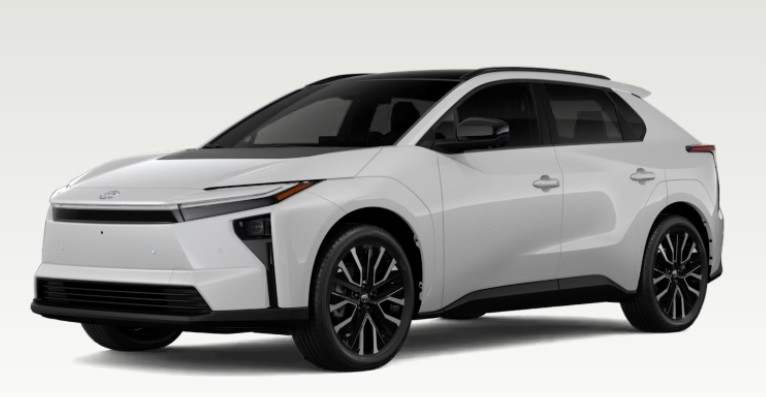
The Toyota bZ is a compact battery-electric SUV sold in the United States. Earlier model years carried the unusual bZ4X name, while Toyota shortened the name to simply “bZ” for the extensively updated 2026 model.
The vehicle sits in roughly the same size category as the Toyota RAV4, although its low-mounted battery and dedicated electric architecture give it a different driving character. There is no gasoline engine, conventional automatic transmission, exhaust system, fuel pump, or traditional four-wheel-drive transfer case.
Instead, the bZ relies on:
- A lithium-ion traction battery
- One or two electric drive motors
- A battery-management system
- Power-control electronics
- Regenerative braking
- A battery heating and cooling system
- Software that coordinates charging and propulsion
For 2026, Toyota introduced larger-battery configurations with capacities of up to 74.7 kWh and projected driving range of up to 314 miles on certain versions. Toyota also added a native North American Charging System port and expanded access to compatible fast chargers.
These upgrades make the latest bZ more competitive. However, a longer range estimate does not automatically answer the reliability question. Reliability is about whether those systems continue working properly—not merely how impressive they look on a specification sheet.
Is the Toyota bZ Reliable Overall?
Our balanced assessment is that the Toyota bZ has average-to-promising reliability potential, but it has not yet established the long-term record of vehicles such as the Prius, Camry, Corolla, or RAV4 Hybrid.
That distinction matters.
Toyota has decades of experience with electric motors, inverters, battery-management systems, and electrified drivetrains through its hybrid lineup. That knowledge gives the company a stronger foundation than a manufacturer building its first electrified vehicle from scratch.
Nevertheless, a full battery-electric vehicle creates different challenges. Fast charging, high-voltage battery temperature, software integration, cold-weather performance, charging-port compatibility, and battery-cell aging all become central ownership concerns.
The bZ’s short U.S. history also limits the amount of long-term evidence available. We have several years of early-model data, but we do not yet have large numbers of American examples with 150,000 or 200,000 miles.
Therefore, we should not call the bZ unreliable, but we should not give it an automatic lifetime-achievement award simply because “Toyota” appears across the liftgate.
Our Practical Reliability Verdict
We would describe it this way:
- Mechanical simplicity: Encouraging
- Battery warranty: Strong
- Routine maintenance: Low
- Early recall history: Concerning but manageable
- Long-term high-mileage evidence: Still limited
- Dealer availability: Better than many EV startups
- Software maturity: Improving, but not flawless
- Overall ownership risk: Moderate rather than high
The bZ looks less like a reliability disaster and more like a first-generation product that has needed refinement.
Toyota bZ Reliability by Model Year
Not every Toyota bZ or bZ4X should be treated as the same vehicle. Model-year changes affect range, charging behavior, equipment, software, and potentially reliability.
2023 Toyota bZ4X Reliability
The 2023 bZ4X was the introductory U.S. model and therefore carries the greatest first-year risk.
Its most serious issue was a recall involving wheel hub bolts. Toyota warned that, after low-mileage use, the bolts could loosen enough for a wheel to detach. The company instructed affected owners not to drive their vehicles until repairs were completed.
That is not a minor inconvenience such as a frozen infotainment screen. A wheel-separation risk is a major safety problem and understandably damaged confidence in the model’s launch.
However, context is important. A recall does not mean every 2023 bZ4X remains unsafe today. Properly completed recall repairs address the identified defect. Buyers considering a used example should verify the vehicle identification number through Toyota and the National Highway Traffic Safety Administration rather than relying on a seller’s verbal assurance.
Should We Avoid Every 2023 Model?
Not necessarily.
A 2023 bZ4X may be worth considering when:
- All recalls have been completed
- The service history is documented
- The price reflects its early-model status
- Battery condition appears healthy
- Charging performance matches the buyer’s needs
- The tires show even wear
- No warning messages are present
Still, cautious shoppers may prefer a later model year simply to reduce exposure to first-year engineering and production issues.
2024 Toyota bZ4X Reliability
The 2024 model benefited from Toyota’s opportunity to refine the original vehicle. It retained the same general platform and powertrain architecture but arrived after the dramatic launch recall had been resolved.
Toyota continued to cover the electric driving components, including the traction battery, for eight years or 100,000 miles. The company also provided a three-year/36,000-mile basic warranty and five-year/60,000-mile powertrain coverage.
For many buyers, a well-maintained 2024 vehicle represents a more comfortable used-EV choice than a launch-year example. It is still important to check open recalls and service campaigns, particularly because later safety actions have affected some 2023–2024 vehicles.
2025 Toyota bZ4X Reliability
The 2025 bZ4X remained an evolutionary version of the original SUV rather than a complete reinvention. By this point, Toyota had accumulated more real-world information about charging, battery management, software, and owner expectations.
From a reliability perspective, that maturity is valuable. Automakers often correct early manufacturing weaknesses through revised components, updated software, altered production processes, and new dealer procedures—even when those changes are not obvious to customers.
A 2025 bZ4X may therefore be one of the safer choices among the original bZ4X versions, although buyers must still evaluate price, range, charging speed, and battery health.
2026 Toyota bZ Reliability
The 2026 Toyota bZ received substantial changes, including higher output, increased range, revised styling, improved charging capability, a larger available battery, and a standard NACS charging inlet. Toyota says compatible versions can offer up to an estimated 314 miles of range.
Those improvements solve several complaints associated with earlier versions. Yet the 2026 model is not free from concern.
In June 2026, Toyota announced a recall affecting approximately 16,200 Toyota bZ and Lexus RZ vehicles in North America. According to Toyota, an error in the battery ECU could cause the electric drive system to shut down. Steering and power-assisted braking would continue to function, but the loss of motive power at higher speeds could increase crash risk. Dealers are expected to correct the problem with a free software update.
This recall does not prove that the redesigned bZ is fundamentally unreliable. It does show that even a mechanically sound electric drivetrain can be undermined by a software or control-module fault.
Is the 2026 Recall a Deal Breaker?
For most buyers, it should be treated as a serious repair requirement rather than an automatic reason to abandon the vehicle.
Before purchasing or taking delivery, we should:
- Enter the VIN into Toyota’s recall checker.
- Confirm whether the vehicle is included.
- Obtain written confirmation that the ECU update was completed.
- Ask the dealer whether any additional campaigns apply.
- Keep repair paperwork with the vehicle’s records.
A completed software recall may have little effect on long-term durability. An ignored recall, however, is never something we should gamble with.
Common Toyota bZ Reliability Concerns
The Toyota bZ does not have a gasoline engine, but fewer moving parts do not mean zero potential problems. EV reliability simply shifts attention toward different components.
Battery Degradation
Every lithium-ion battery gradually loses usable capacity. That process is normal, just as a smartphone battery eventually holds less energy than it did when new.
The real concern is whether degradation occurs unusually quickly.
Battery aging depends on several factors:
- Climate
- Time spent at very high states of charge
- Frequent deep discharging
- Repeated DC fast charging
- Battery temperature
- Driving mileage
- Storage habits
- Software and thermal management
Toyota’s conservative approach to battery management may help long-term durability. Automakers generally reserve some capacity at the top and bottom of the battery’s charge range, preventing drivers from using the battery’s absolute chemical limits.
However, because the bZ has not existed in large numbers for a decade, we still cannot confidently predict what the average U.S. battery will retain after 12 or 15 years.
Cold-Weather Range and Charging
Drivers in Minnesota, Michigan, Colorado, upstate New York, and other cold regions should not confuse winter range loss with battery failure.
Low temperatures reduce battery efficiency, increase cabin-heating demand, and can slow fast charging until the pack reaches an appropriate temperature. An EV that feels perfectly normal in California may behave very differently during a freezing Chicago morning.
Earlier bZ4X versions drew criticism for charging limitations and less competitive road-trip performance. The 2026 bZ attempts to improve the ownership experience through revised charging hardware, battery preconditioning features, and broader fast-charger access.
Toyota says the 2026 model can use more than 25,000 additional NACS plugs in North America through the Tesla Supercharger network, while compatible adapters preserve access to J1772 and CCS equipment.
That improves convenience, but charger availability is not the same as charging consistency. Actual charging speed can still vary with temperature, charger condition, battery percentage, and network congestion.
Software and Electronic Glitches
Modern EVs are computers wearing tires. Their motors may be mechanically simple, but dozens of electronic modules must communicate continuously.
Potential electronic complaints can include:
- Infotainment freezes
- App-connection failures
- Charging-session errors
- Driver-assistance warnings
- Temporary range-estimate irregularities
- Key recognition issues
- Sensor alerts
- Software-update problems
- Battery-control faults
Some faults disappear after a restart or software update. Others require dealer diagnosis. The 2026 battery ECU recall illustrates how software can affect a critical propulsion function even when the physical motor and battery remain intact.
12-Volt Battery Problems
Like most electric vehicles, the Toyota bZ uses a conventional low-voltage battery to operate computers, locks, lights, relays, and control systems.
A weak 12-volt battery can produce confusing symptoms:
- The vehicle will not enter ready mode
- Warning messages appear
- Doors or accessories behave strangely
- The high-voltage system does not activate
- The car appears “dead” despite having charge in the traction battery
This can make a relatively inexpensive battery problem feel like a catastrophic EV failure.
Owners who drive infrequently, leave the vehicle parked for long periods, or use accessories while the car is not fully active should pay particular attention to low-voltage battery condition.
Tire Wear
Electric SUVs are relatively heavy and deliver immediate torque. That combination can accelerate tire wear, especially when drivers enjoy the instant response of the accelerator.
The bZ’s alignment, tire pressure, driving style, and all-wheel-drive configuration all influence tire life.
We should inspect for:
- Uneven inner-edge wear
- Feathering across the tread
- Mismatched replacement tires
- Low tread depth
- Sidewall damage
- Incorrect pressure
- Steering pull
Tires are wear items rather than evidence of a defective drivetrain, but they can become one of the more noticeable recurring costs of EV ownership.
Charging-Port and Cable Issues
Charging equipment lives a hard life. Connectors are exposed to heat, rain, dirt, snow, repeated handling, and thousands of insertion cycles.
Possible trouble points include:
- A connector that will not lock
- A charge door that sticks
- Failed charging handshakes
- Damaged adapters
- Overheated plugs
- Charging interrupted by software
- Home-charger compatibility problems
The 2026 bZ’s standard NACS inlet is a meaningful improvement for American charging access. Still, buyers should test both home and public charging rather than assuming every station will work perfectly.
How Reliable Is the Toyota bZ Battery?
The traction battery is the most expensive single component in the vehicle, so its reliability naturally receives the most attention.
Toyota covers the bZ’s electric-vehicle driving components, including the traction battery, for eight years or 100,000 miles, whichever comes first. The SUV also includes a three-year/36,000-mile basic warranty, five-year/60,000-mile powertrain coverage, ToyotaCare scheduled maintenance for two years or 25,000 miles, and three years of roadside assistance.
The warranty provides useful protection, but owners should read the complete warranty guide. Coverage depends on the type of failure, vehicle use, maintenance, damage, modifications, and other conditions.
Does the Warranty Guarantee Zero Degradation?
No.
A battery-capacity warranty is not necessarily a promise that the vehicle will retain its original EPA range for eight years. Normal capacity loss may not qualify as a defect unless it crosses the manufacturer’s defined threshold or results from a covered failure.
Before buying, especially on the used market, we should ask the dealer to explain:
- What level of capacity loss is considered warrantable
- How battery health is measured
- Whether diagnostic testing is available
- Whether the warranty transfers to later owners
- Whether the vehicle has received all battery-related software updates
How Can Owners Protect the Battery?
A practical battery-care routine includes:
- Using Level 2 home charging for ordinary daily needs
- Avoiding unnecessary daily charging to 100%
- Charging fully before longer trips when needed
- Avoiding leaving the battery nearly empty for extended periods
- Parking in shade or a garage during extreme heat when possible
- Preconditioning while connected to external power
- Installing software updates
- Using approved charging equipment
- Following Toyota’s maintenance and inspection schedule
We do not need to treat the battery like fragile glass. We simply need to avoid turning every charging session into a stress test.
Toyota bZ Maintenance and Long-Term Durability
The bZ eliminates many traditional maintenance items.
There are no:
- Engine-oil changes
- Spark plugs
- Timing belts
- Exhaust repairs
- Conventional transmission-fluid services
- Engine air filters
- Fuel-system cleanings
- Alternators
- Starter motors
That simplicity can reduce scheduled-maintenance expenses and eliminate numerous common failure points.
However, owners still need to maintain:
- Tires
- Brake fluid
- Cabin air filters
- Windshield wipers
- Coolant systems
- Suspension components
- Steering components
- Air-conditioning equipment
- Wheel alignment
- Brake hardware
- Low-voltage battery
- Charging equipment
Regenerative braking can reduce physical brake-pad wear because the electric motor slows the vehicle and returns energy to the battery. Nevertheless, brake components can corrode or stick when used infrequently, especially in snowy states where roads are treated with salt.
Can a Toyota bZ Last 200,000 Miles?
It is mechanically plausible, but not yet proven across a large American fleet.
Electric motors can be extremely durable because they contain fewer friction-heavy parts than combustion engines. A well-managed traction battery may also provide useful service beyond 100,000 miles, even after some range degradation.
The unknowns are more likely to involve:
- Battery capacity after many years
- Replacement cost outside warranty
- Power electronics
- Charging hardware
- Cooling-system components
- Software support
- Availability of model-specific parts
A 200,000-mile bZ may still operate normally while offering less range than it did when new. Whether that reduction matters depends on the owner. A vehicle with 75% of its original range may remain perfectly useful for a 30-mile daily commute but become inconvenient for frequent interstate travel.
Does Toyota’s Reputation Guarantee bZ Reliability?
Toyota’s reputation is relevant, but it should not replace inspection and research.
The company has deep experience with hybrid battery systems. Millions of Prius, Camry Hybrid, RAV4 Hybrid, Highlander Hybrid, and Lexus hybrid vehicles have helped Toyota develop knowledge in electric motors, inverters, battery cooling, regenerative braking, and high-voltage safety.
That experience gives the bZ a credible engineering foundation.
Yet full EV ownership introduces new variables. Toyota cannot simply copy a Prius battery-control strategy into a much larger battery-electric SUV. Fast charging, sustained highway loads, battery preconditioning, public-network compatibility, and high-capacity thermal management require different solutions.
Toyota’s badge is therefore a positive sign—not an invincibility shield.
Toyota bZ Reliability Compared With Other EVs
The bZ competes with vehicles such as the Tesla Model Y, Hyundai Ioniq 5, Kia EV6, Nissan Ariya, Volkswagen ID.4, Subaru Solterra, Chevrolet Equinox EV, and Honda Prologue.
Where the bZ May Be Stronger
The Toyota offers several ownership advantages:
- A large U.S. dealership network
- Familiar controls and driving behavior
- Standard safety technology
- Conservative engineering
- Strong EV-component warranty coverage
- Simple drivetrain architecture
- Improved 2026 charging compatibility
- Toyota-backed parts and service infrastructure
For drivers nervous about buying from a young EV company, Toyota’s nationwide support network can feel like a sturdy bridge across unfamiliar water.
Where Competitors May Be Stronger
Depending on model year and configuration, competitors may offer:
- Faster DC charging
- More established EV software
- Better route planning
- Greater efficiency
- Longer real-world range
- More interior storage
- More powerful mobile applications
- A longer track record in high-volume EV production
Reliability should not be measured only by how often a vehicle visits a repair shop. An EV that rarely breaks but charges too slowly for an owner’s travel routine can still feel unreliable in everyday life.
That is why we must match the vehicle to the intended use.
Buying a Used Toyota bZ4X: Reliability Checklist
A used bZ4X can offer substantial value, particularly because early EV depreciation may lower the purchase price. But a cheap electric SUV becomes expensive quickly when we overlook battery, recall, or charging problems.
Check the Recall History
Use the full VIN to check Toyota and NHTSA recall records. Confirm that all safety recalls and service campaigns have been completed.
Never accept “the dealer probably handled it” as evidence.
Request a Battery Diagnostic
Ask whether a Toyota dealer can provide a battery-health report, diagnostic scan, or capacity assessment.
A dashboard range estimate alone is not enough because estimated range changes with temperature, driving style, climate-control use, and recent trips.
Test AC and DC Charging
During the inspection, test:
- Level 1 or Level 2 AC charging
- Public DC fast charging, when practical
- The charging-port lock
- The charge door
- Any included adapters
- The mobile application
- Scheduled-charging settings
A ten-minute test can uncover a problem that a normal road test would never reveal.
Inspect the Tires Carefully
Check tread depth and confirm that all four tires match in size and preferably brand and model. Uneven wear can suggest alignment trouble, neglected rotation, or suspension damage.
Review the Service Records
Although EV maintenance is relatively light, service history still matters. Look for evidence of:
- Recall completion
- Tire rotations
- Brake inspections
- Cabin-filter replacement
- Cooling-system checks
- Software updates
- 12-volt battery replacement
- Accident repairs
Listen for Suspension Noise
Drive over rough pavement at low and moderate speeds. Listen for clunks, rattles, squeaks, or knocking sounds.
A silent electric drivetrain makes chassis noises easier to hear—and harder for a seller to hide.
Who Should Buy a Toyota bZ?
The bZ makes the most sense for someone who:
- Can charge at home or work
- Drives predictable daily distances
- Values comfort over aggressive performance
- Wants a conventional dealership relationship
- Prefers Toyota’s conservative approach
- Understands winter range loss
- Does not need class-leading fast charging
- Plans to keep the vehicle within battery-warranty limits
- Has confirmed all recalls are complete
It is especially attractive as a commuter and household vehicle. Imagine waking each morning with enough energy for the day, driving quietly through traffic, and skipping gas stations almost entirely. In that environment, the bZ’s strengths come alive.
Who Might Want a Different EV?
Another model may be more suitable for drivers who:
- Frequently take long interstate trips
- Depend almost entirely on public fast charging
- Want the quickest possible charging sessions
- Need proven 150,000-mile EV history
- Live far from a Toyota EV-certified service center
- Regularly tow or carry heavy loads
- Want advanced software above all else
- Expect sports-car acceleration
The bZ is a sensible electric crossover, not a technological circus. Some buyers will appreciate that restraint. Others may find it too conservative.
How to Improve Toyota bZ Reliability
Owners can reduce future trouble with a few practical habits.
Follow Recall Notices Immediately
Do not postpone safety updates because the vehicle appears to operate normally. Software problems can remain invisible until a specific combination of conditions triggers them.
Keep the Software Current
Software updates may improve charging behavior, battery management, warning logic, and system stability.
Use Approved Charging Equipment
Toyota warns that unauthorized charging accessories may affect vehicle performance, safety, or warranty coverage. Toyota provides approved adapters for compatibility with supported charging standards.
Rotate the Tires Regularly
Frequent rotation helps reduce uneven wear caused by vehicle weight and instant electric torque.
Protect the 12-Volt Battery
Avoid leaving accessories active unnecessarily when the vehicle is not in ready mode. Have the low-voltage battery tested when starting behavior becomes inconsistent.
Do Not Ignore Warning Messages
Photograph warning messages before restarting the vehicle. Some intermittent faults disappear from the screen but remain stored in diagnostic memory.
Toyota bZ Reliability: Pros and Cons
Reliability Advantages
- Simple electric drivetrain
- No engine-oil changes
- Fewer moving mechanical components
- Strong EV-component warranty
- Extensive Toyota dealer network
- Lower routine-maintenance burden
- Improved 2026 range and charging access
- Toyota’s experience with electrified drivetrains
Reliability Disadvantages
- Limited long-term U.S. history
- Serious launch-year wheel recall
- 2026 battery ECU software recall
- Potential cold-weather charging limitations
- Expensive battery or electronics repairs outside warranty
- Dependence on software and charging infrastructure
- Heavy tire wear possible
- Early models have less competitive charging performance
Final Verdict: Is the Toyota bZ Reliable in the USA?
The Toyota bZ appears capable of becoming a reliable long-term electric SUV, but the evidence does not yet justify placing it beside Toyota’s most proven models.
Its electric drivetrain is mechanically straightforward. Maintenance requirements are low. Warranty coverage for the battery and EV driving components is reassuring. Toyota’s dealer network also gives owners more service options than they might receive from a small or emerging manufacturer.
However, the reliability story contains real warning signs. The 2023 bZ4X launch was disrupted by a major wheel-hub recall, and certain 2026 bZ vehicles have been recalled because a battery ECU error may shut down the electric drive system.
Those problems should not be hidden beneath Toyota’s reputation.
Our conclusion is that a properly updated Toyota bZ—with completed recalls, a healthy battery, suitable charging access, and documented maintenance—can be a dependable choice for U.S. commuting and everyday family use.
The safest buying strategy is to favor a later model year, verify the VIN, test the charging system, inspect the tires, and avoid assuming that every Toyota is automatically trouble-free.
The bZ is not yet the electric equivalent of an immortal Corolla. It is more like a promising new house built by an experienced contractor: the foundation looks solid, but we still need time to see how it handles decades of weather.
Frequently Asked Questions
1. Is the Toyota bZ more reliable than a Tesla Model Y?
There is not enough long-term data to declare a definitive winner. The Toyota offers a traditional dealer network and conservative engineering, while the Model Y has a much larger real-world fleet and more mature charging ecosystem. Reliability can also vary by production year, software version, and individual vehicle.
2. How long does a Toyota bZ battery last?
The battery may remain useful for well beyond 100,000 miles, although gradual capacity loss is normal. Toyota covers the traction battery and other EV driving components for eight years or 100,000 miles, whichever comes first. Actual lifespan depends on climate, charging habits, mileage, battery temperature, and vehicle use.
3. What is the biggest Toyota bZ4X reliability problem?
The most serious early problem was the 2023 recall involving wheel hub bolts that could loosen and potentially allow a wheel to detach. For certain 2026 vehicles, Toyota also announced a recall involving battery ECU software that could cause a loss of motive power.
4. Is a used Toyota bZ4X worth buying?
It can be, particularly when depreciation has made it substantially cheaper than a new EV. Buyers should verify recall completion, test AC and DC charging, inspect tire wear, review the service history, and obtain as much battery-health information as possible.
5. Which Toyota bZ model year is the most reliable?
Later bZ4X model years may benefit from production and software refinements, but the newest model is not automatically problem-free. A well-maintained 2024 or 2025 bZ4X with completed recalls may be a lower-risk used choice than a launch-year 2023 vehicle. A 2026 bZ can also be attractive once its applicable battery ECU recall has been completed.
If you want to see other articles similar to Toyota bZ Reliability USA: Is Toyota’s Electric SUV Dependable? you can visit the Compare category.
Ford Bronco Pros and Cons: Complete Buyer’s Guide
2026 Ford Bronco Towing: Capacity, Equipment, and Real-World Limits
Ford Bronco Gas Tank Size: 2026 U.S. Guide
2026 Ford Bronco Big Bend vs Outer Banks: Features and Differences Explained
2026 Ford Bronco Trim Levels in Order: Complete U.S. Guide
Ford Bronco Models Explained for U.S. Buyers
Leave a Reply
Related Topics