

Toyota Camry or Similar US: What Does It Actually Mean?

Contents in this publication
- What Does “Toyota Camry or Similar” Mean in the US?
- Which Rental Class Includes the Toyota Camry?
- Most Common Toyota Camry Alternatives in the US
- Toyota Camry vs Honda Accord
- Toyota Camry vs Nissan Altima
- Toyota Camry vs Hyundai Sonata
- Toyota Camry vs Kia K5
- Toyota Camry vs Chevrolet Malibu
- Toyota Camry vs Volkswagen Passat or Jetta
- How Similar Must a Substitute Vehicle Be?
- How Many Passengers Fit Comfortably?
- How Much Luggage Fits in a Camry or Similar?
- Is a Toyota Camry or Similar Good for a US Road Trip?
- Fuel Economy and Operating Costs
- Can We Request a Toyota Camry at Pickup?
- What to Check Before Accepting a Similar Car
- What If the Replacement Is Not Acceptable?
- Should We Book a Camry or Similar Category?
- Toyota Camry or Similar vs Compact SUV
- Toyota Camry or Similar vs Full-Size SUV
- Insurance Considerations for a Camry-Class Rental
- Common Mistakes When Booking “or Similar”
- How to Compare Rental Offers Properly
- Is a Toyota Camry or Similar a Good Rental Choice?
- Final Thoughts: Book the Category, Not the Badge
- Frequently Asked Questions
You are booking a rental car in the United States, comparing prices, and trying to avoid unpleasant surprises. Then you see a category labeled “Toyota Camry or similar.”
It sounds straightforward. You select the Camry, pay the quoted rate, and expect to find a Toyota waiting at the rental counter. Right?
Not necessarily.
In the U.S. rental industry, “Toyota Camry or similar” usually describes a vehicle class rather than a guaranteed make and model. The Camry is shown as a familiar example of what the category may include, but the rental company can provide another sedan with broadly comparable space, comfort, transmission type, seating capacity, and luggage room.
That replacement could be a Honda Accord, Nissan Altima, Hyundai Sonata, Kia K5, Chevrolet Malibu, Volkswagen Passat, or another midsize sedan available in the company’s fleet. The exact possibilities depend on the location, inventory, rental brand, season, and even the time of day when you collect the vehicle.
So, what are we really paying for? Is the Camry genuinely likely, or is the name simply a marketing signpost? More importantly, how can we avoid receiving a car that technically fits the class but does not suit our trip?
Let’s unpack the phrase, examine the most common alternatives, and learn how to book a U.S. rental car with realistic expectations.
What Does “Toyota Camry or Similar” Mean in the US?
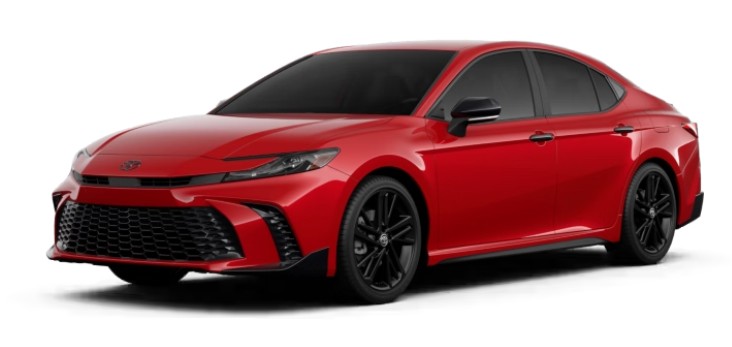
When a rental website displays Toyota Camry or similar, it is selling access to a category of vehicle. It is not usually promising that exact Toyota model.
The Camry acts like a picture on a restaurant menu. It shows the general style of what we are ordering, but the final presentation may vary. Rental fleets change constantly because cars are returned late, moved between branches, cleaned, repaired, sold, upgraded, or reserved by other customers.
The phrase typically points to a midsize or standard sedan with characteristics such as:
- Seating for up to five people
- Four passenger doors
- Automatic transmission
- Air conditioning
- A conventional enclosed trunk
- Comfortable highway performance
- Space for several medium-sized bags
- Better rear-seat room than most compact cars
However, rental terminology is not perfectly standardized across every company. One provider may classify the Camry as midsize, while another may place it in a full-size or standard category. That is why we should pay more attention to the listed features than to the model photograph alone.
Is the Toyota Camry Guaranteed?
In most ordinary reservations, no.
The model is generally an example of the class. Rental companies protect themselves by including the words “or similar”, allowing them to substitute another qualifying vehicle.
Some platforms do offer model-guaranteed reservations, particularly for luxury vehicles, electric cars, specialty models, convertibles, and selected premium fleets. When the model is guaranteed, the booking page normally says so clearly.
If the reservation does not contain language such as “guaranteed model,” “exact model,” or “model choice,” we should assume substitution is possible.
Why Rental Companies Cannot Promise Every Model
A rental branch rarely knows weeks in advance which individual vehicle will be available at a specific collection time.
Imagine a busy airport location on a holiday weekend. Hundreds of vehicles arrive and leave throughout the day. Some customers extend their rentals. Others return cars to different cities. A vehicle may need an oil change, new tires, bodywork, or additional cleaning.
Inventory behaves more like a moving river than a neatly organized showroom. Rental companies therefore sell categories to maintain flexibility.
Which Rental Class Includes the Toyota Camry?
The Toyota Camry is commonly associated with the midsize, standard, or full-size sedan category in the United States. The precise label varies among rental companies and booking platforms.
This variation can feel confusing because terms such as intermediate, midsize, standard, and full-size may overlap.
Midsize or Intermediate Sedan
A midsize or intermediate category may include vehicles such as:
- Toyota Camry
- Nissan Altima
- Hyundai Sonata
- Kia K5
- Chevrolet Malibu
- Volkswagen Jetta
- Similar four-door sedans
This category usually provides a comfortable balance between price, cabin space, fuel use, and luggage capacity.
Standard Sedan
A standard sedan may be slightly larger or better equipped, although the difference is not always dramatic. At some locations, the Camry itself may appear in this category.
Possible alternatives include:
- Volkswagen Passat
- Chrysler 200
- Nissan Altima
- Hyundai Sonata
- Subaru Legacy
- Similar vehicles
Full-Size Sedan
The term full-size can be particularly misleading. In the rental world, it does not always mean a genuinely large luxury sedan. It may simply represent a higher category than midsize.
A full-size group could include:
- Toyota Camry
- Chevrolet Malibu
- Nissan Maxima
- Volkswagen Passat
- Chrysler 300
- Comparable sedans
The category name alone does not tell the full story. We should inspect the number of passengers, baggage allowance, door count, and listed transmission before paying.
Most Common Toyota Camry Alternatives in the US
Although no rental company can guarantee a particular substitute, several models are commonly considered comparable to the Camry.
Toyota Camry vs Honda Accord
The Honda Accord is one of the closest alternatives. Both cars are comfortable family sedans designed for commuting, highway travel, and everyday practicality.
The Accord often feels roomy and refined, particularly in the rear seat. Its driving position is straightforward, and its trunk generally suits normal vacation luggage. Many travelers would consider an Accord a fair substitute for a Camry.
Who Might Prefer the Accord?
The Accord may appeal to drivers who value:
- Spacious seating
- Predictable handling
- A calm highway ride
- A practical trunk
- Simple daily usability
For most rental situations, receiving an Accord instead of a Camry should not significantly change the trip.
Toyota Camry vs Nissan Altima
The Nissan Altima is another frequent member of the same rental category. It offers comfortable seating, an automatic transmission, and enough space for most couples, families, and business travelers.
Depending on the model and trim, the Altima may feel softer and more relaxed than sporty. That can be ideal on long interstate drives, where comfort matters more than sharp cornering.
Some Altimas may also be equipped with all-wheel drive, although we should never assume that feature is included unless it appears on the rental agreement or vehicle itself.
Toyota Camry vs Hyundai Sonata
The Hyundai Sonata is generally a reasonable Camry substitute. It often delivers generous interior space, modern dashboard technology, and a comfortable ride.
Its exterior styling may be more adventurous than the Camry’s, but both vehicles serve a similar purpose: carrying people and luggage without demanding much attention from the driver.
A Sonata can be a good match for:
- Urban trips
- Interstate travel
- Airport transfers
- Small-family vacations
- Business use
Toyota Camry vs Kia K5
The Kia K5 is another modern midsize sedan that may appear in a Camry-style category. It tends to have a lower, sportier appearance, almost like a business suit paired with running shoes.
The K5 usually offers four doors, seating for five, a practical trunk, and modern infotainment. However, its sloping roofline can make the rear seat feel different from the Camry, particularly for tall passengers.
It may still qualify as “similar,” even when the interior shape is not identical.
Toyota Camry vs Chevrolet Malibu
The Chevrolet Malibu has been a familiar rental-fleet sedan in the United States. It generally provides the core features expected from a Camry-class booking: five seats, four doors, automatic transmission, a useful trunk, and acceptable highway comfort.
The Malibu may not feel exactly like the Camry in terms of materials, controls, or driving character. Nevertheless, it usually satisfies the rental company’s category requirements.
This illustrates an important point: similar does not mean identical. It means sufficiently comparable according to the supplier’s classification.
Toyota Camry vs Volkswagen Passat or Jetta
Depending on the rental location and fleet, we may receive a Volkswagen Passat, Jetta, or another sedan.
The Passat is closer to the Camry in overall passenger space, while the Jetta can feel slightly smaller. Yet rental classifications sometimes blur these boundaries.
A Volkswagen substitute may offer:
- Firm but supportive seating
- Easy highway stability
- A clean dashboard layout
- Good luggage practicality
- A slightly different European driving feel
Before leaving the lot, it is wise to check whether the actual car provides enough rear-seat and trunk space for our group.
How Similar Must a Substitute Vehicle Be?
A rental company does not normally compare every specification line by line. Instead, it uses broader class characteristics.
The substitute should generally match the reservation in major areas such as:
- Vehicle category
- Passenger capacity
- Number of doors
- Transmission type
- Basic luggage capacity
- Air-conditioning availability
- General size and purpose
However, it may not match the Camry in:
- Engine power
- Hybrid technology
- Fuel economy
- Infotainment screen size
- Safety-assistance features
- Upholstery
- Trunk shape
- Rear-seat legroom
- Apple CarPlay or Android Auto availability
- All-wheel-drive capability
This distinction matters. A car may satisfy the rental category while lacking a feature that is important to us.
Does “Similar” Include an SUV?
Usually, a Camry or similar reservation leads to a sedan. An SUV belongs to a different category and often carries a higher price.
Nevertheless, a rental company may occasionally provide a complimentary upgrade when sedans are unavailable. We might receive a compact or midsize SUV without paying more.
That sounds attractive, but bigger is not always better. An SUV may use more fuel, feel harder to park, or offer less secure luggage storage because bags remain visible through the rear window.
A free upgrade can be useful, but we should evaluate whether it actually suits the journey.
Can a Compact Car Be Considered Similar?
A genuine compact car should not normally replace a Camry-class reservation because it may offer less passenger and luggage space.
However, category definitions vary, and disagreements can happen at the counter. When the assigned vehicle is clearly smaller than expected, we should compare the reservation details with the car’s actual capacity.
Rather than arguing only about the model name, we can focus on measurable differences:
- Fewer seats
- Reduced luggage capacity
- Two doors instead of four
- A lower vehicle class
- Missing automatic transmission
- Insufficient space for booked passengers
Concrete facts carry more weight than saying, “This is not the car in the picture.”
How Many Passengers Fit Comfortably?
A Toyota Camry and most comparable sedans officially seat five people. Yet official capacity and real comfort are not the same thing.
Four adults usually fit comfortably. Five adults may fit for shorter drives, but the center rear passenger can feel squeezed, especially when everyone is carrying jackets, backpacks, or personal items.
Best Seating Arrangements
A Camry-class sedan works well for:
- Two adults with several bags
- Two adults and two children
- Four adults with moderate luggage
- Three adults on a long road trip
- Five passengers for short urban journeys
It may be less suitable for:
- Five tall adults traveling long distances
- Families using several large child seats
- Groups with oversized suitcases
- Travelers carrying mobility equipment
- Ski trips with bulky gear
When passenger comfort is critical, booking a larger sedan, minivan, or SUV may be smarter than hoping for a generous substitute.
How Much Luggage Fits in a Camry or Similar?
A Camry-style sedan usually has enough trunk room for a typical airport rental, but luggage descriptions on booking websites can be optimistic.
A listing may show room for two large suitcases and two small bags. In reality, suitcase shapes differ. Hard-shell cases waste more space when they cannot compress, while soft bags can squeeze around wheel wells and trunk hinges.
Practical Luggage Estimate
A midsize sedan may accommodate combinations such as:
- Two large suitcases and one carry-on
- Three medium suitcases
- Two medium suitcases plus several backpacks
- One large suitcase, two small cases, and personal bags
Four large suitcases may be difficult, particularly if the trunk opening is narrow.
Here is the golden rule: people can compromise on seat comfort for an hour, but luggage cannot magically shrink.
For a group of four with large checked bags, an SUV or minivan may be safer.
Is a Toyota Camry or Similar Good for a US Road Trip?
For many American road trips, yes.
Midsize sedans are comfortable, relatively economical, easy to drive, and widely supported. They handle interstate highways, city streets, suburban roads, and paved scenic routes without drama.
They are particularly suitable for trips such as:
- Los Angeles to San Diego
- Miami to Orlando
- Dallas to Austin
- Chicago to Detroit
- Boston to New York
- Las Vegas to Los Angeles
- Washington, D.C. to Philadelphia
The low trunk also keeps luggage hidden, which can be an advantage when stopping in cities.
Where a Camry-Class Sedan May Struggle
A standard sedan may be less convenient when the route includes:
- Deep snow
- Unpaved mountain roads
- Flood-prone areas
- Rough desert tracks
- Steep driveways
- Heavy outdoor equipment
- More than four adults with luggage
A Camry can handle ordinary winter conditions when properly equipped, but rental vehicles may not include winter tires. In snowy destinations, tire type and local requirements matter more than the badge on the grille.
Fuel Economy and Operating Costs
One reason travelers choose a Toyota Camry or similar is cost control. A midsize sedan generally consumes less fuel than a large SUV, pickup truck, or minivan.
However, we should not assume the rental vehicle will be a hybrid. Even though some Camry versions use hybrid powertrains, the phrase “Camry or similar” does not guarantee hybrid technology.
The assigned vehicle may have a conventional gasoline engine.
Questions to Ask About Fuel
Before leaving the branch, confirm:
- Which fuel grade the vehicle requires
- Whether the tank is full
- What refueling policy applies
- Whether the car is gasoline, hybrid, plug-in hybrid, or electric
- Where the fuel door release is located
- Whether the rental company charges a service fee for refueling
Most mainstream sedans use regular gasoline, but the owner’s manual or fuel-door label should be treated as the final authority.
Can We Request a Toyota Camry at Pickup?
Yes, we can request one, but the branch may not be able to provide it.
A polite question often works better than demanding a specific model:
“Do you have a Toyota Camry available in this category?”
The agent may offer a choice from several vehicles. Some airport locations allow customers to select any car from a designated aisle, while smaller neighborhood branches may assign a specific unit.
Arriving earlier in the day can sometimes improve the selection, although there is no universal rule. Inventory depends on recent returns and cleaning schedules.
How to Improve the Chances of Getting a Camry
We can increase our chances by:
- Booking directly with a rental company that lists the Camry frequently.
- Calling the pickup branch shortly before arrival.
- Joining the company’s loyalty program.
- Using a location with a large fleet.
- Asking politely at the counter.
- Checking whether the company offers a model-choice aisle.
- Avoiding the final hours of an extremely busy travel day.
None of these steps creates a guarantee, but they may give us more flexibility.
What to Check Before Accepting a Similar Car
We should inspect more than scratches and fuel level. The assigned vehicle needs to work for the actual trip.
Cabin and Comfort Checklist
Check whether:
- Every passenger has adequate seat space
- Child seats fit securely
- Air conditioning works
- The driver’s seat adjusts properly
- Mirrors provide good visibility
- USB ports function
- The navigation or phone connection works
- Warning lights are absent
- The interior is reasonably clean
Luggage and Practicality Checklist
Before driving away:
- Open the trunk
- Load or visually measure the luggage
- Check whether rear seats fold
- Look for a spare tire or repair kit
- Confirm that valuables can remain hidden
- Verify that the trunk closes securely
A five-minute inspection can prevent a five-hour headache.
What If the Replacement Is Not Acceptable?
When the substitute does not meet the booked category, raise the issue before leaving the rental facility.
Remain calm, show the reservation details, and explain the practical problem. For example:
“The reservation states five passengers and three bags, but this vehicle does not have enough luggage space. Is another car available in the same class?”
This approach is stronger than insisting that only a Camry will do.
Possible solutions include:
- Another vehicle in the same category
- A free upgrade
- A paid upgrade
- A vehicle from a nearby branch
- A revised rate
- Cancellation without penalty, depending on the booking terms
Document the problem with photographs and written communication when the disagreement cannot be resolved immediately.
Should We Book a Camry or Similar Category?
This category is a strong choice for travelers seeking a middle ground. It is more comfortable than an economy car but usually cheaper and easier to handle than a large SUV.
Choose It When We Need
- Comfortable seating for two to four people
- Reasonable highway fuel use
- A secure enclosed trunk
- Easy parking
- Automatic transmission
- Enough power for normal road travel
- A familiar driving experience
Choose a Larger Category When We Need
- Space for five adults
- Four or more large suitcases
- Multiple child seats
- Wheelchairs or bulky equipment
- High ground clearance
- Snow-focused capability
- Camping or sports gear
- Guaranteed all-wheel drive
Booking the smallest category that barely meets our needs can turn the pickup counter into a gamble. A little extra capacity often buys peace of mind.
Toyota Camry or Similar vs Compact SUV
Many travelers hesitate between a Camry-style sedan and a compact SUV.
A sedan usually offers better fuel economy, a lower rental price, quieter highway manners, and a covered trunk. A compact SUV offers easier entry, more flexible cargo space, and a higher seating position.
A Sedan May Be Better For
- Couples
- Business travel
- Interstate driving
- City parking
- Fuel-conscious trips
- Travelers carrying valuable luggage
A Compact SUV May Be Better For
- Families
- Tall passengers
- Bulky bags
- Outdoor trips
- Older travelers who prefer easier entry
- Routes with rougher access roads
The best option depends less on image and more on the shape of the trip.
Toyota Camry or Similar vs Full-Size SUV
A full-size SUV offers substantially more passenger and cargo capacity, but it also brings higher costs.
We may pay more for:
- The daily rental rate
- Fuel
- Parking
- Tolls in some situations
- Insurance-related extras
- One-way charges, depending on the supplier
A large SUV can be indispensable for a big group, but it is overkill for two people carrying two suitcases. Renting one for a simple city trip is like wearing hiking boots to walk through a shopping mall: possible, but unnecessary.
Insurance Considerations for a Camry-Class Rental
The model may change, but insurance questions remain important.
Before purchasing coverage at the counter, check whether protection is already provided through:
- Personal auto insurance
- A credit card
- Travel insurance
- Employer coverage
- A third-party booking platform
Coverage rules vary widely. Some credit cards provide collision protection only when we decline the rental company’s collision damage waiver and pay for the entire rental with the eligible card.
Liability coverage, personal belongings, tires, glass, towing, and administrative fees may be treated separately. We should read the terms rather than assuming the phrase “rental insurance” covers everything.
Common Mistakes When Booking “or Similar”
The phrase is simple, yet travelers repeatedly make the same errors.
Mistake 1: Believing the Photo Is a Promise
The image represents the category unless the booking explicitly guarantees the model.
Mistake 2: Ignoring Luggage Capacity
A car can seat five people while failing to carry five people’s bags.
Mistake 3: Assuming Hybrid Fuel Economy
The Camry shown online may be a hybrid, but the substitute may use a traditional gasoline engine.
Mistake 4: Expecting Identical Features
Blind-spot monitoring, adaptive cruise control, heated seats, navigation, and smartphone connectivity are not always guaranteed.
Mistake 5: Accepting the Car Without Inspection
Once we drive away, replacing the vehicle can become far more inconvenient.
Mistake 6: Choosing by Price Alone
A bargain loses its shine when bags sit on passengers’ laps for an entire road trip.
How to Compare Rental Offers Properly
Instead of comparing only model pictures, examine the full reservation.
Look at:
- Rental class
- Passenger capacity
- Bag allowance
- Mileage limits
- Fuel policy
- Deposit amount
- Cancellation conditions
- Driver age fees
- Additional-driver fees
- One-way charges
- Airport surcharges
- Toll policies
- Insurance options
- Pickup hours
- Required identification
A cheaper daily rate can become more expensive after fees. The final payable total matters more than the headline price.
Is a Toyota Camry or Similar a Good Rental Choice?
For most U.S. travelers, it is one of the safest all-round categories.
It gives us enough comfort for long drives without the bulk of a large vehicle. It suits couples, small families, business travelers, and groups of up to four adults with sensible luggage.
The weakness is uncertainty. We are reserving a class, not choosing a car from a dealership. The assigned vehicle may feel slightly smaller, less efficient, less refined, or less familiar than the Camry pictured online.
Still, when we understand the system, that uncertainty becomes manageable.
Final Thoughts: Book the Category, Not the Badge
A Toyota Camry or similar in the US usually means a midsize or standard automatic sedan with four doors, seating for five, and a practical trunk. It does not normally mean the rental company must provide a Toyota Camry.
We may receive a Honda Accord, Nissan Altima, Hyundai Sonata, Kia K5, Chevrolet Malibu, Volkswagen sedan, or another comparable model. The substitution is usually legitimate when the vehicle meets the category’s essential capacity and features.
The smartest strategy is to book according to our real needs. Count the passengers. Measure the luggage. Consider the weather, route, parking conditions, and driving distance. Then review the reservation details instead of falling in love with the example photograph.
A rental category is a promise of general capability, not a marriage certificate with a specific badge. Once we understand that, we can arrive at the counter prepared, inspect the assigned vehicle confidently, and begin the trip without unnecessary frustration.
Frequently Asked Questions
1. What does Toyota Camry or similar mean at a US rental company?
It means the reservation is for a vehicle category represented by the Toyota Camry. The rental company may provide another comparable automatic sedan with similar passenger and luggage capacity.
2. Which cars may replace a Toyota Camry rental?
Possible alternatives include the Honda Accord, Nissan Altima, Hyundai Sonata, Kia K5, Chevrolet Malibu, Volkswagen Passat, or another midsize or standard sedan. Availability varies by branch and date.
3. Can I insist on receiving a Toyota Camry?
You can request one, but you usually cannot insist unless the reservation explicitly guarantees that model. Standard “or similar” bookings allow the company to provide a qualifying substitute.
4. Is a Toyota Camry or similar large enough for four adults?
Yes, it is generally comfortable for four adults. Luggage capacity should still be considered, especially when each traveler has a large checked suitcase.
5. Will a Toyota Camry or similar rental be a hybrid?
Not necessarily. The example vehicle may be a hybrid, but the category does not guarantee a hybrid powertrain unless the booking specifically states that a hybrid vehicle is included.
If you want to see other articles similar to Toyota Camry or Similar US: What Does It Actually Mean? you can visit the Compare category.
Ford Bronco Pros and Cons: Complete Buyer’s Guide
2026 Ford Bronco Towing: Capacity, Equipment, and Real-World Limits
Ford Bronco Gas Tank Size: 2026 U.S. Guide
2026 Ford Bronco Big Bend vs Outer Banks: Features and Differences Explained
2026 Ford Bronco Trim Levels in Order: Complete U.S. Guide
Ford Bronco Models Explained for U.S. Buyers
Leave a Reply
Related Topics