

Toyota Camry vs Subaru Legacy: Which Sedan Is Better?

Contents in this publication
- Toyota Camry vs Subaru Legacy at a Glance
- Two Sedans With Very Different Personalities
- Exterior Design: Bold Camry or Reserved Legacy?
- Powertrain Comparison
- Acceleration and Everyday Drivability
- Fuel Economy: The Camry’s Biggest Victory
- All-Wheel Drive and Winter Capability
- Ride Comfort and Highway Refinement
- Handling and Steering
- Interior Design and Material Quality
- Passenger Space and Family Practicality
- Trunk Space and Cargo Flexibility
- Technology and Infotainment
- Safety and Driver Assistance
- Reliability and Long-Term Ownership
- Maintenance Costs
- Toyota Camry vs Subaru Legacy for Commuting
- Toyota Camry vs Subaru Legacy in Snow
- Toyota Camry vs Subaru Legacy for Performance
- Toyota Camry vs Subaru Legacy for Value
- Potential Drawbacks of the Toyota Camry
- Potential Drawbacks of the Subaru Legacy
- Which Trim Should We Choose?
- Should We Buy New or Used?
- Who Should Buy the Toyota Camry?
- Who Should Buy the Subaru Legacy?
- Toyota Camry vs Subaru Legacy: Final Verdict
- Frequently Asked Questions
Choosing between the Toyota Camry and Subaru Legacy is not as straightforward as comparing two spec sheets and circling the larger numbers. Both are practical midsize sedans with roomy cabins, strong safety credentials, and reputations built around sensible ownership. Yet they approach the family-car formula from completely different directions.
The Toyota Camry has become an all-hybrid sedan, blending excellent fuel economy with smooth everyday performance. The Subaru Legacy takes a more traditional route, offering gasoline engines, standard all-wheel drive, and the option of serious turbocharged power.
So, which one deserves a place in our driveway?
For most commuters, the Camry is the smarter financial and efficiency-focused choice. For drivers who regularly face snow, steep roads, or unpredictable weather, the Legacy feels reassuringly planted. And for anyone who misses the muscular acceleration once offered by V6 family sedans, the turbocharged Legacy XT provides something the current Camry lineup does not.
Let us break down the Toyota Camry vs Subaru Legacy comparison category by category.
Toyota Camry vs Subaru Legacy at a Glance
Before we dive into the details, here is the broad picture:
| Category | Toyota Camry | Subaru Legacy |
|---|---|---|
| Powertrain | Hybrid only | Gasoline or turbocharged gasoline |
| Drivetrain | Front-wheel drive or available AWD | Standard AWD |
| Maximum output | Up to 232 combined horsepower | Up to 260 horsepower |
| Fuel-economy advantage | Excellent | Average to good |
| Performance advantage | Smooth and efficient | Strongest with turbo engine |
| Winter capability | Good with available AWD | Excellent across every trim |
| Cabin personality | Modern and driver-focused | Comfortable and understated |
| Best suited for | Commuters and efficiency buyers | Snow-belt drivers and AWD loyalists |
The modern Camry can produce up to 232 net combined horsepower with its available electronic all-wheel-drive system, while certain front-wheel-drive versions produce 225 horsepower. Toyota also advertises an EPA-estimated rating of up to 51 mpg combined, depending on trim and configuration.
The 2025 Subaru Legacy, meanwhile, comes standard with Symmetrical All-Wheel Drive. Its naturally aspirated 2.5-liter engine produces 182 horsepower and 176 pound-feet of torque, while XT versions use a stronger turbocharged engine.
Two Sedans With Very Different Personalities
At first glance, these cars appear to be close rivals. Both have four doors, seating for five, comfortable highway manners, and enough trunk space for ordinary family life.
Once we drive them, however, their personalities quickly separate.
The Camry feels like a modern commuter tool polished until every rough edge has disappeared. It starts quietly, moves away smoothly, and uses electric assistance to make city driving effortless. The hybrid system works in the background like a good stage crew: busy, effective, and almost invisible.
The Legacy feels more mechanical and grounded. Its boxer engine, continuously variable transmission, and permanent-style all-wheel-drive character create a heavier, more substantial sensation. It is less interested in squeezing maximum distance from every gallon and more interested in maintaining confidence when the road turns wet, icy, or uneven.
The Camry’s Main Philosophy
The Camry prioritizes:
- Fuel efficiency
- Smooth hybrid performance
- Low daily running costs
- Modern styling
- Broad mainstream appeal
The Legacy’s Main Philosophy
The Legacy focuses on:
- Standard all-wheel drive
- All-weather stability
- Spacious passenger accommodations
- Conventional gasoline power
- Available turbocharged performance
Neither philosophy is inherently better. The right one depends on what we expect our sedan to do.
Exterior Design: Bold Camry or Reserved Legacy?
The Camry has become the more visually adventurous car.
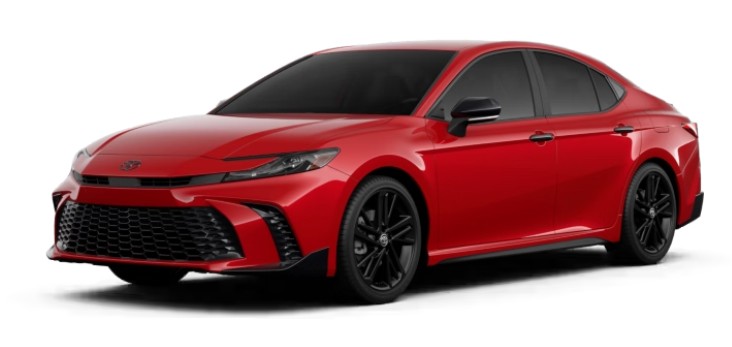
Its front end uses slim lighting, a broad lower grille, and sculpted bodywork that gives the sedan a lower, sportier appearance. SE, XSE, and Nightshade-inspired configurations add larger wheels, darker trim, spoilers, and more aggressive detailing.
The current design looks almost as though Toyota asked a practical sedan to dress for a night out. It remains recognizable as a Camry, but it no longer blends into the parking lot as easily as older generations did.
The Legacy takes the opposite approach. Its shape is clean, traditional, and conservative. The upright greenhouse improves outward visibility, while the body avoids dramatic creases or oversized styling elements.
Some buyers may call it plain. Others will call it refreshingly mature.
Which Sedan Looks Better?
The answer depends on taste:
- Choose the Camry for a sharper and more contemporary appearance.
- Choose the Legacy for a restrained, low-key design.
- Choose a sport-oriented Camry trim if visual presence matters.
- Choose the Legacy if we would rather avoid unnecessary attention.
The Camry wins the styling category for most shoppers, but the Legacy’s simplicity may age gracefully.
Powertrain Comparison
This is where the contest becomes particularly interesting.
Toyota Camry Hybrid Performance
Every new Camry now uses Toyota’s fifth-generation hybrid system. The setup combines a 2.5-liter four-cylinder gasoline engine with electric motor assistance.
Front-wheel-drive versions produce 225 combined horsepower, while all-wheel-drive models add a rear electric motor and increase total output to 232 horsepower.
The result is not sports-car acceleration, but the Camry feels responsive in normal driving. Electric torque helps it move away from traffic lights promptly, and the transition between electric and gasoline power is generally smooth.
It is an easy car to drive quickly without feeling dramatic.
Subaru Legacy 2.5-Liter Engine
Most Legacy trims use a naturally aspirated 2.5-liter boxer four-cylinder engine producing 182 horsepower and 176 pound-feet of torque. Subaru pairs it with a continuously variable transmission and standard Symmetrical All-Wheel Drive.
This engine is adequate rather than exciting.
Around town, it performs its duties without much complaint. On steep grades or during highway passing, however, the engine may sound busier than the actual acceleration suggests. It gets the job done, but it occasionally feels like someone jogging with a full backpack.
Who Will Be Happy With the Base Legacy Engine?
It makes sense for drivers who:
- Prefer calm, predictable acceleration
- Rarely carry heavy loads
- Value AWD more than speed
- Drive mainly in cities or suburban areas
- Want to avoid paying for a turbocharged trim
Subaru Legacy Turbo Performance
The Legacy’s available turbocharged engine changes the experience dramatically.
With approximately 260 horsepower and strong low-end torque, it provides much quicker acceleration than the base model. Highway merging becomes effortless, passing requires less planning, and the car feels surprisingly muscular for such an understated sedan.
The turbo Legacy is the performance winner in this comparison.
The Camry responds smoothly and efficiently, but the Legacy XT delivers the stronger shove. It feels like a quiet office worker who secretly spends every evening at the gym.
Acceleration and Everyday Drivability
Numbers tell only part of the story.
The Camry’s hybrid system is particularly satisfying in stop-and-go traffic. Electric assistance fills the gaps that conventional gasoline engines sometimes leave at low speeds. The accelerator feels responsive, and the car rarely needs to raise its voice.
The base Legacy is slower and more deliberate. Its continuously variable transmission tries to keep the engine operating efficiently, but firm acceleration can produce noticeable engine noise.
The turbo Legacy is far more relaxed because it has a deeper reserve of power. We press the accelerator, and the car responds with confidence rather than negotiation.
Performance Verdict
- Best city response: Toyota Camry
- Best fuel-conscious performance: Toyota Camry
- Best outright acceleration: Subaru Legacy XT
- Least exciting option: Base-engine Subaru Legacy
- Smoothest overall power delivery: Toyota Camry
For most people, the Camry offers the better balance. Enthusiasts who need more passing power may prefer the Legacy XT.
Fuel Economy: The Camry’s Biggest Victory
Fuel economy is one of the clearest differences between these sedans.
Toyota says the Camry can achieve up to an EPA-estimated 51 mpg combined, depending on trim. That level of efficiency would have sounded almost unbelievable for a roomy family sedan not long ago.
The naturally aspirated Legacy is rated at up to 27 mpg city and 35 mpg highway in certain configurations. It uses regular 87-octane gasoline and carries an 18.5-gallon fuel tank.
The Legacy’s highway economy is respectable for an all-wheel-drive gasoline sedan. The problem is that the Camry plays in another league, especially in urban driving.
Why the Camry Is So Efficient
Hybrid technology recovers energy during braking, assists the gasoline engine during acceleration, and can move the vehicle under electric power in certain low-load situations.
That brings several practical benefits:
- Less fuel consumed in stop-and-go traffic
- Less energy wasted while idling
- Reduced dependence on the gasoline engine
- Stronger city efficiency than most conventional sedans
- Fewer visits to the gas station
Real-World Ownership Impact
Imagine driving 15,000 miles per year. Even a moderate difference in fuel consumption can add up to hundreds of dollars annually. Over five or six years, the Camry’s efficiency advantage may become substantial.
Fuel prices fluctuate, and actual mileage depends on weather, speed, terrain, tires, and driving habits. Even so, the Camry is the obvious winner for buyers focused on long-term fuel costs.
All-Wheel Drive and Winter Capability
The Subaru Legacy has built much of its identity around standard all-wheel drive.
Every Legacy sends power through Subaru’s Symmetrical All-Wheel Drive system. We do not need to climb into a higher trim or select an optional package to get it.
That simplicity is valuable. Whether we buy the basic model or a turbocharged version, all-wheel drive is part of the deal.
The Camry offers available Electronic On-Demand All-Wheel Drive across its grades. Rather than using a conventional mechanical connection to the rear axle, the hybrid system uses an electric motor to provide rear-wheel assistance when conditions demand it.
How the Systems Feel Different
The Camry’s system is designed primarily to add traction during acceleration and slippery conditions while protecting fuel economy.
The Legacy’s system feels more deeply woven into the car’s character. Its balanced layout, standard AWD configuration, and predictable traction make it particularly convincing on snowy roads.
Does Standard AWD Make the Legacy Unbeatable in Snow?
Not automatically.
Tires still matter enormously. A front-wheel-drive Camry with quality winter tires may stop and turn more effectively than an AWD Legacy using worn all-season tires. All-wheel drive helps us accelerate, but it cannot rewrite the laws of braking and cornering.
For severe winter climates, however, the Legacy receives the advantage. Its standard system, generous traction, and composed road manners create confidence when the forecast looks unpleasant.
Ride Comfort and Highway Refinement
Both vehicles are comfortable, but they deliver comfort differently.
The Camry’s suspension is well controlled. It absorbs ordinary bumps without allowing the body to float excessively. Sportier trims may feel firmer because of their wheel and tire combinations, but the basic structure remains civilized.
The Legacy generally has a soft, reassuring ride. It handles broken pavement and long highway journeys with the calmness of a car designed for drivers who may regularly cross snowy, imperfect roads.
Which One Is Quieter?
Cabin noise varies by trim, wheel size, road surface, and engine choice.
The Camry can be extremely quiet at low speeds because the gasoline engine may shut off. Under heavy acceleration, the engine can become more noticeable as the hybrid system holds higher revs.
The base Legacy also produces substantial engine noise when pushed. The turbo model often feels less strained because it does not need to work as hard to generate speed.
On a relaxed highway cruise, both are suitable long-distance companions.
Handling and Steering
The Camry has become more engaging than its old appliance-like reputation suggests.
Its steering is light but accurate, and the body remains reasonably composed through curves. Sport-oriented trims sharpen the visual experience, although they do not transform the car into a rear-wheel-drive sports sedan.
The Legacy feels secure and planted. Its lower boxer-engine layout and all-wheel-drive system help create stable cornering behavior. However, the steering is tuned more for confidence than excitement.
Which Sedan Is More Fun?
The answer splits into two categories.
The Camry feels lighter, more responsive, and more eager during ordinary driving. The Legacy XT feels more powerful, especially when accelerating out of corners or onto highways.
Therefore:
- Choose the Camry for nimble, efficient responsiveness.
- Choose the Legacy XT for stronger straight-line performance.
- Choose the base Legacy for stability rather than entertainment.
Interior Design and Material Quality
The Camry cabin looks more modern.
Its dashboard is angled toward the driver, and higher trims add larger displays, upgraded upholstery, ambient details, and more expressive color combinations. The design feels layered rather than flat, giving the cabin a sense of movement.
The Legacy uses a simpler layout dominated by a vertically oriented center display on many trims. Some people appreciate its clean arrangement. Others may find that too many routine functions depend on the touchscreen.
Camry Interior Strengths
The Camry offers:
- A more contemporary dashboard
- Clear driver-focused controls
- Attractive sport and luxury trim options
- Useful storage areas
- A polished hybrid driving interface
Legacy Interior Strengths
The Legacy counters with:
- Excellent seating space
- Large windows
- Strong outward visibility
- A comfortable driving position
- A relaxed, uncluttered atmosphere
The Camry wins for visual design. The Legacy remains competitive for comfort and ease of visibility.
Passenger Space and Family Practicality
A midsize sedan should accommodate adults without forcing anyone to fold themselves like camping furniture.
The Legacy performs well here. Subaru lists up to 105.5 cubic feet of passenger volume, and official specifications show 42.8 inches of front legroom and 39.5 inches in the rear.
Rear-seat passengers receive enough space for long journeys, and the tall roofline makes entering and exiting relatively easy.
The Camry is also spacious, though its lower, sportier shape can make it feel slightly more enclosed. Adults still fit comfortably in both rows, and the rear seat works well for children, teenagers, or coworkers.
Which One Is Better for Tall Passengers?
The Legacy may feel airier because of its roofline and large glass area. The Camry’s front seats provide strong comfort, but its styling creates a more cockpit-like environment.
For families carrying tall adults regularly, the Legacy deserves a careful test drive.
Trunk Space and Cargo Flexibility
Neither vehicle is a cargo champion compared with a crossover, but both can handle groceries, luggage, office equipment, and everyday family gear.
The Camry’s hybrid battery packaging does not destroy trunk practicality, which is an important advantage. The opening is usable, and the rear seats can be folded when we need additional length.
The Legacy also provides a practical trunk and folding rear seatbacks. Its shape is straightforward, making it easier to load rectangular suitcases or storage bins.
What Can We Realistically Carry?
Both sedans should manage:
- Several grocery bags
- Two or three medium suitcases
- A folded stroller
- Sports equipment
- Small home-improvement purchases
- Laptop bags and weekly commuting gear
For bicycles, large dogs, or bulky camping equipment, an Outback, RAV4, or another crossover will be more practical.
Technology and Infotainment
The Camry’s technology package feels newer and more polished, particularly in upper trims.
Depending on configuration, buyers can find a large central touchscreen, digital instrument display, wireless smartphone integration, multiple charging options, and an available premium audio system.
The Legacy’s portrait-style touchscreen looks impressive at first glance. It places navigation, audio, climate, and vehicle settings within one central interface.
The drawback is that screen-based controls may require more attention than physical buttons. A temperature adjustment that should feel instinctive can occasionally resemble navigating a small menu.
Which System Is Easier to Use?
The Camry generally receives the advantage because its interface feels more current and its control arrangement is easier to learn.
The Legacy’s system is functional but may frustrate drivers who prefer separate physical controls for every major feature.
We should spend several minutes using both systems during a test drive. Infotainment preferences are personal, and a small annoyance in the showroom can become a daily irritation after three years.
Safety and Driver Assistance
Both models are designed with family safety in mind.
The Camry includes Toyota Safety Sense 3.0 and standard features such as a blind-spot monitor with rear cross-traffic alert in the current generation.
Subaru equips the Legacy with EyeSight driver-assistance technology, using forward-facing cameras to support functions such as adaptive cruise control, lane assistance, and pre-collision braking.
Common Safety Features May Include
Depending on trim and model year, shoppers may find:
- Automatic emergency braking
- Adaptive cruise control
- Lane-departure warning
- Lane-centering assistance
- Blind-spot monitoring
- Rear cross-traffic alert
- Automatic high beams
- Driver-attention technology
- Parking assistance features
No driver-assistance system replaces an attentive driver. Cameras can be obstructed, lane markings can disappear, and poor weather can reduce system performance.
Still, both sedans provide a strong collection of helpful technology.
Reliability and Long-Term Ownership
Toyota has built the Camry’s reputation over decades of dependable service. Its hybrid technology is no longer experimental; Toyota has used and refined hybrid systems across millions of vehicles.
That history gives the Camry a major psychological advantage. Buyers understand what it represents: predictable transportation, broad parts availability, and a large service network.
The Legacy also has a loyal following. Subaru owners often appreciate the brand’s durable interiors, winter capability, and long-term practicality. However, the boxer-engine layout and standard AWD system create additional mechanical complexity compared with a basic front-wheel-drive vehicle.
What Matters More Than the Badge?
For a used Camry or Legacy, condition matters enormously.
We should check:
- Maintenance records
- Accident history
- Tire condition and matching tire brands
- Fluid leaks
- Warning lights
- Suspension noises
- Battery condition
- Evidence of flood or corrosion damage
- Proper operation of driver-assistance systems
- Results of an independent pre-purchase inspection
A neglected Camry can be a worse purchase than a carefully maintained Legacy. Reputation is useful, but maintenance history tells the real story.
Maintenance Costs
The Camry’s hybrid system may sound complicated, yet routine maintenance is relatively conventional.
It still needs:
- Engine-oil changes
- Tire rotations
- Brake inspections
- Air-filter replacement
- Coolant service
- Periodic mechanical inspections
Regenerative braking may reduce wear on conventional brake components because the electric motor helps slow the vehicle.
The Legacy requires similar routine service. Because it uses all-wheel drive, matching tire circumference is especially important. Replacing one damaged tire may sometimes require additional planning if the remaining tires are significantly worn.
The turbocharged Legacy also introduces more heat, pressure, and components than the naturally aspirated version. It rewards careful maintenance and high-quality oil.
Maintenance Winner
The Camry receives a narrow advantage because of Toyota’s widespread service network, strong efficiency, and proven hybrid experience.
The base Legacy should still be manageable to own, but the turbo model may carry higher long-term repair and fuel costs.
Toyota Camry vs Subaru Legacy for Commuting
For a long daily commute, the Camry is difficult to beat.
Its fuel economy reduces operating costs, the hybrid system performs beautifully in traffic, and the cabin remains comfortable over extended distances.
The Legacy is also a strong commuter when the route includes snow, mountain roads, or poorly maintained surfaces. Its larger fuel tank can support good highway range, even though it burns more fuel per mile.
Choose the Camry for Commuting When:
- Traffic is heavy
- Fuel economy is a major priority
- Most roads are paved and maintained
- We want quiet low-speed operation
- Annual mileage is high
Choose the Legacy for Commuting When:
- Snowfall is frequent
- The route includes steep hills
- Roads are wet or icy for long periods
- Standard AWD provides peace of mind
- We prefer conventional gasoline power
Toyota Camry vs Subaru Legacy in Snow
The Legacy is the natural choice for severe winter use.
Standard AWD means every version is ready to distribute power across all four wheels. The vehicle feels stable and predictable, and Subaru’s brand identity is closely connected to all-weather capability.
The AWD Camry is no weak alternative. Its rear electric motor reacts quickly and adds traction without imposing the same fuel-economy penalty associated with many traditional AWD systems.
For moderate snow and well-maintained roads, an AWD Camry with winter tires should serve most drivers extremely well.
For deep snow, rural roads, mountain communities, or long winters, the Legacy has the more convincing overall package.
Toyota Camry vs Subaru Legacy for Performance
The answer depends on which Legacy we are discussing.
Against the base 182-horsepower Legacy, the Camry feels quicker, smoother, and more energetic. Against the turbocharged Legacy XT, the Camry loses the acceleration contest.
The Legacy XT is the choice for drivers who want effortless highway passing and stronger low-speed torque.
The Camry is for those who want useful power without paying a large fuel-economy penalty.
Performance Ranking
- Subaru Legacy XT
- Toyota Camry AWD hybrid
- Toyota Camry front-wheel-drive hybrid
- Subaru Legacy 2.5-liter
This ranking considers acceleration rather than efficiency or ownership cost.
Toyota Camry vs Subaru Legacy for Value
Value is not simply the lowest purchase price. It includes fuel, equipment, depreciation, maintenance, insurance, capability, and how well the car matches our needs.
The Camry offers exceptional value for high-mileage drivers. Its standard hybrid powertrain can reduce fuel spending year after year.
The Legacy offers value through standard AWD. Buyers do not need to pay extra simply to gain four-wheel traction.
The Camry Is the Better Value If:
- We drive many miles
- Gas prices are high
- AWD is unnecessary or only occasionally useful
- Resale value matters
- We want modern hybrid technology
The Legacy Is the Better Value If:
- AWD is essential
- Snow capability is non-negotiable
- Passenger space matters more than fuel economy
- We want available turbo power
- We prefer Subaru’s driving character
Potential Drawbacks of the Toyota Camry
No vehicle wins every category.
The Camry’s disadvantages include:
- No conventional gasoline-only engine
- No V6 or high-output performance model
- AWD is optional rather than standard
- Sport trims can ride more firmly
- Hybrid engine noise may rise during hard acceleration
- Styling may feel too aggressive for conservative buyers
Some drivers simply prefer the feel and sound of a traditional powertrain. For them, the hybrid-only Camry may require an adjustment period.
Potential Drawbacks of the Subaru Legacy
The Legacy also asks buyers to accept several compromises:
- Lower fuel economy than the Camry
- Slow acceleration with the base engine
- Heavy dependence on touchscreen controls
- Conservative exterior design
- Higher fuel consumption with turbo trims
- Less widespread resale appeal in some regions
- Standard AWD adds weight and complexity
The biggest weakness is the base engine. It works, but drivers who frequently merge onto fast highways may find it uninspiring.
Which Trim Should We Choose?
Best Toyota Camry Trim for Value
A lower or mid-level Camry trim generally provides the best balance. We get the efficient hybrid system, essential safety equipment, and comfortable road manners without paying for every luxury feature.
The LE tends to maximize fuel economy, while the SE adds sportier design details and a firmer personality.
Best Toyota Camry Trim for Comfort
The XLE is the logical choice for drivers who want upgraded materials, additional technology, and a more premium atmosphere.
Best Subaru Legacy Trim for Value
A Premium-level Legacy has traditionally represented the sweet spot. It adds convenience equipment while retaining the efficient naturally aspirated engine and standard AWD.
Best Subaru Legacy Trim for Performance
An XT model is the clear answer. The turbocharged engine transforms the Legacy from an ordinary family sedan into a genuinely quick highway cruiser.
Should We Buy New or Used?
A new Camry makes sense for buyers who want the latest hybrid system, updated design, full warranty coverage, and current driver-assistance technology.
A lightly used Legacy may offer attractive value, especially if depreciation has reduced the price of a well-equipped trim.
Used-car shoppers should compare generations carefully. Powertrains, infotainment systems, AWD designs, safety equipment, and fuel-economy ratings vary by year.
A Smart Used-Car Strategy
Rather than chasing the cheapest listing, we should:
- Set a realistic total budget
- Reserve money for immediate maintenance
- Compare insurance quotes
- Review service records
- Inspect tire wear carefully
- Test every electronic feature
- Obtain a professional inspection
- Avoid vehicles with unclear histories
The best used sedan is usually not the cheapest one. It is the one that has been cared for consistently.
Who Should Buy the Toyota Camry?
The Camry is the stronger choice for drivers who want:
- Outstanding fuel economy
- Smooth city operation
- Modern hybrid technology
- Strong everyday acceleration
- Available AWD
- Broad service availability
- A stylish, contemporary cabin
- Lower long-term fuel expenses
It is particularly attractive for commuters, rideshare drivers, families with long weekly travel schedules, and anyone who keeps a vehicle for many years.
Who Should Buy the Subaru Legacy?
The Legacy suits buyers who prioritize:
- Standard all-wheel drive
- Reliable winter traction
- A spacious and airy cabin
- Good outward visibility
- A comfortable highway ride
- Available turbocharged power
- A traditional gasoline driving experience
- Understated design
It is an excellent match for drivers in snowy states, mountain regions, rural communities, or places where changing weather is part of normal life.
Toyota Camry vs Subaru Legacy: Final Verdict
The Toyota Camry wins the overall comparison for most buyers.
Its combination of strong hybrid performance, excellent fuel economy, modern technology, available all-wheel drive, and manageable ownership costs makes it one of the most complete midsize sedans available.
It behaves like a sensible car without feeling dull. That is its greatest trick. The Camry saves fuel, yet it does not crawl. It carries a family, yet it does not look like a rental car from a decade ago. It is practical without wearing practicality like an oversized name badge.
The Subaru Legacy remains the better specialist.
It is the sedan we would choose when standard AWD matters more than maximum efficiency. It is also the only one of these two that offers a genuinely powerful turbocharged engine. In bad weather, it feels steady and composed, like a pair of hiking boots on a slippery trail.
Our final recommendations are simple:
- Choose the Toyota Camry for fuel economy, commuting, technology, and overall ownership value.
- Choose the Subaru Legacy for standard AWD, winter confidence, passenger space, or turbocharged performance.
- Choose the Camry AWD when we want a balanced combination of efficiency and occasional all-weather traction.
- Choose the Legacy XT when acceleration matters more than fuel savings.
The Camry is the better all-rounder. The Legacy is the better weather warrior. Neither is a poor choice, but one will fit our lifestyle more naturally than the other.
Frequently Asked Questions
1. Is the Toyota Camry more reliable than the Subaru Legacy?
Both can provide dependable service when maintained correctly, but the Camry generally has the stronger mainstream reputation for low-stress, long-term ownership. Toyota’s extensive experience with hybrid technology also makes the current Camry less experimental than some buyers may assume. A used vehicle’s maintenance history remains more important than reputation alone.
2. Is the Subaru Legacy better than the Camry in snow?
The Legacy has the advantage because all-wheel drive is standard on every trim. Its drivetrain and stable road manners make it especially suitable for severe winter climates. An AWD Camry with proper winter tires can still perform very well in moderate snow.
3. Which is faster, the Toyota Camry or Subaru Legacy?
The turbocharged Legacy XT is the fastest option. The hybrid Camry is generally more responsive than the base 2.5-liter Legacy, particularly in city driving. Buyers should compare the exact trims because the Legacy’s two available engines deliver very different performance.
4. Which has better gas mileage, the Camry or Legacy?
The Camry wins easily. Toyota advertises an EPA-estimated rating of up to 51 mpg combined for certain Camry configurations, while the naturally aspirated Legacy is rated at up to 27 mpg city and 35 mpg highway.
5. Is the Camry or Legacy better for a family?
The Camry is better for families focused on fuel savings, technology, and long-term commuting costs. The Legacy may be better for families living in snowy areas or carrying tall passengers regularly. Both offer comfortable seating for five and practical trunks.
If you want to see other articles similar to Toyota Camry vs Subaru Legacy: Which Sedan Is Better? you can visit the Compare category.
Ford Bronco Pros and Cons: Complete Buyer’s Guide
2026 Ford Bronco Towing: Capacity, Equipment, and Real-World Limits
Ford Bronco Gas Tank Size: 2026 U.S. Guide
2026 Ford Bronco Big Bend vs Outer Banks: Features and Differences Explained
2026 Ford Bronco Trim Levels in Order: Complete U.S. Guide
Ford Bronco Models Explained for U.S. Buyers
Leave a Reply
Related Topics