

Toyota Camry vs Hyundai Sonata: Which Sedan Is Better?

Contents in this publication
- Toyota Camry vs Hyundai Sonata at a Glance
- Exterior Design: Conservative Confidence vs Futuristic Drama
- Powertrain Choices and Performance
- Fuel Economy: Which Car Saves More Gas?
- Ride Comfort and Everyday Driving
- Interior Design and Material Quality
- Passenger Space and Practicality
- Infotainment and Connectivity
- Safety Features and Crash Protection
- Toyota Camry vs Hyundai Sonata Reliability
- Warranty Coverage
- Maintenance and Long-Term Ownership Costs
- All-Wheel Drive Comparison
- Trim Levels and Buyer Choice
- Price and Overall Value
- Which Car Is Better for Commuting?
- Which Car Is Better for Families?
- Which Car Is Better for Driving Enthusiasts?
- Reasons to Choose the Toyota Camry
- Reasons to Choose the Hyundai Sonata
- Potential Drawbacks of the Toyota Camry
- Potential Drawbacks of the Hyundai Sonata
- Toyota Camry vs Hyundai Sonata: Final Verdict
- Frequently Asked Questions
The Toyota Camry vs Hyundai Sonata comparison is no longer a simple battle between the sensible choice and the affordable alternative. Both midsize sedans have evolved dramatically, offering bold styling, advanced technology, impressive fuel economy, and enough comfort to make long highway journeys feel far less exhausting.
Yet these cars approach the same mission from different directions.
The Toyota Camry behaves like the dependable friend who arrives early, remembers every appointment, and rarely causes trouble. The Hyundai Sonata is the more adventurous companion—the one wearing sharper clothes, carrying the latest gadgets, and suggesting that we take the scenic route home.
For the current U.S. market, the difference is especially significant. The 2026 Camry uses a hybrid powertrain across its entire lineup, while the 2026 Sonata continues to offer gasoline, hybrid, all-wheel-drive, and performance-oriented configurations. Toyota emphasizes efficiency and everyday consistency; Hyundai gives buyers a broader menu of personalities.
So, which one deserves a place in our driveway? Let’s compare them carefully.
Toyota Camry vs Hyundai Sonata at a Glance
Before diving into every detail, here is the basic personality of each sedan:
| Category | Toyota Camry | Hyundai Sonata |
|---|---|---|
| Core character | Efficient, dependable, polished | Stylish, tech-focused, versatile |
| Standard powertrain | Hybrid | Gasoline |
| Hybrid availability | Every trim | Selected trims |
| All-wheel drive | Available across the lineup | Available on selected gasoline trims |
| Performance option | Sport-styled XSE | Turbocharged N Line |
| Best suited for | Commuters and long-term owners | Feature seekers and style-conscious buyers |
| Main advantage | Fuel economy and consistency | Variety, technology, and design |
| Main drawback | No traditional gasoline-only or high-performance model | Efficiency depends heavily on trim |
There is no universally correct winner. The better car depends on what we expect it to do every day.
Exterior Design: Conservative Confidence vs Futuristic Drama
The quickest way to separate the Camry from the Sonata is simply to look at them.
Toyota Camry Styling
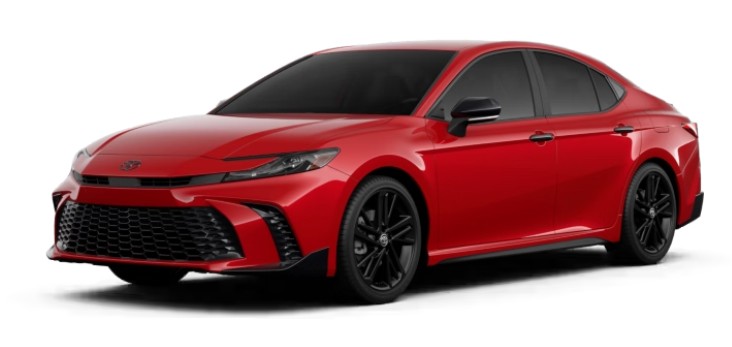
The Camry has moved far beyond the anonymous styling associated with older family sedans. Its front end is lower and more expressive, while the body has sharper lines and a wider-looking stance.
LE and XLE trims lean toward elegance. SE, Nightshade, and XSE models add sportier bumpers, larger wheels, darker exterior details, and a more aggressive attitude. The result is a car that looks modern without trying to become the loudest object in the parking lot.
Toyota’s design feels like a tailored jacket: familiar, clean, and appropriate almost anywhere.
Hyundai Sonata Styling
The Sonata takes a more theatrical approach. Its slim horizontal lighting, sculpted body, and broad front treatment make it appear closer to a concept car than a conventional family sedan.
Hyundai clearly wants the Sonata to stand out. Depending on the trim, it can look elegant, futuristic, or genuinely sporty. The N Line pushes this character further with larger wheels, aggressive trim, and performance-inspired details.
The Sonata is the sedan for drivers who occasionally turn around after parking just to admire their car.
Which Sedan Looks Better?
Design is subjective, but the decision is fairly straightforward:
- Choose the Camry for understated athleticism.
- Choose the Sonata for stronger visual drama.
- Choose the Camry if resale-friendly styling matters.
- Choose the Sonata if individuality matters more.
The Toyota is easier to appreciate over time. The Hyundai makes the stronger first impression.
Powertrain Choices and Performance
This is where the two vehicles begin to follow completely different roads.
Toyota Camry Hybrid Performance
Every current Camry is a hybrid. Its system combines a 2.5-liter four-cylinder gasoline engine with electric assistance.
Front-wheel-drive models produce up to 225 net combined horsepower, while all-wheel-drive versions can provide up to 232 net combined horsepower. Toyota also offers electronic on-demand all-wheel drive throughout the Camry range.
The system is not designed to turn the Camry into a sports sedan. Instead, it delivers smooth low-speed response, confident passing power, and excellent efficiency.
Electric assistance helps the car move away from traffic lights without the lazy sensation sometimes associated with economy-focused vehicles. Acceleration feels immediate enough for daily driving, although enthusiastic drivers may notice that the powertrain becomes vocal during harder acceleration.
The Camry’s strength is balance. It rarely feels slow, yet it never sacrifices its fuel-saving mission.
Hyundai Sonata Gasoline Engine
The entry-level Sonata uses a 2.5-liter four-cylinder engine producing 191 horsepower. In the Sonata SE, Hyundai lists EPA estimates of 28 mpg city, 38 mpg highway, and 32 mpg combined.
This engine is perfectly acceptable for commuting. It is smooth, predictable, and reasonably economical, but it does not provide the electric-assisted response of the Camry.
When merging onto a fast highway or carrying several passengers, the base Sonata can feel more relaxed than energetic. That is not necessarily a flaw. Many buyers want quiet, uncomplicated transportation rather than dramatic acceleration.
Hyundai Sonata Hybrid Performance
The Sonata Hybrid uses a 2.0-liter gasoline engine with electric assistance. Depending on the trim and specification, Hyundai lists combined fuel-economy figures reaching into the high-40-mpg range, with certain highway estimates above 50 mpg.
The hybrid Sonata is smooth and efficient, making it the closest direct rival to the Camry. However, Hyundai reserves its hybrid system for particular trims, while Toyota makes electrification standard throughout the Camry range.
This matters because Camry shoppers can choose a sporty-looking or luxury-oriented trim without abandoning hybrid efficiency.
Hyundai Sonata N Line Performance
Drivers who want genuine speed should look closely at the Sonata N Line. Unlike the Camry XSE, which is primarily a sport-styled hybrid, the Sonata N Line is designed to deliver noticeably stronger acceleration through its turbocharged powertrain.
It can feel like a different species from the regular Sonata. Throttle response is sharper, highway passing is easier, and the car has enough power to make an ordinary on-ramp entertaining.
The trade-off is predictable: lower fuel economy, a firmer ride, and potentially higher ownership costs.
Performance Winner
The winner depends on the type of performance we value:
- Best everyday response: Toyota Camry
- Best fuel-conscious performance: Toyota Camry
- Most powerful option: Hyundai Sonata N Line
- Widest engine selection: Hyundai Sonata
- Simplest buying decision: Toyota Camry
The Camry wins the efficiency race. The Sonata wins the variety contest.
Fuel Economy: Which Car Saves More Gas?
Fuel economy has become one of the strongest reasons to buy a midsize sedan instead of a crossover.
The 2026 Camry can achieve up to an EPA-estimated 51 mpg combined in its most efficient configuration. Toyota’s all-hybrid strategy means even buyers choosing sportier trims benefit from gasoline-electric technology.
The Sonata’s fuel economy varies much more significantly.
A standard Sonata SE is rated at 32 mpg combined, while the SEL Sport is listed at 29 mpg combined with front-wheel drive or 27 mpg combined with all-wheel drive. Hybrid versions can approach the Camry’s efficiency, but the exact result depends on trim.
Camry vs Sonata Hybrid MPG
When comparing efficient hybrid trims, the contest becomes close. Toyota lists the Camry LE at 53 mpg city, 50 mpg highway, and 51 mpg combined. Hyundai’s official specifications show that Sonata Hybrid ratings vary by version, with the most efficient configuration emphasizing excellent highway mileage.
The practical distinction is this:
The Camry tends to shine in mixed and urban driving, where frequent braking allows the hybrid system to recover energy. The Sonata Hybrid can be especially attractive for steady highway use.
Fuel-Economy Winner: Toyota Camry
For most buyers, the Camry is the safer efficiency choice because every trim is a hybrid. We do not need to study the lineup like a restaurant menu written in tiny print.
Ride Comfort and Everyday Driving
A midsize sedan should make rough streets, long commutes, and crowded parking lots easier to tolerate.
How the Camry Drives
The Camry feels controlled and composed. Its steering is light enough for city driving but does not become completely disconnected at higher speeds.
LE and XLE trims place greater emphasis on comfort. SE and XSE versions provide a slightly firmer personality, although they remain suitable for daily use.
The hybrid system is particularly pleasant in traffic. At low speeds, the Camry can move quietly under electric assistance, reducing the constant vibration and noise we might experience from a conventional engine repeatedly starting and stopping.
How the Sonata Drives
The standard Sonata has a relaxed character. Its suspension generally favors comfort, and the cabin remains calm during normal commuting.
The steering is easy rather than especially communicative. For many buyers, that is exactly right. A family sedan does not need to whisper every piece of road texture into our fingertips.
The N Line changes the recipe with a firmer, faster, and more aggressive setup. It is more entertaining, but passengers may notice sharper impacts over broken pavement.
Which One Is More Comfortable?
The result is close.
The Sonata can feel slightly softer and more spacious, while the Camry often feels more tightly controlled. Think of the Sonata as a comfortable sofa and the Camry as a supportive office chair. Both are pleasant, but they support us differently.
Interior Design and Material Quality
Inside the Toyota Camry
The Camry interior is organized around familiarity and ease of use. Important controls remain accessible, and the dashboard avoids becoming a purely digital experiment.
Higher trims provide larger screens, more attractive materials, additional comfort features, and a more premium atmosphere. However, the lower sections of the cabin may still contain hard plastics.
Toyota seems to understand that drivers do not want to complete a software tutorial before adjusting the temperature.
Inside the Hyundai Sonata
The Sonata’s cabin looks more futuristic. Wide digital displays, slim air vents, ambient lighting, and a horizontal dashboard make the interior appear broader.
Hyundai is often generous with visual technology. Even before we study the feature list, the Sonata can feel more expensive simply because the presentation is dramatic.
Some controls may require more familiarization, but the overall layout remains practical.
Interior Winner: Hyundai Sonata
The Sonata wins for showroom appeal and digital presentation. The Camry responds with easier ergonomics and a more traditional sense of usability.
Passenger Space and Practicality
Both vehicles provide seating for five, although four adults will be more comfortable on longer trips.
The Sonata’s shape creates a spacious feeling, especially across the front of the cabin. Rear passengers generally receive competitive legroom, making it a strong option for families, rideshare drivers, or anyone regularly carrying adults.
The Camry also offers generous space, but its more sculpted interior may feel slightly less open. The difference is not dramatic enough to decide the comparison without a test drive.
Trunk and Cargo Use
Both sedans provide useful trunks for groceries, luggage, work equipment, and family gear. Neither offers the tall cargo opening of an SUV, but a sedan trunk has its own advantages: belongings remain hidden, the cargo area is separated from the passenger compartment, and the low floor makes loading heavy bags easier.
The Sonata’s trunk and hands-free access features may appeal to shoppers who regularly approach the car with full hands. The Sonata SE, for example, includes a hands-free smart trunk release among its highlighted equipment.
Practicality Winner: Hyundai Sonata by a Narrow Margin
The Sonata feels slightly more spacious and flexible. The Camry remains completely suitable for normal family use.
Infotainment and Connectivity
Modern buyers expect their sedan to function as a navigation device, music center, communication hub, and mobile office.
Camry Technology
Depending on trim, the Camry offers different touchscreen sizes and digital displays. Smartphone connectivity, USB ports, voice functions, and available premium audio help create a modern experience.
The interface is relatively straightforward. Toyota’s system may not always feel as visually theatrical as Hyundai’s, but its simplicity is valuable when we are driving rather than sitting in a dealership.
Sonata Technology
The Sonata leans heavily into its technology-first identity. The 2026 Sonata SE includes a 12.3-inch touchscreen, while other trims can combine large displays and additional connected features.
Hyundai’s presentation resembles a continuous digital command center. It looks modern, reacts quickly, and gives the cabin a premium atmosphere.
Some drivers will love this. Others may miss the reassuring simplicity of traditional controls.
Technology Winner: Hyundai Sonata
The Sonata provides the more visually impressive experience. The Camry remains easier for drivers who prefer technology to stay in the background.
Safety Features and Crash Protection
Safety should never be reduced to the number of icons printed in a brochure. We need both active driver assistance and strong crash protection.
Toyota equips the Camry with a comprehensive collection of driver-assistance features. Depending on trim, these may include automatic emergency braking, pedestrian detection, adaptive cruise control, lane-departure assistance, lane-centering support, blind-spot monitoring, and rear cross-traffic alert.
Hyundai offers a similarly competitive suite, including forward-collision assistance, lane-keeping technology, driver-attention monitoring, blind-spot assistance, adaptive cruise control, and parking-related features depending on trim.
Most importantly, both the 2025–2026 Camry and 2025–2026 Sonata appear among the Insurance Institute for Highway Safety’s Top Safety Pick+ midsize sedans. For the Sonata, the 2025 award applies to vehicles built after November 2024.
Safety Winner: Tie
Both sedans offer strong safety credentials. Specific equipment still varies by trim, so buyers should verify the exact vehicle rather than assuming every version includes every feature.
Toyota Camry vs Hyundai Sonata Reliability
Reliability is difficult to predict from a showroom visit. The real story unfolds after years of cold starts, potholes, school runs, road trips, and neglected cups of coffee.
Camry Reliability Expectations
The Camry has built its reputation through decades of dependable service. Toyota’s hybrid technology is also mature rather than experimental.
That history does not guarantee that every car will be flawless. Modern vehicles contain complex electronics, sensors, batteries, cameras, and software. Even a Camry can experience problems.
Still, buyers who prioritize long-term predictability will probably feel more comfortable with Toyota.
Sonata Reliability Expectations
Hyundai has improved enormously and typically attracts buyers with strong feature content and extensive warranty coverage. The Sonata can provide excellent value, especially for owners who plan to keep the car within its main warranty period.
Long-term reliability can vary by engine, transmission, model year, and maintenance history. Used-car shoppers should research the exact version rather than treating every Sonata generation as identical.
Reliability Winner: Toyota Camry
The Camry wins because of its established history, proven hybrid strategy, and stronger reputation for long ownership cycles.
Warranty Coverage
Warranty protection is one of Hyundai’s clearest selling points.
Hyundai traditionally offers longer basic and powertrain coverage than Toyota in the U.S. market. This can provide valuable peace of mind, especially for buyers who keep their vehicles for many years but drive a moderate annual distance.
Toyota counters with a reputation that may reduce concern about needing the warranty in the first place. Its hybrid-related coverage is also important for drivers worried about electrified components.
Warranty Winner: Hyundai Sonata
On paper, Hyundai provides the stronger safety net. For buyers who view warranty length as a major financial tool, the Sonata is difficult to ignore.
Maintenance and Long-Term Ownership Costs
The Camry’s hybrid powertrain can reduce fuel spending substantially. Regenerative braking may also reduce wear on conventional brake components because the electric motor helps slow the car.
However, hybrid ownership is not free from maintenance. Tires, fluids, suspension parts, filters, 12-volt batteries, and normal wear items still require attention.
The Sonata’s ownership cost depends heavily on configuration:
- The base engine should be relatively straightforward.
- The hybrid can reduce fuel bills.
- The N Line may consume more fuel and use costlier tires.
- Larger wheels can increase replacement expenses.
- All-wheel drive adds components and complexity.
Toyota may also hold an advantage in resale value, which matters even when we do not plan to sell immediately. Depreciation is a silent expense. It does not arrive as a monthly bill, but it still removes money from the vehicle’s value.
Ownership-Cost Winner: Toyota Camry
The combination of fuel efficiency, expected resale strength, and long-term reputation gives the Camry the edge.
All-Wheel Drive Comparison
Both models can be purchased with all-wheel drive, but availability differs.
Toyota offers electronic on-demand AWD throughout the 2026 Camry lineup. That allows buyers to combine all-weather traction with hybrid efficiency and their preferred trim level.
Hyundai offers AWD on selected gasoline-powered Sonata trims. The 2026 SEL Sport, for example, is listed with both front-wheel-drive and AWD fuel-economy figures.
Which AWD System Is Better for Most Buyers?
The Camry’s system is more attractive for drivers who want efficiency and winter confidence in the same package.
The Sonata AWD remains useful, but buyers seeking a Sonata Hybrid with AWD may find the lineup more restrictive.
AWD Winner: Toyota Camry
Toyota provides greater flexibility and preserves the hybrid advantage.
Trim Levels and Buyer Choice
Camry Trim Strategy
The Camry lineup allows buyers to choose between comfort-oriented and sport-styled versions without changing the basic hybrid philosophy.
Typical personalities include:
- LE: Value and maximum efficiency
- SE: Sportier appearance and road feel
- Nightshade: Darker visual details
- XLE: Comfort and upscale equipment
- XSE: Premium features with aggressive styling
All five 2026 grades are available with front-wheel drive or all-wheel drive.
Sonata Trim Strategy
Hyundai builds more mechanical variety into the Sonata lineup.
Buyers can select:
- An affordable gasoline commuter
- A better-equipped mainstream model
- An all-wheel-drive configuration
- A high-efficiency hybrid
- A turbocharged N Line performance model
This structure gives buyers more freedom, but it also requires more research. Two Sonatas can deliver dramatically different performance and fuel economy.
Trim-Choice Winner: Hyundai Sonata
Hyundai wins for variety. Toyota wins for consistency.
Price and Overall Value
Official prices change with destination charges, options, incentives, and model-year updates, so buyers should always compare actual transaction prices.
At the entry hybrid level, Toyota’s own comparison page lists the 2026 Camry LE Hybrid at $29,300 and the Sonata Blue Hybrid at $29,200 before potential differences in fees and equipment.
The difference is tiny enough that features, financing, insurance, and dealer discounts may matter more than sticker price.
Why the Sonata Can Be the Better Value
The Sonata often gives buyers more visible equipment for the money. Large screens, distinctive styling, convenience features, and warranty coverage can make it feel like the richer package.
Why the Camry Can Be the Better Investment
The Camry may return value gradually through fuel savings, resale strength, and ownership confidence.
The Sonata gives us more value on day one. The Camry may give us more value over ten years.
Which Car Is Better for Commuting?
For a daily commuter, the Camry is exceptionally difficult to beat.
Its hybrid system performs well in stop-and-go traffic, the ride is controlled, the controls are easy to understand, and fuel stops become less frequent.
The Sonata remains an excellent commuter, particularly in hybrid form. Its cabin technology and spacious atmosphere can make a long drive feel more pleasant.
Still, Toyota’s decision to make every Camry a hybrid removes the possibility of accidentally choosing a less efficient version.
Commuting winner: Toyota Camry.
Which Car Is Better for Families?
Families often care about rear-seat space, trunk access, safety technology, warranty coverage, and comfort.
The Sonata’s open-feeling interior and useful convenience features make it highly appealing. Hyundai’s warranty can also reduce anxiety for budget-conscious households.
The Camry answers with efficiency, safety credentials, and expected long-term dependability.
Family winner: Tie.
The Sonata feels roomier and more feature-rich. The Camry feels like the safer long-term financial decision.
Which Car Is Better for Driving Enthusiasts?
The regular Camry handles confidently, but it is not intended to replace a true performance sedan. Even the XSE emphasizes styling, balance, and efficiency rather than raw speed.
The Sonata N Line is the obvious choice for drivers who value strong acceleration and a more energetic personality.
Performance enthusiast winner: Hyundai Sonata N Line.
Reasons to Choose the Toyota Camry
The Camry is probably the better choice when we prioritize:
- Standard hybrid efficiency
- Available AWD on every trim
- Strong long-term reputation
- High expected resale value
- Simple, consistent powertrain choices
- Excellent commuter manners
- Reduced fuel consumption
- Proven hybrid engineering
The Camry does not attempt to overwhelm us. It simply removes many common reasons to regret a car purchase.
Reasons to Choose the Hyundai Sonata
The Sonata may be the better choice when we want:
- More distinctive exterior styling
- A more futuristic dashboard
- Broader powertrain selection
- A genuine performance trim
- Strong warranty coverage
- Generous feature content
- A spacious-feeling cabin
- Greater personality for the price
The Sonata makes the rational sedan feel emotional again.
Potential Drawbacks of the Toyota Camry
No vehicle wins every category.
The Camry’s disadvantages include:
- No gasoline-only option
- No direct equivalent to the Sonata N Line
- Less dramatic interior design
- Potential engine noise during hard acceleration
- Higher trims can become expensive
- Sporty styling does not equal sports-sedan performance
Buyers who dislike hybrid driving characteristics may find the Camry lineup restrictive.
Potential Drawbacks of the Hyundai Sonata
The Sonata’s disadvantages include:
- Fuel economy varies widely by trim
- Hybrid and AWD choices are not as easily combined
- Long-term resale may be less predictable
- Digital-heavy controls may not suit everyone
- N Line efficiency and ride comfort involve compromises
- The lineup requires more careful comparison
The Sonata offers more choices, but choice can become confusion when every trim tells a different story.
Toyota Camry vs Hyundai Sonata: Final Verdict
The Toyota Camry wins this comparison for most buyers.
Its standard hybrid powertrain, available all-wheel drive, strong fuel economy, mature engineering, and long-term reputation create a remarkably complete ownership package. It is the sedan we recommend when reliability, commuting efficiency, and future resale value matter more than visual drama.
The Hyundai Sonata remains the more interesting alternative.
It offers bolder styling, an impressive digital cabin, excellent warranty protection, and a wider selection of personalities. The Sonata Hybrid is a serious efficiency rival, while the N Line provides performance that the Camry lineup does not attempt to match.
Our final recommendation is simple:
- Buy the Toyota Camry for efficiency, predictability, and long-term ownership.
- Buy the Hyundai Sonata Hybrid for technology, highway efficiency, and distinctive design.
- Buy the Hyundai Sonata N Line when acceleration matters more than maximum fuel savings.
- Test-drive both when comfort and interior preferences are the deciding factors.
The Camry is like a high-quality watch: dependable, precise, and easy to trust. The Sonata is like a modern smartwatch: more expressive, more customizable, and packed with features.
Neither is a poor decision. The Camry is simply the easier one to recommend.
Frequently Asked Questions
1. Is the Toyota Camry more reliable than the Hyundai Sonata?
The Camry generally has the stronger long-term reliability reputation. Toyota also has extensive experience with hybrid powertrains. However, maintenance history, driving habits, trim, and model year can be more important than the badge alone when buying used.
2. Which is more fuel-efficient, the Camry or Sonata?
The Camry is more consistently efficient because every current trim is a hybrid. Its most efficient version can achieve up to an EPA-estimated 51 mpg combined. The Sonata Hybrid can deliver excellent mileage, but gasoline and performance trims consume considerably more fuel.
3. Is the Hyundai Sonata faster than the Toyota Camry?
The Sonata N Line is faster and more performance-oriented than the current Camry lineup. Regular Sonata models are not necessarily quicker than the Camry Hybrid, whose electric assistance provides responsive low-speed acceleration.
4. Which car has the better interior?
The Sonata has the more futuristic and visually impressive interior. The Camry provides simpler controls and a more familiar layout. Buyers who love digital displays may prefer the Sonata, while those prioritizing ease of use may prefer the Camry.
5. Should we buy a Camry or Sonata for long-term ownership?
The Camry is generally the stronger choice for long-term ownership because of its efficient hybrid system, reliability reputation, and expected resale value. The Sonata can still be compelling for buyers who prioritize warranty protection, technology, and a lower transaction price.
If you want to see other articles similar to Toyota Camry vs Hyundai Sonata: Which Sedan Is Better? you can visit the Compare category.
Ford Bronco Pros and Cons: Complete Buyer’s Guide
2026 Ford Bronco Towing: Capacity, Equipment, and Real-World Limits
Ford Bronco Gas Tank Size: 2026 U.S. Guide
2026 Ford Bronco Big Bend vs Outer Banks: Features and Differences Explained
2026 Ford Bronco Trim Levels in Order: Complete U.S. Guide
Ford Bronco Models Explained for U.S. Buyers
Leave a Reply
Related Topics