

Toyota Camry vs Nissan Altima: Which Midsize Sedan Is Better?

Contents in this publication
- Toyota Camry vs Nissan Altima at a Glance
- What Is the Main Difference Between the Camry and Altima?
- Engine and Performance Comparison
- Fuel Economy: Camry Hybrid vs Altima Gasoline
- Toyota Camry vs Nissan Altima Driving Experience
- Interior Quality and Cabin Design
- Passenger Space and Rear-Seat Comfort
- Trunk Space and Everyday Practicality
- Technology and Infotainment
- Safety Features and Crash-Test Recognition
- All-Wheel Drive Comparison
- Reliability and Long-Term Ownership
- Maintenance and Running Costs
- Price and Overall Value
- Toyota Camry Trim Strategy
- Nissan Altima Trim Strategy
- Which One Looks Better?
- Camry vs Altima for Commuting
- Camry vs Altima for Road Trips
- Camry vs Altima for Young Drivers
- Camry vs Altima for Used-Car Shoppers
- Advantages of the Toyota Camry
- Disadvantages of the Toyota Camry
- Advantages of the Nissan Altima
- Disadvantages of the Nissan Altima
- Who Should Buy the Toyota Camry?
- Who Should Buy the Nissan Altima?
- Toyota Camry vs Nissan Altima: Which Is Better Overall?
- Final Verdict
- Frequently Asked Questions
The Toyota Camry vs Nissan Altima debate is one of those automotive rivalries that refuses to disappear. Both sedans promise comfortable seating, sensible fuel economy, modern technology, and enough practicality to handle daily commuting without turning every drive into a chore.
Yet these two cars now approach the midsize-sedan formula from noticeably different directions.
The latest Toyota Camry leans heavily into electrification. For the 2026 model year, every Camry uses a hybrid powertrain, delivering up to 232 combined horsepower with available all-wheel drive and as much as an EPA-estimated 51 mpg combined in its most efficient configuration. The 2026 Nissan Altima remains more traditional, using a 2.5-liter gasoline engine with up to 188 horsepower, a continuously variable transmission, and available all-wheel drive.
So, which one deserves a place in our driveway?
The Camry generally wins for fuel economy, powertrain refinement, safety recognition, and long-term appeal. The Altima counters with comfortable road manners, a roomy cabin, simple gasoline power, and pricing that may become especially attractive when dealer incentives enter the picture.
Let us compare them carefully rather than simply declaring one car the winner after glancing at a horsepower figure.
Toyota Camry vs Nissan Altima at a Glance
Before we dig into the details, here is the basic personality of each sedan:
| Category | Toyota Camry | Nissan Altima |
|---|---|---|
| Powertrain approach | Hybrid only | Conventional gasoline |
| Maximum horsepower | Up to 232 combined hp | Up to 188 hp |
| Available AWD | Yes | Yes |
| Best fuel-economy strength | Excellent city and combined economy | Strong highway efficiency |
| Driving character | Smooth, responsive and composed | Relaxed, comfortable and predictable |
| Cabin personality | Modern and slightly more upscale | Spacious, simple and familiar |
| Best suited for | High-mileage drivers and long-term owners | Buyers seeking comfort and possible value |
| Main disadvantage | Higher trims can become expensive | Less powerful and less efficient overall |
The Camry feels like the more forward-looking car. The Altima feels like the more conventional one. Neither approach is automatically wrong, but one will suit your routine better.
What Is the Main Difference Between the Camry and Altima?
The biggest difference is no longer styling, badge prestige, or interior design. It is the powertrain.
Toyota has transformed the Camry into an all-hybrid sedan. Instead of offering a basic gasoline engine, an optional V6, and a separate hybrid, the modern Camry combines a 2.5-liter four-cylinder engine with electric assistance across the entire range.
Nissan continues to use a naturally aspirated 2.5-liter four-cylinder engine in the Altima. It is connected to Nissan’s Xtronic continuously variable transmission, commonly called a CVT. Front-wheel drive is standard, while all-wheel drive is available on selected configurations. Nissan lists up to 188 horsepower and 180 lb-ft of torque for the 2026 Altima.
In everyday language, the Camry behaves more like a modern electrified sedan, while the Altima behaves like a familiar gasoline car.
The Camry can move away from traffic lights with a smooth electric-assisted push. The Altima builds speed in a more traditional fashion, although its CVT may hold engine revs steady during hard acceleration.
Camry Prioritizes Efficiency Without Feeling Weak
Hybrid cars once had a reputation for being slow appliances designed only to squeeze the final mile from every gallon. The Camry largely escapes that stereotype.
Front-wheel-drive versions produce 225 combined horsepower, while all-wheel-drive configurations can reach 232 combined horsepower. That is more output than the Altima’s standard 2.5-liter engine, and the electric motors help deliver an immediate response at lower speeds. Toyota officially advertises up to 232 net combined horsepower for AWD models.
The result is not sports-car acceleration, but the Camry rarely feels sleepy.
Altima Keeps Things Familiar
Some buyers simply do not want a hybrid. They may prefer the familiar behavior of a conventional gasoline engine, plan to keep the vehicle in an area with limited hybrid expertise, or want a straightforward used-car purchase.
The Altima’s 2.5-liter engine is easy to understand. Start the car, select Drive, and go. There is no need to change driving habits, though hybrids do not generally require special treatment either.
The Altima’s power delivery is adequate for commuting, grocery runs, and highway cruising. Push it hard, however, and the engine can sound busier than the Camry’s electrified system.
Engine and Performance Comparison
A family sedan does not need to roar like a muscle car, but it should merge confidently, pass slower traffic without drama, and remain calm when loaded with passengers.
The Toyota performs better in this area.
Its hybrid system offers stronger combined output, and the electric assistance fills in some of the hesitation we might otherwise experience from a four-cylinder engine. It feels alert around town and sufficiently energetic on the highway.
The Altima is not dangerously slow. Its 188-horsepower output is reasonable for the class. Still, it lacks the extra layer of effortless torque that gives the Camry a more responsive personality.
Performance Winner: Toyota Camry
We would choose the Camry for drivers who frequently merge onto busy highways, travel with four adults, or simply prefer a car that responds quickly without requiring a heavy right foot.
The Altima remains suitable for relaxed drivers who place comfort above acceleration.
Fuel Economy: Camry Hybrid vs Altima Gasoline
Fuel economy may be the deciding factor for anyone covering a large annual mileage.
Toyota says the 2026 Camry can achieve up to an EPA-estimated 51 mpg combined, depending on trim and drivetrain. Nissan lists Altima configurations capable of reaching strong highway figures, with certain versions rated as high as 39 mpg on the highway.
That sounds closer than it really is.
The Altima performs best during steady highway driving, where its gasoline engine and CVT can settle into an efficient rhythm. The Camry’s biggest advantage appears in mixed and urban driving. Hybrid systems can recover energy while slowing and use electric assistance when pulling away, which is exactly where conventional gasoline cars often consume the most fuel.
Imagine two commuters traveling through stop-and-go traffic every morning. The Altima repeatedly burns fuel while accelerating from a standstill. The Camry can use its hybrid battery and electric motors to reduce that burden. Over months of commuting, those small savings can grow into a meaningful difference.
Which Car Uses Less Gas in the City?
The Camry is the clear choice.
Urban driving plays directly to the strengths of a hybrid system. Frequent braking, low-speed movement, and repeated acceleration give the Toyota more opportunities to use electric assistance.
Which Car Is Better for Highway Mileage?
The Camry can still be more efficient overall, but the Altima becomes more competitive on long, uninterrupted highway trips.
Drivers who spend nearly all their time cruising at a constant speed may not experience the Camry’s full urban advantage. Even so, its combined efficiency remains difficult to ignore.
Fuel-Economy Winner: Toyota Camry
The Camry is especially compelling for rideshare drivers, sales representatives, long-distance commuters, and families that operate one primary vehicle.
Toyota Camry vs Nissan Altima Driving Experience
The two sedans feel different before we even reach the first corner.
The Camry feels tighter and more controlled. Steering response is generally direct enough to inspire confidence, and the chassis keeps body movement under control without becoming excessively harsh.
The Altima has a softer, more relaxed personality. It is happiest gliding along a broad highway or absorbing an ordinary commute. Its steering is light, its controls are easy to operate, and it does not demand much from the driver.
Neither car transforms a dull road into a racetrack. That is not their mission.
How the Camry Feels on the Road
The Camry carries itself with more precision. It changes direction neatly, feels stable at speed, and has enough power to make passing maneuvers relatively easy.
Sport-oriented trims can use larger wheels and firmer tuning, which sharpen the car’s appearance and responses. The trade-off is a slightly busier ride over potholes and broken pavement.
How the Altima Feels on the Road
The Altima behaves like a comfortable pair of walking shoes. It may not excite us, but it asks very little in return.
The suspension is tuned for everyday comfort, and the cabin remains agreeable during longer journeys. Drivers who dislike heavy steering or aggressive suspension tuning may appreciate the Altima’s easygoing nature.
The CVT can create a droning engine note during hard acceleration, though it becomes much less noticeable during steady cruising.
Ride-Comfort Winner: Nissan Altima by a Small Margin
The Altima has a slight advantage for drivers who prioritize softness and isolation.
Handling Winner: Toyota Camry
The Camry feels more confident and responsive when the road becomes curved or uneven.
Interior Quality and Cabin Design
A midsize sedan spends most of its life carrying us through ordinary moments: morning traffic, school pickups, weekend shopping, and the occasional road trip. Interior quality therefore matters more than dramatic exterior styling.
The Camry’s cabin feels newer and more intentionally designed. Its dashboard has stronger visual character, and higher trims can create an atmosphere approaching entry-level luxury.
The Altima’s interior is simpler. That can be positive or negative depending on our expectations. The layout is easy to learn, physical controls remain accessible, and the seats are designed with comfort in mind. However, some surfaces and design elements can feel less sophisticated than those in the Toyota.
Camry Interior Strengths
The Camry offers:
- A modern dashboard design
- Clear digital displays
- Comfortable front seating
- Good outward visibility
- Available premium materials
- A polished mixture of physical and touchscreen controls
- A more upscale atmosphere in higher trims
Toyota has avoided making the interior feel like a laptop balanced on a shelf. The technology is visible, but it does not completely overwhelm the driving environment.
Altima Interior Strengths
The Altima offers:
- Generous front-seat space
- Supportive seats
- Straightforward controls
- A clean dashboard layout
- Useful storage areas
- Comfortable accommodations for daily driving
Nissan’s approach is less theatrical. Everything is where we expect it to be, and we can usually adjust the climate control without navigating multiple digital menus.
Interior-Quality Winner: Toyota Camry
The Camry feels more contemporary and better suited to buyers who expect their new sedan to remain visually fresh for several years.
Passenger Space and Rear-Seat Comfort
Both vehicles belong to the midsize-sedan category, and both can carry five passengers. In reality, four adults will be much happier than five, especially on a long trip.
The Altima is 192.9 inches long and 72.9 inches wide according to Nissan’s published dimensions. It offers a 15.4-cubic-foot trunk, giving it practical proportions for family use.
Rear-seat space is competitive in both cars. Adults should find enough legroom for ordinary trips, though headroom and comfort can vary by seating position, roof design, and trim.
The Camry’s cabin feels slightly more enveloping. The Altima can feel airier, particularly from the front seats.
Which Sedan Is Better for Families?
The Camry makes the stronger all-round family car because of its efficiency, safety recognition, and polished driving experience.
The Altima remains a practical family choice when purchase price, seat comfort, or a favorable dealer offer matters more than maximum fuel savings.
Trunk Space and Everyday Practicality
Neither sedan can match the cargo flexibility of a crossover with folding rear seats and a large hatch. Still, both trunks can swallow luggage, groceries, sports equipment, and a folded stroller.
The Altima’s published cargo capacity is 15.4 cubic feet.
The Camry also provides a useful trunk, and its hybrid packaging does not turn the cargo area into an awkward battery-shaped cave. The opening is wide enough for most routine items, while folding rear seatbacks help with longer objects.
When comparing them in person, we should bring the items that actually matter. A cargo-volume number cannot tell us whether a particular stroller fits beneath the trunk hinges or whether two large suitcases can sit side by side.
Practicality Result: Nearly Even
The Altima has a useful trunk, while the Camry combines competitive cargo space with excellent fuel efficiency.
Technology and Infotainment
Technology can make a car feel modern, but it can also transform a simple task into a digital treasure hunt.
Both sedans offer smartphone integration, Bluetooth connectivity, USB ports, and available upgraded displays. Nissan confirms that Android Auto, Apple CarPlay, Bluetooth hands-free calling, hands-free text messaging, illuminated USB ports, and Siri Eyes Free are available within the Altima’s connected-services ecosystem.
The Camry’s newest infotainment setup generally looks more current. Depending on trim, buyers can access larger displays, digital instrumentation, wireless phone integration, and upgraded audio equipment.
The Altima’s standard setup is more modest, while upper trims or equipment packages improve the experience considerably.
Camry Technology Advantages
The Toyota’s strengths include:
- More modern screen presentation
- Available large central touchscreen
- Available digital gauge cluster
- Wireless smartphone connectivity on equipped models
- Available premium audio
- A stronger sense of integration between screens and cabin design
Altima Technology Advantages
The Nissan counters with:
- Familiar menu structures
- Easy-to-reach controls
- Common smartphone-integration features
- Available larger displays on selected trims
- Less visual complexity for drivers who prefer simplicity
Technology Winner: Toyota Camry
The Camry offers the more complete and contemporary experience, particularly in mid-level and high-level trims.
Safety Features and Crash-Test Recognition
Safety should never be treated as a decorative option. Fortunately, both manufacturers equip their sedans with a broad selection of driver-assistance features.
Available or standard equipment can include:
- Automatic emergency braking
- Forward-collision warning
- Lane-departure warning
- Lane-keeping assistance
- Blind-spot monitoring
- Rear cross-traffic alert
- Adaptive cruise control
- Automatic high beams
- Pedestrian-detection technology
Exact equipment varies by trim and model year, so shoppers should verify the window sticker rather than assuming every advertised system is standard.
The Camry has a particularly strong recent achievement: the 2025–2026 Toyota Camry earned an IIHS Top Safety Pick+ award.
That recognition gives Toyota an important advantage in this comparison.
Toyota Safety Sense
Toyota packages many of its assistance systems under the Toyota Safety Sense name. The system is designed to reduce collision risk and support the driver rather than replace attention.
Nissan Safety Shield 360
Nissan groups several technologies under the Safety Shield 360 banner. Availability and standard equipment can vary, but the Altima can offer the core features shoppers expect from a modern midsize sedan.
Safety Winner: Toyota Camry
The Camry’s current IIHS Top Safety Pick+ recognition strengthens an already convincing safety package.
All-Wheel Drive Comparison
Both the Toyota Camry and Nissan Altima offer all-wheel drive, an unusual benefit in a segment once dominated almost entirely by front-wheel-drive cars.
Toyota calls its system Electronic On-Demand All-Wheel Drive. Nissan markets Intelligent All-Wheel Drive.
Neither system turns these sedans into off-road vehicles. They are designed to provide additional traction on wet roads, loose surfaces, and light snow.
Is the Camry or Altima Better in Snow?
Tires matter more than many buyers realize.
An all-wheel-drive sedan wearing poor all-season tires may struggle more than a front-wheel-drive car equipped with proper winter tires. AWD can help the car accelerate, but it does not magically shorten braking distances.
The Camry’s hybrid AWD system responds smoothly and preserves much of the car’s efficiency. The Altima’s AWD system provides a familiar mechanical safety net for drivers in changing weather.
AWD Result: Camry by a Narrow Margin
We favor the Toyota because it combines available AWD with stronger output and excellent overall efficiency.
Reliability and Long-Term Ownership
Reliability comparisons require caution. No badge can guarantee a trouble-free vehicle, and an abused Camry may become less dependable than a carefully maintained Altima.
Even so, the Camry has developed an exceptionally strong reputation for long-term durability, resale demand, and predictable ownership costs. Toyota’s hybrid systems have also been used across millions of vehicles, making the technology far less experimental than the word “hybrid” may suggest.
The Altima can deliver many years of service when maintained correctly. However, used-car shoppers often pay close attention to CVT condition, fluid-maintenance history, warning lights, unusual noises, and delayed acceleration.
What to Inspect on a Used Camry
Check:
- Hybrid-battery health on hybrid models
- Complete maintenance records
- Accident and flood history
- Tire wear and alignment
- Brake condition
- Cooling-system maintenance
- Warning lights
- Evidence of rideshare or fleet use
Hybrid regenerative braking can reduce conventional brake wear, but inspection remains essential.
What to Inspect on a Used Altima
Check:
- CVT operation from cold and warm starts
- Transmission-fluid service history
- Hesitation or shuddering
- Engine oil level
- Suspension noises
- Electrical functions
- Uneven tire wear
- Previous rental or fleet use
A pre-purchase inspection is worth the cost. It is the automotive equivalent of turning on the lights before walking through an unfamiliar room.
Long-Term Ownership Winner: Toyota Camry
The Toyota is the safer choice for buyers planning to keep their sedan well beyond the warranty period.
Maintenance and Running Costs
The Altima’s conventional gasoline layout appears simpler on paper. It avoids a hybrid battery and uses familiar mechanical components.
The Camry, however, can recover some ownership costs through lower fuel consumption and reduced brake wear. Hybrid components add complexity, but Toyota has accumulated extensive experience with this type of drivetrain.
Routine expenses for both vehicles include:
- Engine oil and filter changes
- Tires
- Brake inspections
- Cabin and engine air filters
- Coolant service
- Alignment
- Wiper blades
- Battery replacement
- Transmission or drivetrain inspections
The actual winner depends on driving distance.
A low-mileage owner may not save enough fuel to dramatically change the ownership equation. A driver covering 20,000 miles per year could see a much stronger benefit from the Camry’s efficiency.
Running-Cost Winner: Toyota Camry for High-Mileage Drivers
The Altima may remain competitive for low-mileage owners who secure a strong purchase discount.
Price and Overall Value
Nissan lists the 2026 Altima SV with a starting MSRP of $27,580 before destination charges and optional equipment. Nissan also offers FWD and AWD configurations within the range.
Camry pricing varies by trim, drivetrain, options, and destination charges. Because the Toyota is hybrid-only, its sticker price must be considered alongside potential fuel savings rather than compared only with a basic gasoline sedan.
Dealer behavior also matters.
An Altima may be advertised with a larger discount, special finance offer, or lease incentive. Nissan maintains a dedicated page for current Altima offers and incentives, indicating that transactional pricing may differ substantially from the published MSRP.
A Camry may command stronger resale demand and require fewer incentives.
Purchase Price Is Only the First Chapter
The true cost includes:
- Negotiated purchase price
- Finance interest
- Insurance
- Fuel
- Maintenance
- Repairs
- Registration and taxes
- Depreciation
- Resale value
The cheapest car today is not always the cheapest car after five years.
Value Winner: Depends on the Deal
At similar transaction prices, we would choose the Camry. If the Altima carries a substantial discount, it becomes much more persuasive.
Toyota Camry Trim Strategy
The Camry range generally divides into comfort-focused and sport-inspired personalities.
The LE is usually the efficiency-minded choice. The SE adds more visual attitude and a firmer character. Higher trims such as XLE and XSE introduce more premium features, while special appearance packages or editions add cosmetic distinction.
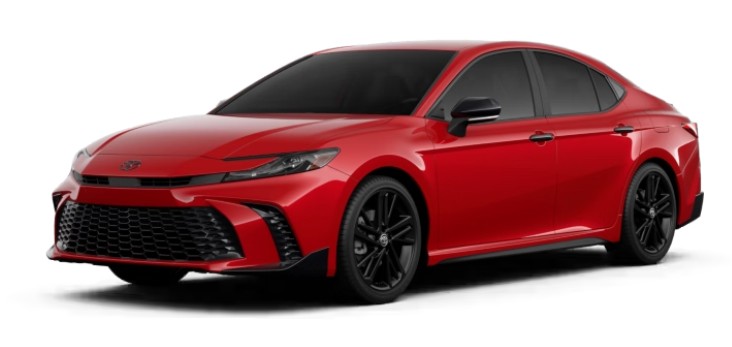
Toyota also introduced a Nightshade Edition for the 2026 Camry, based on the SE and featuring black exterior accents and 19-inch satin-black wheels.
Best Camry Trim for Most Buyers
A mid-range Camry often provides the best balance. We receive the hybrid system, useful safety technology, modern infotainment, and enough comfort without entering near-luxury pricing territory.
The LE deserves attention from efficiency-focused drivers because larger wheels and additional equipment can reduce fuel economy and increase tire-replacement costs.
Nissan Altima Trim Strategy
The 2026 Altima lineup includes SV, SV Special Edition, SR, and SR Midnight Edition configurations, according to Nissan’s published trim information.
The SV serves as the core model. The SR aims for a sportier appearance, while special editions add visual or equipment upgrades.
Best Altima Trim for Most Buyers
The Altima SV may offer the strongest value, especially when paired with a desirable option package or AWD.
The SR looks more athletic, but buyers should remember that sporty styling does not necessarily transform the Altima into a genuine performance sedan.
Which One Looks Better?
Exterior design is subjective, but the cars send different messages.
The Camry looks bolder and more sculpted. Its front fascia, sharp lighting, and available sport treatments make it appear lower and more aggressive.
The Altima takes a smoother approach. Its roofline and body contours create a clean, slightly understated shape. It may appeal to buyers who prefer a sedan that does not shout for attention.
Choose the Camry Design If We Prefer:
- A sharper front end
- More dramatic details
- Sportier trim distinctions
- A modern and technical appearance
Choose the Altima Design If We Prefer:
- Cleaner body lines
- A restrained profile
- A familiar sedan shape
- Less visual complexity
Styling Winner: Personal Preference
We lean toward the Camry, but the Altima may age gracefully because its design is less aggressive.
Camry vs Altima for Commuting
For everyday commuting, the Camry is the stronger tool.
Its hybrid system works beautifully in stop-and-go traffic, the cabin is comfortable, and the driver-assistance technology can reduce fatigue on long highway stretches.
The Altima remains a pleasant commuter because of its supportive seats, soft ride, and simple controls. It may be the better choice for someone who finds the Toyota’s styling or hybrid behavior unnecessarily complicated.
Commuting Winner: Toyota Camry
Fuel savings become increasingly important when the odometer climbs every weekday.
Camry vs Altima for Road Trips
Road-trip priorities differ from commuting priorities.
We want supportive seats, a calm ride, useful cargo space, good highway range, clear infotainment, and enough power for passing.
The Altima performs well here. Its comfortable seating and highway efficiency make it a natural long-distance cruiser.
The Camry counters with stronger acceleration, superior overall fuel economy, modern technology, and a more refined powertrain.
Road-Trip Winner: Toyota Camry, but Closely
The Altima’s seating comfort keeps it competitive, especially for drivers who prefer a softer ride.
Camry vs Altima for Young Drivers
A young driver needs predictable handling, strong safety equipment, reasonable fuel costs, and affordable insurance.
The Camry’s safety recognition and fuel efficiency make it highly appealing. However, purchase price and insurance premiums can vary significantly.
A used Altima may cost less to purchase, but we should inspect its transmission carefully and avoid choosing solely on appearance.
Young-Driver Winner: Toyota Camry
The Toyota offers the more reassuring overall package, assuming the purchase price fits the budget.
Camry vs Altima for Used-Car Shoppers
Used-car comparisons depend heavily on generation, mileage, condition, trim, and maintenance history.
A three-year-old Altima with complete service records may be a better purchase than a neglected Camry with accident damage. Brand reputation should guide our research, not replace it.
Reasons to Buy a Used Camry
- Strong resale demand
- Broad service familiarity
- Efficient hybrid versions
- Proven family-car practicality
- Generally attractive long-term ownership prospects
Reasons to Buy a Used Altima
- Often lower purchase prices
- Comfortable seats
- Good highway manners
- Available AWD in newer generations
- Potentially strong value after depreciation
Used-Car Buying Rule
Never skip a professional inspection.
We should also obtain a vehicle-history report, test every electrical feature, scan for diagnostic codes, verify tire condition, and drive the car at both city and highway speeds.
Advantages of the Toyota Camry
The Camry’s main strengths are:
- Standard hybrid power
- Better overall fuel economy
- Stronger combined output
- Available AWD
- Modern interior design
- Recent IIHS Top Safety Pick+ recognition
- Confident handling
- Strong long-term reputation
- High resale appeal
- Broad trim selection
It is the more complete sedan and the one that asks us to make fewer compromises.
Disadvantages of the Toyota Camry
The Camry is not perfect.
Potential weaknesses include:
- Higher pricing on well-equipped trims
- No conventional gasoline-only version
- Sport trims may ride more firmly
- Large wheels can increase tire costs
- Styling may look too aggressive to conservative buyers
- Popular configurations may receive smaller discounts
Some shoppers may also dislike the sensation of regenerative braking, though most drivers adjust quickly.
Advantages of the Nissan Altima
The Altima offers:
- Comfortable seats
- A smooth highway ride
- Straightforward gasoline power
- Available AWD
- Useful trunk capacity
- Easy-to-understand controls
- Strong highway economy
- Potential dealer discounts
- Lower used-car prices in many markets
It is a sensible choice for drivers who want an uncomplicated sedan and find an attractive transaction price.
Disadvantages of the Nissan Altima
Its main weaknesses are:
- Less horsepower than the Camry
- Lower city and combined efficiency
- A less modern cabin atmosphere
- CVT noise during hard acceleration
- Weaker resale expectations
- Fewer reasons to choose it at equal pricing
- Less prestigious recent safety recognition in this direct comparison
The Altima’s challenge is not that it is bad. Its challenge is that the Camry is exceptionally well-rounded.
Who Should Buy the Toyota Camry?
The Camry is ideal for buyers who:
- Drive many miles each year
- Want excellent fuel economy
- Plan to keep the car long-term
- Prefer stronger acceleration
- Want current safety recognition
- Need available AWD
- Value resale strength
- Like modern cabin technology
It is particularly suitable for commuters, families, rideshare drivers, and practical buyers who want efficiency without moving to a fully electric vehicle.
Who Should Buy the Nissan Altima?
The Altima makes sense for buyers who:
- Find one at a significant discount
- Prefer conventional gasoline power
- Prioritize seat comfort
- Spend much of their time on highways
- Want available AWD
- Like simple controls
- Need a roomy sedan at a competitive price
- Plan to lease rather than own for a decade
The Altima becomes much easier to recommend when its real-world purchase price falls meaningfully below the Camry’s.
Toyota Camry vs Nissan Altima: Which Is Better Overall?
The Toyota Camry is the better overall midsize sedan.
It delivers more power, much stronger combined fuel economy, a polished hybrid system, available all-wheel drive, a modern interior, confident handling, and Top Safety Pick+ recognition from the IIHS for the 2025–2026 model years.
The Nissan Altima remains comfortable, spacious, and capable. Its 2.5-liter engine offers up to 188 horsepower, its highway economy is respectable, and AWD availability improves its usefulness in regions with winter weather.
However, the Altima needs a pricing advantage to become the smarter purchase.
At nearly identical prices, the Camry wins. If the Altima costs several thousand dollars less after discounts, the decision becomes more nuanced.
Final Verdict
Choosing between the Toyota Camry and Nissan Altima is a little like choosing between a modern energy-efficient home and a comfortable traditional one.
The Altima welcomes us with familiar controls, soft seats, and a relaxed personality. It does not ask us to rethink anything. It simply performs the duties of a midsize sedan with minimal fuss.
The Camry moves the formula forward. Its hybrid powertrain saves fuel without sacrificing useful performance. Its chassis feels more controlled, its interior feels newer, and its recent safety recognition adds another layer of reassurance.
For most buyers, we recommend the Toyota Camry.
Choose the Camry for efficiency, long-term ownership, performance, technology, and resale value. Choose the Altima when comfort and a substantially lower purchase price outweigh the Toyota’s broader advantages.
The important phrase is “substantially lower.” A small discount may not compensate for the Camry’s fuel savings and stronger resale appeal.
Ultimately, both cars can handle the rhythm of real life. The Camry simply plays that rhythm with a cleaner, more confident beat.
Frequently Asked Questions
1. Is the Toyota Camry more reliable than the Nissan Altima?
The Camry generally has the stronger long-term reputation and is often the safer choice for buyers planning to keep a car for many years. However, maintenance history and condition matter more than the badge when comparing individual used vehicles.
2. Which gets better gas mileage, the Camry or Altima?
The Camry wins overall. Its hybrid-only powertrain can achieve up to an EPA-estimated 51 mpg combined in the most efficient configuration, while the Altima’s greatest efficiency strength is steady highway driving.
3. Is the Nissan Altima faster than the Toyota Camry?
The current Camry generally has the advantage. It produces up to 232 combined horsepower with AWD, compared with up to 188 horsepower from the 2026 Altima’s 2.5-liter engine.
4. Do the Toyota Camry and Nissan Altima offer AWD?
Yes. Both sedans offer all-wheel-drive configurations. AWD can improve acceleration on slippery surfaces, but proper seasonal tires remain essential for braking and cornering in snow.
5. Is the Nissan Altima worth buying instead of a Camry?
Yes, particularly when the Altima is significantly less expensive, offers the equipment we need, and passes a thorough inspection. At similar prices, however, the Camry’s efficiency, performance, safety recognition, and long-term appeal make it the stronger choice.
If you want to see other articles similar to Toyota Camry vs Nissan Altima: Which Midsize Sedan Is Better? you can visit the Compare category.
Ford Bronco Pros and Cons: Complete Buyer’s Guide
2026 Ford Bronco Towing: Capacity, Equipment, and Real-World Limits
Ford Bronco Gas Tank Size: 2026 U.S. Guide
2026 Ford Bronco Big Bend vs Outer Banks: Features and Differences Explained
2026 Ford Bronco Trim Levels in Order: Complete U.S. Guide
Ford Bronco Models Explained for U.S. Buyers
Leave a Reply
Related Topics