

Toyota Camry MPG Hybrid: Real-World Fuel Economy Guide

Contents in this publication
- What Is the Toyota Camry Hybrid MPG?
- Why the Camry Hybrid Is So Fuel-Efficient
- Toyota Camry Hybrid City MPG
- Toyota Camry Hybrid Highway MPG
- Real-World Toyota Camry Hybrid MPG
- How Camry Hybrid MPG Has Changed Over Time
- Camry Hybrid LE vs SE vs XLE vs XSE MPG
- Does All-Wheel Drive Reduce Camry Hybrid MPG?
- How Far Can a Toyota Camry Hybrid Travel on One Tank?
- Toyota Camry Hybrid MPG in Winter
- Toyota Camry Hybrid MPG in Hot Weather
- How Driving Style Changes Camry Hybrid MPG
- Practical Ways to Improve Toyota Camry Hybrid MPG
- Does the Camry Hybrid Require Premium Gas?
- Is the Toyota Camry Hybrid Economical to Own?
- Toyota Camry Hybrid vs a Regular Gas Sedan
- Toyota Camry Hybrid vs Other Hybrid Sedans
- Common Reasons for Poor Camry Hybrid MPG
- Is Toyota Camry Hybrid MPG Worth It?
- Final Thoughts on Toyota Camry MPG Hybrid Performance
- Frequently Asked Questions
The Toyota Camry has spent decades doing something remarkably difficult: remaining sensible without becoming forgettable. Add a hybrid powertrain to the equation, and this familiar midsize sedan becomes an especially tempting choice for drivers who want fewer fuel stops without stepping into a smaller, less comfortable vehicle.
So, what is the Toyota Camry MPG hybrid rating, and can we realistically achieve it?
The latest Camry lineup is exclusively hybrid in the United States. Depending on the model year, trim level, drivetrain, weather, traffic, and driving style, a Camry Hybrid can return fuel economy in the neighborhood of the mid-40s to low-50s MPG. The most efficient current configuration reaches an EPA-estimated 51 MPG combined, while some sportier or all-wheel-drive versions return lower figures.
Those numbers sound excellent on paper, but MPG is rarely a simple promise. It behaves more like a moving target. A relaxed city commute may push the average upward, while short winter journeys, aggressive acceleration, or sustained high-speed driving can pull it down.
In this guide, we will explore official Camry Hybrid MPG ratings, real-world expectations, differences between trims, highway performance, city efficiency, seasonal changes, ownership costs, and practical ways to squeeze more miles from every gallon.
What Is the Toyota Camry Hybrid MPG?
For the 2026 model year, the most efficient front-wheel-drive Camry LE carries an EPA-estimated rating of approximately:
- 52 MPG city
- 49 MPG highway
- 51 MPG combined
The LE with all-wheel drive is rated at approximately 50 MPG city, 49 MPG highway, and 50 MPG combined. Meanwhile, front-wheel-drive SE, XLE, and XSE versions are rated around 47 MPG city, 45 MPG highway, and 46 MPG combined. Certain AWD configurations drop further, with the XSE AWD rated at approximately 43 MPG combined.
That spread matters. It demonstrates that there is no single Toyota Camry Hybrid MPG figure that applies to every version.
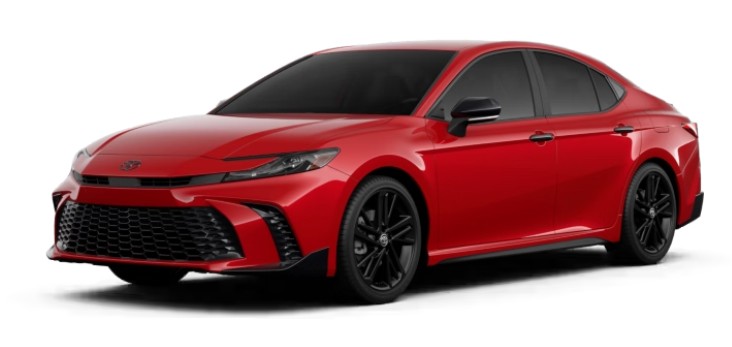
Wheel size, tire design, equipment weight, exterior styling, drivetrain configuration, and suspension tuning can all influence efficiency. The Camry LE is the fuel-saving specialist, while the XSE trades a little economy for a sportier appearance and richer equipment.
Toyota Camry Hybrid MPG at a Glance
| Camry configuration | Approximate EPA combined MPG |
|---|---|
| LE FWD | 51 MPG |
| LE AWD | 50 MPG |
| SE FWD | 46 MPG |
| XLE FWD | 46 MPG |
| XSE FWD | 46 MPG |
| SE AWD | 46 MPG |
| XLE AWD | 46 MPG |
| XSE AWD | 43 MPG |
These figures refer to current US-market estimates and can vary by model year. They should be used for comparison rather than treated as guaranteed real-world results.
Why the Camry Hybrid Is So Fuel-Efficient
The Camry Hybrid combines a gasoline engine with electric motors and a hybrid battery. Instead of making the engine perform every task by itself, the system continuously chooses the most efficient source of power.
At low speeds, the electric motor may move the car briefly without the gasoline engine running. During gentle cruising, the engine and electric system can work together. When we slow down, regenerative braking captures energy that would otherwise disappear as heat and sends some of it back to the battery.
Think of it as a relay race rather than a solo marathon. The gasoline engine does not need to carry the baton every second.
The Engine and Electric Motor Work as a Team
A conventional car often wastes fuel while idling, accelerating from a stop, or operating outside its most efficient engine range. A hybrid reduces those losses.
The electric motor is particularly useful when:
- Pulling away from traffic lights
- Moving through slow traffic
- Parking or maneuvering
- Supporting the engine during acceleration
- Recovering energy while slowing down
- Allowing the engine to shut off when power is not required
The driver does not normally need to select between gasoline and electric operation. The system manages the transition automatically, usually so smoothly that we notice the energy display changing before we feel the power source switch.
Regenerative Braking Makes City Driving an Advantage
In a non-hybrid car, frequent braking usually hurts fuel economy. Energy used to accelerate the car is converted into heat by the brakes and effectively lost.
A hybrid changes that relationship.
When we lift off the accelerator or apply light brake pressure, the electric motor can operate as a generator. It slows the vehicle while recovering energy for the battery. This is why the Camry Hybrid can perform exceptionally well in urban traffic.
City driving is no longer purely the villain of the fuel-economy story. In the right conditions, it can become the Camry Hybrid’s natural habitat.
Toyota Camry Hybrid City MPG
Hybrid sedans often shine in cities because urban driving provides repeated opportunities for electric assistance, engine shutoff, and regenerative braking.
The current Camry LE can carry a city rating above 50 MPG, depending on the model year. That means a patient driver navigating moderate urban traffic may occasionally see trip-computer readings that meet or exceed the official estimate.
However, city driving does not automatically guarantee outstanding mileage.
Very short trips can be inefficient because the engine, fluids, battery, and cabin may need time to reach ideal operating temperatures. A two-mile school run on a cold morning could return worse economy than a longer 15-mile journey through the same streets.
Why Stop-and-Go Traffic Can Help
Stop-and-go traffic gives the hybrid system frequent chances to:
- Shut off the gasoline engine
- Use the electric motor at low speeds
- Recover energy through regenerative braking
- Avoid wasting fuel while stationary
- Keep the gasoline engine closer to its efficient operating range
The best results generally come from traffic that moves slowly but steadily. Complete gridlock is less favorable, especially when heating or air conditioning is working hard.
When City MPG Falls Below Expectations
Urban fuel economy may decline because of:
- Repeated trips of only a few minutes
- Hard launches from traffic lights
- Heavy cabin heating or cooling
- Steep hills
- Low tire pressure
- Excessive cargo
- Long periods of stationary climate-control use
- Cold weather
- A weak 12-volt battery or neglected maintenance
- Frequent use of Sport mode
A hybrid cannot repeal the laws of physics. It can manage energy intelligently, but it cannot make rapid acceleration or a heavily loaded car free.
Toyota Camry Hybrid Highway MPG
The Camry Hybrid remains efficient on highways, although its advantage over a conventional gasoline vehicle is usually less dramatic than it is in town.
At steady highway speeds, there are fewer braking events from which to recover energy. The gasoline engine also runs more consistently because continuous power is needed to overcome air resistance.
Current official highway ratings range from the mid-40s to around 50 MPG, depending on trim and drivetrain.
Why Highway Speed Matters So Much
Air resistance rises quickly as speed increases. Moving from 60 mph to 75 or 80 mph may save time, but it can noticeably reduce MPG.
The car must push an increasingly stubborn wall of air. It is like walking through shallow water and then trying to sprint through it—the faster we go, the more fiercely the environment pushes back.
A Camry Hybrid cruising gently at 60 to 65 mph may produce excellent results. The same car driven at 80 mph into a headwind may return a much lower average.
Best Conditions for Strong Highway MPG
Highway economy tends to improve when we have:
- Moderate cruising speeds
- Light traffic
- Warm but not extremely hot weather
- Properly inflated tires
- Minimal roof-mounted cargo
- Smooth acceleration
- Relatively flat roads
- Limited use of full-throttle passing
- A warmed-up engine and hybrid system
Long journeys can also help because the vehicle spends less of the trip warming up.
Real-World Toyota Camry Hybrid MPG
Official fuel-economy estimates give us a standardized comparison, but actual MPG can land above or below those numbers.
A realistic owner might see anything from the high 30s to more than 50 MPG, depending on circumstances. That range may seem broad, but two drivers can use identical cars in completely different ways.
One person may commute 20 miles through mild-weather suburban traffic. Another may drive three miles at a time during winter, climb steep roads, carry passengers, and accelerate aggressively. Their dashboards will tell very different stories.
What MPG Should We Realistically Expect?
As a broad planning guide:
- Ideal mixed driving: roughly 48–53 MPG
- Normal mixed driving: roughly 43–50 MPG
- Fast highway driving: roughly 38–46 MPG
- Cold, short urban trips: roughly 32–42 MPG
- Gentle city and suburban driving: potentially 50 MPG or more
These are practical ranges rather than guaranteed test results. Model year, trim, drivetrain, terrain, fuel, temperature, tire choice, and driving habits can shift the outcome considerably.
Why the Dashboard MPG May Not Be Perfectly Accurate
The trip computer estimates fuel consumption using vehicle data. It is useful for identifying trends, but it may differ slightly from a calculation made at the pump.
For a more reliable long-term figure, we can use the full-tank method:
- Fill the fuel tank completely.
- Reset the trip meter.
- Drive normally.
- Refill the tank at the same station and, ideally, the same pump.
- Divide miles traveled by gallons added.
- Repeat over several tanks.
One tank is not enough to reveal the full picture. Pump shutoff differences, traffic, wind, weather, and journey type can distort a single result. An average across five or ten tanks is far more meaningful.
How Camry Hybrid MPG Has Changed Over Time
The Camry Hybrid has become substantially more efficient over the years.
The 2010 Camry Hybrid, for example, carried an EPA estimate of approximately 33 MPG city and 34 MPG highway.
By the 2023 and 2024 model years, the most economical LE Hybrid was advertised at approximately 51 MPG city, 53 MPG highway, and 52 MPG combined.
The redesigned 2025 Camry became an exclusively hybrid model in the US market, with the most efficient configuration rated at up to 51 MPG combined.
Older Camry Hybrid MPG Figures
Although exact ratings differ by year and trim, the broader evolution looks like this:
| Camry Hybrid era | Typical combined efficiency |
| Early models | Low-to-mid 30s MPG |
| Early 2010s | Around 40 MPG |
| Late 2010s | Low-to-high 40s MPG |
| 2018–2024 LE models | Around 50–52 MPG |
| 2025–2026 models | Up to 51 MPG |
This improvement did not happen through one magical invention. It came from years of smaller gains: better power electronics, refined engine design, improved battery management, lower mechanical losses, smarter software, aerodynamic work, and lighter or more efficient components.
Camry Hybrid LE vs SE vs XLE vs XSE MPG
Choosing a Camry Hybrid trim is not merely a decision about seats, screens, and exterior styling. It can also affect fuel economy.
Camry LE Hybrid MPG
The LE is normally the mileage champion. It tends to use efficiency-focused wheels and tires and carries fewer heavy luxury or sport-oriented features.
For buyers whose main priority is reducing fuel consumption, the LE is usually the obvious starting point.
Its advantages may include:
- The highest official MPG
- Smaller or more efficient wheel-and-tire combinations
- Lower purchase price
- Comfortable ride quality
- Less weight than heavily equipped trims
- Excellent range per tank
The LE may not look as aggressive as an XSE, but at the fuel pump, modesty has its rewards.
Camry SE Hybrid MPG
The SE adds sportier styling and chassis tuning. Depending on the model year, it may have larger wheels, wider tires, and exterior details that slightly affect aerodynamics or rolling resistance.
The fuel-economy penalty is not catastrophic, but it is measurable. Current SE FWD versions sit around 46 MPG combined rather than the LE’s 51 MPG combined.
For many drivers, that compromise will feel reasonable. The SE still delivers excellent mileage while presenting a sharper visual personality.
Camry XLE Hybrid MPG
The XLE focuses more heavily on comfort and premium equipment. Extra features can add weight, while larger wheels may increase rolling resistance.
Its efficiency remains strong for a spacious midsize sedan, but buyers should not assume that every Camry Hybrid returns the same result as the LE.
The XLE is best viewed as a comfort-first hybrid that still saves fuel rather than the pure efficiency leader.
Camry XSE Hybrid MPG
The XSE is the fashion-conscious athlete of the lineup. Its larger wheels, sportier stance, equipment, and available AWD can reduce economy.
An XSE AWD can carry a combined rating notably below the LE FWD. For 2026, Toyota lists approximately 43 MPG combined for the XSE AWD compared with 51 MPG for the LE FWD.
That eight-MPG gap is large enough to matter over years of ownership.
Still, 43 MPG from a stylish, well-equipped midsize sedan with all-wheel drive is hardly disappointing. The right choice depends on whether we value maximum thrift or a broader mix of appearance, traction, equipment, and efficiency.
Does All-Wheel Drive Reduce Camry Hybrid MPG?
Yes, although the size of the penalty depends on the trim.
All-wheel drive adds mechanical components and weight. It may also create extra energy losses. The system offers useful traction, but it asks the vehicle to carry more hardware everywhere it goes—even on dry roads where additional traction is not needed.
The efficiency difference is relatively small on some Camry versions. The LE FWD, for example, is rated around 51 MPG combined, while the LE AWD sits around 50 MPG combined. Other combinations can experience a more noticeable reduction.
Is AWD Worth the MPG Penalty?
AWD may be worthwhile for drivers who regularly face:
- Snow-covered streets
- Icy hills
- Loose gravel
- Steep wet roads
- Rural routes with unpredictable conditions
Drivers living in warm, flat regions may gain little from it. Quality tires often have a larger effect on braking and cornering than drivetrain layout alone.
We should choose AWD for a genuine traction need, not because the badge sounds reassuring.
How Far Can a Toyota Camry Hybrid Travel on One Tank?
Range depends on tank capacity, official MPG, and how much fuel is actually usable.
A simple estimate uses this formula:
Estimated range = fuel-tank capacity × average MPG
For example, a hypothetical 13-gallon tank and 50 MPG average would suggest a theoretical range of 650 miles.
Real-world usable range will be lower because:
- We rarely use every drop of fuel
- The low-fuel warning activates with fuel remaining
- Weather and speed change efficiency
- Traffic conditions vary
- The car’s range display includes a safety margin
- Individual trims may have different ratings
Even so, the Camry Hybrid can cover long distances between fuel stops. That is one of its greatest practical strengths. It offers EV-like calm in city traffic without requiring charging or detailed route planning.
Toyota Camry Hybrid MPG in Winter
Cold weather is one of the largest enemies of hybrid efficiency.
The gasoline engine needs longer to warm up. The battery may be less efficient when cold. Tire pressure drops. Winter fuel blends may contain less energy. Cabin heating can force the engine to run more often, and snow or slush adds resistance.
A driver who sees 49 MPG during summer might see a number in the high 30s or low 40s during a harsh winter.
Why Cabin Heat Affects MPG
In many hybrids, cabin heat relies partly on warmth produced by the gasoline engine. When we request strong heat on a cold morning, the engine may continue running even when propulsion alone would not require it.
That does not mean we should freeze for the sake of an MPG record. Comfort and clear windows come first. Still, moderate temperature settings and heated seats can sometimes use less energy than immediately demanding maximum cabin heat.
How to Reduce the Winter MPG Drop
We can improve winter efficiency by:
- Combining several errands into one warmed-up journey
- Clearing snow and ice completely
- Checking tire pressure frequently
- Using seat heaters when appropriate
- Parking in a garage
- Avoiding long stationary warm-ups
- Accelerating gently until the car warms
- Removing unnecessary cargo
- Using climate control sensibly
The most effective strategy is often simply reducing the number of cold starts.
Toyota Camry Hybrid MPG in Hot Weather
Warm weather is generally favorable to hybrid efficiency, but extreme heat introduces new challenges.
Air conditioning requires energy. Very high temperatures can cause the battery-management system to protect the hybrid battery. Hot pavement may also affect tire behavior, while open windows create aerodynamic drag at highway speeds.
Moderate summer weather usually produces some of the best MPG figures. Severe heat combined with maximum air conditioning may reduce them.
Air Conditioning or Open Windows?
At low city speeds, opening the windows may have a relatively small aerodynamic effect. At highway speeds, open windows disturb airflow and can increase drag.
There is no universal crossover point, but a sensible approach is:
- Use ventilation or open windows briefly to release trapped heat.
- Close the windows once traveling quickly.
- Set the air conditioner to a comfortable, moderate temperature.
- Use recirculation after the cabin cools.
- Park in shade when possible.
The goal is not to avoid air conditioning completely. It is to prevent the system from fighting a cabin that feels like a greenhouse.
How Driving Style Changes Camry Hybrid MPG
Two Camry Hybrid drivers can travel the same route and finish with dramatically different MPG.
Smooth driving helps because it minimizes energy losses. Every unnecessary burst of acceleration must eventually be cancelled by braking. Regenerative braking can recover some energy, but never all of it.
Accelerate Smoothly, Not Painfully Slowly
Some drivers assume that crawling away from every traffic light produces the best economy. That is not always true.
Excessively slow acceleration can keep the engine running inefficiently for longer. A better approach is moderate, progressive acceleration followed by a steady cruising speed.
Imagine carrying a cup of coffee without a lid. We do not need to move at walking pace, but sharp inputs will create a mess.
Look Far Ahead
Anticipation is one of the strongest hybrid-driving skills.
When we notice a red light early, we can release the accelerator and slow gradually. This gives regenerative braking more time to recover energy and reduces the chance of wasting momentum with hard braking.
Looking several vehicles ahead also helps us avoid pointless acceleration into slowing traffic.
Use Eco Mode Intelligently
Eco mode usually softens accelerator response and adjusts climate-control behavior. It does not add mechanical efficiency by itself, but it can make smooth driving easier.
Sport mode makes the car feel more responsive. That can be enjoyable, but frequent use may encourage stronger acceleration and lower MPG.
Normal mode offers a useful middle ground for drivers who find Eco mode too restrained.
Practical Ways to Improve Toyota Camry Hybrid MPG
Improving fuel economy does not require turning every commute into a scientific experiment. A few habits produce most of the benefit.
1. Maintain Correct Tire Pressure
Underinflated tires flex more and create additional rolling resistance. That wastes fuel and can accelerate tire wear.
Check the pressure when the tires are cold and follow the specification printed on the driver’s door-jamb label, not the maximum pressure molded into the tire sidewall.
2. Avoid Unnecessary Weight
A forgotten box of tools, sports equipment, or other heavy cargo forces the car to move extra mass on every trip.
Removing 10 pounds will not transform MPG, but regularly carrying hundreds of unnecessary pounds can make a measurable difference.
3. Remove Roof Racks When Not Needed
Roof boxes and crossbars disturb airflow. At highway speed, aerodynamic drag can matter more than weight.
A roof box may be invaluable for a vacation. Leaving it attached for six months afterward is like making the car wear a parachute to work.
4. Combine Short Trips
One 20-mile journey is generally more efficient than four separate five-mile journeys because the engine and hybrid system remain warm.
Planning errands in a sensible order saves both time and fuel.
5. Keep Up With Maintenance
A modern Camry Hybrid does not need exotic fuel-saving treatments. It needs ordinary maintenance completed properly.
Important items include:
- Correct engine oil
- Clean engine air filter
- Proper wheel alignment
- Healthy spark plugs at the specified interval
- Correct tires
- Free-moving brakes
- No unresolved warning lights
- Clean hybrid-battery cooling vents
Mechanical resistance can quietly steal MPG long before it produces an obvious breakdown.
6. Reduce High-Speed Driving
Speed is one of the simplest explanations for disappointing highway mileage.
Cruising a little slower can produce a larger improvement than many accessories or fuel additives ever will.
7. Brake Early and Gently
Light, gradual braking allows the regenerative system to do more of the work. Hard braking eventually requires the friction brakes, converting more energy into heat.
Safety always comes first, but good anticipation reduces the need for sudden stops.
8. Avoid Chasing Electric-Only Driving
Trying to force the car to remain in EV operation can sometimes hurt efficiency. If we press the accelerator too lightly and take an eternity to reach cruising speed, we may drain the battery only for the engine to recharge it later.
The hybrid computer usually understands energy management better than we do. Smooth inputs are helpful; micromanaging every power-flow arrow is not necessary.
Most Camry Hybrid models are designed to run on regular unleaded gasoline, although owners should always verify the requirement in the manual for their exact model year and market.
Using a higher octane than required generally does not create a proportional MPG gain. Premium fuel resists knocking in engines designed for higher compression or boost, but it does not contain magical extra mileage.
If regular fuel is recommended, buying premium in hopes of saving fuel is usually like purchasing an expensive umbrella for a sunny room.
Fuel quality matters, but octane should match the manufacturer’s specification.
Is the Toyota Camry Hybrid Economical to Own?
Fuel economy is only one part of ownership cost, but the Camry Hybrid starts from a strong position.
A vehicle returning 50 MPG uses half as much fuel as one returning 25 MPG over the same distance.
At 12,000 miles per year:
- A 25-MPG car uses approximately 480 gallons.
- A 40-MPG car uses approximately 300 gallons.
- A 50-MPG car uses approximately 240 gallons.
Compared with a 25-MPG vehicle, the 50-MPG Camry could save roughly 240 gallons annually. Multiply that by the local fuel price, and the financial difference becomes clear.
Simple Annual Fuel-Cost Formula
Use:
Annual miles ÷ average MPG × fuel price = annual fuel cost
For example:
12,000 miles ÷ 48 MPG × $3.50 = $875 per year
The same mileage at 28 MPG would cost:
12,000 ÷ 28 × $3.50 = $1,500 per year
That is a difference of approximately $625 annually.
Actual savings depend on fuel price, distance traveled, insurance, purchase price, financing, maintenance, depreciation, and the vehicle being replaced.
Toyota Camry Hybrid vs a Regular Gas Sedan
A conventional gasoline sedan may cost less initially or feel simpler to some shoppers. However, the Camry Hybrid offers its greatest advantage in mixed and urban driving.
We may prefer the hybrid when:
- We commute in traffic
- Fuel prices are high
- We keep vehicles for several years
- We want fewer fuel stops
- We value quiet low-speed operation
- We drive enough miles to benefit from lower consumption
A regular gasoline vehicle may still make sense when annual mileage is extremely low or when its purchase price is substantially cheaper.
The correct answer is not automatically “buy the hybrid.” The correct answer comes from calculating total ownership cost for our own driving pattern.
Toyota Camry Hybrid vs Other Hybrid Sedans
The Camry Hybrid competes with vehicles such as the Honda Accord Hybrid, Hyundai Sonata Hybrid, and smaller hybrid sedans.
The Camry’s appeal comes from its balance. It offers strong economy, useful passenger space, comfortable road manners, and a familiar ownership experience.
Toyota states that the 2026 Camry LE Hybrid reaches 51 MPG combined, while the cited 2026 Honda Accord Sport Hybrid is rated at 44 MPG combined. However, trim-to-trim comparisons matter; comparing the most economical version of one car with a sport-oriented version of another can create an incomplete picture.
We should compare:
- Equivalent trim levels
- Purchase prices
- Insurance costs
- Official city and highway MPG
- Cargo space
- Equipment
- Ride comfort
- Warranty coverage
- Dealer access
- Expected resale value
- Personal driving conditions
A single MPG number should begin the comparison, not end it.
Common Reasons for Poor Camry Hybrid MPG
A sudden MPG decline does not always mean the hybrid system is failing.
Common explanations include:
- Colder weather
- Shorter journeys
- Faster highway speeds
- Strong headwinds
- Tire-pressure loss
- New tires with greater rolling resistance
- Roof racks or cargo boxes
- More passengers or luggage
- Heavy air-conditioning use
- Winter fuel
- Brake drag
- Wheel misalignment
- Incorrect oil
- An aging 12-volt battery
- Engine or emissions faults
When Should We Investigate the Car?
Consider having the vehicle inspected when fuel economy drops sharply and remains low despite similar weather, routes, and driving habits.
Warning signs include:
- A check-engine light
- Unusual engine noise
- Rough running
- Brakes that feel hot or smell unusual
- The car pulling to one side
- Tires wearing unevenly
- Reduced power
- The gasoline engine running nearly all the time
- Hybrid-system warnings
- A decline of 10 MPG or more with no obvious explanation
Compare several full tanks before assuming there is a defect. One poor week may simply reflect traffic, weather, or unusual journeys.
Is Toyota Camry Hybrid MPG Worth It?
For many drivers, yes.
The Camry Hybrid can deliver compact-car fuel consumption in a roomy midsize package. The most efficient versions reach around 50 MPG while retaining the comfort, highway composure, and practicality that have made the Camry popular.
The strongest case belongs to drivers who:
- Cover substantial annual mileage
- Spend time in urban or suburban traffic
- Plan to keep the car for several years
- Prefer not to charge a vehicle
- Want predictable long-distance flexibility
- Value efficiency more than maximum performance
The least efficient Camry Hybrid trims may not match the LE’s headline figure, but even the sportier AWD versions remain economical by conventional midsize-sedan standards.
Who Should Choose the Camry LE?
Choose the LE when maximum MPG, value, and range matter most.
Who Should Choose the SE or XSE?
Choose a sport-oriented trim when appearance, handling character, larger wheels, and extra features matter enough to justify lower mileage.
Who Should Choose AWD?
Choose AWD when local weather and road conditions create a genuine need for additional traction.
Final Thoughts on Toyota Camry MPG Hybrid Performance
The Toyota Camry Hybrid proves that fuel efficiency does not need to feel like a punishment.
It offers a spacious cabin, everyday practicality, strong range, and fuel-economy ratings that can reach approximately 51 MPG combined in the most efficient current configuration. Older LE Hybrid models could reach around 52 MPG combined, while early Camry Hybrids returned figures closer to the mid-30s.
The most important lesson is that the trim badge matters. An LE FWD and an XSE AWD may share the Camry name, but they do not share identical MPG.
Real-world efficiency also rests partly in our hands. Smooth acceleration, sensible highway speeds, correct tire pressure, planned journeys, and good maintenance can keep the average close to its potential. Cold weather, short trips, larger wheels, heavy climate-control use, and aggressive driving can send it in the opposite direction.
Ultimately, the Camry Hybrid behaves like a well-trained financial adviser: it cannot stop us from spending energy, but it constantly searches for ways to waste less of it.
Frequently Asked Questions
1. What is the best Toyota Camry Hybrid MPG?
The most efficient current US configuration reaches an EPA-estimated 51 MPG combined. Individual city and highway ratings vary by model year, trim, and drivetrain.
2. Why is my Camry Hybrid only getting 40 MPG?
Cold weather, short trips, high speeds, low tire pressure, cabin heating, air conditioning, hills, heavy cargo, or aggressive acceleration can reduce fuel economy. Forty MPG may be normal under difficult conditions, especially in winter.
3. Does the Camry Hybrid get better MPG in the city or on the highway?
It depends on the model year. Hybrid systems often perform exceptionally well in city driving because they can recover braking energy and use electric assistance at low speeds. Some older LE models, however, carried slightly higher official highway ratings than city ratings.
4. Does AWD reduce Toyota Camry Hybrid MPG?
Usually, yes. AWD adds weight and mechanical complexity. The difference can be small on some trims, but certain sporty AWD models have a noticeably lower combined rating than the front-wheel-drive LE.
5. Can a Camry Hybrid really achieve 50 MPG?
Yes, especially an efficiency-focused LE driven smoothly in favorable weather. However, no owner will achieve exactly 50 MPG in every situation. Speed, trip length, temperature, terrain, tire choice, and driving style all influence the final result.
If you want to see other articles similar to Toyota Camry MPG Hybrid: Real-World Fuel Economy Guide you can visit the Compare category.
Ford Bronco Pros and Cons: Complete Buyer’s Guide
2026 Ford Bronco Towing: Capacity, Equipment, and Real-World Limits
Ford Bronco Gas Tank Size: 2026 U.S. Guide
2026 Ford Bronco Big Bend vs Outer Banks: Features and Differences Explained
2026 Ford Bronco Trim Levels in Order: Complete U.S. Guide
Ford Bronco Models Explained for U.S. Buyers
Leave a Reply
Related Topics