
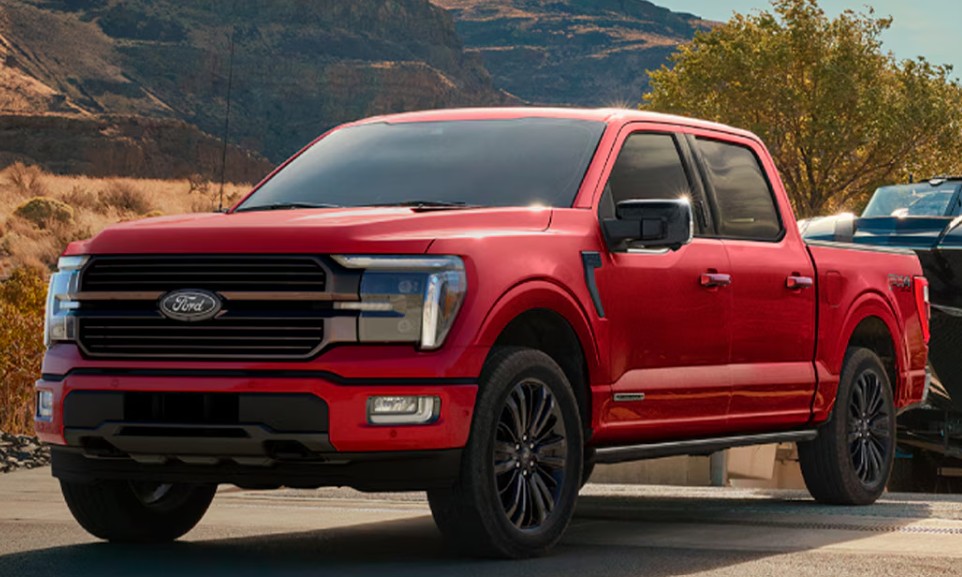
Which Ford F-150 Engines Should I Avoid? A Smart Buyer’s Guide

Contents in this publication
- Understanding the Ford F-150 Engine Lineup
- Which Ford F-150 Engines Should I Avoid First?
- The 5.4L Triton V8: The Big One to Watch
- Early 3.5L EcoBoost V6: Powerful but Not Perfect
- 2018–2020 5.0L Coyote V8: Great Engine, But Check Oil Use
- Certain 2021–2022 2.7L EcoBoost Engines: Recall Awareness Matters
- 3.0L Power Stroke Diesel: Not Bad, But Not for Everyone
- Engines We Should Approach With Caution, Not Fear
- Best Ford F-150 Engines to Consider Instead
- How to Inspect a Used Ford F-150 Engine Before Buying
- Red Flags That Mean Walk Away
- Best Buying Strategy for Avoiding Bad F-150 Engines
- So, Which Ford F-150 Engines Should We Avoid?
- Final Thoughts: Choose the Truck, Not Just the Engine
- FAQs About Which Ford F-150 Engines to Avoid
The Ford F-150 is the kind of truck that feels almost impossible to ignore. It is everywhere: job sites, school runs, farms, highways, camping trails, and suburban driveways. For many of us, the F-150 is not just a pickup; it is the default answer when someone says, “I need a truck that can do everything.”
But here is the honest truth: not every F-150 engine deserves the same level of trust.
Some Ford F-150 engines are tough, simple, and long-lasting. Others can become expensive headaches if we buy the wrong year, ignore the service history, or assume every engine with a blue oval badge is automatically bulletproof. That is where this guide comes in.
We are not here to say, “All EcoBoost engines are bad,” or “Every old V8 is risky.” That would be lazy. Instead, we are going to look at the Ford F-150 engines that buyers should approach carefully, the reasons behind their reputation, the symptoms to watch for, and which engines tend to be safer bets.
So, which Ford F-150 engines should we avoid? Let’s open the hood and talk like real people.
Understanding the Ford F-150 Engine Lineup
Before we point fingers at specific engines, we need to understand that the F-150 has used a wide range of powerplants over the years. Ford has offered naturally aspirated V6 engines, traditional V8s, twin-turbo EcoBoost V6s, diesel options, and hybrid powertrains.
That variety is great for buyers, but it also makes the used market tricky. One F-150 may be a simple workhorse with basic maintenance needs. Another may have turbos, direct injection, complex timing systems, and expensive repair risks hiding under the hood.
Why Engine Choice Matters So Much
The engine is the heart of the truck. If the transmission is the legs, the frame is the skeleton, and the bed is the backpack, then the engine is the muscle pumping life through everything.
Choosing the wrong engine can mean:
- Higher repair bills
- Poor resale value
- Oil consumption problems
- Timing chain noise
- Turbocharger concerns
- Spark plug headaches
- Loss of power
- Costly diagnostic work
That does not mean we should panic. It simply means we should buy with open eyes.
Which Ford F-150 Engines Should I Avoid First?
If we want a quick answer, the engines that usually deserve the most caution are:
- 5.4L Triton V8, especially 3-valve versions
- Early 3.5L EcoBoost V6, especially 2011–2014 models
- 2018–2020 5.0L Coyote V8, mainly because of oil consumption concerns
- Certain 2021–2022 2.7L EcoBoost engines affected by valve-related recall issues
- High-mileage 3.0L Power Stroke diesel if maintenance history is weak
Are these engines automatically terrible? No. Some owners have driven them for many miles without disaster. But if we are shopping used, these are the engines where we need to slow down, inspect carefully, and avoid emotional buying.
The 5.4L Triton V8: The Big One to Watch
The 5.4L Triton V8 is probably the most famous “be careful” engine in Ford F-150 history. It powered many F-150s and was loved for its torque, truck-like feel, and old-school V8 personality. But certain versions, especially the 3-valve design, developed a reputation that still follows them around like a shadow.
Why the 5.4L Triton Can Be Risky
The 5.4L Triton can suffer from several well-known problems, including timing chain wear, cam phaser noise, oiling issues, and spark plug complications. When everything is working, it feels strong enough for daily truck use. But when things start going wrong, repairs can stack up fast.
A noisy 5.4L can sound like a toolbox rolling down a staircase. That ticking, rattling, or diesel-like clatter may point toward cam phasers or timing components. Ignore it, and the bill can grow teeth.
Common 5.4L Triton Problems
Some of the most talked-about issues include:
- Cam phaser rattle
- Timing chain tensioner wear
- Broken or seized spark plugs
- Misfires
- Rough idle
- Low oil pressure symptoms
- Sluggish acceleration
- Expensive labor costs
Should We Completely Avoid the 5.4L Triton?
If we are looking at a 5.4L Triton F-150 with poor maintenance records, engine noise, misfires, or a seller saying “it just needs a tune-up,” we should walk away.
However, a clean, well-maintained example with documented repairs can still serve as a budget truck. The key is price. We should not pay premium money for a risky engine.
Best Advice for the 5.4L Triton
Avoid neglected 5.4L trucks. Consider only clean examples with proof of oil changes, spark plug service, and timing-related maintenance.
Early 3.5L EcoBoost V6: Powerful but Not Perfect
When Ford introduced the 3.5L EcoBoost V6 to the F-150, it felt like a revolution. A twin-turbo V6 making strong torque and replacing big V8 expectations? That was bold.
And honestly, when it works well, the 3.5L EcoBoost is impressive. It pulls hard, feels quick, and makes towing feel easy. But early versions can bring problems that buyers should not ignore.
Why Early 3.5L EcoBoost Engines Can Be Trouble
The early 3.5L EcoBoost engines, especially around 2011–2014, are often discussed because of timing chain stretch, condensation-related misfires, turbo-related concerns, and carbon buildup.
The issue is not that the engine is weak. The issue is complexity. Two turbos, direct injection, intercooler plumbing, high-pressure fuel systems, and timing chain components mean there are more things that can go wrong compared with a simpler naturally aspirated engine.
Common Early 3.5L EcoBoost Problems
Buyers should watch for:
- Timing chain rattle on cold start
- Check engine light
- Misfires under acceleration
- Rough running in damp conditions
- Turbo wastegate rattle
- Oil leaks
- Carbon buildup
- Expensive repair estimates
Cold Start Rattle: A Red Flag
If we start the truck cold and hear a loud rattle for a few seconds, that is not something to casually ignore. A cold start can reveal problems that disappear once the engine warms up. That is why we should always inspect a used F-150 before it has been warmed up by the seller.
Should We Avoid All 3.5L EcoBoost Engines?
No. Later versions improved, and many owners love this engine. But early high-mileage examples without service records deserve caution. If we tow often, drive hard, or want low-maintenance simplicity, an early 3.5L EcoBoost may not be our best match.
Best Advice for the Early 3.5L EcoBoost
Avoid rough, modified, poorly maintained, or high-mileage early EcoBoost trucks unless the price leaves room for repairs.
2018–2020 5.0L Coyote V8: Great Engine, But Check Oil Use
The 5.0L Coyote V8 has many fans, and for good reason. It sounds good, pulls well, and feels more traditional than the turbocharged EcoBoost engines. For many buyers, the 5.0L is the sweet spot: modern power with V8 character.
But not every 5.0L F-150 year is equal.
Why Some 2018–2020 5.0L Engines Worry Buyers
Some 2018–2020 F-150 5.0L engines have been associated with oil consumption complaints. Oil consumption can be annoying at first, but if ignored, it can become serious. An engine that drinks oil between changes is like a runner losing water during a marathon. It may keep going for a while, but eventually something suffers.
Signs of Oil Consumption
When inspecting a 5.0L F-150, look for:
- Low oil level
- Blue smoke from the exhaust
- Burning oil smell
- Owner carrying extra oil in the truck
- Engine ticking
- Rough idle
- Service records showing repeated oil top-offs
Is the 5.0L Coyote Bad?
No, not at all. In fact, many F-150 buyers still prefer the 5.0L over turbocharged options because it is naturally aspirated and generally durable. The problem is that certain years need extra attention.
We should not avoid every 5.0L. We should avoid buying blindly.
Best Advice for the 5.0L Coyote
A 2018–2020 F-150 with the 5.0L can still be a good truck, but we should check oil consumption history before buying.
Certain 2021–2022 2.7L EcoBoost Engines: Recall Awareness Matters
The 2.7L EcoBoost is often praised because it offers a nice balance of fuel economy, power, and daily drivability. Many owners like it because it feels lighter, smoother, and surprisingly strong for its size.
But certain 2021–2022 Ford F-150 trucks with the 2.7L EcoBoost were connected to intake-valve recall concerns. That does not mean every 2.7L is bad. It means we need to check the VIN and recall status.
Why the 2.7L EcoBoost Needs a VIN Check
The concern involved specific engines and production periods, not every 2.7L ever made. That distinction matters. A blanket statement like “avoid the 2.7L” is not fair. But buying one without checking recall history is risky.
Symptoms to Watch For
Possible warning signs may include:
- Rough running
- Engine warning light
- Sudden loss of power
- Misfires
- Hard starting
- Unusual engine noise
Should We Avoid the 2.7L EcoBoost?
Not necessarily. The 2.7L EcoBoost is one of the better modern F-150 engines in many situations. But if we are considering a 2021–2022 truck, we should verify recall completion and service records.
Best Advice for the 2.7L EcoBoost
Do not avoid the engine entirely. Avoid affected trucks with unresolved recall work or unclear history.
3.0L Power Stroke Diesel: Not Bad, But Not for Everyone
The 3.0L Power Stroke diesel is an interesting F-150 engine. It offers good torque and fuel economy, especially for highway drivers. But diesel ownership is not always cheap or simple.
Why the 3.0L Diesel Can Be a Risky Used Buy
Diesel engines can be durable, but modern diesel emissions systems add complexity. We are talking about DEF systems, diesel particulate filters, sensors, EGR components, and expensive diagnostics.
If the previous owner drove mostly short trips, skipped maintenance, or ignored warning lights, the next owner may inherit the bill.
When the 3.0L Diesel Makes Sense
This engine makes more sense for drivers who:
- Drive long highway miles
- Maintain vehicles properly
- Need torque more than speed
- Understand diesel costs
- Keep records and follow service intervals
When We Should Avoid It
We should avoid a high-mileage 3.0L diesel if:
- There are no service records
- It has emissions-related warning lights
- It was used only for short city trips
- It has been deleted or poorly modified
- Repairs were done cheaply
Best Advice for the 3.0L Power Stroke
Avoid neglected diesel trucks. Diesel savings disappear quickly when repair bills arrive.
Engines We Should Approach With Caution, Not Fear
There is a difference between “avoid” and “inspect carefully.” Some F-150 engines fall into the caution zone rather than the danger zone.
Older High-Mileage 4.6L V8 Engines
The 4.6L V8 is generally simpler than the 5.4L, and many people consider it more dependable. However, age matters. A 4.6L truck with 200,000 miles, rust, oil leaks, and poor maintenance is not magically safe just because the engine has a better reputation.
Modified EcoBoost Engines
A tuned EcoBoost can be fun, but used buyers should be careful. Extra boost, aggressive tuning, hard towing, and poor maintenance can shorten engine life.
If a seller says, “It has a tune but it was never driven hard,” we should smile politely and keep inspecting.
High-Mileage Work Trucks
A fleet truck may have excellent records, or it may have lived a brutal life. Idle hours matter. Towing history matters. Oil change discipline matters. A truck can have moderate mileage and still be tired if it spent years idling, hauling, and being treated like a rented mule.
Best Ford F-150 Engines to Consider Instead
Now that we have covered the risky engines, let’s talk about better choices. No engine is perfect, but some F-150 engines tend to inspire more confidence.
5.0L Coyote V8 in Well-Maintained Examples
Outside the oil consumption concern years, the 5.0L remains one of the most appealing F-150 engines. It offers strong power, a classic V8 feel, and less turbo complexity.
2.7L EcoBoost With Clean Recall and Service History
The 2.7L EcoBoost can be an excellent choice for daily driving, light towing, commuting, and mixed use. Just check the recall history on 2021–2022 models.
Later 3.5L EcoBoost Engines
Later 3.5L EcoBoost engines improved compared with the earliest versions. They still require good maintenance, but they are strong performers for towing and power.
3.3L Naturally Aspirated V6
The 3.3L V6 is not exciting, but that is part of the charm. It is simple, practical, and good for buyers who do not tow heavy loads. Sometimes the boring engine is the smart engine.
How to Inspect a Used Ford F-150 Engine Before Buying
A used F-150 can look shiny on the outside and still hide expensive problems under the hood. We need to inspect like detectives, not tourists.
Start It Cold
Always try to hear the engine on a cold start. Warm engines can hide rattles, smoke, misfires, and rough idle problems.
Check the Oil
Pull the dipstick. Look at the level and condition. Low oil may point to consumption, leaks, or poor maintenance.
Scan for Codes
Even if the check engine light is off, scan the truck. Some codes may be pending or recently cleared.
Look for Smoke
Blue smoke can suggest oil burning. White smoke may point to coolant issues. Black smoke can suggest fuel or combustion problems.
Test Drive Properly
A short loop around the block is not enough. We need to feel the engine under light throttle, moderate acceleration, idle, and highway speed if possible.
Ask for Service Records
No records does not always mean the truck is bad, but records bring confidence. A seller with organized maintenance history is usually a better sign than a seller who says, “My cousin changed the oil sometimes.”
Red Flags That Mean Walk Away
Some signs are too risky to ignore. If we see these, we should seriously consider leaving the truck behind.
- Loud timing chain rattle
- Heavy engine ticking
- Blue exhaust smoke
- Coolant loss
- Oil level extremely low
- Misfires under acceleration
- Unresolved recall work
- Freshly cleared codes
- Seller refuses inspection
- No records on a high-mileage truck
- Modified engine with no documentation
A used truck should not feel like a gamble at a casino. If the engine feels suspicious, it probably is.
Best Buying Strategy for Avoiding Bad F-150 Engines
The smartest strategy is not just choosing the “right” engine. It is choosing the right engine, in the right year, with the right maintenance history, at the right price.
Our Simple Buying Formula
Use this formula:
Good engine reputation + clean records + quiet cold start + no codes + fair price = worth considering.
If one of those pieces is missing, we should slow down. If several are missing, we should move on.
Do Not Buy the Badge Alone
The F-150 name carries weight, but the badge does not protect us from poor maintenance. A neglected F-150 can be worse than a well-maintained competitor.
So, Which Ford F-150 Engines Should We Avoid?
Here is the practical answer.
We should be most careful with the 5.4L Triton 3-valve V8, especially if it has noise, misfires, or poor records. We should also be careful with early 3.5L EcoBoost engines, especially 2011–2014 models with timing chain rattle or turbo-related symptoms. The 2018–2020 5.0L Coyote V8 deserves an oil consumption check before buying. Certain 2021–2022 2.7L EcoBoost trucks need recall verification. And the 3.0L Power Stroke diesel should be avoided if maintenance history is weak.
But remember: condition beats reputation.
A supposedly “bad” engine with perfect records may be safer than a supposedly “good” engine that has been neglected. The used truck market is full of surprises, and the smartest buyers are the ones who inspect before they fall in love.
Final Thoughts: Choose the Truck, Not Just the Engine
Buying a Ford F-150 is exciting. It is easy to imagine road trips, towing days, weekend projects, and that satisfying feeling of sitting high above traffic. But the engine choice can make or break the ownership experience.
If we want the safest path, we should avoid neglected 5.4L Tritons, be cautious with early EcoBoost models, verify oil consumption on certain 5.0L trucks, check recall work on affected 2.7L engines, and think carefully before buying a diesel with unknown history.
The best F-150 is not always the newest, loudest, cheapest, or most powerful. It is the one with a clean history, honest maintenance, and an engine that sounds calm instead of angry.
In other words, we are not just buying horsepower. We are buying peace of mind.
FAQs About Which Ford F-150 Engines to Avoid
1. What is the worst Ford F-150 engine to avoid?
The 5.4L Triton 3-valve V8 is often considered one of the riskiest F-150 engines because of cam phaser, timing chain, spark plug, and oiling-related concerns. A well-maintained one may still run well, but neglected examples can become expensive quickly.
2. Should I avoid the 3.5L EcoBoost F-150?
Not all 3.5L EcoBoost engines should be avoided. Early versions, especially around 2011–2014, deserve extra caution due to timing chain rattle, misfires, and turbo-related concerns. Later engines can be strong choices if maintained properly.
3. Is the Ford F-150 5.0L V8 reliable?
The 5.0L Coyote V8 is generally a popular and respected engine, but some 2018–2020 examples have been linked with oil consumption complaints. Before buying, check oil level, service records, and ownership history.
4. Is the 2.7L EcoBoost a bad engine?
No, the 2.7L EcoBoost is not automatically a bad engine. Many owners like it for its balance of power and efficiency. However, certain 2021–2022 trucks should have their recall status checked before purchase.
5. What is the safest Ford F-150 engine to buy used?
A well-maintained 5.0L V8, a clean later-model 2.7L EcoBoost, or a later 3.5L EcoBoost with strong service records can all be good choices. The safest engine is the one with documented maintenance, no warning signs, and a clean inspection.
If you want to see other articles similar to Which Ford F-150 Engines Should I Avoid? A Smart Buyer’s Guide you can visit the Tips category.
Toyota Camry Distance to Empty Reset: Complete Guide
Toyota Camry Eco Mode Turn Off: Complete Driver’s Guide
Toyota Camry Anti Theft System Reset: Complete Guide
Toyota Camry Cabin Air Filter Replacement: A Fresh-Air Guide for Everyday Drivers
Toyota Camry Key Fob Battery Replacement: The Simple DIY Guide Every Driver Should Know
Toyota Camry Dashboard Symbols and Meanings: The Complete Driver-Friendly Guide
Leave a Reply
Related Topics