
Can Toyota Camry Tow? A Complete Guide to Towing Safely

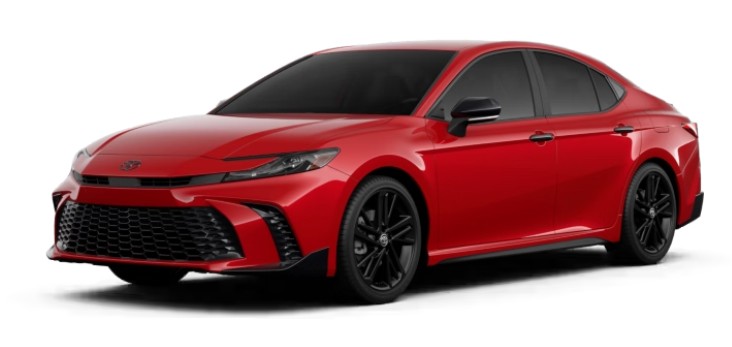
Contents in this publication
- Can a Toyota Camry Tow a Trailer?
- What Is the Toyota Camry Towing Capacity?
- How to Find the Correct Rating for Your Camry
- Why Many Camrys Are Not Rated for Towing
- Can a Toyota Camry Tow 1,000 Pounds?
- Can a Toyota Camry Tow 1,500 Pounds?
- Can a Toyota Camry Tow a Small Utility Trailer?
- Can a Toyota Camry Tow a Camper?
- Can a Toyota Camry Tow a Boat?
- Can a Toyota Camry Tow a Motorcycle Trailer?
- Can a Toyota Camry Hybrid Tow?
- Does All-Wheel Drive Increase Camry Towing Capacity?
- Can We Install a Trailer Hitch on a Camry?
- Understanding Payload and Tongue Weight
- Risks of Towing With a Non-Rated Camry
- How Towing Changes the Way a Camry Drives
- When a Camry Hitch Still Makes Sense
- Better Toyota Alternatives for Towing
- Safer Alternatives to Towing With a Camry
- Checklist Before Towing With Any Rated Camry
- Common Toyota Camry Towing Myths
- Is Towing With a Toyota Camry Worth It?
- Closing Thoughts: Can Toyota Camry Tow Safely?
- Frequently Asked Questions
The Toyota Camry is dependable, comfortable, fuel-efficient, and remarkably easy to live with. It handles daily commutes, long highway journeys, school runs, and grocery trips without breaking a sweat. But what happens when we attach a trailer to the back?
Can a Toyota Camry tow?
The most accurate answer is: some older Camry models may have a published towing allowance in certain countries, but many modern North American Camrys are not designed or recommended for trailer towing.
That distinction matters. A Camry may possess enough engine power to move a light trailer, yet towing involves much more than simply making the wheels turn. The transmission must manage extra heat, the brakes must stop the combined weight, the suspension must support the tongue load, and the vehicle’s structure must safely absorb forces from the hitch.
In other words, horsepower gets the trailer moving, but engineering keeps the entire combination under control.
Toyota explicitly stated in the owner’s manual for some Camry model years that it did not recommend towing a trailer because the vehicle was not designed for trailer towing. By contrast, Toyota Canada published a 1,000-pound towing capacity for the 2010 Camry. That contrast shows why we must check the exact model year, powertrain, market, and owner’s manual rather than applying one universal number to every Camry ever made.
Let’s examine what a Toyota Camry can realistically handle, why the answer changes by model year, and what we should consider before installing a hitch.
Can a Toyota Camry Tow a Trailer?
Technically, a properly equipped Camry may be capable of moving a very small trailer. However, technical ability is not the same as manufacturer approval.
For many late-model Camrys sold in the United States, Toyota does not publish a conventional trailer-towing capacity. Certain owner’s manuals go further and state that the vehicle is not designed for trailer towing. When a manufacturer provides no towing rating, we should not invent one based on engine size, horsepower, hitch availability, or advice found in an online discussion.
The safe principle is simple:
If the owner’s manual does not provide an approved towing capacity, treat the Camry’s trailer-towing capacity as zero.
This may sound conservative, but towing affects nearly every major vehicle system. An aftermarket hitch does not change Toyota’s engineering certification, cooling capacity, braking performance, axle limits, or warranty conditions.
Why the Answer Is Not a Simple Yes or No
The Toyota Camry has been sold for decades across numerous countries. Specifications can vary according to:
- Model year
- Engine and transmission
- Gasoline or hybrid powertrain
- Front-wheel drive or all-wheel drive
- Country of sale
- Local towing regulations
- Factory equipment
- Toyota’s published regional rating
An older Canadian Camry, for instance, may have documentation listing a modest towing limit, while a comparable United States model may contain language advising against trailer towing.
That is why searching only for “Toyota Camry towing capacity” can lead us into a maze. One website may say 1,000 pounds, another may say the car cannot tow, and a third may claim 1,500 or even 2,000 pounds without identifying an official source.
The owner’s manual for the specific vehicle should always win that argument.
What Is the Toyota Camry Towing Capacity?
There is no single towing figure covering every Toyota Camry.
For many modern Camry models in the United States, the practical published towing capacity is not rated for conventional trailer towing. Toyota’s historical manuals for certain generations explicitly say that towing is not recommended and that the vehicle was not designed for it.
Some older models in other markets received an official rating. Toyota Canada, for example, listed the 2010 Camry with a towing capacity of 453 kilograms, or 1,000 pounds.
General Camry Towing Overview
| Camry type or situation | General towing guidance |
|---|---|
| Many recent U.S.-market Camrys | Not rated or recommended for trailer towing |
| Certain older Canadian-market Camrys | Up to 1,000 pounds when officially specified |
| Camry Hybrid | Check the exact manual; do not assume it can tow |
| Camry with an aftermarket hitch | Hitch installation does not create a towing rating |
| Hitch-mounted bicycle rack | May be possible within hitch and vehicle load limits |
| Small utility trailer | Only when the exact Camry has a published allowance |
| Camper, boat, or car trailer | Generally unsuitable for a Camry |
These are general guidelines, not a substitute for the documentation belonging to the vehicle.
How to Find the Correct Rating for Your Camry
Before connecting any trailer, we should identify five things:
- The exact model year
- The country where the vehicle was originally sold
- The engine or hybrid configuration
- The drivetrain and trim
- The towing instructions in the owner’s manual
Toyota provides an online owner-manual library where owners can select the vehicle and model year. Current digital Camry manuals include sections covering cargo, vehicle load limits, trailer towing, and dinghy towing.
Where to Look in the Owner’s Manual
Search the manual index for:
- Trailer towing
- Towing capacity
- Vehicle load limits
- Cargo and luggage
- Gross vehicle weight rating
- Tongue weight
- Dinghy towing
- Emergency towing
Be careful with the phrase “towing.” A section explaining how the Camry should be towed after a breakdown is not permission to tow a trailer behind it.
Emergency Towing Is Different
Emergency towing describes how a disabled Camry can be transported by a tow truck or recovery vehicle. Trailer towing describes the Camry pulling another object.
These are entirely different procedures. Confusing them is like reading instructions for carrying a suitcase and assuming they explain how to pull a caravan.
Why Many Camrys Are Not Rated for Towing
The Camry is a midsize passenger sedan. Its priorities are comfort, fuel economy, predictable handling, cabin space, and everyday reliability—not heavy hauling.
Toyota’s current Camry lineup emphasizes hybrid efficiency, passenger comfort, responsive performance, and available all-wheel drive. The 2026 U.S. model uses an all-hybrid powertrain with up to 232 combined horsepower in available AWD form, but Toyota does not present the Camry among its designated towing vehicles. Toyota’s towing-focused lineup instead highlights models such as the Tacoma, Tundra, SUVs, and crossovers with published capacities.
Engine Power Is Only One Piece
A common argument sounds like this:
“The Camry has more than 200 horsepower, so surely it can tow a tiny trailer.”
That reasoning overlooks several limitations.
A towing vehicle needs:
- Sufficient low-speed torque
- Adequate engine cooling
- Transmission cooling
- Strong braking capacity
- Suitable suspension geometry
- Approved attachment points
- Enough rear-axle capacity
- Stable wheelbase and weight distribution
- Proper electrical connections
- Manufacturer-tested durability
A powerful sedan can still be a poor tow vehicle. Power tells us how eagerly the car accelerates. It does not tell us how the transmission responds after climbing a steep grade with a trailer on a hot afternoon.
Transmission Heat Can Become a Problem
Additional weight forces the transmission to work harder. It may shift more frequently, remain under load longer, and generate extra heat.
Heat is one of a transmission’s greatest enemies. A drive that feels easy on flat roads may become punishing when we encounter:
- Long hills
- Stop-and-go traffic
- High outdoor temperatures
- Strong headwinds
- Repeated acceleration
- A heavily loaded cabin
- An incorrectly loaded trailer
The car may still move, but internal temperatures can climb silently.
Braking Distance Increases
A trailer does not merely add weight. It adds momentum.
When we press the brake pedal, the Camry must slow itself, its passengers, its luggage, the hitch load, and the trailer. Even a relatively light trailer can noticeably extend stopping distance.
Without properly matched trailer brakes, the car’s brakes may overheat on long descents. Brake fade can arrive like a trapdoor: the pedal is still there, but the stopping performance we expected begins to disappear.
Trailer Sway Can Overwhelm a Sedan
Trailer sway occurs when the trailer begins moving from side to side. Wind, excessive speed, poor tongue-weight distribution, abrupt steering, or passing trucks can trigger it.
A Camry sits relatively low and has a lighter structure than a purpose-built tow vehicle. When an unstable trailer starts acting like a pendulum, the sedan may not have enough mass or towing-specific control systems to calm it safely.
Can a Toyota Camry Tow 1,000 Pounds?
Some officially rated older Camrys may tow up to 1,000 pounds, but only where Toyota published that allowance for the exact vehicle.
The 1,000-pound figure should not automatically be applied to every Camry. It appeared in official Toyota Canada materials for the 2010 Camry, but other Camry owner’s manuals explicitly advise against trailer towing.
Even when 1,000 pounds is permitted, that figure normally represents the maximum total trailer weight, not merely the cargo placed inside the trailer.
The total can include:
- The empty trailer
- Cargo
- Spare tire
- Fuel
- Water
- Batteries
- Tools
- Camping equipment
- Accessories attached to the trailer
A 500-pound utility trailer carrying 500 pounds of cargo is already at 1,000 pounds. Add a toolbox, spare wheel, or other equipment and the limit may be exceeded.
A Maximum Is Not a Comfortable Target
Driving at the absolute maximum rating leaves little margin for passengers, elevation, heat, cargo-estimation errors, or difficult road conditions.
A sensible towing plan remains below the official maximum. We want breathing room, not a combination balanced on the edge of its rating like a glass on the corner of a table.
Can a Toyota Camry Tow 1,500 Pounds?
We should not tow 1,500 pounds with a Camry unless Toyota explicitly rates that exact model and configuration for at least that amount.
For many North American Camrys, such an official rating does not exist. A hitch seller may list hardware capable of supporting 1,500 or 2,000 pounds, but the hitch rating describes the component—not the vehicle.
The Lowest Limit Always Wins
Suppose we have:
- A hitch rated for 2,000 pounds
- A ball mount rated for 2,000 pounds
- A trailer weighing 1,400 pounds
- A Camry approved for only 1,000 pounds
The combination is limited to 1,000 pounds, because the vehicle is the weakest officially rated link.
If the Camry is not approved for trailer towing at all, the presence of a 2,000-pound hitch does not create a usable 2,000-pound capacity.
Can a Toyota Camry Tow a Small Utility Trailer?
A small utility trailer may look harmless, but empty weight is only the beginning.
Light utility trailers commonly carry:
- Furniture
- Garden waste
- Building supplies
- Motorcycles
- Appliances
- Landscaping equipment
- Boxes during a house move
The trailer might weigh only a few hundred pounds when empty. Once loaded with soil, timber, tiles, or furniture, the total can rise surprisingly fast.
A rated older Camry might handle an exceptionally light, carefully loaded utility trailer within its published limit. A non-rated Camry should not be used for the job.
Do Not Estimate Weight by Appearance
Dense cargo is deceptive. A low pile of paving stones may weigh far more than a tall stack of empty boxes.
Whenever possible, use:
- A certified public scale
- Manufacturer weight labels
- Verified cargo weights
- A tongue-weight scale
- A complete loaded-trailer calculation
Guessing is not a towing strategy.
Can a Toyota Camry Tow a Camper?
In most cases, a Camry is not a suitable vehicle for towing a conventional camper.
Even small camping trailers may exceed 1,000 pounds after adding:
- Propane
- Batteries
- Mattresses
- Cooking equipment
- Food
- Water
- Clothing
- Awning equipment
- Camping accessories
Published “dry weight” figures often exclude optional equipment and personal cargo. Water alone weighs about 8.3 pounds per U.S. gallon, so a small tank can consume a meaningful portion of a modest towing allowance.
What About an Ultralight Camper?
A truly ultralight trailer may appear compatible on paper with an older Camry that has an official towing rating. Still, we must calculate the fully loaded weight, tongue load, passenger load, and road conditions.
For a modern Camry with no approved trailer rating, even an ultralight camper remains an unsuitable choice.
Can a Toyota Camry Tow a Boat?
Most boat-and-trailer combinations are too heavy for a Camry.
The total towing weight includes:
- The boat
- The trailer
- Fuel
- Battery
- Motor
- Safety equipment
- Fishing gear
- Anchors
- Coolers
- Water inside the hull
Boat ramps also introduce another challenge: traction. Pulling a loaded trailer up a wet, steep ramp can strain the drivetrain and overwhelm the available grip.
Available all-wheel drive may improve traction in some situations, but it does not create a towing capacity. AWD helps distribute propulsion; it does not strengthen the brakes, hitch points, chassis, or cooling system.
Can a Toyota Camry Tow a Motorcycle Trailer?
A lightweight motorcycle trailer carrying one small motorcycle may fall near or below 1,000 pounds. Yet “may fall below” is not enough.
Consider this example:
- Trailer: 300 pounds
- Motorcycle: 450 pounds
- Spare wheel and chocks: 50 pounds
- Ramp and tools: 50 pounds
- Riding gear and luggage: 60 pounds
Estimated total: 910 pounds
That combination would already sit close to a hypothetical 1,000-pound rating. It would not be appropriate for a Camry with no manufacturer-approved towing capacity.
For occasional motorcycle transport, renting a pickup or tow-rated crossover may be cheaper than repairing an overheated transmission.
Can a Toyota Camry Hybrid Tow?
We should never assume that the Camry Hybrid can tow simply because hybrid vehicles produce immediate electric torque.
The hybrid system may provide smooth acceleration and impressive efficiency, but trailer towing places sustained loads on the gasoline engine, electric motors, battery-management system, cooling circuits, brakes, and transmission components.
The current U.S. Camry is an all-hybrid sedan, and Toyota promotes its efficiency and available AWD rather than a published trailer-towing capability.
Why Hybrid Torque Does Not Guarantee Towing Ability
Electric motors can produce strong low-speed torque. That feels useful when moving away from a stop, but approved towing capacity depends on total-system engineering.
We still need:
- Thermal control
- Structural approval
- Braking performance
- Rear-axle capacity
- Stable handling
- Tested hitch attachment points
- Software calibrated for added loads
Torque is an ingredient, not the entire recipe.
Does All-Wheel Drive Increase Camry Towing Capacity?
No, not automatically.
All-wheel drive can improve traction during acceleration on slippery surfaces, but it does not necessarily change:
- Gross vehicle weight rating
- Maximum rear-axle load
- Brake size
- Hitch structure
- Cooling capacity
- Manufacturer certification
The available AWD system in the current Camry may make the sedan feel more secure in rain or snow, but we should not interpret it as a hidden towing package. Toyota lists available Electronic On-Demand AWD as a performance and traction feature, not as evidence of a published Camry trailer rating.
Can We Install a Trailer Hitch on a Camry?
Yes, aftermarket receiver hitches are available for many Camry generations. They are frequently used for:
- Bicycle racks
- Small cargo carriers
- Mobility-device carriers
- Light accessories
However, installation does not mean Toyota approves the car for towing.
Hitch Rating Versus Vehicle Rating
A hitch may display two important limits:
- Maximum gross trailer weight
- Maximum tongue weight
Those figures tell us what the hitch itself can withstand under defined conditions. They do not override the Camry’s limits.
The real operating limit is the lowest rating among:
- Vehicle
- Hitch
- Ball mount
- Hitch ball
- Trailer
- Tires
- Axles
- Safety chains
- Any required braking equipment
Hitch-Mounted Accessories Still Add Load
Even without a trailer, a hitch-mounted bicycle rack or cargo carrier places weight behind the rear axle. That leverage can magnify its effect on the suspension.
For example, a 50-pound rack holding two 60-pound electric bicycles creates a 170-pound static load before considering movement and leverage. We must confirm the hitch’s accessory rating, the rack’s capacity, and the vehicle’s available payload.
Understanding Payload and Tongue Weight
Towing capacity is only half the equation.
Payload is the weight the vehicle can carry, including:
- Driver
- Passengers
- Luggage
- Accessories
- Hitch equipment
- Trailer tongue weight
Toyota notes generally that maximum towing capability depends partly on vehicle weight, cargo, occupants, and installed equipment. It advises owners never to exceed published capacities and to follow the instructions in the owner’s manual.
What Is Tongue Weight?
Tongue weight is the downward force the trailer applies to the hitch.
For many conventional trailers, stable loading often requires roughly 10% to 15% of the loaded trailer weight on the tongue, subject to the trailer and vehicle manufacturer’s directions.
A 1,000-pound trailer could therefore place around 100 to 150 pounds on the hitch. That weight becomes part of the Camry’s payload.
Payload Example
Imagine an officially rated Camry carrying:
- Driver: 180 pounds
- Passenger: 160 pounds
- Two rear passengers: 280 pounds
- Luggage: 100 pounds
- Hitch equipment: 30 pounds
- Trailer tongue weight: 120 pounds
Total added vehicle load: 870 pounds
Even if the trailer itself is below the theoretical towing limit, the vehicle could exceed its payload or axle rating. Towing is a system of limits, not one glamorous headline number.
Risks of Towing With a Non-Rated Camry
Using a non-rated Camry for trailer towing can lead to:
- Transmission overheating
- Premature brake wear
- Reduced stability
- Longer stopping distances
- Rear suspension sag
- Tire overloading
- Poor steering response
- Increased mechanical wear
- Hitch or body damage
- Insurance complications
- Warranty disputes
- Legal liability after a collision
Not every towing attempt ends dramatically. That is partly what makes the risk tempting. The car may seem fine during the first few miles, yet damage can accumulate quietly.
Warranty Considerations
Some historical Toyota Camry documentation states that warranty coverage may not apply to damage or malfunction caused by trailer towing. The precise wording varies by model year and market, so owners should consult both the owner’s manual and warranty booklet before using a hitch for towing.
How Towing Changes the Way a Camry Drives
Even a light trailer changes vehicle behavior.
We may notice:
- Slower acceleration
- Wider turns
- More frequent transmission activity
- Longer braking distances
- Increased sensitivity to wind
- Reduced fuel economy
- More movement over bumps
- Greater difficulty reversing
- Increased rear suspension compression
The trailer effectively becomes a second vehicle with no steering wheel of its own. It follows, pushes, pulls, and reacts to every input we make.
Driving on Hills
Uphill driving increases engine and transmission load. Downhill driving increases brake load.
On long descents, continuously riding the brakes can cause overheating. A tow-rated vehicle may include transmission cooling, trailer-brake controls, sway-control programming, and drivetrain modes designed for these conditions. A Camry generally does not provide the same towing-focused hardware.
Driving in Crosswinds
A lightweight trailer with a large side profile can act like a sail. Strong wind may push it sideways, especially at highway speeds.
Slowing down helps, but speed reduction cannot transform an unsuitable car-and-trailer combination into a properly engineered one.
When a Camry Hitch Still Makes Sense
A receiver hitch can remain useful even when trailer towing is not recommended.
Common non-trailer uses include:
- Carrying standard bicycles
- Mounting a lightweight cargo tray
- Transporting sporting equipment
- Supporting certain accessibility devices
Before using any accessory, verify:
- Hitch tongue-weight rating
- Accessory weight
- Cargo weight
- Vehicle payload
- Rear-axle load
- Ground clearance
- License-plate visibility
- Taillight visibility
- Local regulations
A cargo carrier should not block exhaust flow or place heat-sensitive objects near the tailpipe.
Better Toyota Alternatives for Towing
When regular towing is part of our lifestyle, choosing a factory-rated Toyota is the smarter route.
Toyota publishes towing ratings for several trucks, SUVs, and crossovers. The exact capacity varies by trim and equipment, but available alternatives include models such as:
- Toyota RAV4
- Toyota Crown Signia
- Toyota Highlander
- Toyota 4Runner
- Toyota Tacoma
- Toyota Tundra
- Toyota Sequoia
For example, Toyota Canada lists certain 2026 RAV4 versions with towing capacities ranging from 1,750 to 3,500 pounds, depending on trim. The Crown Signia is advertised with a capacity of up to 2,700 pounds. These vehicles provide a more appropriate starting point for owners who need modest towing ability.
Camry Versus RAV4 for Towing
The Camry is usually the better choice for:
- Sedan handling
- Commuting
- Fuel efficiency
- Comfortable road trips
- Low loading height
- Everyday passenger use
A properly rated RAV4 is the better choice for:
- Small trailers
- Outdoor equipment
- Light campers
- Increased cargo flexibility
- More ground clearance
- Factory-published towing capability
Camry Versus Tacoma for Towing
A Tacoma is designed around utility and towing in a way the Camry is not. Depending on configuration, Tacoma models can provide capacities measured in several thousand pounds and may include towing-specific equipment.
The trade-off is obvious: a truck may consume more fuel, cost more, and feel less sedan-like during daily driving. Nevertheless, when we need to tow regularly, using the right tool removes a mountain of uncertainty.
Safer Alternatives to Towing With a Camry
Owning a Camry does not mean we must replace it immediately whenever we need to move something large.
Practical alternatives include:
- Renting a pickup
- Renting a cargo van
- Hiring a delivery company
- Using a moving service
- Borrowing a rated tow vehicle
- Renting a vehicle and trailer together
- Using roof-mounted equipment within approved limits
- Shipping a motorcycle professionally
A one-day rental is often cheaper than buying and installing a hitch, wiring harness, ball mount, safety chains, and other towing equipment.
It is certainly cheaper than replacing a damaged transmission.
Checklist Before Towing With Any Rated Camry
When the exact Camry has an official trailer-towing allowance, use this checklist before departure.
Confirm the Numbers
- Read the owner’s manual.
- Verify the published towing capacity.
- Determine the trailer’s loaded weight.
- Measure tongue weight.
- Calculate passenger and cargo weight.
- Confirm payload and axle limits.
- Use the lowest component rating.
Inspect the Equipment
- Confirm that the hitch is securely mounted.
- Use the correct hitch ball size.
- Attach safety chains correctly.
- Connect and test trailer lights.
- Check tire pressures.
- Inspect trailer tires for cracking.
- Verify wheel-nut torque.
- Test trailer brakes when fitted.
- Confirm that cargo is secured.
Prepare the Route
- Avoid severe weather.
- Reduce highway speed.
- Allow greater stopping distance.
- Plan fuel and rest stops.
- Avoid steep grades where practical.
- Practice reversing in an empty area.
- Recheck the coupling after the first few miles.
Stop Immediately When Something Feels Wrong
Pull over safely if we notice:
- Trailer sway
- Burning smells
- Warning lights
- Abnormal transmission behavior
- Brake fade
- Excessive rear sag
- Unusual tire heat
- Rattling from the hitch
- Loose cargo
- Flickering trailer lights
A warning sign is not an invitation to “see whether it clears up.”
Common Toyota Camry Towing Myths
“The European Camry Can Tow, So Mine Can Too”
Not necessarily. Vehicles sold under the same name may receive different engines, cooling systems, hitches, certifications, and legal ratings.
A foreign-market figure cannot automatically be transferred to a U.S.-market vehicle.
“A Class I Hitch Means the Camry Can Tow”
No. The class describes the hitch hardware. It does not certify the car.
“A Light Trailer Cannot Cause Damage”
Even a light trailer can overload payload, create sway, increase transmission heat, or reduce braking performance.
“All-Wheel Drive Makes the Camry a Tow Vehicle”
AWD can improve traction. It does not provide an approved towing rating.
“Staying Below 1,000 Pounds Is Always Safe”
Only when the exact Camry is officially rated for that weight and every other limit is respected. For a non-rated Camry, staying below 1,000 pounds does not create manufacturer approval.
Is Towing With a Toyota Camry Worth It?
For most owners of modern North American Camrys, trailer towing is not worth the mechanical, legal, and safety uncertainty.
The Camry excels because it knows its role. It is a comfortable, efficient family sedan—a marathon runner in sensible shoes. Asking it to become a pickup truck is possible only in the same way that carrying a refrigerator up the stairs is possible: determination may get the job started, but that does not make it a wise plan.
An officially rated older Camry may handle an extremely light trailer when correctly equipped and loaded. Even then, occasional use, conservative speeds, flat routes, and generous safety margins are sensible.
For campers, boats, loaded utility trailers, or frequent towing, we should use a vehicle with a clearly published capacity.
Closing Thoughts: Can Toyota Camry Tow Safely?
So, can a Toyota Camry tow?
Some older Camry models sold in particular markets were officially rated to tow approximately 1,000 pounds. However, many newer U.S.-market Camrys are not designed or recommended for conventional trailer towing. Toyota’s own historical documentation demonstrates that the answer changes by year and region.
We should never choose a towing limit based on a generic online chart or the rating stamped onto an aftermarket hitch. Instead, we must consult the owner’s manual for the exact vehicle.
When the manual says trailer towing is not recommended, the safest answer is no.
When it provides a rating, that figure is only the beginning. We must still account for the trailer’s loaded weight, tongue load, passengers, cargo, hitch components, tires, brakes, weather, terrain, and local law.
The Camry remains an excellent sedan. Letting it do the job it was designed to do is one of the best ways to keep it reliable.
Frequently Asked Questions
1. Can a Toyota Camry tow a 1,000-pound trailer?
Certain older Camry models in some markets were officially rated to tow up to 1,000 pounds. Many newer U.S.-market Camrys are not rated or recommended for trailer towing. Check the owner’s manual for the exact model year before connecting a trailer.
2. Can a Toyota Camry tow a small camper?
Generally, a Camry is not a suitable camper-towing vehicle. Even ultralight campers can exceed 1,000 pounds after adding batteries, water, propane, food, and personal equipment. Use a vehicle with a published towing capacity whenever possible.
3. Does installing a hitch increase Camry towing capacity?
No. A hitch provides an attachment point, but it does not increase the vehicle’s structural, braking, cooling, suspension, or transmission limits. The lowest rating in the entire combination always applies.
4. Can a Camry Hybrid tow a trailer?
Do not assume that a Camry Hybrid can tow because it produces electric torque. Consult the model-specific owner’s manual. When Toyota does not provide an approved trailer rating, the vehicle should be treated as unsuitable for conventional towing.
5. Can a Toyota Camry carry a hitch-mounted bike rack?
Often, yes, provided the hitch, rack, vehicle payload, and tongue-weight limits allow it. Include the weight of the rack and every bicycle, and remember that loads positioned behind the rear axle can create additional leverage on the suspension.
If you want to see other articles similar to Can Toyota Camry Tow? A Complete Guide to Towing Safely you can visit the Tips category.
Toyota Camry Eco Mode Turn Off: Complete Driver’s Guide
Toyota Camry Anti Theft System Reset: Complete Guide
Toyota Camry Cabin Air Filter Replacement: A Fresh-Air Guide for Everyday Drivers
Toyota Camry Key Fob Battery Replacement: The Simple DIY Guide Every Driver Should Know
Toyota Camry Dashboard Symbols and Meanings: The Complete Driver-Friendly Guide
Ford F 150 Dashboard Symbols and Meanings: The Complete Driver-Friendly Guide
Leave a Reply
Related Topics