
2026 Ford Bronco Towing: Capacity, Equipment, and Real-World Limits

Contents in this publication
- 2026 Ford Bronco Towing Capacity at a Glance
- 2026 Ford Bronco Towing Capacity by Engine
- 2026 Ford Bronco Towing Capacity by Trim
- Two-Door vs Four-Door Bronco Towing
- Understanding the Bronco Trailer Tow Equipment
- Ford Bronco Tongue-Weight Limits
- Payload: The Number Towing Buyers Often Miss
- What Are GVWR, GCWR, and GAWR?
- Trailer Frontal Area: The Invisible Towing Limit
- What Can a 2026 Ford Bronco Tow?
- Trailer Brakes and Legal Requirements
- How Altitude Affects Bronco Towing
- Does the Sasquatch Package Increase Towing Capacity?
- Is the Bronco Raptor the Best Bronco for Towing?
- How to Tow Safely With a Ford Bronco
- Common Bronco Towing Mistakes
- Should We Tow at the Maximum Rating?
- How to Confirm Your Exact Bronco Towing Capacity
- Final Thoughts on 2026 Ford Bronco Towing
- Frequently Asked Questions
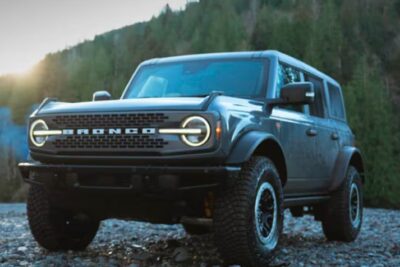
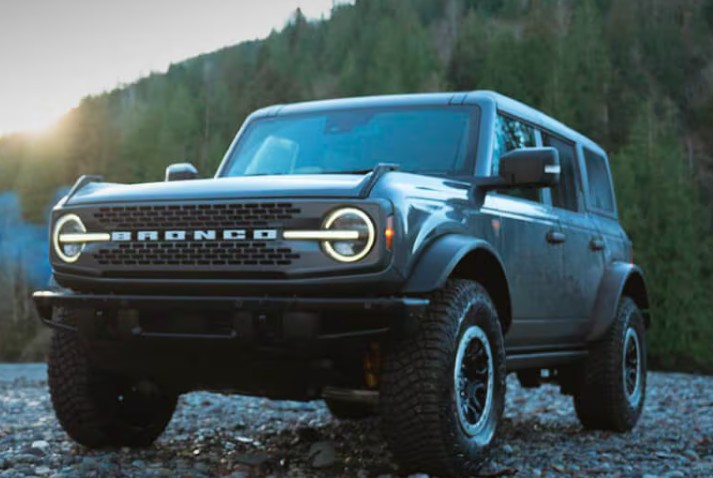
The 2026 Ford Bronco looks like it would tow a mountain if we attached a strong enough chain. Its square body, body-on-frame construction, low-range four-wheel drive, and broad stance give it the visual confidence of a serious workhorse.
Yet towing is not simply a contest of appearance, horsepower, or tire size.
For the 2026 U.S. lineup, most Ford Bronco configurations can tow up to 3,500 pounds, while the more powerful Bronco Raptor raises the ceiling to 4,500 pounds. One specific configuration—the four-door Badlands with the 2.7-liter EcoBoost V6—is rated slightly lower at 3,460 pounds. These figures apply only when the vehicle is properly equipped and operated within all weight limits.
That makes the Bronco useful for towing small campers, utility trailers, personal watercraft, motorcycles, and other recreational equipment. However, it remains an off-road SUV first. It does not offer the heavy-trailer capacity of a full-size pickup, and its maximum advertised number tells only part of the story.
Let us unpack the numbers, equipment, limitations, and practical considerations behind 2026 Ford Bronco towing.
2026 Ford Bronco Towing Capacity at a Glance
Here is the central information most shoppers need:
| 2026 Bronco configuration | Maximum loaded trailer weight |
|---|---|
| Most Bronco trims and powertrains | 3,500 lbs |
| Four-door Badlands with 2.7L EcoBoost V6 | 3,460 lbs |
| Bronco Raptor with 3.0L EcoBoost V6 | 4,500 lbs |
| Standard Bronco maximum tongue load | 350 lbs |
| Bronco Raptor maximum tongue load | 450 lbs |
Ford calculates the Bronco’s towing ratings using the SAE J2807 testing method. Maximum capability can still change according to cargo, accessories, vehicle configuration, optional equipment, and passenger count.
What Does “Maximum Loaded Trailer Weight” Mean?
The towing rating does not refer to an empty trailer sitting in a dealership lot.
It means the total trailer weight after adding:
- Camping supplies
- Water and propane
- Batteries
- Food and luggage
- Motorcycles or ATVs
- Tools and accessories
- Fuel carried by recreational equipment
- Permanently installed upgrades
Suppose a small travel trailer has a dry weight of 2,850 pounds. Add a battery, propane tank, water, kitchen supplies, outdoor furniture, and personal belongings, and the actual loaded weight could approach or exceed 3,500 pounds surprisingly quickly.
That is why we should compare the Bronco’s rating with the trailer’s loaded weight, not merely its advertised dry weight.
2026 Ford Bronco Towing Capacity by Engine
The 2026 Bronco offers three EcoBoost engines across the U.S. lineup. Engine choice affects acceleration and performance, but it does not automatically increase the towing rating.
2.3-Liter EcoBoost Four-Cylinder
The 2.3-liter EcoBoost four-cylinder can support a maximum conventional towing rating of 3,500 pounds when paired with the correct configuration and required towing equipment. It is available with either a seven-speed manual transmission or a ten-speed automatic transmission, depending on the trim.
This is an important reminder that cylinder count does not tell the whole towing story. A properly equipped four-cylinder Bronco may carry the same maximum trailer rating as a 2.7-liter model.
The smaller engine can make sense when we:
- Tow only occasionally
- Pull a lightweight utility trailer
- Carry bicycles, kayaks, or motorcycles
- Choose a compact teardrop camper
- Value a lower purchase price over maximum engine output
The 2.3-liter Bronco may need to work harder on steep grades, especially with a tall trailer or a heavily loaded cabin. Still, staying below the vehicle’s limits matters far more than chasing the largest engine badge.
Can the Manual Bronco Tow 3,500 Pounds?
Yes. Properly configured 2026 Broncos with the seven-speed manual transmission can be rated to tow up to 3,500 pounds.
Ford offers the manual only with the 2.3-liter engine. Its first six ratios function as normal driving gears, while the additional crawler gear is designed primarily for very low-speed off-road operation rather than ordinary highway towing.
A manual Bronco can therefore tow a trailer, but the driver must manage clutch engagement carefully. Repeatedly slipping the clutch while backing a trailer uphill can create unnecessary heat and wear.
2.7-Liter EcoBoost V6
The 2.7-liter EcoBoost V6 is paired with the ten-speed automatic transmission. Most compatible configurations retain the familiar 3,500-pound maximum towing rating.
The larger engine does not generally raise the tow rating above the four-cylinder’s maximum, but its stronger power delivery may feel more relaxed when:
- Merging into traffic
- Climbing grades
- Accelerating with a loaded trailer
- Driving at higher elevations
- Carrying passengers and cargo
Think of it as climbing the same hill with longer legs. The legal ceiling may remain similar, but the engine may reach it with less drama.
The Badlands 2.7-Liter Exception
The four-door 2026 Bronco Badlands with the 2.7-liter V6 has a maximum trailer rating of 3,460 pounds, not 3,500 pounds.
Ford lists that configuration with a gross combination weight rating of 9,120 pounds, a curb weight of 5,046 pounds, and a maximum payload rating of 1,204 pounds.
A 40-pound reduction sounds tiny—and in everyday terms, it is—but published limits still matter. We should never round a vehicle’s rating upward simply because another version of the same model can tow more.
3.0-Liter EcoBoost V6 in the Bronco Raptor
The 2026 Bronco Raptor uses a 3.0-liter EcoBoost V6 and is rated to tow up to 4,500 pounds. Its ten-speed automatic transmission, specialized chassis, and standard Raptor towing equipment give it a 1,000-pound advantage over most other Bronco models.
The Raptor also receives a maximum hitch tongue-load rating of 450 pounds, compared with 350 pounds for the regular Bronco.
That extra capacity expands the range of compatible trailers, but 4,500 pounds is still a moderate SUV rating. The Raptor may look like a desert-racing beast, yet it should not be mistaken for an F-150 wearing hiking boots.
2026 Ford Bronco Towing Capacity by Trim
Ford’s 2026 U.S. order guide lists these principal Bronco series:
- Base
- Big Bend
- Outer Banks
- Badlands
- Heritage Edition
- Stroppe Edition
- Raptor
The exact combination of body style, engine, axle ratio, transmission, and packages varies by trim.
Bronco Base Towing Capacity
Properly equipped Base models can tow up to 3,500 pounds with either the seven-speed manual or ten-speed automatic transmission.
The Base can be a sensible starting point for buyers who want Bronco capability without adding expensive luxury equipment. Fewer heavy options may also help preserve useful payload, although the doorjamb label on the individual vehicle remains the final authority.
Bronco Big Bend Towing Capacity
The 2026 Bronco Big Bend is rated for up to 3,500 pounds when properly equipped.
It can be a practical middle-ground choice. We get greater feature availability than on the Base without stepping immediately into the specialized suspension and heavier hardware of the most aggressive off-road trims.
Bronco Outer Banks Towing Capacity
The Outer Banks can tow up to 3,500 pounds with either the 2.3-liter EcoBoost or available 2.7-liter EcoBoost V6, depending on configuration.
For road-focused trailer use, the Outer Banks may appeal to owners who want a more comfort-oriented Bronco. Its available V6 can also provide confident acceleration, even though the maximum rating remains 3,500 pounds.
Bronco Badlands Towing Capacity
A 2026 Badlands with the 2.3-liter engine can tow up to 3,500 pounds. The four-door Badlands with the 2.7-liter V6 is rated at 3,460 pounds.
Badlands buyers often prioritize rock crawling, suspension articulation, and trail hardware. Those attributes do not necessarily translate into greater trailer capacity. In fact, rugged accessories and extra cargo can consume payload that would otherwise be available for trailer tongue weight.
Bronco Heritage Edition Towing Capacity
Properly equipped Heritage Edition models can tow up to 3,500 pounds with compatible engine and transmission combinations.
Ford made the ten-speed automatic available with the 2.3-liter engine on the 2026 Heritage Edition, expanding its powertrain choices for the model year.
Bronco Stroppe Edition Towing Capacity
The four-door 2026 Stroppe Edition uses the 2.7-liter V6 and is rated to tow up to 3,500 pounds. Ford lists its maximum payload at 1,141 pounds and its gross combination weight rating at 9,120 pounds.
The Stroppe Edition may be visually and mechanically adventurous, but its towing ceiling remains aligned with the mainstream Bronco range.
Bronco Raptor Towing Capacity
The Bronco Raptor stands alone at 4,500 pounds.
It is the model to choose when maximum Bronco towing capacity is essential. However, its higher curb weight, wider body, specialized tires, and premium pricing mean it is not automatically the ideal tow vehicle for every buyer.
Sometimes the better tool is not the biggest hammer. A standard Bronco towing a 2,000-pound trailer may be easier to own than buying a Raptor merely to access capacity we rarely use.
Two-Door vs Four-Door Bronco Towing
Both two-door and four-door Bronco configurations can reach a 3,500-pound towing rating where offered and properly equipped.
The more meaningful differences appear in wheelbase, cabin room, cargo space, curb weight, and payload.
Why the Four-Door May Feel More Stable
A longer wheelbase generally creates a calmer towing platform. The four-door Bronco places more distance between its axles, which can make trailer movements feel less abrupt.
It also provides:
- Easier access to the rear seats
- More space for passengers
- Greater interior cargo flexibility
- A longer stance on the highway
However, the four-door is usually heavier. More vehicle weight can reduce remaining payload, depending on the specific trim and options.
Why the Two-Door Still Makes Sense
The two-door Bronco is shorter, lighter in many configurations, and easier to maneuver on narrow trails.
It can be a good match for:
- Small utility trailers
- Lightweight fishing boats
- Personal watercraft
- Compact off-road campers
- Motorcycle trailers
Its short wheelbase demands more attention, particularly when crosswinds or passing trucks disturb the trailer. It can tow capably, but it may feel busier than a long-wheelbase truck.
Understanding the Bronco Trailer Tow Equipment
Every 2026 Bronco except the Raptor includes a Trailer Tow Prep Package, but the regular Bronco still requires dealer-installed OEM towing equipment to achieve its published trailer capability. The Raptor includes Tow Package 2 as standard equipment.
What the Bronco Towing Equipment Includes
According to Ford’s 2026 towing guide, the regular Bronco’s dealer-installed equipment can include:
- Seven-wire harness
- Four-pin and seven-pin trailer connector
- Trailer module
- Hitch receiver
The Bronco Raptor receives standard towing-related content that includes the hitch and electrical connections, along with an auxiliary automatic-transmission oil cooler and Tow/Haul mode. Trailer Sway Control is standard across the lineup. Content can vary by trim and powertrain.
Why the Electrical Connector Matters
A trailer connector does more than illuminate the trailer’s taillights.
Depending on its design and equipment, it may support:
- Brake lights
- Turn signals
- Running lights
- Reverse-light circuits
- Electric trailer brakes
- Auxiliary battery charging
- Trailer-system monitoring
A simple four-pin connector handles basic lighting functions. A seven-pin connection is typically needed when a trailer uses electric brakes or additional circuits.
Do Not Assume a Visible Hitch Means Full Capability
A receiver attached to the Bronco does not automatically prove that the SUV is prepared to tow its maximum rating.
We must also verify:
- Wiring configuration
- Trailer module
- Hitch class and label
- Ball-mount rating
- Hitch-ball size
- Vehicle-specific tow rating
- Trailer-brake requirements
- Remaining payload
A hitch is only one link in the chain. Towing capacity is limited by the weakest component.
Ford Bronco Tongue-Weight Limits
Tongue weight is the downward force that the trailer applies to the hitch.
Ford lists maximum tongue loads of:
- 350 pounds for the standard Bronco
- 450 pounds for the Bronco Raptor
This number can become the limiting factor before we reach the maximum trailer rating.
Why Tongue Weight Matters
Too little tongue weight can allow the trailer to sway. Too much can overload the Bronco’s rear axle, hitch, suspension, or available payload.
Many conventional trailers place roughly 10% to 15% of their loaded weight on the hitch, although owners must follow the trailer manufacturer’s instructions.
For illustration, a 3,200-pound loaded trailer with 12% tongue weight would place approximately 384 pounds on the hitch. That would exceed the regular Bronco’s published 350-pound maximum tongue load, even though the trailer itself weighs less than 3,500 pounds.
This is why the headline rating cannot be used alone.
Tongue Weight Counts Against Payload
The hitch load becomes cargo carried by the Bronco.
Imagine a Bronco with 1,200 pounds of available payload. We add:
- Driver and passengers: 600 pounds
- Luggage and supplies: 180 pounds
- Trailer tongue weight: 350 pounds
- Hitch accessories: 40 pounds
The combined load reaches 1,170 pounds. Only 30 pounds of theoretical payload remains.
That example shows why a Bronco can run out of payload before it runs out of advertised towing capacity.
Payload: The Number Towing Buyers Often Miss
Payload is the amount of weight the Bronco can carry in and on the vehicle.
It includes:
- People
- Luggage
- Pets
- Roof-mounted equipment
- Aftermarket bumpers
- Recovery gear
- Tools
- Hitch hardware
- Trailer tongue weight
Ford’s technical specifications show significant payload differences among 2026 configurations. For example, the four-door automatic Base is listed at up to 1,395 pounds, while the Raptor is listed at up to 1,155 pounds. The actual vehicle’s doorjamb label should always be used because installed options and accessories can change its capacity.
How to Calculate Available Payload
Use this basic formula:
Available payload – occupants – cargo – accessories – tongue weight = remaining payload
Suppose the doorjamb label lists 1,250 pounds:
- Four passengers: 650 pounds
- Camping gear: 180 pounds
- Cooler and food: 70 pounds
- Hitch and ball mount: 40 pounds
- Trailer tongue weight: 300 pounds
Total load: 1,240 pounds.
Remaining payload: only 10 pounds.
The trailer may be comfortably below 3,500 pounds, but the vehicle is already close to its carrying limit.
What Are GVWR, GCWR, and GAWR?
Towing terminology can feel like alphabet soup served in an owner’s manual. Fortunately, the ideas are straightforward.
GVWR: Gross Vehicle Weight Rating
GVWR is the maximum allowed weight of the loaded Bronco itself.
It includes the vehicle, passengers, cargo, accessories, fuel, hitch hardware, and trailer tongue weight.
GCWR: Gross Combination Weight Rating
GCWR is the maximum combined weight of the loaded Bronco and loaded trailer.
For example, Ford lists a GCWR of 10,650 pounds for the Bronco Raptor. The four-door Badlands with the 2.7-liter V6 is listed at 9,120 pounds.
Even when the trailer remains below its individual rating, the combined vehicle-and-trailer weight must not exceed GCWR.
GAWR: Gross Axle Weight Rating
GAWR is the maximum permitted load on an individual axle.
A heavy tongue load presses down primarily on the rear axle. Therefore, a Bronco can theoretically remain below GVWR while still exceeding its rear GAWR if weight is poorly distributed.
Trailer Frontal Area: The Invisible Towing Limit
Weight is not the only force the Bronco must overcome. Air resistance can be just as demanding.
Ford limits the maximum trailer frontal area to:
- 30 square feet with the regular Bronco’s dealer-installed towing equipment
- 40 square feet with the Bronco Raptor’s Tow Package 2
Frontal area is the surface presented to the air as the Bronco and trailer move forward.
Why Shape Can Matter as Much as Weight
A low, streamlined trailer may tow more easily than a lighter but taller box-shaped camper.
Picture the difference between pulling a sled and pushing a wardrobe through the wind. The scale may show similar weight, but the wardrobe fights the air like a sail.
Excessive frontal area can:
- Increase engine load
- Raise transmission temperature
- Reduce fuel economy
- Slow acceleration
- Increase downshifting
- Make crosswinds more noticeable
- Reduce performance on grades
A trailer can therefore be below the Bronco’s weight rating yet still exceed Ford’s frontal-area limitation.
What Can a 2026 Ford Bronco Tow?
A properly equipped Bronco may be suitable for many lightweight recreational trailers.
Potential examples include:
- Small utility trailers
- Lightweight teardrop campers
- Compact pop-up campers
- Personal watercraft trailers
- Small fishing boats
- Motorcycle trailers
- Some lightweight enclosed trailers
- Small off-road camping trailers
Compatibility depends on the trailer’s actual loaded weight, tongue weight, frontal area, brake equipment, and the Bronco’s remaining payload.
Can a Bronco Tow a Travel Trailer?
Yes, but the suitable travel-trailer category is relatively narrow.
Many small campers advertise dry weights below 3,500 pounds. Once loaded for a trip, however, they may exceed the Bronco’s trailer rating, tongue-load limit, payload, or frontal-area restriction.
A cautious Bronco shopper should examine:
- Gross vehicle weight rating of the trailer
- Realistic loaded weight
- Loaded tongue weight
- Exterior height and width
- Trailer-brake equipment
- Bronco payload label
- Passenger and cargo weight
Choosing a trailer with comfortable margin is smarter than buying one that fits only when every tank is empty and every suitcase stays home.
Can a Bronco Tow a Boat?
The Bronco can tow some small boats, including certain fishing boats, personal watercraft, and lightweight runabouts.
Remember to include:
- Boat weight
- Trailer weight
- Fuel
- Batteries
- Motor
- Safety gear
- Fishing equipment
- Coolers
- Water retained after launch
Boat trailers also operate around water, so connector maintenance, wheel-bearing care, corrosion inspection, and functioning trailer brakes deserve regular attention.
Can a Bronco Tow an ATV or Side-by-Side?
Often, yes.
We need to combine the weight of:
- The ATV or side-by-side
- Utility trailer
- Fuel
- Ramps
- Tools
- Spare parts
- Helmets and riding gear
A single ATV on a lightweight open trailer can fit comfortably within the Bronco’s capability. A large side-by-side on a heavy steel trailer may approach the limit much faster.
Trailer Brakes and Legal Requirements
Trailer-brake laws vary by state, trailer weight, and trailer type. Owners should confirm the rules that apply in every state they plan to enter.
Even where the law permits an unbraked trailer at a particular weight, brakes may provide a valuable safety margin. The Bronco’s brakes must otherwise control both the SUV and the momentum of the trailer.
A brake controller, properly adjusted electric brakes, and correct wiring can make stopping feel more predictable—especially on long descents.
How Altitude Affects Bronco Towing
Ford’s maximum rating is not a promise of identical performance under every condition.
At higher elevations, engines and cooling systems work under different demands. Turbocharging helps the EcoBoost engines compensate for thinner air, but the total combination still faces:
- Long grades
- Reduced cooling efficiency
- Higher engine load
- More frequent transmission shifts
- Longer downhill braking events
Ford advises considering a more capable vehicle when towing in demanding conditions such as mountainous terrain or when the trailer creates substantial aerodynamic drag.
We should leave a larger safety margin when a journey involves the Rockies, extreme heat, or repeated steep climbs.
Does the Sasquatch Package Increase Towing Capacity?
No. The Sasquatch Package does not raise the regular Bronco’s maximum towing rating above 3,500 pounds.
Its 35-inch tires, axle gearing, locking differentials, and off-road equipment improve trail capability rather than converting the Bronco into a heavier-duty tow vehicle.
In some configurations, added equipment can also reduce payload. Ford’s specifications, for example, list lower maximum payload for several Sasquatch-equipped models than for comparable standard configurations.
The Sasquatch Package helps the Bronco crawl over obstacles. It does not help it leap over towing limits.
Is the Bronco Raptor the Best Bronco for Towing?
On paper, yes. It offers:
- The highest Bronco tow rating
- A 4,500-pound maximum
- A 450-pound tongue-load ceiling
- Standard Tow Package 2
- Tow/Haul mode
- An auxiliary automatic-transmission oil cooler
- A 40-square-foot trailer frontal-area allowance
But “best” depends on the job.
The Raptor is wide, expensive, and built around high-performance off-road driving. A buyer who tows a 1,500-pound utility trailer twice a year may not benefit enough to justify it.
For trailers regularly approaching 4,000 pounds, the Raptor is the only 2026 Bronco with adequate published capacity. For heavier or taller trailers, a pickup or larger SUV may be the more appropriate tool.
How to Tow Safely With a Ford Bronco
Towing well is less about bravado and more about preparation.
Before Connecting the Trailer
Check:
- Bronco payload label
- Trailer loaded weight
- Tongue weight
- Hitch and ball ratings
- Ball size
- Coupler latch
- Safety chains
- Electrical connection
- Trailer-brake operation
- Tire pressure
- Wheel-lug torque
- Mirrors and visibility
- Cargo security
Ford states that trailers over 2,000 pounds require dealer-installed towing equipment on the regular Bronco. Ford also warns that towing without required equipment may affect the New Vehicle Limited Warranty.
Balance the Trailer Correctly
Ford recommends placing approximately 60% of allowable cargo weight in the front half of the trailer and 40% in the rear, while remaining within the applicable tongue-weight limit. Cargo should also be balanced side to side and secured against movement.
An improperly balanced trailer can behave like a shopping cart with a broken wheel—calm one second and wandering the next.
Practice Before Entering Traffic
Before the first major trip, practice:
- Wide turns
- Controlled braking
- Reversing
- Parking
- Lane positioning
- Judging overhead clearance
Ford recommends practicing turning, stopping, and backing in an area away from heavy traffic.
A Simple Reversing Technique
Place one hand at the bottom of the steering wheel. Move that hand in the direction you want the trailer to travel.
Make small corrections and move slowly. A spotter can help, but both people should agree on clear hand signals before reversing.
Common Bronco Towing Mistakes
Using Dry Weight as the Final Number
Dry weight usually excludes cargo and may exclude batteries, water, or optional equipment.
Ignoring Payload
Passengers and tongue weight may consume the Bronco’s carrying capacity before the trailer reaches 3,500 pounds.
Buying Too Much Trailer
A trailer that barely fits the rating on paper may become overweight after normal trip preparation.
Assuming the V6 Always Tows More
The 2.7-liter V6 offers stronger performance, but most standard Broncos remain capped at 3,500 pounds.
Overlooking Frontal Area
A tall camper may create more aerodynamic strain than a lower trailer of similar weight.
Adding Heavy Accessories Without Recalculating
Steel bumpers, winches, roof tents, skid plates, and recovery equipment all consume payload.
Forgetting the Hitch Hardware Weight
The ball mount, hitch ball, and related components count against payload and must carry ratings equal to or greater than the planned load.
Should We Tow at the Maximum Rating?
A maximum rating is a boundary, not a target.
Running close to the limit leaves less room for:
- Unexpected cargo
- Scale variation
- Strong winds
- Steep grades
- High temperatures
- Extra passengers
- Future trailer upgrades
- Water or fuel added during a trip
Keeping a reasonable margin can improve comfort and reduce stress on the vehicle and driver.
There is no universal percentage that guarantees safety because trailer design, road conditions, payload, and weight distribution differ. The best approach is to calculate every limit independently and select a trailer that remains comfortably inside all of them.
How to Confirm Your Exact Bronco Towing Capacity
Before towing, use vehicle-specific information rather than relying only on a general article.
Check:
- The certification and payload labels on the driver-side doorjamb
- The owner’s manual
- Ford’s 2026 Bronco towing guide
- The hitch-receiver label
- Axle-ratio information
- Trailer identification plate
- Actual scale weights
- Guidance from a Ford dealer when equipment is unclear
Ford notes that towing capacity varies according to cargo, configuration, accessories, options, and passenger count.
A public truck scale can provide the clearest picture. Weigh the loaded Bronco and trailer as they will travel—not empty, not estimated, and not based on brochure numbers.
Final Thoughts on 2026 Ford Bronco Towing
The 2026 Ford Bronco is a capable light-duty tow vehicle wrapped in one of the most adventurous SUV designs on the road.
Most configurations can tow up to 3,500 pounds, while the Bronco Raptor reaches 4,500 pounds. The four-door Badlands with the 2.7-liter V6 carries a slightly lower 3,460-pound rating. Standard Bronco models have a 350-pound maximum tongue load, while the Raptor allows up to 450 pounds.
Those numbers make the Bronco a realistic partner for small boats, utility trailers, motorcycles, personal watercraft, compact campers, and other lightweight recreational loads.
Still, the trailer rating is only the front door of the calculation. Payload, tongue weight, axle ratings, GCWR, equipment, aerodynamics, cargo, and passengers all shape what the Bronco can safely handle.
When we respect those limits, the Bronco can carry the adventure beyond the end of the pavement. When we ignore them, even a short journey can become a white-knuckle contest between physics and optimism.
Frequently Asked Questions
1. How much can a 2026 Ford Bronco tow?
Most properly equipped 2026 Ford Bronco models can tow up to 3,500 pounds. The Bronco Raptor can tow up to 4,500 pounds, while the four-door Badlands with the 2.7-liter V6 is rated at 3,460 pounds.
2. Does the 2.7-liter Bronco tow more than the 2.3-liter model?
Generally, no. Both engines can support ratings of up to 3,500 pounds in compatible configurations. The 2.7-liter V6 may deliver stronger acceleration under load, but it does not normally increase the maximum trailer rating.
3. Does the 2026 Bronco come with a tow hitch?
Non-Raptor Broncos include a Trailer Tow Prep Package, but Ford specifies dealer-installed OEM towing equipment for the regular Bronco. The Bronco Raptor includes Tow Package 2 as standard. Equipment content should be confirmed for the individual vehicle.
4. Can the Ford Bronco tow a camper?
Yes, the Bronco can tow certain lightweight campers. Buyers must consider the camper’s loaded weight, tongue weight, frontal area, trailer brakes, and the Bronco’s remaining payload—not just the camper’s advertised dry weight.
5. Is the Bronco or Bronco Sport better for towing?
The full-size Bronco offers the greater maximum capacity. The 2026 Bronco reaches 3,500 pounds in most configurations or 4,500 pounds as a Raptor, while the 2026 Bronco Sport is rated up to 2,200 pounds.
If you want to see other articles similar to 2026 Ford Bronco Towing: Capacity, Equipment, and Real-World Limits you can visit the Compare category.
Ford Bronco Pros and Cons: Complete Buyer’s Guide
Ford Bronco Gas Tank Size: 2026 U.S. Guide
2026 Ford Bronco Big Bend vs Outer Banks: Features and Differences Explained
2026 Ford Bronco Trim Levels in Order: Complete U.S. Guide
Ford Bronco Models Explained for U.S. Buyers
Ford Bronco Cargo Space: Dimensions, Capacity, and Practicality Explained
Leave a Reply
Related Topics