
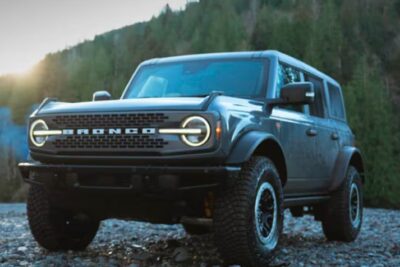
2026 Ford Bronco Big Bend vs Outer Banks: Features and Differences Explained

Contents in this publication
- 2026 Bronco Big Bend vs Outer Banks at a Glance
- What Is the Main Difference Between Big Bend and Outer Banks?
- Exterior Styling: Rugged Simplicity or Polished Presence?
- Wheels and Tires
- Interior Quality and Cabin Materials
- Comfort Features and Daily Driving
- Technology and Infotainment
- Safety and Driver-Assistance Features
- Engine Comparison
- Transmission Differences
- Off-Road Capability in Standard Form
- Sasquatch Package Comparison
- Black Diamond and Appearance Packages
- 60th Anniversary Package
- Ride Comfort and Road Manners
- Fuel Economy Expectations
- Towing Capability
- Big Bend Pros and Cons
- Outer Banks Pros and Cons
- Who Should Buy the 2026 Bronco Big Bend?
- Who Should Buy the 2026 Bronco Outer Banks?
- Is Outer Banks Worth It Over Big Bend?
- Best Configuration for Most Buyers
- Final Verdict: Ford Bronco Big Bend vs Outer Banks
- Frequently Asked Questions
The 2026 Ford Bronco Big Bend vs Outer Banks comparison is less about choosing between a basic Bronco and a capable one. Both are genuine body-on-frame, four-wheel-drive Broncos with removable body panels, trail-ready hardware, and the kind of squared-off styling that makes an ordinary parking lot feel slightly more adventurous.
The real question is this: Do we want a simpler, more customizable Bronco, or a more polished Bronco with comfort and convenience features already built in?
That distinction matters because the Big Bend and Outer Banks share more mechanical DNA than their different personalities suggest. In standard form, they use the same suspension family, offer the same five G.O.A.T. Modes, ride on 32-inch tires, and deliver nearly identical basic off-road dimensions. However, the Outer Banks adds an automatic transmission, upgraded seats, more driver-assistance technology, larger wheels, refined exterior details, and the standard Mid Package.
In plain English, the Big Bend is the flexible adventurer, while the Outer Banks is the well-dressed adventurer.
This detailed guide focuses on the 2026 U.S.-market four-door Ford Bronco, not the smaller Bronco Sport.
2026 Bronco Big Bend vs Outer Banks at a Glance
Here is the simplest way to understand the comparison:
| Category | 2026 Bronco Big Bend | 2026 Bronco Outer Banks |
|---|---|---|
| Body style | Four-door only | Four-door only |
| Standard engine | 2.3L EcoBoost four-cylinder | 2.3L EcoBoost four-cylinder |
| Optional engine | Not listed as available | 2.7L EcoBoost V6 |
| Standard transmission | Seven-speed manual | Ten-speed automatic |
| Optional transmission | Ten-speed automatic | None needed; automatic standard |
| Standard tires | 32-inch all-terrain | 32-inch all-terrain |
| Standard wheels | 17-inch aluminum | 18-inch machined aluminum |
| Seats | Cloth, manually adjustable | Heated leather-trimmed/vinyl, power-adjustable |
| Flooring | More utilitarian configuration | Carpeted front and rear |
| Mid Package | Available | Standard |
| Lux Package | Not available | Available |
| Sasquatch Package | Available | Available |
| Main personality | Value, simplicity, customization | Comfort, technology, premium appearance |
Ford lists both models as four-door Broncos. The Big Bend comes standard with the 300-hp 2.3-liter EcoBoost four-cylinder and gives buyers a choice between a seven-speed manual and ten-speed automatic. The Outer Banks uses the automatic as standard equipment and can be upgraded to the 330-hp 2.7-liter EcoBoost V6.
What Is the Main Difference Between Big Bend and Outer Banks?
The most important difference is not raw off-road ability. It is how much everyday comfort and technology we receive from the factory.
The Big Bend starts with the Bronco essentials and leaves room to build the vehicle around our priorities. We can keep it relatively simple, preserve the manual transmission, add trail-oriented equipment, or select appearance packages without paying for every luxury feature.
The Outer Banks builds on the Big Bend by adding equipment that many commuters and family buyers will use every day. Standard upgrades include:
- Ten-speed automatic transmission
- Heated front seats
- Heated steering wheel
- Leather-trimmed and vinyl upholstery
- Power-adjustable front seats
- Dual-zone automatic climate control
- Blind-spot monitoring
- Rear cross-traffic alert
- Lane-keeping technology
- Rear parking sensors
- Remote start
- Intelligent access
- 18-inch wheels
- Body-color fender flares
- LED fog lamps and LED taillamps
- Carpeted flooring
Ford’s 2026 order guide describes the Outer Banks as including all Big Bend standard equipment, then adding its own mechanical, styling, seating, safety, and Mid Package features.
That is why the Outer Banks feels less like a completely different off-roader and more like a Big Bend wearing better boots, a smarter jacket, and a smartwatch.
Exterior Styling: Rugged Simplicity or Polished Presence?
Big Bend Exterior Design
The Big Bend keeps the Bronco’s classic, utilitarian appearance intact. It comes with 17-inch Carbonized Gray-painted aluminum wheels, privacy glass behind the front row, and the familiar upright Bronco silhouette. Ford also makes several visual and equipment packages available, including Free Wheeling, Black Appearance, Black Diamond, and Sasquatch configurations.
Its appearance is rugged without trying too hard. The smaller wheels and taller tire sidewalls create a traditional off-road stance, while the darker, simpler exterior trim communicates that this Bronco is meant to be used rather than merely displayed.
The Big Bend may actually appeal more to traditionalists because it looks less polished. Mud, trail dust, and minor scratches tend to feel natural on it.
Outer Banks Exterior Design
The Outer Banks takes the same basic shape and cleans up the details.
It receives:
- Body-color fender flares
- A black molded-in-color grille
- Contrasting white “BRONCO” lettering
- Powder-coated side steps
- LED fog lamps
- LED taillamps
- Body-color-painted mirror caps
- 18-inch bright machined, high-gloss black-painted aluminum wheels
These changes make it look more finished and more expensive. The body-color flares soften the utilitarian contrast found on lower trims, while the machined wheels add a flash of upscale SUV styling. Ford also offers body-color-painted hard-top configurations on the Outer Banks.
Which Exterior Looks Better?
That depends on what we think a Bronco should be.
The Big Bend looks like it is waiting for a roof rack, muddy recovery boards, and a weekend in the woods. The Outer Banks looks ready for those things too, but it would not appear out of place outside an upscale restaurant afterward.
We would choose the Big Bend for a classic off-road aesthetic. We would choose the Outer Banks for a cleaner, more coordinated design.
Wheels and Tires
The standard Big Bend uses 17-inch Carbonized Gray-painted aluminum wheels, while the Outer Banks receives 18-inch bright machined aluminum wheels. Both use tires with an approximate 32-inch overall diameter in standard form, although the tread and sizing differ slightly. Ford identifies the Big Bend’s standard setup as a 17-inch wheel with an all-terrain tire, while the Outer Banks uses a P255/70R18 all-terrain tire.
Why the Big Bend Wheel Setup May Be Better Off Road
A smaller wheel combined with a taller tire sidewall generally gives us more cushioning over rocks, roots, potholes, and washboard surfaces. It also creates more visual sidewall, which suits the Bronco’s trail-oriented character.
The Big Bend’s 17-inch setup is therefore the more natural foundation for drivers who intend to leave pavement regularly.
Why the Outer Banks Wheels May Be Better on the Street
The Outer Banks’ 18-inch wheels create a more upscale appearance and may deliver slightly sharper steering response on pavement. They fill the wheel arches more dramatically, which helps the vehicle look substantial even without the Sasquatch Package.
The trade-off is that larger wheels are easier to scuff and provide less tire sidewall between the wheel and the terrain.
Interior Quality and Cabin Materials
Big Bend Interior
The Big Bend uses cloth upholstery and manually adjustable front bucket seats. Its cabin is functional rather than luxurious, although it still includes Bronco essentials such as a leather-wrapped steering wheel, a digital instrument display, modern infotainment, and modular interior touches. Ford specifies six-way manual adjustment for both front occupants.
For many buyers, this is enough. Cloth can be comfortable in hot weather, does not show every crease, and fits the Big Bend’s straightforward personality.
The simplicity also reduces the number of power mechanisms and premium surfaces we may worry about damaging while camping, carrying pets, or climbing into the cabin with wet clothing.
Outer Banks Interior
The Outer Banks makes a much larger leap inside than its exterior differences might suggest.
Standard equipment includes:
- Leather-trimmed and vinyl seating
- Heated front bucket seats
- Ten-way power driver’s seat
- Eight-way power passenger seat
- Second-row center armrest with two cupholders
- Heated steering wheel
- Leather-wrapped gear selector
- Carpeted front and rear flooring
- Carpeted front floor mats
Ford’s order guide confirms that the Outer Banks’ heated front seats include ten-way power adjustment for the driver and eight-way adjustment for the passenger.
This is one of the clearest reasons to upgrade. When we use a Bronco as a daily driver, seat comfort matters every single morning. Power adjustment makes it easier to find an ideal driving position, while heating transforms cold-weather starts from a chore into something almost pleasant.
A Word About Carpeted Flooring
Carpet makes the Outer Banks feel warmer, quieter, and more conventional. It also creates a disadvantage for frequent off-road use because mud, sand, water, and pet hair are more difficult to remove.
The Big Bend is not automatically a full washout-cabin model in standard specification, but its simpler material mix still feels more appropriate for dirty adventures. Buyers who prioritize easy cleaning should study the available Black Diamond Package rather than assuming the Outer Banks’ premium cabin is the best choice.
Comfort Features and Daily Driving
This is where the Outer Banks begins pulling away.
The standard Mid Package brings features that we notice constantly rather than once or twice a year. These include:
- Dual-zone electronic automatic temperature control
- Intelligent keyless access
- Auto-dimming rearview mirror
- Heated front seats
- Heated steering wheel
- Remote start
- Rear parking sensors
- Illuminated sliding vanity mirrors
- Dual smart-charging USB ports
- 400-watt Pro Power Onboard outlet
- Connected navigation features
- Ford Co-Pilot360 technology
The Mid Package is optional on the Big Bend but standard on the Outer Banks.
Does Adding the Mid Package Make Big Bend Equal to Outer Banks?
Not completely.
A Big Bend with the Mid Package can close the technology gap, but it still does not automatically gain all the Outer Banks’ distinctive equipment. The Outer Banks also includes power leather-trimmed/vinyl seats, body-color exterior details, 18-inch wheels, carpeted flooring, side steps, and access to the Lux Package.
Once we add the automatic transmission and Mid Package to a Big Bend, the price difference may shrink enough that the Outer Banks starts making more sense. This is why comparing only base prices can be misleading. The correct comparison is between the actual configurations we would order.
Technology and Infotainment
Both trims benefit from the Bronco’s modern digital architecture, including a large central touchscreen, smartphone connectivity, and a 12-inch digital instrument cluster. The major difference is not the screen itself but the supporting technology around it.
The Big Bend provides the core interface, while the Outer Banks adds more convenience through its standard Mid Package.
Outer Banks Lux Package
The Outer Banks can go one step further with the available Lux Package. Ford lists the following upgrades:
- 360-degree camera
- Adaptive cruise control
- Twelve-speaker B&O audio system with subwoofer
- Evasive Steering Assist
- Front parking sensors
- LED approach lamps in the exterior mirrors
These features are incremental additions above the standard Mid Package.
The 360-degree camera is particularly valuable in a Bronco. A tall hood, upright body, rear-mounted spare tire, and wide trail obstacles can make placement difficult. The camera system acts like an extra set of eyes around the vehicle, whether we are navigating rocks or a crowded parking garage.
Adaptive cruise control is equally useful for highway travel. It does not make the Bronco quieter or more aerodynamic, but it makes long distances less tiring.
Can the Big Bend Get the Lux Package?
No. For 2026, the Lux Package is associated with the Outer Banks and higher applicable trims, not the Big Bend. Buyers who want adaptive cruise control, the 360-degree camera, front parking sensors, and the premium B&O system should therefore choose the Outer Banks rather than attempting to build an equivalent Big Bend.
Safety and Driver-Assistance Features
The Big Bend includes essential active-safety technology, including automatic emergency braking and a rearview camera. Selecting the Mid Package expands its driver-assistance equipment.
On the Outer Banks, the broader Ford Co-Pilot360 suite comes standard through the Mid Package. It includes:
- Automatic high beams
- Blind Spot Information System
- Cross-Traffic Alert
- Lane-Keeping Alert
- Lane-Keeping Aid
- Driver Alert
- Pre-Collision Assist
- Pedestrian Detection
- Forward Collision Warning
- Dynamic Brake Support
- Rearview camera with backup guidelines
Ford also equips the Outer Banks with rear parking sensors as standard.
These features do not turn the Bronco into a self-driving vehicle, nor do they replace attentive driving. They simply reduce stress in common situations. Blind-spot monitoring is useful because the Bronco’s removable roof structure, pillars, and spare tire can make rearward visibility feel more truck-like than car-like.
Engine Comparison
Standard 2.3L EcoBoost Four-Cylinder
Both trims use Ford’s 2.3-liter EcoBoost turbocharged four-cylinder as the standard engine. It produces 300 horsepower and 325 lb-ft of torque when operated under Ford’s specified fuel conditions.
This engine is not merely an economy choice. It has enough low-end torque for everyday driving, highway merging, moderate towing, and recreational off-roading.
In a large, upright SUV, no engine will make the Bronco feel like a lightweight sports car. Still, the 2.3-liter delivers respectable response without forcing us into a V6.
Optional 2.7L EcoBoost V6
The 2.7-liter EcoBoost V6 is available on the Outer Banks but not shown as an engine option for the 2026 Big Bend. It produces 330 horsepower and 415 lb-ft of torque.
The horsepower increase is modest, but the torque gain is significant. That extra shove is noticeable when:
- Accelerating with passengers and cargo
- Climbing long grades
- Running oversized Sasquatch tires
- Passing at highway speeds
- Towing
- Crawling through deep sand or loose terrain
The V6 makes the Bronco feel less strained, especially after adding heavy options.
Is the V6 Necessary?
No. The four-cylinder is capable enough for most drivers.
The V6 is worth considering when we plan to order Sasquatch, tow regularly, live at elevation, carry heavy equipment, or simply prefer stronger acceleration. Buyers focused on comfort rather than speed may be better served by keeping the four-cylinder and spending the difference on the Lux Package or roof options.
Transmission Differences
The Big Bend gives us a choice between:
- Seven-speed manual transmission
- Ten-speed automatic transmission
The Outer Banks comes only with the ten-speed automatic.
Why Choose the Big Bend Manual?
The manual transmission is one of the Big Bend’s strongest advantages. It provides a more mechanical, engaging experience and includes a dedicated crawler gear for slow trail work.
A manual Bronco feels old-school in the best sense. We participate directly rather than simply selecting “Drive” and letting software manage everything.
It is also becoming increasingly rare. For some buyers, preserving that experience is more important than heated seats or adaptive cruise control.
Why Choose the Outer Banks Automatic?
The automatic is easier in traffic, smoother for most family drivers, and required with the optional 2.7-liter V6. It also enables trail technologies such as Ford Trail Control, Trail Turn Assist, and Trail One-Pedal Drive across appropriately equipped models.
For a daily-driven Bronco that spends time in urban congestion, the automatic is the obvious choice.
Off-Road Capability in Standard Form
Here is the surprise: The standard Big Bend and Outer Banks are mechanically very similar off road.
Both use:
- HOSS 1.0 suspension
- Standard four-wheel drive
- 32-inch tires
- Five G.O.A.T. Modes
- Comparable approach and departure angles
- Approximately 8.4 inches of standard ground clearance
- A maximum water-fording claim of up to 31.5 inches in standard configuration
Ford’s technical specifications group the standard four-door Big Bend and Outer Banks together for key off-road measurements. They share a 35.7-degree approach angle, 29.8-degree departure angle, 8.4 inches of ground clearance, and 31.5 inches of standard water-fording capability.
That means the Outer Banks is not fundamentally less capable simply because it looks more polished.
Where Big Bend Has a Practical Trail Advantage
The Big Bend’s 17-inch wheels, cloth cabin, lower replacement-cost trim, and simpler appearance make us less nervous about rough use.
We may be more willing to squeeze between branches or climb into it with muddy boots. Capability is not only about axle ratios and suspension travel; sometimes it is about how comfortable we feel using the vehicle as intended.
Where Outer Banks Has a Practical Trail Advantage
The Outer Banks’ standard automatic transmission enables useful electronic trail aids. Its side steps help passengers enter the cabin, although they can reduce clearance around obstacles and may not be ideal for technical terrain.
The available 360-degree camera in the Lux Package is also a genuine off-road advantage. It helps us see tire placement and nearby obstacles that would otherwise disappear below the hood line.
Sasquatch Package Comparison
The Sasquatch Package is available on both trims and dramatically changes their capability.
It adds equipment such as:
- 35-inch rugged-terrain tires
- 17-inch wheels
- Advanced four-wheel drive with automatic on-demand engagement
- Electronic-locking front and rear axles
- 4.7 final-drive ratio
- High-clearance suspension
- Wider fender flares
- Position-sensitive Bilstein dampers
Ford offers Sasquatch on both the Big Bend and Outer Banks, with maximum ground clearance increasing to approximately 11.5 inches on the four-door configuration.
Big Bend Sasquatch
This configuration makes sense for someone who prioritizes capability over luxury. It combines the Big Bend’s simpler cabin and styling with serious factory off-road hardware.
A Big Bend Sasquatch is like a durable hiking boot: not fancy, but ready to get dirty.
Outer Banks Sasquatch
The Outer Banks Sasquatch offers nearly the same key trail equipment while preserving heated seats, automatic climate control, power seating, and available high-end technology.
It is the better all-rounder for someone who wants to explore difficult trails on Saturday and commute comfortably on Monday.
Which Sasquatch Build Is Better?
Choose the Big Bend Sasquatch when value and rugged simplicity matter most.
Choose the Outer Banks Sasquatch when we want maximum comfort without sacrificing aggressive tires, locking differentials, and high-clearance suspension.
Black Diamond and Appearance Packages
Big Bend Black Diamond Package
One of the Big Bend’s most interesting advantages is access to the Black Diamond Package. Ford positions it as a way to add more serious protective and trail-oriented equipment without moving into a completely different trim.
Depending on final configuration, this package can add ruggedized exterior hardware, more durable interior materials, auxiliary switches, and off-road protection. It suits buyers who would rather spend money on capability than powered seats.
Outer Banks Black Appearance Package
The Outer Banks offers the Black Appearance Package, which leans more heavily toward visual drama. Black wheels, dark trim, and coordinated exterior elements give it a stronger presence.
Both trims can therefore be personalized, but their packages follow the same overall philosophy as the vehicles themselves: the Big Bend tends toward utility, while the Outer Banks leans toward premium style.
60th Anniversary Package
The 2026 Bronco introduces a 60th Anniversary Package exclusively for the Outer Banks. Ford says it starts with the Outer Banks and can be paired with either the standard 2.3-liter engine or optional 2.7-liter V6.
This heritage-inspired package adds distinctive colors, badging, graphics, wheels, and retro design elements. It does not necessarily make the Outer Banks better for every buyer, but it gives collectors and nostalgic owners an option unavailable on the Big Bend.
Those shopping purely on features may find it unnecessary. Those who view the Bronco as an emotional purchase may find it irresistible.
Ride Comfort and Road Manners
Because the standard trims share HOSS 1.0 suspension architecture and similar tire diameters, their fundamental ride characteristics are close.
The Big Bend’s 17-inch wheels and taller sidewalls may absorb sharp pavement imperfections slightly better. The Outer Banks’ 18-inch wheels can feel a little more direct and visually sophisticated.
However, the greatest comfort difference comes from the cabin rather than the suspension. The Outer Banks’ power seating, heated surfaces, automatic climate control, extra insulation-oriented materials, and convenience features create a more relaxing experience.
Neither is a quiet, car-like crossover. The removable roof, upright windshield, chunky tires, and body-on-frame construction all contribute to wind and road noise. The Outer Banks softens those edges; it does not erase them.
Fuel Economy Expectations
The two trims should return broadly similar fuel economy when equipped with the same 2.3-liter engine, automatic transmission, tire package, and roof configuration.
Real-world consumption can change substantially with:
- The 2.7-liter V6
- Sasquatch tires
- Added weight
- Roof racks
- Heavy bumpers
- Towing
- High-speed highway driving
- Frequent short trips
- Aggressive acceleration
The Big Bend manual may appeal to efficiency-minded enthusiasts, but a manual gearbox does not guarantee better fuel economy. Driver behavior and vehicle configuration matter more.
A standard-tire four-cylinder model will usually be the sensible choice for anyone concerned about fuel costs, regardless of trim.
Towing Capability
Ford’s technical specifications list up to 3,500 pounds of conventional towing capacity for Broncos equipped with the 2.3-liter or 2.7-liter engines, depending on configuration and required equipment. The Raptor is rated separately at a higher maximum.
Both Big Bend and Outer Banks can therefore handle modest recreational trailers when properly equipped.
The Outer Banks V6 may feel stronger while towing because of its additional torque, but engine output does not automatically increase the published maximum rating. We must follow the specific vehicle’s door-jamb labels, equipment requirements, payload limits, and towing documentation.
Big Bend Pros and Cons
Big Bend Advantages
- Lower-cost entry into a well-equipped Bronco
- Manual transmission available
- Simpler cabin that suits outdoor use
- 17-inch wheels with trail-friendly sidewalls
- Mid Package available
- Sasquatch Package available
- Black Diamond Package available
- Strong foundation for customization
- Same standard four-cylinder output as Outer Banks
- Similar baseline off-road geometry
Big Bend Disadvantages
- No optional 2.7-liter V6 listed
- Heated seats are not standard
- Power seats are not standard
- Fewer premium interior materials
- Lux Package unavailable
- Adaptive cruise and 360-degree camera unavailable
- Less polished exterior detailing
- Building one with automatic and Mid Package can reduce its value advantage
Outer Banks Pros and Cons
Outer Banks Advantages
- Standard ten-speed automatic
- Optional 2.7-liter V6
- Standard Mid Package
- Heated power front seats
- Heated steering wheel
- Leather-trimmed/vinyl upholstery
- Dual-zone climate control
- Blind-spot monitoring and lane assistance
- Rear parking sensors
- Available Lux Package
- Available 360-degree camera
- Available adaptive cruise control
- More upscale exterior design
- Exclusive 60th Anniversary Package
Outer Banks Disadvantages
- No manual transmission
- Higher purchase price
- Carpet is less suitable for mud and water
- 18-inch wheels are easier to damage
- Premium appearance may make trail scratches more painful
- Some buyers may pay for comfort features they rarely use
- Still uses HOSS 1.0 suspension in standard form
Who Should Buy the 2026 Bronco Big Bend?
The Big Bend is the better choice when we:
- Want a manual transmission
- Prefer cloth seats
- Expect to modify the vehicle
- Plan to prioritize trail hardware
- Do not need adaptive cruise control
- Do not care about power seats
- Want 17-inch wheels
- Prefer a simpler, more traditional Bronco
- Want to keep the initial configuration under control
- Expect the cabin to see mud, pets, camping gear, or work equipment
It is especially compelling for enthusiasts who view the Bronco as a platform rather than a finished luxury product.
Who Should Buy the 2026 Bronco Outer Banks?
The Outer Banks makes more sense when we:
- Want an automatic transmission anyway
- Use the Bronco as a daily driver
- Value heated seats and a heated steering wheel
- Want power-adjustable seating
- Need blind-spot monitoring
- Prefer dual-zone climate control
- Want the optional V6
- Want adaptive cruise control
- Want a 360-degree camera
- Prefer a coordinated, body-color appearance
- Frequently travel long distances
- Need a family-friendly mix of capability and comfort
It is the stronger choice for buyers replacing a premium crossover or midsize SUV but who still want genuine Bronco character.
Is Outer Banks Worth It Over Big Bend?
Yes, when we already plan to add the automatic transmission and Mid Package to the Big Bend.
At that point, the Outer Banks adds enough meaningful equipment to justify serious consideration: power heated seats, improved upholstery, heated steering wheel, body-color trim, LED lighting, larger wheels, standard running boards, and Lux Package availability.
The upgrade is harder to justify when we want a manual transmission, cloth seats, basic technology, and maximum utility. In that scenario, the Big Bend is not a compromise. It is the more appropriate product.
The mistake would be choosing solely by trim hierarchy. Higher does not always mean better. It means more equipment, and equipment only has value when we use it.
Best Configuration for Most Buyers
For a balanced daily driver, the Outer Banks with the standard 2.3-liter engine is arguably the sweet spot. It provides the comfort and safety features most people appreciate without requiring the cost and fuel appetite of the V6.
Drivers who travel frequently may add the Lux Package for adaptive cruise control and the 360-degree camera.
For adventure-focused buyers, a Big Bend with Sasquatch creates a more purposeful build. It spends money where the tires meet the trail rather than inside the cabin.
For enthusiasts, the manual Big Bend remains the obvious answer. The Outer Banks cannot replicate the involvement of choosing gears ourselves.
Final Verdict: Ford Bronco Big Bend vs Outer Banks
The 2026 Ford Bronco Big Bend and Outer Banks are built from the same sturdy foundation, but they target different kinds of ownership.
The Big Bend is the honest, flexible Bronco. It gives us the essential capability, keeps the manual transmission alive, supports several useful packages, and leaves room for future modifications. It is the trim we choose with our head when utility, value, and simplicity lead the conversation.
The Outer Banks is the more complete daily driver. Its heated power seats, automatic climate control, driver-assistance systems, automatic transmission, premium upholstery, and available Lux Package make it far easier to live with. It is the trim we choose when our Bronco must tackle commutes, family trips, highways, winter mornings, and trails without asking us to tolerate unnecessary discomfort.
So, which one wins?
Choose the Big Bend for customization, value, manual-transmission fun, and rugged simplicity. Choose the Outer Banks for superior comfort, technology, styling, and everyday convenience.
Neither is the wrong Bronco. They simply approach adventure from opposite sides of the same road.
Frequently Asked Questions
1. Is the 2026 Bronco Outer Banks more capable than the Big Bend?
Not significantly in standard form. Both use HOSS 1.0 suspension, 32-inch tires, five G.O.A.T. Modes, and similar basic off-road dimensions. The Outer Banks adds more comfort and technology rather than a major standard mechanical advantage. Both can be equipped with the Sasquatch Package for substantially greater capability.
2. Can the 2026 Bronco Big Bend get the 2.7L V6?
Ford lists the 2.3-liter EcoBoost four-cylinder as the Big Bend engine, while the 2.7-liter EcoBoost V6 is available on the Outer Banks. Buyers wanting the V6 between these two trims should select the Outer Banks.
3. Does the Bronco Outer Banks have leather seats?
It has leather-trimmed and vinyl seating rather than entirely leather-covered seats. The front seats are heated and include ten-way power adjustment for the driver and eight-way adjustment for the passenger.
4. Can we get a manual transmission in the Outer Banks?
No. The 2026 Outer Banks comes with a ten-speed automatic transmission. The Big Bend offers both a seven-speed manual and an available ten-speed automatic.
5. Which Bronco trim is better for everyday driving?
The Outer Banks is generally better for everyday driving because it includes heated power seats, dual-zone climate control, remote start, rear parking sensors, blind-spot monitoring, lane-keeping assistance, and a heated steering wheel. The Big Bend remains better for buyers who prefer simplicity, lower cost, or a manual transmission.
If you want to see other articles similar to 2026 Ford Bronco Big Bend vs Outer Banks: Features and Differences Explained you can visit the Compare category.
Ford Bronco Pros and Cons: Complete Buyer’s Guide
2026 Ford Bronco Towing: Capacity, Equipment, and Real-World Limits
Ford Bronco Gas Tank Size: 2026 U.S. Guide
2026 Ford Bronco Trim Levels in Order: Complete U.S. Guide
Ford Bronco Models Explained for U.S. Buyers
Ford Bronco Cargo Space: Dimensions, Capacity, and Practicality Explained
Leave a Reply
Related Topics