

Toyota bZ vs Lexus RZ: Which Electric SUV Is Better?

Contents in this publication
- Toyota bZ vs Lexus RZ at a Glance
- Are the Toyota bZ and Lexus RZ the Same Vehicle?
- 2026 Toyota bZ: What Changed?
- 2026 Lexus RZ: What Changed?
- Toyota bZ vs Lexus RZ Price
- Toyota bZ vs Lexus RZ Range
- Toyota bZ vs Lexus RZ Charging
- Toyota bZ vs Lexus RZ Performance
- Ride Comfort and Handling
- Exterior Design Comparison
- Interior Quality and Cabin Atmosphere
- Passenger Space and Everyday Practicality
- Technology and Infotainment
- Safety and Driver Assistance
- Toyota bZ vs Lexus RZ Ownership Costs
- Warranty and Dealer Experience
- Toyota bZ vs Lexus RZ for Road Trips
- Toyota bZ vs Lexus RZ in Winter
- Which Toyota bZ Trim Makes the Most Sense?
- Which Lexus RZ Trim Makes the Most Sense?
- Toyota bZ vs Lexus RZ: Pros and Cons
- Toyota bZ vs Lexus RZ: Which Should We Buy?
- Final Verdict
- Frequently Asked Questions
The Toyota bZ vs Lexus RZ comparison is unusual because these electric SUVs share family DNA yet chase very different buyers. One is designed as a practical, relatively affordable electric crossover. The other wraps similar underlying ideas in richer materials, stronger performance options, quieter road manners, and a premium badge.
Think of them as two apartments in the same building. The Toyota bZ is the smart, modern unit with everything most people actually need. The Lexus RZ is the penthouse upstairs, furnished with better materials and a more impressive view—but carrying a considerably larger monthly payment.
For the 2026 model year, the decision has become more interesting. Toyota has dropped the former bZ4X name in the United States, increased range and power, adopted a North American Charging System port, and improved charging performance. Lexus has also refreshed the RZ with greater range, more power, and a new high-performance RZ 550e F SPORT AWD model.
So, which one should we buy? Let’s compare the Toyota bZ and Lexus RZ in the areas that matter most: price, range, charging, performance, comfort, technology, practicality, safety, and long-term value.
Toyota bZ vs Lexus RZ at a Glance
Before we dive into the details, here is the basic personality of each electric SUV.
| Category | 2026 Toyota bZ | 2026 Lexus RZ |
|---|---|---|
| Market position | Mainstream compact electric SUV | Luxury compact electric SUV |
| Drivetrain choices | Front-wheel drive or all-wheel drive | Front-wheel drive or DIRECT4 all-wheel drive |
| Maximum listed range | Up to 314 miles | Up to 301 miles |
| Maximum output | Up to 338 horsepower | Up to 402 horsepower |
| Charging port | NACS | NACS |
| Best quality | Value and everyday usability | Comfort, refinement, and performance |
| Main drawback | Less luxurious cabin | Considerably higher cost |
| Ideal buyer | Practical EV shopper | Premium EV shopper |
The numbers reveal the central theme immediately. The Toyota can actually travel slightly farther in its most efficient configuration, while the Lexus offers considerably more performance at the upper end of its lineup. Toyota lists up to 314 miles for the bZ XLE FWD Plus, while Lexus lists 301 miles for the RZ 350e.
Are the Toyota bZ and Lexus RZ the Same Vehicle?
No, but they are closely related.
Both are five-passenger electric crossovers developed within the Toyota Motor Corporation family. They share broad engineering concepts, including dedicated battery-electric architecture, similar proportions, and related electric powertrain technology.
However, calling them the same vehicle would be like saying a standard hotel room and a luxury suite are identical because they use the same elevator.
Lexus gives the RZ its own exterior design, cabin layout, suspension tuning, sound insulation, technology presentation, seating materials, dealer experience, and performance hierarchy. The RZ is intended to feel more polished and emotionally engaging, while the bZ focuses on practical electric transportation.
The Difference in Brand Philosophy
Toyota generally asks a straightforward question: How can we make electric driving useful and accessible?
Lexus asks a different one: How can we make electric driving feel luxurious?
That philosophical split affects nearly everything. The bZ feels functional, airy, and efficient. The RZ feels quieter, softer, more carefully finished, and more deliberately styled.
2026 Toyota bZ: What Changed?
The 2026 Toyota bZ represents a substantial update rather than a simple name change.
Toyota has retired the awkward bZ4X badge in the United States and now calls the vehicle simply the Toyota bZ. More importantly, available battery capacity has increased to as much as 74.7 kWh, and the most efficient XLE FWD Plus version receives a manufacturer-estimated range of up to 314 miles. Toyota also increased output significantly, with AWD versions producing up to 338 combined horsepower.
The 2026 model also receives:
- A standard NACS charging inlet
- Plug & Charge capability
- Faster Level 2 charging through an 11-kW onboard charger
- Improved cold-weather DC charging performance
- Updated front-end styling
- A redesigned center console
- A standard 14-inch touchscreen
- More convenient device storage and charging
These changes address several weaknesses of the previous bZ4X. The old model sometimes felt like an early attempt at an EV. The refreshed bZ feels more mature, more competitive, and much easier to recommend.
2026 Lexus RZ: What Changed?
The 2026 Lexus RZ has also received meaningful improvements.
The lineup now includes three main power configurations:
- RZ 350e FWD: 221 total system horsepower
- RZ 450e AWD: 308 total system horsepower
- RZ 550e F SPORT AWD: 402 total system horsepower
Lexus also improved range, charging performance, efficiency, and overall responsiveness. The new RZ 550e F SPORT AWD can accelerate from zero to 60 mph in approximately 4.1 seconds, giving the lineup a genuine performance flagship.
Like the Toyota, the 2026 RZ adopts a NACS charging port, Plug & Charge functionality, and access to more than 25,000 additional compatible plugs through the Tesla Supercharger network in North America.
Toyota bZ vs Lexus RZ Price
Price creates the widest divide between these two vehicles.
The 2026 Toyota bZ XLE begins at a listed base MSRP of approximately $34,900, while the bZ Limited begins at approximately $43,300, before destination fees, taxes, options, or dealer charges.
The Lexus RZ sits in a different financial neighborhood. Depending on trim, drivetrain, destination charge, options, and regional availability, the final price can climb far beyond the Toyota’s.
Why the Toyota bZ Is the Value Leader
The bZ gives buyers the core EV experience without forcing them into a luxury price bracket. We still get:
- Competitive driving range
- Available all-wheel drive
- Strong AWD acceleration
- A large infotainment screen
- Modern safety technology
- NACS charging access
- A spacious five-passenger cabin
- Toyota’s broad U.S. dealer network
For many households, that list covers nearly everything they need.
When Paying More for the Lexus Makes Sense
The Lexus premium is easier to justify when comfort and refinement matter every day.
A buyer may prefer the RZ for its:
- More sophisticated cabin presentation
- Richer upholstery and trim
- Quieter highway behavior
- More composed ride
- Stronger available performance
- More exclusive exterior design
- Premium dealership experience
- Greater sense of occasion
The RZ does not necessarily perform every practical task better. Instead, it performs those tasks with more polish.
Toyota bZ vs Lexus RZ Range
Range anxiety can turn an otherwise exciting EV purchase into a math lesson nobody asked for. Fortunately, both vehicles now provide useful real-world range potential.
The maximum Toyota figure is 314 miles for the bZ XLE FWD Plus. The standard bZ XLE configuration is listed with a lower range, while other trims vary according to battery, drivetrain, and wheel size. Toyota lists the Limited at up to 299 miles in an efficient configuration.
The Lexus RZ 350e offers a listed range of up to 301 miles. The AWD RZ 450e is listed at up to 264 miles, while performance-oriented configurations may sacrifice additional efficiency for power, grip, and larger wheels.
Which Electric SUV Goes Farther?
In their most efficient forms, the Toyota bZ wins.
Its 314-mile maximum gives it a modest advantage over the RZ 350e’s 301-mile figure. That 13-mile difference is not enormous, but it reinforces the Toyota’s focus on sensible efficiency.
However, trim selection matters more than the badge. An efficient front-wheel-drive model with smaller wheels will generally travel farther than a powerful AWD trim wearing larger tires.
What Can Reduce Real-World Range?
Official range estimates are useful for comparison, but actual results vary. Range may fall because of:
- Freezing or extremely hot weather
- High interstate speeds
- Aggressive acceleration
- Mountain driving
- Strong headwinds
- Heavy cargo
- Roof-mounted accessories
- Cabin heating or cooling
- Larger wheels and performance tires
- Battery age and condition
We should therefore choose a vehicle with more rated range than our daily routine strictly requires. A comfortable buffer is worth far more than bragging rights at the charging station.
Toyota bZ vs Lexus RZ Charging
Charging is one of the strongest areas of improvement for both 2026 models.
The Toyota bZ and Lexus RZ now use a NACS inlet, commonly associated with Tesla’s charging connector in North America. Both brands state that 2026 owners gain access to more than 25,000 additional compatible Tesla Supercharger plugs, alongside other supported charging networks.
Both vehicles also come with adapters that preserve compatibility with J1772 AC charging and CCS fast-charging stations. That flexibility matters during the transition toward NACS because the American charging landscape still uses multiple connector types.
Toyota bZ Charging Times
Toyota states that the 2026 bZ can charge from approximately 10% to 80% in around 30 minutes under ideal DC fast-charging conditions.
Its 11-kW onboard AC charger can take the battery from approximately 10% to 100% in around seven hours with suitable Level 2 equipment.
That is a major practical upgrade. Plugging in after dinner and waking up to a full battery becomes a normal routine rather than a logistical puzzle.
Lexus RZ Charging Experience
The RZ offers similar charging-network benefits, including NACS access, Plug & Charge functionality, compatible adapters, and app-based charger discovery.
The main difference is not necessarily raw charging speed. It is the experience surrounding the process. Lexus aims to make route planning, app integration, service, and ownership feel more premium.
What Is Plug & Charge?
Plug & Charge allows an enrolled vehicle to communicate with a compatible charger automatically. Instead of opening an app, scanning a code, entering a card, and hoping the session starts, we connect the cable and let the vehicle handle authentication.
Both Toyota and Lexus note that the feature requires initial enrollment and depends on supported networks and connected services.
Toyota bZ vs Lexus RZ Performance
Performance is where the RZ starts flexing its luxury muscles.
The Toyota bZ is no longer slow, particularly in AWD form. With up to 338 combined horsepower, it can deliver the quick, effortless response we expect from a modern electric crossover.
The Lexus lineup stretches further. The RZ 350e produces 221 horsepower, the RZ 450e produces 308 horsepower, and the RZ 550e F SPORT AWD produces 402 horsepower.
Front-Wheel-Drive Models
The front-wheel-drive Toyota and Lexus versions prioritize range and efficiency.
They are not designed to pin us against the seat like a roller coaster. Instead, they deliver smooth, quiet acceleration that feels responsive in traffic and relaxed on the highway.
The RZ 350e has more than enough power for normal use, but its greatest strengths are refinement and efficiency rather than outright speed.
All-Wheel-Drive Models
The AWD Toyota bZ offers a strong blend of traction and acceleration. Its available X-MODE system is intended to help on slippery or uneven surfaces, making it appealing to drivers who face snow, wet roads, gravel, or steep driveways.
The Lexus RZ 450e uses the brand’s DIRECT4 all-wheel-drive system, which can adjust front-to-rear torque distribution to improve stability, response, and handling feel.
RZ 550e F SPORT AWD Performance
The RZ 550e F SPORT AWD is the athlete of the family.
With 402 horsepower and an estimated 4.1-second sprint to 60 mph, it moves with genuine urgency.
That output changes the RZ’s character. Instead of merely being a comfortable luxury EV, the 550e becomes something we may choose because driving itself matters.
Still, speed has trade-offs. More power, wider tires, larger wheels, and aggressive driving can reduce range and increase replacement-tire costs.
Ride Comfort and Handling
The Toyota bZ feels composed and easy to drive. Its low-mounted battery helps lower the center of gravity, reducing the top-heavy sensation found in some gas-powered crossovers.
The steering is light, visibility is generally good, and the vehicle feels well suited to commuting, suburban errands, and long highway journeys.
The Lexus RZ goes further.
It feels more isolated from wind, vibration, and road noise. Its suspension tuning aims to smooth rough pavement without allowing the body to float like a boat untied from the dock.
Which One Is More Comfortable?
The Lexus RZ wins.
Its quieter cabin, more supportive seating, more refined suspension behavior, and higher-quality touchpoints create a calmer atmosphere. On a short test drive, the difference may seem modest. After three hours on an interstate, it becomes much easier to appreciate.
Which One Is More Fun to Drive?
The answer depends on the trim.
A regular RZ 350e is not necessarily a sports SUV. The RZ 550e F SPORT AWD, however, adds enough power and chassis tuning to become the most engaging option in this comparison.
The Toyota bZ AWD is quick and secure, but its personality remains practical rather than playful.
Exterior Design Comparison
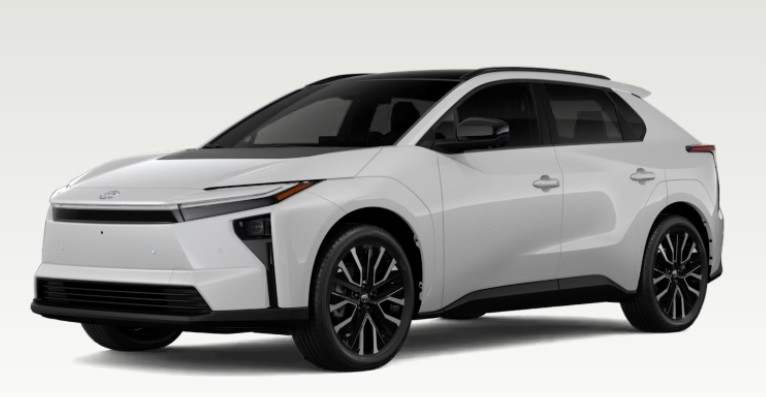
The Toyota bZ has a cleaner front end for 2026, replacing some of the visual clutter associated with the previous bZ4X. It looks futuristic without resembling a science-fiction prop that escaped from a movie set.
Its short nose, sculpted sides, contrasting body elements, and sharply angled lighting give it a recognizable EV identity.
The Lexus RZ looks more dramatic.
Its body uses the brand’s spindle-inspired design language without relying on the enormous open grille required by gasoline models. The roofline appears sleeker, the surfaces feel more sculpted, and the detailing is more intricate.
Which SUV Looks Better?
Design is subjective, but the Lexus has greater visual presence.
The Toyota blends into everyday traffic more naturally. The RZ looks more expensive—and that is precisely the point.
Interior Quality and Cabin Atmosphere
The bZ cabin is modern and unusual. Its instrument display sits high and far forward, while the steering wheel is positioned below it. Some drivers enjoy the arrangement because it keeps information closer to their line of sight. Others may need time to find a seating position that prevents the wheel from blocking the display.
The 2026 bZ includes a standard 14-inch Toyota Audio Multimedia touchscreen, multiple USB-C ports, and available dual wireless phone chargers.
The Lexus RZ provides a richer experience through softer materials, cleaner detailing, ambient lighting, more premium seating surfaces, and greater attention to noise suppression.
Toyota bZ Interior Strengths
The Toyota cabin succeeds because it is:
- Spacious
- Easy to clean
- Technologically modern
- Well organized
- Bright and airy
- Practical for families
- Less intimidating than some luxury EV interiors
Lexus RZ Interior Strengths
The Lexus cabin stands out through:
- More upscale materials
- Better visual consistency
- Greater seat comfort
- More sophisticated trim
- Reduced road and wind noise
- A stronger luxury atmosphere
The Toyota interior feels like a well-designed workspace. The Lexus interior feels like a lounge.
Passenger Space and Everyday Practicality
Both vehicles seat five people and work well for small families, couples, and commuters.
Their flat battery packaging helps preserve useful cabin space. Rear passengers receive a reasonably open floor, and the hatchback body style provides more cargo flexibility than a sedan.
The Toyota’s practical mission gives it a slight philosophical advantage here. We may feel less nervous loading muddy sports gear, garden supplies, a stroller, or an enthusiastic dog into the bZ.
The Lexus can perform the same tasks, but its nicer upholstery and trim may make us think twice before tossing in a leaking bag of potting soil.
Which Is Better for Families?
The Toyota bZ is the more rational family choice because it combines useful room, lower pricing, easy-to-use technology, and less financial stress.
The Lexus RZ is better for families that prioritize quietness, seat comfort, premium finishes, and a more relaxed highway experience.
Technology and Infotainment
The bZ’s 14-inch multimedia screen gives it the visual centerpiece expected from a current EV. Wireless smartphone connectivity, connected navigation features, voice assistance, and app-based vehicle functions help it feel modern.
Lexus adds its own interface, graphics, available audio upgrades, premium convenience features, and more sophisticated cabin presentation.
Both brands support Apple Maps EV Routing through Apple CarPlay on compatible vehicles. The system can consider battery information, elevation changes, and compatible charging locations when planning a route.
Which Infotainment System Is Better?
The functional difference may be smaller than buyers expect because both systems come from the same corporate technology family.
The Lexus version generally feels more polished and better integrated into a luxury cabin. The Toyota delivers most of the essential capability for less money.
Safety and Driver Assistance
The Toyota bZ includes Toyota Safety Sense 3.0, a suite of active safety and driver-assistance technologies. Available functions vary by trim and may include systems that assist with emergency braking, lane guidance, adaptive cruising, road-sign recognition, and proactive driving support.
The Lexus RZ offers its own Lexus Safety System+ package with a similarly broad collection of driver-assistance features.
These systems can reduce workload, but they do not turn either vehicle into a self-driving car. We still need to watch the road, understand system limitations, and remain ready to take control.
Important 2026 Recall Information
Toyota announced a North American recall on June 18, 2026, covering certain 2026 Toyota bZ and Lexus RZ vehicles. According to the company, an error involving the battery ECU may cause the electric drive system to shut down, potentially resulting in a loss of motive power. Dealers will update the affected software free of charge.
This does not mean every bZ or RZ is affected. Buyers should check the exact VIN through the manufacturer or the National Highway Traffic Safety Administration, especially when purchasing dealer inventory or a used example.
Toyota bZ vs Lexus RZ Ownership Costs
The bZ should generally cost less to purchase, insure, finance, and repair after warranty expiration.
The Lexus may command higher costs for:
- Insurance premiums
- Larger replacement tires
- Cosmetic repairs
- Premium trim components
- Optional equipment
- Depreciation in dollar terms
- Out-of-warranty luxury features
Electric vehicles still avoid many traditional engine-maintenance tasks. Neither model requires engine-oil changes, spark plugs, exhaust-system repairs, or conventional transmission servicing.
However, EV ownership is not maintenance-free. Tires, brakes, suspension components, cabin filters, coolant inspections, wiper blades, air-conditioning systems, and 12-volt batteries still need attention.
Tire Costs Matter More Than We Think
EVs are heavy and deliver immediate torque. Those qualities can increase tire wear, especially when we enjoy full-throttle acceleration a little too often.
A Lexus RZ equipped with large performance wheels will usually cost more to re-tire than an efficiency-focused bZ on smaller wheels.
That expense may not appear in a showroom payment calculator, but it certainly appears later.
Warranty and Dealer Experience
Toyota’s dealer network is broader, which can make routine support easier in many parts of the United States.
Lexus has fewer dealerships, but its service departments traditionally aim to provide a more premium customer experience. Loaner availability, waiting areas, appointment handling, and personal attention can contribute to the feeling that the higher purchase price buys more than leather and horsepower.
Warranty details and complimentary maintenance programs may change by model year, purchase date, or region, so buyers should confirm the exact written coverage before signing.
Toyota bZ vs Lexus RZ for Road Trips
For long-distance travel, the Toyota bZ XLE FWD Plus has the strongest range number in the comparison.
Its 314-mile maximum rating, NACS connector, expanded charging access, and approximately 30-minute ideal-condition 10%-to-80% charging window make it a credible road-trip EV.
The Lexus RZ 350e follows closely with up to 301 miles. It may not travel quite as far on paper, but it provides a quieter and more comfortable environment while covering those miles.
Toyota Road-Trip Advantage
Choose the bZ when we prioritize:
- Maximum rated range
- Lower purchase cost
- Lower financial risk
- Practical cabin materials
- Broad Toyota dealer access
Lexus Road-Trip Advantage
Choose the RZ when we prioritize:
- Quieter cruising
- Better seat comfort
- More refined ride quality
- Premium audio and cabin ambiance
- Stronger passing performance in upper trims
Toyota bZ vs Lexus RZ in Winter
All-wheel drive is available in both lineups, making either vehicle suitable for drivers who face snow and slippery roads.
The Toyota bZ AWD includes X-MODE capability, while AWD Lexus models use DIRECT4 control. AWD can improve traction during acceleration, but it does not shorten braking distances on ice.
Winter tires remain one of the best safety investments for cold climates.
Battery range will also decrease in cold weather. We should expect greater consumption when heating the cabin, warming the battery, pushing through snow, or driving on cold, dense air.
Which Toyota bZ Trim Makes the Most Sense?
The bZ XLE FWD Plus is the range-focused sweet spot.
It offers the headline 314-mile estimate while keeping the price and complexity below the Limited. It should suit commuters and road-trip buyers who do not need AWD.
The bZ AWD models make more sense for buyers in snowy areas or those who value stronger acceleration.
The bZ Limited adds comfort and convenience features such as upgraded seating, larger wheels, and additional premium equipment. It narrows the gap toward Lexus territory but remains substantially more value-oriented.
Which Lexus RZ Trim Makes the Most Sense?
The RZ 350e is the logical choice for range-conscious luxury buyers. Its front-wheel-drive layout and 301-mile rating provide the best efficiency in the RZ family.
The RZ 450e AWD balances all-weather traction, stronger power, and luxury comfort.
The RZ 550e F SPORT AWD is the emotional choice. It is for drivers who want rapid acceleration and a sportier personality and who are willing to accept higher pricing and potentially reduced range.
Toyota bZ vs Lexus RZ: Pros and Cons
Toyota bZ Pros
- Significantly lower starting price
- Up to 314 miles of range
- Strong available AWD output
- Standard NACS charging port
- Approximately 30-minute ideal fast-charging window
- Standard 14-inch touchscreen
- Practical cabin
- Broad dealer network
- Strong overall value
Toyota bZ Cons
- Cabin materials are less luxurious
- Unusual instrument layout may not suit everyone
- Less prestigious badge
- Fewer high-end performance options
- Ride and noise isolation trail the Lexus
Lexus RZ Pros
- Premium interior
- Quieter road manners
- More comfortable seating
- Up to 301 miles of range
- Available 402-horsepower F SPORT model
- Sophisticated AWD system
- NACS charging access
- Distinctive design
- Premium ownership experience
Lexus RZ Cons
- Higher purchase price
- Performance trims sacrifice efficiency
- Larger wheels can raise tire costs
- Less maximum range than the most efficient bZ
- Some underlying technology is similar to the cheaper Toyota
Toyota bZ vs Lexus RZ: Which Should We Buy?
The Toyota bZ is the better choice for most readers.
It offers more maximum range, a much lower entry price, strong available AWD power, modern technology, and access to an expanded NACS charging network. It covers the essential EV experience without asking us to pay for luxury details we may not value.
The Lexus RZ is the better vehicle for buyers who view comfort as a daily necessity rather than a bonus.
Its cabin feels richer, its road manners are calmer, and its upper trims deliver significantly more performance. The RZ does not win the value argument, but luxury vehicles rarely try to. It wins by making ordinary journeys feel less ordinary.
Choose the Toyota bZ If:
- We want the lowest purchase price
- We prioritize maximum range
- We need practical family transportation
- We prefer a broader dealer network
- We want AWD performance without luxury pricing
- We care more about function than prestige
Choose the Lexus RZ If:
- We want a quieter cabin
- We value premium seating and materials
- We prefer luxury styling
- We want the 402-horsepower F SPORT model
- We spend many hours on the highway
- We are comfortable paying more for refinement
Final Verdict
The Toyota bZ vs Lexus RZ contest does not produce one universal winner because these vehicles solve different versions of the same problem.
The bZ asks, “How much electric SUV do we truly need?”
The RZ asks, “How enjoyable can that electric SUV become?”
For value, range, and everyday practicality, the Toyota bZ wins. Its 2026 improvements transform it into a more complete EV, and the XLE FWD Plus offers an especially appealing combination of range and price.
For luxury, comfort, quietness, and high-end performance, the Lexus RZ wins. The RZ 350e serves efficient luxury buyers, while the RZ 550e F SPORT AWD delivers the kind of acceleration that turns an ordinary entrance ramp into a brief amusement ride.
Our practical recommendation is simple: test-drive both on the same day. Start with the Toyota, then drive the Lexus over the same roads. When the second drive ends, ask whether the extra silence, softness, materials, and polish are worth the price difference.
If the answer is no, buy the bZ and enjoy the savings.
If the answer is an immediate yes, the Lexus RZ has already made its case.
Frequently Asked Questions
1. Is the Lexus RZ based on the Toyota bZ?
The Lexus RZ and Toyota bZ are closely related electric crossovers developed within the same corporate family, but they are not identical. The Lexus receives distinct styling, cabin materials, suspension tuning, technology presentation, sound insulation, and available performance features.
2. Which has more range, the Toyota bZ or Lexus RZ?
The 2026 Toyota bZ offers the higher maximum figure. The bZ XLE FWD Plus is rated at up to 314 miles, while the Lexus RZ 350e is listed at up to 301 miles. Actual range depends on trim, wheels, weather, speed, terrain, and driving habits.
3. Is the Lexus RZ faster than the Toyota bZ?
The most powerful Lexus is faster. The RZ 550e F SPORT AWD produces 402 horsepower and is listed with a 4.1-second zero-to-60-mph time. The Toyota bZ AWD produces up to 338 combined horsepower, making it quick but less performance-focused.
4. Can the Toyota bZ and Lexus RZ use Tesla Superchargers?
The 2026 Toyota bZ and Lexus RZ have NACS charging ports and access to thousands of compatible Tesla Supercharger plugs in North America. Network compatibility, Plug & Charge support, charger availability, and account requirements should be verified before traveling.
5. Is the Lexus RZ worth the extra money?
The RZ may be worth its premium for buyers who strongly value cabin quality, lower noise, seat comfort, dealership service, distinctive styling, or high-performance trims. Buyers primarily seeking range, transportation, and value will usually find the Toyota bZ more sensible.
If you want to see other articles similar to Toyota bZ vs Lexus RZ: Which Electric SUV Is Better? you can visit the Compare category.
Ford Bronco Pros and Cons: Complete Buyer’s Guide
2026 Ford Bronco Towing: Capacity, Equipment, and Real-World Limits
Ford Bronco Gas Tank Size: 2026 U.S. Guide
2026 Ford Bronco Big Bend vs Outer Banks: Features and Differences Explained
2026 Ford Bronco Trim Levels in Order: Complete U.S. Guide
Ford Bronco Models Explained for U.S. Buyers
Leave a Reply
Related Topics