

Toyota bZ vs Subaru Solterra: Which Electric SUV Should You Buy?

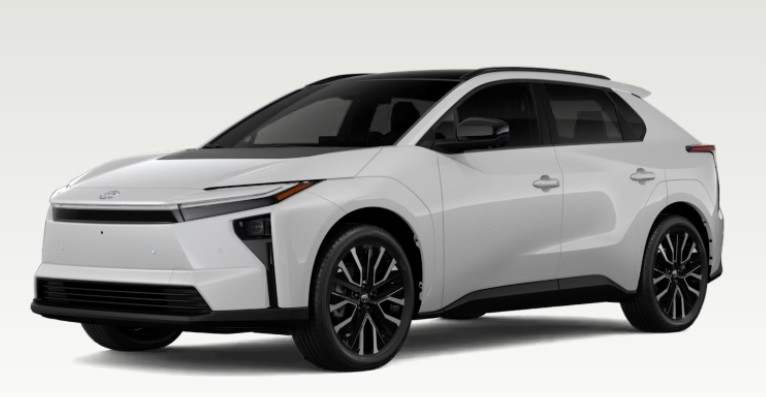
Contents in this publication
- Toyota bZ vs Subaru Solterra at a Glance
- Are the Toyota bZ and Subaru Solterra the Same Vehicle?
- 2026 Updates Transform Both Electric SUVs
- Price and Value: Toyota Starts Lower
- Range: Toyota bZ Takes the Lead
- Performance: Surprisingly Strong Siblings
- All-Wheel Drive and Traction: Subaru Makes Its Case
- Charging Speed: Essentially a Tie
- Interior Design: Similar Blueprint, Different Flavor
- Passenger Space and Cargo Practicality
- Ride Comfort and Handling
- Safety and Driver-Assistance Technology
- Warranty and Ownership Considerations
- Toyota bZ Trim Strategy
- Subaru Solterra Trim Strategy
- Toyota bZ Advantages
- Subaru Solterra Advantages
- Toyota bZ Disadvantages
- Subaru Solterra Disadvantages
- Which Is Better for Commuting?
- Which Is Better for Snow?
- Which Is Better for Road Trips?
- Which Is Better for Outdoor Lifestyles?
- Which Is Better for Budget-Conscious Buyers?
- Toyota bZ vs Subaru Solterra: Final Verdict
- Frequently Asked Questions
The Toyota bZ vs Subaru Solterra comparison is more interesting than the badges suggest. These two electric SUVs share much of their engineering, exterior dimensions, battery technology, and basic cabin architecture. Park them side by side, and they can look like siblings wearing different jackets.
Yet buying a vehicle is rarely about identifying which models share the same bones. It is about determining which one fits our budget, driving habits, climate, lifestyle, and expectations.
For the 2026 model year, both electric SUVs received meaningful improvements. They now offer longer driving ranges, stronger performance, faster charging, North American Charging System ports, and updated designs. The Toyota bZ can travel farther in its most efficient configuration, while the Subaru Solterra provides all-wheel drive as standard equipment across the range.
So, which one should we choose?
The simple answer is that the Toyota bZ is generally the stronger option for maximum range, lower entry pricing, and drivetrain flexibility. The Subaru Solterra is especially appealing to buyers who want standard all-wheel drive, generous ground clearance, and Subaru-flavored equipment without climbing far up the trim ladder.
Let us look beyond the matching silhouettes and find the differences that matter.
Toyota bZ vs Subaru Solterra at a Glance
Before diving into the details, here is a simplified comparison of the 2026 U.S.-market models.
| Category | 2026 Toyota bZ | 2026 Subaru Solterra |
|---|---|---|
| Starting MSRP | $34,900 | $38,495 |
| Drivetrain | Front-wheel drive or all-wheel drive | Standard all-wheel drive |
| Maximum estimated range | Up to 314 miles | Up to 288 miles |
| Standard output | 221 horsepower | 233 horsepower |
| Maximum output | 338 horsepower | 338 horsepower |
| Battery capacity | Up to 74.7 kWh | 74.7 kWh |
| DC fast charging | About 10%–80% in 28 minutes | About 10%–80% in 28 minutes |
| Charging connector | NACS | NACS |
| Ground clearance | Approximately 8.2 inches | 8.3 inches |
| Best suited to | Range, value and choice | Standard AWD and outdoor use |
Toyota lists the 2026 bZ from $34,900, while Subaru prices the 2026 Solterra from $38,495. However, that opening comparison requires context: the least expensive Toyota uses front-wheel drive, whereas every Solterra includes all-wheel drive. A comparable AWD Toyota bZ begins at $39,900.
Are the Toyota bZ and Subaru Solterra the Same Vehicle?
Not exactly, although their family connection is impossible to ignore.
Toyota and Subaru jointly developed the electric platform underpinning both SUVs. Consequently, the bZ and Solterra share several fundamentals:
- Battery architecture
- Platform dimensions
- Basic body structure
- Many interior controls
- Infotainment layout
- Steering and suspension foundations
- Similar charging capabilities
- Closely related electric motors
Calling them identical, however, would be like saying two houses are the same because they share a floor plan. The paint, furniture, landscaping, equipment, pricing, and atmosphere can still create different experiences.
Toyota offers front-wheel-drive and all-wheel-drive versions, giving buyers more freedom to prioritize efficiency or traction. Subaru leans into its traditional identity by making all-wheel drive standard and adding its own traction-management philosophy.
Shared engineering can benefit shoppers in several ways. It allows both manufacturers to spread development expenses across more vehicles, use proven components, and build a broader service network around related technology.
It also makes the final buying decision more focused. We do not need to choose between completely different platforms. Instead, we can concentrate on practical distinctions such as price, range, dealership access, equipment, warranty support, and drivetrain configuration.
2026 Updates Transform Both Electric SUVs
Comparisons involving earlier models may paint these vehicles as slow-charging EVs with only average range. That description is increasingly outdated.
For 2026, Toyota renamed the bZ4X simply bZ and introduced substantial upgrades. Depending on configuration, the new bZ offers up to 314 miles of estimated range and as much as 338 horsepower. Toyota also fitted a native NACS charging port and improved battery preconditioning.
The 2026 Subaru Solterra received a similarly extensive overhaul. It now offers up to 288 miles of range, 233 horsepower in standard form, and up to 338 horsepower in the stronger XT version. Subaru also states that DC charging from 10% to 80% takes approximately 28 minutes under suitable conditions.
These are not tiny mid-cycle adjustments. They address some of the biggest weaknesses associated with the previous generation.
Price and Value: Toyota Starts Lower
Price is one of the clearest differences.
The 2026 Toyota bZ starts at $34,900 for the XLE front-wheel-drive model. That gives cost-conscious buyers a lower gateway into this electric SUV platform. Buyers who want all-wheel drive can select the bZ XLE AWD, which starts at approximately $39,900.
The 2026 Subaru Solterra begins at $38,495, but standard all-wheel drive is included. In other words, comparing the base Solterra with the cheapest bZ is not entirely fair. The Subaru costs more because it starts with an additional driven axle and slightly more standard power.
Which Model Delivers Better Base-Trim Value?
That depends on what we actually need.
The Toyota bZ makes greater financial sense when:
- Front-wheel drive is sufficient
- Maximum range matters more than AWD
- We want the lowest initial price
- Most driving occurs on paved roads
- Snow and loose surfaces are occasional concerns rather than daily realities
The Subaru Solterra makes greater sense when:
- We already planned to buy an AWD vehicle
- Winter traction is a priority
- Gravel roads or trailheads are part of normal life
- We prefer Subaru dealerships or brand ownership
- Paying slightly more for standard capability feels worthwhile
Do Not Compare Sticker Prices Alone
Dealer discounts, finance rates, lease programs, destination charges, state incentives, insurance costs, and local inventory can completely reshape the result.
An advertised price is only the opening scene. The total transaction is the whole movie.
A heavily discounted Solterra may cost less than an equivalently equipped bZ in a particular city. Conversely, Toyota’s larger dealership footprint may make it easier to locate the exact trim and negotiate among several stores.
Range: Toyota bZ Takes the Lead
For many EV shoppers, range remains the headline figure.
The most efficient 2026 Toyota bZ configuration offers an EPA-estimated range of up to 314 miles. Toyota achieves that figure with the XLE FWD Plus model and its larger battery. Other bZ configurations offer lower ratings depending on drivetrain, wheels, and equipment.
The 2026 Subaru Solterra offers up to 288 miles in its most efficient configuration. Solterra versions fitted with larger 20-inch wheels are rated at approximately 278 miles.
That means the Toyota can provide roughly 26 additional rated miles at the top of the range chart.
How Much Does the Range Difference Matter?
Twenty-six miles may sound significant, but its real-world importance depends on our routine.
For a driver covering 35 miles per day and charging at home, both vehicles provide more than enough capacity. We may plug in only a few times each week.
For apartment residents, frequent highway travelers, or drivers in cold northern states, the extra margin becomes more valuable. Wind, speed, low temperatures, elevation, cargo, heating, and larger wheels can all reduce real-world range.
Think of rated range as a savings account. We do not always need to spend every mile, but a larger balance gives us more breathing room.
Toyota Is Better for Range-Focused Buyers
The bZ is the more logical choice when we want:
- The longest possible distance between charges
- A front-wheel-drive efficiency advantage
- More flexibility when planning road trips
- Greater range reserve during winter
- Fewer charging sessions in everyday use
Subaru’s 288-mile maximum is still competitive enough for most daily driving. It simply does not win this category.
Performance: Surprisingly Strong Siblings
Neither vehicle is marketed as a sports car, but the 2026 upgrades gave both SUVs considerably more energy.
The front-wheel-drive Toyota bZ produces around 221 horsepower. AWD versions can deliver as much as 338 combined horsepower, a dramatic increase over the previous bZ4X.
The standard Subaru Solterra produces 233 horsepower, while the Solterra XT reaches 338 horsepower.
Toyota bZ Performance Character
The front-wheel-drive bZ should feel smooth and sufficiently responsive for commuting. Its lower output is not necessarily a disadvantage because it helps support better efficiency and range.
The AWD model is a different animal. With 338 horsepower available, it should merge, pass, and accelerate with far more urgency. Press the accelerator, and the bZ can move like a calm dog suddenly spotting a squirrel.
Subaru Solterra Performance Character
The standard Solterra provides a little more power than the base bZ while maintaining all-wheel drive. That combination may appeal to buyers who want confident everyday acceleration without paying for a top performance trim.
The Solterra XT matches the strongest conventional bZ at 338 horsepower. Therefore, buyers choosing between high-output versions should focus less on the raw number and more on equipment, pricing, ride quality, tires, and brand preference.
All-Wheel Drive and Traction: Subaru Makes Its Case
This category belongs to Subaru—not because Toyota lacks capable AWD, but because Subaru includes it on every Solterra.
The standard system means buyers do not need to inspect trim sheets to determine whether both axles are powered. Every 2026 Solterra arrives with Subaru’s Symmetrical All-Wheel Drive branding and traction-focused programming.
Toyota offers AWD on selected versions, but front-wheel drive remains available for shoppers who prefer a lower price or longer range.
Is Subaru’s AWD Automatically Better?
We should be careful here. Marketing language can make one system sound as if it bends the laws of physics.
Both SUVs use closely related electric hardware, and both AWD configurations can respond quickly to changing traction. Tire quality remains enormously important. An AWD EV on poor all-season tires may perform worse in snow than a front-wheel-drive model wearing proper winter tires.
Subaru still deserves credit for building its entire Solterra lineup around AWD capability. It is the simpler, more consistent choice for snow-belt buyers.
Ground Clearance and Outdoor Use
The Solterra provides approximately 8.3 inches of ground clearance, which is generous for a compact electric crossover. It also includes features aimed at slippery or uneven terrain.
The Toyota bZ offers similar clearance, so neither is a low-slung urban EV. Still, Subaru’s packaging, standard AWD, roof rails, and brand positioning make the Solterra feel more naturally aligned with camping trips, snowy cabins, dirt access roads, and muddy trailhead parking.
Neither Is a Hardcore Off-Roader
We should keep expectations realistic.
These vehicles are crossover SUVs, not electric rock crawlers. Their batteries sit beneath the cabin, replacement body panels can be expensive, and standard road-oriented tires have limits.
They can confidently handle conditions many sedans would dislike, but neither should be treated like a purpose-built Jeep Wrangler.
Charging Speed: Essentially a Tie
Both 2026 models address one of the biggest complaints attached to their predecessors: charging performance.
The Toyota bZ supports DC fast charging at up to approximately 150 kW and can charge from 10% to 80% in roughly 28 minutes under ideal conditions. Its 11-kW onboard AC charger can handle a typical overnight Level 2 session.
The Subaru Solterra also supports up to 150-kW DC fast charging and lists a 10%–80% charging time of around 28 minutes. Its 11-kW onboard charger can replenish the battery in about six hours from the low-charge warning level under the stated 240-volt conditions.
NACS Access Improves Road-Trip Convenience
Both vehicles now use a native NACS port, the connector associated with the Tesla Supercharger network in North America.
For Toyota drivers, the company says the 2026 bZ can access more than 25,000 additional NACS plugs through the Tesla Supercharger network. Toyota also supplies adapters for backward compatibility with J1772 and CCS stations.
This is a major usability improvement. Instead of juggling a growing collection of adapters like keys on a janitor’s belt, drivers receive a connector designed around the direction the North American market is taking.
Cold-Weather Battery Preconditioning
Both updated vehicles include battery-preconditioning technology intended to improve fast-charging performance in low temperatures.
That feature matters because a cold battery may charge considerably more slowly than a warm one. Preconditioning helps bring the battery closer to its preferred temperature before reaching a fast charger.
Still, “28 minutes” should not be treated as a guarantee. Charging time varies with:
- Battery temperature
- Charger output
- Starting charge level
- Battery state of health
- Weather
- Shared station power
- Charging-curve behavior
In practical terms, charging performance is close enough that it should not decide the comparison by itself.
Interior Design: Similar Blueprint, Different Flavor
Step inside either vehicle and the shared roots become obvious.
Both use an unusual cockpit layout with a digital instrument display positioned high and far forward. The steering wheel sits lower than in many conventional SUVs. Some drivers enjoy the near-head-up-display effect, while others struggle to find a position that does not partially block the screen.
This is why a test drive matters. A seating layout that feels futuristic to one person can feel awkward to another.
Toyota bZ Interior Atmosphere
The bZ presents a modern, clean cabin with a large central touchscreen and an uncluttered dashboard. Toyota’s version tends to emphasize mainstream simplicity.
The refreshed design feels more polished than before, and the available equipment can include:
- Large multimedia display
- Wireless Apple CarPlay
- Wireless Android Auto
- Heated and ventilated front seats
- Panoramic roof
- Digital key functionality
- Surround-view camera
- Premium audio
- Driver-assistance technology
Subaru Solterra Interior Atmosphere
The Solterra uses a broadly similar dashboard but applies Subaru-specific materials, graphics, equipment combinations, and branding.
Its standard equipment can make the base trim feel less stripped down than some entry-level EVs. Subaru also emphasizes practical touches suited to active owners, including roof rails and weather-oriented features.
Which Cabin Is Better?
There is no universal winner.
Choose Toyota when we prefer a slightly more conventional mainstream presentation and a broader range of trim choices.
Choose Subaru when standard AWD-related equipment and an outdoors-oriented personality matter more.
The cabins are so closely related that seat comfort, visibility, upholstery, and dealer-installed accessories may influence us more than dashboard design.
Passenger Space and Cargo Practicality
Both SUVs occupy nearly identical exterior footprints. The Solterra measures approximately 184.6 inches long, 73.2 inches wide, and 65 inches high, with a 112.2-inch wheelbase.
Their long wheelbases help create useful passenger space, especially for rear-seat occupants. Adults should find the second row comfortable enough for regular trips, while the flat floor improves foot space.
Cargo Area Strengths
The rear cargo areas are useful for:
- Grocery runs
- Strollers
- Sports equipment
- Medium-size luggage
- Camping supplies
- Pet carriers
- Foldable bicycles
Neither model is a class-leading cargo van disguised as an SUV. Sloping rooflines and styling priorities limit ultimate boxiness. Families carrying bulky equipment should bring that equipment—or at least measure it—during the dealership visit.
What About a Front Trunk?
These vehicles do not place heavy emphasis on a large front trunk. Buyers expecting a deep storage compartment beneath the hood may be disappointed.
For most owners, rear cargo usability matters more, but competitors with useful front trunks can provide an extra place for charging cables, muddy shoes, or smaller bags.
Ride Comfort and Handling
Because the bZ and Solterra share their platform and basic suspension design, their road manners are more alike than different.
The battery mounted beneath the floor lowers the center of gravity. That helps both SUVs feel planted through curves despite their weight and crossover height.
Around Town
Electric torque makes low-speed driving easy. Both should feel smooth in traffic, responsive when leaving intersections, and quiet compared with gasoline-powered alternatives.
Regenerative braking can reduce how often we use the brake pedal, although drivers should experiment with available settings before assuming either vehicle provides a full one-pedal experience in every mode.
On the Highway
The longer wheelbase contributes to stability, while the electric powertrains deliver immediate passing response.
Wind and tire noise become more noticeable because there is no combustion engine masking them. Versions with larger wheels may look sharper but can bring firmer ride quality, higher replacement-tire costs, and slightly lower efficiency.
On Rough Roads
Subaru’s standard AWD, 8.3-inch clearance, and traction-focused identity give it a psychological and practical edge on rougher surfaces.
Toyota’s AWD bZ remains capable, though. The difference is not a canyon; it is more like a step.
Safety and Driver-Assistance Technology
Both models include extensive active-safety equipment, although the systems carry different brand names.
Toyota equips the bZ with its Toyota Safety Sense suite, while Subaru uses the EyeSight name for its driver-assistance package.
Depending on trim, available functions can include:
- Automatic emergency braking
- Pedestrian detection
- Adaptive cruise control
- Lane-departure alert
- Lane-centering assistance
- Blind-spot monitoring
- Rear cross-traffic warning
- Automatic high beams
- Parking assistance
- Surround-view cameras
Drivers should remember that these are assistance systems, not autonomous-driving systems. We remain responsible for watching the road and controlling the vehicle.
A Current Toyota Recall Buyers Should Know About
In June 2026, Toyota announced a recall involving approximately 16,200 model-year 2026 Toyota bZ and Lexus RZ vehicles in North America. Toyota said an error involving the battery ECU could cause the electric drive system to shut down, potentially resulting in a loss of motive power. Dealers are instructed to update the relevant software free of charge.
This does not mean every 2026 bZ is affected. Buyers considering a specific vehicle should check its VIN through Toyota or the National Highway Traffic Safety Administration and confirm that any required remedy has been completed.
Warranty and Ownership Considerations
Both Toyota and Subaru provide warranties covering the vehicle, powertrain, electric components, and traction battery. Exact terms and exclusions should be reviewed on the purchase agreement and manufacturer warranty documents.
Beyond written coverage, ownership convenience may depend on where we live.
Toyota Ownership Advantages
Toyota has a very large U.S. dealer network. That can make it easier to:
- Find nearby service
- Compare inventory
- Obtain warranty support
- Shop among multiple dealers
- Trade the vehicle later
However, EV expertise can still vary from one dealership to another. A nearby Toyota store does not automatically mean that every technician has extensive high-voltage-vehicle experience.
Subaru Ownership Advantages
Subaru dealerships are particularly common in regions where AWD vehicles are popular. Owners in Colorado, Vermont, Washington, Oregon, Maine, and similar markets may find strong local familiarity with Subaru customers and their driving needs.
The brand also enjoys loyalty among buyers who value practical vehicles rather than flashy luxury.
Insurance and Repair Costs
Insurance quotations should be collected before signing.
Electric vehicles can be expensive to repair after collisions because of sensors, cameras, structural components, battery-protection requirements, and specialized labor. Two vehicles with similar purchase prices can produce surprisingly different premiums.
Toyota bZ Trim Strategy
The bZ lineup gives shoppers more drivetrain and efficiency flexibility.
At a broad level, Toyota buyers can choose between:
- Lower-priced front-wheel-drive configurations
- Longer-range front-wheel-drive versions
- AWD models with more traction and power
- Higher trims with additional comfort and technology
This approach works well for shoppers who want to build the vehicle around a specific priority.
Best Toyota bZ for Maximum Range
The XLE FWD Plus is the standout for drivers who want the maximum estimated range of up to 314 miles.
It is the road-trip specialist of the conventional bZ lineup—not because it charges much faster than the others, but because it can travel farther before needing the charger.
Best Toyota bZ for Performance
An AWD version with the 338-horsepower powertrain is the better fit for drivers who want stronger acceleration and improved traction.
The trade-off is reduced range compared with the most efficient front-wheel-drive model.
Subaru Solterra Trim Strategy
Subaru makes the first decision easy: every Solterra includes AWD.
From there, shoppers mainly choose how much comfort, technology, style, and performance they want.
The lineup progresses from the value-focused standard model into more richly equipped versions, with the XT serving buyers who want the full 338-horsepower output.
Best Solterra for Value
The base Solterra is arguably the sweet spot for practical shoppers because it combines:
- Standard AWD
- 233 horsepower
- Up to 288 miles of range
- 18-inch wheels
- Strong ground clearance
- Modern charging hardware
Smaller wheels also tend to support better range, lower tire costs, and a more forgiving ride than 20-inch alternatives.
Best Solterra for Performance
The Solterra XT is the natural choice for shoppers who want faster acceleration without abandoning Subaru’s AWD-focused character.
However, buyers should compare its final price with other performance-oriented electric crossovers. At higher trim levels, the market becomes crowded quickly.
Toyota bZ Advantages
The Toyota bZ stands out for several reasons:
- Lower base price
- Available front-wheel drive
- Maximum range of up to 314 miles
- Available 338-horsepower AWD system
- Broad Toyota dealer network
- Native NACS charging port
- Improved charging performance
- More configuration flexibility
The bZ feels like the better analytical choice. We can select efficiency, price, or performance rather than accepting one drivetrain across every trim.
Subaru Solterra Advantages
The Subaru Solterra counters with its own strengths:
- Standard all-wheel drive
- 233 standard horsepower
- Up to 288 miles of range
- 8.3 inches of ground clearance
- Standard outdoor-friendly character
- Available 338-horsepower XT version
- Native NACS charging port
- Strong appeal in snowy regions
- Straightforward trim philosophy
The Solterra feels like the simpler emotional choice for existing Subaru owners. It asks, “Do we want an electric Subaru?” rather than forcing us to choose a drivetrain first.
Toyota bZ Disadvantages
No vehicle wins every category.
Possible bZ drawbacks include:
- AWD costs more than the base front-wheel-drive model
- Some configurations have significantly less range than the 314-mile headline
- The unusual instrument-panel position may not suit every driver
- Cargo capacity is not class-leading
- The June 2026 recall should be checked by VIN
- Its design may feel less outdoorsy than the Subaru
- Larger-wheel versions may sacrifice comfort and efficiency
Subaru Solterra Disadvantages
Potential Solterra drawbacks include:
- Higher starting price than the front-wheel-drive Toyota
- No lower-cost front-wheel-drive option
- Maximum range trails the longest-range bZ
- Shared architecture reduces some sense of brand uniqueness
- High-output trims may face strong competition from faster EVs
- No major charging-speed advantage over the Toyota
- The cockpit layout may divide opinion
Which Is Better for Commuting?
The Toyota bZ is usually the better commuter choice, especially in front-wheel-drive form.
Its lower starting price and longer potential range make sense for paved daily routes. Drivers in warm or moderate climates may not gain enough from standard AWD to justify paying for it.
The Solterra remains an excellent commuter, but its primary advantage—standard all-wheel drive—may be underused by someone driving through dry suburbs every day.
Winner for commuting: Toyota bZ
Which Is Better for Snow?
The Subaru Solterra takes this category because AWD is standard and the entire lineup is built around that capability.
An AWD Toyota bZ should also perform confidently, especially with proper winter tires. Still, Subaru makes the snow-friendly configuration easier to buy.
Winner for snow: Subaru Solterra
Which Is Better for Road Trips?
The longest-range Toyota bZ wins on paper with up to 314 miles versus the Solterra’s maximum of 288 miles.
Both now offer NACS connectivity and similar peak fast-charging speeds, so the Toyota’s additional range gives it the edge.
However, route-specific charger reliability matters more than a small specification difference. We should use a route-planning app to test our common journeys before buying.
Winner for road trips: Toyota bZ
Which Is Better for Outdoor Lifestyles?
The Solterra’s standard AWD, roof rails, generous ground clearance, and Subaru identity make it feel more cohesive as an adventure-oriented crossover.
The bZ can reach many of the same places, particularly in AWD form, but the Subaru packages the experience more naturally.
Winner for outdoor use: Subaru Solterra
Which Is Better for Budget-Conscious Buyers?
The Toyota bZ starts several thousand dollars lower because it offers front-wheel drive.
That gives Toyota the clear advantage for buyers who do not need AWD. When comparing AWD to AWD, however, the Subaru’s starting price is slightly lower than the equivalent Toyota figure quoted by Subaru.
Winner at the absolute lowest price: Toyota bZ
Winner for entry-level AWD value: Subaru Solterra
Toyota bZ vs Subaru Solterra: Final Verdict
So, where does that leave us?
The 2026 Toyota bZ is the better overall choice for most American EV shoppers. It starts at a lower price, offers front-wheel-drive and all-wheel-drive configurations, and reaches an estimated maximum of 314 miles. It lets us choose the version that matches our needs instead of making AWD mandatory.
The 2026 Subaru Solterra is the smarter choice for buyers who already know they want all-wheel drive. It delivers standard AWD, slightly more base horsepower, strong ground clearance, and up to 288 miles of range. It feels particularly well suited to snowy states, mountain towns, gravel roads, camping trips, and loyal Subaru households.
Our final recommendation looks like this:
- Choose the Toyota bZ for maximum range, a lower starting price, and more drivetrain choice.
- Choose the Subaru Solterra for standard AWD, outdoor-friendly equipment, and straightforward capability.
- Choose the AWD Toyota bZ or Solterra XT when acceleration matters.
- Choose a model with 18-inch wheels when range, ride comfort, and tire cost matter more than appearance.
- Check local incentives, insurance, dealer discounts, charging access, and recall status before signing.
These SUVs may share a family tree, but they grow in slightly different directions. Toyota stretches toward efficiency and choice. Subaru digs its boots into traction and adventure.
The right one is not simply the model with the longest specification sheet. It is the one that fits our daily life when the showroom lights are gone and the monthly payments begin.
Frequently Asked Questions
1. Is the Subaru Solterra made by Toyota?
The Subaru Solterra was jointly developed by Subaru and Toyota and shares its electric platform and many components with the Toyota bZ. It is still sold, branded, equipped, warrantied, and serviced as a Subaru.
2. Which has more range, the Toyota bZ or Subaru Solterra?
The 2026 Toyota bZ offers the higher maximum rating. Its XLE FWD Plus configuration can travel up to an EPA-estimated 314 miles, while the 2026 Subaru Solterra offers up to 288 miles.
3. Does every Subaru Solterra have all-wheel drive?
Yes. Every 2026 Subaru Solterra comes with all-wheel drive as standard. The Toyota bZ is available with either front-wheel drive or all-wheel drive.
4. Can the Toyota bZ and Subaru Solterra use Tesla Superchargers?
The 2026 models use NACS charging ports, giving them access to compatible NACS fast-charging stations, including eligible Tesla Supercharger locations. Access, payment procedures, and station compatibility should still be confirmed through the manufacturer’s app before traveling.
5. Which is cheaper, the Toyota bZ or Subaru Solterra?
The Toyota bZ has the lower overall starting MSRP at $34,900 because its entry model uses front-wheel drive. The Subaru Solterra starts at $38,495 with AWD included. An AWD Toyota bZ starts at approximately $39,900, making the Subaru slightly less expensive when comparing entry-level AWD configurations.
If you want to see other articles similar to Toyota bZ vs Subaru Solterra: Which Electric SUV Should You Buy? you can visit the Compare category.
Ford Bronco Pros and Cons: Complete Buyer’s Guide
2026 Ford Bronco Towing: Capacity, Equipment, and Real-World Limits
Ford Bronco Gas Tank Size: 2026 U.S. Guide
2026 Ford Bronco Big Bend vs Outer Banks: Features and Differences Explained
2026 Ford Bronco Trim Levels in Order: Complete U.S. Guide
Ford Bronco Models Explained for U.S. Buyers
Leave a Reply
Related Topics