

Toyota Camry Difference Between SE and LE: Complete Comparison

Contents in this publication
- Toyota Camry LE vs SE at a Glance
- What Do LE and SE Mean on a Toyota Camry?
- What Is the Main Difference Between Toyota Camry SE and LE?
- Toyota Camry LE vs SE Exterior Design
- Wheel and Tire Differences
- Toyota Camry SE vs LE Interior
- Comfort and Seating Comparison
- Ride Quality: Is the Camry LE Smoother Than the SE?
- Handling: Is the Toyota Camry SE Sportier?
- Hybrid Powertrain and Performance
- Toyota Camry LE vs SE Fuel Economy
- Front-Wheel Drive and All-Wheel Drive Availability
- Technology and Infotainment
- Safety and Driver-Assistance Features
- Toyota Camry LE vs SE Price Difference
- Insurance and Ownership Costs
- Which Trim Is Better for Daily Commuting?
- Which Camry Is Better for Families?
- Which Trim Is Better for Younger Drivers?
- Toyota Camry LE vs SE for Long Road Trips
- Should You Buy a Used Camry LE or SE?
- Toyota Camry LE Pros and Cons
- Toyota Camry SE Pros and Cons
- Is the Toyota Camry SE Worth the Extra Money?
- Toyota Camry LE vs SE: Which One Should We Buy?
- Final Verdict: Comfort or Character?
- Frequently Asked Questions
Choosing between the Toyota Camry LE and SE can feel like deciding between a comfortable pair of walking shoes and a sportier pair of sneakers. Both get us where we need to go, both offer impressive everyday practicality, and both share the same dependable foundation. Yet they deliver noticeably different personalities once we look beyond the badge on the trunk.
The Toyota Camry difference between SE and LE mainly comes down to styling, ride quality, wheels, seating materials, fuel economy, standard equipment, and price. The LE focuses on comfort, efficiency, and affordability. The SE adds a sharper appearance, larger wheels, sportier seats, and a more energetic driving feel.
For the current U.S.-market 2026 Camry, both trims use Toyota’s fifth-generation hybrid system and can be ordered with front-wheel drive or electronic on-demand all-wheel drive. The LE is the efficiency-focused entry model, while the SE serves as the sport-inspired step up.
So, which one deserves a space in our driveway? Let’s compare them from every useful angle.
Toyota Camry LE vs SE at a Glance
Here is the simplest way to separate the two trims:
| Category | Toyota Camry LE | Toyota Camry SE |
|---|---|---|
| Main personality | Comfortable and efficient | Sporty and expressive |
| Starting price | Lower | Higher |
| Standard wheels | 16-inch alloy wheels | 18-inch black-finished alloy wheels |
| Exterior styling | Clean and understated | Aggressive sport design |
| Seat material | Fabric upholstery | Sport fabric and SofTex trim |
| Suspension character | Softer and comfort-oriented | Firmer and more responsive |
| Fuel economy | Better | Slightly lower |
| Best for | Commuters and value buyers | Drivers wanting sportier style |
For 2026, Toyota lists the LE with a starting MSRP of $29,600 and the SE at $32,100 before options, taxes, registration, and other charges. That creates a starting-price difference of approximately $2,500. Toyota also lists the front-wheel-drive LE at an estimated 52 mpg city and 49 mpg highway, while the SE is rated at 47 mpg city and 45 mpg highway.
Those figures immediately reveal the basic trade-off: the LE saves more money and fuel, while the SE spends some of that efficiency budget on appearance and road presence.
What Do LE and SE Mean on a Toyota Camry?
Toyota does not always treat trim abbreviations as rigid definitions, but buyers generally associate LE with a comfort-focused or luxury-oriented entry trim and SE with a sportier edition.
In practical terms, the letters matter less than the equipment philosophy behind them.
The LE is designed to cover the essentials without making the cabin feel stripped down. It is not a bare fleet car with plastic everywhere. It still gives us modern multimedia, automatic climate control, alloy wheels, driver-assistance technology, and a refined hybrid powertrain.
The SE takes that foundation and adds visual seasoning. Think of the LE as a well-made black coffee and the SE as the same drink with an extra shot of espresso. The ingredients are closely related, but the experience feels more energetic.
What Is the Main Difference Between Toyota Camry SE and LE?
The main difference is their intended character.
The Camry LE prioritizes comfort, fuel economy, and value, whereas the Camry SE prioritizes sporty styling, firmer handling, and a more distinctive interior.
Both trims remain practical midsize sedans. The SE does not suddenly become a track car, and the LE does not float around like an oversized luxury limousine. Their differences are meaningful but measured.
We can summarize the distinction like this:
- Choose the LE for maximum efficiency and a smoother everyday ride.
- Choose the SE for more aggressive styling and a sportier driving atmosphere.
- Choose the LE when keeping the purchase price low matters most.
- Choose the SE when appearance matters enough to justify the premium.
- Consider either trim with AWD when additional traction is important.
Toyota Camry LE vs SE Exterior Design
The LE Keeps Things Clean and Conservative
The Camry LE wears the calmer outfit. Its front-end treatment, smaller wheels, and simpler trim details create a polished but restrained appearance.
This design works well for buyers who want a car that looks modern without shouting across the parking lot. The LE blends naturally into professional settings, suburban driveways, airport parking garages, and daily commuter traffic.
There is an advantage to understatement. A cleaner exterior may age gracefully because it relies less on dramatic vents, contrasting trim, or oversized wheels. Five years from now, the LE is unlikely to look like it tried too hard.
The SE Adds a Sportier Face
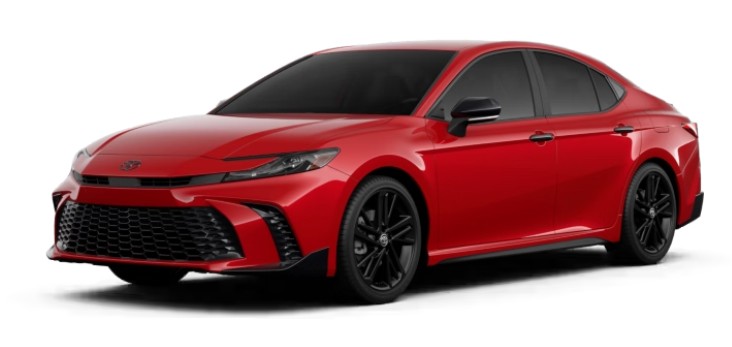
The SE receives a black sport-mesh grille, racing-inspired air curtains, front-side canards, and 18-inch multi-spoke black-finished alloy wheels. These elements give it a wider, lower, and more aggressive presence than the LE.
The difference is easy to spot when the cars are parked side by side. The SE looks prepared to move even when standing still. It has more visual tension in its bodywork, much like an athlete leaning forward before a sprint.
Does the Camry SE Look More Expensive?
To many buyers, yes.
Larger wheels, black exterior accents, and sport-inspired body details can make the SE appear more upscale or customized. Although the LE is less expensive, someone unfamiliar with the trim lineup may simply see the SE as the more premium-looking car.
That perception can matter. We see our vehicle almost every day. If walking toward a sharper-looking Camry makes the morning commute slightly more enjoyable, the aesthetic upgrade has real personal value.
Wheel and Tire Differences
Wheel size is one of the most visible and practical distinctions.
The 2026 Camry LE comes with 16-inch 10-spoke silver-painted alloy wheels. The SE moves up to 18-inch multi-spoke black-finished alloy wheels.
Larger wheels usually create a sportier stance and may sharpen steering response. However, they also use lower-profile tires with less cushioning between the road and the wheel.
That affects ownership in several ways.
Advantages of the LE’s Smaller Wheels
The LE’s 16-inch wheels generally support:
- A softer ride over potholes
- Less road shock entering the cabin
- Lower replacement-tire costs
- Better protection against wheel damage
- Improved fuel efficiency
- More forgiving performance on rough roads
Advantages of the SE’s Larger Wheels
The SE’s 18-inch wheels provide:
- A more athletic appearance
- A wider visual stance
- More immediate steering feel
- Reduced sidewall flex
- A stronger showroom presence
Which Wheels Are Better for Bad Roads?
The LE’s smaller wheels are usually the smarter choice for broken pavement, deep potholes, and neglected city streets.
The taller tire sidewalls act like an extra cushion. They cannot erase every bump, but they absorb road imperfections more effectively. The SE’s wheels look better to many eyes, yet beauty occasionally sends a bill in the form of pricier tires or greater vulnerability to pothole damage.
Toyota Camry SE vs LE Interior
The LE Interior Focuses on Simplicity
The LE cabin follows a practical and welcoming approach. Toyota uses woven fabric upholstery and trim patterns that emphasize comfort rather than performance theater. The latest Camry LE interior was designed with an embossed, wave-inspired pattern in its fabric surfaces, giving the entry trim more personality than a plain economy-car cabin.
The atmosphere is relaxed. Controls are easy to understand, the layout feels familiar, and the materials suit daily use.
For families, commuters, and rideshare drivers, fabric seats can also be a sensible choice. They generally remain cooler after sitting in direct sunlight and may feel less slippery than synthetic upholstery.
The SE Interior Feels More Driver-Focused
The SE includes sport SofTex-trimmed and fabric-trimmed front seats, along with an eight-way power-adjustable driver’s seat.
SofTex is Toyota’s synthetic seating material. Its use around the sport fabric gives the SE cabin a more finished appearance without moving all the way into the higher-priced luxury territory of upper trims.
The seats also reinforce the SE’s personality. Their shapes and contrasting materials make the cockpit feel more purposeful. We are still inside a comfortable family sedan, but the visual message becomes clearer: this version wants driving to feel like more than a chore.
Comfort and Seating Comparison
Comfort is subjective. A seat that feels perfectly supportive to one driver might feel too firm to another.
In broad terms, the LE is the better fit for people who prioritize softness and easygoing daily comfort. The SE’s sport seats may provide a more secure feeling around the body, particularly during turns, but their firmer character will not appeal equally to everyone.
The LE May Be Better For:
- Long highway commutes
- Older drivers who prefer easier entry and exit
- Passengers sensitive to firm ride quality
- Families seeking a calm cabin
- Drivers who spend hours behind the wheel
The SE May Be Better For:
- Drivers who enjoy stronger seat support
- Buyers who prefer a cockpit-like appearance
- Owners who want easier-to-clean seat accents
- People who regularly drive winding roads
- Buyers who value style as much as softness
Before choosing, we should spend at least ten or fifteen minutes sitting in each trim. A quick two-minute showroom test may not reveal pressure points that become obvious during a two-hour trip.
Ride Quality: Is the Camry LE Smoother Than the SE?
Yes, the Camry LE generally delivers the smoother ride.
Its smaller wheels, taller tire sidewalls, and comfort-oriented setup help isolate passengers from damaged pavement. The suspension can breathe more naturally over bumps instead of transmitting every sharp edge through the cabin.
The SE feels firmer and more connected. That does not automatically mean uncomfortable. On well-maintained roads, many drivers may prefer its more controlled body movements.
The difference becomes clearer on:
- Expansion joints
- Concrete highways
- Pothole-filled city streets
- Rough rural roads
- Uneven parking-lot entrances
The LE rounds off those edges. The SE lets us feel more of the road beneath the tires.
Handling: Is the Toyota Camry SE Sportier?
The SE is the sportier choice, but we should keep expectations realistic.
Its wheel-and-tire package and firmer tuning can produce quicker responses when we turn the steering wheel. The car may also feel more planted during fast curves and highway lane changes.
The LE leans toward relaxed predictability. It is not clumsy, but it does not invite us to attack a winding road in the same way.
Does the SE Have More Horsepower Than the LE?
For the current U.S. Camry, choosing the SE does not give us a more powerful standard hybrid system than the LE.
Both use a 2.5-liter four-cylinder engine paired with Toyota’s fifth-generation hybrid system. Front-wheel-drive versions produce 225 net-combined horsepower, while AWD versions produce 232 net-combined horsepower.
This point matters because the SE looks substantially sportier. Its appearance may suggest extra power, but the actual acceleration difference between similarly equipped LE and SE models should be modest.
The SE changes the flavor of the drive more than the basic recipe.
Hybrid Powertrain and Performance
Since the ninth-generation Camry arrived for the 2025 model year, the U.S. lineup has been exclusively hybrid. Toyota combines a 2.5-liter gasoline engine with electric-motor assistance and an electronically controlled continuously variable transmission.
The system suits both trims well.
Electric assistance helps the Camry move away from a stop smoothly, while the gasoline engine handles sustained driving. The transitions are designed to happen quietly in the background. We do not need to plug the car into a charger because it is a conventional self-charging hybrid rather than a plug-in hybrid.
LE Performance Character
The LE’s lighter, efficiency-oriented setup feels calm and effortless. It is the version we choose when we want the hybrid system to stretch every gallon as far as possible.
SE Performance Character
The SE surrounds the same basic powertrain with sportier visual and chassis elements. Acceleration remains similar, but the driver may perceive the car as more responsive because of its firmer road manners and more engaging cabin.
Toyota Camry LE vs SE Fuel Economy
Fuel economy is one of the LE’s strongest advantages.
Toyota lists the 2026 front-wheel-drive LE at 52 mpg city and 49 mpg highway. The front-wheel-drive SE is listed at 47 mpg city and 45 mpg highway.
Why does the LE do better if both trims use the same hybrid system?
Several small factors can contribute:
- Smaller and lighter wheels
- Narrower tires
- Lower rolling resistance
- Reduced aerodynamic drag
- Slight differences in curb weight
- Different trim equipment
None of those changes seems dramatic alone. Together, they work like tiny leaks being sealed in a bucket. The result is meaningfully better efficiency over thousands of miles.
How Much Fuel Could the LE Save?
The actual savings depend on mileage, fuel prices, climate, traffic, and driving style.
Imagine that we travel 15,000 miles annually. A difference of several miles per gallon could save dozens of gallons each year. The annual dollar amount may not transform our finances, but the savings continue year after year.
High-mileage commuters, delivery drivers, and rideshare operators have the strongest reason to choose the LE. For someone traveling only 5,000 miles annually, the fuel-economy gap will matter less than personal preference.
Front-Wheel Drive and All-Wheel Drive Availability
Both the LE and SE are available with front-wheel drive or electronic on-demand all-wheel drive in the current lineup. The AWD system uses a dedicated rear electric motor to send power to the rear wheels when extra traction is needed.
That means we do not need to buy the SE simply to obtain AWD.
When FWD Makes Sense
Front-wheel drive is a strong choice when we:
- Live in a mild climate
- Prioritize fuel economy
- Rarely encounter snow
- Want the lowest purchase price
- Mostly drive on paved roads
When AWD Makes Sense
All-wheel drive may be worth considering when we:
- Regularly drive in snow or ice
- Live on steep roads
- Encounter heavy rain
- Want more confidence during slippery starts
- Frequently travel through changing weather
AWD improves traction, not the laws of physics. Proper tires remain essential because all-wheel drive does not automatically shorten braking distances on ice.
Technology and Infotainment
Both trims provide the core technology most buyers expect from a modern midsize sedan.
The 2026 LE comes standard with an 8-inch Toyota Audio Multimedia touchscreen and a six-speaker audio system. The trim also includes dual-zone automatic climate control with a humidity sensor, air filter, and rear-seat vents.
The SE shares the Camry’s modern multimedia foundation, so buyers are not sacrificing essential connectivity simply by choosing one personality over the other.
Equipment can change with option packages. A heavily optioned LE may therefore include features absent from a basic SE, while an upgraded SE may become significantly more expensive than its advertised starting price.
Do Not Compare Trim Names Alone
When shopping, compare the actual window stickers.
Two cars carrying the same SE badge may differ because one includes:
- A larger display
- A convenience package
- Heated seats
- A sunroof
- Premium audio
- Additional parking technology
- Different paint or accessories
The same principle applies to used Camrys. Packages, regional configurations, and model-year changes can blur the simple LE-versus-SE distinction.
Safety and Driver-Assistance Features
The LE and SE belong to the same Camry family and share Toyota’s broader suite of active-safety technology. Exact feature availability should always be checked on the specific model-year specification sheet and window sticker.
Common modern Camry assistance systems are designed to help with situations such as:
- Detecting potential frontal collisions
- Supporting lane positioning
- Maintaining a selected cruising distance
- Monitoring surrounding traffic
- Recognizing certain road signs
- Assisting during low-light driving
These systems support the driver rather than replace the driver. Cameras and sensors can be affected by dirt, weather, glare, faded road markings, or other conditions.
From a buying perspective, neither trim should be dismissed as the “unsafe” version. The main LE-versus-SE decision remains centered on comfort, styling, efficiency, and price.
Toyota Camry LE vs SE Price Difference
For 2026, Toyota advertises a $29,600 starting MSRP for the LE and $32,100 for the SE, creating an approximate $2,500 gap before additional charges and optional equipment.
What do we receive for that extra money?
Primarily:
- 18-inch black-finished alloy wheels
- Sportier front-end styling
- Sport fabric and SofTex-trimmed seats
- A power-adjustable driver’s seat
- Firmer road manners
- A more distinctive overall appearance
Whether that package represents good value depends on our priorities.
A practical buyer might look at the list and say, “None of those changes gets me to work faster.” That buyer should lean toward the LE.
An appearance-conscious buyer might say, “I will see and feel those upgrades every day.” That buyer may find the SE premium completely reasonable.
Insurance and Ownership Costs
The SE may cost slightly more to own, though real-world insurance premiums depend on the driver, location, insurer, coverage, credit-based insurance rules, claim history, and other factors.
Its higher purchase price can increase the vehicle’s insured value. Larger wheels and lower-profile tires may also cost more to repair or replace.
The LE has several potential ownership-cost advantages:
- Lower starting price
- Better fuel economy
- Less expensive tire sizes
- Softer tires that may resist impact damage better
- Less money tied up in cosmetic upgrades
The SE may still retain strong used-car appeal because sport-styled trims often attract buyers who want a more exciting appearance without moving to a luxury brand.
Tire Costs Deserve Attention
Replacement tires are easy to ignore during the purchase process because the original set is already installed. A few years later, however, the price difference becomes real.
Before buying, we can check replacement prices for both factory sizes. Multiply that difference across four tires and consider how frequently we drive. This small exercise may strengthen the financial case for the LE.
Which Trim Is Better for Daily Commuting?
The LE is usually the stronger pure commuter.
It combines better fuel economy, a smoother ride, smaller wheels, and a lower entry price. In stop-and-go traffic, those benefits matter more than aggressive exterior styling.
The LE is particularly attractive when our commute includes:
- Rough urban pavement
- Heavy traffic
- Long annual mileage
- Frequent parking
- Fuel-cost concerns
- Extended highway travel
The SE remains a perfectly capable commuter, but we choose it because we want the commute to feel and look a little more exciting—not because it is the cheapest tool for the job.
Which Camry Is Better for Families?
Either trim can work well for a family because both share the Camry’s basic passenger space, four-door body, five-seat layout, and practical trunk.
The LE may have the edge for families prioritizing comfort and cost control. Its smoother ride can help sleeping children remain asleep, while its smaller wheels may reduce tire expenses.
The SE appeals to parents who need family practicality but refuse to surrender every hint of personality. It looks less like an appliance and more like a deliberate style choice.
We should also consider upholstery preferences. Fabric can be comfortable in hot weather, while SofTex accents may be easier to wipe clean after small spills.
Which Trim Is Better for Younger Drivers?
Younger drivers may naturally gravitate toward the SE because its wheels, grille, and sport interior create a more youthful image.
However, the LE may be the wiser financial choice for a first-time buyer. The lower price, stronger fuel economy, and potentially cheaper tires leave more room in the budget for insurance, maintenance, registration, and emergencies.
A useful middle ground is buying the LE and appreciating its savings rather than trying to modify it immediately. Aftermarket wheels and cosmetic upgrades can quickly erase the original price advantage, and poorly chosen modifications may hurt ride quality or resale value.
Toyota Camry LE vs SE for Long Road Trips
For long-distance travel, the LE wins on paper.
Its smoother ride and better fuel economy reduce fatigue and fuel stops. Smaller wheels can also make rough highway sections less intrusive.
The SE may still be preferable for drivers who value firmer seat support and more controlled handling. On winding mountain highways, its sportier character can feel reassuring.
Our physical comfort should guide the decision. A spreadsheet cannot tell us which seat agrees with our back. A long test drive, when available, is more valuable than ten online opinions.
Should You Buy a Used Camry LE or SE?
When buying used, condition matters more than the badge.
A carefully maintained LE with service records is usually a better purchase than a neglected SE with curb-damaged wheels and mismatched tires. Likewise, a clean SE may be worth paying more for when its equipment and appearance match our preferences.
Used Camry Inspection Checklist
Before buying either trim, check:
- Maintenance history
- Accident records
- Tire brand and tread depth
- Wheel damage
- Brake condition
- Hybrid-system warning lights
- Interior wear
- Operation of cameras and sensors
- Air-conditioning performance
- Evidence of water damage
- Unusual suspension noises
- Number of keys included
Older Camry model years may use different engines, transmissions, option packages, and fuel-economy ratings. The all-hybrid description in this comparison applies to the current ninth-generation U.S. Camry, not every used LE or SE ever produced.
For example, the 2024 lineup still offered conventional gasoline four-cylinder and V6 configurations alongside hybrid versions, whereas the redesigned 2025 U.S. Camry became exclusively hybrid.
Toyota Camry LE Pros and Cons
Advantages of the Camry LE
- Lower purchase price
- Better fuel economy
- Smoother ride
- Smaller, more practical wheels
- Potentially lower tire costs
- Understated exterior design
- Strong value for commuters
- Same core hybrid output as the SE
Disadvantages of the Camry LE
- Less aggressive appearance
- Simpler upholstery
- Less distinctive wheels
- Softer handling
- May feel too conservative for some buyers
- Fewer standard sport-oriented details
Toyota Camry SE Pros and Cons
Advantages of the Camry SE
- More aggressive exterior styling
- Larger black-finished alloy wheels
- Sport fabric and SofTex seating
- More supportive driving atmosphere
- Firmer, more responsive road feel
- Greater visual presence
- Strong appeal without moving to the XSE
Disadvantages of the Camry SE
- Higher starting price
- Lower fuel economy
- Firmer ride
- More expensive replacement tires
- Increased pothole vulnerability
- No standard horsepower advantage over the LE
- Sporty appearance may not suit every buyer
Is the Toyota Camry SE Worth the Extra Money?
The SE is worth the extra money when we genuinely value its design and driving feel.
It is not necessarily worth paying more when we expect a dramatic performance increase. Since the LE and SE share the same basic hybrid output in equivalent drive configurations, the SE premium primarily buys presentation, wheels, seating upgrades, and a sportier chassis personality.
Ask three questions:
- Would we still want the SE if both trims had identical wheels?
- Do we enjoy a firmer ride?
- Will we appreciate the SE’s appearance several years from now?
When the answer to all three is yes, the SE makes sense.
When we hesitate, the LE is probably the smarter purchase. It delivers the essential Camry experience with fewer financial compromises.
Toyota Camry LE vs SE: Which One Should We Buy?
The right answer depends on what we expect the car to do emotionally as well as practically.
Choose the Toyota Camry LE When:
- Fuel economy is the top priority.
- We want the lowest purchase price.
- Our roads are rough.
- Ride comfort matters more than handling.
- We drive a high number of miles.
- We prefer subtle styling.
- Lower tire costs appeal to us.
- We view the car primarily as reliable transportation.
Choose the Toyota Camry SE When:
- Sporty styling matters.
- We prefer larger black wheels.
- We like firmer road feedback.
- Sport seats appeal to us.
- We are willing to sacrifice some fuel economy.
- The extra purchase price fits comfortably within the budget.
- We want a Camry that stands out without buying an XSE.
- We value emotional appeal alongside practicality.
Final Verdict: Comfort or Character?
The Toyota Camry difference between SE and LE is not about one trim being universally better. It is about two versions of the same sensible sedan aiming at different drivers.
The LE is the rational champion. It costs less, uses less fuel, rides more smoothly, and should generally be easier on tire budgets. It makes a compelling case for commuters, families, high-mileage drivers, and buyers who value substance over decoration.
The SE adds character. Its 18-inch wheels, black sport grille, sport seating, and firmer personality give the Camry a sharper edge. It does not turn the sedan into a high-performance machine, but it can make an ordinary trip feel more special.
Our final choice should be refreshingly simple. When our head controls the purchase, the LE usually wins. When our eyes and hands demand more excitement, the SE answers the call.
Neither is a bad Camry. One wears comfortable shoes; the other ties on sneakers.
Frequently Asked Questions
1. What is the biggest difference between Camry LE and SE?
The biggest difference is their overall personality. The LE emphasizes comfort, fuel economy, and affordability, while the SE adds sportier styling, larger wheels, firmer road manners, and upgraded seat materials.
2. Does the Toyota Camry SE have more horsepower than the LE?
Not in the current U.S. lineup when comparing equivalent drivetrains. Both trims use the same fifth-generation hybrid system, producing 225 net-combined horsepower with front-wheel drive or 232 horsepower with AWD.
3. Is the Camry LE more fuel-efficient than the SE?
Yes. For 2026 front-wheel-drive models, Toyota lists the LE at 52 mpg city and 49 mpg highway, compared with 47 mpg city and 45 mpg highway for the SE.
4. Is the Camry SE less comfortable than the LE?
The SE generally feels firmer because of its sportier setup and larger 18-inch wheels. Some drivers prefer that controlled feeling, while others find the LE’s softer ride more comfortable, especially on rough roads.
5. Is the Camry SE worth approximately $2,500 more?
It can be worth the premium for buyers who value sport styling, larger black wheels, SofTex-trimmed sport seats, and firmer handling. Buyers focused mainly on efficiency, comfort, and value will usually be happier with the LE.
If you want to see other articles similar to Toyota Camry Difference Between SE and LE: Complete Comparison you can visit the Compare category.
Ford Bronco Pros and Cons: Complete Buyer’s Guide
2026 Ford Bronco Towing: Capacity, Equipment, and Real-World Limits
Ford Bronco Gas Tank Size: 2026 U.S. Guide
2026 Ford Bronco Big Bend vs Outer Banks: Features and Differences Explained
2026 Ford Bronco Trim Levels in Order: Complete U.S. Guide
Ford Bronco Models Explained for U.S. Buyers
Leave a Reply
Related Topics