

Toyota Camry Engine Size in the US: Complete Guide by Model Year

Contents in this publication
- What Is the Toyota Camry Engine Size in the US?
- Toyota Camry Engine Size at a Glance
- What Does a 2.5-Liter Engine Actually Mean?
- 2025 and 2026 Toyota Camry Engine Size
- 2018–2024 Toyota Camry Four-Cylinder Engine
- 2018–2024 Toyota Camry Hybrid Engine Size
- 2018–2024 Toyota Camry V6 Engine Size
- 2012–2017 Toyota Camry Engine Sizes
- Older Toyota Camry Engine Sizes
- How to Find Your Toyota Camry Engine Size
- Does a Bigger Camry Engine Use More Gas?
- Is the Toyota Camry 2.5-Liter Engine Reliable?
- Four-Cylinder Versus V6 Camry
- Hybrid Camry Versus V6 Camry
- Does AWD Change the Toyota Camry Engine Size?
- Which Camry Engine Is Best for Highway Driving?
- Which Toyota Camry Engine Size Should We Buy?
- Common Misunderstandings About Camry Engine Size
- Maintenance Considerations by Engine Size
- The Future of Toyota Camry Engine Sizes
- Final Thoughts on Toyota Camry Engine Size in the US
- Frequently Asked Questions
The Toyota Camry has spent decades proving that a sensible family sedan does not have to feel dull, fragile, or painfully slow. Yet when we begin comparing Camry models, trims, and generations, one basic question often creates more confusion than expected: What engine size does a Toyota Camry have in the US?
The simple answer is that most modern US-market Toyota Camry models use a 2.5-liter four-cylinder engine. However, that answer only opens the door. Depending on the model year, a Camry may have a conventional gasoline four-cylinder, a 2.5-liter hybrid powertrain, or a muscular 3.5-liter V6.
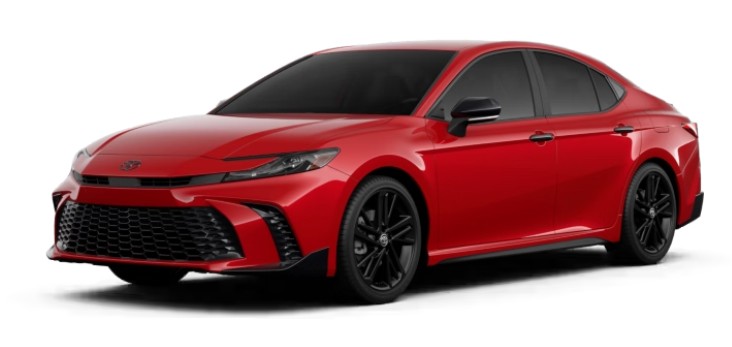
The situation changed significantly for the 2025 model year. Toyota eliminated the gasoline-only and V6 choices from the US Camry lineup, making every new Camry a hybrid powered by a 2.5-liter four-cylinder engine and electric motors. The 2026 Camry continues with this exclusively hybrid arrangement.
So, which Toyota Camry engine size makes the most sense? Is the 2.5-liter engine powerful enough? Should we search for an older V6? And does a hybrid’s engine size tell us the entire performance story?
Let’s lift the hood and sort everything out.
What Is the Toyota Camry Engine Size in the US?
For current US models, the Toyota Camry uses a 2.5-liter inline four-cylinder gasoline engine as part of its hybrid system. This engine works alongside electric motors rather than powering the car completely by itself.
Front-wheel-drive Camry models produce 225 net combined horsepower, while models equipped with electronic on-demand all-wheel drive generate 232 net combined horsepower. Toyota’s official 2026 specifications continue to list the Camry with a 2.5-liter four-cylinder engine in both front-wheel-drive and all-wheel-drive configurations.
Before the ninth-generation Camry arrived for 2025, American buyers had more engine choices. The 2024 Camry lineup included:
- A 2.5-liter naturally aspirated four-cylinder
- A 2.5-liter four-cylinder hybrid
- A 3.5-liter naturally aspirated V6
That makes the model year especially important when discussing Toyota Camry engine size. A shopper comparing a 2023 Camry XSE V6 with a 2026 Camry XSE is not merely comparing two versions of the same powertrain. They are comparing two completely different mechanical personalities.
Toyota Camry Engine Size at a Glance
Here is a simplified overview of common engine sizes found in recent US-market Camry models:
| Camry model or generation | Engine size | Configuration | Typical output |
|---|---|---|---|
| 2025–2026 Camry | 2.5 liters | Hybrid four-cylinder | 225–232 combined hp |
| 2018–2024 gas Camry | 2.5 liters | Gasoline four-cylinder | About 202–206 hp |
| 2018–2024 Camry Hybrid | 2.5 liters | Hybrid four-cylinder | 208 combined hp |
| 2018–2024 Camry V6 | 3.5 liters | Gasoline V6 | 301 hp |
| 2012–2017 four-cylinder | 2.5 liters | Gasoline four-cylinder | Around 178 hp |
| 2012–2017 Camry V6 | 3.5 liters | Gasoline V6 | Around 268 hp |
| Older four-cylinder models | 2.2 or 2.4 liters | Gasoline four-cylinder | Varies by year |
| Older V6 models | 3.0 or 3.3 liters | Gasoline V6 | Varies by year |
These figures offer a useful starting point, but engine displacement alone cannot tell us how quick, efficient, refined, or expensive a Camry will be to operate.
What Does a 2.5-Liter Engine Actually Mean?
A 2.5-liter engine has approximately 2.5 liters of total cylinder displacement. Displacement measures the combined volume swept by the pistons as they travel inside the engine’s cylinders.
In everyday terms, engine size gives us a rough idea of how much air and fuel the engine can process. A larger engine can often produce more power and torque, but modern engineering has made displacement less decisive than it once was.
A hybrid system, turbocharger, electric motor, compression ratio, fuel-injection design, transmission, and engine-control software can dramatically alter performance. That is why the current 2.5-liter Camry hybrid can produce more total system power than some older engines of similar size.
Think of displacement as the size of a kitchen. A larger kitchen may give the chef more room, but the equipment, recipe, and staff still determine how good the meal becomes.
Is 2.5 Liters Considered a Large Engine?
No. In the modern American market, a 2.5-liter four-cylinder is generally considered a medium-size engine.
It is larger than the 1.5-liter and 2.0-liter engines frequently found in compact cars, but smaller than the V6 and V8 engines traditionally used in performance cars, trucks, and large SUVs.
For a midsize sedan such as the Camry, 2.5 liters sits in a practical sweet spot. It can deliver enough power for highway driving while avoiding the fuel consumption and additional weight of a larger six-cylinder engine.
2025 and 2026 Toyota Camry Engine Size
The 2025 redesign marked one of the biggest powertrain changes in Camry history. Toyota made the US-market Camry exclusively hybrid and paired every trim with a 2.5-liter four-cylinder engine and the company’s fifth-generation Toyota Hybrid System.
The setup produces:
- 225 net combined horsepower with front-wheel drive
- 232 net combined horsepower with all-wheel drive
The extra power in the AWD model comes from an additional electric motor that drives the rear wheels when needed. The gasoline engine remains 2.5 liters in both versions.
This distinction matters because some shoppers assume an AWD Camry must have a larger engine. It does not. Toyota creates the higher total output by adding electric assistance rather than increasing engine displacement.
Is the New Camry a Plug-In Hybrid?
No. The current US Toyota Camry is a conventional self-charging hybrid, not a plug-in hybrid.
We do not need to connect it to a charging station or household outlet. The hybrid battery receives energy through the gasoline engine and regenerative braking. When we slow down, the system captures energy that would otherwise disappear as heat and stores it for later use.
This arrangement makes the Camry feel familiar. We fill it with gasoline, drive it normally, and let the powertrain manage the relationship between the engine, battery, and electric motors.
Why Did Toyota Keep the 2.5-Liter Engine?
Toyota could have chosen a smaller engine for its hybrid sedan, but the 2.5-liter unit offers several useful characteristics:
- Stronger highway performance than many smaller engines
- Lower reliance on turbocharging
- Efficient operation under steady loads
- Smooth cooperation with electric motors
- Enough output for a fully loaded midsize sedan
- A proven basic engine architecture
The electric motors help during acceleration, where gasoline engines often work hardest. Meanwhile, the 2.5-liter engine can operate efficiently during cruising. The result is a powertrain that feels less strained than its fuel-economy numbers might suggest.
2018–2024 Toyota Camry Four-Cylinder Engine
The eighth-generation Camry introduced for 2018 used a 2.5-liter Dynamic Force four-cylinder engine in most gasoline trims.
Depending on trim and configuration, this engine generally produced between 202 and 206 horsepower. Certain AWD versions had slightly different output figures. Toyota listed the 2021 front-wheel-drive engine at 203 horsepower in most trims and 206 horsepower in the XSE, which used a dual-outlet exhaust.
This engine was paired with an eight-speed automatic transmission in non-hybrid models. It provided a noticeable performance improvement over the four-cylinder used in the previous generation.
Was the 2.5-Liter Gas Camry Fast?
We would not call it a sports sedan, but it was far from helpless.
The 2.5-liter gas model offered enough power for merging, overtaking, and everyday commuting. Because the Camry is relatively light for a midsize family vehicle, more than 200 horsepower gave it respectable acceleration.
Its character was calm rather than aggressive. Press the accelerator gently, and the car moved quietly and efficiently. Push harder, and the transmission dropped gears while the engine became louder. It did the job, although without the effortless surge of the V6.
2018–2024 Toyota Camry Hybrid Engine Size
The eighth-generation Camry Hybrid also used a 2.5-liter four-cylinder engine, but it operated as part of a hybrid system.
The 2024 Camry Hybrid produced 208 net combined horsepower. Toyota offered it in several trims, including LE, SE, SE Nightshade, XLE, and XSE.
Although the gas and hybrid Camrys shared the same nominal engine displacement, they were not identical powertrains. The hybrid version used a combustion cycle, internal tuning, electric motors, battery, and transmission arrangement optimized for efficiency.
Gas 2.5-Liter Versus Hybrid 2.5-Liter
The gasoline-only 2.5-liter engine sent power through a conventional eight-speed automatic transmission. The hybrid used an electronically controlled continuously variable transmission, commonly called an eCVT.
Here is how their personalities differed:
| Characteristic | Gas 2.5-liter Camry | Hybrid 2.5-liter Camry |
| Initial acceleration | Conventional and predictable | Quicker electric response |
| Transmission feel | Noticeable gear changes | Smooth, gearless sensation |
| City efficiency | Good | Excellent |
| Highway efficiency | Strong | Strong |
| Low-speed noise | Engine usually running | Can move briefly on electricity |
| Mechanical complexity | Traditional gas powertrain | Gas-electric hybrid system |
| Driving character | Familiar | Smoother and more efficiency-focused |
The hybrid usually felt more responsive from a stop because electric motors can provide torque immediately. The gasoline model felt more traditional because its engine speed and gear changes rose in a familiar rhythm.
2018–2024 Toyota Camry V6 Engine Size
For drivers who wanted significantly more performance, Toyota offered a 3.5-liter V6 in selected XLE and XSE trims.
This naturally aspirated engine produced 301 horsepower and 267 pound-feet of torque.
The V6 turned the Camry into something of a sleeper. From the outside, it remained a practical sedan capable of carrying groceries, coworkers, or a family. Under the hood, however, it had enough muscle to accelerate with genuine urgency.
Why Did Drivers Like the 3.5-Liter V6?
The V6 offered qualities that a smaller four-cylinder could not completely duplicate:
- Strong passing power
- Smooth acceleration
- A richer engine sound
- Less effort when climbing hills
- Immediate response without turbo lag
- More relaxed performance with passengers and cargo
Its naturally aspirated design also appealed to drivers who preferred an engine without a turbocharger. Power delivery felt linear: press the accelerator farther, and the engine pulled harder.
Why Did Toyota Discontinue the Camry V6?
Toyota has not framed the change as a rejection of performance. Instead, the company redesigned the Camry around hybrid efficiency, stronger standard output, and electrified all-wheel drive.
The market also moved away from large engines in mainstream sedans. Fuel-economy requirements, emissions goals, customer demand, production efficiency, and hybrid development all favored a single electrified powertrain family.
Still, some enthusiasts miss the V6. The current hybrid is efficient and responsive, but it does not recreate the sound or high-speed character of the 301-horsepower six-cylinder.
2012–2017 Toyota Camry Engine Sizes
The seventh-generation US Camry continued the familiar formula of four-cylinder, V6, and hybrid choices.
The standard gasoline engine was a 2.5-liter four-cylinder producing approximately 178 horsepower and 170 pound-feet of torque. The available 3.5-liter V6 generated about 268 horsepower.
Toyota’s 2015 specifications paired the 178-horsepower four-cylinder and 268-horsepower V6 with six-speed automatic transmissions.
The four-cylinder was adequate for normal commuting but less energetic than the 2.5-liter Dynamic Force engine introduced for 2018. The V6, meanwhile, remained the choice for buyers who wanted stronger acceleration.
Is the Older 2.5-Liter Camry Underpowered?
Not necessarily.
We must judge performance according to the car’s purpose. A 178-horsepower Camry can comfortably maintain highway speed, handle daily errands, and carry four adults. It simply requires more planning during fast overtaking or steep climbs than a V6 model.
For many used-car buyers, condition matters more than horsepower. A well-maintained 2.5-liter Camry with service records may be a far better purchase than a neglected V6 with worn tires, overdue fluids, and a mysterious warning light.
Older Toyota Camry Engine Sizes
Earlier Camry generations used a broader range of engines. Depending on the year, American models could have a 2.2-liter, 2.4-liter, 2.5-liter, 3.0-liter, 3.3-liter, or 3.5-liter engine.
Common examples include:
- 1990s models: often 2.2-liter four-cylinder or 3.0-liter V6
- Early-2000s models: commonly 2.4-liter four-cylinder or 3.0-liter V6
- Mid-2000s models: available 2.4-liter four-cylinder, 3.0-liter V6, or 3.3-liter V6
- Late-2000s models: generally 2.4-liter four-cylinder or 3.5-liter V6
- 2010–2011 models: commonly 2.5-liter four-cylinder or 3.5-liter V6
This variety is why we should never purchase maintenance parts based only on the words “Toyota Camry.” Oil filters, spark plugs, belts, gaskets, fluid capacities, and engine components can differ considerably.
The vehicle identification number, model year, trim, emissions label, and engine code provide more reliable information.
How to Find Your Toyota Camry Engine Size
We have several easy ways to confirm the engine size in a specific Camry.
Check the Owner’s Manual
The owner’s manual contains information about the engine, recommended fluids, maintenance, warning systems, and operating procedures.
However, some manuals cover multiple powertrains. Make sure we identify which section applies to the vehicle.
Look Under the Hood
The emissions-information label under the hood may show the engine family and displacement. Some engine covers also display a V6, hybrid, or displacement marking.
Do not rely entirely on the decorative engine cover, especially when inspecting a repaired used vehicle. Labels and covers can be replaced.
Use the VIN
A Toyota dealer, parts supplier, insurance company, or reliable VIN decoder can identify the factory-installed powertrain from the 17-character vehicle identification number.
The VIN is commonly visible:
- At the base of the windshield
- On the driver’s door-jamb label
- On the registration
- On the insurance document
- On the vehicle title
Review the Original Window Sticker
The Monroney label lists the engine, transmission, fuel economy, standard equipment, options, and original pricing.
For used cars, the original sticker may be missing, but some owners keep it with the vehicle records.
Does a Bigger Camry Engine Use More Gas?
Usually, yes, but not in every driving situation.
A larger engine has more internal displacement and can consume more fuel when producing power. The 3.5-liter V6 Camry generally uses more gasoline than the 2.5-liter four-cylinder or hybrid.
However, driving style can narrow or widen the difference. A gentle driver cruising on an open highway may achieve reasonable fuel economy from a V6. An aggressive driver repeatedly accelerating and braking can return disappointing mileage even in a hybrid.
Fuel consumption also depends on:
- Vehicle weight
- Tire pressure
- Wheel size
- Temperature
- Traffic
- Elevation
- Fuel quality
- Maintenance
- Passenger and cargo load
- Air-conditioning use
- Trip length
The engine is a major part of the equation, but it is not the entire equation.
Is the Toyota Camry 2.5-Liter Engine Reliable?
The 2.5-liter engine is widely chosen because it balances power, efficiency, and relatively straightforward operation. Still, reliability cannot be reduced to displacement.
A reliable engine can suffer if oil changes are ignored, the cooling system leaks, incorrect fluids are used, or warning lights are treated like decorations.
For a used Camry, we should examine:
- Service history
- Oil-change consistency
- Coolant condition
- Signs of leaks
- Cold-start behavior
- Exhaust smoke
- Dashboard warning lights
- Maintenance receipts
- Accident and ownership history
- Results of a pre-purchase inspection
A properly serviced engine with higher mileage can be safer than a lower-mileage engine with a missing maintenance history.
Does the Hybrid Engine Last as Long?
A Camry hybrid’s gasoline engine may experience less stress in certain situations because the electric system assists with acceleration and can shut the engine off when it is not required.
However, a hybrid has additional components, including a traction battery, electric motors, power electronics, and a specialized transaxle.
That does not automatically make it unreliable. It simply changes what we inspect. When buying a used hybrid, we should check the gasoline engine and the health of the hybrid system rather than focusing on engine displacement alone.
Four-Cylinder Versus V6 Camry
Choosing between a four-cylinder and V6 Camry usually comes down to priorities.
Choose the Four-Cylinder When We Want:
- Better fuel economy
- Lower everyday running costs
- A wider selection of used vehicles
- Adequate commuting performance
- Less front-end weight
- A practical ownership experience
Choose the V6 When We Want:
- Stronger acceleration
- Easier highway passing
- Smoother high-power delivery
- A more distinctive engine sound
- One of the quickest traditional Camry configurations
- A discontinued powertrain with enthusiast appeal
The V6 is the exciting answer. The four-cylinder is usually the rational answer. Neither is automatically correct for every buyer.
Hybrid Camry Versus V6 Camry
This comparison is more interesting because the powertrains represent two different eras of the Camry.
The V6 uses displacement and six cylinders to create power. The hybrid blends a four-cylinder engine with electric motors. One feels muscular and traditional; the other feels smooth, immediate, and technology-driven.
The current hybrid delivers better fuel economy and offers available all-wheel drive. The older V6 delivers significantly more peak horsepower and a more dramatic engine note.
For urban commuting, the hybrid is usually the better tool. It can recover braking energy and use electric assistance in stop-and-go traffic.
For a driver who values strong acceleration and does not mind higher fuel use, a clean used V6 may be more satisfying.
Does AWD Change the Toyota Camry Engine Size?
No. On recent Camry models, choosing all-wheel drive does not change the gasoline engine’s displacement.
The 2026 FWD and AWD Camry models both use a 2.5-liter four-cylinder hybrid engine. The AWD model adds a rear electric motor, increasing combined system output to 232 horsepower.
Earlier eighth-generation gas Camry AWD models also used the 2.5-liter four-cylinder. The V6 was not paired with all-wheel drive.
This means buyers previously had to choose between the traction of AWD and the power of the V6. The current hybrid lineup makes AWD available while retaining the same 2.5-liter engine across the range.
Which Camry Engine Is Best for Highway Driving?
All recent Camry engines can handle highway driving, but they do so differently.
The 3.5-liter V6 is the most effortless when merging or passing. It has abundant reserve power, so we do not need to press the accelerator as deeply.
The 2018–2024 gasoline 2.5-liter engine is perfectly capable but may downshift more noticeably during fast acceleration.
The current hybrid uses electric assistance to provide prompt response. It feels lively at legal road speeds, although prolonged hard acceleration produces a different sound and sensation from a conventional automatic transmission.
For most drivers, the hybrid offers the best balance of highway capability and fuel economy. For enthusiasts, the V6 remains the more emotional choice.
Which Toyota Camry Engine Size Should We Buy?
For a new Camry, the decision is easy because the US lineup uses one basic engine size: a 2.5-liter hybrid four-cylinder.
We still need to choose between front-wheel drive and all-wheel drive, but the gasoline engine displacement remains the same.
For used Camry shoppers, the choice requires more thought.
Best for Maximum Fuel Economy
Choose a Camry Hybrid, especially if most trips involve urban traffic, commuting, or frequent stops.
Best for Simple Everyday Transportation
Choose a well-maintained 2.5-liter gasoline four-cylinder from a recent generation.
Best for Performance
Choose a 3.5-liter V6, particularly a later XSE V6 or XLE V6 in excellent condition.
Best for Snowy or Slippery Conditions
Consider a 2.5-liter Camry with AWD. Remember that quality tires remain essential. AWD can help the vehicle accelerate on slippery surfaces, but it cannot magically shorten braking distances.
Best Used-Car Value
The answer depends less on displacement than on condition. We should prioritize a clean history, consistent maintenance, a professional inspection, and a realistic purchase price.
Common Misunderstandings About Camry Engine Size
Engine terminology can be confusing, especially when dealerships and advertisements use short descriptions.
“Hybrid” Is Not the Engine Size
Hybrid describes the type of powertrain. The gasoline engine still has a displacement. In the current Camry, that displacement is 2.5 liters.
Horsepower and Engine Size Are Not the Same
Two 2.5-liter engines can produce different horsepower. Tuning, airflow, compression, exhaust design, electric assistance, and other factors affect output.
AWD Does Not Automatically Mean a Larger Engine
The AWD Camry uses the same 2.5-liter engine size as the FWD version. Its rear electric motor changes the drivetrain and combined power output.
A V6 Is Not Always Turbocharged
The 3.5-liter Camry V6 is naturally aspirated. It does not need a turbocharger to produce its rated power.
More Displacement Does Not Guarantee Better Ownership
A larger engine may be faster, but it may also consume more fuel, cost more to insure, and be more expensive to service in certain situations.
Maintenance Considerations by Engine Size
Different Camry engines can require different quantities of oil, different spark plugs, different filters, and different repair procedures.
We should not guess an oil capacity or part number based only on displacement. Two engines labeled “2.5-liter” may belong to different engine families and model years.
Before buying parts, confirm:
- Model year
- Trim level
- Gas or hybrid powertrain
- Front-wheel drive or all-wheel drive
- Engine code
- VIN
- Required oil grade
- Correct fluid capacity
The owner’s manual and Toyota’s maintenance information should be our primary references.
Does the V6 Cost More to Maintain?
It can.
A V6 has six cylinders rather than four, which means it uses more spark plugs. Its engine bay can also be more crowded, making certain services more labor-intensive.
Fuel costs are usually higher as well. However, actual repair expenses depend on vehicle condition, mileage, local labor rates, and the parts being replaced.
The Future of Toyota Camry Engine Sizes
The Camry’s move to a hybrid-only lineup shows where mainstream sedan development is heading.
Instead of using a larger gasoline engine to increase performance, Toyota can combine a relatively efficient 2.5-liter engine with stronger electric motors. This allows the company to improve low-speed response, support available AWD, and reduce fuel consumption without shrinking the Camry into an underpowered economy car.
Future Camry generations may gain more advanced batteries, motors, power electronics, and engine controls. Yet displacement may remain familiar because the 2.5-liter format provides a useful balance for a midsize sedan.
In other words, the engine is no longer performing a solo. It is part of an orchestra, and the electric motors have moved from the back row to center stage.
Final Thoughts on Toyota Camry Engine Size in the US
The Toyota Camry engine size in the US depends mainly on the model year.
Current 2025 and 2026 Camry models use a 2.5-liter four-cylinder hybrid powertrain. Front-wheel-drive versions deliver 225 net combined horsepower, while all-wheel-drive versions produce 232 net combined horsepower.
From 2018 through 2024, buyers could choose among a 2.5-liter gasoline four-cylinder, a 2.5-liter hybrid, and a 3.5-liter V6. Earlier generations used several other engine sizes, including 2.2-liter, 2.4-liter, 3.0-liter, and 3.3-liter options.
For most drivers, the 2.5-liter engine offers the right blend of power and economy. The discontinued V6 remains attractive for buyers who value speed, smoothness, and character. Meanwhile, the new hybrid system proves that a smaller cylinder count does not necessarily mean a weak driving experience.
The smartest choice is not always the biggest engine. It is the powertrain that suits our mileage, budget, climate, driving habits, and expectations.
Frequently Asked Questions
1. What engine size is in the 2026 Toyota Camry?
The 2026 Toyota Camry uses a 2.5-liter inline four-cylinder gasoline engine combined with a hybrid system. Front-wheel-drive models produce 225 net combined horsepower, while AWD models produce 232 net combined horsepower.
2. Does the Toyota Camry still have a V6 engine?
No. Toyota discontinued the V6 option when the redesigned 2025 Camry became exclusively hybrid in the United States. The previous 3.5-liter V6 produced 301 horsepower in selected XLE and XSE models.
3. Is the Toyota Camry 2.5-liter engine powerful enough?
Yes, for most drivers. Recent gasoline 2.5-liter Camrys produce more than 200 horsepower, while the current hybrid develops 225 or 232 combined horsepower. Both provide adequate acceleration for city and highway driving.
4. Is a Camry four-cylinder or V6 better?
The four-cylinder is generally better for fuel economy and everyday costs. The V6 is better for quick acceleration, smooth power, and a sportier driving experience. Vehicle condition should remain a major factor when buying used.
5. How can I tell which engine my Camry has?
Check the owner’s manual, under-hood emissions label, original window sticker, registration information, or VIN. A Toyota dealership or parts department can also identify the factory engine using the VIN.
If you want to see other articles similar to Toyota Camry Engine Size in the US: Complete Guide by Model Year you can visit the Compare category.
Ford Bronco Pros and Cons: Complete Buyer’s Guide
2026 Ford Bronco Towing: Capacity, Equipment, and Real-World Limits
Ford Bronco Gas Tank Size: 2026 U.S. Guide
2026 Ford Bronco Big Bend vs Outer Banks: Features and Differences Explained
2026 Ford Bronco Trim Levels in Order: Complete U.S. Guide
Ford Bronco Models Explained for U.S. Buyers
Leave a Reply
Related Topics