

Toyota Camry Insurance Cost in the US: Complete 2026 Guide

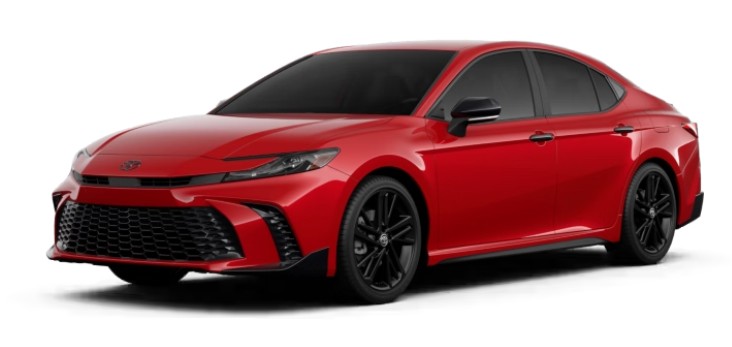
Contents in this publication
- How Much Is Toyota Camry Insurance in the US?
- Why Does Toyota Camry Insurance Cost Vary So Much?
- Is a Toyota Camry Expensive to Insure?
- Toyota Camry Insurance Cost Compared With the US Average
- Full-Coverage Toyota Camry Insurance Cost
- Liability-Only Toyota Camry Insurance Cost
- Toyota Camry Insurance Cost by Model Year
- Toyota Camry Insurance Cost by Trim Level
- Does the Camry Hybrid Cost More to Insure?
- How Safety Ratings Affect Camry Insurance
- Toyota Camry Insurance Cost by Driver Age
- How Location Changes Toyota Camry Insurance Cost
- How Driving History Affects Camry Insurance
- Does Credit Affect Toyota Camry Insurance Cost?
- How Deductibles Change Camry Insurance Premiums
- How Much Coverage Does a Camry Owner Need?
-
Best Ways to Lower Toyota Camry Insurance Cost
- 1. Compare Multiple Companies
- 2. Bundle Home and Auto Policies
- 3. Increase the Deductible Carefully
- 4. Ask About Low-Mileage Discounts
- 5. Consider Usage-Based Insurance
- 6. Maintain Continuous Coverage
- 7. Review Optional Extras
- 8. Protect Your Driving Record
- 9. Check Discounts Annually
- 10. Shop Again Before Renewal
- Should We Buy Gap Insurance for a New Camry?
- Should We Drop Full Coverage on an Older Camry?
- How to Get an Accurate Toyota Camry Insurance Quote
- Common Mistakes When Insuring a Toyota Camry
- Is the Toyota Camry a Good Car for Affordable Insurance?
- Final Thoughts on Toyota Camry Insurance Cost in the US
- Frequently Asked Questions
The Toyota Camry insurance cost in the US can range from surprisingly manageable to painfully expensive. One driver may receive a quote below $150 per month, while another gets handed a bill exceeding $300 for what appears to be the same car.
Why such a dramatic gap?
Car insurance pricing is a little like airline pricing. Two people can purchase what seems like the same product yet pay entirely different amounts because timing, location, personal history, and dozens of behind-the-scenes calculations shape the final price.
In 2026, one major insurance analysis estimates that full coverage for a Toyota Camry averages approximately $2,889 per year, or about $241 per month. That estimate is slightly below its reported national average for full-coverage car insurance. However, other studies calculate substantially lower Camry averages, demonstrating why no single number can predict what an individual driver will actually pay.
Throughout this guide, we will examine average costs, coverage choices, driver profiles, model years, trims, locations, discounts, and practical ways to lower a Toyota Camry insurance premium in the United States.
How Much Is Toyota Camry Insurance in the US?
A reasonable national estimate for Toyota Camry insurance is approximately:
- $160 to $275 per month for full coverage
- $80 to $160 per month for liability-focused coverage
- $1,900 to $3,300 per year for full coverage
- $960 to $1,920 per year for liability-focused coverage
These are broad planning ranges rather than guaranteed quotes.
Current published estimates vary considerably. Insure.com reports an average Camry full-coverage cost of approximately $2,889 annually, while CareEdge places its estimate closer to $2,039 annually. Another analysis reports an average of roughly $1,964 per year for Toyota vehicles overall and a lower model-specific figure for the Camry.
Meanwhile, one recent estimate places full coverage for a 2025 Toyota Camry at around $271 per month, with liability-only coverage averaging about $148 per month.
Why are the estimates so different? Each study uses its own sample drivers, locations, ages, deductibles, coverage limits, credit profiles, and insurance companies. Comparing them without examining the methodology is like comparing restaurant bills without checking what anyone ordered.
Estimated Toyota Camry Insurance Cost Per Month
For a mature driver with a clean record and average credit, we can use the following approximate ranges:
| Coverage type | Estimated monthly cost | Estimated annual cost |
|---|---|---|
| State-minimum liability | $75–$130 | $900–$1,560 |
| Higher-limit liability | $100–$170 | $1,200–$2,040 |
| Full coverage, $1,000 deductible | $160–$230 | $1,920–$2,760 |
| Full coverage, $500 deductible | $185–$275 | $2,220–$3,300 |
| Young-driver full coverage | $300–$650+ | $3,600–$7,800+ |
These numbers can rise sharply in expensive insurance markets or after an accident, speeding conviction, lapse in coverage, or major credit change.
Estimated Toyota Camry Insurance Cost Per Year
For budgeting purposes, a typical Camry owner may want to reserve around $2,400 to $3,000 per year for full coverage until personalized quotes prove otherwise.
That does not mean everyone will pay that much. Experienced drivers in low-cost ZIP codes may pay considerably less. Teenagers, newly licensed drivers, and people living in high-claim urban areas may pay considerably more.
Why Does Toyota Camry Insurance Cost Vary So Much?
An insurer does not simply look at the Toyota badge and select a price from a menu. Instead, it evaluates the likelihood that a claim will occur and how expensive that claim could become.
The company may consider:
- Your age and driving experience
- Your ZIP code
- Your claims history
- Traffic violations
- Annual mileage
- Credit-based insurance score where permitted
- Coverage limits
- Deductible amounts
- Vehicle model year
- Camry trim level
- Ownership or financing status
- Anti-theft and safety equipment
- Other household drivers
- Previous insurance history
Two Camry owners who live across the country from one another are not really purchasing the same risk. One may drive 5,000 miles annually through a quiet rural area. The other may commute 20,000 miles through dense traffic, frequent hailstorms, and a neighborhood with elevated theft rates.
The cars may match. The exposure does not.
Is a Toyota Camry Expensive to Insure?
Generally, a Toyota Camry is not considered an unusually expensive vehicle to insure relative to luxury sedans, sports cars, high-performance electric vehicles, or large premium SUVs.
It benefits from several insurance-friendly qualities:
- It is a mainstream family sedan.
- It has widely available replacement parts.
- Many repair facilities understand the model.
- It is not marketed primarily as a performance vehicle.
- Modern versions include substantial driver-assistance technology.
- It has a strong reputation as practical transportation.
One 2026 analysis estimates that Camry full coverage costs approximately $148 less per year than its calculated national average.
However, “affordable to insure” should not be confused with “cheap for everyone.” Modern bumpers, cameras, sensors, hybrid equipment, radar units, windshields, headlights, and electronic modules can turn a seemingly minor collision into a complicated repair.
A parking-lot bump is no longer always a simple piece of plastic and paint. Sometimes it is plastic, paint, sensors, calibration, scanning, labor, and a repair invoice that grows legs.
Toyota Camry Insurance Cost Compared With the US Average
National insurance averages have increased substantially during recent years, although pricing can change month by month. One current 2026 estimate places average full-coverage insurance in the United States at around $203 per month, with minimum coverage averaging approximately $61 per month.
Against that benchmark, some Camry estimates appear close to the national average, while others place it slightly above or below.
The fairest conclusion is this:
The Toyota Camry itself is usually not the main reason a quote becomes extremely expensive. The driver, location, insurer, and coverage configuration often matter more.
An insurance company that prices one driver competitively may price another harshly. This is why comparison shopping can create larger savings than choosing between two similar Camry trims.
Full-Coverage Toyota Camry Insurance Cost
“Full coverage” is not a standardized policy sold as one universal package. It usually refers to a combination of:
- Bodily injury liability
- Property damage liability
- Collision coverage
- Comprehensive coverage
- Uninsured or underinsured motorist coverage
- Personal injury protection or medical payments where applicable
A financed or leased Toyota Camry will usually require both collision and comprehensive coverage. The lender wants the vehicle protected because it retains a financial interest in the car.
What Collision Coverage Does
Collision coverage may help repair or replace your Camry after damage involving:
- Another vehicle
- A guardrail
- A wall
- A tree
- A pole
- A rollover
- Certain single-vehicle accidents
You normally pay your deductible first. The insurer then handles covered repair costs up to the policy and vehicle-value limits.
What Comprehensive Coverage Does
Comprehensive coverage generally addresses non-collision events such as:
- Theft
- Vandalism
- Fire
- Hail
- Flooding
- Falling objects
- Broken glass
- Animal strikes
For many Camry owners, comprehensive coverage provides valuable protection at a lower price than collision coverage. Still, its cost depends heavily on local theft, weather, vandalism, and glass-claim patterns.
Liability-Only Toyota Camry Insurance Cost
Liability insurance generally covers injuries or property damage you cause to other people. It does not normally pay to repair your own Camry after an at-fault collision.
A liability-focused Camry policy may cost around $80 to $160 monthly, but prices can fall below or rise above that range.
One current model-specific analysis estimates approximately $148 per month for liability-only coverage on a 2025 Camry. That number is relatively high because the underlying driver sample, state mix, limits, and rating methodology affect the result.
When Does Liability-Only Coverage Make Sense?
Liability-only coverage may be worth considering when:
- The Camry is paid off.
- Its market value has declined significantly.
- You can afford to replace it personally.
- Collision and comprehensive premiums represent a large percentage of its value.
- The lender no longer requires physical-damage coverage.
However, dropping full coverage solely to save money can backfire. Imagine eliminating collision coverage on a $12,000 Camry and totaling it the following month. The premium saving may feel like a cup of water against a house fire.
We should compare the annual cost of collision and comprehensive coverage with the vehicle’s current value, deductible, and our ability to absorb a major loss.
Toyota Camry Insurance Cost by Model Year
Newer Camrys generally cost more to repair or replace, so they often produce higher premiums than older versions. Yet age does not create a perfectly straight pricing line.
An older Camry may have fewer advanced sensors, but it can also lack modern crash-avoidance technology. A newer Camry may carry a higher replacement value while benefiting from more sophisticated safety systems.
Insurance Cost for a New Toyota Camry
A new 2025 or 2026 Toyota Camry may cost approximately:
- $190 to $300 per month for full coverage
- $2,280 to $3,600 per year
- More for young drivers, poor credit profiles, or expensive states
The Camry has been sold exclusively with a hybrid powertrain in the United States since its 2025 redesign. The current generation’s additional technology and higher value can increase repair severity even when fuel costs are reduced.
Insurance Cost for a Used Toyota Camry
A five- to ten-year-old Camry may cost approximately:
- $130 to $230 per month for full coverage
- $75 to $150 per month for liability-oriented coverage
As the vehicle depreciates, collision and comprehensive prices may gradually decrease. Liability premiums may not fall at the same speed because liability is tied primarily to the damage and injuries we could cause to others.
Insurance Cost for an Older Toyota Camry
A Camry more than ten years old may become inexpensive to insure when we select liability-only coverage. Yet the quote still depends heavily on the driver.
A 19-year-old driving a 2012 Camry could easily pay more than a 45-year-old driving a 2026 Camry. Vehicle age is just one ingredient in a rather crowded recipe.
Toyota Camry Insurance Cost by Trim Level
The Camry trim can affect insurance pricing because trims differ in market value, wheels, headlights, interior equipment, cosmetic details, and repair costs.
Toyota Camry LE Insurance Cost
The LE is often among the least expensive Camry trims to insure because it typically has:
- A lower purchase price
- Smaller wheels
- Less expensive cosmetic equipment
- A practical, non-performance-oriented configuration
For shoppers focused on the lowest total ownership cost, the LE frequently makes the strongest financial argument.
Toyota Camry SE Insurance Cost
The SE may cost slightly more to insure than the LE due to sportier exterior pieces, different wheels, tires, and trim-specific parts.
The difference may be small, however. Driver and location variables can overwhelm the trim-related change.
Toyota Camry XLE Insurance Cost
The XLE carries additional luxury-oriented features and a higher replacement value. More expensive headlights, interior components, wheels, and electronics can produce a moderately higher premium.
Toyota Camry XSE Insurance Cost
The XSE is often the most expensive mainstream Camry trim to insure because it combines a higher purchase price with larger wheels and sportier equipment.
Even so, we should request VIN-specific quotes before choosing a trim. The expected order does not always match an insurer’s actual rating system.
Does the Camry Hybrid Cost More to Insure?
The current US-market Camry is hybrid-only, making hybrid insurance cost part of the standard Camry conversation rather than a niche alternative.
Hybrid vehicles can be more expensive to repair after certain collisions because they contain:
- High-voltage battery systems
- Electric motors
- Power-control electronics
- Specialized cooling components
- Additional wiring
- Model-specific diagnostic requirements
However, insurers also consider safety equipment, claim frequency, driver behavior, theft experience, and repair availability.
A hybrid badge does not automatically trigger an enormous premium. For many owners, the difference is modest or barely noticeable compared with the impact of ZIP code, age, coverage limits, and insurer choice.
How Safety Ratings Affect Camry Insurance
Safety equipment can reduce crash likelihood or injury severity, but it does not guarantee low insurance prices.
The 2026 Toyota Camry earned the Insurance Institute for Highway Safety’s Top Safety Pick+ designation, its highest award level. The IIHS reports strong performance across key crashworthiness and crash-prevention categories for the model.
Modern Camry safety technology may include:
- Automatic emergency braking
- Forward-collision warning
- Lane-departure alert
- Lane-keeping assistance
- Adaptive cruise control
- Pedestrian detection
- Blind-spot monitoring on equipped versions
- Rear cross-traffic alert on equipped versions
These systems may help prevent accidents. Yet the sensors and cameras supporting them can also increase repair costs.
That creates an insurance paradox: the technology may reduce the frequency of some crashes while making certain repairs more expensive when a crash still occurs.
Toyota Camry Insurance Cost by Driver Age
Age is one of the most influential insurance variables.
Teenage Camry Drivers
A teenager may pay $400 to $800 per month or more for individual full coverage, depending on state, location, sex where permitted, vehicle, and record.
Adding a teenager to a family policy is often less expensive than purchasing a separate policy. Discounts for good students, driver education, telematics, and living away at college may help.
Camry Insurance for Drivers in Their 20s
Rates commonly begin falling as drivers accumulate experience. A clean-record driver in the mid-to-late twenties may still pay more than a middle-aged driver, but the difference can narrow substantially.
Expected full-coverage costs might range from $220 to $450 per month, depending on the driver’s exact age and location.
Camry Insurance for Drivers Aged 30 to 60
This group often receives the most favorable pricing, assuming a clean record, continuous coverage, and strong insurance score.
A typical range may be around $150 to $275 per month for full coverage, although low-cost areas can fall below it.
Camry Insurance for Senior Drivers
Rates may remain competitive throughout the sixties before increasing later as insurers identify higher claim frequency or injury severity among older age groups.
Defensive-driving courses, low mileage, bundling, and mature-driver discounts can help reduce the bill.
How Location Changes Toyota Camry Insurance Cost
Location can transform the premium more dramatically than the car itself.
Insurance companies may examine:
- Accident frequency
- Vehicle theft
- Repair labor rates
- Medical costs
- Fraud patterns
- Litigation trends
- Weather losses
- Population density
- Uninsured-driver rates
- State insurance laws
A Camry stored in a private garage in a low-traffic community may be cheaper to insure than an identical Camry parked on a city street where theft, vandalism, congestion, and hail claims are common.
Even moving between ZIP codes within the same city can change the price.
Expensive States for Camry Insurance
Camry owners may encounter higher rates in states with dense traffic, high medical costs, severe weather, elevated litigation, no-fault systems, or high numbers of uninsured motorists.
For example, current state-level comparisons show major differences in average full-coverage premiums, with some states exceeding $200 per month before vehicle-specific factors are considered.
Cheaper States for Camry Insurance
Lower-density states with fewer claims and lower repair or medical costs may offer more affordable premiums.
Nevertheless, statewide averages can conceal enormous variation between rural areas, suburbs, and major cities.
How Driving History Affects Camry Insurance
A clean driving record is one of the strongest tools for controlling insurance cost.
Premiums may rise after:
- Speeding tickets
- At-fault crashes
- Reckless-driving convictions
- Driving under the influence
- License suspensions
- Multiple comprehensive claims
- Coverage lapses
One minor speeding ticket may cause a manageable increase. An at-fault crash or serious violation can reshape the premium for several years.
Insurers do not all punish violations equally. One company may treat a speeding ticket like a flashing yellow light. Another may treat it like a marching band entering the underwriting department.
This is another reason to compare quotes after a violation rather than automatically renewing.
Does Credit Affect Toyota Camry Insurance Cost?
In many states, insurers may use credit-based insurance scores when calculating premiums. These scores are not identical to ordinary lending credit scores, although they use some related information.
Drivers with poor insurance-based credit may pay much more than drivers with strong credit, even when both have clean driving records.
Some states prohibit or restrict this practice, so its effect depends on location.
Improving credit-related factors may gradually lower premiums by:
- Paying bills on time
- Reducing revolving balances
- Correcting report errors
- Avoiding unnecessary new accounts
- Maintaining long-term account stability
We should not expect an overnight transformation, but insurance savings can become an overlooked benefit of healthier credit habits.
The deductible is the amount we pay toward a covered collision or comprehensive claim before insurance contributes.
Common deductibles include:
- $250
- $500
- $1,000
- $1,500
- $2,000
Raising a deductible generally reduces the premium. However, the savings may be smaller than expected.
Suppose increasing the collision deductible from $500 to $1,000 saves $110 per year. We are accepting an additional $500 of potential out-of-pocket cost to save $110 annually. That may be reasonable if we maintain a strong emergency fund, but risky if finding $1,000 after an accident would be difficult.
The best deductible is not automatically the highest option. It is the highest amount we could comfortably pay without turning a bad day into a financial crisis.
How Much Coverage Does a Camry Owner Need?
State-minimum coverage may make a vehicle legal to drive, but legal minimums can be financially inadequate.
A serious crash can produce:
- Emergency medical bills
- Long-term treatment
- Lost wages
- Legal expenses
- Vehicle replacement
- Property damage
- Lawsuits
Low liability limits can disappear quickly. Many drivers choose limits such as 100/300/100, meaning:
- $100,000 bodily injury per person
- $300,000 bodily injury per accident
- $100,000 property damage per accident
Drivers with substantial income, savings, property, or other assets may require higher limits and possibly an umbrella policy.
Saving $15 per month by cutting liability protection can be false economy. Insurance exists to shield us from losses that could alter our financial lives, not merely to satisfy registration requirements.
Best Ways to Lower Toyota Camry Insurance Cost
We cannot control every rating factor, but several strategies can create meaningful savings.
1. Compare Multiple Companies
Rates can vary by hundreds or thousands of dollars for the same driver. Obtain quotes from:
- Large national insurers
- Regional companies
- Independent agents
- Direct-to-consumer insurers
- Military-focused insurers if eligible
Recent industry comparisons continue to show that no single insurer is cheapest for every type of driver.
2. Bundle Home and Auto Policies
Combining auto insurance with homeowners, renters, or condo coverage can produce a multi-policy discount.
Still, compare the combined total. A large advertised discount does not guarantee the lowest final price.
3. Increase the Deductible Carefully
A higher collision or comprehensive deductible can reduce premiums. Keep enough money available to pay it immediately after a claim.
4. Ask About Low-Mileage Discounts
Drivers who work from home, use public transportation, or drive infrequently may qualify for low-mileage pricing.
Report mileage honestly. Underestimating use can create problems during policy reviews or claims.
5. Consider Usage-Based Insurance
Telematics programs may evaluate:
- Braking
- Acceleration
- Mileage
- Driving time
- Cornering
- Phone use
- Speed patterns
Safe, low-mileage drivers may save money. Aggressive drivers or people frequently driving late at night should examine the rules carefully.
6. Maintain Continuous Coverage
A lapse in insurance can make future coverage more expensive. Arrange the next policy before canceling the previous one.
7. Review Optional Extras
Rental reimbursement, roadside assistance, custom equipment protection, gap insurance, and other additions can be useful, but unnecessary overlap increases cost.
For example, roadside assistance may already be available through a credit card, vehicle warranty, automaker plan, or separate membership.
8. Protect Your Driving Record
Avoiding one ticket or collision may save far more than chasing a collection of minor discounts.
Slow down, leave space, avoid distractions, and drive defensively. Boring driving can produce beautifully boring insurance renewals.
9. Check Discounts Annually
Potential discounts include:
- Multi-vehicle
- Multi-policy
- Good driver
- Good student
- Defensive driving
- Anti-theft equipment
- Automatic payments
- Paperless billing
- Paid-in-full
- Occupational or membership discounts
- Vehicle safety discounts
10. Shop Again Before Renewal
Insurance pricing changes. A company that was competitive two years ago may no longer be the best fit.
Request fresh quotes annually or after major life changes such as moving, marrying, buying a home, improving credit, changing jobs, or reducing mileage.
Should We Buy Gap Insurance for a New Camry?
Gap insurance covers the potential difference between the vehicle’s insurance value and the remaining loan or lease balance after a total loss.
It may be helpful when:
- The down payment is small.
- The loan term is long.
- Negative equity was rolled into the loan.
- The vehicle is leased.
- Early depreciation could exceed the loan payoff pace.
It may become unnecessary once the loan balance falls comfortably below the Camry’s market value.
Compare gap coverage through the insurer and dealership. Dealership products can be convenient, but they may cost more and may be financed into the loan, generating interest.
Should We Drop Full Coverage on an Older Camry?
There is no universal age at which full coverage should disappear.
Instead, consider:
- The Camry’s current market value
- The annual collision and comprehensive premium
- The deductible
- Your savings
- Your dependence on the vehicle
- The likelihood of theft, hail, flooding, or animal damage
Suppose an older Camry is worth $5,000, the deductible is $1,000, and physical-damage coverage costs $900 annually. The maximum practical insurance benefit may be approximately $4,000, yet we are paying $900 every year to preserve it.
Dropping collision might be reasonable. Keeping comprehensive could still make sense if it is inexpensive and the local theft or storm risk is substantial.
We can also remove collision while retaining comprehensive. Coverage decisions do not have to be all or nothing.
How to Get an Accurate Toyota Camry Insurance Quote
Online averages are useful for planning, but only a personalized quote can reflect our real cost.
Before requesting quotes, gather:
- The Camry’s VIN
- Driver’s license information
- Current policy declarations page
- Estimated annual mileage
- Garaging address
- Loan or lease details
- Desired liability limits
- Preferred deductibles
- Household-driver information
Then request quotes using identical limits and deductibles.
This point matters. A $160 quote with low liability limits and a $2,000 deductible is not automatically better than a $190 quote with stronger limits and a $500 deductible.
Compare the policy, not merely the price printed in the largest font.
Common Mistakes When Insuring a Toyota Camry
Drivers often overpay or remain underinsured because they:
- Accept the dealership’s suggested provider without comparison
- Choose state minimums without examining personal risk
- Use different coverage limits when comparing quotes
- Forget to remove outdated drivers or vehicles
- Ignore low-mileage changes
- Carry unnecessary duplicate roadside coverage
- Select a deductible they cannot afford
- Allow coverage to lapse between policies
- Fail to ask about discounts
- Renew automatically for years
Insurance should not be placed in a drawer and forgotten. A brief annual review can uncover outdated assumptions and expensive little leaks.
Is the Toyota Camry a Good Car for Affordable Insurance?
For many US drivers, yes.
The Camry combines broad repair availability, mainstream pricing, strong safety performance, practical power, and a non-exotic image. Those characteristics generally make it easier to insure than high-performance or premium alternatives.
The 2026 model’s Top Safety Pick+ recognition reinforces its credentials as a safety-focused family sedan.
Still, the cheapest car to insure is not always the cheapest car to own. We should consider:
- Purchase price
- Financing
- Fuel
- Maintenance
- Depreciation
- Registration
- Tires
- Repairs
- Insurance
A slightly higher insurance premium may be acceptable if the car delivers lower fuel costs, stronger reliability, better resale value, and fewer repairs.
Final Thoughts on Toyota Camry Insurance Cost in the US
The typical Toyota Camry insurance cost in the US may fall between $160 and $275 per month for full coverage, with a broad annual expectation of approximately $1,900 to $3,300.
Some current studies place average Camry full coverage near $2,000 annually, while others estimate almost $2,900 or more. That wide gap is not necessarily a contradiction. It is evidence of how strongly driver profiles, locations, coverage choices, and research methodologies influence averages.
The Camry is generally a sensible vehicle to insure, but the badge alone cannot promise a bargain. The greatest savings usually come from comparing insurers, maintaining a clean record, selecting thoughtful deductibles, preserving continuous coverage, and reviewing the policy every year.
A good quote should not merely look cheap today. It should provide enough protection to keep an accident from turning into a long-term financial storm.
Frequently Asked Questions
1. How much is Toyota Camry insurance per month in the US?
Toyota Camry insurance may cost approximately $160 to $275 per month for full coverage. Liability-focused coverage may range from around $80 to $160 monthly. Actual prices depend on age, ZIP code, record, credit where permitted, model year, deductible, limits, and insurer.
2. Is a Toyota Camry cheaper to insure than a Honda Accord?
The difference is often small and varies by driver and insurer. One company may price the Camry lower, while another may favor the Accord. Request VIN-specific quotes for both vehicles using identical coverage levels before purchasing.
3. Does a Toyota Camry hybrid cost more to insure?
It can cost slightly more because hybrid components and modern electronics may be expensive to repair. However, the difference is not always significant. Safety features, location, driver history, coverage choices, and insurer pricing may have a larger effect.
4. What Toyota Camry trim is cheapest to insure?
The Camry LE is often the cheapest trim to insure because it usually has the lowest purchase price and less expensive wheels and cosmetic equipment. However, actual results vary, so buyers should compare VIN-specific quotes for the LE, SE, XLE, and XSE.
5. How can we get cheaper Toyota Camry insurance?
Compare multiple insurers, bundle policies, maintain continuous coverage, improve credit where relevant, select a manageable higher deductible, use low-mileage or telematics programs, ask about discounts, and protect your driving record.
If you want to see other articles similar to Toyota Camry Insurance Cost in the US: Complete 2026 Guide you can visit the Compare category.
Ford Bronco Pros and Cons: Complete Buyer’s Guide
2026 Ford Bronco Towing: Capacity, Equipment, and Real-World Limits
Ford Bronco Gas Tank Size: 2026 U.S. Guide
2026 Ford Bronco Big Bend vs Outer Banks: Features and Differences Explained
2026 Ford Bronco Trim Levels in Order: Complete U.S. Guide
Ford Bronco Models Explained for U.S. Buyers
Leave a Reply
Related Topics