

Ford F 150 vs 250 vs 350: Which Ford Truck Should We Really Choose?

Contents in this publication
- Ford F 150 vs 250 vs 350: The Basic Difference
- What Is the Ford F-150 Best For?
- What Is the Ford F-250 Best For?
- What Is the Ford F-350 Best For?
- Ford F-150 vs F-250 vs F-350 for Daily Driving
- Ford F 150 vs 250 vs 350 for Towing
- Ford F 150 vs 250 vs 350 for Payload
- Engine Options and Performance Personality
- Ride Comfort: Which Truck Feels Best?
- Interior and Technology Differences
- Fuel Economy and Running Costs
- F-150 vs F-250 vs F-350 for Work Use
- F-150 vs F-250 vs F-350 for Families
- Which Truck Is Best for RV Owners?
- Which Truck Is Best for Contractors?
- Buying Too Much Truck: Is the F-350 Overkill?
- Buying Too Little Truck: When the F-150 Is Not Enough
- Ford F-150 vs F-250 vs F-350: Price and Value
- Ford F-150 vs F-250 vs F-350: Resale Value
- Single Rear Wheel vs Dual Rear Wheel F-350
- Which Ford Truck Should We Choose?
- Final Verdict: Ford F 150 vs 250 vs 350
- FAQs About Ford F 150 vs 250 vs 350
When we start comparing the Ford F 150 vs 250 vs 350, we are not just comparing three pickups. We are comparing three different levels of strength, comfort, responsibility, and daily usability. It is a bit like choosing between a solid pair of work boots, steel-toe boots, and full-on construction-site armor. They all belong to the same family, but they are built for different days, different loads, and different kinds of drivers.
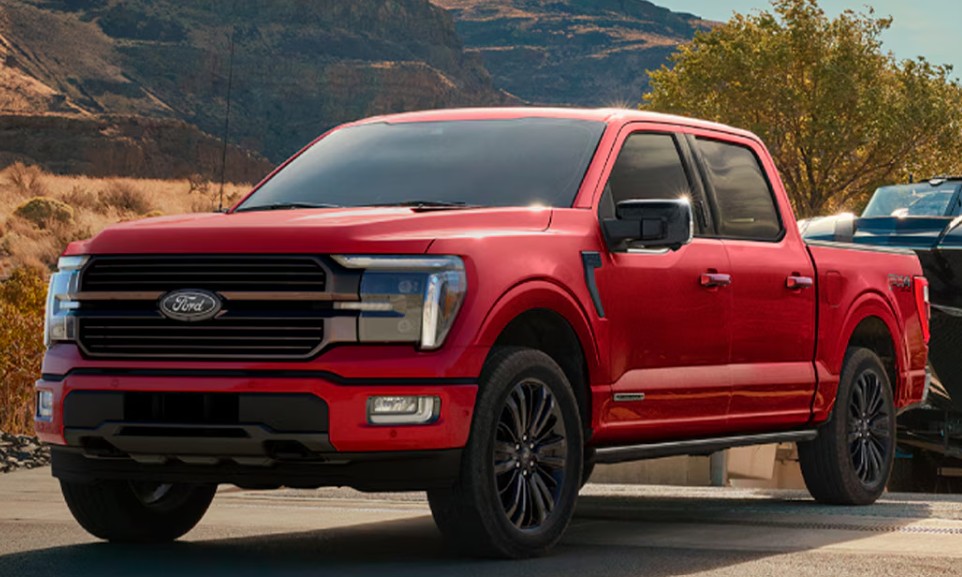
The Ford F-150 is the friendly all-rounder. It can commute, tow, haul, run errands, take the family out, and still look sharp in the driveway. The F-250 steps into heavier territory. It feels more serious, more planted, and more prepared for big trailers, work equipment, and tougher routines. Then we have the F-350, the big sibling with the broad shoulders. This is the truck we look at when payload, fifth-wheel towing, commercial use, and maximum capability become the real priority.
So, which one makes the most sense? That depends on what we actually do with the truck. Buying too little truck can become stressful. Buying too much truck can feel like using a sledgehammer to hang a picture frame. Let’s break it down in plain English.
Ford F 150 vs 250 vs 350: The Basic Difference
At the simplest level, the Ford F-150 is a light-duty full-size pickup, while the F-250 and F-350 are part of Ford’s Super Duty lineup. That one phrase — Super Duty — tells us a lot. These trucks are built with heavier frames, stronger suspension components, more robust axles, larger towing hardware, and engines designed for serious pulling.
The F-150 is the truck most people can live with every day. It is easier to park, smoother to drive, more fuel-friendly, and available in trims that range from basic work truck to luxury cruiser. The F-250 is for people who tow or haul often enough that a light-duty truck starts to feel stretched. The F-350 is for those who need even more payload and towing confidence, especially with heavy trailers, goosenecks, campers, construction gear, or commercial loads.
Quick Comparison Table
| Category | Ford F-150 | Ford F-250 | Ford F-350 |
|---|---|---|---|
| Class | Light-duty | Heavy-duty Super Duty | Heavy-duty Super Duty |
| Best For | Daily driving, moderate towing, family use | Heavy towing, work use, large trailers | Maximum payload, fifth-wheel towing, commercial hauling |
| Ride Comfort | Smoothest | Firmer | Firmest, especially unloaded |
| Parking Ease | Easiest | Bigger and wider-feeling | Biggest and least city-friendly |
| Fuel Economy | Best of the three | Lower | Lowest, especially with dual rear wheels |
| Payload Strength | Good | Strong | Strongest |
| Towing Strength | Good to excellent | Excellent | Maximum capability |
| Daily Usability | Highest | Moderate | Lowest unless needed |
What Is the Ford F-150 Best For?
The Ford F-150 is the truck we choose when we want capability without making every drive feel like a jobsite assignment. It is the most balanced option in this comparison. We can use it for commuting, road trips, Home Depot runs, light business work, weekend towing, and family duty without feeling like we bought more truck than we need.
It is especially appealing because it offers a wide range of engines, trims, cab choices, bed lengths, and technology packages. We can configure an F-150 as a basic workhorse or as a premium truck with leather, big screens, advanced driver assistance, and enough comfort to make long drives feel easy.
The F-150 Makes Sense If We:
- Tow boats, small campers, ATVs, or utility trailers
- Want a truck that still feels manageable in town
- Need a pickup for mixed personal and work use
- Care about fuel economy more than maximum towing
- Want the widest range of trims and configurations
- Do not regularly haul extremely heavy payloads
The F-150 is not weak. Far from it. But it is designed to balance strength with everyday friendliness.
What Is the Ford F-250 Best For?
The Ford F-250 is where things get serious. This is the truck for people who tow heavier trailers, carry tools, haul materials, or need a more durable platform than the F-150 can comfortably provide. It is not as easygoing as the F-150, but that is the point. The F-250 trades some softness for strength.
Think of the F-250 as the “sweet spot” for many heavy-duty buyers. It gives us Super Duty toughness without always jumping into the biggest, stiffest, most expensive configuration. If we tow a large travel trailer, a horse trailer, a heavy equipment trailer, or a loaded work trailer, the F-250 starts to make a lot of sense.
The F-250 Makes Sense If We:
- Tow heavy trailers several times a month
- Need more payload than an F-150 can safely handle
- Want access to Super Duty gas and diesel engines
- Use the truck for business, farming, construction, or fleet work
- Want serious towing confidence without necessarily needing an F-350
- Prefer a heavy-duty truck that still feels relatively practical
The F-250 is often the “just right” choice for people who have outgrown a half-ton truck but do not need maximum dual-rear-wheel capability.
What Is the Ford F-350 Best For?
The Ford F-350 is the muscle truck of the trio. It is built for heavier payloads, bigger trailers, and more demanding work. If the F-250 is a strong handshake, the F-350 is a concrete pillar. This is the truck we buy when numbers matter — payload ratings, axle strength, fifth-wheel capability, gooseneck towing, and long-term durability under pressure.
The F-350 is also available in configurations that make it far more capable than the F-250, especially when equipped with dual rear wheels. That extra rear tire setup gives the truck more stability under heavy loads and makes it a favorite for large campers, commercial trailers, and serious towing operations.
The F-350 Makes Sense If We:
- Tow very heavy fifth-wheel or gooseneck trailers
- Carry slide-in truck campers
- Need maximum payload capacity
- Use the truck commercially
- Want dual rear wheels for added stability
- Regularly haul heavy equipment or materials
The F-350 is not the most relaxed daily driver. It is big, firm, and thirsty. But when we need real heavy-duty capability, it is the one that stands tallest.
Ford F-150 vs F-250 vs F-350 for Daily Driving
For daily driving, the F-150 wins easily. It is smoother, lighter, easier to park, and more comfortable in normal traffic. It feels like a truck, yes, but it does not constantly remind us that we are driving something built to move half a jobsite.
The F-250 can be used daily, and plenty of people do it. But the ride is firmer, the size is more noticeable, and parking lots feel tighter. It is manageable, but less relaxed.
The F-350 is the hardest one to recommend as a pure daily driver unless we truly need its capability. In single-rear-wheel form, it can still be livable. In dual-rear-wheel form, it becomes much more demanding around town. Narrow lanes, drive-thrus, parking garages, and crowded streets can all become little daily puzzles.
Daily Driving Ranking
- Ford F-150 — best comfort and convenience
- Ford F-250 — usable but firmer and larger
- Ford F-350 — practical only if we need the strength
Ford F 150 vs 250 vs 350 for Towing
Towing is where the comparison really changes. The F-150 is excellent for moderate towing, but the F-250 and F-350 are designed to tow heavier loads with more stability and confidence.
The F-150 can handle many boats, campers, trailers, and recreational loads. For many families, it is more than enough. But once we start towing large travel trailers, loaded equipment trailers, heavy livestock trailers, or fifth-wheel setups, the Super Duty trucks become more appropriate.
The F-250 gives us stronger towing hardware, bigger brakes, heavier suspension, and more engine torque when properly equipped. The F-350 takes that even further, especially with dual rear wheels and heavy-duty towing packages.
Towing Rule of Thumb
- Choose the F-150 for occasional to moderate towing.
- Choose the F-250 for frequent heavy towing.
- Choose the F-350 for maximum towing and heavy fifth-wheel or gooseneck work.
Ford F 150 vs 250 vs 350 for Payload
Payload is one of the most misunderstood truck specs. Many people focus only on towing, but payload is just as important. Payload includes passengers, cargo in the bed, tools, accessories, hitch weight, and anything else sitting on or inside the truck.
This is where the F-350 shines. The F-150 can carry plenty for normal use, but it has limits. The F-250 adds a lot more strength, especially for work gear and heavier loads. The F-350 is the one we look at when payload becomes the main event.
If we are hauling gravel, construction materials, welding equipment, water tanks, heavy toolboxes, or a slide-in camper, payload can disappear quickly. A truck that looks strong may still be overloaded if the payload rating is not enough.
Payload Ranking
Best for Light Payloads: Ford F-150
Great for furniture, tools, bikes, mulch, weekend gear, and general household hauling.
Best for Work Payloads: Ford F-250
A strong middle ground for contractors, farmers, and people who carry heavy gear often.
Best for Maximum Payloads: Ford F-350
The right pick for extreme payload needs, commercial work, and heavy campers.
Engine Options and Performance Personality
The F-150 offers a broader mix of engines aimed at different lifestyles. We can find turbocharged V6 options, V8 power, hybrid capability, and performance-focused versions depending on trim. This makes the F-150 feel flexible. It can be efficient, quick, comfortable, or rugged depending on how we build it.
The F-250 and F-350 focus more on torque and durability. Their gas V8 engines are built for hard work, while the Power Stroke diesel options are designed for serious pulling. Diesel costs more upfront, but it brings stronger torque and better confidence under heavy loads.
Gas vs Diesel in Super Duty Trucks
Gas engines usually make sense if we:
- Tow occasionally or moderately
- Want lower upfront cost
- Prefer simpler maintenance
- Drive fewer annual miles
- Do not need maximum torque
Diesel engines usually make sense if we:
- Tow heavy loads often
- Drive long distances with trailers
- Need high torque
- Use the truck for business
- Want stronger resale appeal in heavy-duty markets
The diesel is like a locomotive. It is not always necessary, but when the load gets serious, we understand why people love it.
Ride Comfort: Which Truck Feels Best?
The F-150 feels the most refined. It is lighter, smoother, and more forgiving over rough roads. If we spend most of our time driving empty, this matters. A truck that rides well every day can make ownership much more enjoyable.
The F-250 rides firmer because it is designed to carry and tow more. When empty, that suspension can feel stiff. Add weight or hook up a trailer, though, and the truck starts to feel more natural.
The F-350 is even more work-focused. It can feel bouncy or stiff when unloaded, especially in heavy payload configurations. But once loaded, it settles into its purpose. It is not trying to be a luxury crossover. It is trying to be a freight train with a pickup bed.
Interior and Technology Differences
All three trucks can be surprisingly comfortable, especially in higher trims. Ford has turned its trucks into rolling offices, family lounges, and mobile command centers. We can find large touchscreens, premium audio, advanced towing cameras, trailer backup systems, heated and ventilated seats, digital clusters, and upscale materials.
The big difference is not just features. It is how the truck feels around us. The F-150 feels easier and more relaxed. The F-250 and F-350 feel taller, wider, and more industrial, even when dressed in luxury trim.
Best Interior Choice by Buyer Type
For Families
The F-150 is usually the better choice because it blends space, comfort, and daily convenience.
For Contractors
The F-250 is excellent because it can be comfortable while still handling serious work.
For Heavy-Duty Owners
The F-350 gives us luxury and capability, but we should buy it for the strength first.
Fuel Economy and Running Costs
The F-150 is usually the most fuel-efficient truck here. It has smaller engine options, lighter weight, and hybrid availability in some configurations. That can make a big difference if we drive a lot without towing.
The F-250 and F-350 cost more to operate. Tires, brakes, fuel, maintenance, insurance, and registration can all be higher. Diesel models may deliver better efficiency under load, but diesel engines also bring higher upfront costs and potentially more expensive maintenance.
This is where honesty helps. If we only tow a few times per year, an F-350 diesel may look cool but feel expensive for no real benefit. Buying the right truck is not about ego. It is about matching the tool to the task.
F-150 vs F-250 vs F-350 for Work Use
For light work, the F-150 is fantastic. Landscapers, inspectors, real estate contractors, mobile service workers, and small business owners may find it perfectly capable.
For heavier work, the F-250 becomes more attractive. It is tougher, more stable with trailers, and better suited to heavy tools and jobsite abuse.
For commercial hauling, heavy equipment, large trailers, and maximum payload, the F-350 is the clear winner. It is the truck we choose when downtime, overload risk, and towing stress are not acceptable.
Work Use Recommendation
- F-150: light-duty business and general work
- F-250: serious contractor and towing work
- F-350: commercial-grade hauling and maximum capability
F-150 vs F-250 vs F-350 for Families
For family use, the F-150 usually wins. It has plenty of room, easier entry and exit, better ride comfort, and more manageable size. A crew cab F-150 can feel like a family SUV with a bed attached.
The F-250 can work for families who tow large campers, boats, or trailers. It offers lots of cabin space, but the ride is firmer and the size is more noticeable.
The F-350 is only the best family choice if the family lifestyle includes major towing — like a large fifth-wheel RV or horse trailer. Otherwise, it may be overkill.
Which Truck Is Best for RV Owners?
RV owners need to be careful. A small travel trailer may pair nicely with an F-150. A larger travel trailer may push us toward an F-250. A big fifth-wheel may require an F-350, especially when pin weight becomes heavy.
This is where payload matters more than many people expect. Fifth-wheel trailers place a lot of weight directly in the bed. That weight counts against payload. So even if a truck can technically tow the trailer, it may not have enough payload for the trailer’s hitch weight, passengers, and cargo.
RV Matching Guide
Small Camper or Lightweight Travel Trailer
Choose the F-150.
Large Travel Trailer
Choose the F-250.
Big Fifth-Wheel RV
Choose the F-350, especially if payload is high.
Which Truck Is Best for Contractors?
Contractors should think beyond towing numbers. Tools, fuel tanks, compressors, ladders, bed racks, trailers, crew members, and materials all add weight. A truck that feels fine on Monday may be overloaded by Friday.
The F-150 works well for lighter trades. Electricians, inspectors, painters, and maintenance pros may be happy with it.
The F-250 is the best all-around contractor truck for many people. It offers serious strength without always being as bulky as an F-350.
The F-350 is ideal for heavy trades, welding rigs, construction trailers, masonry, farm work, and commercial hauling.
Buying Too Much Truck: Is the F-350 Overkill?
Yes, the F-350 can be overkill. That does not mean it is bad. It means it may be too much tool for the job.
If we drive mostly empty, rarely tow, and just like the idea of owning the biggest truck, the F-350 may punish us with a stiffer ride, higher costs, harder parking, and lower fuel economy. It is like wearing hiking boots to walk around the mall. It works, but it is not the most comfortable choice.
However, if we tow heavy, haul heavy, or depend on the truck for income, the F-350 can be the smartest choice. Overkill becomes peace of mind when the load is truly demanding.
Buying Too Little Truck: When the F-150 Is Not Enough
The F-150 is capable, but it has limits. If we constantly tow near its maximum rating, carry heavy payloads, or feel nervous in crosswinds with a large trailer, it may be time to move up.
A truck should not feel like it is holding its breath every time we use it. The right truck feels stable, confident, and controlled. If the F-150 is always working at the edge, the F-250 may be a better long-term choice.
Ford F-150 vs F-250 vs F-350: Price and Value
The F-150 is usually the most affordable to buy and own. It also gives us a wide selection of trims, from budget-friendly work trucks to luxury models.
The F-250 costs more, but it delivers more capability. For buyers who actually need that strength, the value is excellent.
The F-350 can be expensive, especially with diesel power, dual rear wheels, and premium trims. But for heavy-duty buyers, value is not just about price. It is about whether the truck can do the job safely and repeatedly.
Best Value by Use Case
- Best everyday value: Ford F-150
- Best heavy-duty value: Ford F-250
- Best maximum capability value: Ford F-350
Ford F-150 vs F-250 vs F-350: Resale Value
All three trucks can hold value well, but heavy-duty trucks often have strong resale demand when properly configured. Diesel Super Duty models can be especially desirable in used markets, mainly because buyers looking for them often need serious capability.
The F-150 has the advantage of broad appeal. More people can use it, which helps demand. The F-250 and F-350 appeal to more specific buyers, but those buyers are often willing to pay for the right truck.
Single Rear Wheel vs Dual Rear Wheel F-350
One major F-350 question is whether we should choose single rear wheel or dual rear wheel. A single-rear-wheel F-350 is easier to live with. It is narrower, easier to park, and more practical for mixed use.
A dual-rear-wheel F-350 is better for serious heavy towing and payload stability. The extra rear tires improve confidence when carrying heavy bed loads or towing large fifth-wheel trailers. But they also make the truck wider, less convenient, and more expensive to maintain.
Choose Single Rear Wheel If:
- We want better daily usability
- We tow heavy but not extreme
- We need strong payload without maximum width
- We park in normal spaces often
Choose Dual Rear Wheel If:
- We tow large fifth-wheel trailers
- We carry very heavy bed loads
- We want maximum rear-end stability
- We use the truck commercially
Which Ford Truck Should We Choose?
Here is the cleanest way to decide.
Choose the Ford F-150 if we want one truck that can do almost everything reasonably well. It is the best daily driver, the easiest to live with, and the most sensible choice for many people.
Choose the Ford F-250 if we need a real heavy-duty truck but do not need the absolute maximum capability of an F-350. It is the smart middle child — strong, serious, and still manageable.
Choose the Ford F-350 if payload and towing are non-negotiable. If the truck is part of our business, RV lifestyle, farm work, or heavy hauling routine, the F-350 is the one built to carry the burden without flinching.
Final Verdict: Ford F 150 vs 250 vs 350
The Ford F-150, F-250, and F-350 are not three versions of the same truck for the same buyer. They are three answers to three different questions.
The F-150 asks, “How much truck do we need for daily life?”
The F-250 asks, “How much strength do we need for serious towing and work?”
The F-350 asks, “What if maximum capability matters more than convenience?”
For most people, the F-150 is the best choice. For serious towing and work, the F-250 is the sweet spot. For extreme payload, fifth-wheel towing, commercial hauling, or heavy RV use, the F-350 is the clear winner.
The smartest truck is not always the biggest one. It is the one that fits our life like a good pair of gloves — strong where it needs to be, comfortable where it counts, and ready when the real work begins.
FAQs About Ford F 150 vs 250 vs 350
1. Is the Ford F-250 much better than the F-150?
The Ford F-250 is better for heavy towing, payload, and work use, but the F-150 is better for daily driving, fuel economy, comfort, and general practicality. If we tow only occasionally, the F-150 may be the smarter truck.
2. Should we buy an F-250 or F-350 for towing?
Choose the F-250 for frequent heavy towing and large trailers. Choose the F-350 if we tow very heavy fifth-wheel or gooseneck trailers, carry high payloads, or need maximum stability.
3. Is the Ford F-350 too big for daily driving?
For many drivers, yes. The F-350 can be used daily, but it is large, firm, and harder to park than an F-150. A dual-rear-wheel F-350 is especially demanding in city driving.
4. Which is more comfortable: F-150, F-250, or F-350?
The F-150 is the most comfortable for everyday driving. The F-250 is firmer but still livable. The F-350 is the stiffest, especially when unloaded, because it is designed for heavier work.
5. Which Ford truck is best overall?
The best overall truck for most people is the Ford F-150. The best heavy-duty middle ground is the F-250. The best choice for maximum towing and payload is the F-350.
If you want to see other articles similar to Ford F 150 vs 250 vs 350: Which Ford Truck Should We Really Choose? you can visit the Compare category.
Ford Bronco Pros and Cons: Complete Buyer’s Guide
2026 Ford Bronco Towing: Capacity, Equipment, and Real-World Limits
Ford Bronco Gas Tank Size: 2026 U.S. Guide
2026 Ford Bronco Big Bend vs Outer Banks: Features and Differences Explained
2026 Ford Bronco Trim Levels in Order: Complete U.S. Guide
Ford Bronco Models Explained for U.S. Buyers
Leave a Reply
Related Topics