

Ford F-150 Years: The Complete Guide to Every Generation and the Best Model Years

Contents in this publication
- The Legacy of the Ford F-150
- A Quick Timeline of Ford F-150 Years
- The Beginning: 1975-1979 Ford F-150
- 1980-1986: A New Era of Efficiency
- 1987-1991: Fuel Injection Changes Everything
- 1992-1996: The Last of the Classic Body Style
- 1997-2003: The Radical Redesign
- 2004-2008: Bigger, Stronger, Smarter
- 2009-2014: Power and Capability Take Center Stage
- Why the 2011 Ford F-150 Matters
- 2015-2020: The Aluminum Body Revolution
- Best Ford F-150 Years to Buy
- 2021-Present: The Most Advanced F-150 Ever
- Ford F-150 Years to Avoid
- Most Reliable Ford F-150 Years
- How Ford F-150 Towing Capacity Has Evolved
- Engine Evolution Across Ford F-150 Years
- The Most Collectible Ford F-150 Years
- Which Ford F-150 Year Is Best for Used Buyers?
- Factors to Consider Before Choosing a Ford F-150 Year
- The Enduring Success of the Ford F-150
- Conclusion
- Frequently Asked Questions
The Ford F-150 is more than just a pickup truck. It is an American icon, a workhorse, a family vehicle, and for many owners, a trusted companion that handles everything from daily commutes to demanding job sites. Over the decades, the F-150 has evolved dramatically, transforming from a straightforward utility truck into one of the most advanced pickups on the road.
But when people search for "Ford F-150 years," they are usually asking one of three questions:
- Which Ford F-150 years are the best?
- Which years should I avoid?
- How has the F-150 changed over time?
In this complete guide, we'll explore every major Ford F-150 generation, highlight the standout years, discuss common issues, and help you determine which model year fits your needs and budget.
The Legacy of the Ford F-150
Few vehicles have achieved the reputation of the Ford F-150. Since its introduction in 1975, the F-150 has consistently ranked among the best-selling vehicles in North America.
What makes it special?
The answer lies in its ability to adapt. Every generation has introduced new technologies, stronger engines, better towing capabilities, and enhanced comfort while maintaining the rugged spirit that truck buyers expect.
A Quick Timeline of Ford F-150 Years
Ford F-150 Generations at a Glance
| Generation | Model Years |
|---|---|
| First Generation | 1975-1979 |
| Seventh Generation | 1980-1986 |
| Eighth Generation | 1987-1991 |
| Ninth Generation | 1992-1996 |
| Tenth Generation | 1997-2003 |
| Eleventh Generation | 2004-2008 |
| Twelfth Generation | 2009-2014 |
| Thirteenth Generation | 2015-2020 |
| Fourteenth Generation | 2021-Present |
Each generation brought significant improvements that helped shape the truck we know today.
The Beginning: 1975-1979 Ford F-150
Why Ford Introduced the F-150
The F-150 debuted in 1975 as a heavier-duty alternative to the F-100. Ford designed it to provide greater payload capacity while avoiding certain emissions regulations that affected lighter-duty trucks at the time.
What Made These Years Special
Early F-150 models featured:
- Durable body-on-frame construction
- Simple mechanical systems
- V8 engine options
- Easy maintenance
Today, these trucks are highly sought after by collectors who appreciate classic styling and mechanical simplicity.
1980-1986: A New Era of Efficiency
The Seventh Generation Transformation
The 1980 redesign was one of the most significant in Ford truck history.
Ford introduced:
- Improved aerodynamics
- Reduced weight
- Better fuel economy
- Enhanced suspension systems
This generation marked the transition from purely utilitarian trucks to more versatile daily drivers.
Best Years From This Era
Many enthusiasts favor:
- 1985 Ford F-150
- 1986 Ford F-150
These models benefited from several years of refinement and improved reliability.
1987-1991: Fuel Injection Changes Everything
The Rise of Modern Engine Technology
Ford introduced electronic fuel injection across much of the lineup.
Benefits included:
- Easier cold starts
- Better fuel economy
- Increased reliability
- Improved emissions performance
For many truck enthusiasts, this generation represents the perfect balance between classic simplicity and modern drivability.
1992-1996: The Last of the Classic Body Style
Why This Generation Remains Popular
The ninth-generation F-150 maintained the traditional boxy appearance while receiving important updates.
Owners appreciate:
- Strong engine options
- Proven drivetrains
- Straightforward repairs
- Excellent durability
The Legendary 1995 Ford F-150
Among older F-150s, the 1995 model is often praised for its dependability and ease of ownership.
Many examples remain on the road today with impressive mileage.
1997-2003: The Radical Redesign
A Truck Unlike Any Before It
The 1997 F-150 shocked truck buyers.
Ford abandoned the boxy look and introduced:
- Rounded styling
- More comfortable interiors
- Improved ride quality
- Enhanced safety features
This redesign divided opinions initially but eventually became one of Ford's most successful truck generations.
The Introduction of the SVT Lightning
Performance truck enthusiasts remember this era for the SVT Lightning.
The Lightning transformed the F-150 into a street-performance machine capable of rivaling sports cars in straight-line acceleration.
2004-2008: Bigger, Stronger, Smarter
The Eleventh Generation Evolution
The 2004 redesign introduced:
- Fully boxed frame
- Increased towing capacity
- Larger cabin options
- Better crash protection
This generation significantly improved structural rigidity and overall capability.
Best Model Years
Many experts recommend:
2006 Ford F-150
Known for improved reliability compared to earlier years.
2008 Ford F-150
One of the most refined trucks of the generation.
2009-2014: Power and Capability Take Center Stage
A Major Step Forward
The twelfth-generation F-150 focused heavily on performance and towing.
Key improvements included:
- Stronger frame
- Better suspension
- Updated interiors
- Advanced technology
The Arrival of EcoBoost
Perhaps the biggest story was Ford's EcoBoost engine lineup.
These turbocharged engines delivered:
- Strong torque
- Better fuel efficiency
- Impressive towing capability
Many buyers were skeptical initially, but EcoBoost quickly became a game-changer.
Why the 2011 Ford F-150 Matters
The EcoBoost Revolution Begins
The 2011 model introduced the 3.5L EcoBoost V6.
This engine changed perceptions about truck power.
Instead of relying solely on V8 engines, buyers could enjoy:
- Excellent towing performance
- Competitive fuel economy
- Strong acceleration
The success of EcoBoost influenced the entire truck market.
2015-2020: The Aluminum Body Revolution
Ford Takes a Huge Risk
The 2015 F-150 became the first mainstream pickup with a military-grade aluminum body.
Many critics questioned the decision.
Ford proved them wrong.
Benefits included:
- Significant weight reduction
- Better fuel economy
- Increased payload capacity
- Improved performance
A Historic Milestone
This redesign remains one of the most important moments in pickup truck history.
Best Ford F-150 Years to Buy
2015 Ford F-150
Excellent combination of:
- Modern features
- Aluminum construction
- Strong engine lineup
2018 Ford F-150
Widely considered one of the best all-around model years.
Highlights include:
- Refined EcoBoost engines
- Updated styling
- Advanced safety features
2020 Ford F-150
The final year before the next redesign brought peak refinement to the generation.
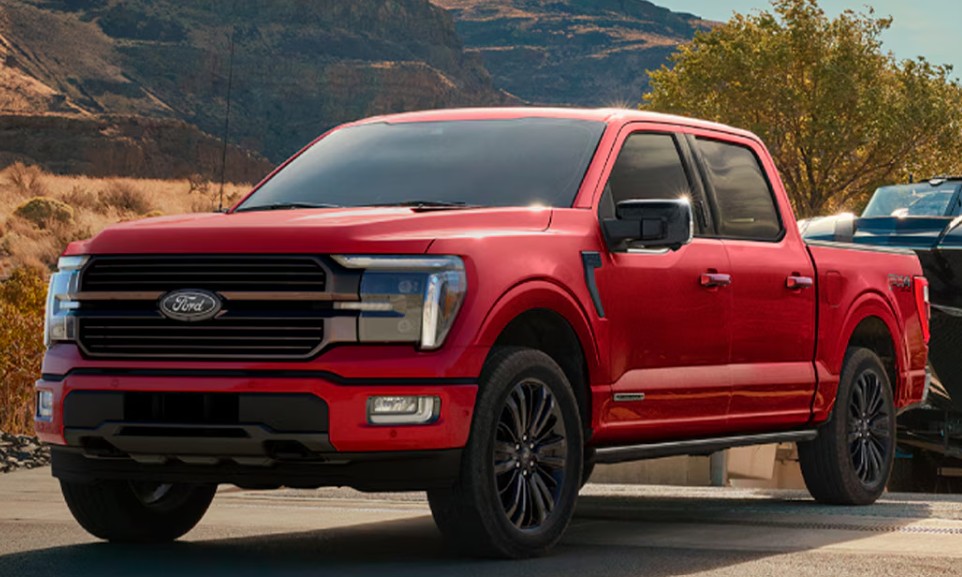
2021-Present: The Most Advanced F-150 Ever
Technology Meets Toughness
The current generation introduced:
- Hybrid powertrains
- Over-the-air updates
- Advanced driver assistance
- Improved interiors
The truck now feels as sophisticated as many luxury SUVs.
PowerBoost Hybrid Innovation
Ford's PowerBoost hybrid system delivers:
- Strong towing capability
- Exceptional fuel efficiency
- Onboard power generation
For many buyers, it's the perfect blend of performance and practicality.
Ford F-150 Years to Avoid
2004 Ford F-150
Some owners reported:
- Electrical issues
- Transmission concerns
- Window regulator failures
2005 Ford F-150
Common complaints included:
- Engine problems
- Transmission repairs
- Fuel system issues
2010 Ford F-150
Although generally capable, certain models experienced recurring mechanical concerns.
When shopping used, maintenance history often matters more than the model year alone.
Most Reliable Ford F-150 Years
Top Reliability Picks
The following years frequently receive praise:
- 1995 Ford F-150
- 1996 Ford F-150
- 2008 Ford F-150
- 2014 Ford F-150
- 2018 Ford F-150
- 2020 Ford F-150
These trucks generally combine strong engineering with proven reliability records.
How Ford F-150 Towing Capacity Has Evolved
Then vs. Now
Early F-150 models could tow respectable loads for their time.
Today's trucks can tow over 13,000 pounds when properly equipped.
That evolution reflects decades of advancements in:
- Engine technology
- Transmission design
- Frame construction
- Suspension engineering
Engine Evolution Across Ford F-150 Years
Classic V8 Era
Older generations relied heavily on:
- 302 V8
- 351 Windsor V8
- 460 Big Block V8
Modern EcoBoost Era
Current offerings include:
- 2.7L EcoBoost
- 3.5L EcoBoost
- 5.0L Coyote V8
- PowerBoost Hybrid
Each engine serves a different type of truck owner.
The Most Collectible Ford F-150 Years
Classic Favorites
Collectors often seek:
- 1975 First-Year F-150
- 1979 F-150 Ranger
- 1993 SVT Lightning
- 1995 F-150 Eddie Bauer
- 2004 SVT Lightning
These trucks combine historical significance with enthusiast appeal.
Which Ford F-150 Year Is Best for Used Buyers?
Best Budget Option
2014 Ford F-150
Best Value Option
2018 Ford F-150
Best Technology Option
2021-Present Ford F-150
Best Classic Option
1995 Ford F-150
Your ideal choice depends on budget, intended use, and personal preferences.
Factors to Consider Before Choosing a Ford F-150 Year
Mileage Matters
A well-maintained truck with higher mileage may outperform a neglected truck with lower mileage.
Maintenance Records Are Critical
Look for evidence of:
- Oil changes
- Transmission service
- Brake maintenance
- Cooling system repairs
Usage History Tells a Story
A truck used for heavy commercial towing may have experienced more wear than a family-owned daily driver.
The Enduring Success of the Ford F-150
The Ford F-150 has survived changing regulations, economic downturns, fuel crises, and fierce competition. Through every generation, Ford has refined its formula while staying true to the truck's core mission.
Whether you're drawn to a classic 1970s model, a dependable 1990s workhorse, a modern EcoBoost truck, or the latest hybrid powerhouse, there's an F-150 year that fits nearly every need.
That's the secret behind its success. The F-150 isn't just a truck. It's a timeline of innovation on wheels, constantly evolving while remaining instantly recognizable.
Conclusion
Understanding Ford F-150 years helps buyers make smarter decisions. Some years stand out for reliability, others for performance, and a few for groundbreaking innovation. From the original 1975 model to today's advanced hybrid trucks, every generation has contributed to the F-150's legendary status.
If you're shopping for a used F-150, focus on maintenance history, overall condition, and your specific needs rather than the model year alone. Do that, and you'll likely end up with a truck capable of serving you faithfully for years to come.
Frequently Asked Questions
1. What is the most reliable Ford F-150 year?
Many owners and experts consider the 2014, 2018, and 2020 models among the most reliable modern F-150 years.
2. Which Ford F-150 years should I avoid?
The 2004, 2005, and some 2010 models are commonly cited due to higher numbers of reported issues.
3. When did the Ford F-150 get an aluminum body?
Ford introduced the aluminum body design for the 2015 model year.
4. What was the first Ford F-150 year?
The Ford F-150 debuted in 1975 as a heavier-duty alternative to the F-100.
5. Which Ford F-150 year is best for towing?
Recent models from 2021 onward offer some of the highest towing capacities thanks to advanced engines and improved chassis engineering.
If you want to see other articles similar to Ford F-150 Years: The Complete Guide to Every Generation and the Best Model Years you can visit the Compare category.
Ford Bronco Pros and Cons: Complete Buyer’s Guide
2026 Ford Bronco Towing: Capacity, Equipment, and Real-World Limits
Ford Bronco Gas Tank Size: 2026 U.S. Guide
2026 Ford Bronco Big Bend vs Outer Banks: Features and Differences Explained
2026 Ford Bronco Trim Levels in Order: Complete U.S. Guide
Ford Bronco Models Explained for U.S. Buyers
Leave a Reply
Related Topics