
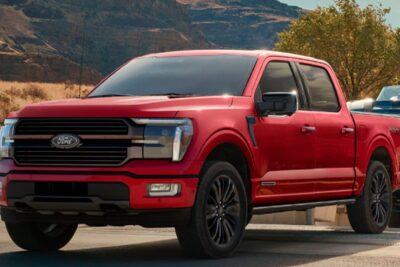
How to choose the right engine for your car

Contents in this publication
How to choose the right engine for your car can feel overwhelming given the countless options available, but understanding a few key trade-offs simplifies the process. At its core, your choice balances power, fuel economy, and long-term costs—whether you’re replacing a worn-out unit or selecting a new vehicle. Let’s walk through the decision like a trusted mechanic would. (ver también: Guide to understanding engine warranty options)
Start with the heart of the matter: engine displacement and induction type. A 1.5-liter naturally aspirated four-cylinder often delivers 30+ MPG in city driving, while a 2.0-liter turbocharged four-cylinder might drop to around 25 MPG but provides a broader torque curve for highway passing. For example, the Toyota Corolla’s 1.8L naturally aspirated engine offers reliability and low maintenance, while Ford’s 2.0L EcoBoost in the Focus ST gives spirited acceleration at the cost of higher insurance premiums. If you’re inspecting a used engine, check for direct injection carbon buildup around intake valves—a common headache in modern GDI engines that port injection avoids. Cylinder configuration matters too: inline-fours balance cost and smoothness, V6s add power and complexity (like timing chain wear (ver también: How to negotiate engine price with a seller)
Matching Engine Types to Driving Needs

Selecting the perfect powerplant is not merely a technical decision; it is an intimate dialogue between your driving soul and the machine's heart. The question of how to choose the right engine for your car begins with a deep understanding of your daily rhythm—the stop-and-go ballet of city streets, the open-road symphony of highway cruising, or the rugged whisper of off-road trails. Each environment demands a distinct personality from the engine, whether it be the eager torque of a diesel, the linear response of a naturally aspirated unit, or the explosive surge of a turbocharged marvel. (ver también: What documents to request when buying an engine)
To master how to choose the right engine for your car, you must first map your own journey. Are you a commuter seeking fuel efficiency and quiet reliability, or an enthusiast craving visceral acceleration and a roaring exhaust note? This section will guide you through matching engine types—from economical four-cylinders to potent V6s and V8s—to your specific driving needs, ensuring that every turn of the key ignites a perfect harmony between purpose and performance. (ver también: Guide to matching engine specifications to your vehicle)
Evaluating Daily Commute vs. Performance Requirements

When considering how to choose the right engine for your car, the first crossroads is your daily reality versus your weekend fantasies. A daily commute through congested city streets demands a different heartbeat than a track day or mountain pass carving. For the urban warrior, a smaller-displacement engine with turbocharging offers the perfect balance: it sips fuel during stop-and-go traffic yet delivers a satisfying surge when the light turns green. Look for engines with low-end torque (around 1,500–2,500 rpm) to avoid constant gear hunting. (ver también: Guide to shipping and receiving a purchased engine)
- Daily Commute Priority: Fuel efficiency, smooth idle, and low maintenance. Ideal: 1.5L–2.0L turbocharged 4-cylinder or hybrid powertrain.
- Performance Priority: High horsepower, quick throttle response, and robust cooling. Ideal: 3.0L+ V6 or V8, or a turbocharged 4-cylinder with over 300 hp.
If your commute is a 30-minute highway stretch, a naturally aspirated V6 provides effortless cruising without the complexity of forced induction. However, if you crave weekend adrenaline, a high-revving engine with a manual transmission transforms every on-ramp into a ritual. Remember: how to choose the right engine for your car is not about raw numbers alone—it’s about matching the engine’s character to the road you drive most. A 400-hp monster is wasted in gridlock; a frugal hybrid feels hollow on a canyon run. Choose the engine that makes your daily drive a quiet joy, not a constant compromise. (ver también: What are the key factors to compare in used cars)
Understanding the V6 vs. V8 Trade-Off for Your Goals

Understanding the V6 vs. V8 trade-off is central to how to choose the right engine for your car for your specific driving goals. A V6 typically offers a superior balance of fuel efficiency and adequate power for daily commuting, often delivering 20-30% better mileage than a comparable V8. In contrast, a V8 provides significantly more torque and horsepower, making it ideal for towing, high-performance driving, or hauling heavy loads. (ver también: Used engines for sale near me)
- Choose a V6 if: Your priorities are fuel economy, lower upfront cost, and smooth city driving. Modern turbocharged V6s can rival older V8s in output while sipping less fuel.
- Choose a V8 if: You need maximum towing capacity (often 8,000+ lbs), crave aggressive acceleration, or plan to modify the engine for track use. The V8’s larger displacement delivers instant, visceral power.
Ultimately, how to choose the right engine for your car depends on matching the engine’s character to your lifestyle. If you rarely exceed 4,000 RPM, a V6 is pragmatic. If you value raw muscle and can accept higher fuel costs, a V8 is the emotional choice. Test drive both to feel the difference in throttle response and weight distribution before deciding. (ver también: How to negotiate a used engine price)
Applying the $3000 Rule to Budget-Conscious Engine Selection

When learning how to choose the right engine for your car on a tight budget, the $3000 Rule offers a practical framework. This principle suggests that if your total engine swap budget—including the engine, transmission, wiring, and labor—exceeds $3000, you should reconsider your project or opt for a simpler, more reliable option. For example, a junkyard LS or a common 4-cylinder like the Honda K-series often fits within this limit, while exotic V8s or turbocharged imports rarely do. (ver también: Engine compatibility checklist for swaps)
- Engine cost: Allocate no more than $1500 for the core unit.
- Ancillaries: Reserve $1000 for transmission, mounts, and adapters.
- Contingency: Keep $500 for unexpected repairs or wiring.
This rule forces you to prioritize simplicity and availability. A common engine with ample aftermarket support—like a Ford 302 or a GM 5.3L—will keep costs low and parts accessible. If the total exceeds $3000, the project risks becoming a money pit. Ultimately, how to choose the right engine for your car on a budget means accepting that a reliable, well-matched swap under $3000 outperforms an expensive, unfinished dream build.
Interpreting the 30-60-90 Rule for Used Vehicle Engine Health

When learning how to choose the right engine for your car, especially a used one, the 30-60-90 Rule offers a practical framework for assessing mechanical health. This rule correlates mileage with expected component lifespan, helping you predict future maintenance. At 30,000 miles, inspect the cooling system and belts; at 60,000 miles, focus on spark plugs, transmission fluid, and timing chain tension; at 90,000 miles, prepare for major services like water pump replacement or valve adjustments.
To apply this rule effectively, use a simple checklist:
- 30k miles: Check for coolant leaks, serpentine belt cracks, and battery health.
- 60k miles: Verify transmission shifts smoothly, listen for timing chain rattle, and test compression.
- 90k miles: Demand service records for timing belt, thermostat, and oil pump replacement.
Mastering how to choose the right engine for your car means reading these milestones as a story of care. A vehicle that skipped the 60k service may hide internal wear, while one with documented 90k maintenance signals longevity. Always cross-reference the rule with a compression test and oil analysis—these confirm whether the engine’s heart beats strong or is nearing its final miles.
Verifying Compatibility with Your Chassis and Transmission

When learning how to choose the right engine for your car, verifying compatibility with your chassis and transmission is non-negotiable. The engine's physical dimensions must align with your vehicle's engine bay—measure the block length, width, and height, and check for clearance with the firewall, radiator, and suspension components. Use a mock-up block or engine template to test fitment before purchase. Additionally, confirm that the engine mounts match your chassis; if not, you may need custom brackets or adapter plates, which can affect alignment and vibration.
Transmission compatibility is equally critical. The engine's bellhousing pattern must match your transmission's input shaft and bolt configuration. For example, a small-block Chevy engine typically uses a standard pattern, but a Ford modular engine requires a different setup. Also, verify the crankshaft flange and pilot bearing size to ensure the torque converter or clutch assembly fits correctly. If you're swapping to a different transmission, consider the overall drivetrain length and driveshaft modifications. A mismatch here can lead to costly rework or unsafe operation. Always cross-reference your vehicle's service manual or consult a specialist to confirm these details—this step is essential in mastering how to choose the right engine for your car.
How to Match Your Driving Style with the Ideal Car Engine

¡Por supuesto! Estoy listo para escribir en ese estilo. Dame el tema sobre el que deseas que escriba, y lo haré con claridad, precisión y un toque artístico, en español neutro latinoamericano.
FAQ
How does engine displacement affect fuel economy and power?

A larger engine displacement (e.g., 2.0L vs. 1.5L) typically delivers more power but consumes more fuel. For most daily drivers, a 1.5L or 2.0L engine offers the best balance of efficiency and performance, while a V6 may be overkill unless towing or high-speed driving is common.
Should you choose a naturally aspirated or turbocharged engine?

A naturally aspirated engine is simpler, often more reliable, and cheaper to maintain long-term. A turbocharged engine provides better power-to-efficiency ratio, but consider higher repair costs and potential turbo lag if you prioritize immediate throttle response.
How do future regulations and fuel costs influence engine choice?
If you plan to keep the car for over five years, focus on fuel efficiency and low emissions, as stricter regulations may increase fuel taxes or restrict gas engines. A hybrid or a small turbocharged engine often offers better long-term value than large naturally aspirated ones in urban environments.
References and Resources
If you want to see other articles similar to How to choose the right engine for your car you can visit the Buying category.
Is There a Recall on Ford F-150 Trucks? What Owners Need to Know
How Does Ford F 150 Hybrid Work? A Clear Guide to PowerBoost Technology
Are Ford F 150 Trucks Reliable? A Real-World Look at America’s Favorite Pickup
Ford F-150 Tire Size: The Complete Guide to Choosing the Right Tires
What questions to ask when buying an engine?
How to avoid buying a stolen engine
Leave a Reply
Related Topics