

Toyota bZ Battery Replacement Cost USA: Complete Owner’s Guide

Contents in this publication
- How Much Does a Toyota bZ Battery Replacement Cost?
- First, Which Toyota bZ Battery Are We Discussing?
- What Determines the Toyota bZ Battery Replacement Price?
- Toyota bZ Battery Warranty in the USA
- Will Toyota Replace the Battery for Normal Degradation?
- How Often Do EV Batteries Need Replacement?
- Can a Toyota bZ Battery Be Repaired Instead of Replaced?
- Toyota Dealer Versus Independent EV Repair Shop
- Could Insurance Pay for a Toyota bZ Battery?
- Does the Toyota bZ Battery Price Follow Cost per kWh?
- Are Toyota bZ Battery Replacement Costs Falling?
- How to Obtain an Accurate Toyota bZ Battery Quote
- Warning Signs That Deserve Professional Diagnosis
- How to Help the Toyota bZ Battery Last Longer
- Should We Buy a Used Toyota bZ With an Older Battery?
- Is an Extended Warranty Worth Considering?
- Is Replacing the Battery Financially Sensible?
- How Toyota bZ Ownership Costs Compare With Gas Vehicles
- How Much Should Owners Save for Future Repairs?
-
Common Toyota bZ Battery Cost Mistakes
- Mistake 1: Confusing the 12-Volt Battery With the Traction Battery
- Mistake 2: Treating an Industry Pack Price as a Retail Quote
- Mistake 3: Assuming Reduced Winter Range Means Failure
- Mistake 4: Replacing the Pack Without a Second Diagnosis
- Mistake 5: Ignoring Warranty Eligibility
- Mistake 6: Choosing the Cheapest Used Battery
- Final Thoughts on Toyota bZ Battery Replacement Cost USA
- Frequently Asked Questions
The Toyota bZ battery replacement cost in the USA is one of those subjects that can make a potential electric-vehicle owner pause mid-scroll. We see an electric SUV with impressive range, quick acceleration, and low routine maintenance, but then one uncomfortable question appears: what happens when the main battery eventually needs replacing?
That concern is understandable. A high-voltage battery is not comparable to the small battery sitting under the hood of a conventional car. It is the heart, fuel tank, and energy-management center of the vehicle rolled into one enormous component.
However, scary online estimates often leave out several crucial details. Complete battery failures remain uncommon, warranty protection may cover qualifying problems, and a technician may be able to repair an individual component rather than replace the entire assembly.
For an out-of-warranty Toyota bZ in the United States, we should currently treat roughly $8,000 to $20,000 or more as a realistic planning range for complete traction-battery replacement. That is an informed market estimate rather than a universal Toyota list price. The final invoice can vary considerably according to the model year, battery capacity, part availability, labor rate, taxes, shipping, diagnostic work, and whether the replacement pack is new, remanufactured, or used.
Industry data places out-of-warranty EV battery replacements more broadly at approximately $5,000 to $16,000, although larger packs, limited replacement inventory, dealer pricing, and associated labor can push some jobs beyond that range. Recurrent also notes that complete out-of-pocket battery replacement remains rare.
Before we imagine a five-figure repair bill landing like a piano from a cartoon window, let us separate the different batteries, costs, warranties, and repair scenarios involved.
How Much Does a Toyota bZ Battery Replacement Cost?
A complete Toyota bZ high-voltage traction-battery replacement in the USA may reasonably cost:
| Replacement scenario | Estimated total cost |
|---|---|
| Minor battery-system diagnosis or repair | $300–$1,500 |
| Sensor, wiring, contactor, or cooling-system work | $500–$3,000 |
| Individual module or limited internal repair, where available | $2,000–$7,000 |
| Used or salvaged battery installation | $5,000–$12,000 |
| Remanufactured battery installation | $7,000–$15,000 |
| New complete OEM traction battery replacement | $8,000–$20,000+ |
| Conventional 12-volt battery replacement | $180–$450 |
These figures should be viewed as budgeting ranges, not guaranteed Toyota prices. Toyota does not publish one simple nationwide retail figure covering every bZ battery, trim, dealer, region, and repair situation.
The price could fall below the range when only a small component fails. It could rise above it when the vehicle needs a complete new OEM pack, extensive collision-related work, special shipping, structural repairs, or several hours of high-voltage labor.
The Most Useful Planning Number
For an owner researching long-term risk, a sensible placeholder is:
Approximately $12,000 to $18,000 for a new, complete, out-of-warranty traction-battery replacement, including typical associated labor.
This middle range gives us a more practical starting point than assuming the battery will either cost only $5,000 or automatically exceed $25,000.
Still, the only reliable price for a particular vehicle will come from a written diagnosis using the VIN.
First, Which Toyota bZ Battery Are We Discussing?
The Toyota bZ has more than one battery. Confusing them can turn a simple service question into an unnecessary panic attack.
The High-Voltage Traction Battery
This is the large lithium-ion battery that stores energy for propulsion. It powers the electric motors and determines much of the vehicle’s driving range.
The 2026 Toyota bZ lineup uses battery capacities of up to 74.7 kWh, depending on the configuration. Toyota states that the XLE FWD Plus can deliver an EPA-estimated range of up to 314 miles.
Replacing this large battery assembly is the expensive scenario that people usually mean when they search for Toyota bZ battery replacement costs.
The 12-Volt Auxiliary Battery
The smaller 12-volt battery powers computers, locks, interior electronics, control systems, relays, and other low-voltage equipment. It helps wake the vehicle before the high-voltage system takes over.
A weak 12-volt battery may cause:
- Failure to enter Ready mode
- Warning lights
- Unresponsive locks
- Intermittent electrical behavior
- A vehicle that appears to have a major EV fault
- Infotainment or accessory problems
Replacing the 12-volt battery is usually far less expensive than replacing the traction battery. Depending on the battery type, dealer labor, local pricing, and installation requirements, we might pay approximately $180 to $450.
That distinction is critical. A Toyota bZ that refuses to start does not automatically need a five-figure traction battery.
What Determines the Toyota bZ Battery Replacement Price?
A battery replacement quote is built from several moving parts. Think of it less like buying a refrigerator and more like renovating a kitchen: the headline product matters, but the surrounding work can change everything.
Battery Capacity and Configuration
A larger-capacity battery typically contains more cells and more raw material. Consequently, replacing a larger pack may cost more than replacing a smaller one.
The 2026 Toyota bZ is available with different battery configurations, including a battery with up to 74.7 kWh of total capacity.
Front-wheel-drive and all-wheel-drive versions may also use different components, software, mounting arrangements, or battery specifications. A dealer must use the VIN to identify the correct assembly.
New, Remanufactured, or Used Battery
A brand-new OEM battery will usually be the costliest choice, but it may provide the strongest parts warranty and the cleanest service history.
A remanufactured battery may contain inspected, balanced, repaired, or replaced internal components. It can reduce the cost, although availability for relatively new vehicles such as the bZ may be limited.
A used battery from a dismantled vehicle may be cheaper, but its history matters enormously. We should ask about:
- Original mileage
- Production date
- State of health
- Collision history
- Water exposure
- Storage conditions
- Remaining capacity
- Parts warranty
- Compatibility with the receiving vehicle
A low-priced used battery with uncertain health can be a bargain-shaped trapdoor.
Labor Rates
High-voltage battery replacement requires trained technicians, appropriate lifting equipment, insulated tools, protective procedures, diagnostic software, and a safe work area.
Toyota explicitly warns that the bZ contains dangerous high-voltage DC and AC systems and advises owners not to touch or remove orange high-voltage wiring or connectors. Toyota recommends having repairs performed by an authorized dealer.
Labor rates vary dramatically across the United States. A dealership in a high-cost metropolitan area may charge much more than a qualified independent EV specialist in a lower-cost region.
Shipping and Hazardous-Material Handling
Traction batteries are large, heavy, and regulated for transportation. Shipping one is not like sending a brake pad in a cardboard box.
The quote may include:
- Freight charges
- Special handling
- Protective packaging
- Core charges
- Return shipping for the old battery
- Storage fees
- Recycling or disposal costs
Ask whether these expenses are already included. A quote that initially looks inexpensive can grow teeth once freight and core charges appear.
Diagnostic Fees
A proper repair begins with diagnosis, not guesswork. The technician may need to:
- Scan the battery-management system.
- Review stored diagnostic trouble codes.
- Inspect the 12-volt system.
- Measure pack and module voltage.
- Check insulation resistance.
- Inspect cooling components.
- Verify charging behavior.
- Review battery temperature data.
- Conduct a road test.
- Contact Toyota technical support if necessary.
Diagnostic costs may range from a relatively modest inspection fee to several hundred dollars for complex troubleshooting.
A battery may fail because of an internal defect, but the vehicle may also have damage elsewhere.
For example, a road impact may affect the battery enclosure, underbody panels, coolant lines, brackets, wiring, or structural mounting points. Flood exposure can create an even more complicated repair.
In those situations, the final cost may include much more than the battery itself.
Toyota bZ Battery Warranty in the USA
Warranty coverage can be the difference between a manageable appointment and a financially painful repair.
Toyota states that the 2026 bZ’s electric-vehicle driving components, including the traction battery, are covered for eight years or 100,000 miles, whichever comes first. Toyota’s current U.S. bZ product page presents the same eight-year/100,000-mile battery-warranty period.
What the Warranty May Cover
The warranty may cover a qualifying defect in materials or workmanship during the coverage period, subject to the official terms, exclusions, and Toyota’s diagnosis.
Potentially covered situations could include an internally defective component that causes the traction battery to malfunction under normal use.
However, owners should never assume coverage before Toyota evaluates the vehicle.
What May Not Be Covered
Common reasons a battery-related claim may be denied or handled outside the standard warranty include:
- Collision damage
- Road-debris impact
- Flood or water damage
- Fire damage originating outside the battery
- Improper modifications
- Unauthorized repair attempts
- Misuse
- Tampering
- Salvage-title complications
- Damage caused by non-approved equipment
- Problems arising outside the time or mileage limit
Normal range variation and gradual capacity loss may not be treated the same way as sudden battery failure. The exact warranty language in the vehicle’s warranty guide controls the decision.
California and State-Specific Coverage
Some vehicles registered and operated in California or states that follow California emissions rules may qualify for additional zero-emission-vehicle warranty provisions.
Eligibility can depend on:
- Model year
- Original sale location
- Current registration
- Vehicle certification
- Specific failed component
- Applicable state regulations
Owners should ask a Toyota dealer to check the VIN rather than relying on a generic online statement.
Will Toyota Replace the Battery for Normal Degradation?
Not necessarily.
Lithium-ion batteries gradually lose usable capacity as they age. That does not automatically mean they are defective. Much like a phone battery, an EV battery may hold less energy after years of heat, charging, driving, and calendar aging.
The important question is whether the battery has:
- Experienced ordinary degradation
- Fallen below a warranty-defined standard
- Developed a specific internal fault
- Triggered diagnostic trouble codes
- Become unable to operate safely
- Suffered external damage
A gradual reduction in range can also come from factors unrelated to permanent degradation.
Range Loss Does Not Always Equal Battery Failure
Driving range changes according to:
- Outside temperature
- Highway speed
- Tire pressure
- Wheel size
- Cabin heating
- Air-conditioning use
- Elevation changes
- Wind
- Passenger and cargo weight
- Driving style
- Recent trip history
- Battery temperature
- Software calculations
Toyota lists up to 314 miles of EPA-estimated range for the 2026 bZ XLE FWD Plus, but EPA estimates are standardized comparison figures rather than promises that every trip will deliver the same result.
A winter highway trip with the heater running may produce noticeably less range without indicating that the battery needs replacement.
How Often Do EV Batteries Need Replacement?
Complete replacements are much less common than internet conversations might suggest.
Recurrent reports that battery replacements outside normal recall-related circumstances are rare in its EV community. It places the overall observed replacement rate at about 2.5%, with many replacements concentrated among earlier-generation EVs. Newer battery-management systems are expected to improve durability further.
This does not provide a Toyota bZ-specific failure rate, nor does it guarantee that a particular vehicle will never have a problem. It does, however, add useful perspective.
The traction battery should not be treated like:
- An oil filter
- A set of brake pads
- A 12-volt battery
- A scheduled replacement item
- A component automatically replaced every eight years
The end of warranty coverage does not mean the end of battery life. It simply means the manufacturer’s standard warranty period has ended.
Can a Toyota bZ Battery Be Repaired Instead of Replaced?
Possibly, but the answer depends on the failure, Toyota’s repair procedures, parts availability, and the technician’s capabilities.
A traction battery is an assembly containing much more than cells. It may include:
- Modules
- Bus bars
- Contactors
- Fuses
- Sensors
- Wiring
- Cooling passages
- Control electronics
- Protective casing
- Service disconnect components
If the actual problem lies in a replaceable sensor, connector, control component, or cooling-system part, full battery replacement may not be necessary.
When Module-Level Repair May Make Sense
A limited internal repair could be considered when:
- Only one section is faulty
- The rest of the pack remains healthy
- Approved replacement components are available
- The repair is technically supported
- A qualified high-voltage specialist can perform the work
- The repair comes with a meaningful warranty
Yet module replacement is not always the perfect cure. Installing one healthier module among heavily aged modules can create imbalance. A reputable shop should evaluate the complete pack, not simply replace whichever module produced the first error code.
When Full Replacement Is More Likely
Complete replacement may be recommended when:
- Several modules have deteriorated
- The enclosure is damaged
- Water has entered the pack
- Insulation faults are widespread
- The battery cannot be safely repaired
- Replacement parts are not offered separately
- Toyota’s official procedure requires assembly replacement
- The labor cost of rebuilding approaches the cost of another pack
Toyota Dealer Versus Independent EV Repair Shop
Where we take the vehicle can affect the price, warranty, and repair options.
Advantages of a Toyota Dealer
A Toyota dealership may offer:
- Factory diagnostic equipment
- VIN-specific service information
- Toyota technical assistance
- OEM parts
- Warranty-claim processing
- Recall and campaign verification
- Technicians trained on Toyota systems
- Software updates
- Proper documentation for future resale
For a vehicle still under warranty, visiting a Toyota dealer first is usually the most logical route.
Advantages of an Independent EV Specialist
A qualified independent specialist may offer:
- Lower labor rates
- Component-level repairs
- Used or remanufactured battery options
- More flexible sourcing
- Battery-health reports
- Alternatives for older, out-of-warranty vehicles
The key word is qualified. A general repair shop that occasionally works on hybrids is not automatically prepared to open or replace a modern high-voltage battery.
Questions to Ask an Independent Shop
Before approving work, ask:
- Are your technicians trained for this Toyota battery system?
- Do you carry high-voltage insurance?
- Will you provide a state-of-health report?
- Is the battery new, used, or remanufactured?
- What is the donor battery’s mileage?
- What parts-and-labor warranty is included?
- Does the quote include freight and the core charge?
- Will the vehicle require programming or calibration?
- How will the old battery be recycled?
- Will you document the repair for a future buyer?
Could Insurance Pay for a Toyota bZ Battery?
Insurance may cover battery replacement when the damage results from a covered event, such as:
- A collision
- Flooding
- Fire
- Vandalism
- Road debris
- Theft-related damage
- Another insured loss
Insurance usually does not cover ordinary aging, gradual capacity loss, or mechanical breakdown unless the policy includes a specific mechanical-protection product.
Why a Battery-Damage Claim Can Total the Vehicle
An insurer compares the repair cost with the vehicle’s actual cash value. If a battery, underbody structure, wiring, cooling system, and labor collectively approach the vehicle’s market value, the insurer may declare it a total loss.
This is more likely as an EV ages and depreciates. A $15,000 repair may make economic sense on a newer vehicle worth $35,000, but not on an older vehicle worth $17,000.
Before accepting a total-loss valuation, owners should review:
- Vehicle mileage
- Trim level
- Options
- Local comparable listings
- Pre-loss condition
- Recent major expenses
- Battery condition before the incident
Does the Toyota bZ Battery Price Follow Cost per kWh?
Only partly.
Battery-industry prices are often expressed in dollars per kilowatt-hour. Recurrent reported an average battery-pack cost of around $111 per kWh at the end of 2024, down sharply from earlier years.
If we multiply $111 by a 74.7-kWh capacity, we get approximately $8,292. That calculation may look like a replacement quote, but it is not one.
Industrial pack-cost averages do not automatically include:
- Retail markup
- Dealer overhead
- Low-volume replacement inventory
- Packaging
- Freight
- Taxes
- Core handling
- Vehicle-specific electronics
- Labor
- Coolant
- Programming
- Diagnostics
- Warranty administration
Therefore, cost-per-kWh data helps us understand the direction of the market, but it cannot tell us exactly what a Toyota dealer will charge.
Are Toyota bZ Battery Replacement Costs Falling?
The long-term trend suggests that battery manufacturing costs are falling.
Recurrent reported that average battery costs declined from more than $400 per kWh during the early mass-market EV era to approximately $111 per kWh by the end of 2024.
Lower cell and pack costs could eventually make replacement batteries more affordable. However, owners may not feel those reductions immediately.
Replacement prices also depend on:
- Production volume
- Parts distribution
- Import costs
- Domestic battery manufacturing
- Dealer pricing
- Remanufacturing availability
- Salvage supply
- Repairability
- Labor training
- Demand for replacement packs
In other words, the raw ingredients may become cheaper before the restaurant lowers the menu price.
How to Obtain an Accurate Toyota bZ Battery Quote
Do not ask only, “How much is a battery?” That question is too broad.
Use a structured process.
Step 1: Confirm Whether It Is the 12-Volt Battery
Ask the shop to test the auxiliary battery under load. A weak 12-volt battery can produce misleading symptoms and communication errors.
Step 2: Request a Full Diagnostic Scan
Obtain the diagnostic trouble codes in writing. Avoid approving a complete pack replacement based solely on a dashboard warning.
Step 3: Check Warranty Status by VIN
Ask Toyota to confirm:
- In-service date
- Current mileage
- Standard warranty eligibility
- State-specific coverage
- Recalls
- Service campaigns
- Previous warranty repairs
Step 4: Request an Itemized Estimate
The estimate should separate:
- Battery assembly
- Labor
- Diagnostic charges
- Freight
- Taxes
- Coolant or fluids
- Programming
- Core charge
- Disposal fees
- Additional components
Step 5: Ask About Every Battery Option
Request prices for:
- New OEM
- Remanufactured
- Used
- Component-level repair
- Insurance repair
- Warranty repair
Not every option will be available, but asking creates a clearer picture.
Step 6: Get a Second Opinion
For an out-of-warranty five-figure repair, a second diagnosis is reasonable. However, the second shop must have genuine high-voltage EV expertise.
Warning Signs That Deserve Professional Diagnosis
A Toyota bZ should be inspected when we notice:
- A persistent EV-system warning
- Failure to enter Ready mode
- Repeated charging interruptions
- Sudden, severe range reduction
- Reduced-power mode
- Unusual battery temperature warnings
- A burning smell
- Smoke
- Fluid leaking near the battery area
- Underbody impact
- Flood exposure
- New electrical faults after an accident
Toyota warns owners not to touch high-voltage wiring, connectors, leaking battery material, or damaged traction-battery components.
When to Stop Driving Immediately
Stop in a safe place and seek professional assistance when the vehicle displays a serious battery warning, loses propulsion, produces smoke, develops a burning odor, or has visible battery damage.
Do not attempt to disconnect the high-voltage system at home.
How to Help the Toyota bZ Battery Last Longer
Owners cannot stop calendar aging, but we can reduce unnecessary stress.
Avoid Leaving the Battery at Extremes for Long Periods
Regularly parking for days at either a very low or extremely high state of charge may place additional stress on lithium-ion cells.
For daily driving, follow Toyota’s charging recommendations rather than treating 100% as mandatory every night.
Use DC Fast Charging Strategically
DC fast charging is useful for travel. Toyota says the 2026 bZ can charge from 10% to 80% in around 30 minutes under ideal conditions.
Still, home Level 2 charging may be gentler and more convenient for ordinary daily use. There is no need to fear occasional fast charging, but we also do not need to use maximum-speed charging for every small top-up.
Protect the Vehicle From Extreme Heat
Whenever practical, park in shade, use a garage, and avoid leaving the vehicle fully charged in intense heat for extended periods.
The battery-management system provides protection, but reducing heat exposure can still support long-term health.
Maintain Tires and Alignment
Poor alignment and low tire pressure do not directly destroy the battery, but they increase energy consumption. That can make normal efficiency loss look like battery degradation.
Install Software Updates
Battery-management and charging behavior can be influenced by vehicle software. Ask the dealer whether any updates, recalls, or service campaigns apply.
Follow the Maintenance Guide
Although an EV requires fewer traditional services, it still needs inspections. Cooling systems, brakes, tires, suspension components, filters, electrical systems, and high-voltage components should not be ignored.
Should We Buy a Used Toyota bZ With an Older Battery?
A used Toyota bZ can be attractive when depreciation lowers the purchase price, but we should evaluate the battery rather than merely admiring the remaining range shown on the dashboard.
Check These Items Before Buying
- Original in-service date
- Remaining battery warranty
- Current mileage
- Charging history, when available
- Fast-charging frequency
- Accident history
- Flood history
- Underbody condition
- Diagnostic codes
- Real-world range
- Battery state of health
- Service records
- Recall completion
- Title status
Compare Battery Risk With the Purchase Price
Suppose two used bZ models appear similar:
- Vehicle A costs $22,000 and has verified battery health.
- Vehicle B costs $19,000 but has warning codes and no inspection history.
The $3,000 discount could disappear instantly if Vehicle B needs major battery work. Cheap purchase prices are exciting, but battery uncertainty can act like a hidden balloon payment.
A pre-purchase inspection by a Toyota dealer or EV specialist is particularly valuable for a vehicle approaching the end of its battery-warranty period.
Is an Extended Warranty Worth Considering?
An extended service contract may provide peace of mind, but we must read the exclusions carefully.
Some contracts advertise electric-vehicle coverage while excluding:
- Gradual battery degradation
- High-voltage batteries
- Battery modules
- Diagnostic time
- Pre-existing conditions
- Commercial use
- Salvage vehicles
- Flood-related damage
- Repairs exceeding the vehicle’s value
Ask the provider to show the exact clause covering the traction battery. Verbal assurances are mist; written contract language is concrete.
Is Replacing the Battery Financially Sensible?
Battery replacement is not purely a repair decision. It is a valuation exercise.
Use this simple framework:
Vehicle value after repair
minus total repair cost
minus near-term additional repairs
equals approximate economic benefit
Replacement May Make Sense When
- The vehicle is otherwise in excellent condition
- The body and interior are clean
- Mileage is moderate
- The replacement includes a strong warranty
- The repaired vehicle will be kept for several years
- The total cost is far below replacement-vehicle cost
- Used or remanufactured options reduce the bill
- Insurance or warranty pays most of the expense
Replacement May Not Make Sense When
- The repair approaches the vehicle’s market value
- The vehicle has severe collision damage
- Other major systems also need work
- The title is branded
- The replacement battery has little warranty
- The owner planned to sell soon
- A comparable working vehicle costs only slightly more
How Toyota bZ Ownership Costs Compare With Gas Vehicles
A potentially expensive battery does not mean an EV is automatically more expensive to own.
The Toyota bZ does not require:
- Engine oil changes
- Spark plugs
- An exhaust system
- Conventional transmission servicing
- Fuel injectors
- Engine belts
- A catalytic converter
- Many common engine repairs
Regenerative braking may also reduce friction-brake use, although tires can wear more quickly because EVs are heavy and deliver immediate torque.
The most balanced way to think about ownership is this:
The bZ may save money through lower routine maintenance while carrying a small risk of a very expensive out-of-warranty battery repair.
Both statements can be true.
How Much Should Owners Save for Future Repairs?
We do not necessarily need a $15,000 cash reserve labeled “battery replacement.” For many owners, that money would sit untouched for the entire ownership period.
A more balanced approach could include:
- Maintaining a general emergency repair fund
- Keeping comprehensive insurance
- Reviewing warranty expiration dates
- Checking battery health before warranty expiration
- Avoiding unsupported modifications
- Preserving complete service records
- Reassessing the vehicle’s value as it ages
An owner planning to keep the bZ well beyond 100,000 miles might gradually build a larger repair reserve. Even then, that fund can cover any major expense, not just the battery.
Common Toyota bZ Battery Cost Mistakes
Mistake 1: Confusing the 12-Volt Battery With the Traction Battery
A $250 auxiliary-battery problem and a $15,000 traction-battery problem are entirely different repairs.
Mistake 2: Treating an Industry Pack Price as a Retail Quote
Cost per kWh does not include the full repair ecosystem.
Mistake 3: Assuming Reduced Winter Range Means Failure
Cold weather, heater use, speed, wind, and tires can significantly influence range.
Mistake 4: Replacing the Pack Without a Second Diagnosis
An EV warning may originate from a sensor, connector, cooling component, software issue, charger, or 12-volt battery.
Mistake 5: Ignoring Warranty Eligibility
Always check the VIN before paying for major repairs.
Mistake 6: Choosing the Cheapest Used Battery
Battery health, compatibility, shipping damage, and warranty matter more than the advertised price alone.
Final Thoughts on Toyota bZ Battery Replacement Cost USA
The Toyota bZ battery replacement cost in the USA can be substantial, but we should view the risk with context rather than fear.
A complete out-of-warranty traction-battery replacement may cost approximately $8,000 to $20,000 or more, with a practical planning range of roughly $12,000 to $18,000 for many new-pack scenarios. Yet that does not mean every battery warning leads to complete replacement. A problem could involve the 12-volt battery, wiring, sensors, cooling equipment, charging hardware, software, or one repairable section of the high-voltage system.
Toyota provides eight-year/100,000-mile coverage for the 2026 bZ’s electric-vehicle driving components, including the traction battery, subject to the official warranty terms.
Our smartest strategy is simple: diagnose first, verify warranty coverage, request an itemized quote, compare repair options, and obtain a second opinion before authorizing an expensive out-of-warranty replacement.
The battery may be the biggest single component in the bZ, but it should not become the biggest shadow hanging over ownership. Most drivers are likely to spend far more time charging and driving than replacing the pack.
Frequently Asked Questions
1. How much is a new Toyota bZ battery in the USA?
A complete new OEM high-voltage battery replacement may cost approximately $8,000 to $20,000 or more, including associated labor and fees. Toyota does not publish one universal nationwide replacement price, so owners need a VIN-specific dealer quote.
2. Is the Toyota bZ battery covered by warranty?
Toyota states that the 2026 bZ’s electric-vehicle driving components, including the traction battery, are covered for eight years or 100,000 miles, whichever comes first, subject to official terms and exclusions.
3. Does a Toyota bZ need a new battery after eight years?
No. Eight years marks a warranty period, not a mandatory replacement date. The battery may continue operating for many years beyond the end of warranty coverage.
4. Can Toyota replace only one battery module?
It may be technically possible in certain situations, but availability depends on the failure, Toyota’s repair procedures, parts supply, and the technician. Some faults require a complete assembly, while others may involve replaceable components outside the cells.
5. How much does the Toyota bZ 12-volt battery cost?
A conventional 12-volt battery replacement may cost roughly $180 to $450, depending on battery specification, labor, location, and dealer pricing. It is dramatically cheaper than replacing the high-voltage traction battery.
1) Principal Keywords: Toyota bZ Battery Replacement Cost
2) SEO Headline: Toyota bZ Battery Replacement Cost USA Guide
3) Pathway: bz-battery
4) Meta Summary: Toyota bZ battery replacement cost explained, including U.S. price estimates, warranty coverage, repair choices, warning signs, and savings.
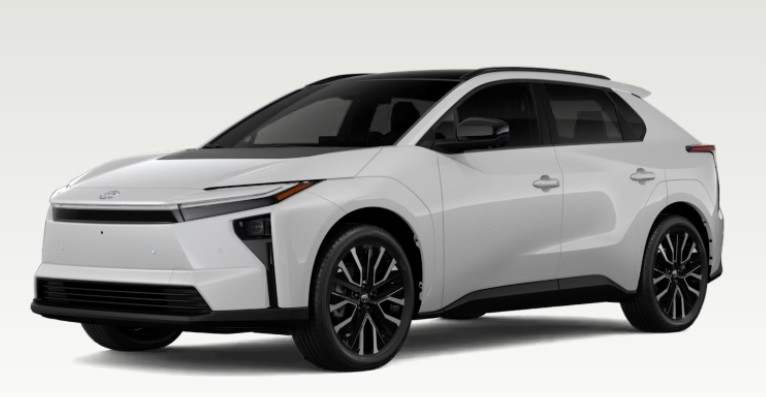
5) Image Alt Text: Toyota bZ undergoing a high-voltage battery inspection at a certified electric-vehicle service center in the USA
{finish}
If you want to see other articles similar to Toyota bZ Battery Replacement Cost USA: Complete Owner’s Guide you can visit the Repairs category.
Ford F-150 ABS Module Repair: The Complete Guide to Diagnosis, Fixes, Costs, and Prevention
Ford F-150 Fuel Pump Replacement: The Complete Guide to Costs, Symptoms, and Installation
How to perform a compression test on your motor
How to identify and fix motor misfires at home
How to prevent motor damage with regular maintenance checks
Guide to replacing a faulty motor sensor yourself
Leave a Reply
Related Topics