
Ford Bronco Do Not Drive Recall: What Owners Need to Know

Contents in this publication
- What Is the Ford Bronco Do Not Drive Recall?
- Does the Recall Affect the Ford Bronco or Bronco Sport?
- What Is Wrong With the Front Suspension?
- Why Is Ford Telling Owners Not to Drive?
- Which Ford Bronco Sport Years Are Recalled?
- How to Check Whether a Bronco Sport Is Recalled
- What Should Owners Do If the VIN Is Included?
- What Repair Will Ford Perform?
- Can We Drive the Bronco Sport Before the Appointment?
- What If the VIN Is Not Included?
- Does This Recall Affect Used Bronco Sport Buyers?
- Is the Bronco Sport Now an Unsafe Vehicle Overall?
- How Is This Different From the Separate Bronco Fire Recall?
- What Should We Say When Calling the Dealer?
- What If a Dealer Tells Us to Drive It In?
- Can Insurance or Roadside Assistance Help?
- How Owners Can Reduce Recall Stress
- The Bottom Line on the Ford Bronco Do Not Drive Recall
- Frequently Asked Questions
The phrase “Ford Bronco Do Not Drive recall” sounds dramatic—and in this case, it deserves to be taken seriously. Ford has issued an urgent instruction telling certain owners to stop driving their vehicles because a front suspension component may separate while the vehicle is moving.
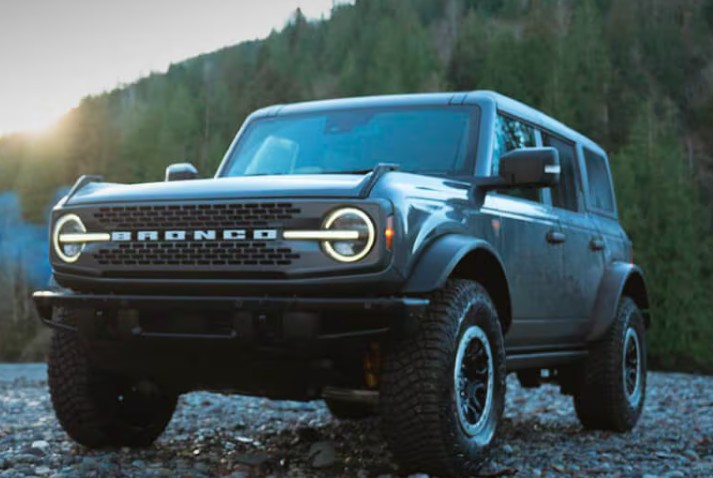
However, there is one crucial distinction we need to make immediately: the Do Not Drive advisory applies to certain Ford Bronco Sport vehicles, not the larger body-on-frame Ford Bronco.
That difference matters. The Bronco and Bronco Sport may share a family name and rugged styling, but they are separate vehicles built on different platforms. An owner who searches only for “Ford Bronco recall” can easily become confused by headlines, social-media posts, or incomplete summaries.
The recall involves a relatively limited number of vehicles, but the potential failure is serious. A front lower control-arm ball joint may have been installed or repaired incorrectly. If it separates from the wheel knuckle, the driver could lose control of the vehicle. Ford therefore advises affected owners not to drive until the vehicle has been inspected and repaired.
So, what exactly has gone wrong? Which model years are involved? How can we check a vehicle identification number? And should owners tow the vehicle rather than drive it to a dealership?
Let’s unpack the recall carefully, without turning it into a storm of unnecessary panic.
What Is the Ford Bronco Do Not Drive Recall?
Ford’s Do Not Drive advisory is connected to NHTSA recall number 26V340, also identified by Ford as recall 26S36. It covers 4,653 vehicles in total: certain Ford Bronco Sport SUVs and Ford Maverick pickup trucks. The official recall population includes 2,296 Bronco Sport vehicles and 2,357 Mavericks. Ford estimated that approximately 1% of the recalled population may contain the defect.
The affected Bronco Sport vehicles span the 2021 through 2026 model years, while affected Mavericks span the 2022 through 2026 model years. That does not mean every vehicle from those years is recalled. The campaign targets specific vehicles identified through manufacturing, inspection, and repair records.
Ford’s instruction is straightforward: owners whose vehicles are included should stop driving immediately and contact a Ford dealership.
This is stronger than an ordinary recall recommendation. Many recalls allow owners to continue using the vehicle cautiously until an appointment becomes available. A Do Not Drive advisory means Ford believes continued operation could expose the driver, passengers, and other road users to an unacceptable safety risk.
The Recall at a Glance
| Recall detail | Information |
|---|---|
| Manufacturer | Ford Motor Company |
| NHTSA recall number | 26V340 |
| Ford recall number | 26S36 |
| Total vehicles potentially involved | 4,653 |
| Bronco Sport vehicles involved | 2,296 |
| Bronco Sport model years | 2021–2026 |
| Other model involved | 2022–2026 Ford Maverick |
| Main defect | Incorrectly installed or repaired front lower control-arm ball joint |
| Main danger | Ball-joint separation and loss of vehicle control |
| Owner instruction | Do not drive affected vehicles |
| Repair cost | Free |
| Transportation assistance | Complimentary towing or possible mobile inspection |
Does the Recall Affect the Ford Bronco or Bronco Sport?
The recall affects the Ford Bronco Sport.
It does not apply to the full-size Ford Bronco merely because that vehicle carries the Bronco name. This is perhaps the most important clarification in the entire discussion.
Ford Bronco Versus Ford Bronco Sport
The regular Ford Bronco is a body-on-frame SUV designed with serious off-road use in mind. It competes more directly with vehicles such as the Jeep Wrangler.
The Bronco Sport is a smaller, unibody crossover. It shares more of its underlying architecture with road-focused compact vehicles, although Ford gives it capable all-wheel-drive systems and adventurous styling.
Think of them as cousins wearing similar hiking boots. They belong to the same extended family, but they are not the same vehicle.
Why Headlines Can Create Confusion
A headline may simply say “Ford Bronco Do Not Drive recall,” because that phrase is shorter and attracts more searches. Yet an owner of a two-door Bronco Badlands could read it and assume their vehicle is affected.
The correct question is not simply:
“Do I own a Bronco?”
It is:
“Does my Bronco Sport’s VIN appear in Ford’s or NHTSA’s recall database?”
The VIN decides whether the recall applies—not the model name alone.
What Is Wrong With the Front Suspension?
The problem involves the connection between a front lower control-arm ball joint and the front wheel knuckle.
Those terms sound technical, but the basic idea is easy to understand.
The lower control arm helps position and control the wheel as the suspension moves. The ball joint creates a flexible connection that allows the wheel and suspension to move while maintaining alignment and control. The wheel knuckle holds several important wheel and steering components together.
For the system to work safely, the ball-joint stud must sit fully and correctly inside the knuckle and be secured properly.
In the recalled vehicles, the left or right front lower control-arm ball joint may have been incorrectly assembled or improperly repaired. Ford’s recall report states that partial engagement between the ball stud and the knuckle could allow the joint to separate.
How the Assembly Problem Happened
According to Ford’s filing, vehicles built before June 1, 2025, may have had a front lower-control-arm ball stud that was not fully inserted into the wheel knuckle before the securing bolt was installed.
For vehicles built on or after June 1, 2025, Ford said some units requiring an in-plant repair may have left the factory without that repair being properly completed.
In plain English, this was not necessarily a weak component that gradually wore out under normal use. It was primarily an assembly or repair-completion issue.
Imagine fastening a door hinge while one side is only partly seated. The bolt may appear to hold everything together, but the connection is not carrying force as intended. Add road impacts, steering loads, vibration, and suspension movement, and the incomplete connection may eventually come apart.
Why Is Ford Telling Owners Not to Drive?
Ford issued the Do Not Drive instruction because ball-joint separation could lead to a sudden loss of vehicle control.
If the lower control arm separates from the wheel knuckle, the affected wheel may no longer remain positioned correctly. The vehicle could pull sharply, become difficult to steer, or behave unpredictably.
At parking-lot speed, such a failure could leave the vehicle disabled. At highway speed, the consequences could be much worse.
NHTSA’s recall report explains that separation may cause loss of control while driving and increase the risk of a crash.
That is why this recall sits in a different category from a minor trim problem or an infotainment glitch. We are talking about a component that helps keep a front wheel connected to the suspension geometry.
Can the Vehicle Fail Without Warning?
Owners should not assume they will always receive a clear warning before separation occurs.
A loose or partly engaged joint might produce symptoms, but the absence of symptoms does not prove the vehicle is safe. Some drivers could potentially notice:
- Clunking or knocking from the front suspension
- A change in steering response
- Unusual vibration
- A wheel that appears misaligned
- Uneven handling while turning
- A sudden pull to one side
- Abnormal tyre wear
These symptoms can have many causes and are not a reliable substitute for checking the VIN.
Why a Quiet Vehicle May Still Be Affected
Mechanical problems do not always announce themselves like a fire alarm. Sometimes they whisper. Sometimes they stay silent until the connection finally gives way.
A Bronco Sport that feels completely normal could still be included in the recall population. Conversely, a vehicle with a suspension noise may have an unrelated worn component.
The VIN lookup is the dependable starting point.
Which Ford Bronco Sport Years Are Recalled?
The recall covers certain 2021, 2022, 2023, 2024, 2025, and 2026 Ford Bronco Sport vehicles.
The official production range listed for the Bronco Sport runs from March 11, 2020, through April 28, 2026. Ford identified 2,296 Bronco Sport vehicles as potentially involved.
Again, “certain” is doing a lot of work here.
Ford did not recall every Bronco Sport produced during those years. The affected population was narrowed using factory records and information about vehicles that may have received an incorrect assembly or incomplete in-plant repair.
Are All Trims Included?
The recall is VIN-specific rather than something owners should determine solely by trim level.
A Bronco Sport Base, Big Bend, Outer Banks, Badlands, Heritage, or another version should not be assumed safe or affected merely because of its badge.
The same principle applies to the engine, paint colour, optional packages, and four-wheel-drive equipment. Owners should enter the full 17-character VIN into an official recall checker.
Where Can We Find the VIN?
The VIN is normally located in several places:
- At the lower edge of the windshield on the driver’s side
- On a label inside the driver’s door opening
- On the vehicle registration
- On insurance documents
- In the Ford app or owner account
- On finance or purchase paperwork
Check each character carefully. The letters I, O, and Q are normally not used in modern VINs, which helps reduce confusion with the numbers 1 and 0.
How to Check Whether a Bronco Sport Is Recalled
Owners have several reliable options.
1. Use Ford’s Official Recall Lookup
Ford provides an online recall checker that allows owners to enter their VIN. The results should show open safety recalls associated with that specific vehicle.
2. Use the NHTSA VIN Lookup
NHTSA also offers an official recall search. This is useful for checking whether an unrepaired safety recall appears against a U.S.-market vehicle.
3. Contact a Ford Dealer
A Ford service department can check the VIN through Ford’s internal systems. This may be the best approach when the vehicle was recently purchased, the online result is unclear, or the owner needs to arrange towing immediately.
4. Call Ford Customer Service
Ford’s recall filing lists its customer-service line as 1-866-436-7332. A representative or dealer can use the VIN to determine whether the vehicle is included.
Do Not Rely Only on a Recall Letter
A mailed notice is helpful, but it should not be the sole method of checking.
Letters can arrive late. An address may be outdated. A recently purchased used vehicle may still be registered to a previous owner. Some owners may discard the envelope without realizing its importance.
When a Do Not Drive advisory exists, actively checking the VIN is the wiser move.
What Should Owners Do If the VIN Is Included?
If the VIN shows that the Bronco Sport is affected by the Do Not Drive recall, do not drive it to the dealership.
Contact a Ford dealer and explain that the vehicle is subject to recall 26S36 or NHTSA campaign 26V340. Ask the service adviser to confirm the transportation and repair procedure.
Ford has said affected customers will be offered complimentary towing for dealer inspection and repair. Where available, customers may also be given the option of an on-site inspection through Ford mobile service.
Recommended Owner Checklist
- Park the vehicle in a safe location.
- Avoid driving it, even for a short dealership trip.
- Record the VIN and current mileage.
- Save a screenshot of the recall result.
- Call the nearest authorised Ford dealer.
- Clearly mention the Do Not Drive instruction.
- Request complimentary towing or mobile inspection.
- Ask whether a replacement or loan vehicle is available.
- Keep copies of repair orders and correspondence.
- Verify that the recall is marked complete after repair.
What If the Vehicle Is Away From Home?
Suppose the recall appears while the Bronco Sport is parked at work, an airport, a holiday property, or another city.
The same rule applies: do not continue driving merely because reaching home would be more convenient.
Call a local Ford dealer and explain the vehicle’s location. The towing arrangement should take the vehicle to an authorised facility capable of performing the recall inspection or repair.
A Do Not Drive advisory is not the moment to think, “It is only ten miles.” Mechanical failures do not respect short distances.
What Repair Will Ford Perform?
Ford dealers will inspect the ball-joint-to-knuckle attachment on affected vehicles.
The required work may involve confirming that the ball-joint stud is correctly seated and that the connection is properly secured. If the assembly is incorrect, the dealer will perform the necessary repair in accordance with Ford’s service procedure.
The official remedy is provided free of charge because it is a safety recall.
Will Every Recalled Vehicle Need Parts?
Not necessarily.
A recall population often includes vehicles that require inspection because manufacturing records indicate they may have been exposed to the defect. Some will pass inspection and need no major component replacement. Others may require adjustment, reassembly, or new parts.
That does not mean the recall is exaggerated. It means Ford must capture the full group that could reasonably contain the unsafe condition.
How Long Might the Repair Take?
The hands-on inspection or repair may be relatively straightforward, but total dealership time can vary because of:
- Appointment availability
- Towing schedules
- Technician workload
- Parts availability
- Additional damage found during inspection
- Local mobile-service capacity
- Demand from other recalled owners
When calling, ask the dealer whether the vehicle will be inspected immediately and whether parts are already in stock.
Can We Drive the Bronco Sport Before the Appointment?
No—not if Ford or the VIN lookup confirms the vehicle is subject to the Do Not Drive advisory.
Waiting several days for an appointment does not turn the vehicle into a safe means of transportation. Leave it parked and arrange authorised towing or mobile service.
What About Driving Very Slowly?
Low speed may reduce the energy involved in a crash, but it does not eliminate the risk of ball-joint separation.
The problem concerns a structural suspension connection. It can be loaded during:
- Steering
- Braking
- Entering a driveway
- Crossing a pothole
- Driving over a speed bump
- Climbing a kerb
- Turning into a parking space
Even a slow trip can place significant force on the front suspension.
Can We Tow It Ourselves?
Professional towing is the safer choice.
An all-wheel-drive Bronco Sport generally needs to be transported using an approved towing method, commonly a flatbed, to avoid drivetrain damage. The towing provider should follow Ford’s guidance for the specific model and configuration.
Do not improvise with ropes, tow straps, or an unsuitable two-wheel dolly. Solving one problem by creating another would be like putting out a candle with a garden hose inside the living room.
What If the VIN Is Not Included?
If an official Ford or NHTSA search shows no open recall 26S36 or 26V340 for the vehicle, the Bronco Sport is not currently identified as part of this specific campaign.
Owners can continue using the vehicle normally unless another warning, safety recall, or mechanical symptom applies.
However, it remains sensible to:
- Recheck the VIN periodically
- Keep contact information current with Ford
- Pay attention to recall letters
- Investigate unusual steering or suspension noises
- Maintain service records
- Use an authorised technician when safety-related symptoms appear
Recall databases can be updated as repairs are completed or campaign information changes, so a future check can still be worthwhile.
Does This Recall Affect Used Bronco Sport Buyers?
Yes, used-vehicle shoppers should pay close attention.
Safety recalls follow the vehicle, not the original owner. A recalled Bronco Sport does not become exempt because it was traded, auctioned, financed, or sold privately.
Before Buying a Used Bronco Sport
Ask the seller for the VIN before travelling to inspect the vehicle. Then:
- Run the VIN through Ford’s recall checker.
- Run it through NHTSA’s recall database.
- Ask for proof that completed recalls were repaired.
- Review the service history.
- Arrange an independent pre-purchase inspection.
- Avoid test-driving a vehicle under an active Do Not Drive advisory.
Can a Dealer Sell a Vehicle With an Open Recall?
The answer can depend on whether the vehicle is new or used and on the laws and practices of the relevant jurisdiction.
Regardless of the seller’s legal obligations, a buyer should not accept delivery of an affected Bronco Sport before the Do Not Drive recall has been completed. The vehicle’s purchase price, warranty, or attractive trim package does not outweigh a known suspension safety risk.
Is the Bronco Sport Now an Unsafe Vehicle Overall?
One recall does not automatically mean every Bronco Sport is fundamentally unsafe or poorly designed.
Recalls are part of how manufacturers and regulators address defects found after production. Some campaigns affect millions of vehicles; others, like this one, target a narrow population linked to particular factory records.
What matters is the nature of the defect and how owners respond.
This recall is serious because it can affect vehicle control. But it also has a defined remedy, a limited identified population, and no-cost inspection and repair.
A Recall Is a Process, Not a Verdict
We can think of a recall like a fire door in a building. Its existence tells us that a risk has been identified and a response system is operating. The crucial question is whether people follow the instructions.
Ignoring the campaign would make the vehicle unnecessarily dangerous. Completing the repair closes the loop.
How Is This Different From the Separate Bronco Fire Recall?
Owners may encounter reports about another large Ford Bronco recall involving an engine-compartment wiring harness and possible fire risk.
That is a separate campaign affecting certain 2021–2026 Ford Bronco and Bronco Raptor vehicles. It involves wiring that may rub against nearby components, potentially exposing conductors and causing a short circuit or fire. That campaign is identified as Ford recall 26S55 and NHTSA recall 26V468.
The differences are important:
| Recall | Vehicle | Main issue |
|---|---|---|
| 26S36 / 26V340 | Bronco Sport and Maverick | Front lower-control-arm ball-joint assembly |
| 26S55 / 26V468 | Bronco and Bronco Raptor | Engine wiring abrasion and fire risk |
The Do Not Drive suspension advisory discussed in this article concerns the Bronco Sport, not the regular Bronco.
This distinction prevents owners from mixing two different safety actions, repair procedures, and vehicle populations.
What Should We Say When Calling the Dealer?
A clear opening can save time:
“My Ford Bronco Sport VIN shows recall 26S36, NHTSA campaign 26V340, with a Do Not Drive instruction. I need to arrange the approved inspection and complimentary towing or mobile service.”
Then ask:
- Can you confirm my VIN is included?
- Should the vehicle remain exactly where it is?
- Will Ford arrange the tow directly?
- Is mobile inspection available in my area?
- Are repair parts available?
- How long do you expect to keep the vehicle?
- Is alternative transportation available?
- How will I confirm the campaign is closed?
Write down the representative’s name and the date of the conversation. Documentation can be useful if towing, parts, or scheduling problems arise.
What If a Dealer Tells Us to Drive It In?
Politely remind the adviser that Ford issued a Do Not Drive advisory and offered complimentary towing or mobile inspection for affected vehicles. Ford’s public statement explicitly urges impacted owners to contact dealerships immediately rather than drive the vehicles.
Ask the adviser to verify the instructions using the recall number.
If the response remains unclear, contact another authorised Ford dealership or Ford customer service. Do not let a casual telephone comment override the formal safety instruction attached to the VIN.
Can Insurance or Roadside Assistance Help?
Ford’s recall transportation programme should be the first route because Ford has stated that complimentary towing will be available to affected owners.
Roadside-assistance or insurance coverage may provide an alternative if Ford-arranged towing is delayed, but owners should confirm:
- Where the vehicle will be taken
- Whether the towing method is appropriate
- Who will pay the invoice
- Whether reimbursement requires prior approval
- Whether storage charges could apply
Avoid authorising an expensive private tow without understanding whether Ford will cover it.
How Owners Can Reduce Recall Stress
A Do Not Drive notice can disrupt work, school runs, appointments, and family plans. The quickest path forward is organised communication rather than repeated calls without documentation.
Create a simple record containing:
- VIN
- Licence plate
- Mileage
- Recall number
- Dealer name
- Appointment date
- Tow confirmation
- Repair-order number
- Names of representatives
- Copies of emails or text messages
A neat paper trail turns an irritating situation into a manageable process.
Do Not Attempt a DIY Repair
This is not a suitable driveway repair based on a video or forum post.
The defect involves correct ball-joint seating, retention, inspection criteria, and manufacturer procedures. An amateur may make the connection look secure without confirming that the stud, knuckle, bolt, and surrounding components meet Ford’s specifications.
Safety-critical suspension work deserves the right tools, procedure, and accountability.
The Bottom Line on the Ford Bronco Do Not Drive Recall
The Ford Bronco Do Not Drive recall is serious, but the headline needs context.
It applies to certain 2021–2026 Ford Bronco Sport vehicles, not every Bronco and not every Bronco Sport. The problem concerns a front lower control-arm ball joint that may have been assembled or repaired incorrectly. If that connection separates from the wheel knuckle, the driver may lose control of the vehicle.
Affected owners should stop driving, check the VIN, contact a Ford dealership, and arrange complimentary towing or mobile inspection. The inspection and repair are free.
There is no benefit in gambling with a suspension component simply because the vehicle still feels normal. A Do Not Drive notice is Ford’s way of placing a bright red flag beside the risk.
Check the VIN. Follow the instruction. Complete the repair. Then get back on the road with the recall properly closed rather than hanging over the vehicle like a dark cloud.
Frequently Asked Questions
1. Is there currently a Ford Bronco Do Not Drive recall?
Yes, Ford issued a Do Not Drive advisory covering certain 2021–2026 Ford Bronco Sport vehicles and 2022–2026 Ford Mavericks. The campaign concerns an incorrectly assembled or repaired front lower-control-arm ball joint that may separate from the wheel knuckle.
2. Does the recall affect the full-size Ford Bronco?
This specific Do Not Drive campaign applies to the Ford Bronco Sport, not the full-size Ford Bronco. Owners should still check their VIN because the regular Bronco is involved in separate recall campaigns, including a 2026 engine-wiring fire-risk recall.
3. Can I drive my recalled Bronco Sport to the dealership?
No. When the VIN is included in the Do Not Drive advisory, contact the dealership and request the approved transportation procedure. Ford has offered complimentary towing and, where available, mobile inspection.
4. How many Bronco Sport vehicles are affected?
Ford’s NHTSA filing identifies 2,296 potentially affected Bronco Sport vehicles. Together with 2,357 Ford Mavericks, the total recall population is 4,653 vehicles.
5. Will Ford repair the recalled Bronco Sport for free?
Yes. Safety-recall inspection and repair work is performed at no charge to the owner. A Ford dealership can confirm the specific remedy, towing arrangements, and appointment availability after checking the VIN.
If you want to see other articles similar to Ford Bronco Do Not Drive Recall: What Owners Need to Know you can visit the Problems category.
Toyota Camry Key Won’t Turn: Causes, Fixes, and Prevention
Toyota Camry Keys Locked in Trunk: Safe Ways to Get Them Back
Toyota Camry Keys Locked in Car: What to Do Next
Toyota Camry Won’t Start But Has Power: Causes, Fixes, and Smart Troubleshooting
Toyota Camry Issues: Common Problems, Warning Signs, and What We Should Know Before Buying
Ford F-150 Not Starting: Complete Troubleshooting Guide
Leave a Reply
Related Topics